The Orbit 2018 Year in Review

9 photos of Billie Nardozzi in a collage

Rachel Bovier (neé Billie Nardozzi), The People’s Poet

Renowned veterinary doctor Theodore Nugent said it best: “I don’t know where they come from, but they sure do come.” Dr. The Nuge was speaking to a particular feline ailment, but he may as well have been consulting on web metrics.

‘Tis the season for reflection, year-end lists, and sitting on one’s keister instead of hitting the bricks in pursuit of new content. This is that one time per annum when we open the blogging master console and crunch the numbers on what people were actually reading this year.

abandoned house with spray-painted graffiti "Into the forgotten", Clairton, PA

“Into to the forgotten” maybe, but not for Orbit readers. Clairton’s ghost neighborhood.

It turns out that every single day we still get dozens of visitors coming in to read the years-old stories of Clairton’s ghost neighborhood (2017) and the wacky-terrifying antics of Bill Ansell and his Christmas cul-de-sac of nightmares (2016). Somebody from Reddit linked to our Twin Sycamores of Sheraden story (2015) for a page view spike we’ll likely never experience again.

These three non-2018 stories were our most-read of the year. So this time around we’re just going to go with the top articles that were actually published in the last twelve months. We’ll follow that up with our “staff picks” of favorite sleeper posts that showed up in the lower reaches of the list, but we believe deserve another chance at your eyeballs.

The Orbit will be off next weekend, so happy holidays and we’ll see you in 2019.


The Hits

1. The People’s Poet: Billie Nardozzi (Jan. 28)

Rachel Ann Bovier aka Billie Nardozzi aka Billy Nardozzi (photo, top) came into our lives more than a decade ago via the ingeniously-D.I.Y. publishing method of running weekly poems in the Post-Gazette’s classified ads. Lately she/he [Bovier/Nardozzi: “I’m still figuring that out.”] has gone even more big time–quite literally–with a full-size billboard that you can’t miss on Bigelow Boulevard. Pittsburgh noticed.
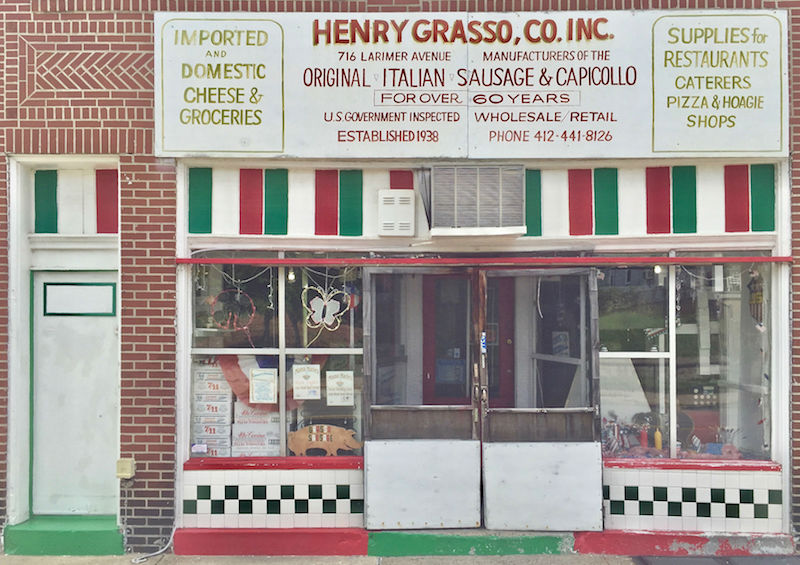
red, white, and green painted storefront for Henry Grasso, Co. Inc. Pittsburgh, PA

Henry Grasso, Co. Inc., one of the last traces of Larimer’s “Little Italy” past

2. Looking for a Lost Little Italy in Larimer (Sept. 23)

From a throwaway line in the movie Striking Distance (see following item), Dennis Farina kicked this Medigan’s gul into a block-by-block, alley-by-alley trolling through Larimer looking for any traces of what was once Pittsburgh’s largest “Little Italy.” The short version: there ain’t much left. But it was a lot of fun looking, researching, speculating, and hearing the community’s feedback.

illustration of scene from 1993 film "Striking Distance" with Lt. Vince Hardy (John Mahoney) and Det. Tom Hardy (Bruce Willis) in police car

Mario Zucca’s fan illustration of the chase scene from “Striking Distance”

3. Take Bigelow! “Striking Distance,” 25 Years Later, Part 1: The Scene, The Meme, The Dream (July 15)

It was just about this time last year–an icy cold New Year’s Day, if this blogger recalls–when the idea came to retrace the Striking Distance “Take Bigelow” chase scene as a prompt for a then-and-now look at two views of Pittsburgh, separated by 25 years. Then we realized that to do it justice, we’d need to wait half a year until the trees were at full foliage and sun was out so that we could actually compare apples to apples.

No matter. That just led the dedicated Orbit staff to a springtime of repeated viewings of the library’s DVD, triangulating locations, and wondering what Jo Christman ever saw in John Hardy. Then Mario Zucca and his amazing original illustrations came into our lives. ‘Nuf said.

2-story cement house with large side yard, Donora, PA

Cement City, Donora, PA

4. Heavy Living: Cement City, Donora (May 6)

Little Donora, 30 miles south-southeast/upriver from Pittsburgh, has had a rough run. The mills shut down a decade or more before its Mon Valley peers and it’s now remembered primarily for the deadly smog of 1948–an environmental disaster so severe it was a major factor in the formation of the E.P.A. [This history is all covered in the terrific Donora Smog Museum.]

But Donora has a fascinating history outside of air pollution and there is a small, but committed, group of local historians and preservationists who work hard to let you know about it.

There’s nowhere better to put those pieces together than Cement City–a retro-futurist development on the south side of town. The neighborhood was built just about a hundred years ago on technology pushed by Thomas Edison who saw poured-in-place concrete housing as the vision of the future. It didn’t turn out that way, but Donora still ended up with a great little neighborhood.

statuette of Mary with deer statue in front yard of row house, McKees Rocks, PA

One of the many front yard Marys in little Presston, McKees Rocks

5. Color Me In Presston: The Front Yard Marys of McKees Rocks, Part 1 (Nov. 18)

If you’ve never heard of Presston, you’re not alone. The little one-way-in/one-way-out neighborhood is just about as cut off from the world as a place could possibly be and still see the skyline of a (semi-)major U.S. city.

There are inevitably many great stories from this edge of McKees Rocks [Presstonians: we’re just waiting for the invitation!] but last month we dug into an old favorite: front yard Marys. Presston has just about as many–house for house–as anywhere we’ve been.


The Sleepers

homemade hat with stuffed groundhogs

The world’s coldest fashion show: Groundhog Day at Gobbler’s Knob

Groundhog Gonzo! Fur and Clothing on the Punxsutawney Groundhog Trail (Feb. 11)

To live in Western Pennsylvania and not make the trip up to Punxsutawney for Groundhog Day–at least once–is a crying shame. The yearly event is as wholesome as they come and way goofier than we could have predicted. Orbit staff were there for the whole thing–2:00 AM to daybreak–and came away with an entirely new appreciation for groundhog fashion, “hog heads,” and the collective defiance of winter.

That this story–with some fine writing and fun pictures–didn’t get more attention was a bummer. Maybe people were just groundhogged-out by the following weekend. Now, we’re just in time to get the hype machine going for GHD ’19, so take this op to catch up.
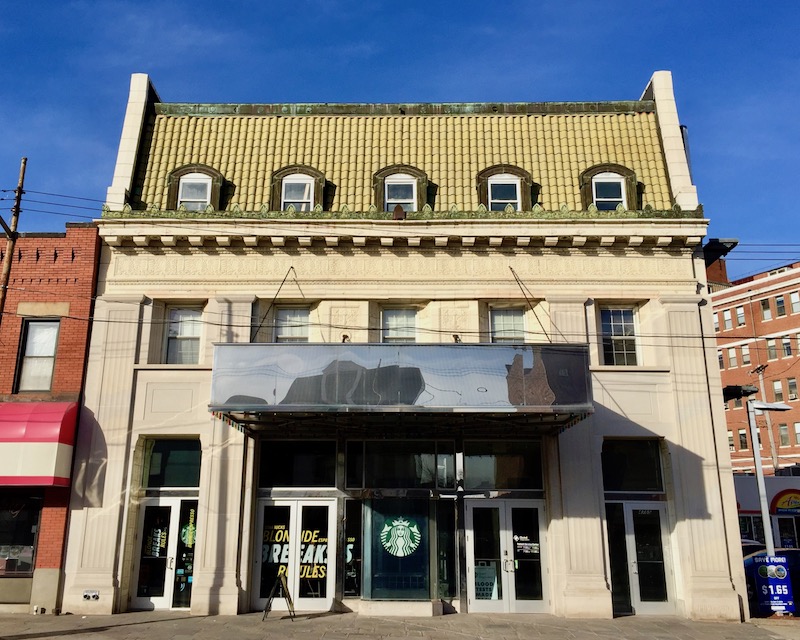
former Plaza Theatre in Pittsburgh, PA

former Plaza Theatre, current Starbucks/Quest Diagnostics, Bloomfield

Show’s Over: Ex-Theaters, Part 1–Mourning the Recently Departed (April 15)

There was a period in the early spring when it was all ex-(movie) theaters: combing through historical maps, cruising the Cinema Treasures site, mentally reconstructing radically-altered façades. That was all in the service of a planned series on what’s happened to all the old movie houses that used to line the commercial drags of every decent-sized town in America.

We got as far as the recently-closed theaters we could still remember from the 1990s–places like the old Plaza in Bloomfield and Cinema 4 in Dormont, Bellevue’s dirty double-screen and the street-straddling pair of Cheswick theaters. Hopefully we’ll get back to this series–heck, we’ll make it a resolution!–as there are just a ton of them out there.

members of 1976 Pittsburgh Triangles World Team Tennis, 1976

Members of the Pittsburgh Triangles of World Team Tennis, 1976

No Room For Squares: When the Pittsburgh Triangles Were Golden (April 29)

Clint Burton was a teenager in the mid-1970s when Pittsburgh had its own squad representing the short-lived World Team Tennis league. He was there on the sidelines, hired by his uncle to be the team’s stats guy, when the Triangles won the league championship in 1975.

Clint’s first-hand account of seat-of-the-pants sports management in a fledgling league, a wide-eyed teenager hanging-out with world-famous sports stars, and filing game recaps to Super-Tiebreaker magazine is a great story we were very proud to tell.
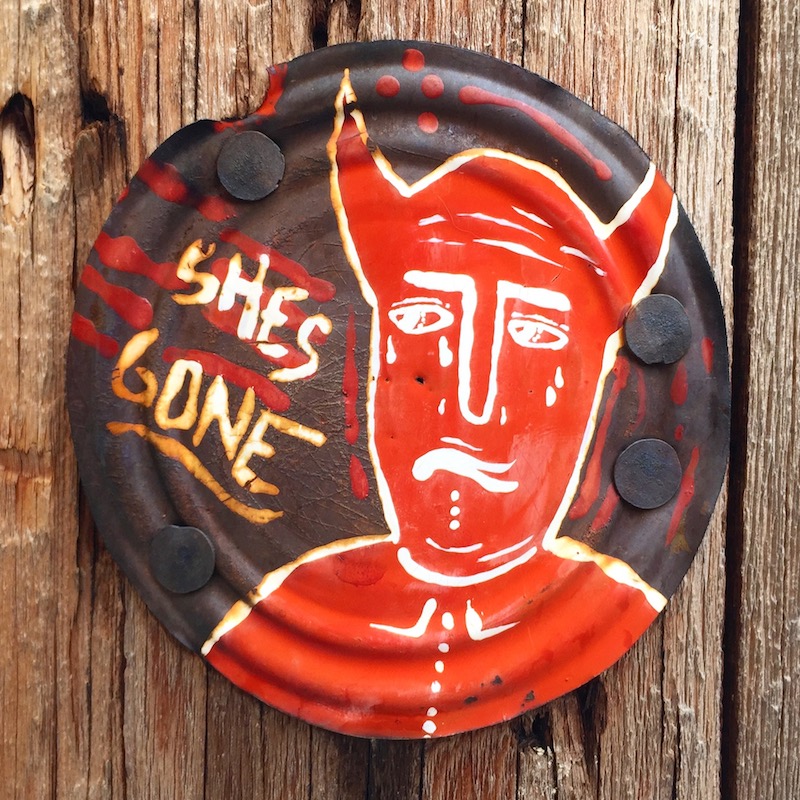
tin can lid painted with sad devil and the words "She's gone", Pittsburgh, PA

tin can pole art, Bloomfield

Tin Can Pole Art, Part 2: A Date with Some Little Devils (June 3)

Who takes the severed lid from a tin can, paints a tiny work of art on it, and then tacks that piece to a utility pole for public consumption? Why, angels must do it, right? And what do these haloed Robin Hoods choose as their subject? Devils!

O.K., the artist or artists involved in this particular genre of pole art may or may not be either divine or particularly pure of thought, but they sure do create interesting little specimens that make for a wonderful ongoing egg hunt.
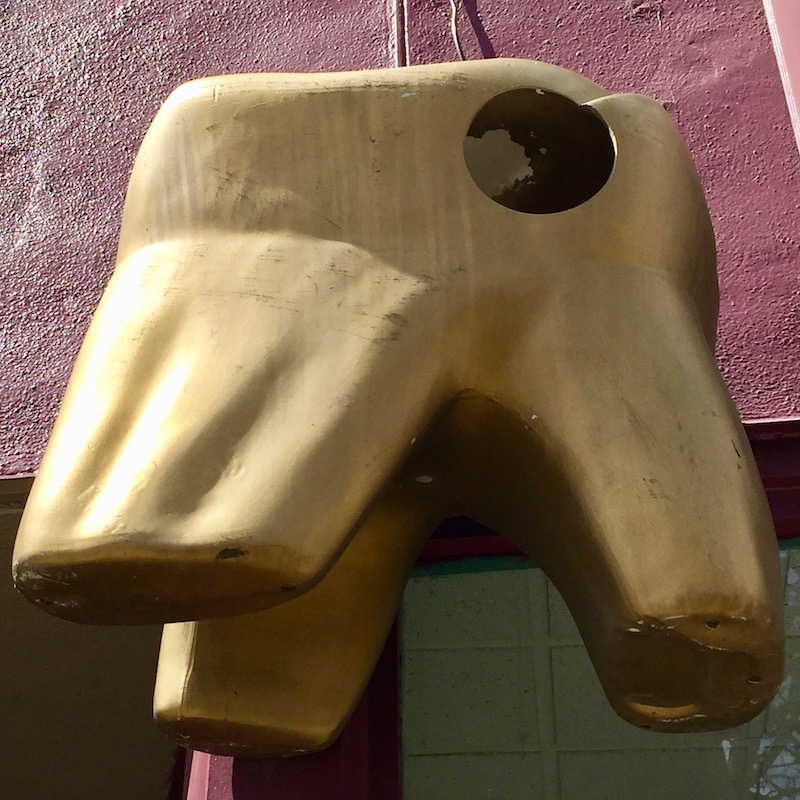
large plastic tooth painted gold hanging in front of dentist's office, Pittsburgh, PA

you can’t handle the tooth (art)!

Incisor Edition: Dental Art (Aug. 5)

If you haven’t been paying attention, you might have missed just how many giant teeth are out there in front of Pittsburgh’s–and the rest of America’s–dentists, orthopedists, and oral surgeons.

It’s a strange phenomenon that this one medical field chooses to advertise itself with large–often 3-dimensional–renderings of the body part to-be-worked-upon. You don’t see a similar number of outsized eyeballs, spines, feet, ears, noses, and/or throats. There is so much great dental art, we’re already most of the way to a sequel. Hopefully, that’ll give you something to look forward to in the new year.

Lift/Off: Kirsten Ervin’s Air Portraits Take Flight

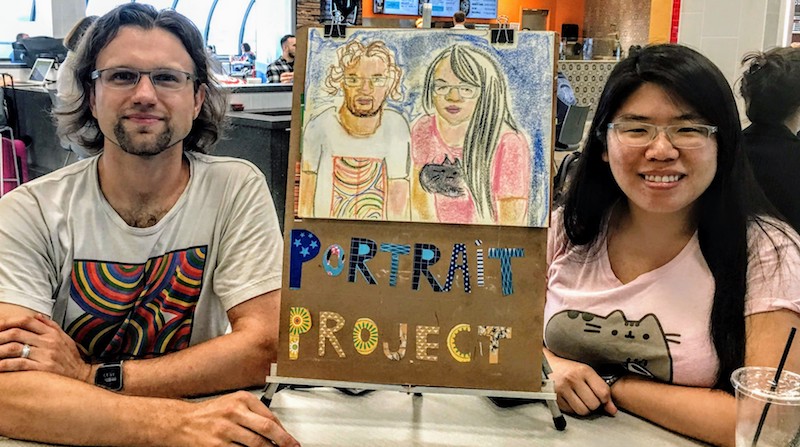
Passenger Portrait Project installed in glass case at Pittsburgh International Airport

Kirsten Ervin’s Passenger Portrait Project at Pittsburgh International Airport

The third floor of Pittsburgh International Airport’s “land-side” terminal is a single, high-ceilinged, wide-open space devoted exclusively to ticketing and baggage check-in. It hasn’t gotten the deluxe terrazzo floor re-do the “air-side” received a couple years ago, so you’ll still find a dated, early ’90s color scheme in the floor’s clickety-clack tiles.

Appearing like a glowing apparition rising from the dull gray is a an enormous illuminated display case that nearly spans the entirety of the north wall. Inside the glass is a series of hand-drawn, brightly-colored, chalk pastel portraits. The subjects are young and old, of all complexions and hair colors, smiling and noncommittal, dressed in business attire and printed t-shirts. Together they’re all part of the Passenger Portrait Project.

collage of 9 chalk pastel portraits created by Kirsten Ervin

Some of the 65 portraits created for Kirsten Ervin’s Passenger Portrait Project

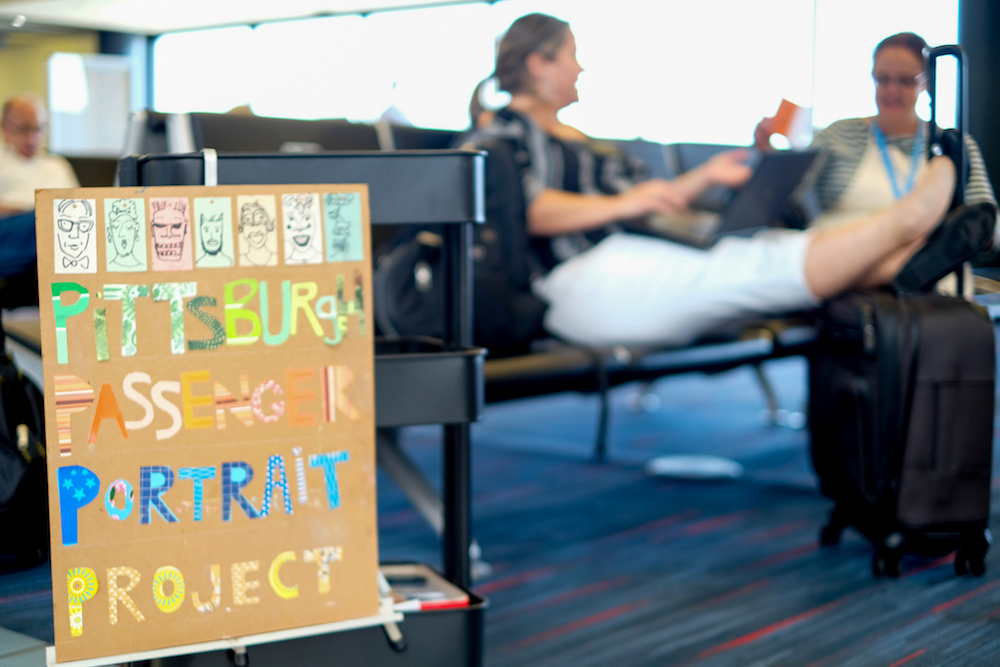
From the late summer through mid-fall, Pittsburgh artist Kirsten Ervin spent every Thursday at the airport. She wasn’t flying anywhere, nor was she there to drop-off or pick-up an air traveler. Ervin’s reason to make the trip each week was to meet strangers passing through the airway’s concourses. Those with an open mind and a few minutes to spare would have an original artwork created of them, right there on-the-spot.

“With passengers in a place like the airport you get such a wide cross-section of people, going different places, from many different cultures,” Ervin says, “It’s more diverse than, say, your average shopping mall.”

Artist Kirsten Ervin working on an "Air Portrait"

Kirsten Ervin in action at the terminal gate [photo: Pittsburgh International Airport]

The process began with three simple questions: Where are you going today? What’s the best trip you ever took? and If you could go anywhere in the world, where would you go? The participants’ answers to these are included alongside the final portraits.

From there, both artist and traveler/model were off on the brief but intense relationship that is a one-on-one, up-close drawing session.

“I really love the kinds of conversations that happen with people as you draw their portraits,” Ervin says, “You’re literally paying attention to every aspect of their face, their affect. You’re paying attention to every detail in a way that you don’t do with photography or other art forms.”

woman with dyed red hair holding partial portrait of herself

Passenger with in-process portrait [photo: Kirsten Ervin]

Ervin is a multidisciplinary artist who’s worked in paint and collage, hooked rugs and embroidery, puppetry and theater, as instructor and consultant. In previous work drawing “furries” at Anthrocon and an ongoing project having her Lawrenceville neighbors sit for her, Ervin is not new to quick-study figure drawing, either. That said, the Passenger Portrait Project is by far the biggest of these ventures, so far.

“Drawing or painting a portrait is a very deep meditation on another person as a human being,” says Ervin, “You have a very directed focus on a person for a period of time.”

male/female couple with partial portrait of themselves

Newlywed passengers with in-process portrait [photo: Kirsten Ervin]

The majority of the airport drawings were done in short 15-20 minute bursts when early-arriving passengers had some extra time at the gate before boarding. A photo was taken of each participant with their in-process sketch. Later, the 11″ x 14″ drawings received after-the-fact touch-ups, extra details, and filled-in backgrounds at home in Ervin’s studio.

The drawings preserve the rough, immediate energy in which they were created. They’re neither photo-realistic, nor cartoon or caricature. Instead, the subjects appear amused and disarmed, visibly pleased at the delight of this unexpected airport encounter and inevitably excited to be both engaging with a friendly face at the often-impersonal transit spot and embarking on a new adventure or returning home from a business trip.

Artist Kirsten Ervin with portrait subject at Pittsburgh International Airport

Ervin with portrait subject [photo: Pittsburgh International Airport]

You may have seen Tobey Fraley’s Robot Repair Shop and assorted other installations throughout the space, but that original artwork is created within the airport–expressly for exhibition there–may come a surprise.

In fact, Pittsburgh International Airport has an arts and culture manager (Rachel Rearick) and the Office of Public Art has a project manager (Derek Reese) who works in the space. PIT is among a very small group of international airports that support a full-time artist-in-residence program, complete with studio space at the terminal.

Ervin’s “air portraits” were created through the Art in the Airport program, which makes regular  calls for artists that provide visual art for several different display areas in the facilities as well as weekly live performances.

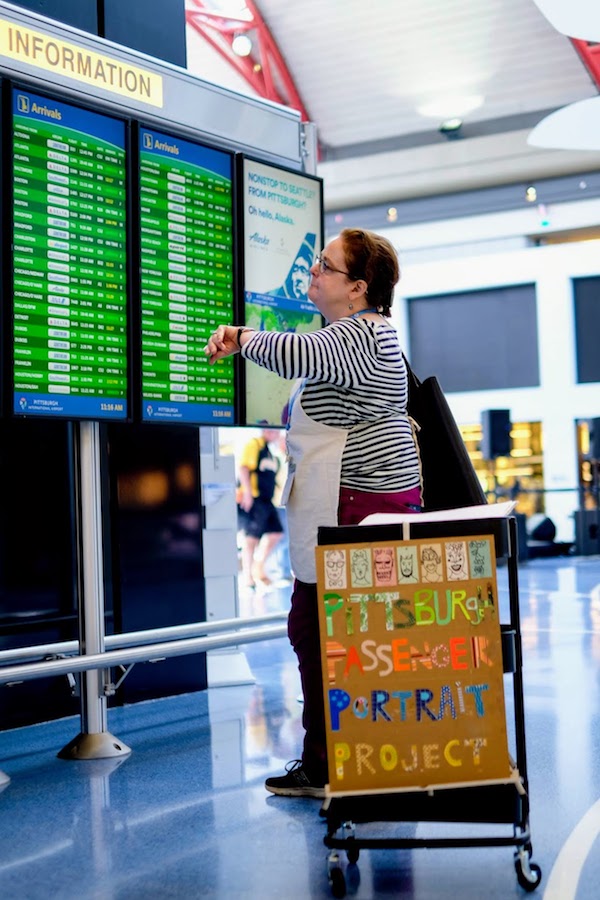
artist Kirsten Ervin looking at Pittsburgh airport's arrival information board

Kirsten Ervin at the estimated times of art board [photo: Pittsburgh International Airport]

Full disclosure: Pittsburgh Orbit has thrown out all journalistic integrity on this particular post. Kirsten Ervin is more than just some artist whose project we like. Over the years, she’s been a contributor, editor, and sounding board for the blog. Oh–and “Mrs. The Orbit” is married to one of our junior reporters.

That said, it’s safe to say we’d jump at reporting this story even if we weren’t living under the same roof. Kirsten’s excitement at engaging with strangers is infectious, as is her desire to skip the politics and get down to what’s really important–making connections between human beings. If that’s not what art–let alone air travel–is all about, well then maybe we should all just stay home.

Artist Kirsten Ervin in front of chalk pastel portraits of airport passengers

Kirsten Ervin with her Passenger Portrait Project installation

The Passenger Portrait Project will be up through late February, 2019. If you’re traveling by aeroplane between now and then, do yourself a favor and leave an extra few minutes early to check out the full display for yourself.


Follow Kirsten Ervin on Instagram @kirstenervinart and check out her web site kirstenervin.org

One More Time for the Skyline

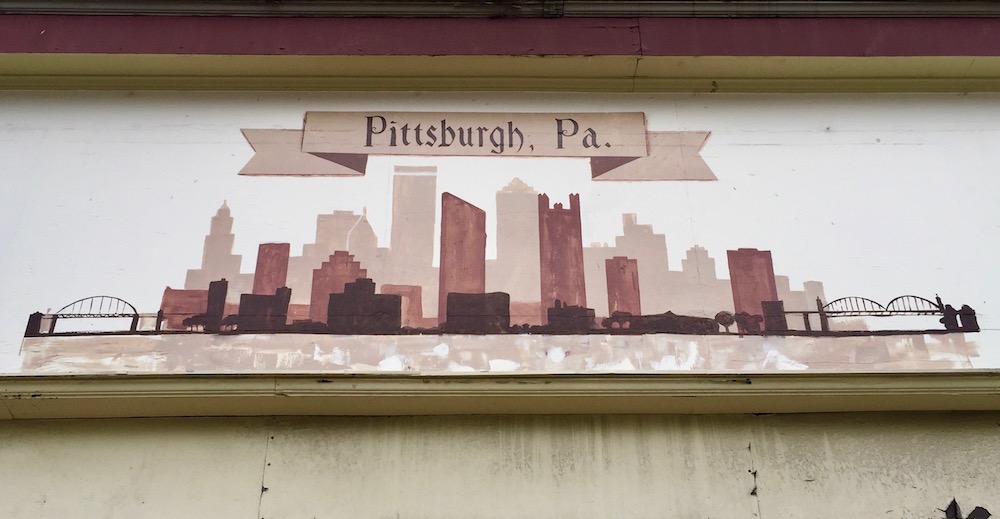
painting of Pittsburgh skyline on retail storefront

ye olde city: Arnold’s Tea House, Northside

Close your eyes. No, wait–open them back up. You’ll need them for the rest of the piece.

Imagine the view of downtown Pittsburgh, straight-on, looking due east. You know the scene, even though few of us actually see the city from this middle-of-the-confluence angle. There are the spiky towers of PPG and Fifth Avenue Place in the foreground, Grant Street’s tall buildings farther back, various middle-height apartment and office buildings. The Fort Pitt and Fort Duquesne bridges bookend the whole display.

This is remarkable because–unless you’re a riverboat captain or Canada goose–you probably never see the city from this viewpoint. Sure, you can get a slimmed-down approximation standing near the fountain, looking back across Point State Park. But unless you end up on one of the Gateway Clipper party boats or happen to take a canoe out on the water to just the right spot, you won’t see the real thing.

That image, though, is instantly recognizable because we see it so often in so many places.

In this, the third collection of Pittsburgh skyline art, we’ll round up the latest findings. Links to the earlier stories in the series are included as well, below.

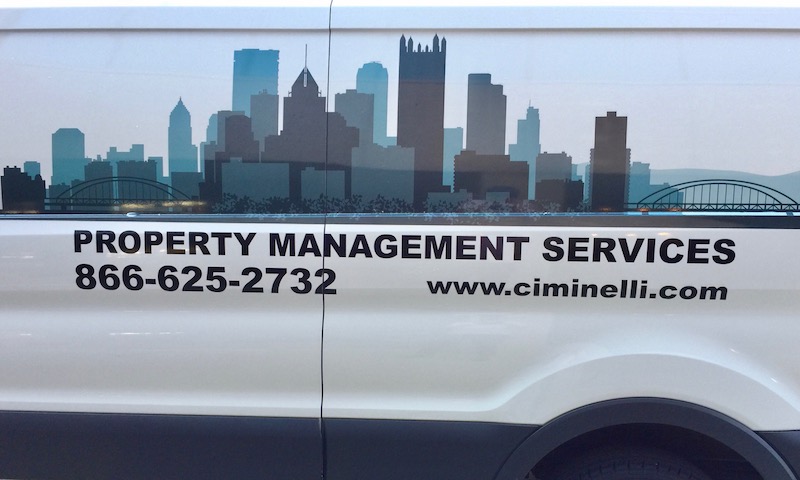
Ciminelli Property Management Services van with image of Pittsburgh skyline

Cinemascope city: Ciminelli Property Management Services van

Ciminelli Property Management and Arnold’s Tea House (above, top) have remarkably similar renderings of the downtown skyline. Both are from that same midde-of-the-rivers perspective with wide cinematic dimensions and both use the device of representing depth via shifting color values within the same palette.

Arnold’s has a folksier appeal as it’s clearly been painted by hand, directly to the tea shop’s wooden façade. Whereas Ciminelli is a pro job reproduced for the company’s maintenance vans (and likely other corporate materials). We’re fans of both.

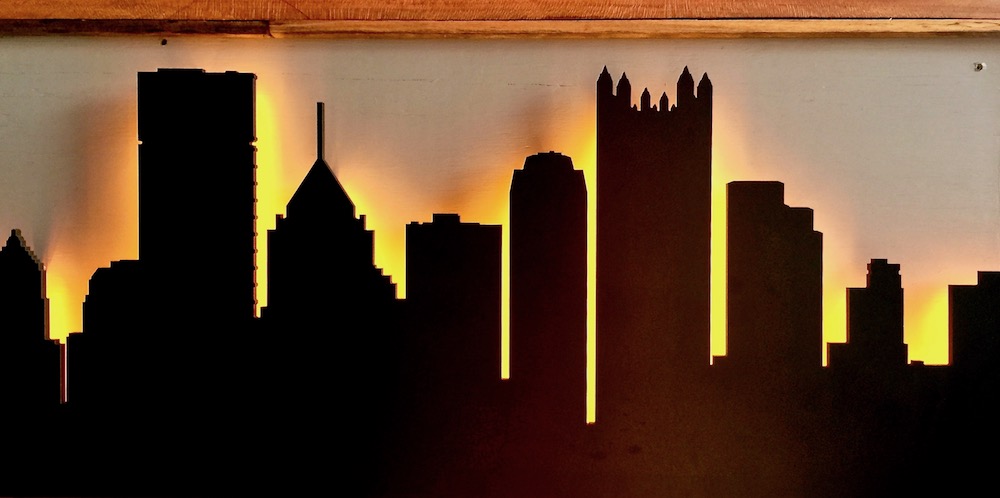
artist rendering of Pittsburgh skyline in restaurant

glowing city: Railroad Grill & Tap Room, Bridgeville

The décor for Bridgeville’s Railroad Grill & Tap Room includes this innovative flat skyline in black silhouette, backlit by glowing yellow-orange lights. It’s a nice touch that likely goes unnoticed for many of the restaurants’ patrons inevitably dazed by the dozen or so sports-focused televisions. Yeah, The Orbit would proudly eat the onion rings and quaff the porters and brown ales at an all-skyline tavern. For now though, we’ll live with Railroad Grill’s hip height offering at the host station.

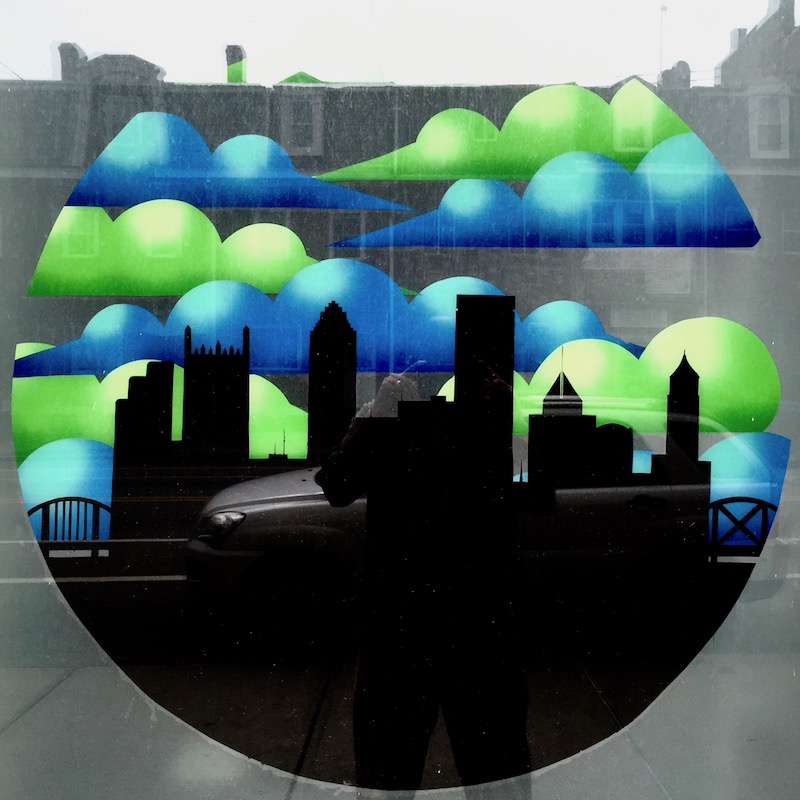
storefront window image including Pittsburgh skyline

pop art city: storefront skyline, Bloomfield

Pretty sure this one is gone now, so be glad The Orbit was there to remember it for you.

Über-stylized green and blue bubblegum clouds hover over downtown, appearing in crisp black silhouette in the wordless logo for an unknown Bloomfield business. This one is interesting in that we’re looking at town from the Hill District, facing west (with PPG on the left hand side) or the installers just chose to place the image on the inside of the office’s glass window making their customers see the inverse. If that’s the case, somebody goofed. Maybe that’s why this business isn’t around any more.

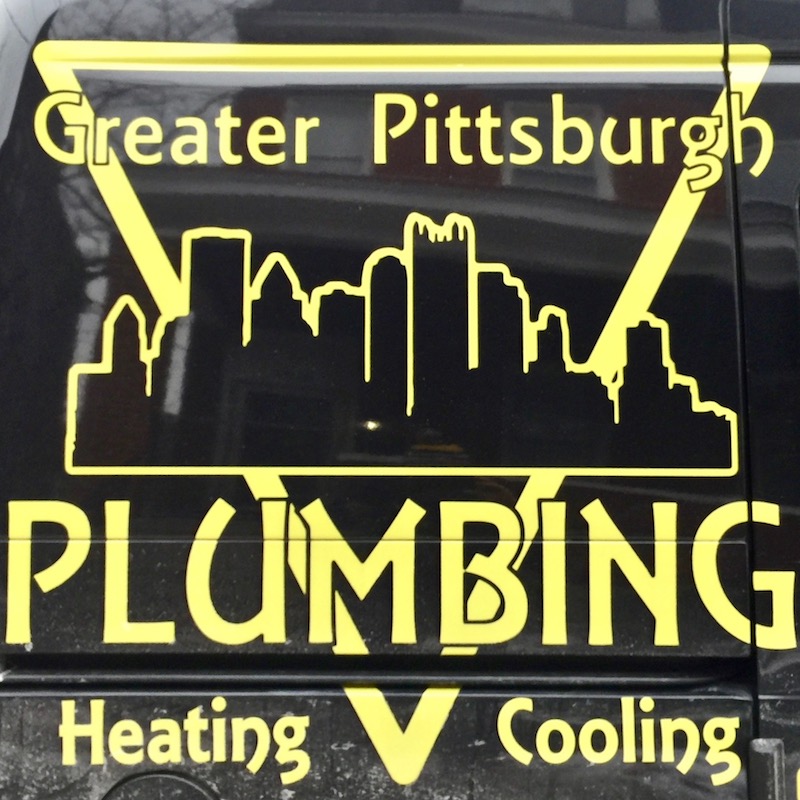
service van for Greater Pittsburgh Plumbing, Heating, and Cooling with Pittsburgh skyline

hot and cold city: Greater Pittsburgh Plumbing, Heating, and Cooling logo

Greater Pittsburgh Plumbing doesn’t fool around with city iconography. The company logo–repeated on three sides of the crew’s work van–features a giant golden triangle, black-and-gold color scheme, and a spot-on downtown skyline. We can’t attest to how well GPPHC can snake a drain or run a new service line, but they get a triple-A rating for hometown pride.

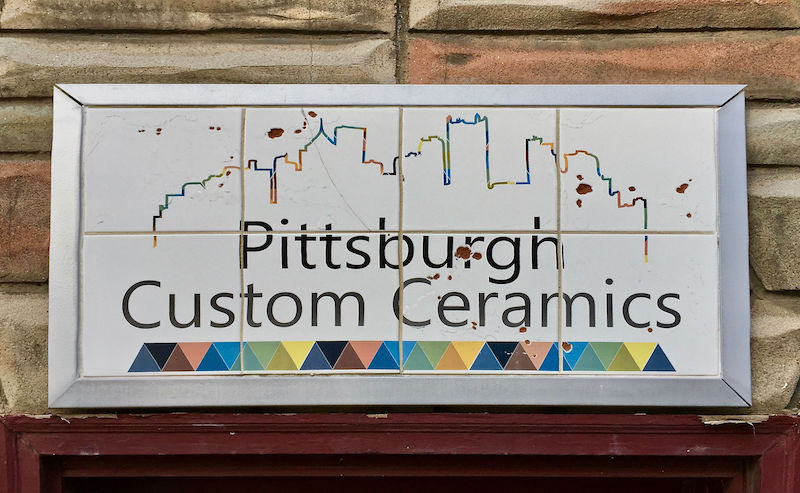
retail store sign for Pittsburgh Custom Ceramics with outline of Pittsburgh's skyline

grout city: Pittsburgh Custom Ceramics, Sharpsburg

Pittsburgh is famously the Steel City and thanks to Alcoa, PPG, etc. we could also legitimately claim to be Aluminum City, Glass City, and/or Paint City–although none of those sound quite as cool. [Also, Cleveland might have a better claim to that last one.]

Pittsburgh Custom Ceramics, operating out of a small storefront on Sharpsburg’s main drag, throws in one more raw material by rebuilding downtown in 6″ x 6″ tile. Here, the familiar skyline is rendered in a single continuous outline that seems to cycle through all colors of the rainbow.

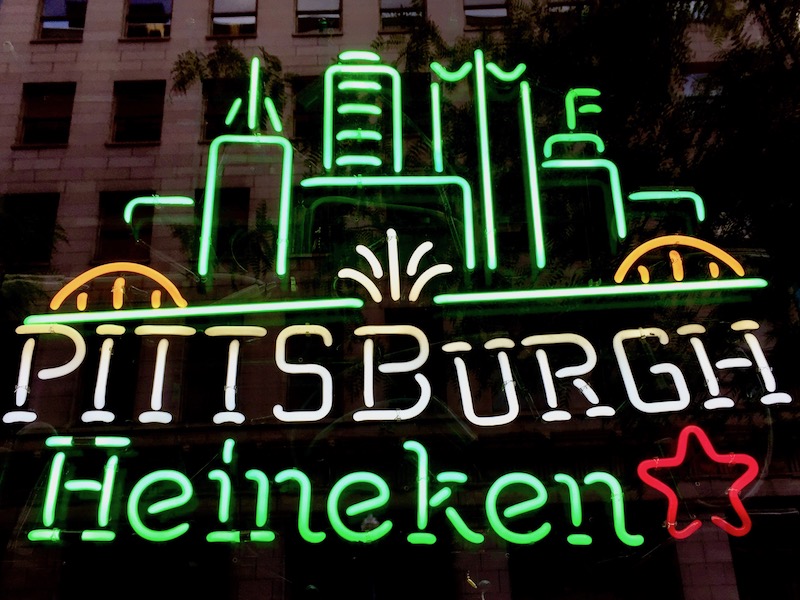
neon sign for Heineken Beer including Pittsburgh skyline

neon city: some bar Downtown

In the most gestural of today’s offerings, Pittsburgh is simplified down to three tall buildings–Fifth Avenue Place, the U.S. Steel tower, and PPG–plus two bridges and the fountain at Point State Park. It’s all been created in neon light for a Heineken Beer sign in the window of bar that may or may not still exist. Count it.

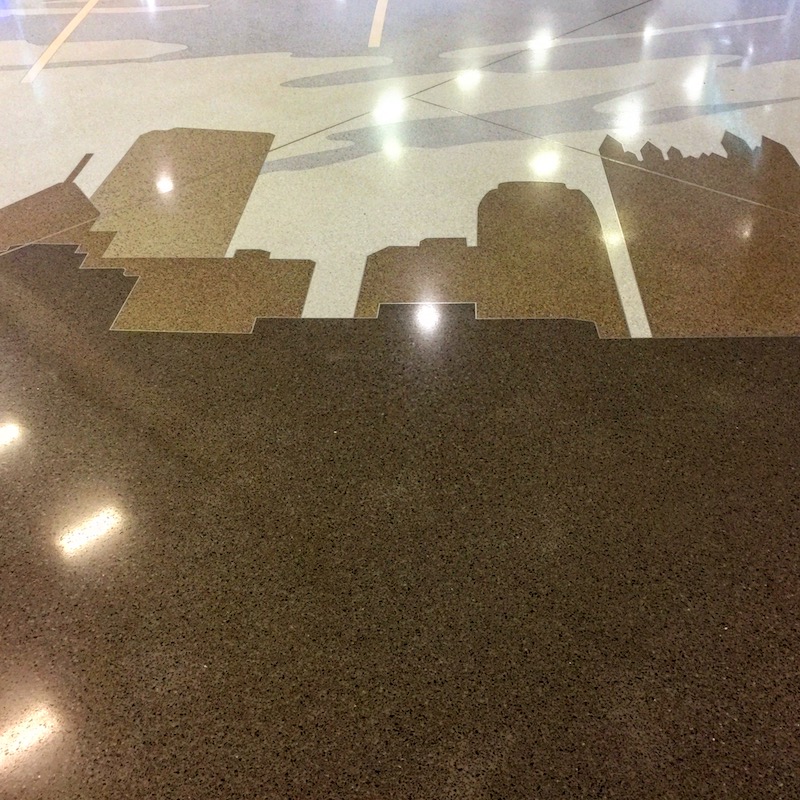
terrazzo tile floor of Pittsburgh International Airport with rendering of Pittsburgh skyline

terrazzo city: Pittsburgh International Airport

Anyone visiting the airport in the last four years has noticed the massive floor project. Gone are the dated old clackety-clack tiles, replaced with a truly gorgeous terminal-wide terrazzo floor depicting four large-scale scenes.

One of these includes the downtown skyline, cast in amber hues from that same looking-east vantage point. It’s not as pretty as the radiant blue skies and stylized cloud forms elsewhere in the design, but the nods to legit downtown buildings–you know which is which by now–make this a winner, too.

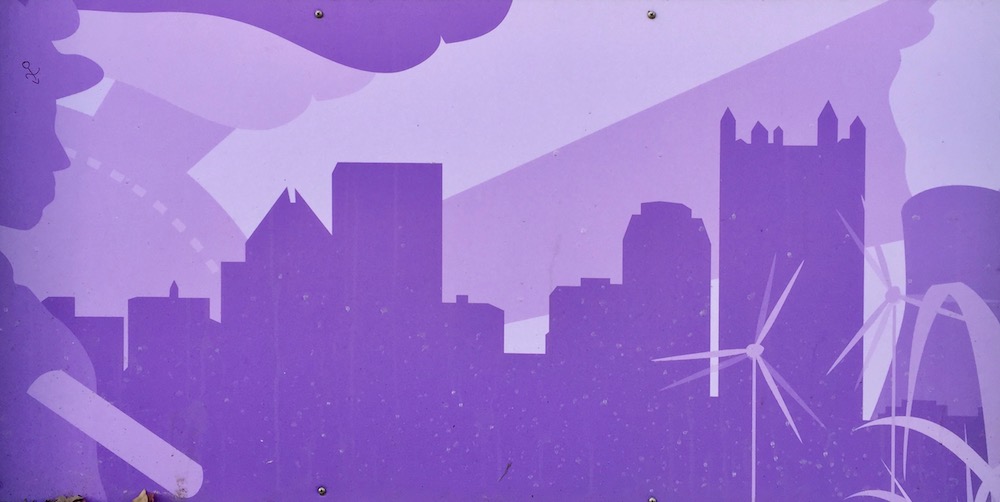
painting on wood of Pittsburgh skyline

erotic city: Strip District

You’ve been past this one a zillion times, but it may never have registered. Heck–this blogger circumnavigated the whole building–an otherwise nondescript windowless warehouse on Liberty Avenue–which is decorated with a dozen similar-styled paintings, and I still can’t tell you what the damn place is.

Regardless, the downtown skyline–plus a silent worker, wind farm, and nuclear reactor–look great in their various shades of purple. Over at The Portland Orbit, the crew was Johnny-on-the-spot last year with a Prince tribute to his signature color. If we had been thinking, this would have been Exhibit A.


Got a tip on a cool version of the Pittsburgh skyline? Hook us up!

See also:

The Missing Link: Making the Connection via the Mon Wharf Switchback

Mon Wharf walkway in downtown Pittsburgh, PA

Mon Wharf Landing, looking east towards the Smithfield Street Bridge, downtown

One glorious day–and a Sunday at that! Deep blue skies, whispy cirrus clouds, bright sunshine, and seasonally optimistic temperatures requiring only a long-sleeve shirt. Those who failed to leave the indoors on this 24-hour reprieve between Thanksgiving’s elongated drizzly gloom and the following Monday’s snow-filled temperature plunge should feel all the guilt and remorse they deserve.

Just jaggin’–no judgment, here. This blogger, however, wasn’t going to miss the opportunity. The Orbitmobile was sprung from its hutch, tires inflated, and chain oiled. We were off to town on a mission to check out the brand new Mon Wharf Switchback.

Mon Wharf Switchback bicycle/pedestrian ramp in downtown Pittsburgh, PA

The new Mon Wharf Switchback Ramp, downtown

It’s been said that Pittsburgh is the only city with a front door. Indeed, the approach from the morass of Parkway West suburbia/airport/I-79 to the awestruck oohs and aahs emerging from the Fort Pitt Tunnel into a seeming city from nowhere is truly spectacular, unparalleled, and–I can attest, twenty-some years on–never gets old.

That said, one can only reach that front door with a motor vehicle. For those arriving in our fair city by bicycle–and yes, thanks to the Great Allegheny Passage trail, plenty of newcomers get here on two wheels–it’s a less dramatic entrance. That changed, at least a little bit, with the completion of this last connection point allowing car-free passage into town from the Smithfield Street Bridge.

bicycle/pedestrian ramp to Point State Park in downtown Pittsburgh, PA

ramp to Point State Park

As of now, the incoming cyclist may exit the Smithfield Bridge to be gently guided down to the previously-existing, but hard-to-get-to Mon Wharf Landing parklet hugging the riverbank. The method is a long, graceful switchback ramp connecting 40 or 50 vertical feet from bridge deck to walkway below.

The park a lovely open space with a wide walkway, stone resting spots–they’re not quite benches–and a thin strip of green grass. Native maple trees–presumably planted back at the park’s opening in 2009–have managed to cling to their deep red fall leaves long after wimpier peers dropped all outerwear weeks ago.

bicycle/pedestrian entrance to Point State Park via the Mon Wharf trail in downtown Pittsburgh, PA

gateway to Point State Park

The new ramp doesn’t just connect downtown with the South Side. One can now, in theory, ride continuously from Point State Park all the way to our nation’s capital without having to contest with any car traffic. Three hundred and thirty-five miles, in fact, as the crow dodges and weaves, crosses the Alleghenies, ducks through tunnels, and follows the curling banks of various old rivers.

That is one hell of an accomplishment for long-distance, intrastate bicycle recreation[1], but the new ramp that allows connection from the upriver side of the Smithfield Street Bridge through to Point State Park–is likely going to be much more useful to the city’s cyclists for their around-town commutes and pleasure cruises.

We’ll spare the particulars, but if you’re a city cyclist, you know getting from, say, Penn Avenue to the South Side was a pain in the ass. Thanks to this new infrastructure, one can make that ride safely and with a spectacular 360° tour of all three rivers.

traffic sign reading "Motor vehicles only: no pedestrians" on Mon Wharf bicycle/pedestrian path in downtown Pittsburgh, PA

The Mon Wharf bicycle/pedestrian route: “Motor vehicles only: no pedestrians”

Though the ramp has been publicly accessible for a week or two, the opening will be made official with an event this Tuesday. As of last weekend, there are still some final touches to the overall route we hope they’ll eventually get to.

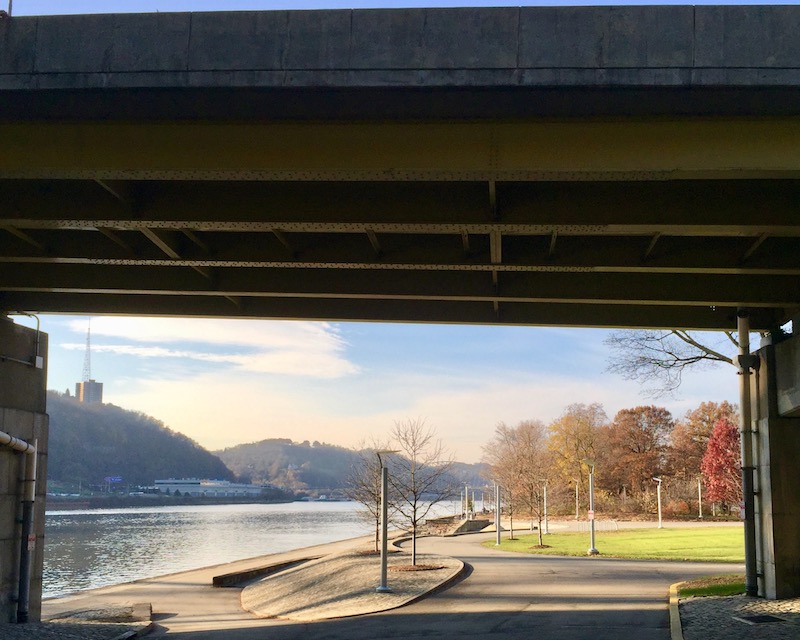
Most notable is the lack of signage directing the connection-curious to and from Point State Park. From the latter, one must–on blind faith–go under the bridge ramp overpass, pass a maintenance vehicle parking lot, along the thin connection beside a highway ramp, and then down the fairly steep ramp to the Mon Wharf. This only-possible route takes the walker/bicycle rider directly under a (roadway) sign with the confusing message MOTOR VEHICLES ONLY: NO PEDESTRIANS (see photo, above). [This is a minor quibble that we assume city crews will get to–and may already have.]

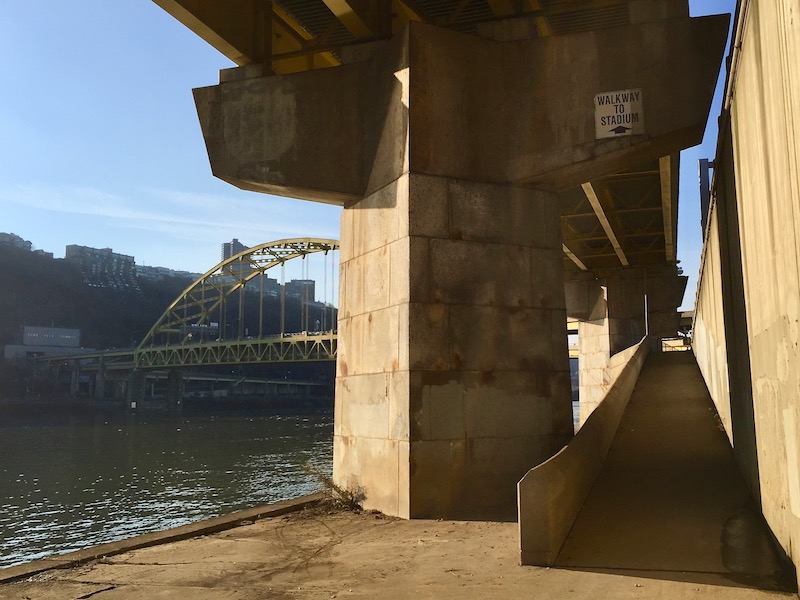
Mon Wharf path in downtown Pittsburgh, PA

Mon Wharf Landing, looking west towards the Fort Pitt Bridge

The Mon Wharf Landing and switchback ramp are projects from Riverlife and the City of Pittsburgh. The commitment both have shown toward making the city bike- and pedestrian-safe, friendly, and accessible should absolutely be recognized and praised. From the (mostly) bicycle-based Orbit staff, a very big thank you–we’ll be putting the new route to use as often as we can.


[1] Between the GAP and C&O, the two trails run through Pennsylvania, Maryland, West Virginia, Virginia, and the District of Columbia.