The Sad Toys of Homewood’s “Killing Fields”

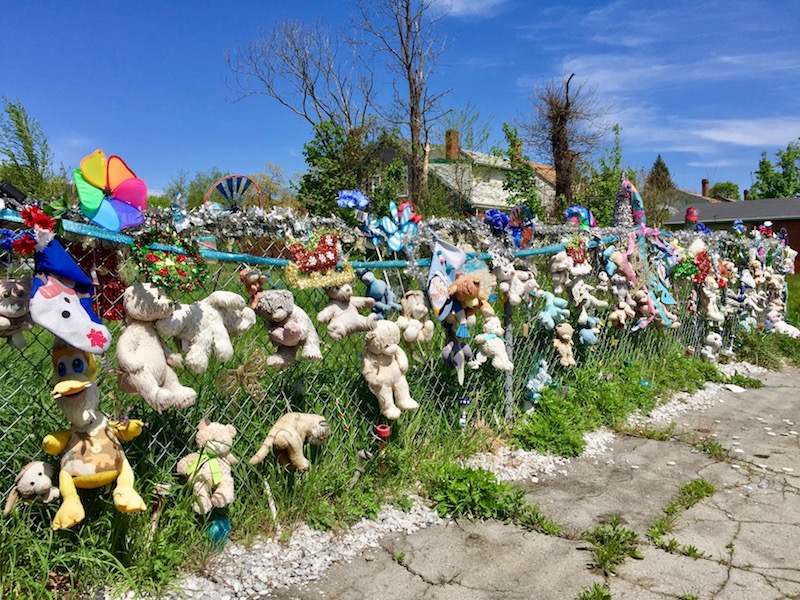
chain link fence decorated with stuffed animals, Pittsburgh, PA

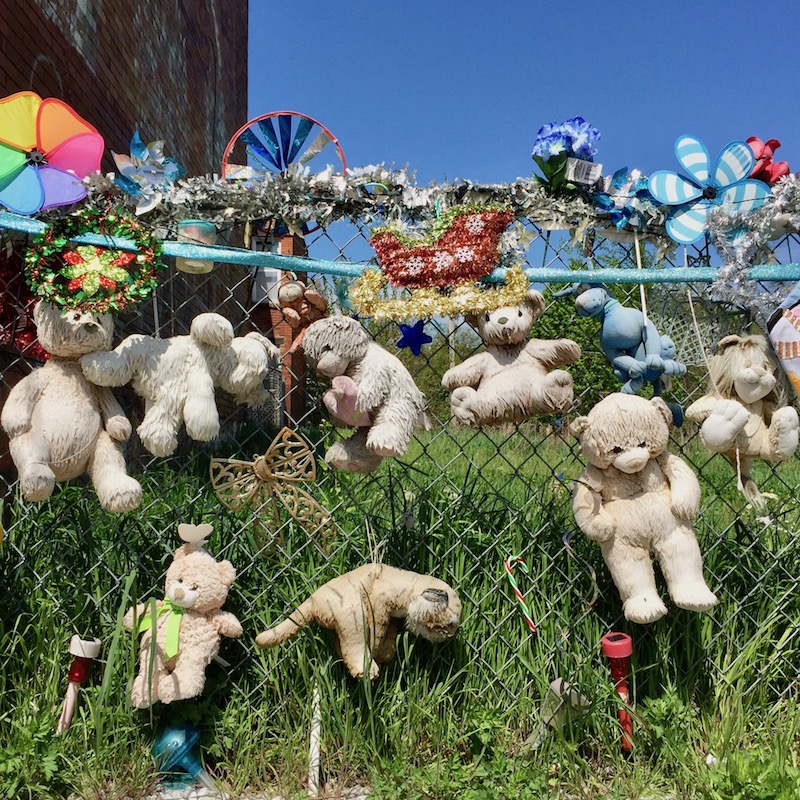
The sad toys of “The Killing Fields”, Homewood South

Against deep blue sky and thick green long-overgrown grass, the fuzzy little bodies pop from the chain link fence they cling to. Tigers, monkeys, floppy-eared dogs and bunny rabbits fill the ranks, as do a lion, zebra, and giant duck. We didn’t know dinosaurs could be cuddly and furry, but there’s one of those too.

Overwhelmingly, though, the majority in this population is the teddy bear. Dozens of bears hang from the fence and nearby telephone pole: in a bow tie and with a Valentine’s heart, dressed in a Scotsman’s plaid and with matching Christmas hat and scarf, still buoyantly wide-eyed awake and drooping limply with the weight of the world.

telephone pole decorated with stuffed animals and Christmas garland, Pittsburgh, PA

The long, east-west alleys of Homewood are, like many sets of children born to the 1970s, group-named with a common initial letter: Ferdinand, Fletcher, Fuchsia, Fielding, Forest, Felicia, Fleury. Heading south, the very last of these–before you cross Hamilton Avenue and both street grid and naming scheme change–is Formosa Way.

The little alleyway is typical of many old Pittsburgh backstreets–a single lane, weedy, cracked, and stained with decades of practical use and a typically low seat on the Department of Public Works priority list for maintenance. Formosa Way runs parallel between Kelly Street and Hamilton Ave. and (at least at one time) was the main entrance for many row houses that fronted the alley for blocks in either direction.
chain link fence decorated with stuffed animals, Pittsburgh, PA

All things considered, the 7300 block of Formosa Way looks a whole lot better than many Pittsburgh alleys. There’s next-to-no litter, nor signs of illegal dumping. The backyards of the row houses facing the adjoining streets may be untamed, but are now lush, tall-grassed expanses that bring welcome deep green open space to what at one time must have been dense blocks of brick worker housing.

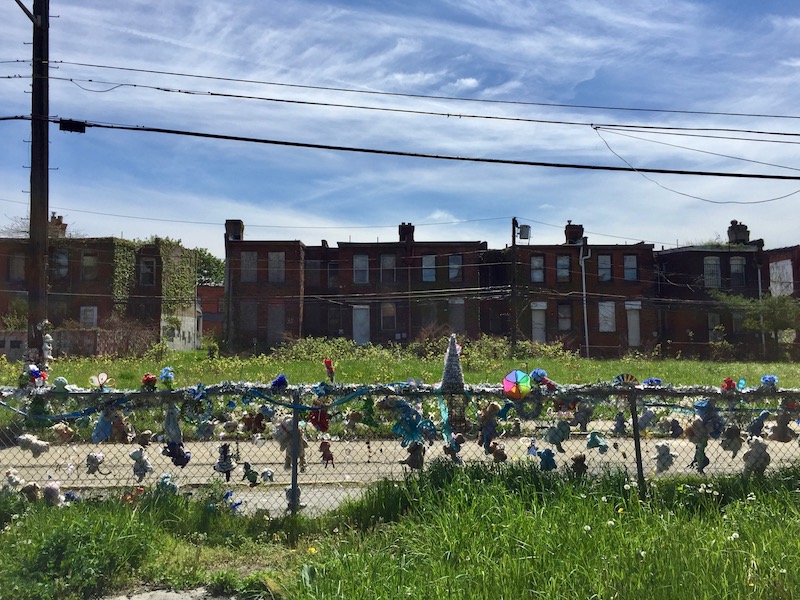
What’s not so expected is the stretch of thirty-some feet of chain link fence, now bordering an overgrown vacant lot, plus one service pole across the alley. Attached to the intertwined steel strands and lashed to the wooden pole are scores–a hundred or more–soft children’s playthings along with assorted pinwheels, holiday decorations, and Christmas garland. These tributes have clearly been here for some time: their synthetic fur is matted, gnarled, and bleached white in years’ worth of sun, rain, frost, and thaw.

boarded-up row houses and chain link fence decorated with stuffed animals, Pittsburgh, PA

It’s a strange realization that the small patch of earth one has bicycled-through mere hours before is known locally as The Killing Fields…or, at least, it was at one time*. That particular name arrived during the crack-fueled gang violence of the 1990s, but persisted (we understand) until quite recently. Right here at Formosa and Collier, several blocks of derelict housing were razed in 2012*. A short set of five boarded-up row houses immediately adjoining the fence appear headed for the same fate.

That said, on this fine, bright sunny Sunday early afternoon, the blocks around Formosa Way feel much more like the Sunday-go-to-meetin’ fields or the wash-the-car-with-the-radio-on fields. Those activities, along with stoking up big barrel charcoal grills and neighbors swapping gossip on front porches are the most obvious occupations to the peddle-by blogger.

telephone pole decorated with stuffed animals and Christmas garland, Pittsburgh, PA

No label is attached to the fence of sad toys, there is no description for the installation, and attribution for the collection is not given. But what’s here seems obvious enough for even the densest of outsiders to put two and two together. This pair of diametrically-opposed and inseparably-linked events–decades of street violence and the impromptu memorial to lost innocence–say so much about the deep loss generations of Homewood families must have felt.

If each stuffed animal on the Formosa Way fence represents just one casualty in the neighborhood’s struggle, it is a weight no single community should have to bear. It’s more likely that not every victim received a tribute here–that a suitable memorial may need to be twice, three or more times greater to accurately represent the actual loss. For now, we can only hope the collection of playthings stops right where it is.
chain link fence decorated with stuffed animals, Pittsburgh, PA

Final note: While most Pittsburgh Orbit stories sit just fine in the quasi-legitimate world of “speculative journalism”, this one does not. It’s crying out for more information from the Homewood community, the creators of the fence, residents of Formosa Way, etc.–we know this. Time and schedule wouldn’t allow that kind of “real journalism” for this week’s post, but we absolutely plan on continuing the story.

If you live in Homewood or have information on the Formosa Way fence, we would love to hear from you.


“Demolition gives Homewood residents hope”, Joe Smydo, Pittsburgh Post-Gazette, April 5, 2012 and “The ‘killing fields’ demolished in Homewood”New Pittsburgh Courier, 2012.

Heroine Epidemic: Overdosing On The Ass-Kicking Lady Heroes of Heroineburgh

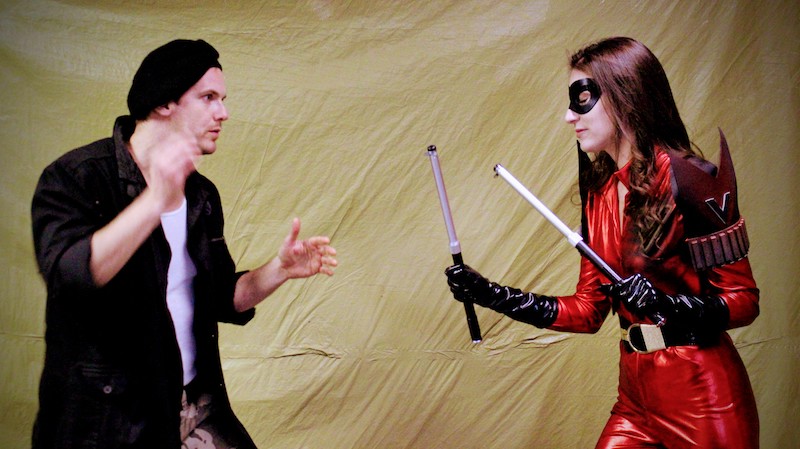
Heroine Vendetta attacks the bad guy with her escrima staves

Heroine Vendetta (Cat Orlando) attacks the bad guy with her escrima staves [From Episode 4: “Trans-Adriatic Express”]

Public health warning: a highly-addictive opiate cocktail of science, camp, Lycra, estrogen, and ass-kicking is about to drop on metro Pittsburgh bigly. The special effects of this drug are not entirely understood–heck, they may not even be fully rendered in the final cut yet! In a strange turnabout, the pushers are law enforcement, their justice meted out in killer vines, laser beams, and escrima staves.

Heroineburgh [note the important extra “e“] is a new, live-action, original character superhero series set in (real) Pittsburgh. The Orbit sat down with series writer/producer/director Manny Theiner to discuss the world he and his team have created, roots of his fandom, and where the stories are headed. Heroineburgh is set to make its debut with pair of big-screen showings on April 30 (details below).

Heroineburgh comic book graphic art by Jason Wright, the current colorist on DC's Green Lantern

Heroineburgh comic book graphic art by Jason Wright, the current colorist on DC’s Green Lantern

Theiner, a lifelong fan of superheroes and graphic storytelling, describes himself as a “second-wave or classic liberal feminist”. He was inspired to initiate the series after experiencing Pittsburgh Batman–another locally-produced superhero play/video. While he enjoyed the production, it featured almost no female characters and some of the jerks deserved a kick in the keister.

Each episode of the anthology-style series features unique superheroines, evil-doers, and dressed-to-kill costumed villains. We’re told the first [planned twelve-episode] series will end with the characters uniting in a Pittsburgh Heroine League.

Becky Bloom becomes heroine Gardenia in her house

Becky Bloom becomes heroine Gardenia (Laurie Kudis) in her house [From Episode 3: “Everything’s Gone Green”]

Ultimately, Heroineburgh‘s greatest strength is Theiner’s inventive characters and concise, bite-sized storytelling. The standard-issue costumed hero/quasi-science tropes are deployed like exclamation points in Batman‘s fight scenes, but there are also references to the screenwriter’s arsenal of deep-read science, philosophy, and re-envisioned mythology that give the stories an exciting and welcome depth.

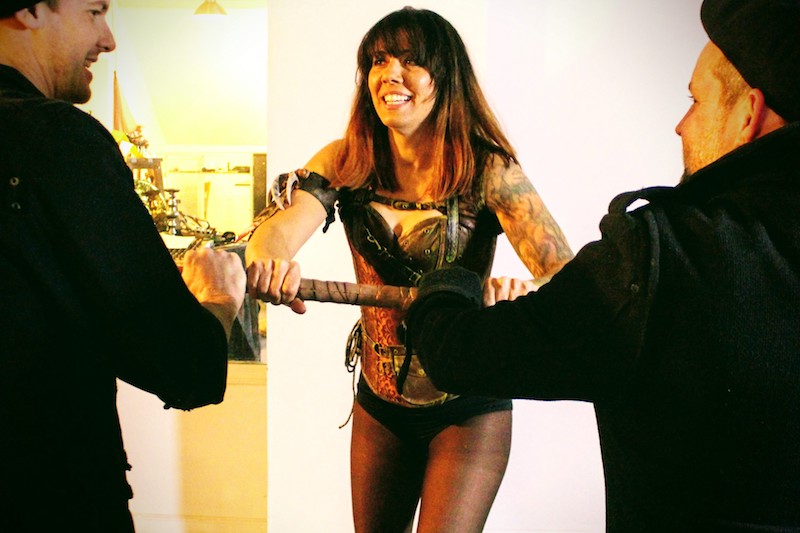
Cinematographer/sets designer J. Wayne, editor Frank Farnsaglio, and color correction/effects artists Latent Imagery make up the rest of the technical team. These guys know what they’re doing: the final product looks good, manages to slyly gloss over the improvised studio’s many challenges, and packs more than a few punches.

Heroine Devana fights two thugs from the Serbian mob

Heroine Devana (Mary Bielich) fights two thugs from the Serbian mob [From Episode 4: “Trans-Adriatic Express”]

But let’s cut the crap: you’re not going to shell out five clams for Color-Correctionsburgh. Who are these ladies with the funny names, freaky powers, high style and kicks to match? Who will we turn to when the Serbian mob pops out of the Fort Pitt Tunnel? What hero will deal justice to the villainess Devorra, who “gains the power to emit pollen from her hand, turning anyone who breathes it into her slave drone” or the evil Dr. Shvitz and his global warming earth sauna?

man in lab coat with evil scowl on his face

Evil Dr. Shvitz (Mike Shanley)

Meet Gardenia–the earth mother–who draws energy from the soil and uses the plant kingdom as both arsenal and army. Put under extreme stress, Gardenia’s appendages morph en bois with the invocation of Ironwood fist.

There’s Cybrina, a blue-haired “genius computer programmer” who takes big data to a new dimension. She “gains the powers of electricity and cybernavigation–the ability to transform herself into data and enter any computer system”. In Cybrina’s story (Episode 1: “Anger is an Energy”), she’ll team with fellow technologist Red Gina to battle prejudice and harassment in new Pittsburgh’s tech sector.

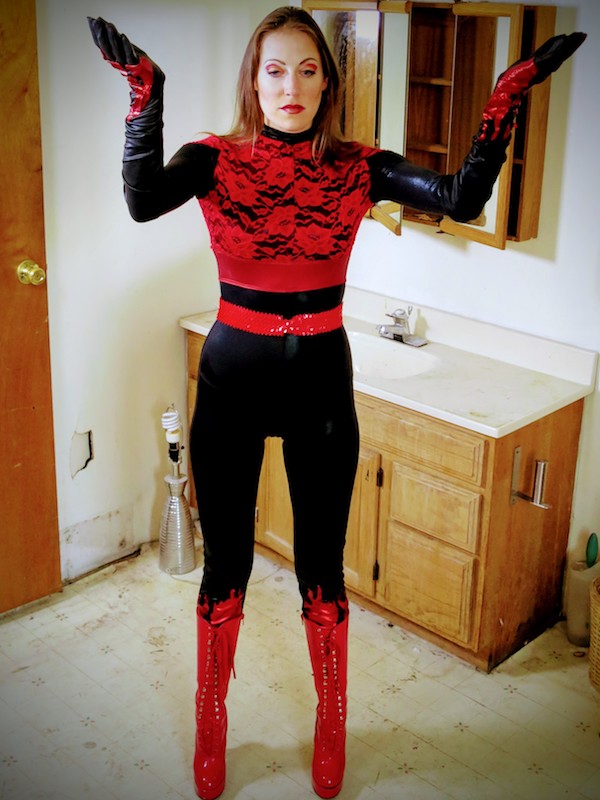
Helena Brent transforms into heroine Hellfyra in the Brillobox bathroom

Helena Brent transforms into heroine Hellfyra (Courtney Elizabeth) in the Brillobox bathroom [From Episode 2: “I Bring You Fire”]

Hellfyra [just try to get the Oak Ridge Boys tune out of your head now!] may be a “Satanist superheroine with demonic powers”, but even Lucifer’s goat draws the line at theft…if it involves a heavy metal band’s touring gear. When Hellfyra locks devil horns with Mesmera, mistress of hypnotism, look out.

As the “Italian spirit of vengeance”, Vendetta has a family story complex enough to make Mario Puzo grab a note pad with his cannoli. Suffice to say it involves a mafia princess, a capo and his consigliere; tragedy, intrigue, deception, and revenge; Sicily and Bloomfield. Essere Vendetta sicuro, Pittsburgh ha bisogno di te!

Villainess Red Gina and computer-savvy heroine Cybrina

Villainess Red Gina (Jessica Renae) and computer-savvy heroine Cybrina (Nicole Palmer) [From Episode 1: “Anger Is An Energy”]

Devana is the Slavic goddess of the hunt, whose old-world Eastern European past will chase her down in present-day Pittsburgh. It will be touch-and-go when the heroine crosses paths and trades blows with “superhuman mercenaries” Clockcleaner and Earthmover in a Bloomfield warehouse. Get the large popcorn as you won’t want to miss a second of Episode 4: “Trans-Adriatic Express” to see how this plays out.

Let’s get something straight: The Dark Knight or Guardians of the Galaxy this ain’t. Theiner and crew filmed these first four episodes on a minimal budget, using borrowed sets, with “casting by proximity” kismet.

Full disclosure: this blogger was booked for extra work after running into Manny on the street and spent a cold February evening on-set and in-lab-coat working as a hard hat-wearing knowledge worker at the fictional Cybertech. There, he had the privilege of getting beaten up by the rampaging Red Gina multiple times–one of which involved a plate of Chinese food tossed in the air from an upended break room table.

From that experience, I can tell you that on the Heroineburgh set, preparation is handed-out on a need-to-know basis and third takes are considered bourgeois time-wasters. Regardless, watching preview clips from the not-quite-final versions reveals the filmmakers know how to do a lot with a little, effectively turning the grab-the-camera/let’s-put-on-a-show harried scramble into a quick-paced enjoyable campy romp. Be there at the premier or miss out on a good time.

man in lab coat and hard hat in employee restroom

The author, on set as Cybertech employee in Episode 1 [photo: Pittsburgh Orbit]

 Heroineburgh episodes 1-4 are now available for download from heroineburgh.com.


Production photos and graphic art provided by Heroineburgh, except where noted.

Easter Special: You Can’t Make an Omelet Without Finding Some Eggs

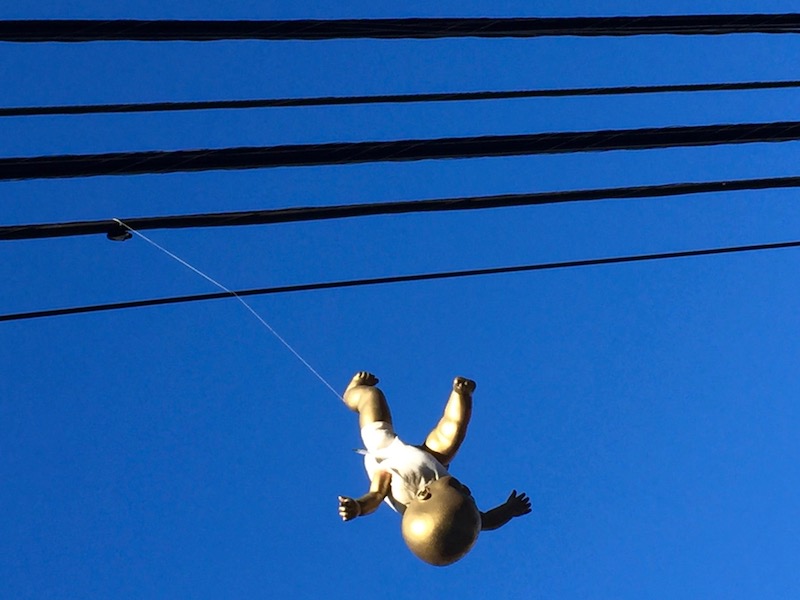
baby doll painted gold and hanging from telephone wires, Pittsburgh, PA

Golden baby, Lawrenceville

Matched ceramic salt and pepper shakers, ruby glass, bobbleheads, Hummel figurines, cookie jars–people collect all kinds of goofy stuff. Bakelite AM radios, Santas, and state plates, World’s Fair trinkets and glass insulators from telegraph lines. David from our West Coast rival Portland Orbit has some unique collections: cans of knock-off Dr. Pepper, eyeglass stems found on the street, other peoples’ grocery lists.

Easter may come only once a year, but every day can be the Orbiteer’s figurative egg hunt–which is really just the primordial collecting impulse–and it doesn’t cost a penny or take up any room on your shelves. Spotting is a lifelong and year-round habit: take the alley, poke behind the bushes, look down at the pavement and up in the telephone wires. [Oh, Golden Babies, how we pray we haven’t seen the last of you!]

Today, whether you’re a committed church-going, brunch-eating Easter reveler or full-on dance-naked-by-the-bonfire pagan, we celebrate some of the Orbit‘s favorite any-time/all-year-long city egg hunt targets.

protractor glued to metal driving barrier, Pittsburgh, PA

Pittsburgh protractor, Allegheny River Trail, Millvale

Pittsburgh Protractors are the easy money, chump change, fish-in-a-barrel of local urban collecting. In that way, though, they’re a great entry point–the gateway drug–to hardcore egg hunting. Either way, you have to respect the work of the protractor perpetrator(s) and we couldn’t not include the protractors in the list. There are just so damn many of the little plastic doo-dads glued all over the place that if you’re in bicycle-accessible city limits and keep your blinkers open, you’ll probably spot a few even if you’re not really trying.

ghost sign for "Arsenal Brand Meat Products" painted on side of brick building, Pittsburgh, PA

Ghost sign: Arsenal Brand Meat Products, Hill District

Sal’s MeatsHipCo BatteriesMother’s Best FlourOwl Cigar. Who are these vendors and what is the business arrangement that traded a (presumably) single payment into a long-after-life of marketing products that may no longer be purchased?

The hand-painted, brick wall advertising of yesteryear was all put out of business (we assume) by the arrival of big, purpose-built billboards with their larger display areas, darkness-defying flood lights, targeted sight lines, and monthly rates. That’s part of what makes so-called ghost signs so enjoyable for the egg hunter: it’s pretty obvious that there won’t be any more of them[1], and what’s left is often fading fast.

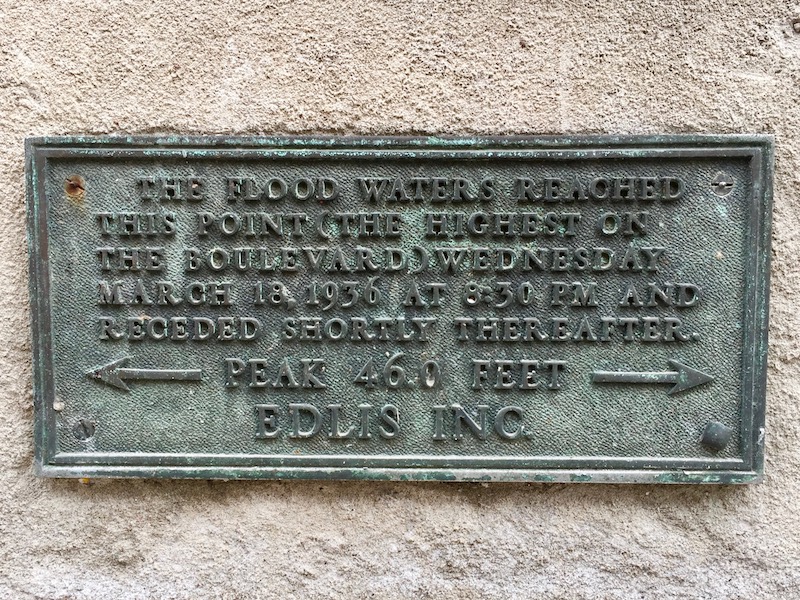
brass marker showing the 46.0 high water mark for the March 18, 1936 flood of downtown Pittsburgh, PA

1936 flood marker, Blvd. of the Allies, Downtown

Waaaay back when, the very first story committed to these virtual pages concerned a cryptic message painted around two faces of an old brick building in Manchester. That [SPOILER ALERT!] turned to be a marker for the most famous rising of the waters in Pittsburgh’s history–the 1936 St. Patrick’s Day flood.

We’ve found a handful more of them around downtown and on the North Side, but surprisingly few considering the immensity of the event and the age of our building stock. That just makes the hunt all that much sweeter when we zero in on previously unseen prey.

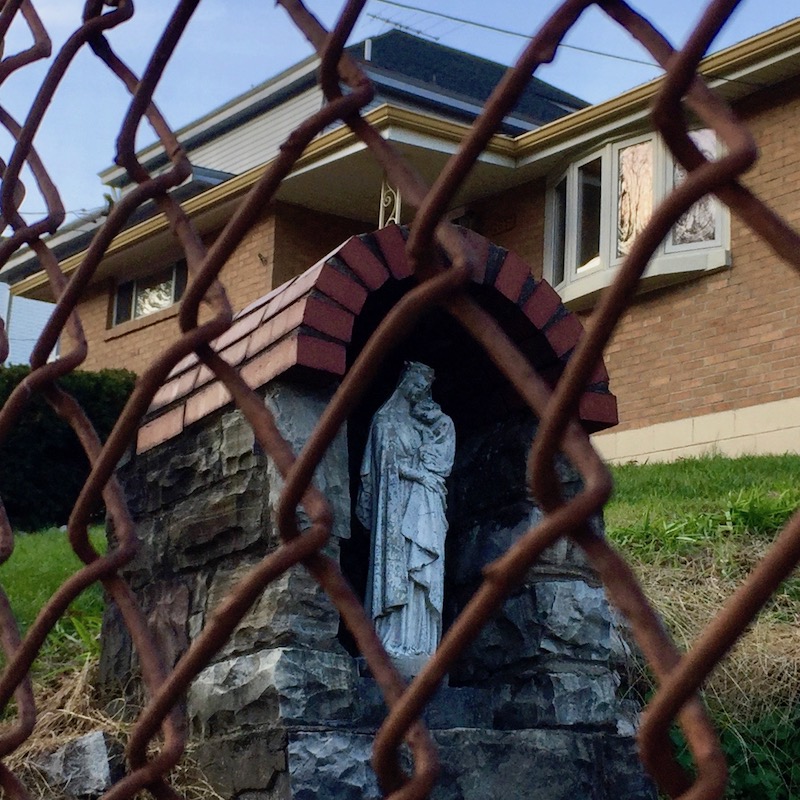
Mary statuette in homemade grotto, Pittsburgh, PA

Front yard Mary and grotto, Arlington

The blessed mother, hands spread with her palms open in a welcoming embrace or–far less often–the pietà image of Mary cradling the dead body of Jesus or holding the once-and-future as a baby [see above]. Whichever way we encounter the statuary, this is Front Yard Mary [even if she’s in the side or back yard] and we’ll take her any way we can get her.

There are so many Marys out there that we’ve got separate future features planned for South Oakland, Homestead, and the South Side Slopes (at least), which hardly makes Mary the most difficult egg to hunt. That said, this is ostensibly an Easter feature…

painting of woman with three eyes by Clohn Art, wheatpasted to wood, Pittsburgh, PA

Clohn Art, Downtown

Clohn Art is the nom de plume–or perhaps nom de paintbrush–of one John Lee, whose crude extra-eyed men, women, and animal paintings are executed on the placemats of Chinese restaurants and unfurled brown paper bags. They’re found wheatpasted at construction sites, alley walls, and, in at least one case, a rusty bus shelter in Homestead.

Wherever we happen to see the artist’s distinctive little paintings, they always pop off the wall surface and bring a twisted smile to our merely two-eyed faces. Mr. Lee declined The Orbit‘s request for a feature interview [John: we’re still interested!] so we’re left to troll the back streets, hoping to grab another of those rarest of eggs: a fresh, new Clohn to nestle in the wicker basket.

teddy bear and plastic flowers left on curbside, Pittsburgh, PA

Reasonably happy-looking sad toy, Fairywood

Like some mangy old teddy bear, dropped casually from a toddler’s stroller and forced to spend purgatory face-down in the weedy berm, Al Hoff brought the concept of “sad toys” into this blogger’s life and then cruelly left us by the side of the road to fend for ourselves.

Stuffed animals with their fur matted, flattened, and filthy; a basketball, punctured and concave in an oily culvert; doll parts dismembered and jettisoned like the work of a Lilliputian serial killer. So much pathos in such tiny candy-colored doses! It’s almost too much to bear…almost. But when we find them–and these are truly both the most random and the most reliable, renewable resource of today’s eggs–we can’t help but bag them.

outline of previously-existing "ghost house" against larger brick building, Pittsburgh, PA

Ghost house, North Side

Ghost houses–the imprint of one, now-extinct building upon its still-extant neighbor–is hardly a concept unique to Pittsburgh, but we’ve got the perfect environmental conditions to produce them here. Older building stock constructed right up against each other in a previous era when the density supported a pedestrian-based workforce, coupled with decades of “benign neglect” that demolished many–some falling all on their own–and landlords caring little about fixing-up the weird negative spaces on their vacant lot-facing windowless walls.

Like many of the other ova that occupy our oculi, ghost houses are special because–like a petrified forest, or the career of Steve Guttenberg–they’re the result of such a peculiar series of historic events, circumstances, and (non-)actions over a great period of time that we’ll likely not encounter the same perfect storm here again.

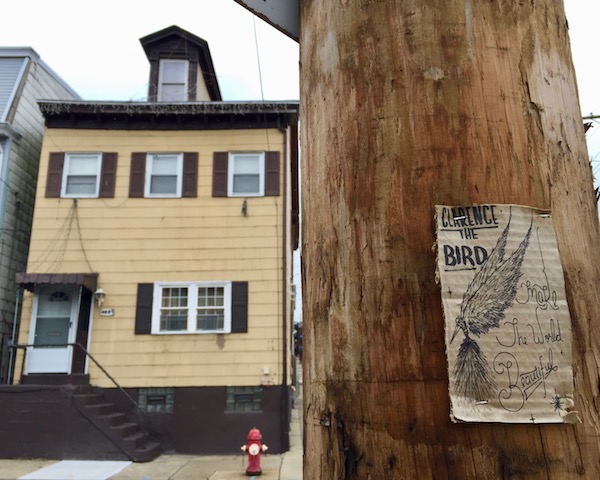
Clarence the Bird artwork stapled to telephone pole, Pittsburgh, PA

Clarence the Bird pole art, Bloomfield

With Clarence the Bird, the egg hunt changes parameters. Like picking up pawpaws, where there’s one of his handmade, ink-on-cardboard Make the World Beautiful instances, there tend to be a lot. Find a Clarence and you can safely spread out–looking up and down at the adjacent-blocks’ neighboring telephone poles and bulletin boards–and you’ll likely spot more.

So far [to our knowledge], Clarence has stuck to the greater Lawrenceville-Bloomfield-Garfield-Friendship portion of the East End, but that may just be where we’ve crossed paths with his big wings and pointy beak. I’m sure if we do see his trail elsewhere, we’ll see it everywhere.

poems of The Dirty Poet taped to a lamp post, Pittsburgh, PA

Poems of The Dirty Poet, Oakland

To call locating the telephone pole and street lamp verse of The Dirty Poet “egg hunt” material is a little bit of a stretch. His Dirtiness (yes: the writer is a he) wants the short, dittoed poems he authors to be read, after all. They’ve been taped and stapled at eye level on prominent foot traffic corners for just that purpose.

Regardless, it’s still neat to run across the prickly prose and lurid lines of the Bard of the Backstreets, knowing that one is literally standing in the creator’s footprints, inhaling his boozy breath, and shimmering in what’s left of his groovy vibes. To you, Whitman of the walkways, Dickinson of the downtown, Angelou of the who are you? may we always encounter your offspring sunny side up.

Toynbee Tile reading "Toynbee Idea in movie '2001' resurrect dead on planet Jupiter"

Toynbee Tile (no longer present), Downtown

It almost feels like cheating to include the so-called Toynbee Tiles in the list–we ran a feature on the House of Hades tiles just last week. But when you get lucky enough to spot one of the remaining, legit, first-generation street pieces, well, it’s a good day indeed.

As we reported, it is The Orbit‘s conclusion that none of these still exist in metro Pittsburgh and we’re left with a pair of ersatz Hell-bound tributes. But you never know! What does Easter–and, by association, spring–offer but the arrival of new hope, possibility, and opportunity. It is a new season: the sun is shining, birds are chirping, and flowers are popping with their tiny blasts of color across late winter’s gray-brown backdrop. Go out there and get you some eggs!


[1] There are, however, several efforts out there to restore/repaint old ghost signs as new mural projects. There’s a big one on Penn Avenue in Garfield and several in Braddock that we know of.

Highway to Hell: The House of Hades “Toynbee” Tiles

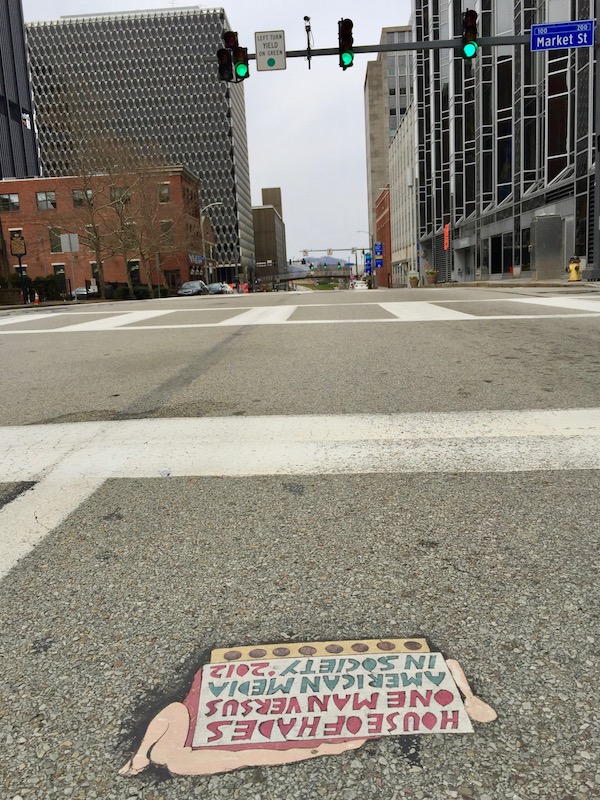
Street art "Toynbee tile" reading "House of Hades, one man versus American media in society: 2012", Pittsburgh, PA

Pennies for your paranoid thoughts. House of Hades tile #1, Blvd. of the Allies at Market St., Downtown.

The style is exactly the same: linoleum tile, constructed in reverse, and embedded as mosaic into a tar base that is applied directly to road surface. Ultimately, the piece will fuse with street macadam given enough over-rolling traffic to force it into the pavement. Arch messages are cut into rough block capital letters and have a familiar cryptic apocalyptic tone with phrases like House of Hades and Media must be reduced to ash in society.

We know these–they’re the so-called “Toynbee Tiles”…right? The (very literal) street art/paranoia phenomenon has emanated from center city Philadelphia outward for several decades now. They’ve been featured in their own investigative documentary film [Resurrect Dead: The Mystery of the Toynbee Tiles (2012)], and–at least at one time–decorated a bunch of streets in the Golden Triangle.

Street art "Toynbee tile" reading "House of Hades, media must be reduced to ash in society: 2012", Pittsburgh, PA

House of Hades tile #2, Blvd. of the Allies at Wood St., Downtown

But…not so fast. For one thing, pretty much every legitimate Toynbee tile in downtown Pittsburgh has vanished from this earth[1]. We chronicled a bunch of these in our stories on The Toynbee Tiles of Smithfield Street and its follow-up Orbit obit to The Last Toynbee Tile on Smithfield Street a year later. The all-things-Toynbee site toynbeeidea.com has a Google map that includes pinpoints for eight different tiles that used to exist on Smithfield, Forbes, Oliver, and Commonweath Place. Under Orbit due diligence, our bicycle- and sidewalk-based researchers criss-crossed downtown and couldn’t locate a single extant tile from this set.

Second, the pair of tiles that arrived on Blvd. of the Allies (photographed here, but not currently on toynbeeidea.com’s map) aren’t strictly “Toynbee”. Whether they’re the work of a copycat, tributes to the original, or just plain doing their own thing (using the same visual language), is a matter of some debate. What’s clear, though, is that these House of Hades tiles have been left by a different crew than the person Resurrect Dead researcher/filmmaker Steve Weinik calls The Toynbee Tiler (“TTT”).

map of downtown Pittsburgh with locations marked for former locations of Toynbee tiles

Red dots mark the former locations of eight Toynbee tiles in downtown Pittsburgh–now all are gone. [map: toynbeeidea.com]

The ominous warning One man versus American media in society certainly comes off as incredibly timely given the current political climate. But in fact these messages go back well before Steve Bannon’s elevation to the White House. Both pieces contain the date 2012. This may or may not be accurate to the time of installation, but that’s around when we first remember tripping across them.
Information on this “House of Hades” is scant. Is it the message or the maker? As these things go, there’s no P.O. box to send your S.A.S.E. into or 800 number to call for a free brochure. ToynbeeIdea.com claims the tiles started appearing in Buffalo some time in the oughts and “look nice, but don’t last long”[2]. That’s not our experience, though. The pair on Boulevard remains nearly perfect five (or more) years on. Of course, we probably don’t have the volume of Philly traffic they’re comparing them to, but it’s still impressive.

street art "Toynbee tile" and buildings of downtown Pittsburgh, PA

Regardless, we’ll re-issue that old Orbit saw and simply say, House of Hades–who- or whatever you are–we’re glad somebody’s still out there carving wacky words, spoons, and lady legs into street decoration and we’re glad you dropped enough morsels in downtown Pittsburgh for us to chew on for a while. If it stops us in our tracks–possibly with oncoming travel barreling forward–makes us wonder, and gives the noodle a twist, well, you’re all right by us.

Oh–and one more thing: while The Orbit may technically qualify as part of “the media” [in its loosest, most pathetic usage], please don’t reduce us to ash just yet. We’ve still got some things we want to cover.

street art "Toynbee tile" and buildings of downtown Pittsburgh, PA


[1] That we know of…but The Orbit is pretty sure this is it. If you know of any other remaining Toynbee tiles in the city, please educate us.
[2] http://www.toynbeeidea.com/house-of-hades/


See also: Highway to Hell: The House of Hades “Toynbee” Tiles, Part 2: (Pittsburgh Orbit, August 6, 2017)

Fish On My List: Holy Angels vs. St. Maximilian Kolbe

fish sandwich with three breaded fillets of fish from church fish fry

The holy grail: Holy Angels Parish panko-crusted triple-decker fish sandwich

Editor’s note: When Orbit cub reporter Lee Floyd pitched the idea of a one-lunch back-to-back fish vs. fish showdown comparing two of the area’s finest, we thought he was crazy…crazy like a fox! Here’s Lee’s take on the day.

Pittsburgh may not be known for seafood, but we can deep fry a frozen filet as well as any city with a coastline. I’ve ordered fish in several states that couldn’t hold a candle to the piping-hot deliciousness served up by volunteers at churches and firehalls around the Steel City. The solemnness of the Lenten season is completely lost on The Orbit as we seek out Friday lunch like wide-eyed, salivating animals.

table covered with homemade desserts for sale at church fish fry dinner

Dessert table, Holy Angels

The fourth day of Spring, sunny with a high in the mid-60s, was perfect weather for a bicycle-based culinary tour. I pedaled against the wind to meet today’s dining partner (and Orbit editor) for a double dose of our most-beloved sandwich. I was determined to impartially judge two of my local favorites because, while every local news outlet and their mother has a fish fry guide or a basketball-style bracket for the best fish, it is really just a popularity contest. I even take my own opinion with a dash of hot sauce unless I can compare two things back-to-back. So that’s exactly what we set out to do.

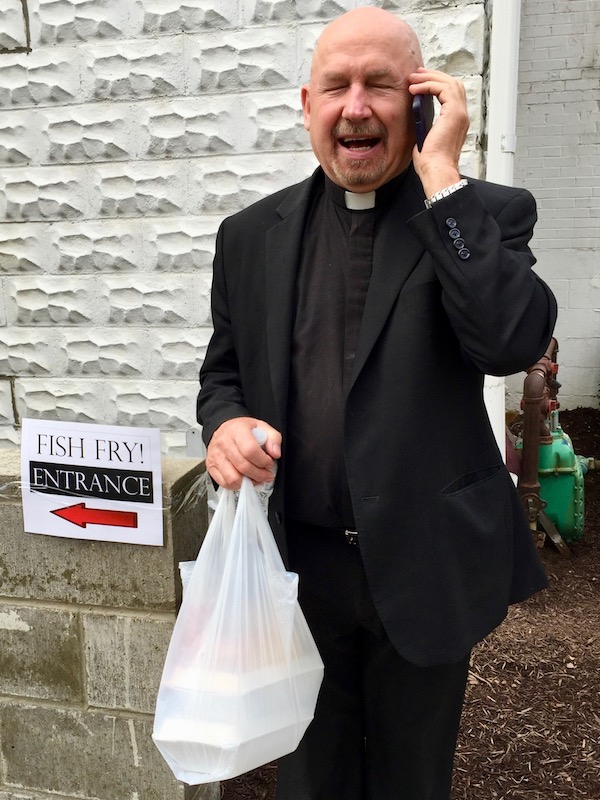
Catholic priest laughing with take-out from church fish fry

Jesus on the mainline: this priest is on a (take-out) mission

Our first stop was right in the middle of the lunch hour so we found Holy Angels Parish packed to the gills. We were greeted at the door, handed menus, and bid good luck in finding a seat. Once we were situated, we simply flashed a pink card and a server arrived to take our order. There was very little hassle or delay despite the size of the crowd, although you might disagree if you were looking for parking in Holy Angels side lot.

two men eat fish sandwiches in church basement fish fry

Bon appétit! Satisfied Holy Angels customers digging-in.

Let me tell you about that fried fish sandwich! Holy Angels dropped three generous panko-crusted Pollack filets into a standard hoagie bun and nothing was ever the same again. It was obvious these were express shipped to the table straight out of the fryer–I even burnt my finger after the photo-op.

Holy Angels also offers baked fish options, the standard sides (we tried the mac and cheese–gooey and good, but nothing special), two seafood-based soups, cheese pizza, and a tantalizing, largely homemade-by-parishioners dessert table.

stacks of boxed frozen pollack fillets on shipping pallets

2000 pounds of frozen pollack just delivered for next Friday’s fry, Holy Angels Parish

To protect the integrity of this story I scolded my editor: “Are you really going to put the hot sauce on your half before you taste it!?!” Our fellow fish-fiends/tablemates overheard and immediately began to relate their Lenten exploits (we added West Mifflin’s Holy Trinity to our to-eat list) and gloated that they know the best restaurant that serves fried fish year round–Rene’s (pronounced “REN-ees” or maybe “REE-knees“) in McKeesport. The conversation lasted longer than our meal and so I forgot about the (terrible but empirical) plan to pocket part of a sandwich so I could compare alternate bites at our second stop.

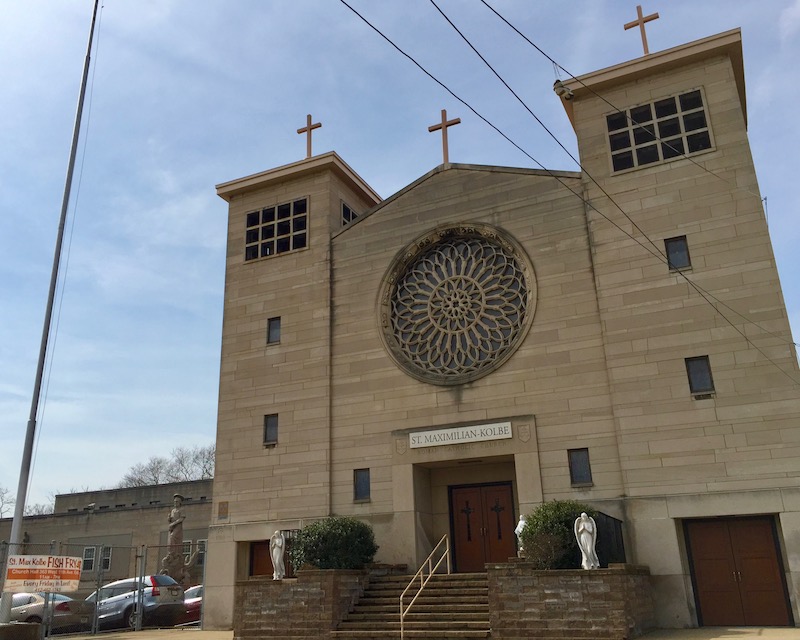
exterior of St. Maximillian-Kolbe Catholic church, Homestead, PA

St. Maximillian-Kolbe (aka “St. Max”), Homestead

After a combined three mile ride via river trail and Homestead side streets, a palate-cleansing flight of craft beer at Blue Dust, and one calf-straining climb up the hill to 13th Ave., we found ourselves locking up our bicycles next to the 24-foot-tall likeness of St. Joseph the Worker just outside St. Maximilian Kolbe Parish in Homestead.

At St. Max, you order and pay just inside the door before entering the hall. My editor-of-little-faith’s jaw hit the floor when he found out the good saint serves beer alongside scripture. By the time we finally got done picking it up, our food was ready.

fish sandwich with sides of haluski and potato haluski from church fish fry

Fish sandwich with sides of (traditional noodle) haluski and potato haluski served on a McDonald’s tray, St. Max’s

As Rick Sebak put it, “The bun is just a handle”, and never was he more on-point than at St. Max. The parish serves one absurdly long, flaky filet on an oversized–but still way too small–bun. It is not only substantial but also cooked and seasoned with a hand that we can only assume is heaven-sent. Loose, thin breading ensures the fish remains the star of the show.

At this stop, we chose to sample both types of haluski on the menu–egg noodle and the more traditional potato dumpling–which were part of the largest church menu I’ve ever seen. The extended offerings also include baked and fried fish, crab cakes, shrimp, pierogies, haluski, linguini, pizza, stewed tomatoes, deli salad sandwiches, and more–in addition to the standard sides and dessert table.

piece of puff pastry in plastic wrap on disposable plate

Puff pastry, wrapped in plastic, St. Max’s

So…who wins? In my opinion, the breading and service really makes Holy Angels’ fish stand out from all the other places we’ve visited. On the other hand, the generous, quality filet at St. Max hasn’t been rivaled either (it may be enough for two meals, but I’ll devour it all at once, thanks). If you like fish, you’ll not be disappointed with either choice! Since the fish was so difficult to call, we’ve got to contrast other factors:

  • If you plan to arrive by bicycle along the Great Allegheny Passage trail, then Holy Angels is much more accessible–it’s just a short, easy ride up from the break under the Glenwood Bridge.
  • If your sweet tooth is what gets you to leave the house, Holy Angels wins the dessert table by a nose for its homemade bringings-in. That said, St. Max’s had some of parishioner Shirley’s cream puffs that blew our mind.
  • If you enjoy the chance to share a table with strangers, either location will probably do, but Holy Angels is known for being packed to capacity. The crew at our table were a particularly lively bunch that couldn’t wait to share and compare info on other fish fries.
  • The cheese pizza at either location should keep the children quiet, but if you need to order for diverse tastes, then perhaps the larger more-ethnic menu at St. Max will make you the hero of the office.
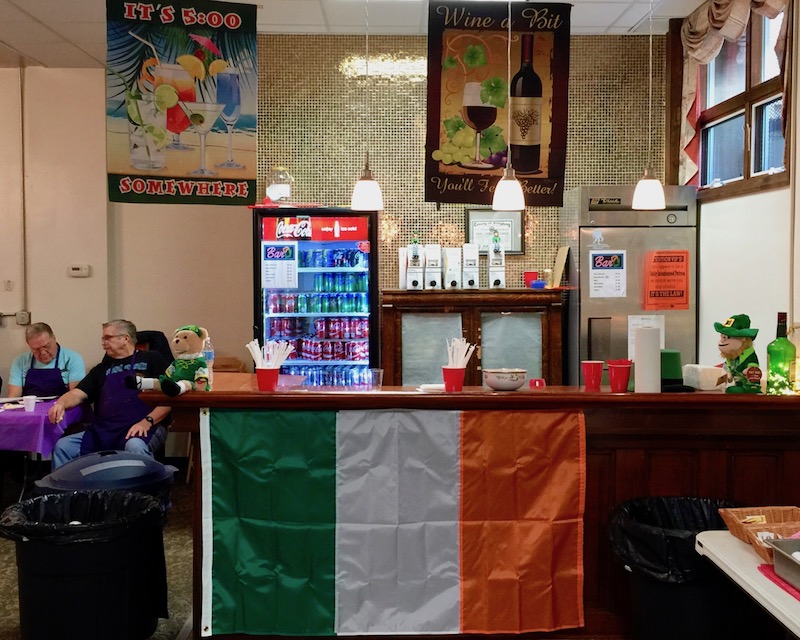
  • If you like to get canned-up on domestic brews at dive bar prices with the option to confess it all in one convenient location, then St. Max’s “It’s 5 O’clock Somewhere” bar is your spot.
  • If you’re ordering to go and have a fear of soggy breading, then St. Max is my recommendation.
small bar in church basement decorated with flag and banners

The “It’s 5:00 Somewhere” bar, St. Max

Winner winner, fried fish dinner.

It’s said that difficult decisions are so because there simply is no right answer. What’s clear from this attempt to pit parish vs. parish, panko vs. batter, Lucy’s cheesecake vs. Shirley’s cream puffs is that when it comes to the fish on The Orbit‘s list, we’re all winners…except maybe the fish. The fish are probably not the winners here, but the rest of us are winners. Eat well.

author Lee Floyd posing on "Fish Fry Today" sign outside church

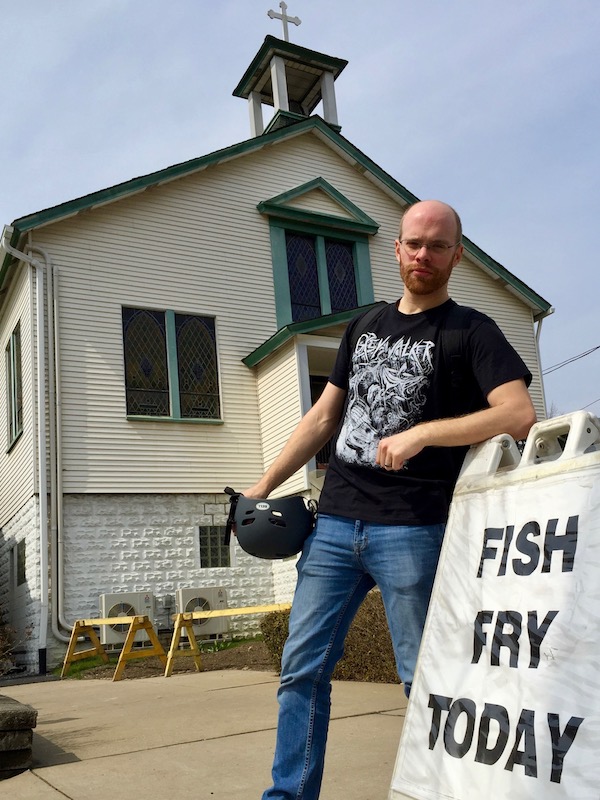
The author, Holy Angels Parish, Hays


Getting there:
Holy Angels Parish: 408 Baldwin Road, Hays.
St. Maximilian Kolbe Parish: 363 W 11th Ave, Homestead.
Both serve fish Ash Wednesday and all Fridays of Lent, 11 AM – 7 PM…or until the fish runs out.