Lackzoom Acidophilus

Terra cotta facade storefront in Pittsburgh with the engraved names Lackzoom and Acidophilus

5438 Penn Ave: Lackzoom Acidophilus

I must have passed it a thousand times or more.  Certainly I’d noticed the white terra cotta facade and its odd trapezoidal shape, canted in such a way that it doesn’t quite align with the street, like a mis-set bone.

But it wasn’t until very recently that I happened to actually look up and take in the detail above the doorway/windows.  Two names (?) permanently formed into the ceramic tile that read like ancient runes, some hep jazzcat jive, or a preposterous stage name: Lackzoom Acidophilus.

The small, two-story building at 5438 Penn Avenue turns out to have been the one-time laboratory and corporate headquarters for the lineal parent of the General Nutrition Corporation (or GNC), the Pittsburgh-based retail giant that made a fortune over the last half century urging America to “Live Well” vis-a-vis shopping and popping (malls and pills, respectively).

Terra cotta tile reading "Lackzoom"

It’s no surprise that I’m not the only one to ever spot this curious storefront, but there’s remarkably little information out there on it.  The definitive piece seems to be a short Western Pennsylvania History Magazine article written in 2003 by Chris Potter.

Potter’s story details David Shakarian, founder of GNC, whose:

… Armenian parents ran a business called “Lackzoom” which sold yogurt, buttermilk, and Bulgarian acidophilus–milk fortified with the bacteria lactobacillus acidophilus to intestinal bacteria that make digesting milk difficult for some.

Apparently the original Lackzoom never survived The Great Depression, but Shakarian would go on to found his own health food store, and eventually the GNC chain. In 1983, the year before his death, Shakarian was named by Forbes magazine as the wealthiest Pittsburgher on their annual list. Live well, indeed.

Pittsburgh ghost sign reading "Lackzoom and Acidophilus"

Ghost sign, obscured by flora: “Lackzoom and Acidophilus”

Art All Night 2015 Round-up

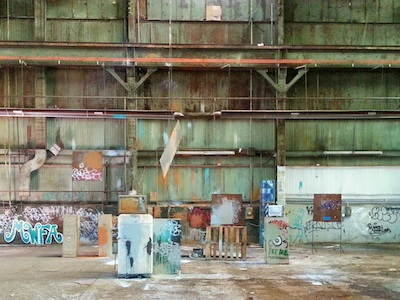
warehouse in Pittsburgh where Art All Night 2015 was held

Outside Art All Night’s home for the last couple years

Art All Night.  That most democratic of all one-day, all-night, anything-goes art “happenings.” It’s one of the reasons The Orbit took up shop in Lawrenceville some fifteen years ago and, at least for the moment, it’s still going strong.

This past weekend was Art All Night’s eighteenth year.  We were there seventeen years ago for event #2 in the former G.C. Murphy’s on Butler Street (now Rent-a-Center).  Back then, that medium-sized retail space was over-large for the hundred-some pieces of artwork that walked in the door and the couple hundred event-goers there to check them out. The art was hung, as I recall, on old Murphy’s pegboard, before the advent of the now-standard OSB and 2×4 panels.

Even in its embryonic state, this blogger-to-be was hooked.  We bought our house right up the hill a year later and I was volunteering for the event the year after that. My contribution has dwindled to just the big build-out day, but my conscience won’t let me not show up at all.

Art All Night is in the weird position of being a victim of its own success.  The elephant in the warehouse-sized room is that the event won’t be around forever; Lawrenceville is just running out of the kind of giant, vacant real estate that can still accommodate thousands of visitors. This year’s building is slated for (at least partial) demolition and redevelopment, which is sad, but also makes perfect sense.

industrial warehouse interior with paint slingshot targets

Paint slingshot targets

I didn’t take any big group shots of the thousands of people who packed the massive five-bay industrial building where the event took place this (and last) year, nor did I try to capture any of the many performers (some 40+ musical acts, dance, improv comedy, live painting, a guy trying to set a world record for human beat-boxing, etc.) or wacky crowd figures (Abe Lincoln, “The Cowboy,” the rubber men, guy with Christmas lights under his furry coat, etc.).

There are many great things about Art All Night, but ostensibly, the event is about the thousand-or-so objets d’art that manage to make their way into the space that afternoon and up on the panels, or along the walls, or spilled along the floor for the world to see mere hours later.

There is great art, for sure, but in the shotgun blast of raw expression, joke art, quirk, deviance, desire, and beauty that is rushed onto the particle-board panels, it’s the ones that scream the loudest that seem to make the event the most memorable.

It is in that spirit that I thought I’d just feature some great examples of what we consider “classic Art All Night”–whether that speaks to cliche or repetition or simply some base human mode of expression is up for debate. Presented are individual examples of this year’s entries and the various itches they scratch.  Enjoy.  I know I did.
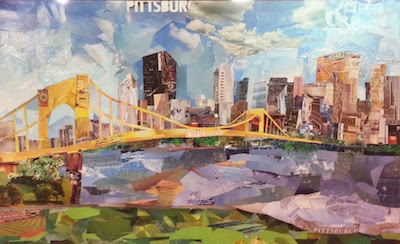
artwork of Pittsburgh skyline in cut paper

Pittsburgh skyline

painting of steel worker with steel mill in background

Steel mills/steel industry

painting of two football players on the field

Sports art/Steelers

painting of Jerry Garcia with a glowing third eye

Skip a little rope, smoke a little dope
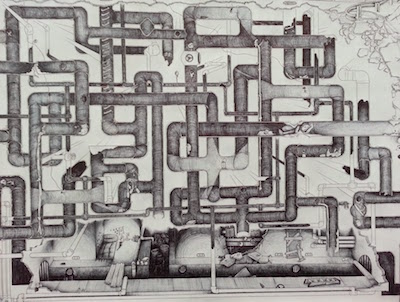
line drawing of intertwining pipes

Time to wash the hands (again)

This is nothing to those halcyon days of the early oughts when a guy could cover an entire 8′ x 4′ display panel with an imaginary city, complete with all transit routes and street names, mapped out on graph paper and executed in mechanical pencil.
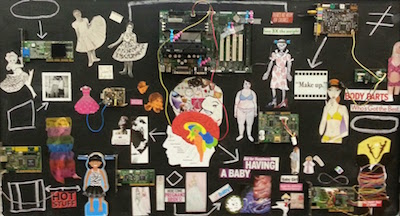
artwork showing challenges and options for women today

Thought-provoking/statement

Under-represented this year were the big poster boards loaded up with (literal) ripped-from-the-headlines newspaper clippings (another casualty of the death of print!).  These would often be accessorized by a top layer big message: WAR? or Progress? or Justice? There were some nice sentiments on the evils of bearing children (one complete with a dangling flaccid condom), but it just wasn’t the same.
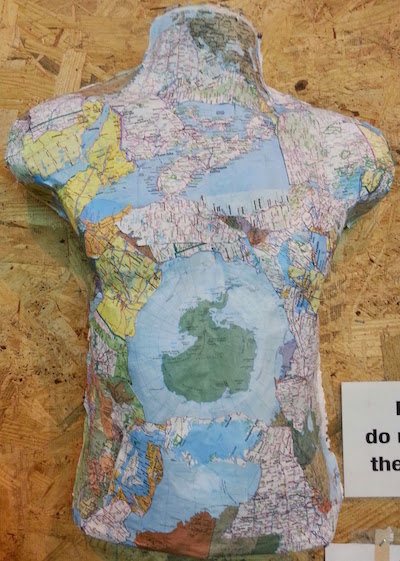
sculpture of human torso with world map glued to it

Maps/torsos OR “That’s not my belly-button!”

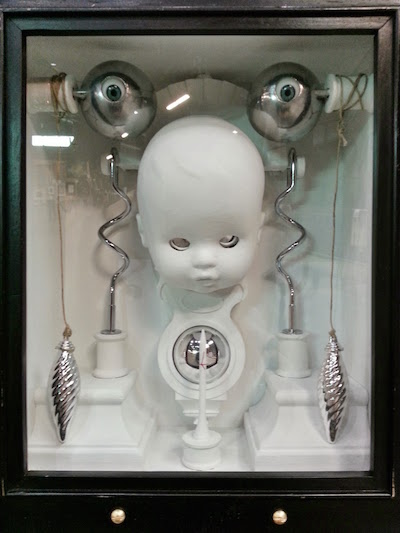
assemblage artwork including a baby doll's head

Doll head/parts assemblage

The doll parts genre this year was impressively (if disappointingly) tasteful. Typically there are numerous crude entries, oft splattered with red paint, grafted in vulgar ways to stray objects, etc.  Sigh.

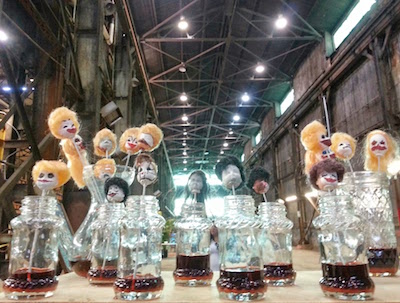
artwork with tiny clown heads on sticks in jars with mysterious liquid

Science art/tiny clown heads on sticks in jars with mysterious liquid

I love the pseudo-science entries–and this was a fine one–but the genre lacked quantity this year.

two large-size sculptures of robots

Big robots

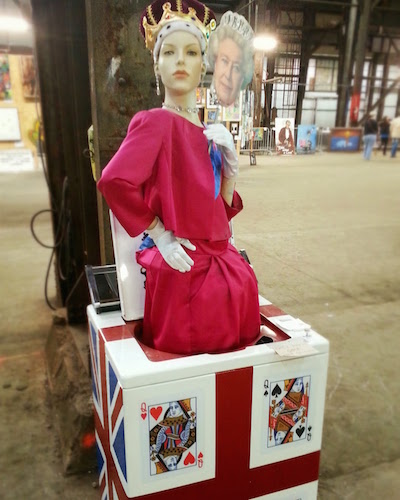
Artwork with a mannequin dressed like a queen in a clothes washing machine

Mannequin/English royalty/appliance-related

painting of Spock from Star Trek

science fiction

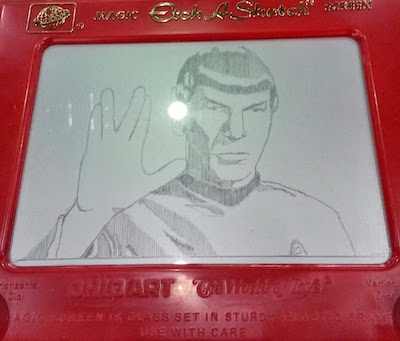
Spoke from Star Trek rendered on an Etch-a-Sketch

Etch-a-Sketch

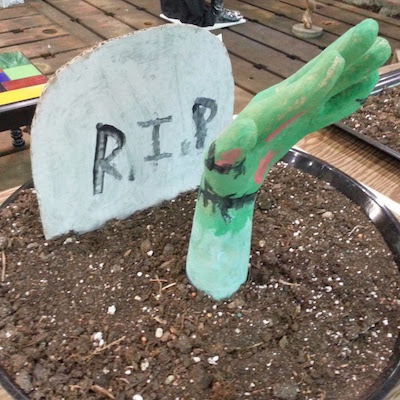
sculpture of zombie hand and grave stone in dirt

The evergreen: Pittsburgh loves zombies

painting of female monster eating a human head

Monster/horror

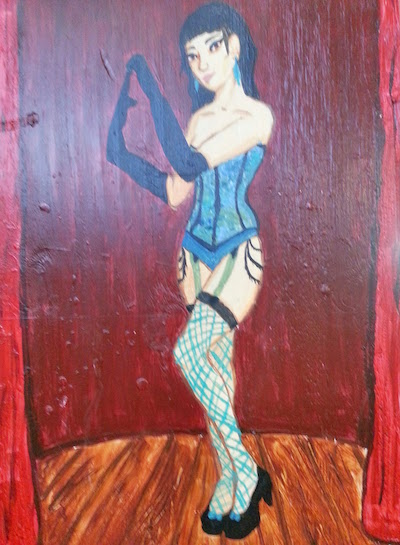
painting of woman in her underwear removing a long black glove

Naughty ladies (and the men who like them)

This year’s naughty/nudie art count was way down from any previous event.  In fact, the normally stocked “porn art” entrants must have just sat on their flesh- and boudoir-colored paint cans this year, as there was nary a stray wang or cooter to bat an eye at.

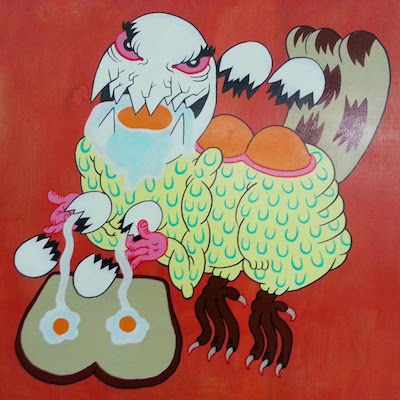
painting of a strange part chicken/part egg creature

Which came first: the chicken or the … ah, jeez
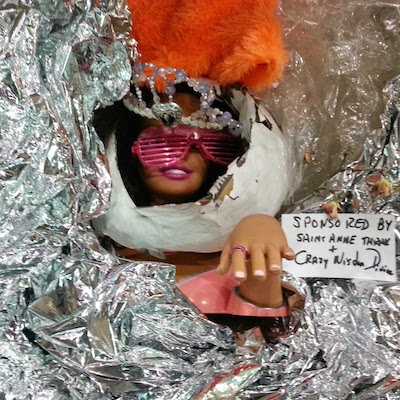
sculpture of woman's head and hand surrounded by silver foil

???

I heard a number of people remark that it felt like the total amount of art was down from previous years. Maybe that’s true, or maybe it’s just the way the space and panels were used. Either way, my remarks above definitely include a lot of sentiments around missing some old friends.  Ah, well, maybe next year.

Onion Dome Fever: Holy Transfiguration!

Holy Transformation Russian Orthodox Church, Steubenville, Ohio

Holy Transfiguration Russian Orthodox Church, Steubenville, Ohio

The Orbit road crew was a on a mission to find the grave of Jimmy The Greek in Steubenville, Ohio, and find it we did.  Oh yes, find it we did.  But as we were heading up Washington Street from downtown, there, sparkling like a new penny, was the phosphorescent green mini onion dome of Holy Transfiguration Russian Orthodox Church.  Never ones to avoid getting distracted by shiny things, we detoured up to the tiny dead end of North 10th Street to get a shot of the church all lit up in the afternoon sun.

Pastor Greg, dressed appropriately in a friar’s dark, knotted robe and sandals, spotted me taking pictures outside and asked if we’d like to come in for the service that was beginning in fifteen minutes.  We politely declined, to which he followed up by urging us to just come inside for a look. That was an offer we couldn’t refuse.

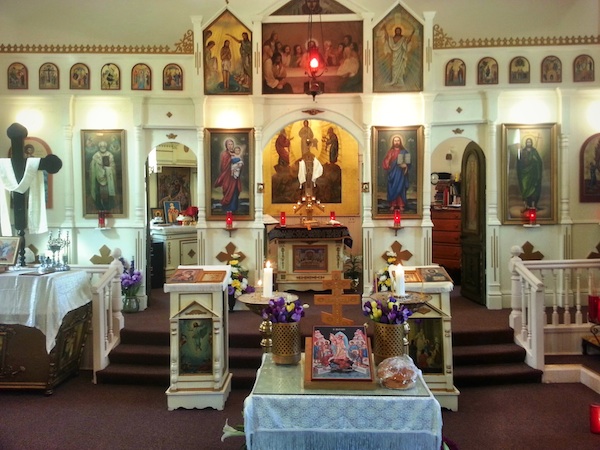
The humble country church look of the outside didn’t give any clue to the gorgeous collection of gold leaf icons, burning candles, Byzantine crosses, live flowers, incense burners, brassware, lace cloth, and the like that awaited within.

interior of Holy Transformation Russian Orthodox Church, Steubenville, Ohio

Interior, Holy Transfiguration Church

The pastor had departed in his minivan to pick up a parishioner who needed a ride to the service.  I wish we’d had the chance to ask him about the history of the church and the current state of the laity.  That very congregation was beginning to file in as we were poking around, so it started to feel pretty awkward and we made our exit.

Steubenville has been draining population since the 1940s (The Greek led that wave out of town), and my guess is that the number of Russian Orthodox parishioners is dwindling in the low double-digits.  So one hopes that Holy Transfiguration will be around for Steubenville’s inevitable glorious comeback, but it will probably take a little divine intervention.

Holy Transformation Russian Orthodox Church, Steubenville, Ohio

Interior (detail), Holy Transfiguration Church

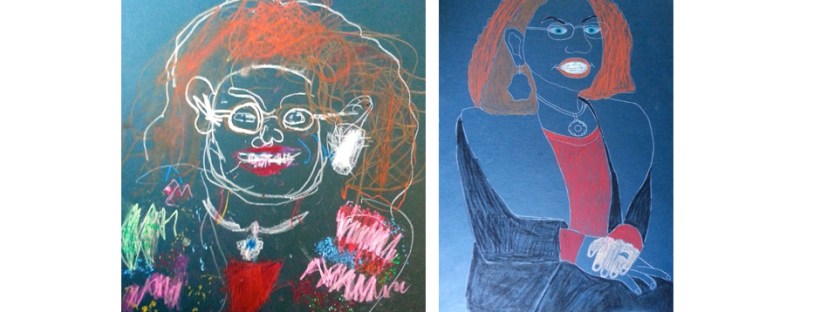
Now You See Me: Portraits by Creative Citizen Studios Students at the Greater Pittsburgh Arts Council

We couldn’t have said this better ourselves! Literally–we don’t know some of these words!

Tonight is your last best chance to see the “Now You See Me” portrait show as part of the downtown gallery crawl. Do yourself a favor and get your kiester to the GPAC building and see the full show up close and personal.

Alexandra Oliver's avatar

Those who know me know my outrageous affection for student art. Yes, student art is less developed than professional art, less focused, less sure of itself. It’s the kind of thing that expects to receive a grade, not a review. Much of it is predictable. But just as often it is fresh and ambitious. So here I am, reviewing a student show and even recommending it. The show is Now You See Me: Portraits, all works on paper by the students of Creative Citizen Studios and installed in GPAC’s downtown offices. Not only is this an exceptionally strong showing of student work, it was also a standout when it opened during the last gallery crawl. It will be open again during this Friday’s crawl, so now is your chance to see what I’m raving about—and make up your own mind as to whether I’m raving with reason, or…

View original post 916 more words

Get to the Point

Man pointing from Ohio River to Pittsburgh's highpoint

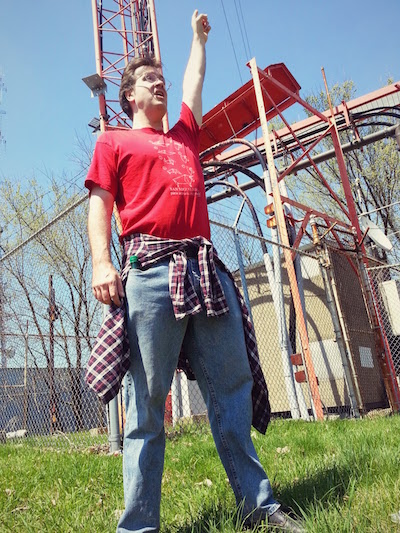
Ben points from The Point to Pittsburgh’s highpoint

Whether it’s a sport or a hobby or simply an absurd excuse for the journey is the destination, man, “highpointing” (its practitioners spell it as a single compound noun) is the pursuit of reaching the highest altitude spot in each of the U.S. states, amassing these achieved peaks like collector’s cards.  Ben Blanchard is a Pittsburgh highpointer.

Ben explains that he got into highpointing naively. Years ago, he stumbled across a road sign directing motorists to the highest point in Maine, Mount Katahdin (alt: 5,280 feet). After making his way up and down from the mountain, Ben decided it would be a fun way to let kismet be his travel agent and kept after further highpoints.

It turns out Ben is not alone and highpointing is a real thing.  Web sites like highpointers.org and peakbagger.com provide both statistics and community information. Ben has currently visited thirteen state and two city highpoints.  Next on the list is a New England swing to include New York, New Hampshire, Vermont, and a return trip to Maine.

ducks on a log in river

These ducks technically started lower than us, but we didn’t see them make it to the top.

As no two states are the same, no two highpoints are either.  Highest points are as diverse as a Philadelphia suburb (Ebright Azimuth, Delaware) or the upper edge of an inclined plane (“Mount” Sunflower, Kansas) to true mountain peaks like Mt. Whitney (California) or Mt. Elbert (Colorado).  Every American highpointer’s ultimate goal is Denali (Mt. McKinley) in Alaska.

For The Orbit, I proposed scaling the highpoint for the City of Pittsburgh.  Apparently highpointers look down on city/county highpoints in favor of states/countries, but it sounded interesting to me.  I laid out a goal that we would travel from low to high, and make the journey on bicycle.

Western State Penitentiary, Pittsburgh

Along the way: Western State Penitentiary, Woods Run

Historically, Pittsburgh’s low point was Donzi’s in the Strip. But with that floating meat-rounder barge sadly no longer operating, its bass cabinets and Jello shot molds long dormant, we had to settle for river level (alt. 719 feet) as the accepted lowest altitude.  And, just to get real symbolic, we met at “The Point,” the tip of Point State Park, where the three rivers meet.

Our destination was the top of Montana Street (alt. 1345 feet), KDKA’s giant broadcasting tower standing as a (literal) beacon for us head toward.  The route would take us down the Ohio River bicycle trail, past the old Western State Penitentiary, through the neighborhood of Wood’s Run, up along the northern edge of Riverview Park, and finally up to the peak in Perry North.

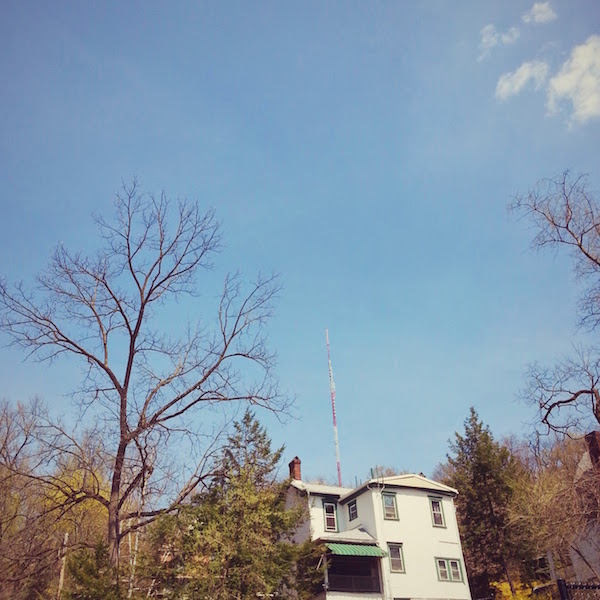
View of KDKA tower from Mairdale Ave., Observatory Hill

View of KDKA tower in the distance from the steep climb up Mairdale Ave., Observatory Hill

The one block assent of Montana Street proved the most difficult cycling of the trip, it being one of those Pittsburgh hills so steep the rider is forced to lean over the handlebars just to avoid the bike flipping backwards on itself, but we made it.

I had been on one previous (city) highpoint in Washington, D.C. (Ft. Reno Park) and similar to that one, the actual peak is off-limits to the public.  Ours has a high chain-link fence surrounding a large water reservoir and processing facility.

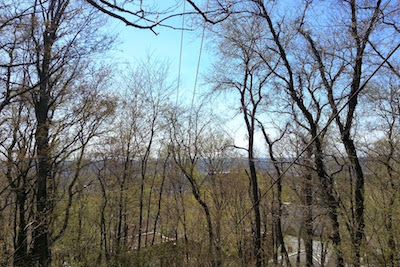
View from Pittsburgh's highpoint showing mainly trees

“View” from the highpoint: Mt. Washington it ain’t

We were able to walk the full circumference of the facility.  There’s no benchmark to get a photo by, nor is there much of a view–you’re surrounded by trees on all sides.  But in the early Spring, we still got some nice glimpses of the observatory in Riverview Park and the top of Downtown Pittsburgh’s skyline, looking like it grew naturally out of the woodlands.

Our stats: we climbed 626 vertical feet over around 6.5 miles, about half of that along the river to get from town to Wood’s Run.  It took us around 45 minutes going up on bicycles; the return trip is very short as it is literally all down hill.  A bar called Rumerz in Wood’s Run [Ben: Have you heard anything about it? Me: Don’t believe everything you hear. Ben: What are you talk…oh.] provided few beer options, but a nice outdoor deck, built Pittsburgh grotto-style, right up against a rock wall.

Man celebrating reaching Pittsburgh's highpoint

Victory: point high for a highpoint!

A note to would-be bike-pointers: this blogger made the trip up just fine, but the rest of our party (ahem) needed to get off and push a couple times.  It’s no big deal, though, if you’re in decent shape and have a full collection of low gears.  The bigger deal (for me) was actually coming down the hill where my (under-performing) brakes were pushed pretty hard and I reached a semi terror state.  If I’d had to actually come to a full stop anywhere, it would have been ugly.

A Visit with Jimmy The Greek

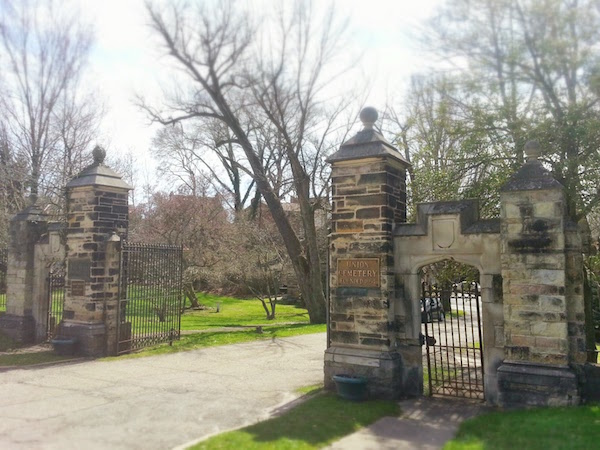
New Chapel, where Jimmy "The Greek" is entombed, Union Cemetery, Steubenville, Ohio

New Chapel, where Jimmy “The Greek” is entombed, Union Cemetery, Steubenville, Ohio

SPOILER ALERT:  There is no head stone to visit, no special directional signage like the “1812 Veteran” or the “Fighting McCooks” or the “Grandparents of Woodrow Wilson” get, and there’s not even a place to leave a tributary poker chip or tip sheet from the nearby Wheeling dog track. No, when you actually arrive at the final resting place for Jimmy “The Greek” Snyder, it’s on the very top row, well above even this tall blogger’s head height, inside a sterile mausoleum called the New Chapel, marked with a simple brass nameplate that’s barely legible standing on the floor in full daylight. The photo I took inside was so uninteresting I decided we’d just go with the exterior shot.

The Greek died of some combination of diabetes and coronary failure in 1996, the year after New Chapel was built at Union Cemetery in Steubenville, Ohio–Jimmy’s home town and an easy jaunt from Pittsburgh.  Jimmy’s loved ones may have thought that having the latest and greatest in resting places for the family was practical (his sister Marika Berris died in 2009 and is entombed right next to Jimmy), but I’d guess that he was secluded high out of sight, out of mind, and–perhaps, most advantageously–out of reach from any malice that may have been directed his way in the afterlife.

Signed headshot of Jimmy The Greek

Jimmy The Greek in livelier times

Jimmy The Greek’s rise and (epic) fall is legend to a generation that was paying attention to such things in the 1980s.  He was a career sports bettor, television prognosticator, and outsize personality that injected street smart grit and spilled cigar ash on the sterile CBS studio where most of us first encountered him.  Jimmy brought sports betting out of the bar and into post-church middle class living rooms by way of his weekly picks on The NFL Today.

Snyder was fired by CBS in 1988 for “racially insensitive comments” he made on camera at a banquet dinner.  Whether Jimmy was actually a racist or just put his foot in his mouth on a topic he really didn’t have any business speaking on seems up for debate. Both his longtime NFL Today co-host Irv Cross (who is black) and Jessie Jackson defended Snyder and Jimmy famously spent the rest of his life apologizing for the incident, humbled and disgraced.  The world largely turned its back on him, which is perhaps how he ended up nearly un-locatable in Steubenville.

entrance gate, Union Cemetery, Steubenville, Ohio

Union Cemetery entrance gate

The Greek’s surroundings in the New Chapel are particularly sad considering the phenomenal beauty of the rest of the park.  He’s going to spend eternity in a mausoleum that looks like a Denny’s while the rest of the of his neighbors are ensconced in the tree-filled, lush rolling hills of this gorgeous circa-1845 cemetery.

Union Cemetery has the characteristic design of others from this era: non-linear paths that work around the topography and ancient trees that grow between–and sometimes up and over–the graves.  The markers are notably more humble than those in Pittsburgh’s Allegheny or Homewood cemeteries, and have suffered a greater natural decay (cheaper material? harsher climate? less maintenance?).  But taken as a whole, it has a similar level of natural beauty, solace, history, and nature-without-man chaos.

statuary, Union Cemetery, Steubenville, Ohio

Statuary, Union Cemetery

Union Cemetery takes extra pride in their veterans.  The (many) Civil War graves each have a special iron shield, many still painted red, white, and blue, marking them as “Union Soldier”. Veterans from Cuba, World Wars I and II, and Korea each got similar, if less ornate, treatment. Vietnam veterans have an entire section to themselves, sharing space with large mortar cannons.

I don’t know that I can recommend a trip to Steubenville just to visit Jimmy The Greek, but we found some other interesting things while we were there (more about that in some future dispatch). However, if you’re in the area, and it’s as beautiful a day as we got, The Orbit has its own tip for you: do yourself a favor and stop by to say hello to The Greek.

Union soldier grave marker, Union Cemetery, Steubenville, Ohio

Union soldier grave marker, Union Cemetery, Steubenville, Ohio

Union army grave markers, Union Cemetery

Thoughts on a Coffee Mug

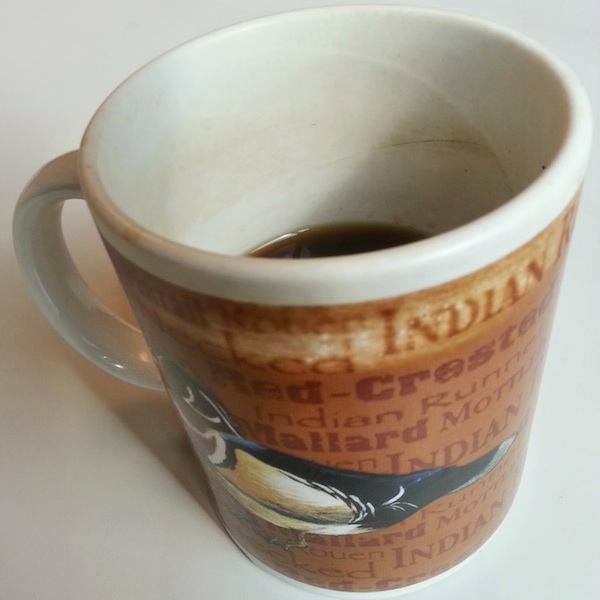
coffee mug with image of a duck

A well-used coffee mug

As of today, this part-time blogger has worked at his full-time job for eight years.  That’s a long time.  And, as it turns out, that’s a lot of coffee.

I showed a colleague from California how to use our non-intuitive single-serve coffee machines last week (the LA office uses much more efficient/less wasteful giant urns–my campaign to get ours replaced is a whole other topic).  After we got the mud flowing, I made a dumb joke that “after four thousand cups, you get pretty used to it.”

Not terribly funny, but it got me thinking: How many cups of coffee have I actually drunk here? Do I really want to know?

As it turns out, I’m way over that meager 4000-cup guess.  By my estimation, I have consumed somewhere in the neighborhood of 5,600 cups of coffee, just on this job, here at the office–and that’s a conservative estimate.

My math: three cups a day (it’s often four) x five days a week x 47 weeks a year (?) x eight years = ~5,640 cups.  That’s a lot of coffee!  I may treat my lungs like the Queen of Sheeba, but my entrails get the rented mule shuffle.

That made me think about the mug that has made the down-the-hall, around the bend, to the machine walk and refill journey with me right since the beginning.  It was a present from my former ESL student Tony back before I started this job–part of a wrapped gift package that also included a similar-but-different mug (birds maybe? I can’t remember–it’s long since gone) and a bag of coffee and some nuts (or something like that).  I think he got it at Big Lots.

The mug features two identical images of the same duck with a score of duck varieties named in different typefaces around the outside: King-Necked, Red-Crested, Gadwall, Mallard, Mottled, Pekin, Hookbill, etc.  Eight years of looking at that image and I still haven’t bothered to identify the type of duck pictured on the mug!

How many things get used 5,600 times without any kind of breakdown?  The only maintenance this mug has ever needed is its daily (minimal, I’m afraid) scrub before cup #1; the only wear and tear some thinning of the silk-screen (?) print job on the top lip-meets-brim edge; and (no surprise here) some staining on the inside.

I don’t know if I’ll still be pushing digits and influencing pixels in eight years, and I don’t know if my body will let me keep drinking black gold like it was holy water.  But to you, faithful duck mug, may we have another eight great years together!

Blogger with coffee mug and sad clown painting

The author on the job: you don’t have to be crazy to work here, but it helps to have a coffee mug.

Ghost House: Brighton Heights

"Ghost house"--impression of one razed house against another still standing

Ghost house: Brighton Heights

You don’t see one of these every day–that is, unless you regularly find yourself traveling the back way from Woods Run up to Brighton Heights.  I was all the way down in my low gear huffing and puffing up that hill and believe you me I thought twice about giving up the small amount of inertia I had to stop for a photo, but there was really no decision.  This is the kind of hardship we dedicated bloggers/ghost house haunters live for.

‘Scuse me while I catch my breath, even the memory is exhausting…OK, I’m good.  Where was I?  Oh, yeah: there I was, face-to-tar shingle and clapboard with the big one!  This amateur archeologist had everything he needed but the platte maps.  Such a perfect specimen!  One tiny house perfectly imprinted on the neighbor’s only slightly larger simple frame home, complete with front and rear porches, slanted roof, and exposed foundation.

I don’t know what happened to that little guy, but I’m sure glad it (literally) left a mark to tell us where it was and give us a hint at what it was all about.


The Over-the-Wall Club

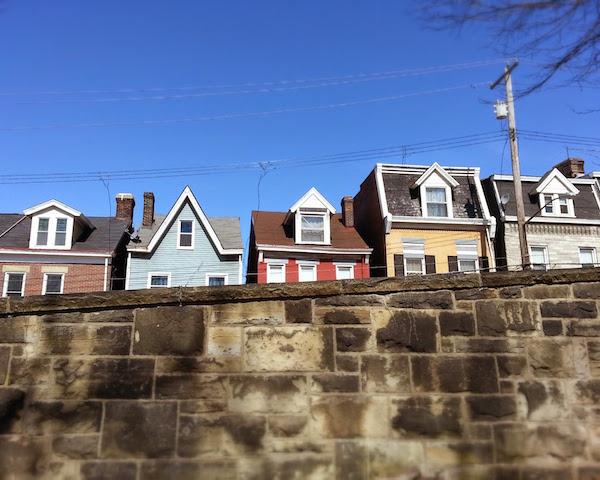
Bloomfield rowhouses seen over a wall

Bloomfield

What’s on the other side?

The question that drove thousands (millions!) of seekers–from Lief Ericson and Amelia Earhart to Harry Houdini and Charlie Sheen to that darned chicken.  What’s on the other side?

Walls make us wonder all the time, especially those that give just glimpses above of what might be masked below: treetops, a roofline, hillside, telephone wires.  What’s going on over there? Who’s in there? Is the grass really greener?

Photographically, they’re strange creatures. There’s very little visual action in a wall (depending on the wall), and you probably wouldn’t want to only look at a just a plain old wall. But what if it bisects a scene into neat geometric chunks: bands of near and far, light and dark, patterned and dissonant.

The Over-the-Wall Club meets irregularly to share photos of their findings, gulp coffee, inhale paint fumes, stare over the wall, and ask the question one more time: what’s on the other side?

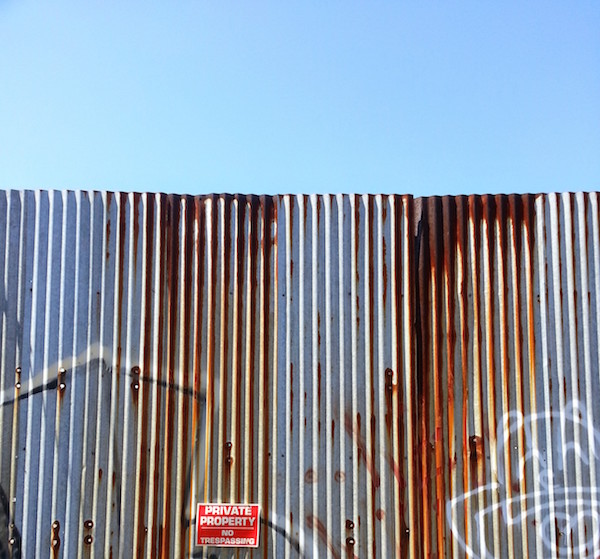
Corrugated metal wall, Lawrenceville

Lawrenceville

Leslie Park Pool, seen over the pool wall

Leslie Park Pool, Lawrenceville

Troy Hill, seen over a wall

Troy Hill (from the Strip District)

Lawrenceville row houses from Allegheny Cemetery

Lawrenceville (from Allegheny Cemetery)

ALICE IN WONDERLAND, W.C. Fields, as Humpty-Dumpty, 1933

The Over-the-Wall Club’s most famous member

Out of the Force and Into the Frying Pan

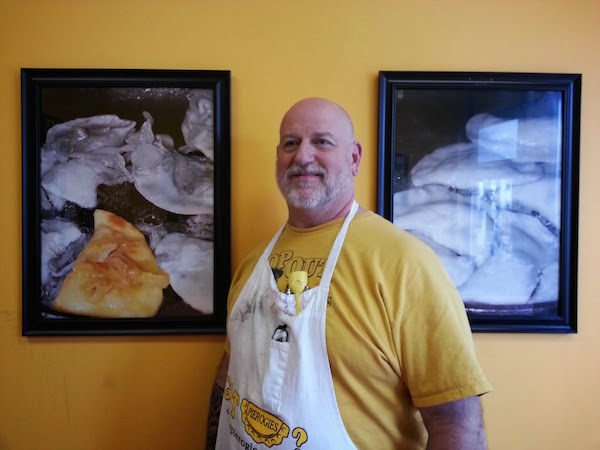
Carl Funtal of Cop Out Pierogies

Carl Funtal of Cop Out Pierogies, Etna

Pierogi-lovers, there’s a new sheriff… er … sergeant in town.

If Pittsburgh had an official city food there would be a number of possible contenders, but let’s face it: we’d end up choosing the pierogi.  Pierogies appear on diner menus and Lenten church suppers, as caricatures on t-shirts and dressed-up at fancy restaurants.  The Pirates knocked-off Milwaukee’s racing sausages with their own racing pierogies.  Oliver Onion can never catch a break!

That said, for as long as I’ve been around, the retail pierogi landscape has been dominated by only three players: Clara’s, Gosia’s, and the babcia of them all, Pierogies Plus.

Carl Funtal was a Shaler Police officer until very recently when he retired to dedicate himself fully to his three-year-old side business Cop Out Pierogies.  “I gave up working 110 hours a week so I could work just 50 or 60,” Funtal joked with us.

He’s got all the standards covered: potato/cheese, sauerkraut, cottage cheese, and lekvar (prune). But he’s not afraid to go way new school with a menu that reads more like a pizza shop: spinach, feta, and sundried tomato; pepperoni pizza; buffalo chicken, etc.  He’s also got a whole dessert line of “pie-rogies” including apple maple walnut cheese cake, salted caramel, and “Freaking Fudge.”

To wspaniała historia, ale jak to pierogów?

dinner plate with cooked pierogies, onions, sour cream, and green peas

Answer: they are delicious

Sorry! I dropped into my ghetto Polish there. But yes, this is not just some human interest story–this is hard news! The pierogies are obviously hand made, with the same each-is-a-doughy-snowflake unique lumps and pinches and aberrations that you get from the great Polish church kitchen sales.

And, most importantly, Cop Out’s pierogies are delicious. We went rogue with the Reuben and pepper butt varieties. I’ll be honest and say that with two versions of spiced-up red meat inside a dough pocket, fried in butter, and slathered in cooked onions and sour cream, I couldn’t even tell the difference.  But next time we’ll make some choices that are a little farther afield.

Cop Out’s retail storefront on Butler Street in Etna sells frozen pierogies (14 to a “dozen”) on Fridays and Saturdays and is supplying restaurants and entertainment venues throughout the region.

Carl Funtal of Cop Out Pierogies

Carl Funtal poses with some of the shop’s pierogi art