Go On and Take a Free Ride: The Tarentum History Mural

mural of rail car with famous natives of Tarentum, PA

famous Tarentum natives: Evelyn Nesbit Thaw, Henry Marie Brackenridge, Capt. J.B. Ford, “Uncle Billy” Smith, Sam Kier, and J.W. Hemphill

A rearing horse bucks at the sight of a beautiful woman through a rail car’s passenger window. High school sports fans celebrate championships of the Tarentum Redcats and Highland Rams. A pair of bonnet-wearing homesteaders share an emotional goodbye with a departing Union soldier headed off to war. Mercantile goods are unloaded from a flat-bottom riverboat to the R. McAyeal General Store. A Vietnam veteran dances with a mysterious one-armed monochrome man[1].

These very public Norman Rockwell by-way-of David Lynch scenes come to us from the dedicated hands–and seriously overworked paintbrush–of one Wally Sommer. They all play out upriver, over the bridge, and downtown, in Tarentum.
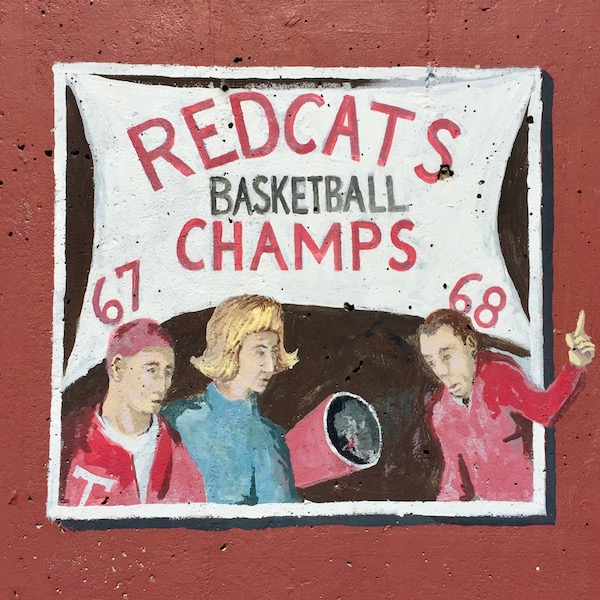
mural detail of high school students with banner reading "Redcats basketball champs '67 '68", Tarentum, PA

Redcats basketball fans

mural detail of Vietnam War veterans dancing and "Welcome to RAM LAND" sign, Tarentum, PA

Welcome to RAM LAND, dancing vets

The history of Tarentum–from the native Shawnee Indians on undeveloped Allegheny River banks to present-day football fans tailgating before a Steelers game–is chronicled in an amazing right-to-left time-traveling mural spanning the equivalent of an entire city block in the Allegheny Valley borough’s downtown.

The long concrete retaining wall has been painted in one epic, continuous 180-foot scene that takes the spectator through more than two hundred years of borough history. Starting with native Americans in unspoiled lush summer lea, the viewer is taken on a multi-century journey through colonial-era mercantile settlement, Tarentum’s industrial heyday[2], connections to U.S. war efforts, social change, famous natives, leisure, and business.

mural of army tank on train car with soldiers, sailors, and WACs on train station platform, Tarentum, PA

Tarentum’s contribution toward World War II
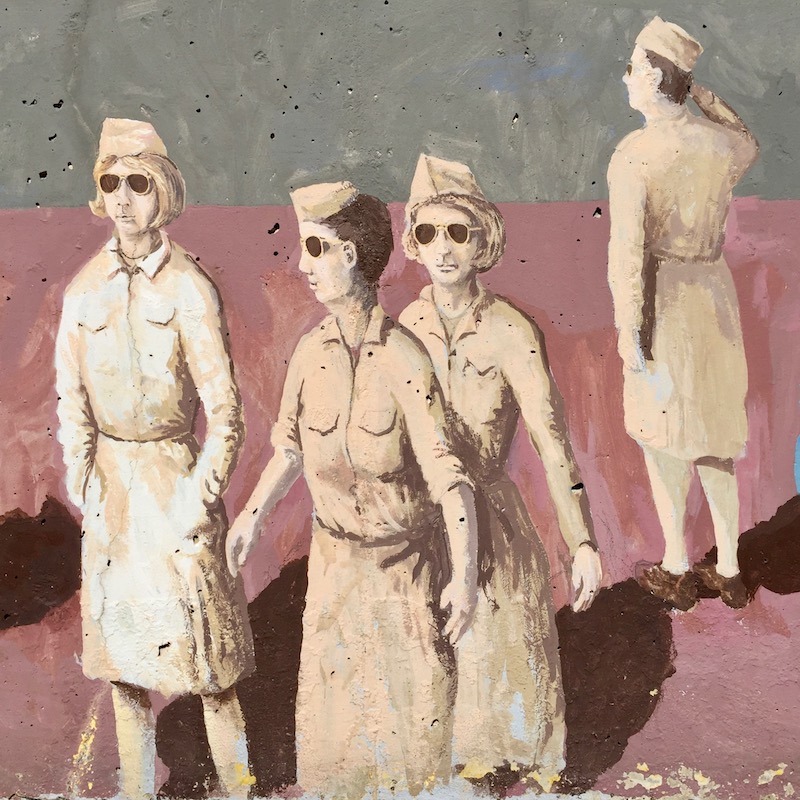
mural detail of World War II WACs, Tarentum, PA

WACs

That this magnum opus was created by just one person–an unpaid, 61-year-old (at the time) volunteer who “runs a family-owned auto repair shop” at that–is pretty incredible. A 2010 TribLive article profiles the work of Sommer as he was still currently one year into the painting process. At that point, the artist estimated he’d already put 500 hours into the massive work, hoping to finish another six months later. [No word on when the piece was actually completed.]

Sommer may be an amateur painter, but he’s clearly got both talent and technique. Sure, there are some funny proportions and odd angles, the backgrounds get a little splotchy when you get in close and there’s a John Kane-like flatness to some of the larger scenes. Overall, though, it’s really quite an impressive feat that stands up against similar pieces by “real” artists and rewards close looks at the many tiny details Sommer has included.
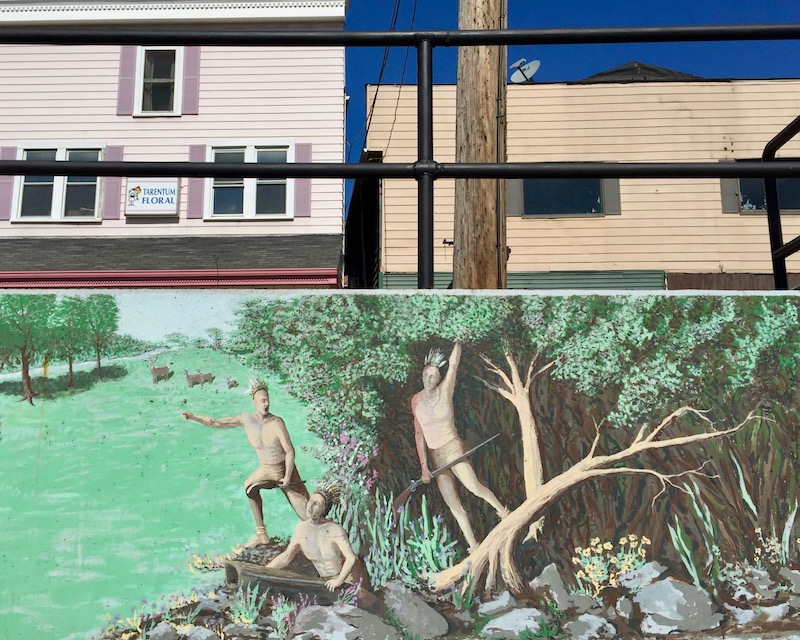
mural of native Americans with land that would become Tarentum, PA

(Shawnee?) natives of lower Allegheny River
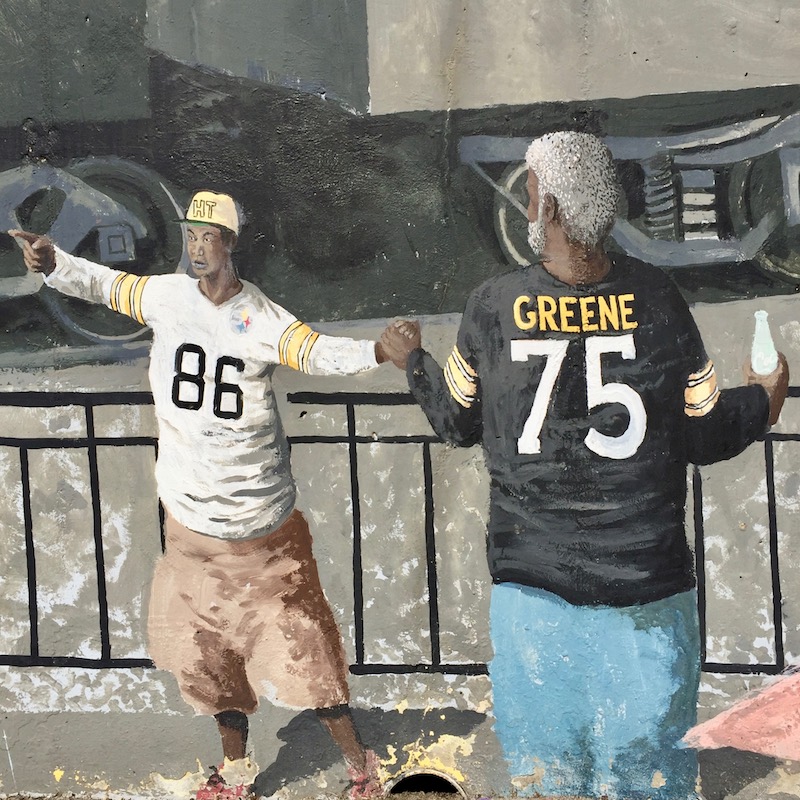
mural detail of two men in Pittsburgh Steelers team jerseys, Tarentum, PA

Steelers fans

The thematic device of a single multi-use train spanning a couple hundred years of local history was not without its bearing in immediate reality. Tarentum Borough, twenty miles northeast of downtown Pittsburgh, is bisected by prominent east-west train tracks that parallel the river and separate the town into distinct sections. Below are river flats with most of the commercial and industrial buildings. Above the tracks are largely residential slopes full of single-family detached homes, schools, and churches. The retaining wall-turned-history mural is just below East 6th Ave. and directly behind the old 1913 downtown depot, now home to JG’s Tarentum Station Grille.

mural detail of 19th century rail worker and draft horse in field, Tarentum, PA

rail worker and draft horse

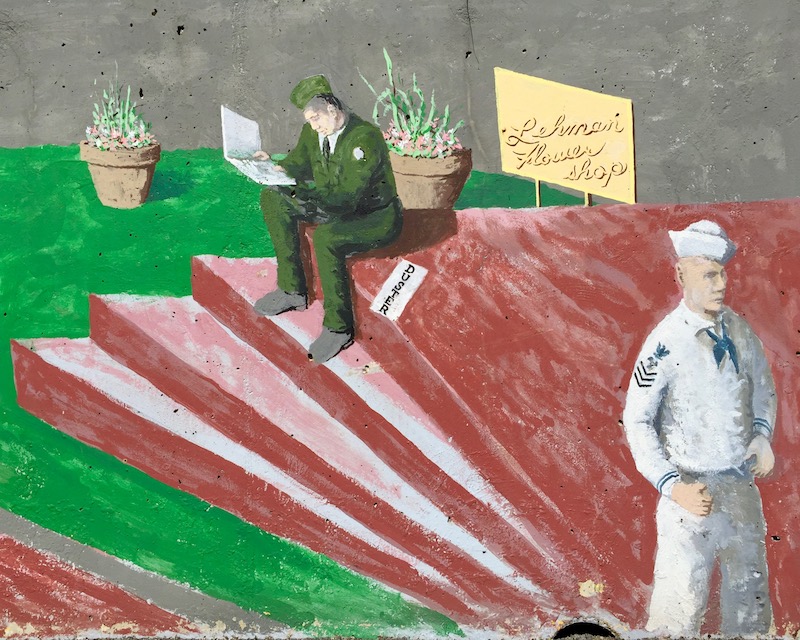
mural detail of soldier reading letter and sailor waiting at Tarentum, PA train station

soldier and sailor at Tarentum station

You won’t find a passenger train that stops in Tarentum anymore (sigh), but as a freight route, the tracks that parallel the Allegheny River still get plenty of daily use. Tarentum, like many of its sister riverfront (ex-)factory towns, has “seen better days”. According to Wikipedia, the town’s current population of 4,500 is less than half its peak in the 1940s[3]. So it’s easy to see why a large public artwork that celebrates a history of making things, winning wars, and establishing a nation would be appealing. But it’s also encouraging that this spirit still persists in the work of Wally Sommer. There’s no comparable mural project in, say, Clairton or Ambridge or right across the river in New Kensington.

mural of early American settlement with general store, farmers, and river boat, Tarentum, PA

early mercantile Tarentum general store and river boat
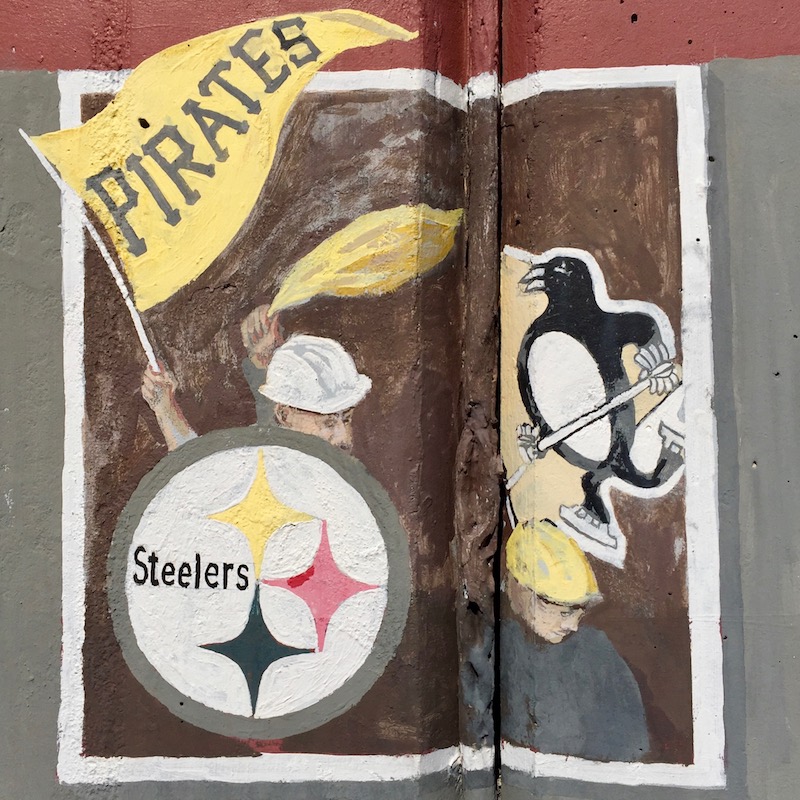
mural detail of Pittsburgh Steelers, Pirates, and Penguins logos, Tarentum, PA

Pittsburgh sports and the hardhat-wearing fans who love them

This blogger has opined on both the virtues and perils of large, public artworks in these virtual pages before. Unlike the Sewickley Speakeasy or Images or Rankin, however, Tarentum’s mural really feels built to last. It won’t take the daily roadside abuse of the former and we imagine a more invested maintenance plan than the latter. It also has the feel of a real we’re-all-in-this-together town centerpiece that will be watched-over, respected, and loved. Seven years on, the painting still looks fresh, vibrant, and as alive as the day Sommer finally laid down his brush. So far, no teenager with a can of spray paint has defiled the piece. Let’s hope it stays that way.

mural detail of Union army soldier with two women in Victorian dress at Tarentum, PA train station

Union soldier leaving from Tarentum Station

mural detail of train car windows showing man with A-1 Rental equipment, Highlands High School students, fraternal organization logos, Tarentum, PA

(present-day) mural sponsors, businesses, and civic groups are well-represented: A-1 Rental, Highlands High School, fraternal organizations


[1] We suspect the dancing partner is a fellow veteran of a more recent desert war–Kuwait, Iraq, or Afghanistan–but it is unclear from the painted depiction.
[2] The Big Steel era of the mural was sadly in heavy shade on the super sunny day we visited, so we chose not to include any of the substandard photos from this section.
[3] https://en.wikipedia.org/wiki/Tarentum,_Pennsylvania#Demographics
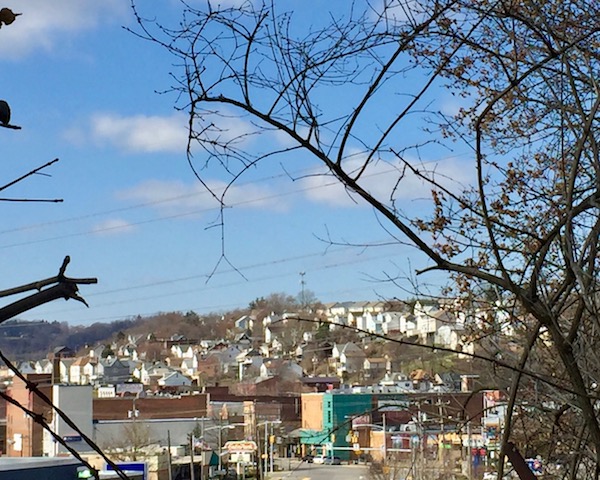
A Splendid Day in Esplen

view of McKees Rocks, PA from Pittsburgh neighborhood of Esplen

Esplen: Gateway to McKees Rocks. View of downtown McKees Rocks from the end of Radcliffe Street.

This blogger ain’t too proud to admit he had to look it up. Where the heck is Esplen? Well, it turns out we’d been there–or, at least, driven past–plenty of times and just didn’t even know it. You probably have as well.

The little boomerang-shaped neighborhood sits at the far western edge of the city, bounded by the Ohio River, Chartiers Creek, and a set of train tracks. There is no welcome sign. If you don’t live in the area, you’ve still probably whizzed by on West Carson Street/Rt. 51 as it heads out toward McKees Rocks, Neville Island, Coraopolis, and points west. In fact, from several Esplen dead-end streets there are some quite fine, elevated views across the creek to Chartiers Ave., downtown McKees Rocks’ main drag[1].

small cinderblock building with "Lab" over front door, Pittsburgh, PA

Mystery Lab

A visit to Esplen won’t take you all day. With ten or twelve very short streets, plus a similar number of alleys and block-long connectors–may be a couple hundred total houses–you can probably tour the entire neighborhood and still have time for the Sunday crossword all before lunch.

Esplen is largely zoned commercial/industrial and is home to several small factories, a trucking center, some kind of chemical plant with its own mystery “Lab”, two different plumbing and heating outfits, etc. All this and the only actual retail business is a single Sunoco station. Presumably, Esplenites cross the creek to shop in the Rocks’ business district just blocks away.

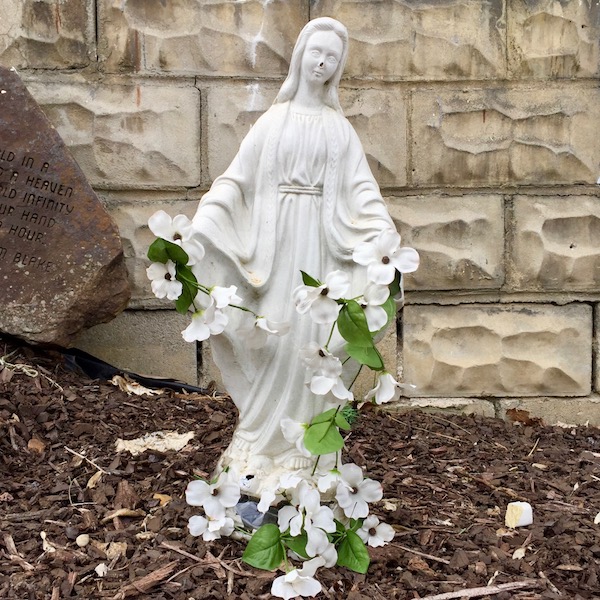
statuette of Mary with white flowers, Pittsburgh, PA

Mary with flowers, Oregon Street

statuette of Mary on pedestal of bricks, Pittsburgh, PA

She’s a brick house Mary, Oregon Street

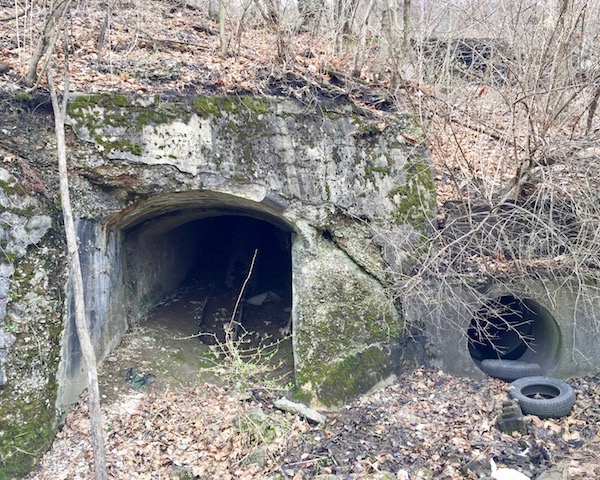
Esplen is a tiny neighborhood–among the smallest in the city both in acreage and population–but it still has a bunch of our favorite Pittsburgh things. There is a fine pair of front yard Marys at two different Oregon Street houses, some rugged untamed hillsides–one with a couple weird tunnels (storm drains from uphill Sheraden? former sewers?)–and a set of houses built on the face of a rock wall so steep there are two flights of steps to get to the front doors. A hand-painted sign informed us the mail is delivered milkman-style via the Caledonia Way alley behind the houses.

hand-painted sign reading "Mail Box Side Porch", Pittsburgh, PA

“Mail Box Side Porch”, Caldonia Way

two frame houses with long sets of steel steps to reach the front door, Pittsburgh, PA

This is why the mail is delivered via the back alley/side porch, Oregon Street

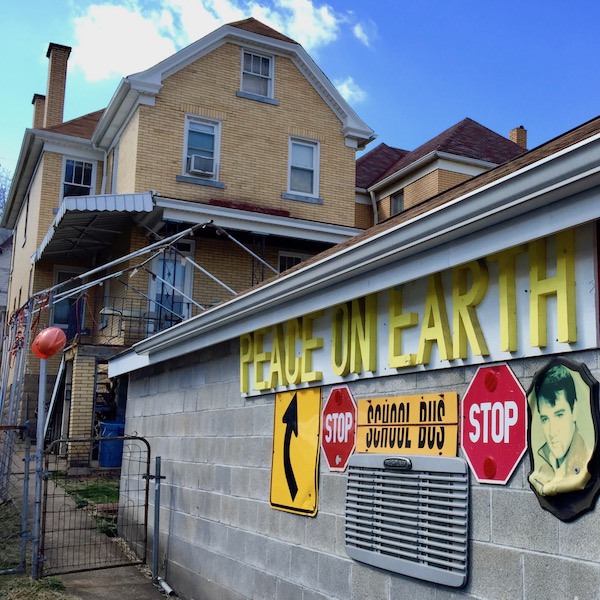
There is no official art gallery in Esplen, but one Poplar Way cinderblock garage has its exterior wall stocked with an odd assortment of recycled signage, plus the grill from a truck, and a sun-bleached portrait of Elvis. In a pinch, it’ll do.

Another Oregon Street house (not pictured) will be fully decked out for the holiday–you name the holiday–complete with both a prominent rebel/Confederate flag and a framed poster of (black athlete) Bo Jackson on the front porch. Esplenites are clearly comfortable with dichotomy on this matter.

garage decorated with "Peace on Earth" letters, stop signs, "School Bus" sign, and mounted photograph of Elvis Presley, Pittsburgh, PA

Poplar Way garage gallery

cement retaining wall in hillside with two tunnels, Pittsburgh, PA

Mystery tunnels, Esplen Street

Should you add Esplen to your must do list? As pro-Pittsburgh/gotta-see-it-all as The Orbit is, it’s hard for even us to lobby this one. It’s a cheap date, for sure–you’re only out the couple bucks for a Sunoco coffee and the gas to get you over the McKees Rocks Bridge[2]–but Bicycle Heaven is free! If our time was worth anything, would we be blogging?

That said, there’s just not much for even the most easily-amused to poke around and ponder upon. Esplen is essential if you’re trying to visit/report on every one of Pittsburgh’s 90 neighborhoods (we are), but we still recommend you take your out-of-towners to more A-list attractions like the Rising Main steps, Howard Street, or the ex-atom smasher first.

Garage door with painting of two toddlers looking in their diapers and the words "There IS a difference in plumbing", Pittsburgh, PA

Sex ed, Esplen-style


[1] Our first visit–when we took all these photos–was back in late winter when the trees were still bare, exposing views of McKees Rocks that may not exist during the lush months of summer.
[2] The western neighborhoods of Pittsburgh are not easily accessible by bicycle from the rest of the city, so yes–we drove to Esplen. If any Orbit reader has a safe, bicycle-friendly route out that way, please let us know.

Stamp Collecting: The Quest for More Sidewalk Stamps

pair of sidewalk stamps by Langell & Son, Millvale, PA

Langell & Son, Millvale

All these years wasted! A lifetime, really. Day after day, week after week, month after month rolling around with neither goal nor focus. Eyes dawdling in every direction but down! Into electrical wires, on the backsides of buildings, caught in treetops, telephone poles, and up in the clouds. Regrets: yeah, we’ve had a few.

Sure: we’d seen sidewalk/mason stamps before, but they never really occupied prime territory in this blogger’s dog-eared and ill-folded mental map. Maybe it was just plain not paying attention or the willful ignorance of avoiding their alluring street-level stare. Either way, the city’s concrete masons never made that great of an impression on us [har har]. That was, however, until Orbit reader Larry Kramer came into our life with his post-Easter walk-through on the year-round egg hunt that is stamp collecting.

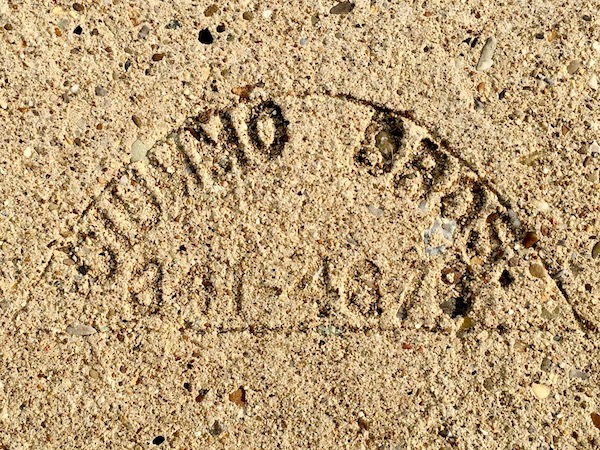
sidewalk stamp for Didiano Bros. Cement Contr., Pittsburgh, PA

Didiano Bros. Cement Contr., Lawrenceville

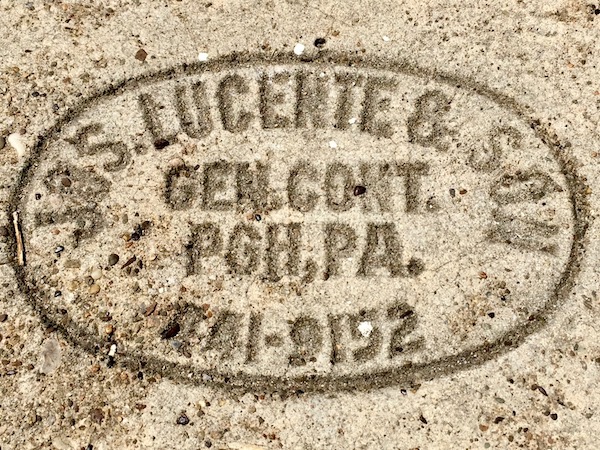
sidewalk stamp for Jos. Lucente & Son, Pittsburgh, PA

Jos. Lucente & Son, Gen. Cont., Lawrenceville

Larry’s piece was a great beginner’s guide to the greatest hits–plus a few deep cuts/one-hit-wonders–of Pittsburgh sidewalk-laying history. Di Bucci, Pucciarelli, Baleno, Ciriello–these are the Beatles, Stones, Michael Jackson, and Prince (respectively) of local cement work. You’ll come to recognize their tell-tale signature shapes from any distance–across the street or cruising by in a two-wheel, slow-motion neighborhood drag.

A little tip: don’t get too excited when you bag your first diamond-shaped Santo–it’s about as hard to find as Best of Bread or Whipped Cream and Other Delights at any thrift shop–and worth the same fifty cents. In just a few short months, we’ve developed a whole new outlook on life and a more discerning palate in this most al fresco of dining experiences.

sidewalk stamp reading "WCCP", Pittsburgh, PA

WCCP, Oakland

sidewalk stamp reading "Neno Colucci Cement Contractor", Pittsburgh, PA

Neno Colucci Cement Contractor, Lawrenceville

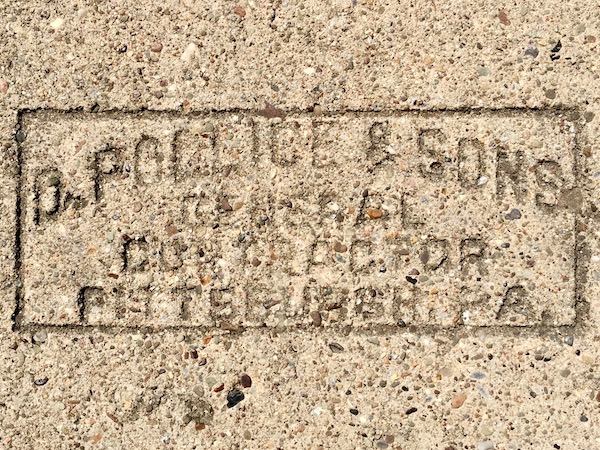
DidianoLucenteColucciPalmieriCiummoPollice. It’s a stereotype, for sure, but the names–which read like a passenger manifest on a one-way liner from Naples to Ellis Island–don’t lie. Italian-Americans poured a lot of concrete in Pittsburgh over the last century and still seem to dominate the business today. After you bag all the big-name repeat offenders, it’s these other smaller-scale, long-gone operators who may only have a handful of remaining stamps that keep the hunt alive and exciting.

"Palmieri" sidewalk stamp, Pittsburgh, PA

Palmieri, Oakland

sidewalk stamp, Pittsburgh, PA

Ciummo Bros., Friendship

There seems to be very little documentation on the computer Internet of this particular underfoot history–and most of that comes from some pretty rinky-dink sources. From what we can tell, though, the legacy of sidewalk stamps has some unique cultural differences based on what part of the country was having their pedestrian paths prepped.

sidewalk stamp for D. Pollice & Sons, Pittsburgh, PA

D. Pollice & Sons General Contractor, Oakland

sidewalk stamp for Jos. Crimeni Paving, Pittsburgh, PA

Jos. Crimeni Paving, Oakland

Here in Pittsburgh, the obvious thematic threads between our stamps are that they include the surnames of (mostly Italian) individual contractors, (seven-digit) phone numbers, and (often) extra business info squeezed in, ex: Cement Contr.Gen. Con.Landscaping & Construction. Our stamps are never dated. (Sigh–that would be so interesting!)

Other cities like Vancouver and Milwaukee have made dating the concrete pour the primary stamp. In Corvallis, Oregon the system was to include street name, contractor, and year of installation, but with a standard form and typeface (if it can be called that) containing no individual flourish. In the latter case, every (known) stamp in town seems to have been impressively mapped and labeled. There are other blog entries documenting small collections from Los Angeles, Oakland/Berkeley, Denver, and Chicago–but there’s just not that much interest out there.

sidewalk stamp for Dormont Concrete Co., Pittsburgh, PA

Dormont Concrete Co., Oakland

The new school. Depressingly sterile in their oblong, bloated rectangle shape and factory-set letters, it’s still great to see today’s masons leave their mark–and phone number–in their work…the stamps are just not as attractive or interesting.

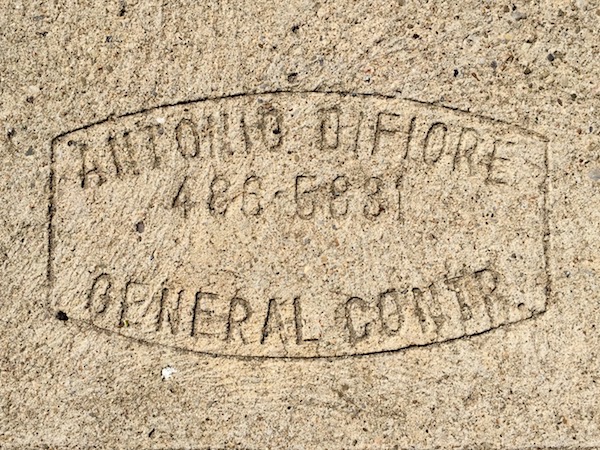
Nick Scotti (whose unique diamond-shaped six-sider was included in Larry’s piece) shows up with two different new-fangled stamps. The “Concrete Man” of Verona and Antonio DiFiore are working with similar off-the-shelf models. Vento Landscaping & Construction obviously paid for a nicer, custom design.

sidewalk stamp for Vento Landscaping & Construction, Pittsburgh, PA

Vento Landscaping & Construction, Friendship

sidewalk stamp for Nick Scotti, Pittsburgh, PA

Nick Scotti concrete contr., Bloomfield

sidewalk stamp for Nick Scotti, Cement Contr., Pittsburgh, PA

Nick Scotti, Cement Contr. (hand-written phone number), Oakland

sidewalk stamp for Concrete Man, Pittsburgh, PA

Concrete Man, Friendship

sidewalk stamp for Antonio DiFiore, Pittsburgh, PA

Antonio DiFiore, General Contr., Morningside

Finally…these are pretty neat, but there must be more of the really cool metal plaques that Larry mentioned, right? You bet your big brass there are! We’re working on a follow-up that will include the really old-school inset pieces along with some of the other oddball stamps and things we’ve found. That’ll be up….sometime.


Got a tip on an unrecognized stamp? A suggestion of an impression? We’d love to hear about it.

Going Postal: Cap Man Fever

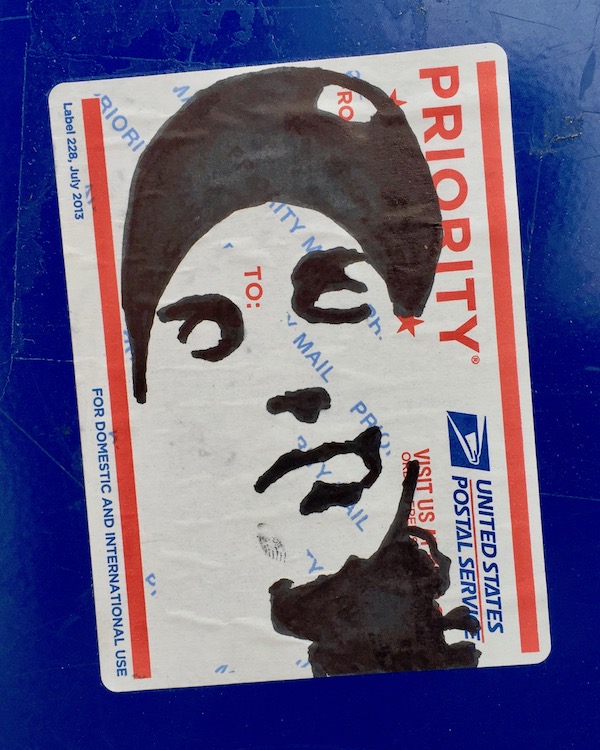
mail label portrait of man with baseball cap, Pittsburgh, PA

Cap Man #8, Schenley Plaza

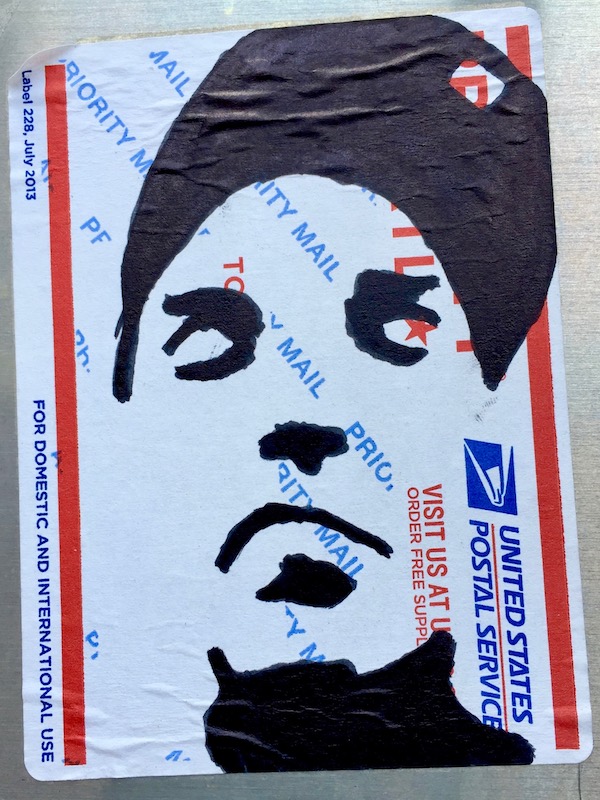
The ball cap is cocked high, resting on the back of the head at a jaunty just-off-center angle. Its bill is pure black, minus a small rectangular label on the inside brim. When you can see the man’s eyes, they stare directly back with a cold, dispassionate expression. More often, though, they’re shrouded in the heavy shadows cast by his supraorbital ridge.

Cap Man–our name for this anonymous figure–is the subject of a series of tiny artworks currently on view for a limited time* in the general vicinity of Craig Street and Forbes Avenue in Oakland. You’re going to have to work a little to find them.

portrait of man with eyes closed wearing a baseball cap drawn on US postal service mail label and stuck to blue free paper box, Pittsburgh, PA

Cap Man #1, Forbes Ave.

US postal service priority mail sticker with black ink portrait of man with baseball cap, Pittsburgh, PA

Cap Man #2, Craig Street

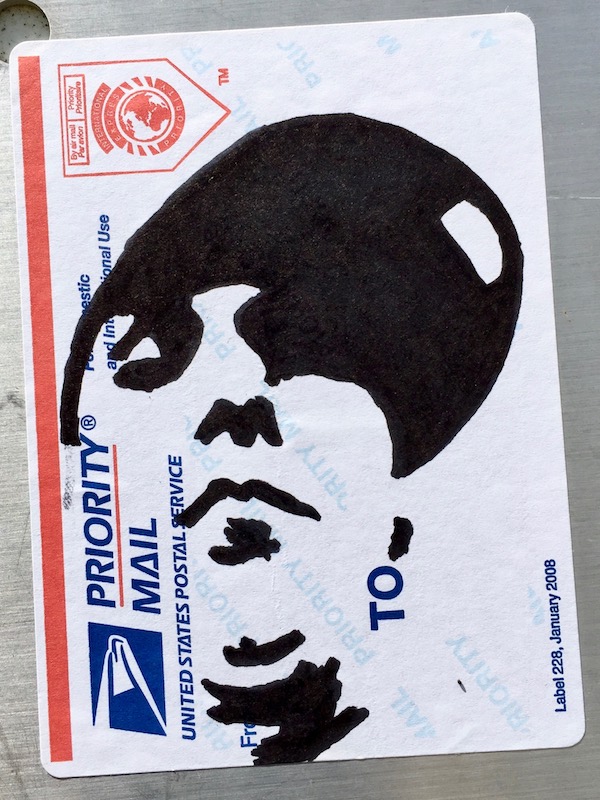
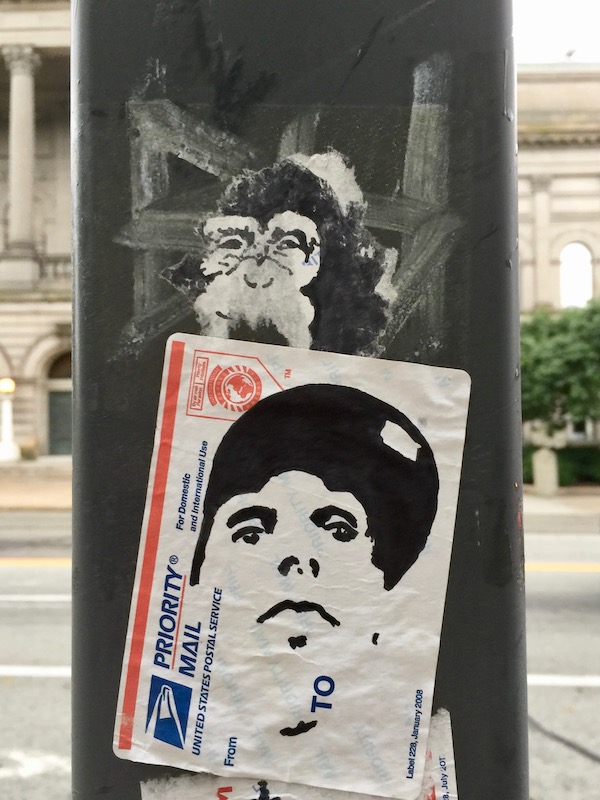
Both the medium and presentation for the Cap Man portraits are as DIY and proletariat as they come–thick black felt tip ink drawn on repurposed U.S. Postal Service “228” priority mail labels. The little stickers have been peeled off and applied haphazardly to a free publication bin, an electrical box, street poles, and–clearly the venue of choice–the back sides of metal street signs.

Cap Man’s creator certainly isn’t the first to use this medium. Alternately going by the general term sticker art or the more specific postal slaps, you’ll see similar pieces littering mailboxes and light poles all over the city and (apparently) across the country. Typically, though, they’re filled with either bright big-lettered tags that look like studies for future spray paint work or blunt messages like the series of FUCK TRUMP stickers around town. The Cap Man original ink portraits are something a little more interesting.

US postal service priority mail sticker with black ink portrait of man with baseball cap, Pittsburgh, PA

Cap Man #3, Craig Street

US postal service priority mail sticker with black ink portrait of man with baseball cap, Pittsburgh, PA

Cap Man #4, Bellefield Ave.

We don’t know who this person is–either artist or subject. It’s probably safe to assume, though, that the two are one in the same–self-portraits of a young man on the move. The angle of the image seems to suggest the artist is working from a lap-held mirror, or (more likely) his phone.

A theory: The proximity of where the stickers have been left suggests the possibility the perpetrator is riding the bus to Oakland, getting off at Fifth & Craig (or thereabouts), and then tagging the first bare surface he or she encounters on the ensuing walk down Craig Street and around the corner, heading toward the museum maybe, or Pitt.

In this scenario, the drawings may even be inked right there in the aft seats of the 54C or the 93A, a daily discipline perfect for the 10-minute hands-free commute. The shaky nature of this workspace would also help to explain why a couple of the portraits are clearly off–as if the otherwise competent hand that drew them was jostled mid-stroke…but this may just be a romantic pipe dream from a blogger who reads too many detective stories.

mail label portrait of man with baseball cap, Pittsburgh, PA

Cap Man #5, Forbes Ave.

mail label portrait of man with baseball cap, Pittsburgh, PA

Cap Man #6, Forbes Ave.

Let’s face it: ball caps look pretty dumb on anyone who’s not either twelve years old or actively playing baseball at that moment. That said, we’re glad Cap Man has given his stark two-tone/big negative space portraits something distinctive to, uh, hang his hat on. As a visual element, it makes his head stand out, provides structure, and frames the top of the drawings. It also provides a nice thematic grouping for the current exhibition in Oakland.

We suspect Cap Man’s old-school selfies aren’t the only street-facing work of this artist. Bloomfield is currently host to another pretty distinct series of postal slaps that look like they may have come from the very same hands. That, however, is a subject for another post on another day. Until then, a tip of the hat to you, Cap Man, it’s been a good time finding your tiny pictures.

mail label portrait of man with baseball cap, Pittsburgh, PA

Cap Man #7, Forbes Ave.

mail label portrait of man with baseball cap, Pittsburgh, PA

Cap Man #8 (detail), Schenley Plaza


* Limited, but unspecified: sunlight, rain, or graffiti cleanup efforts will eventually claim these pieces.

Poetry’s Uplifting Gormandizer: Scott Silsbe Serves Up “Muskrat Friday Dinner”

Poet Scott Silsbe standing in front of faded mural of Viet Nam veterans, Pittsburgh, PA

Think war is Hell? Trying reading this guy’s book! Just jaggin’–it’s good!

Inside, there are many, many nights of consumption–music and alcohol, laughter and greasy food. But also deeply personal reminiscences on childhood, past loves, missed opportunities, anecdotes of the day-to-day, awkward conversations. Yes, you’ll also find that great mother of all poetic downers–mortality.

Muskrat Friday DinnerScott Silsbe‘s just-released third collection of writing, contains all of these.

Some things are difficult. Some things we have to whisper.
Some things we don’t say at all. We have to keep it down.
Even if the laughter is all that’s keeping us alive or sane.

“Three Fragments” (excerpt)

A dirty secret: when poetry is recited at Chez Orbit, it generally involves both super-sized anatomy and the island of Nantucket–so we don’t have a lot of experience in the world of deep verse. Why? A prejudice, for sure: it feels like work in the same way some think about watching foreign films, or listening to twelve-tone music, or flossing. But it needn’t be that way.

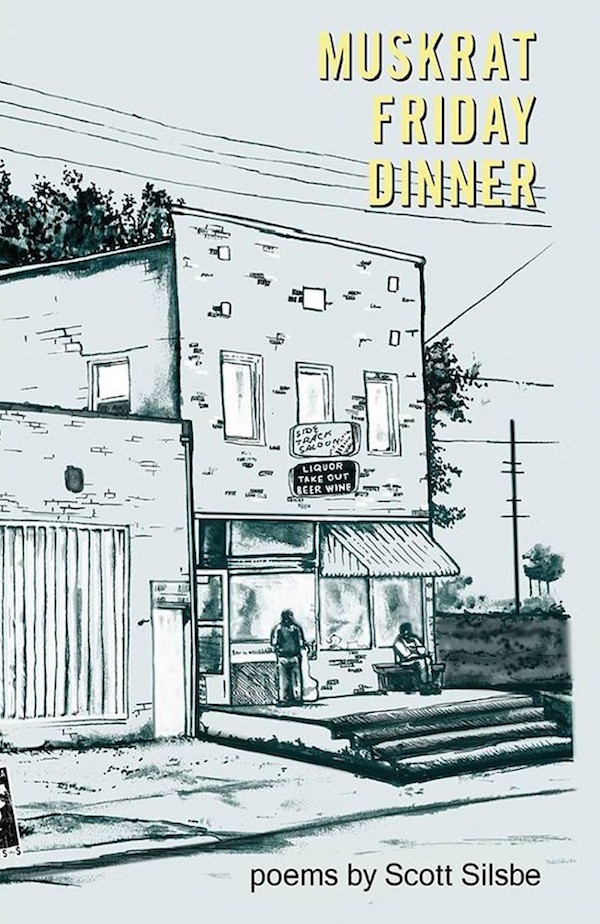
Silsbe, who came to Pittsburgh at the turn-of-the-millenia to pursue an MFA in poetry from Pitt, expressly wants to get away from that kind of foo-foo academic writing and create work that’s direct, narrative, accessible, and decidedly not difficult. Muskrat Friday Dinner–from its title poem of a Downriver Detroit saloon staple to the rat-on-a-dinner-plate illustrations–delivers.

book cover for "Muskrat Friday Dinner" by Scott Silsbe

“Muskrat Friday Dinner” book cover, illustration by Paulette Poullet

“Poetry can be fun”, says Silsbe, “I wanted a book of good-time, drinkin’ poems that people will enjoy reading or hearing”.

Arty or arch, these short poems ain’t. That said, fun may depend on one’s sense of humor. But yeah, if you don’t get too worried about the condition of Silsbe’s over-worked liver, you can hopefully enjoy the vicarious thrill of waking up on the living room floor or arriving home with the dawn all from the comfort of your chaise lounge.

The book is so, uh, human-readable in fact, as to sometimes feel like a collection of journal entries, day-after tall tale-telling, or (very) short fiction–narrative, in plain English, and real. “I want to document the world around me,” Silsbe says, “The poetry should be personal so that it can be universal.”

If there’s
enough
money
get me
pork rib.

“Found Poem–Express Lane, Giant Eagle”

Silsbe’s experiences may or may not be truly universal, but they’re sure close. We’ve ridden in that car, ate that midnight meal, ended up in that tavern and didn’t know how or why. You’ve heard a record that felt like it was written just for you, longed for a person behind a second-story window light, seen the beauty in a perfect new snowfall…and then ruined it with your own need to slog through and get home to bed. Everyone past a certain age has received a phone call where he or she ended up needing a black suit.

Silsbe talks about individual pieces taking days–weeks, even–to get right. But the poems have an immediacy that feel like they were inked right then when the memory was still fresh–at the end of the night, or first thing the next morning–his head still throbbing and ears still buzzing.

It’d be nice to get some down so we don’t lose them. Stories grow soft with time. Though sometimes we fill in the gaps with juicier details to make the story better, making the story our own, with the hope we don’t lose the best parts, we don’t sacrifice the real story. As if we really know or care what that is.

“Old Writers Talking About Old Writers” (excerpt)

Us, we’re still buzzing too. Silsbe is right: it is fun to read a book of poetry (twice, even–we had to take notes!) and we’ll do again. Also interesting is getting inside the life of a person we kind of know [full disclosure: Silsbe was an acquaintance prior to the book’s release] vis-à-vis this tightly-edited, metered take on real experiences, Pittsburgh places we know, and people around town.

“There’s something in our makeup that craves to create a beautiful object”, Silsbe says in the poem “Ceremony”, “Essential to that is the knowledge that no thing we create can ever be without defects.” Defects? Yeah, well, maybe–sure. But hat’s off, Mr. Silsbe, you created some real nice stuff here. Thanks for letting us in to have a look.

My God, how I loved living on the earth.
There were those things that sustained me
all those years–the names of the clouds,
the vesper sparrows lined up on a branch,
her bedroom light on behind a red curtain.
I would circle the block just to see that–
knowing it meant she was in there, alive.
perhaps waiting for me, and perhaps not.
But there. And that presence was enough.

“Searchlight”

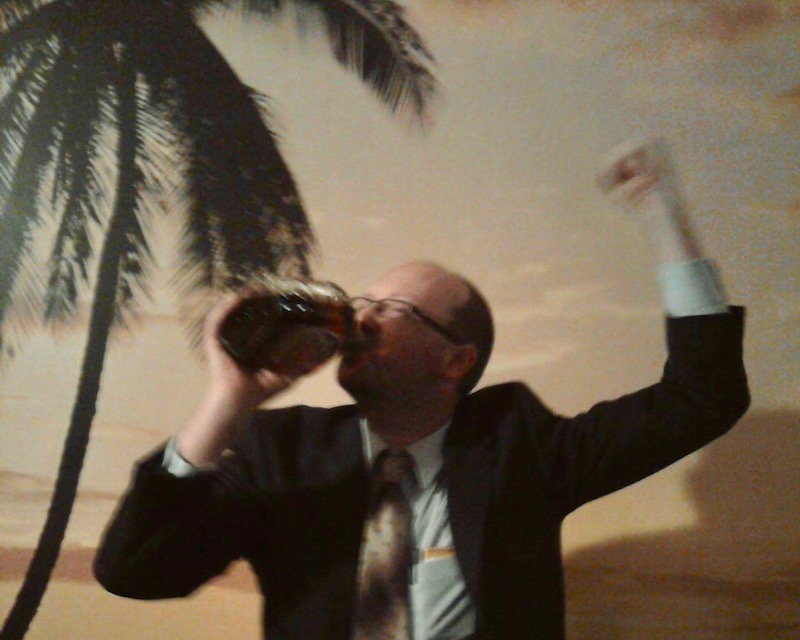
author Scott Silsbe dressed in suit and tie, drinking whiskey from a bottle in front of a wallpaper beach scene

Another day in paradise. Silsbe at “The Beach”. [photo: Scott Silsbe]

Muskrat Friday Dinner is Scott Silsbe’s third collection of poems. All three are available locally from Caliban Books in Oakland as well as “other fine booksellers”.  Those either preferring or requiring the magic of The Internet can achieve the same from Amazon.


Quoted poems taken from Muskrat Friday Dinner, White Gorilla Press, Belford, NJ ©2017 Scott Silsbe and used with permission of the author.