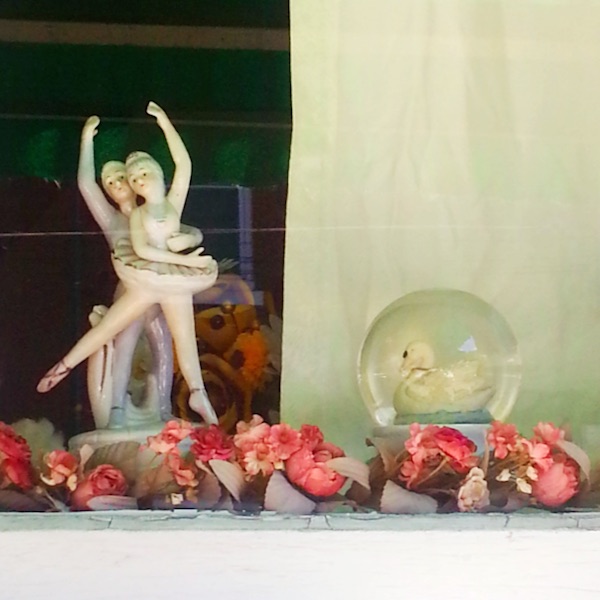
Easter Special: Lawrenceville Window Displays

row house window diorama

Guest blogger Kirsten Ervin has long watched the evolving window displays of our neighbors in Lawrenceville.   For our Easter special, Kirsten takes us for a look around the seasonal offerings on this fine finally-feels-like-Spring holiday weekend.


row house window artI have long been intrigued by the window art of Pittsburgh row houses. These are the windows of working class houses in Bloomfield, Lawrenceville and Polish Hill, neighborhoods once dominated by the steel mills.


Easter bunny in door window

Here you’ll find tableaus of religious figures mixed with cartoon characters, stuffed animals, kids artwork and Steeler fandom. It’s common to see Jesus and Mary mingling with cheerful trolls and frogs, nestled up to Andre Fleury and Sidney Crosby.

These shadow boxes face the street, on display for the pedestrian, giving a glimpse into those who live inside. “We love spring!” declares one, or “We are faithful!” shouts another, or even, “We haven’t given a shit about anything since Halloween!” says a third.


row house window art

They remind me of the assemblages of Joseph Cornell, that solitary American artist of the mid century, who created achingly beautiful, surreal arrangements while living in Queens and eating most of his meals at the automat.

What happens when objects are placed under glass in a box? Do the contents seem more precious, more significant? One is reminded of religious shrines of course, and the powerful combination of color, glass and light, framed.

row house window art

For the viewer of Pittsburgh window art, another dimension exists, the reflection of the opposite side of the street. Add the layered images of branches, other houses, street signs, and electrical lines, and the tableau shifts again.

It is touching to recall that one of Joseph Cornell’s last exhibitions was created especially for children, his boxes hung at child-friendly height, with cake and soda at the reception. Here too, is everyday art, meant for the everyday spectator, a chance to show the passerby who you are and what you care about.


Photos and text by Kirsten Ervin.
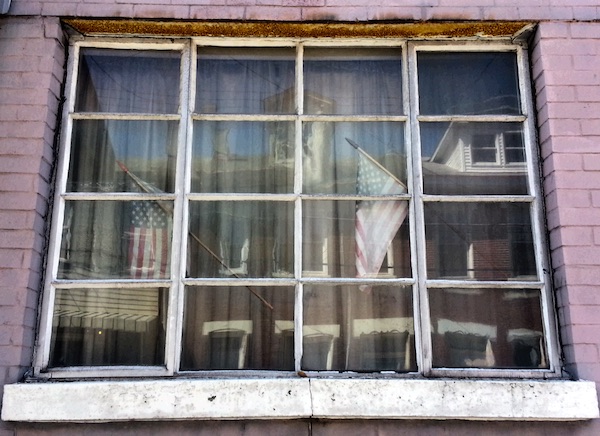
row house window art


row house window art

Good Friday Special: The Father, The Sunoco, The Holy Ghost

Crucifixion scene with Sunoco gas station in background

Jesus/Sunoco, Carnegie

Sometimes these things just fall into your lap.  That is, if your lap happens to be hanging out around the Russian Orthodox church in Carnegie.  Or maybe it’s more like discovering an Easter egg: we came looking up toward the roofline from the street, but found this little gem around the corner in the side yard.

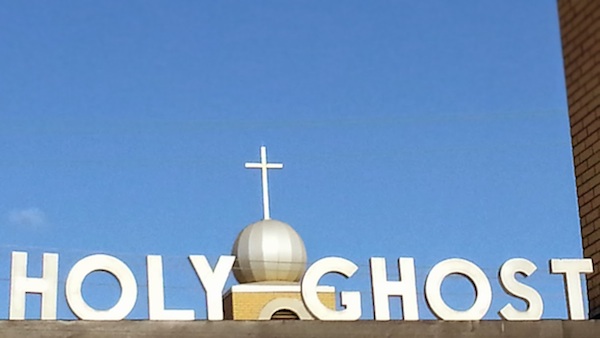
Either way, there it was: the photo-blogger’s cheap, visual joke laid out on a platter like an Easter ham with all the fixins.  Jesus crucified twice: once on the old-school cross, and then again bisected by the Sunoco station roof, just in time for Easter.  We threw in a shot from Holy Ghost Byzantine just to, you know, complete the trifecta.

I wonder if the site planners for Sunoco even considered their neighbors when locating this mega-station on Mansfield Blvd. next to Holy Virgin Church.  I’m a so-so photographer, but I always pay attention to what’s in the background of the shot.  Maybe they considered all that and just wanted to make the gas station look better.

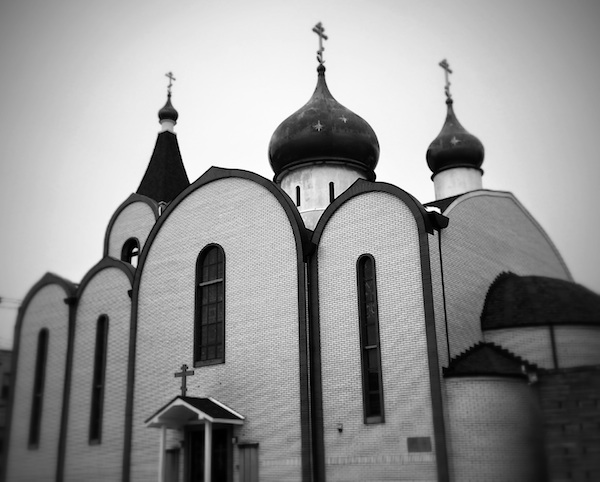
Holy Ghost Byzantine Catholic Church, McKees Rocks, PA

Holy Ghost, McKees Rocks

Murals of the Bloomfield V.F.W.

Detail of mural on the Bloomfield V.F.W. showing returning sailor kissing a nurse

The Kiss

The murals popped-up probably ten or twelve years ago and just like the scenes depicted in them, for Foodland’s (now Shur-Save’s) customers it was like a bomb had dropped in the parking lot.  Seemingly overnight, the nondescript backside of the windowless cinderblock Bloomfield V.F.W. was suddenly transformed into an electric war fantasy where a battleship caricature drifts next to haggard Vietnam G.I.s, a chopper hovers in air support.  World War I-style trench warfare plays out next to a rendering of the famous photo of the V-J Day Times Square kiss.  An evil black stealth bomber soars overhead.

The single large mural covers two sides of the building and features a collection of the most iconic images from each of the last century’s big wars (Korea and Kuwait don’t seem to have made the cut).  The scenes are all John Wayne glory without any of suffering, tragedy, or boredom that the actual veterans inside the post must have experienced.  I suppose that’s to be expected, and yet things can’t have been all that great for every V.F.W. member.

I don’t know when or why the Bloomfield V.F.W. closed, but now that time has passed and the murals have faded and physical structures decayed, they’ve lost at least some of their gun-toting braggadocio and taken on a new air of sadness and absurdity.

Why is the Times Square couple in front of a wall of breaking waves?  Many of the wave crests are literally breaking as the four-foot retaining wall deteriorates under them. Why does the battleship have hundred-yard-long cannons? (Ladies: don’t answer that one.) And why is there a flag-colored curtain exposing the scene as if it is a literal theater of war?

The Vietnam section suffered either a most inept act of vandalism or an unfortunate spill from someone working on the roof. The gas mask-wearing warrior looks out from a trench immediately behind more crashing waves.

I don’t know what will become of the former V.F.W. or its murals and for once I don’t even have a rooting interest either way.  Godspeed.

Detail of mural on the Bloomfield V.F.W. showing battleship with exaggerated cannons

It’s not the size of your cannon…

Detail of mural on the Bloomfield V.F.W. showing Vietnam soldiers and helicopter

“The Shit”: ‘Nam

Detail of mural on the Bloomfield V.F.W. showing World War I trench warfare

Beach/trench warfare

Why is purple the color of Lent?

cross with Lenten purple cloth

Why is purple the color of Lent? St. Paul’s Cathedral, Oakland

St. Paul’s Cathedral in Oakland, its giant cross with purple fluttering cloth and large entry door wreaths pops with brilliant purple, especially on the earliest bleak days of the season, when the trees are still bare and the sky is inevitably gray and drizzling.

It looks terrific, but this heathen-turned-blogger decided to seek out a different type of higher power to answer a question that likely all you Catholics already have figured-out: why is purple the color of Lent?  I did the Googling, so you don’t have to.  Here’s what I found out:

Tyrian purple was associated with royalty.  It is also appropriately known as “royal purple.”  The color was largely a status symbol as purple dye was the most painstaking and expensive to produce and therefore purple-dyed fabric was prohibitively expensive for anyone else. From a 2013 New York Times Science article:

To make Tyrian purple, marine snails were collected by the thousands. They were then boiled for days in giant lead vats, producing a terrible odor. The snails, though, aren’t purple to begin with. The craftsmen were harvesting chemical precursors from the snails that, through heat and light, were transformed into the valuable dye. The compounds that turn purple in this process serve a defensive role in the snail — they protect the egg masses from bacterial infection.

Fair enough, but how does this get us to the Bible?  Don’t worry, they’re related.  The explanation is that the regal color is a mockery of the “King of the Jews,” deployed by Pontius Pilate and his soldiers at a crucial spot in that greatest story ever told.  From Mark 15:17-20:

And they clothed him in a purple cloak, and twisting together a crown of thorns, they put it on him. And they began to salute him, “Hail, King of the Jews!” And they were striking his head with a reed and spitting on him and kneeling down in homage to him. And when they had mocked him, they stripped him of the purple cloak and put his own clothes on him. And they led him out to crucify him.

Ouch!  In third grade Mrs. Yuchmow taught us to never start a sentence with “And.”  Small style quibbles aside, I guess we have an explanation.  In perhaps the original example of a group turning an epithet on its head to take back ownership, the Catholic church now recognizes Tyrian purple as the symbolic color of the season.  And they look great doing it.

St. Paul's Cathedral front doors with Lenten purple wreaths

St. Paul’s Cathedral with Lenten purple wreaths

Onion Dome Fever: St. Mary’s Russian Orthodox Church

St. Mary's Russian Orthodox Church, McKeesport, Pa.

St. Mary’s Russian Orthodox Church, McKeesport

It was a bleak late February day when Orbit cub reporter Tim and I set out in the slush for McKeesport. We were tracking big game: one muffler man and a couple onion domes.  And bag them we did. Oh yes, bag them we did. But so much more, too: fish and trains and saints and steps and one Magic Palace. More about all that (hopefully) in the weeks to come.

But for now, let’s get to the task at hand: the beautiful St. Mary’s Russian Orthodox Church. Located on a side street, a couple blocks off the main drag from McKeesport’s downtown, St. Mary’s looks nothing like the landscape that surrounds it.  It also looks not particularly like the other Eastern Orthodox churches we’ve seen on this beat: more modern, white-bricked, with glowing blue domes (you’ll have to take my word on that one, or see video at bottom).

If this blogger wants to hit the big time he’s going to have to remember to bring his reporter’s notebook and write down some facts, so I don’t have a date on when St. Mary’s was built.  That said, it feels very between-the-wars: sleek and stylish, its curves more suggestive, its lines part old world, part deco.

I don’t know if it’s worth a trip to McKeesport just to see St. Mary’s–that’s what the Orbit is here for!–but definitely do stop by if you’re out that way.  And if you do, let me know what it says on the cornerstone.

St. Mary's Russian Orthodox Church, McKeesport, Pa.

McKeesport skyline with St. Mary’s

St. Mary's Russian Orthodox Church, McKeesport, Pa.

“Tim: get out of my shot!”

Bonus footage!  Video of St. Mary’s new dome getting installed in 1998:

P.A.P.A. Was A Rolling Stone

Unique head-to-head pinball action

These guys: The first “A” in PAPA stands for Amateur

Spoiler Alert: competitive pinball is not a great spectator sport.

It’s not that The Professional & Amateur Pinball Association (“PAPA”) didn’t try.  There were cameras trained on each of the Division A tables which simultaneously broadcast to big screen TVs right above the play and live to the Internet on the organization’s streaming site.  A set of low bleacher seats was set up with a view of everything and it was consistently stocked with lounging competitors. Occasionally, one of them would even look up to check out the action. But let’s face it, watching some dude (and it is almost always a dude) play pinball is just not that exciting, no matter how good he is.

PAPA Championship Group A competition

Not the Super Bowl: PAPA Championship Group A competition

PAPA, based in a big warehouse in the industrial section of Carnegie, has put on eighteen World Championships of pinball, the most recent having just wrapped-up last weekend. When we hear the words “world championship pinball” followed by “free” and “pancake breakfast” (O.K. that last one wasn’t an official part of the event), you know we’ll be there.

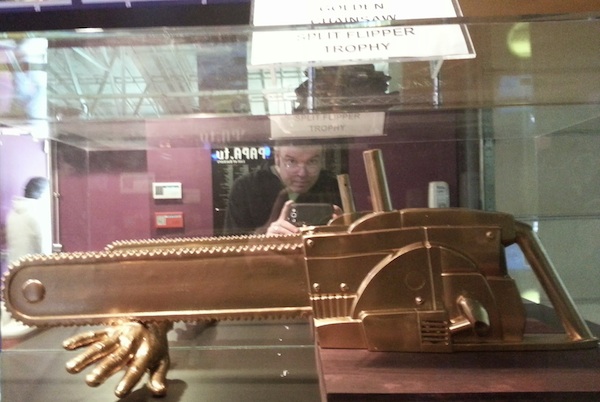
Golden Chainsaw Split Flipper Trophy

As close as this blogger will ever get to the Golden Chainsaw Split Flipper Trophy

Though it’s exciting to walk into what is essentially the Olympics of pinball, the Orbit staff, much like Bob Costas and Mary Carillo in Sochi, quickly lost focus and wandered off to look at shiny things.

And there were many shiny things to distract even the most hardened get-the-story-right blogger: blinking lights, ringing bells, zapping buzzers, bumping bumpers, crazy mechanical contraptions, perverse teenage fantasies, (outdated) pop culture knock-offs, blast-from-the-past zig-zagging lasers. Some 450+ pinball machines alone (we’re taking the PAPA’s word on this, but that seems totally believable) plus old-school video games, mechanical arcade games, novelties, and one “yarn-bombed” art machine.

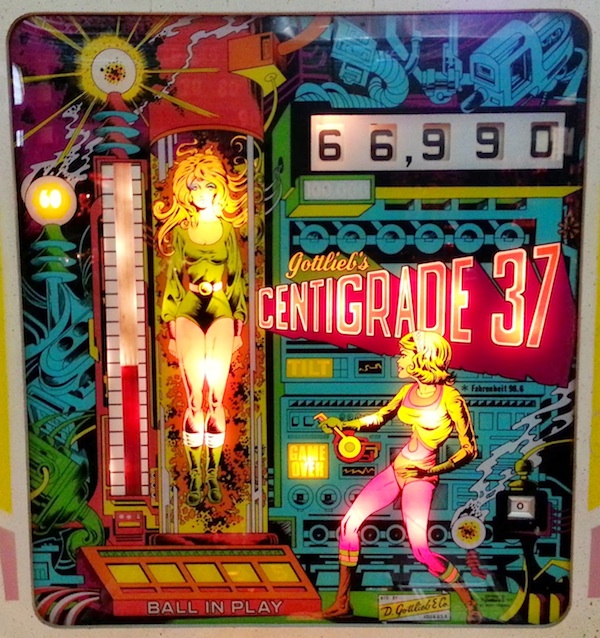
Centigrade 37

Centigrade 37: it’s getting hot in here

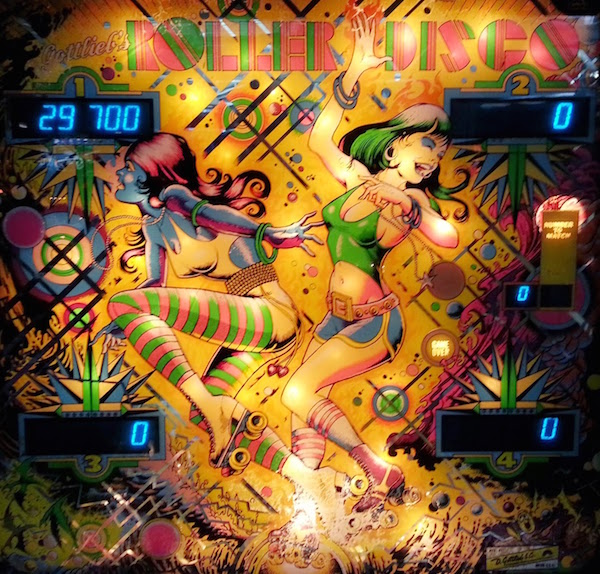
I love pinball art in all its glowing comic book teenage (male) fantasy over-the-topness. Busty science-fiction vixens, stoned aviator sunglasses-wearing protagonists with unfortunate haircuts and “shaggin’ wagons” (Greg’s term), popcorn movie tie-ins (official), and knock-offs (not so).  No genre or theme seems to have been left unexplored: from the old West to outer space, from secret agents to cartoons, surfing to disco dancing, Guns and Roses to ladies formal wear (yes: the Dress Up pinball game seems to be the one machine 100% targeted to women and/or budding fashion designers).

Bally Embryon pinball machine

Embryon: time to make a baby

Gottlieb Roller Disco pinball machine

Roller Disco: let’s boogie

Bally Wizard! game

Wizard!: such a supple wrist

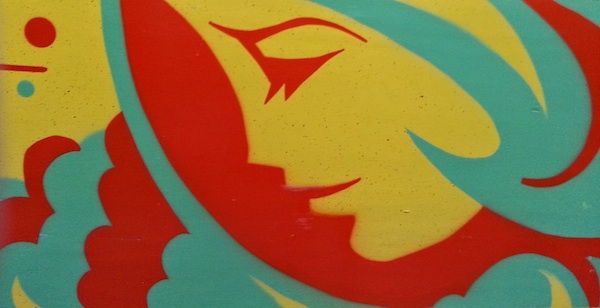
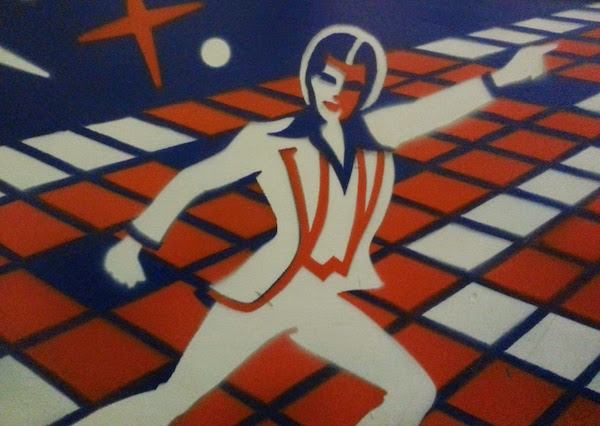
As great and ridiculous as the actual glowing machine graphics are, I find that what appeals to me most are the simple 3- and 4-color spray-painted cabinet stencils that decorate the sides of the machines.  Their placement makes a lot of them difficult to see (and impossible to photograph) except when the right machine ended up on the end of a row where you could really get a good look at it. This is totally understandable, of course, but still a shame as the simple designs and fuzzy not-quite-registered paint jobs are particularly terrific.

pinball cabinet stencil of woman's face

cabinet stencil

disco-themed pinball cabinet stencil

cabinet stencil

pinball cabinet stencil of surfer

cabinet stencil

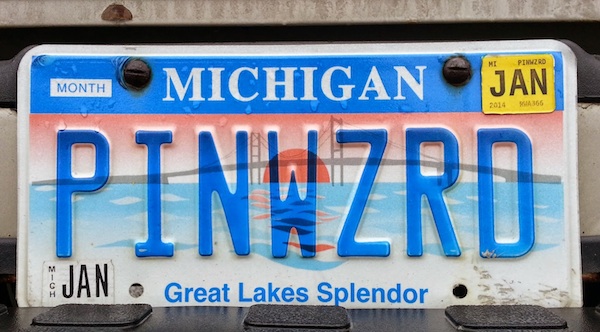
The variety of license plates told us that attendees came from all over the country (at least) and the banners that immortalized past champions (and their home towns) hanging from the ceiling had a similar distribution. Keep your eyes peeled for a second big event in August at the convention center where a pay-one-price scheme gets you open play at the full collection of PAPA’s pinball games and supposedly another hundred or so they’re bringing in on top.

Michigan license plate PINWZRD

Michigan PINWZRD spotted in the parking lot

pinball machine bumpers

“Howdy, bumper!”

pinball game artwork

Sometimes a giant vase is just a giant vase, and then other times …

Two Great Tastes: Snow & Trains

Coal car in snow

Coal car and warehouse, Lawrenceville

If the Milton S. Hershey Company is to be believed, chocolate and peanut butter are two great tastes that taste great together.  The number of great one-two combinations certainly doesn’t stop there, though.  I’d suggest that the guitar and the accordion are two great sounds that harmonize great together.  Fresh mowed grass and burning charcoal are certainly two great aromas that smell great together.  Kirsten’s mother believed that bright orange and deep purple were two great colors that looked great together, and I wouldn’t argue about that, though I don’t think I’ve run it up the flagpole myself.  Watching French cop movies with a cat on your chest are certainly two great sensations that, uh, feel good together.

If you’ve spent any time around Bloomfield, you know that Zubaz and tank tops are two great fashions that look great together.  Deep-fried cod and mac & cheese are two great solemn religious observances that celebrate the rebirth of Christ great together.  A lot of people will tell you that biceps and tattoo ink are in this same league, but we’re staying mum on that one.

Where am I going with this?  Oh yeah!  Here on this first day of Spring, let’s say goodbye to Ol’ Coldipants with one of the action blog photographer’s great two-fers: snow and trains. Black rail cars, white snow, blips of color that pop like the first flowers right around the corner–they just work, and they work great together.

Rail yard with empty coal trains

Rail yard, Duquesne

Railroad switch in snow

Rail switch, Lawrenceville

Coal car with graffiti reading "I Don't Give a Fuck"

“I Don’t Give a Fuck”, Duquesne

Coal cars in snow

Coal cars, Lawrenceville

Onion Dome Fever: Rocks Bottoms Orthodox

St. Nicholas Orthodox Church

St. Nicholas Orthodox Church, McKees Rocks

Growing up in the South, we had plenty of churches, but they tended to be Baptist, Methodist, and A.M.E.  They worshipped in unremarkable generic brick buildings, scaled-down budget classics, old wooden country churches, and occasionally unfortunate modern takes that would make even the most pious consider a life of sin.

There were a handful of Catholics in every decent-sized town, but they weren’t the wine-swilling, cigar-chomping, fish-frying variety that exist in the North.  One of my earliest new-to-Pittsburgh memories was going to a church carnival in my neighborhood where the fund-raising priest hosted a cash-on-the-table spinning wheel gambling game where the prizes were all bottom shelf liquor.  That just doesn’t go on in Appalachian Virginia.

Around Pittsburgh, there are dozens of amazing Eastern Orthodox churches with an architecture that still strikes me as otherworldly.  Byzantine crosses and elaborate stained glass.  Gold-leafed tableaus and, above all (literally), glorious (usually) gold-painted onion domes that routinely mark the skylines of otherwise humble brick factory towns and glow on gray and rainy days.

Here’s a first post wherein we honor the amazing church architecture in Pittsburgh.  The small neighborhood of “The Bottoms” in McKees Rocks boasts at least three different Eastern Orthodox churches, each with their own interesting features.  Let’s start with St. Nicholas.

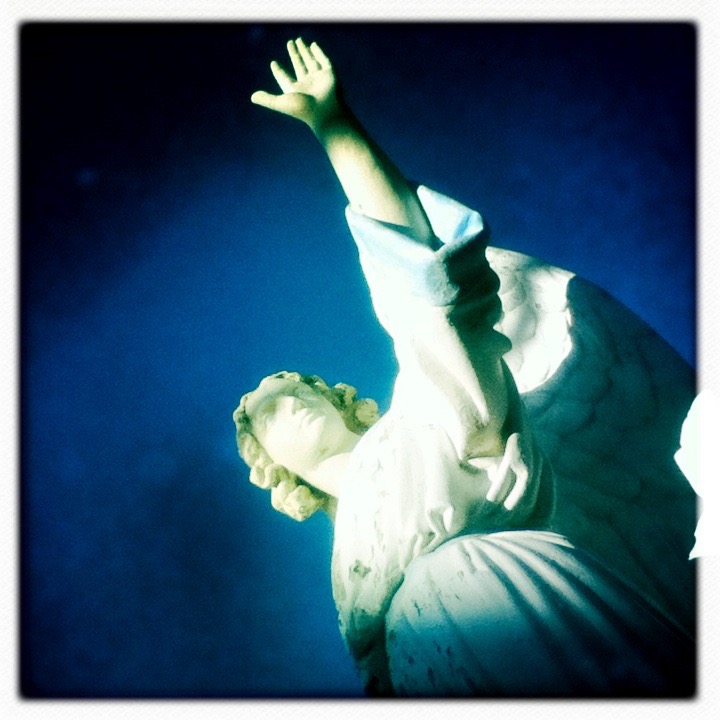
Statue at St. Nicholas Orthodox Church

Angel

Statue at St. Nicholas Orthodox Church

Angel (detail)

Statue at St. Nicholas Orthodox Church

Angel with power lines

St. Nicholas Orthodox Church in silhouette

St. Nicholas silhouette


Italian Colors

Two rowhouses in the Bloomfield neighborhood of Pittsburgh: one green, one red

Green house, red house, white snow, Bloomfield

Even the most casual student of the classics will recognize the names of great Italian painters. Botticelli, Caravaggio, Verrocchio–the list goes on and on.  Their descendants made their way in droves to Pittsburgh, settling largely in Larimer, Bloomfield, South Oakland, and other parts of the city.  And they continued to paint.
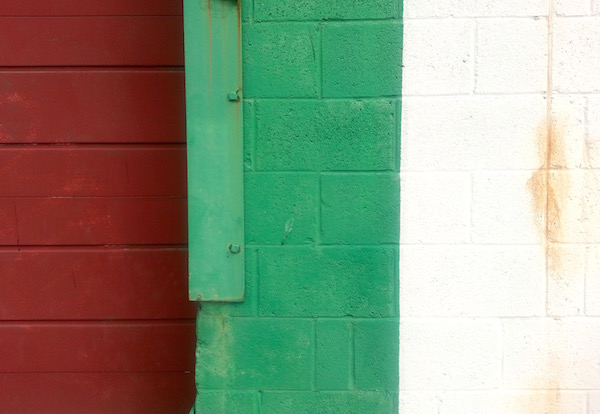
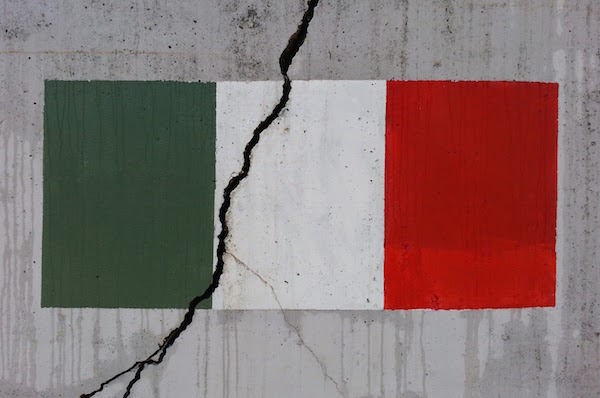
The medium of choice is still oils (albeit exterior enamel) and they’ve simplified their color palette to the trinity of green, white, and red.  Boldly eschewing the staid canvas and gallery presentation, these artists work large and for the world to see: on cement walls and park benches, street lights and entire houses.

Garage wall in Italian red, green, and white

Garage (detail), Uptown

It’s curious to me that while Pittsburgh’s great expansion in the late nineteenth and early twentieth centuries was famously from eastern and southern European immigrants, it seems that only the Italians felt the need to reproduce the flag over and over again.  Why don’t we see crude renderings of the white eagle on garages in Polish Hill and Lawrenceville?  Why no black, red, and gold telephone poles in Deutschtown?  We’ve got (people who identify as) Croats and Slovaks out the yin yang.  Who’s representing?

Street light pole in Italian colors

Street light pole, Bloomfield

Flower pot with red and white flowers and statue of Jesus

Jesus Planter, Bloomfield

While only a fraction of the population of those other neighborhoods, the tiny neighborhood-within-a-neighborhood of Panther Hollow has possibly more Italian colored things per capita than anywhere else.  There’s a bi-lingual war memorial with the flags of The United States, Italy, and Pittsburgh, an Italian-colored park bench and picnic table, the flag rendered graffiti-style on a retaining wall, and one abbreviated stretch of picket fence.

Park bench and picnic table in Italian colors

Park bench, picnic table, Panther Hollow

It was there, at the very end of Panther Hollow, that we had the great fortune to run into lifetime resident, local historian, and maintainer of the terrific pantherhollow.us website, Carlino Giampolo. “Everyone should have a fence to hide their garbage,” Carlino told us as explanation for the curious freestanding set of tri-colored fence at the edge of his property, the last plot in the Hollow as the dead-end Boundary Street trickles into Schenley Park bicycle trail.

Retaining wall with Italian flag

Retaining wall, Panther Hollow

Carlino went on to tell us about growing up in Panther Hollow, when what is now Pitt’s lower parking lot was a ball field, community park, and cow pasture.  When there were as many as six different operating businesses in the Hollow (today there are none, nor any obvious former retail spaces).  He showed us where the hotel once stood in what is now his side yard, the community oven that would cook the neighborhood’s bread, and how self-sufficient the whole place once was (and not that long ago)–butchering their own animals, making cheese and butter from the small herd of cows they kept, etc.

Picket fence in Italian colors

“Everyone should have a fence to hide their garbage”, Carlino’s fence, Panther Hollow

The McKeesport Muffler Man

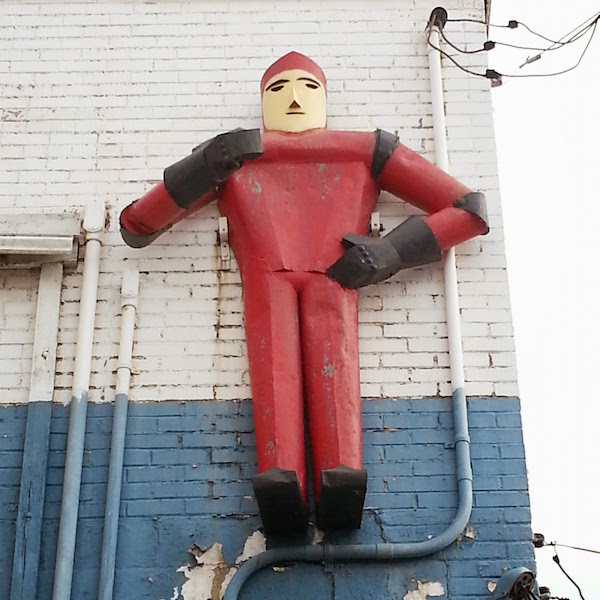
Figure of a man created from steel parts on wall of Mars Builders Supply, McKeesport, PA

The McKeesport Muffler Man

While not technically a “muffler man” in the strictest of roadside America senses, the figure that adorns a brick wall of Mars Wholesale Supply in McKeesport appears to have actually been fabricated out of mufflers (OK, probably loose duct work or other stray sheet metal the crew had laying around).

Regardless, his characteristic stance with one hand up to stabilize an invisible object, the other down to carry its load looks awfully familiar.  This guy has a similar steely take-no-prisoners look in his squinting eyes and is a commanding presence on the traffic of Walnut Street (Rt. 148) as it leaves town.  “Come in,” Muffler Man seems to say, “I’ll bet you could use some nice joint compound right about now.”

While it may be fanciful to imagine Home Depot’s staff having the freedom to rend macho muffler men or lovely ladies of lumber, we can always hope.  They’re losing out on a lot of blogger dollars!