One Big Heart: Memorial Day 2019

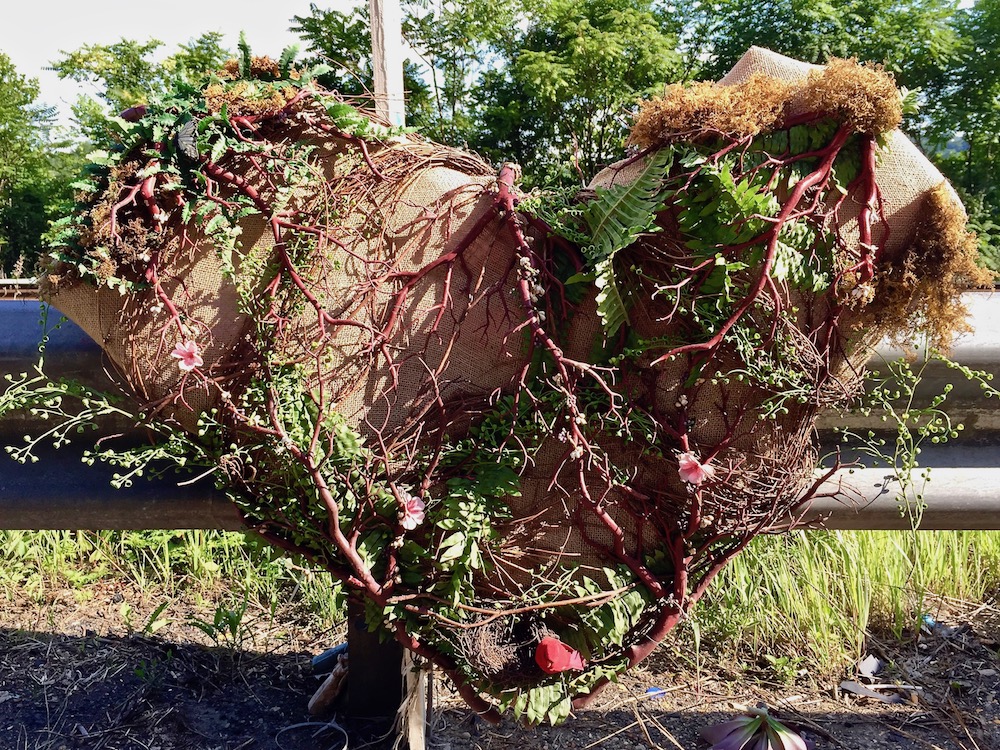
Jordan Celovsky, 1988-2017, Rt. 837

Someone really loved Jordan Celovsky a lot; you can tell by the heart that’s been left behind. Attached to an otherwise nondescript stretch of highway guard rail is the most elaborate, and perhaps beautiful, model of a human heart we’ve ever come across.

The memorial sculpture–I think that’s the right term–is several feet wide, covered in rough burlap and then wrapped in an incredible tangle of green leaves and beet red roots. If you never made the connection between woodsy flora and coronary arteries before, you’ll never see them as independent again. We could only wish this past Carnegie International had anything either this imaginative or moving.

The 29-year-old Celovsky died two years ago in a head-on collision on Easter Sunday, 2017.[1] In that time, he’s already had three memorials created along Rt. 837. There was a beautiful hand-painted cross + Harley-Davidson stone left at the scene last year. [See our 2018 story Memorial Day: Roadside Crosses for a photo.] Now this heart and an entirely different cross, featuring what seem to be hand prints from the two children he left behind, have appeared back at the same location. [See photo, below.]

Jordan Celovsky, 1988-2017, Rt. 837

While this memorial is above-and-beyond in several different measures, it’s certainly not alone. Hopefully everyone has someone who cares about him or her the way that Jordan Celovsky’s loved-ones do. For those who die tragically and prematurely–in car crashes or accidents, suicide or as victims of gun violence–the rest of us hold onto a special kind of survivor’s guilt.

How many times have I driven that very same stretch of Rt. 837 in the Mon Valley? How about where other memorials are found along Ohio River Boulevard, McKeesport Road, or Munhall? Whatever the answer, we all know there’s been ample opportunity to end up with the same fate. It could have been me.

unknown, Strip District

This Memorial Day, we’re continuing with a theme we started one year ago: rounding up and focusing in on these very public, yet intimately personal, remembrances of a departed we’ll never get the chance to meet.

The highway crosses and utility pole collections of stuffed animals have become a kind-of people’s park outside the cold formality of the cemetery; it’s the immediate, this-is-where-it-happened holy ground for a life cut short.

roadside memorial including painted cross, angel statue, inscribed stone, and solar garden light

Jessica Marie Lojak, 10-13-81 – 9-26-10, Lincoln Place [photo: Lee Floyd]

roadside memorial cross for "CB"

CB, 1/21/59-3/27/15, Mon-Fayette Expressway

roadside memorial cross

Nick, Lincoln Place [photo: Lee Floyd]
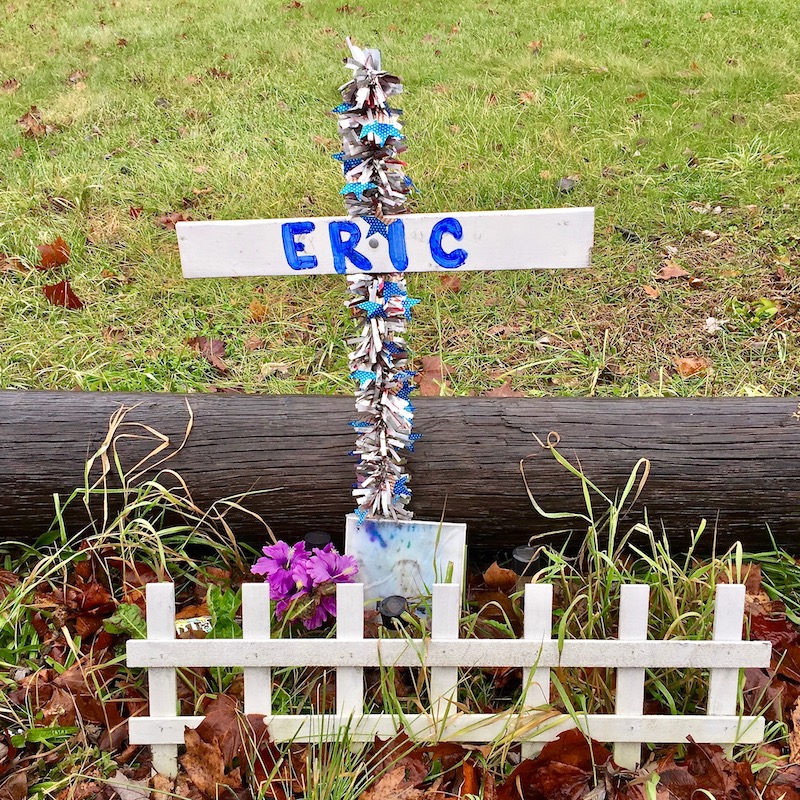
Eric, Glassport

Jazmere B. Custis, Munhall [photo: Lee Floyd]

roadside memorial made from inscribed wooden planks

Nicholas W. Marino, Lincoln Place [photo: Lee Floyd]

unknown, McDonald
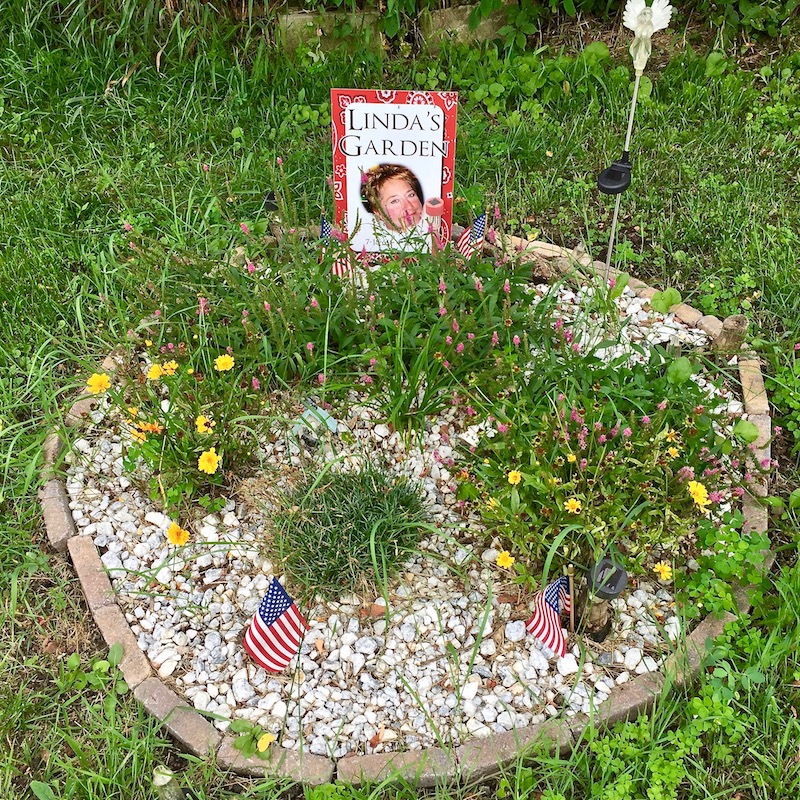
Linda’s Garden, Slickville

unknown, Bellevue

Derek Durand #23, Butler-Freeport Community Trail
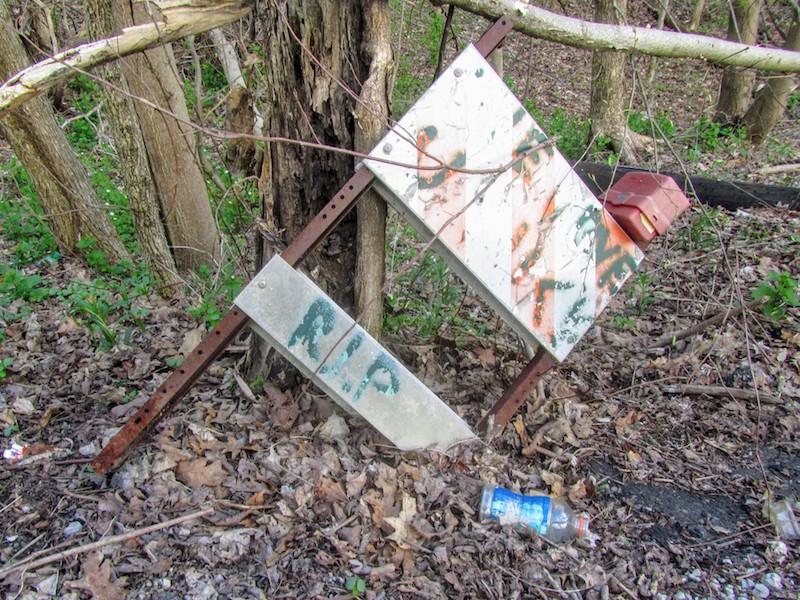
road construction warning sign turned into memeorial

unknown (“We love U (?) … R.I.P.”), Lincoln Place [photo: Lee Floyd]

It would be an incredible oversight to let the day go by without a mention of the lives lost in the Tree of Life Synagogue shooting. Unlike, say, traffic fatalities or suicide–which are sadly so common as to not really rate as news–that horrific hate crime has no parallel in modern America.

Back in January, we ran a story on the beautiful collection of handmade Stars of David that appeared throughout Squirrel Hill in the months following the massacre. [See “Higher and Higher: Star-Gazing in Squirrel Hill,” Pittsburgh Orbit, Jan. 13, 2019.] That display is just about as powerful a memorial as we can imagine.

The photo below, though, taken on the Monday morning after the attack at (Tree of Life victim) Dr. Jerry Rabinowitz’s office in Bloomfield, was its own kind of loving memorial. The spontaneous leaving of dozens of flower bouquets outside an office that may have been incapable of opening for the day says as much as the love and respect of this particular departed as anything else.

Office of Dr. Jerry Rabinowitz, Bloomfield

Finally, a personal connection. If you regularly walked Centre Avenue near the Giant Eagle you knew Roger. A constant positive spirit and kind soul who spent many of his days camped-out on the pavement, using black Sharpie markers to create goofy-faced pet rocks and elaborate dream worlds on discarded sheets of cardboard.

Working in the area, I got to know Roger a little bit–filling his coin cup now and again, along with buying him the occasional serving of take-out soup or fried chicken from the grocery store. The Orbit’s co-assistant to the mail room intern and spiritual time lord Lee did a lot better than me–regularly hooking Roger up with fresh fruit, cash money, and restocking his marker supply. I wish I’d have done more when I had the chance.

This Memorial Day, let’s all try to help each other get along in this life so we don’t live with any regret when they reach the next one.

R.I.P. Roger, Shadyside

[1] https://archive.triblive.com/local/allegheny/12202259-74/friend-family-remember-lincoln-place-man-killed-in-west-mifflin-crash

A Model City: Carnegie in Miniature

corner of West Main and Jefferson Street, downtown Carnegie, PA

There is a big hole in downtown Carnegie. Don’t worry—it’s nothing dangerous you might fall into. Rather, an enormous void is all that’s left in the 200 block of East Main Street. That’s where, just about a year ago, a massive fire erupted in the lovely three-story turn-of-the-century building that housed Papa J’s Ristorante for the last 26 years.

The fire damage was so extensive that the entire building has since been razed and the resulting pile of bricks and beams carted away. All that’s left is a large gravel-filled flat lot; a gaping missing tooth right in the heart of the borough’s business district.

York’s Appliance’s (sic.)

Liberty Theatre

The truth is, though, Carnegie—just like every small town and old commuter borough in America—had its share of challenges preserving the history and character of its main drag long before the fire last summer.

The automobile—with its distant reach and attendant expectation of acres of easy parking—big box retail, changes to shopping habits, and that demon Internet have all taken their pounds of flesh from Main Streets everywhere. When you then throw in the familiar one-two punch of big industry closing down and its resultant dramatic loss in population and buying power, there just aren’t even enough customers left over for many local retail businesses to make a go of it. Carnegie’s population peaked somewhere around World War II and it’s been slowly draining people ever since.

But—I’m guessing you know where this is heading by now—there’s a place where you can still see downtown Carnegie at its absolute zenith—and you don’t need a time machine to do it.

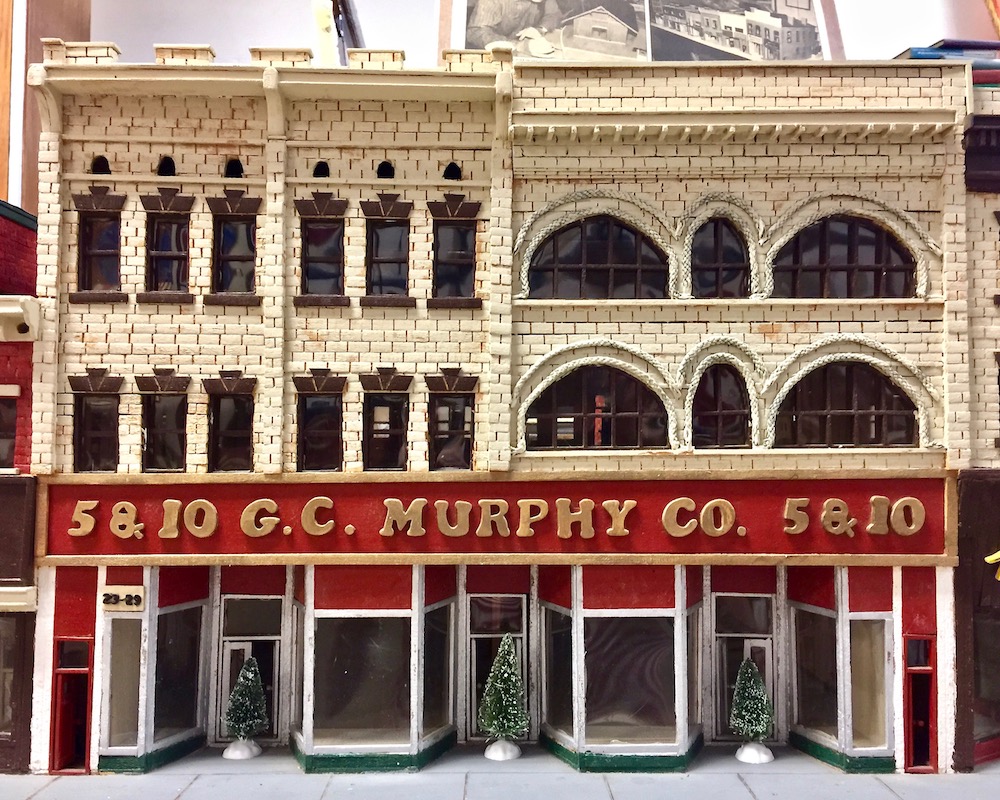
G.C. Murphy Co.

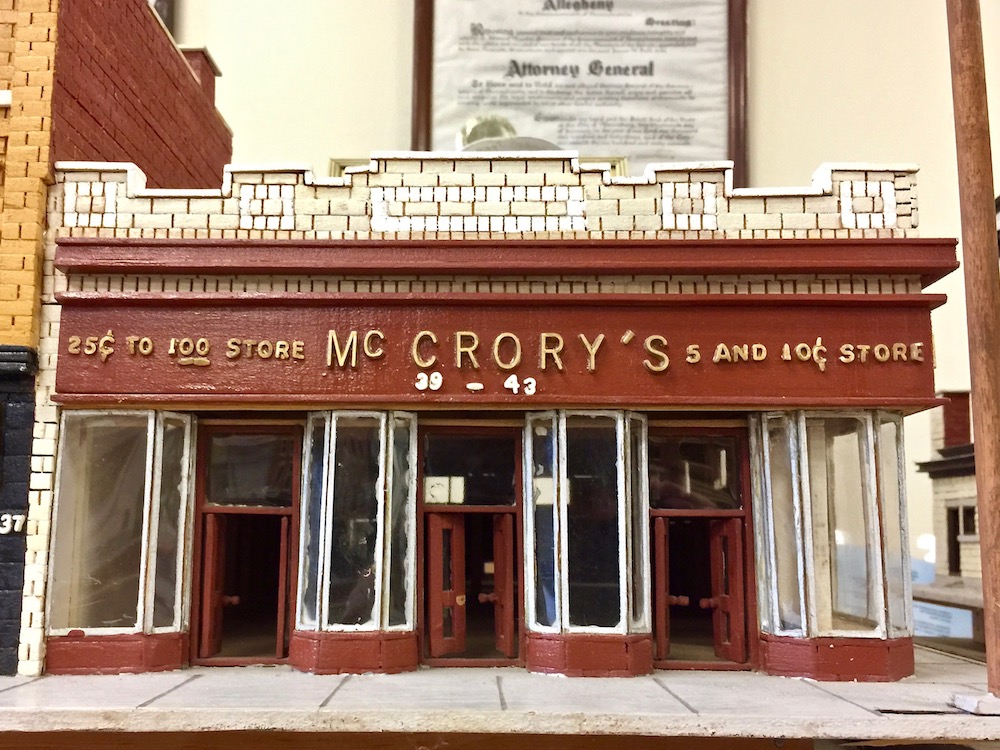
McCrory’s

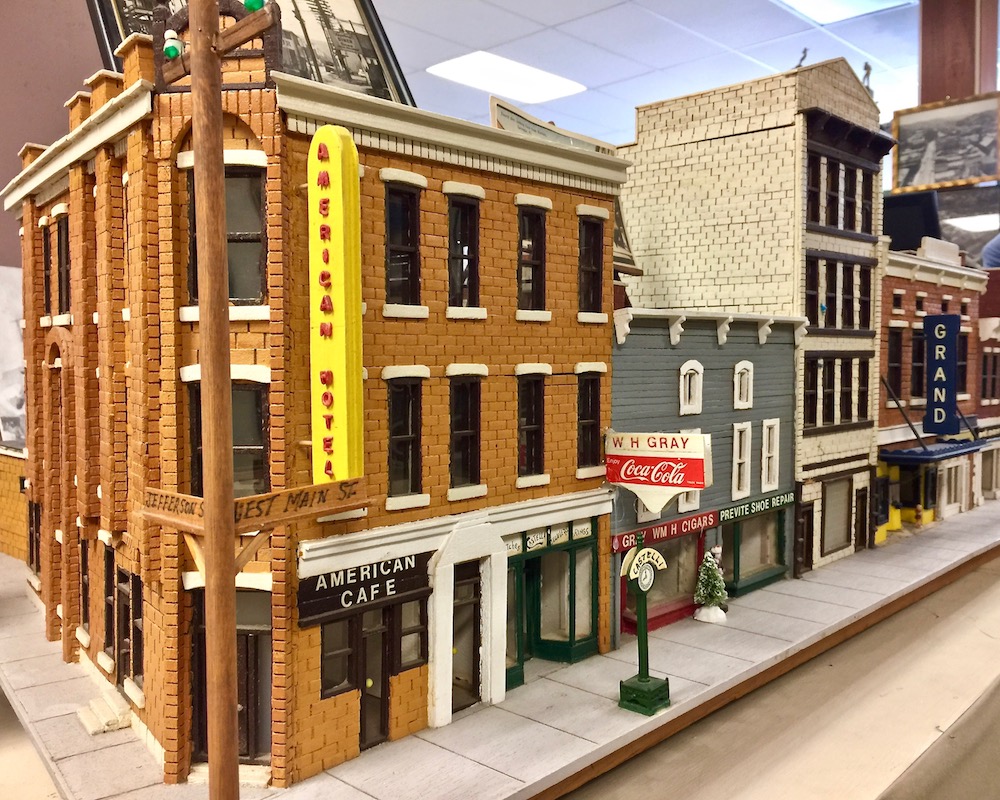
Miniature Main Street is an incredible scale model of Carnegie’s business district as it existed in the 1940s. Block after painstakingly-accurate block were carved, painted, and glued by the hands of resident Walter Stasik. Stasik worked on this, his magnum opus, for the last ten years of his life, before passing in 2000.

The model buildings that make up Stasik’s recreation seem to clearly be a loving memory of the downtown he would have experienced in his youth. They’re now on permanent display at the Carnegie Historical Society.

Chartiers Plumbing & Electric Shop

Star Markets / Block’s / Sun Store

What Stasik crystalized in his elaborate, room-filling recreation is both humble and sublime. The Main Street Carnegie of the mid-twentieth century probably looked a lot like that of any other bustling town of the era. There were independent small businesses of all types filling the storefronts up and down: furniture and clothing stores, grocers and lunch counters, a plumber, insurance agent, beauty and cigar shops, a masonic hall and Moose temple. Downtown Carnegie had competing five-and-dimes and four different movie theaters.

Bale’s Restaurant / Harris / Isaly’s / Donahoe’s

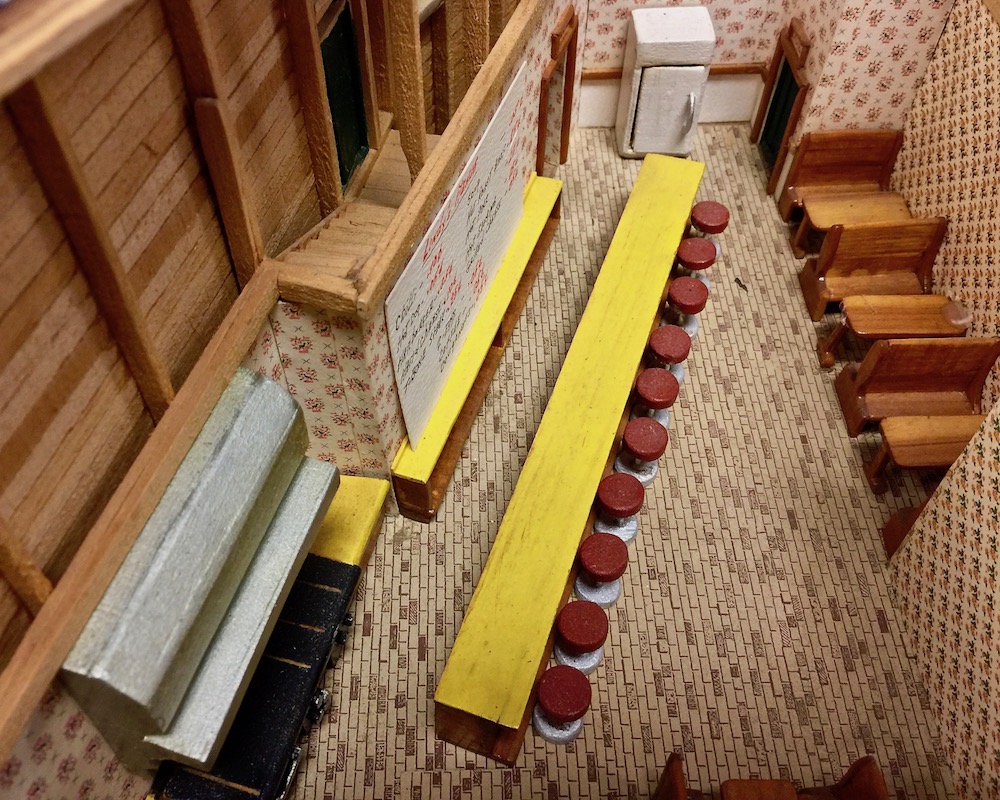
diner interior

What’s fascinating about Stasik’s models is that they’re not just some nostalgia trip. Their scale—each floor is around eight inches in height—allow the visitor to get right down onto street level and look around in a kind of low-tech virtual reality experience without having to get wired-up to one of those goofy headsets.

Further, each model was constructed with a lift-off roof letting the visitor peer straight down into the little dollhouse-like worlds within. Stasik didn’t have the opportunity to complete the interiors of every building in the set, but the ones that did get finished have a fascinating level of playful detail: specials chalked onto the menu board at the diner; a wooden armchair in a projectionist’s booth at the movie house; a customer testing the feel of a mattress at York’s Furniture.

York’s Furniture and Appliances (interior)

movie theater interior

Stasik’s models aren’t Smithsonian perfect. There’s a rough, folk/outsider art quality to the construction and some visible wear-and-tear on the buildings—fragile signs and lifting wallpaper need to be glued back in place; dislodged doors and lamp posts reset. In some cases, Stasik used molded letter forms for his storefronts; in others, we see the obvious curlicue schoolboy handwriting of the creator in Sharpie-written business signs.

This isn’t to diminish the work, but rather to praise how beautifully and lovingly handmade the entire display is. The materials appear scavenged and the execution improvised. Rows of theater seats are carved from single spindly blocks of wood and plexiglass windows have been carefully nudged into place by Stasik’s aging fingers.

Walter Stasik, “Main Street Creator”

bank interior

If this blogger had been thinking ahead, he’d have bagged a photo of Stasik’s rendition of the turreted building at the corner of Broadway and Main that would eventually be home to Papa J’s Ristorante. That would have made an artful bookend to the narrative about loss and preservation, the real and the imagined, historical accuracy vs. artistic license.

But alas, sometimes l’esprit d’escalier even catches our hardest-working speculative journalists flat-footed. Besides, there are way more model buildings in this collection than we could possibly photograph for this piece—the enormity of the creation is hard to overstate.

That, and the friendly volunteers at the Historical Society distracted us with a side trip to the mini Honus Wagner museum-within-a-museum so we could absurdly pose in a batting stance with Wagner’s hundred-year-old baseball bat. [Yes: this is worthy of its own Orbit story.] Either way, it’s an excuse to tell you to go check out the full extent of Walter Stasik’s Main Street—and the rest of Carnegie’s great historical collection—in person the next time you’re craving Papa J’s.

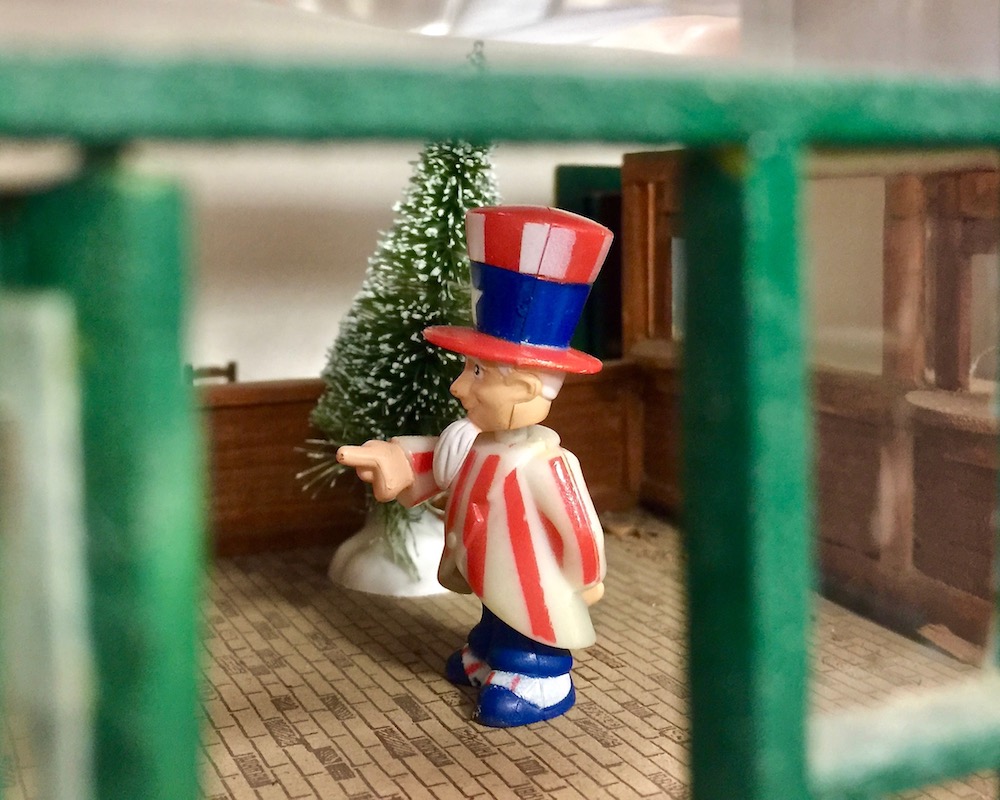
I want you … to visit the Historical Society of Carnegie. Uncle Sam inside bank lobby

Postscript: One glass-is-half-empty reading of the above story may suggest that present-day Carnegie is down on its luck or has “seen better days.” Rest assured, Carnegie’s business district seems to be doing just fine—storefronts are occupied, people are out, there are hip-looking restaurants and boutiquey stores. Heck, there’s even a monthly art walk, experimental theater, and meadery. Next stop, gentrification!


The Carnegie Historical Society is located at 1 West Main Street. There are limited daytime hours Tuesday through Saturday. Admission is free.

Art Walk: The Pipe Cleaner Fern Frames of Lawrenceville

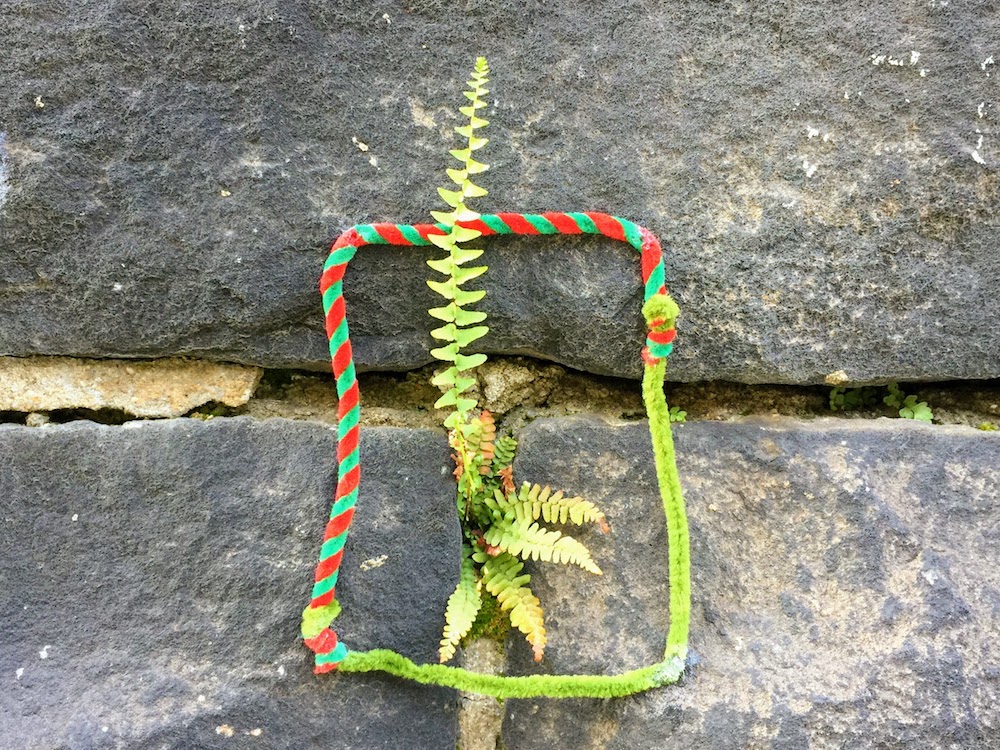
pipe cleaner fern frame

Consider it a wild weekend with woebegone weeds or First Fridays for forgotten ferns. Heck, this may even qualify as the Make a Wish Foundation for misunderstood moss. Whatever you call it, there’s a new street-level contemporary art walk on exhibit now–for what may be a very limited run–in Central Lawrenceville.

pipe cleaner fern and moss frame

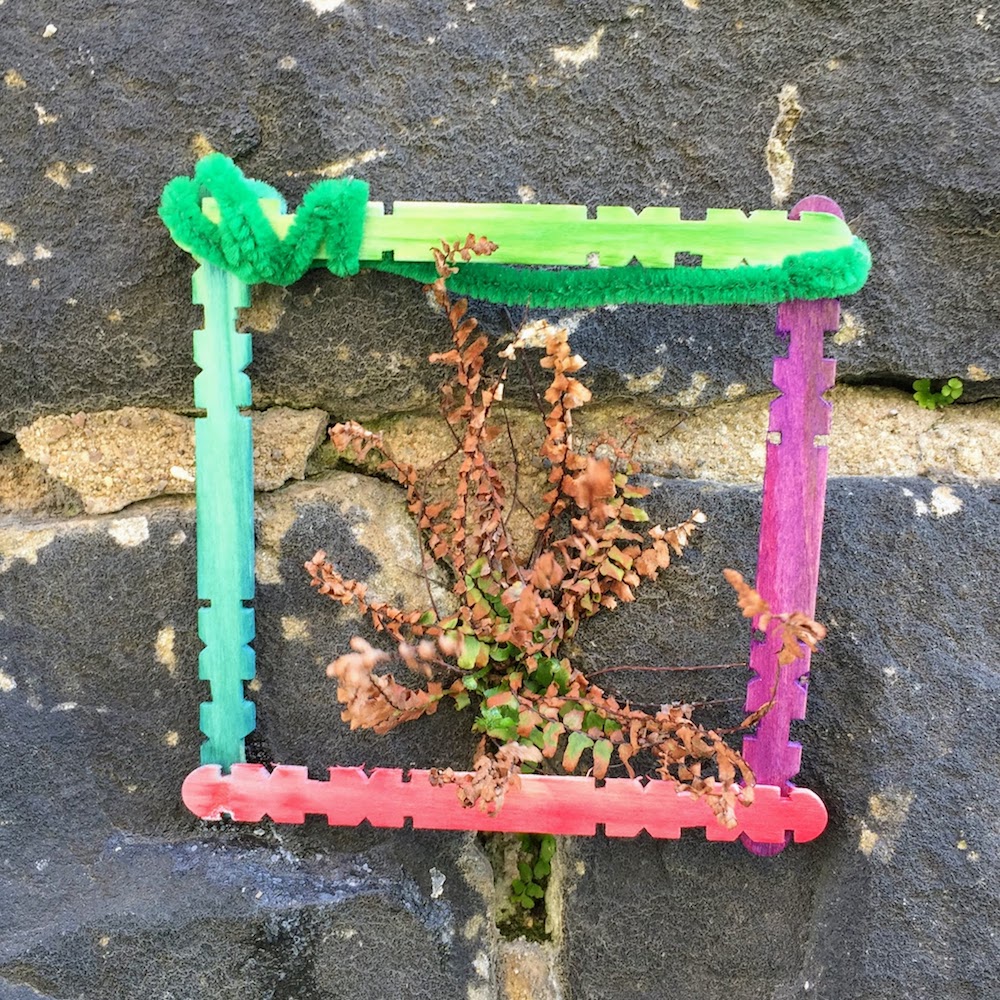
Someone has taken the fascinating step of constructing simple colorful rectangular frames from mismatched pipe cleaners and attached them to an old stone retaining wall along 45th Street, bordering St. Mary’s Catholic Cemetery.

Their placement on the soot-blackened stones is no haphazard act of vandalism or careless littering–no, they’ve been very precisely curated to frame and highlight the kind of the minute nature dioramas that appear around us everywhere, all the time, but usually go unnoticed. In lieu of anything more witty, we’re calling these fern frames.

popsicle stick fern frame

Nature is an absolutely amazing thing–and one that we can reasonably trust to outlive and survive the appetite-for-extinction behavior of the human race. In every sidewalk crack, a burst of life; on each block of pavement, itty-bitty creatures scurrying around, just doing their thing. And yes, in the thin vertical spaces between wall stones and mortar joints there exist tiny blasts of green in the form of soft fuzzy moss, delicate miniature weeds, the spindly leaves of little ferns.

pipe cleaner moss frame

We have no idea what motivated the person or persons responsible to construct and place the fern frames–they come with neither attribution nor artist statement. So we’re left to speculate on what’s going on with these simple displays. Are they a goofy stunt with leftover crafting materials? Psychological experiment? Candid Camera-style prank where The Orbit is the butt of the joke?

Anything’s possible, but to the imaginative mind what these little pieces seem to say echoes Alfred Joyce Kilmer’s famous couplet I think that I shall never see / A poem as lovely as a tree. You can put a lot of effort into painting a picture, singing a song, or–gulp–writing a blog post, but you’re not going to top Mother Nature. Look around! Keep those peepers open! The world is a wonderful and mystifying place.

It can be really hard given the news of the day–you name the day–and, yes, people have all kinds of heaviness they’re dealing with. But what these little fern frames seem to say is, don’t just stop and smell the roses–those sell-outs already get enough attention!–put your schnoz right down in between the cracks in the sidewalk and up against the stones in the wall. There is so much beauty all around us, but sometimes it takes an anonymous stranger with a couple pipe cleaners to point it out to us.

pipe cleaner weed and moss frame

Art All Night 2019: A Roundup with Reflections on 22

artists from Creative Citizens Studios, “Pittsburgh,” (detail) mixed media

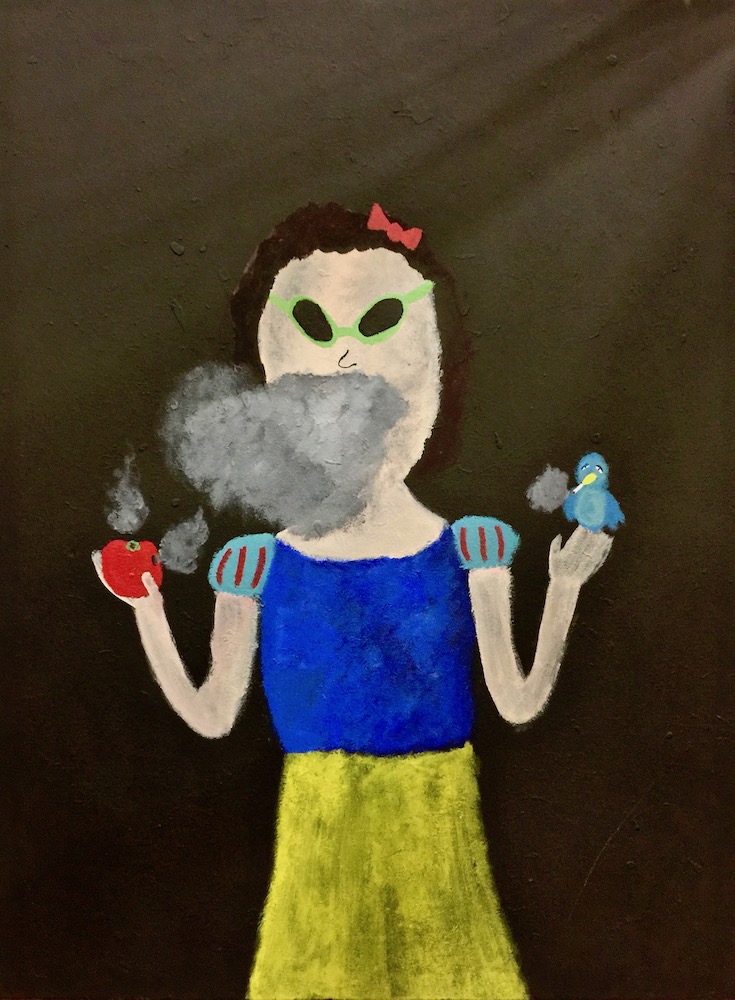
There she is: perhaps the most famous character the Brothers Grimm brought to world. Most of us came to her doe-eyed, perfectly-behaved acquaintance care of Walt Disney Studio’s classic animated film.

Only here the princess is no angel. She’s accessorized in rock-and-roll sunglasses and huffing a cloud of gray smoke through a makeshift pipe. It’s a scene that would leave Cheech and/or Chong gasping for fresh air. The crudely-painted artwork is titled Snow White Smoking Weed from an Apple.

lildoodoobutt, “Snow White Smoking Weed from an Apple”

Through the years, we’ve seen Art All Night grow up. We were there when the very literal all-night, anything-goes community event masquerading as art show learned to crawl, built its first set of plywood S panels, and went from a four-month planning cycle to an incredibly-efficient four-week execution. [Full disclosure: this author was neck-deep in volunteering for Art All Night for at least ten years; this year he just pulled a late-night, keep-your-eyes-open shift.]

So it is with strange comfort that we see this onetime oddball event grow up to be the same kind of goofball grass-roots institution we might have hoped for. The longevity of this all-volunteer event–last weekend was its 22nd yearly happening–and the continued commitment to no jury / no fee / no censorship is about as resolutely pure and accurate as one could hope from an organizational constitution.

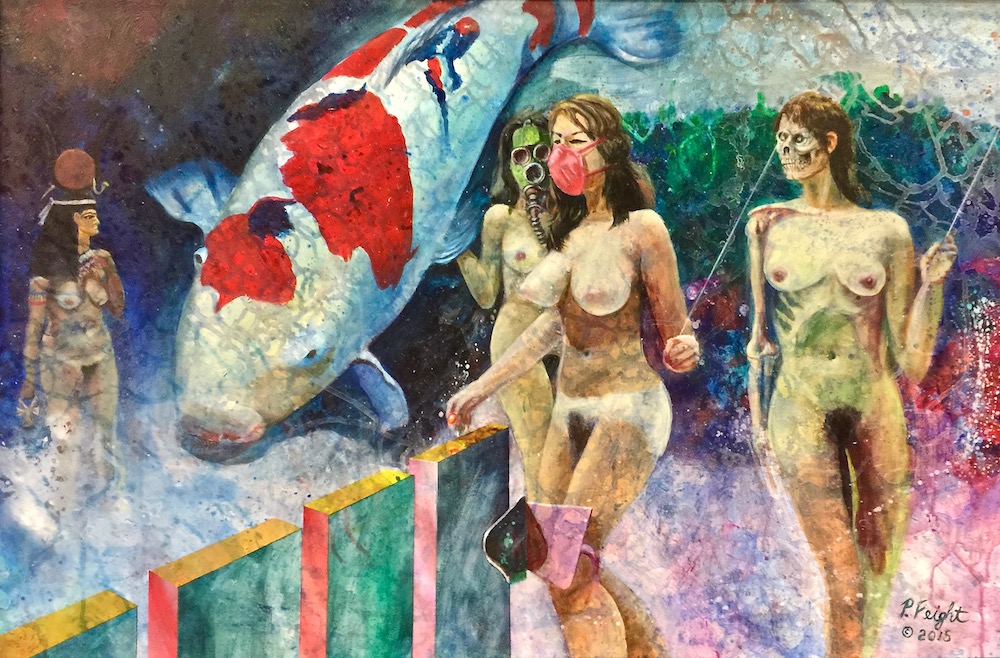
Paul Feight, “4 Nudes Walking with Koi fish,” acrylic on canvas

Alexander Sands, “Diablo Blanco,” acrylic on canvas

There are a few other nos we could tack onto the Art All Night credo: no curation, no restraint, and no questions asked. These are, of course, 100% in the spirit of the event and give it a great I don’t need your rulesstick it to the man vibe–but that can present its own set of challenges for both participant and spectator.

Like being the introvert at a raucous New Year’s Eve gala or a vegetarian at a pig roast, the more subtle artworks are absolutely invited and welcome to be there, but may have a hard time feeling like they came to the right party.

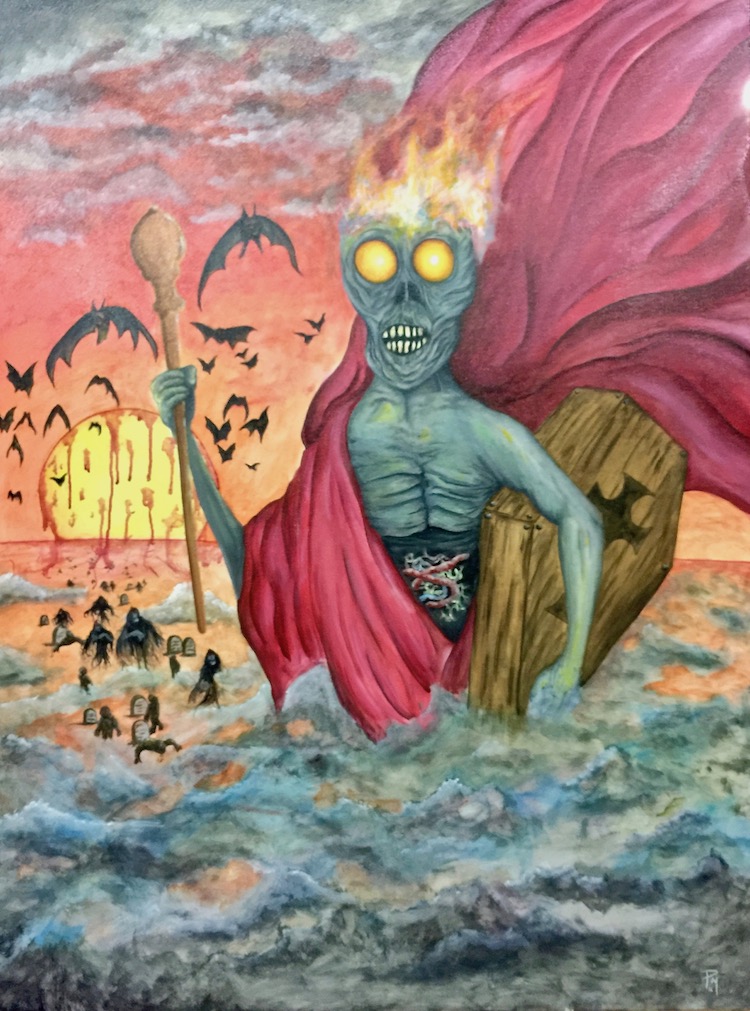
Petey Miceli, “The Red Death,” acrylic on canvas

Exhibition at Art All Night favors big and loud, jokey and profane–that’s just the reality of an environment where the hanging is a shotgun blast of random collisions on dull fiberboard. There’s no way a sensitive portrait in graphite, delicate fabric embroidery, or miniature collage can compete side-to-side with a painting like The Red Death (above). That three-foot acrylic-on-canvas fantasy by artist Petey Miceli stars a giant demon-creature in flowing red cloak walking through turbulent seas with an enormous coffin under his arm.

Steven Walker, untitled, mixed media

Steven Walker’s untitled mixed media (self?) portrait of a young man staring straight back at the viewer (above) features actual barbed wire looped around the painting and a molded plastic eyeball exploding through the canvas in a gruesome bloody mess. It’s a lot to take in.

Ditto that for Universally fucked (below)–a kind of stoned joke come to life in the form of an orgasmic scary clown rogering a duck against a backdrop of the swirling psychedelic cosmos. There are elements of Jeannine Weber’s pen/pencil/acrylic artwork that I like–but I’m not going to hang this in the living room.

Jeannine Weber, “Universally fucked,” pencil/pen/acrylic

Kailee Greb, untitled (detail)

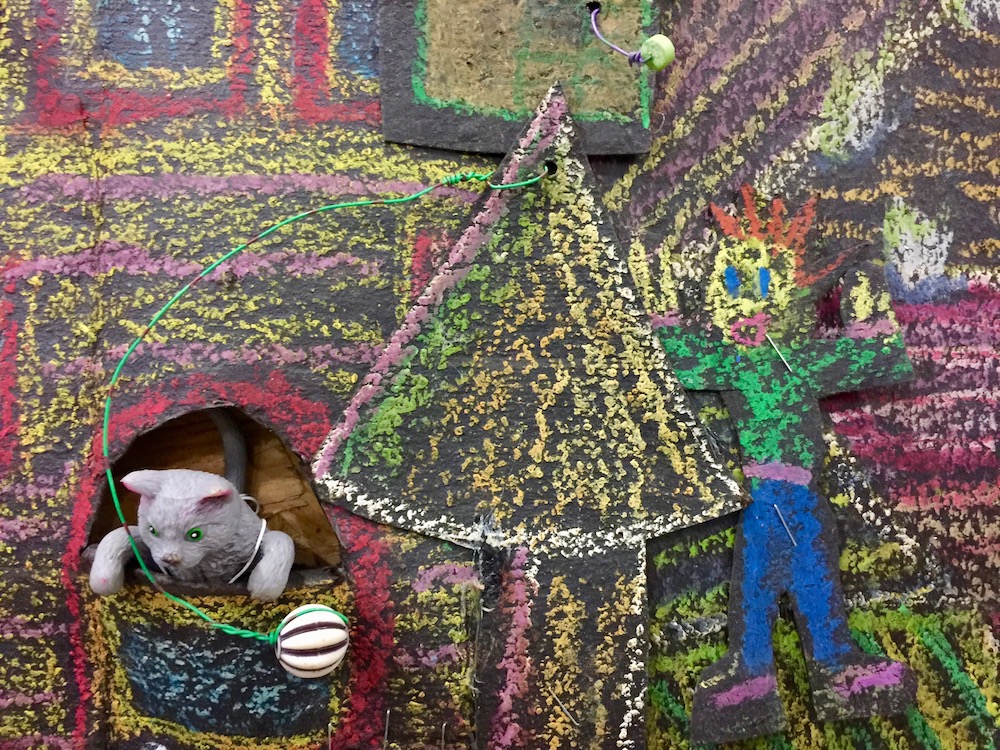
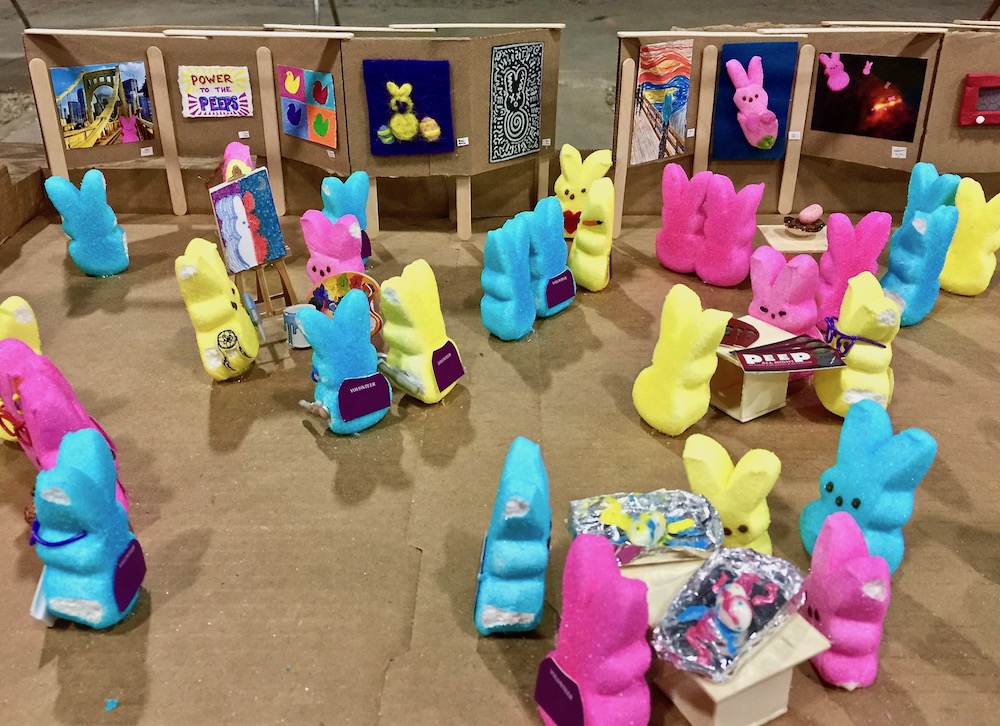
Kathie Hollingshead’s Peep All Night (below) takes the created-for-the-occasion approach to a whole new level. As one of the organizers of the event, her insiders-view recreation of Art All Night in miniature–with leftover Easter peeps standing in for attendees and volunteers–is a kind of meta joke-within-a-joke that blew this blogger’s already fragile noggin.

The piece–complete with faithful models of the plywood exhibition panels in cardboard and popsicle sticks–has so many great nods to Art All Nights past that we really have to salute this as some kind of high-water mark in art history. The tiny Etch-a-Sketch? The little Three Sisters bridge photo? Portraits of peeps? If you’ve been to Art All Night–any Art All Night–you’ll recognize these tropes. That’s it, man–game over.

Kathie Hollingshead, “Peep All Night,” mixed media

There’s long been a debate in Art All Night’s inner circles as to whether the work of younger artists should be segregated into a safe zone. The proponents argue that this way junior’s finger painting doesn’t end up hanging next to something really offensive; those opposed feel like it puts the kids in the often looked-over ghetto of “children’s art.”

Personally, I love to be surprised when the piece that pops out from a full panel has Age: 14 (or whatever) on the info tag. But I’m not a parent and don’t have to answer not-ready-for-it-yet questions like “why is that man doing that to that lady?”

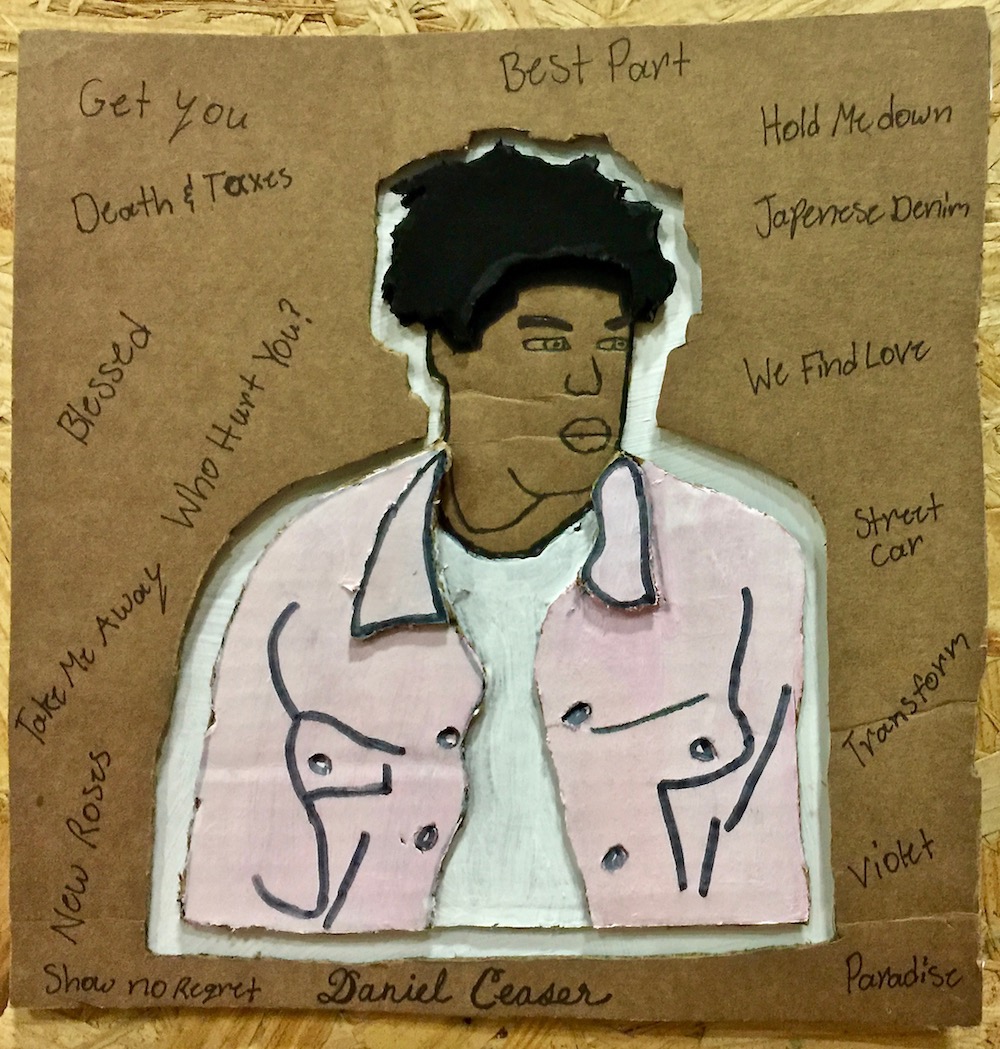
Regardless, the under-18 panels always yield great stuff–too much to include here–but we loved Faith Little’s Daniel Ceaser, a mixed-media bas-relief in cut cardboard with stray scattered phrases like “Japanese Denim,” “Death & Taxes,” and “Street Car” that must be meaningful…but we can’t make the connection.

Faith Little, “Daniel Ceaser,” mixed media

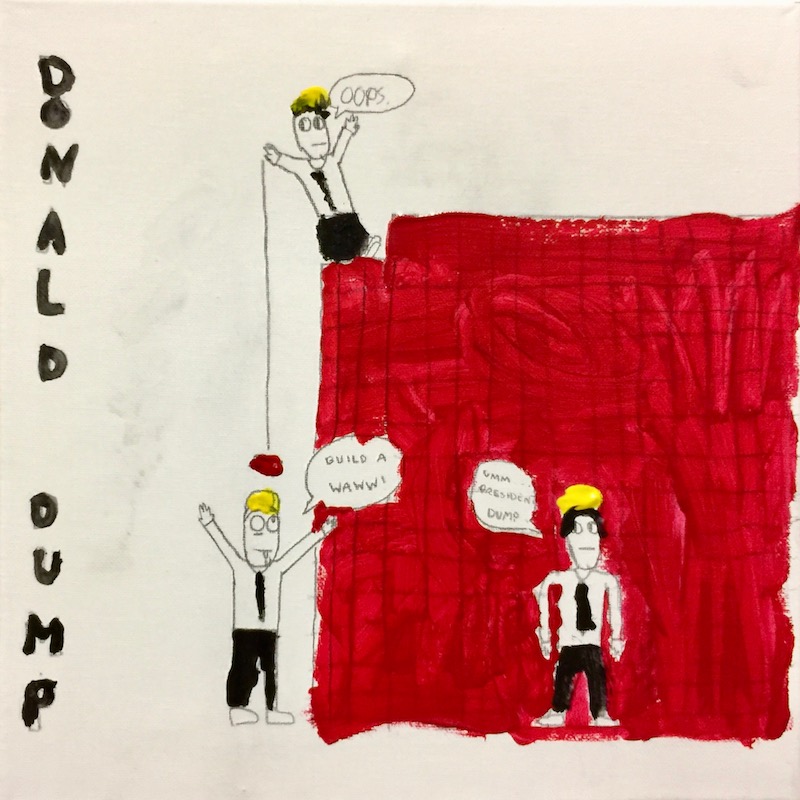
Elias Grim, “Building a Wall”

As always, Art All Night is a place for some folks to, as Mrs. The Orbit says, “get their freak on.” From the days of The Rubber Men, The Cardboard Cowboy, and Sailor John Art All Night always brings out a who’s-who of where are these people the rest of the year?

The event has been around long enough for some of these folks to now be exhibiting in the great gallery in the sky. Rest assured, there’s a new crew of regulars–that guy with the electric blinking lights fuzzy jacket, Most Wanted’s crushed art cars, too many costumed characters to name, a naked lady!

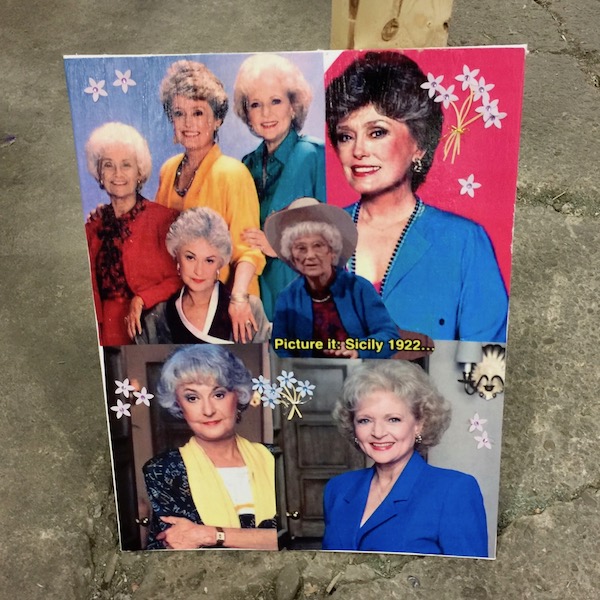
We also enjoyed this too-late-for-the-party-but-I’m-showing-up-anyway tribute collage to the Golden Girls (below) which appears to just be a drop-off/leave-behind. We don’t know what Blanche, Rose, Sophia and the gang would have thought about Art All Night, but they’d be welcome here too.

anonymous drop-off art, “Golden Girls” collage

They’re not the only ones. If Art All Night teaches us anything, it’s that the human spirit to create, delight, surprise, and humor is deep and wide, strong and alive. That behind every row house awning and within every apartment bedroom there may be an artist, paintbrush in hand, shoving a fake bloody eyeball through a canvas just because he or she wanted to communicate…something…to the world.

lildoodoobutt, the artist behind the Snow White piece, would likely have a hard time finding gallery sponsorship elsewhere. We might assume the same for the vast majority of Art All Night contributing artists. That said, Ma and Pa doodoobutt can rest assured their kid will always have a home at Art All Night.

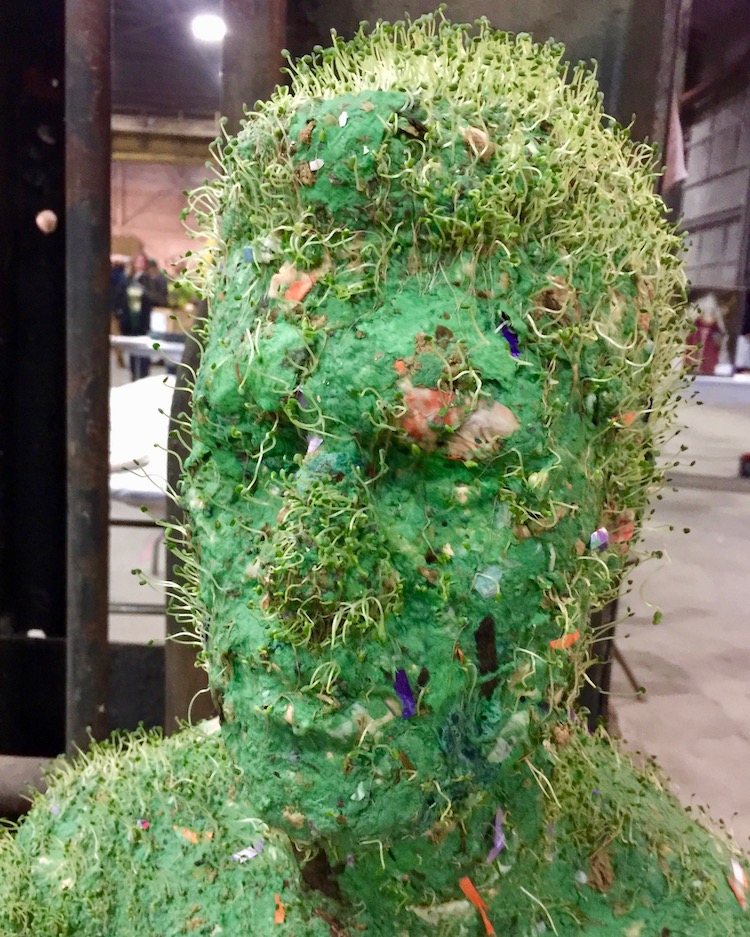
Katy Dement, papier mache/chia seed