Poli-Science: A Double Ghost Exposed in Squirrel Hill!

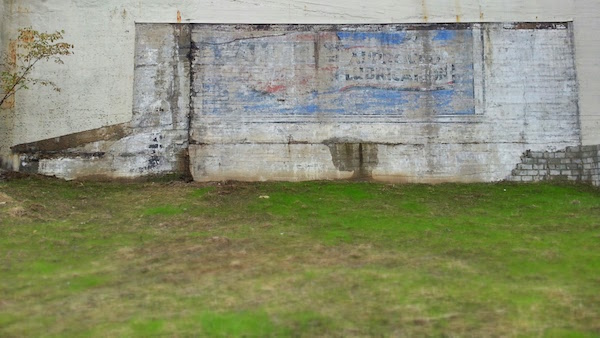
Ghost building with a ghost sign for Approved Lubrication, Pittsburgh, PA

The recently-uncovered rare “double ghost” in Squirrel Hill

Everyone said that great treasures would inevitably appear. When we were in the process of buying an old house, friends told stories of finding wavy glass apothecary bottles lost behind walls, secret messages under wallpaper, amateur paintings behind basement pegboard, pornography stowed and forgotten in loosened ceiling tiles.

A house built in the 1880s should have had ample time to accrue all this and more, but fifteen years later, the sum total this home-renovating blogger unearthed was one skeleton key and a set of Pittsburgh Press pages from the 1950s, laid below the linoleum on the third floor as, it seems, everybody used to do. I kept those papers for half-dozen years and then sent them out with the recycling one day. Sigh.

Poli restaurant in Pittsburgh, PA before the fire that destroyed it

Before the fall: Poli, pre-fire/demolition [photo: SquirellHill.com]

The news that the former Poli restaurant and its neighbor building had burned was big local news–and not without its share of suspicion and intrigue. The whole block at the corner of Murray and Forward (including the former Squirrel Hill Theater) had basically been shuttered and was slated for a massive redevelopment project that seems to have been postponed.

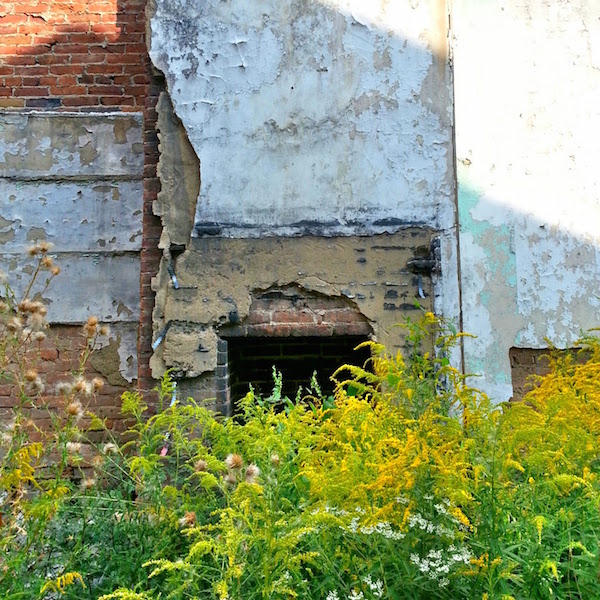
Whatever the reason, this sad event has a curious and surprising double twist for the ghost hunters of Pittsburgh Orbit. Now exposed, behind Poli’s former rear wall, we can see both a very clear building outline against the dense retaining wall behind (this seems to be the ghost of an addition to the original Poli) and a ghost sign that must have predated that section of the structure.

The building outline is nothing special–a straight rectangular box with one angled extension that looks like a slanted entrance to cellar stairs. The sign, on the other hand, begged for some looking into.

detail of faded ghost sign for Approved Lubrication, Pittsburgh, PA

Approved Lubrication ghost sign (detail)

The paint is almost completely worn away at this point. But with a little imagination and a little investigation, it turns out the sign was a large-form rendition of Amoco’s corporate identity and its Permalube Service used in the 1930s and ’40s. The tag line  Approved Lubrication is the most recognizable part of what remains. Knowing the original building dates to 1921, it’s probably safe to assume this painted advertisement was added before Poli’s misguided facelift and expansion onto the right/south side of the old building.

Amoco sign, 1930s-40s

Amoco sign, 1930s-40s [image: the Internet]

Poli would probably have made a great Orbit obit, but we just weren’t the right people to do it. [anyone? anyone?] The restaurant had existed at the same Murray Ave. location since 1921 and this blogger had at least fifteen years of ample opportunity to give it a try. What can I say? I was busy that night! No: it just didn’t happen.

I’m glad I made it to The Suburban Lounge and Moré and Chiodo’s Tavern before each of those storied haunts ended their respective run, but I’m afraid Poli is one that got away. Let it serve as a lesson that these places that seem like they’ll exist forever will not. [Note to self: get to Minutello’s ASAP!]

Ghost building/sign at the location of the former Poli restaurant, Pittsburgh, PA

In context: the double ghost at the former Poli site, Squirrel Hill

All that remains now is a re-seeded empty lot, an incongruous out-of-work smokestack, the nested pair of ghosts, and, across Murray Ave. from the site, the (literal) sign of Poli’s mid-life crisis. This c. 1970s triangular sign sits high up on its tall pedestal and shares a pie-shaped section of the five-points corner with a sidewalk no one will ever use, a parking lot with no apparent sponsor, and a set of out-of-place fruiting apple trees. In generally healthy, pedestrian-friendly Squirrel Hill, this is one dead space.

What will become of the sign? Who owns it now? It would be great if it could gradually morph into a legitimate “Thomasson” or be repurposed into a Welcome to Squirrel Hill beacon–its placement right at one entrance to the neighborhood would be perfect for that. Or, maybe, it will just become another ghost.

Sign reading "Poli Since 1921", Pittsburgh, PA

All that remains: Poli’s triangular sign across Murray Ave.

Jesus Houses

Run down brick house with large white cross above entryway, Steubenville, Ohio

Steubenville, Ohio

This blogger does not know his scripture, but he’s pretty sure that somewhere in Revelations there must be a passage like “If thou believeth in me, maketh sure everyone in the county is awareth of it.” (I’m paraphrasing, of course.)

Whether or not that’s true, there sure are a lot of Christians that want you to know it. You can see it just by looking over their front doors. Big white crosses hanging under the eaves, lashed to the split rail fence, or in one case, the name JESUS in thick garland where a leaded glass pane must have been.

Church built into home, Hill District, Pittsburgh, PA

Hill District

While we at The Orbit subscribe to a “live and let live” approach to life (and letting life), it’s sad that it’s so hard to imagine similar displays of the crescent moon or stars of David being as benignly accepted. Why, Regent Square has its bizarre tribute to Bacchus on that apartment building right across from the movie theater [note to self: get on that!], but I don’t know if they’d get away with a similarly prominent Buddha. [Realistically, Buddha probably gets a pass, but you know what I mean.]

Home with plastic cross tied to split-rail fence, Rochester, PA

Rochester, PA

We love human creation. Sometimes that most obviously comes in a physical statement of faith, or hand painting a Steelers party wagon (although those are increasingly hard to find). A power so great that it compels someone to create who may not otherwise have done so is an amazing thing, whether you believe in it or not. This non-flag-waving heathen has a hard time relating to the specific motivation here, but not to the greater one of exploration, expression, and release. Maybe that’s what these folks would tell me the whole thing is about, anyway.

Large house with "Jesus" written in large letters over the front door, Pittsburgh, PA

Central North Side

Ghost House: Wearing a Hearth on the Eaves

Brick house with exposed fireplace, Pittsburgh, Pa.

Central North Side

Home is where the heart is–at least if Granny’s framed needlepoint aphorism is to be believed. For buildings of a certain age, we may cheekily adjust this to say that home is where the hearth is (or hearths are)–every pre-steam heat building having requisite fireplaces in each and every living space throughout the house. This blogger’s little row house had eight of them.

Sometimes, though, the old saw gets flipped on its head. Quite often the old fireplaces end up outliving their host homes. Keith Richard-like hard-smoking, hard-living grizzled bears that manage to defy odds and stay alive while marathon-running vegetarians a generation younger fall in their trail.

Brick house with exposed fireplace, Pittsburgh, Pa.

Central North Side

When we started our series on ghost houses, the very first post was on a pair of houses in East Liberty. The second of these profiled had the curious arrangement that two fireplaces from the former home were left intact and hanging from the now-exposed common wall. We remarked at how extraordinary this was. [That post is still worth a look as the combined brick-faced (upper) and fake stone (lower) hearths still paint a strange portrait.]

Well, it sure seemed like that at the time. But as with so many of life’s mysteries, once the eyes were properly trained, it became a thing we started seeing everywhere–like faces in plumbing arrangements, or constellations in sidewalk chewing gum, or evil elves.

Brick house with two exposed fireplaces, Pittsburgh, Pa.

East Deutschtown

This is surely not a Pittsburgh phenomena, but the city is uniquely suited for it. Almost all of the oldest parts of town were built in dense neighborhoods of brick row houses, their adjoining walls sharing common, integral chimney stacks. As time and tide (and the death of the local steel industry) did their thing, lots of these houses were demolished–or just plain collapsed from neglect. So when the situation resulted in a kept-up house abutting a felled one, you get fireplaces dangling from external walls. It’s weird. And it’s kind of cool.

Brick house with two exposed fireplaces, Millvale, Pa.

Millvale

It turns out that there are so many of these out there, in fact, that we may end up needing to run a sequel (or two). There are even some interesting related-but-different sub-categories: exterior bath and kitchen tile, stair framing, exposed plaster walls that somehow survive winter after winter. So much to get to!

Brick house with two exposed fireplaces, Pittsburgh, Pa.

Hill District

Downtown Flood Markers

Close-up of a marker for the St. Patrick's Day flood of 1936 on the former Joseph Horne department store, downtown Pittsburgh, PA

Waaaaaaay back (O.K., it was just at the beginning of the year) this only notional blog kicked itself off with a story on one set of cryptic runes reading H.W. 46 ft. 3-18-1936. That (Spoiler alert!) ended up being about the St. Patrick’s Day Flood of 1936 and a couple extant markers we had located in the industrial section of Manchester/Chateau on the North Side.

This blogger wondered aloud (in print) that there must be more where this came from, but that we weren’t actually aware of any. Informed readers responded (thanks Pauline!) to tip us off and we finally followed-up over Labor Day weekend with a cruise downtown to spot a couple more flood markers.

The first of these sits high on a wall (maybe twelve or so feet above street level) at the corner of Penn Ave. and Stanwix Street, on the old Horne’s department store. [The current tenant is the appropriately-named Highmark Insurance company.] It’s a simple brass marker, and like the others, it’s got the date of the flood (actually the day after St. Patrick’s Day, when the water crested) and height (46 ft.).
Marker for the St. Patrick's Day flood of 1936 on the former Joseph Horne department store, downtown Pittsburgh, PA

In context: flood marker on the former Horne’s, Penn & Stanwix, Downtown

We let our fingers do the walking and came up with a tip for one more downtown marker. This one on the Pittsburgh Post-Gazette building on The Boulevard of the Allies. Then, of course, we let our legs do the bicycling, our pores do the sweating (it was really hot that day!), and our fingers do the shutter-clicking to snap this pic.

I realized that I’d never actually walked right up to the Post-Gazette building before, although I’d ridden/driven by plenty of times. I was first impressed by their nice row of thriving potted plants, but then even more so by the big windows that let you look right into the giant rows of printing equipment that fill the first floor. Those huge, old machines are now idle as the paper has recently moved all its printing operations to a brand new facility somewhere outside of town. Sigh. I cursed myself for never stopping to see them all spinning and cranking when they were still in use. That must have been quite a sight. Just like the flood.

Marker for the St. Patrick's Day flood of 1936 on the Pittsburgh Post-Gazette building, Downtown Pittsburgh, PA

Flood marker on the Post-Gazette building, Boulevard of the Allies, Downtown

Any more flood marker tips for The Orbit? Please let us know.

Step Beat: Bloomfield’s “Try Try Try” Steps

City Steps with graffiti reading "Try" on every riser, Pittsburgh, PA

Bloomfield’s “Try Try Try” Steps

Try, try, try. What a wonderful message of self-affirmation, coming to you directly from your urban infrastructure! You can do it–whatever it is! Just make it a little farther, a little higher. Reach for the sun; step into the light!

The word Try is identically painted over and over again on each of the risers on the long second flight of Bloomfield’s Ella Street steps. If only all law-scoffing paint-huffing miscreants would take such an interest in the collective conscience. Sometimes we wish the city would put more effort into the upkeep of the steps, but if some well-meaning civil servant were to white-wash each of these, you could bank on this blogger’s mellow getting majorly harshed.

City steps in the Bloomfield neighborhood of Pittsburgh, PA

The “Try Try Try” steps from Lorigan Street

Bloomfield won’t make anyone’s short list of great city steps must-sees. Despite the steep drop-off into “Skunk Hollow,” The Orbit knows of only two sets of steps in the whole neighborhood–these on Ella and one other at the end of Cederville. But don’t let the step snobs of more vertical wards deter you from a really great easy-access down-and-back hike. The end of Ella Street is mere blocks from Liberty Avenue, Bloomfield’s main drag, but a world away from the dense thicket of row houses you pass to get there. It’s all air and light and thick, untamed overgrowth, spilling off the hillside and into the hollow below (at least by this time of the year). Get your hot sausage, go for a little hike down the hill, come back up for a cannoli.

Homemade toy truck bolted to city steps in Pittsburgh, PA

The little red truck: the “Try Try Try” steps unofficial mascot

I’ve been up and down the Try Try Try steps a dozen times in as many years, and for that entire duration, there’s been a curious attachment to the bottom-most landing (just above Lorigan Street). A rusted, red-painted toy truck, which seems to be a homemade piece from heavy garage scraps, is bolted to the concrete. The motivation for this is curious, as is the respect it’s paid from the crews that hang out and graffiti the step rails after hours. They may leave their malt liquor bottles, but they don’t mess with the little red truck. I tend think of it as the unofficial mascot of the Try Try Try steps: the little (fire) engine that could.

View down the Ella Street city steps, Pittsburgh, PA

View down the Ella Street steps

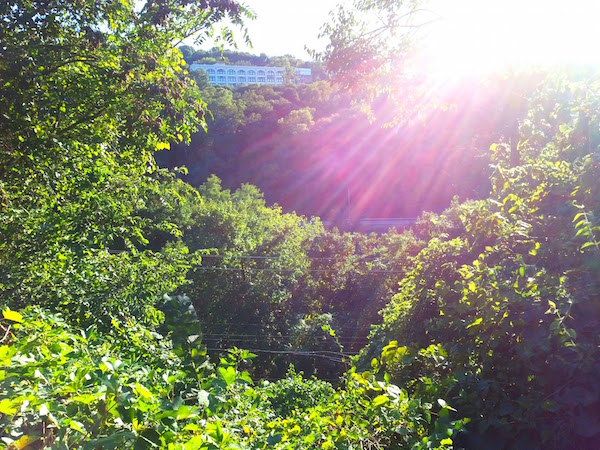
Reaching the top of the Ella Street steps (and optionally the short flight up the perpendicular Wertz Way steps that adjoin) one gets a great payoff with views through the tree canopy to Polish Hill, North Oakland, and down to Skunk Hollow. On this beautiful early fall(-feeling) day, the sky a perfect cloudless blue, the dappled light, and lush, overgrown hillsides were as spectacular as one could want. And all we had to do was try.

View of Skunk Hollow and North Oakland from Wertz Way, Pittsburgh, PA

View of Skunk Hollow and North Oakland from Wertz Way steps


On the Trail of the Train-Squashed Penny

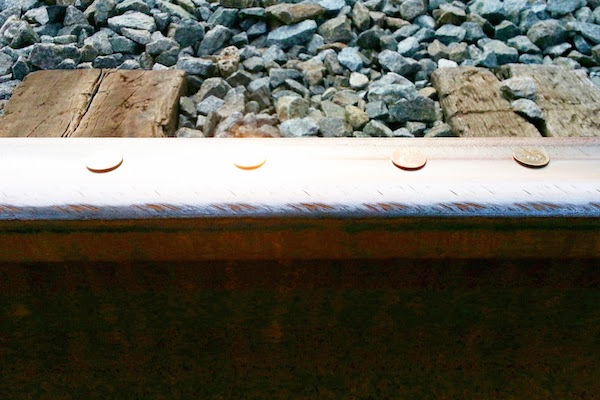
Four pennies lying on a train track

In an age where one may receive instant communication on where distant acquaintances are eating lunch and realtime updates on the line at the grocery store, The Orbit thought it might be fun go back and explore a slow burn pastime that’s as old as coal-fueled locomotives and nearly-worthless coinage. That, of course, is the sport of creating train-squashed pennies.

I know, I know–a sport? It’s an activity that makes yogurt-making look like The X Games, but bear with me. Squashing a penny is going to involve some transportation to the track (we recommend a bicycle ride followed by a walk down the ties) and the non-physical cunning of more rugged and/or glamorous pseudo-sports like hunting or sailing or stock car racing.

Both one-cent coinage and interstate rail infrastructure exist all over the place, so this is definitely not a uniquely Pittsburgh thing. That said, our fair city is surrounded by train tracks and there are many easy access points to get to the rails. It literally costs pennies to participate and hopefully by now you’ve got ObamaCare in case you lose an arm. The world is your squashing ground!

Train-squashed penny found against gravel and a rail tie

Found! Squashed penny amongst the gravel along the rail tie off the track

I’d like to train squash a penny. How do I do that?

You put a penny on a train track, you come back later, you pick up the penny. What’s to know? Oh sure: it seems this simple. (It is almost this simple.) But there are a few things to be mindful of:

1. Safety. It goes without saying that if one encounters an oncoming train, get thee away from the track! Squashed pennies are great, but they’re not worth losing a life or limb over. There may be pennies in heaven, but there are no trains to squash them!

2. Choose your location wisely. Not all tracks are actually in use. There is no disappointment in life quite so devastating as returning a day or two later to find out that one’s pennies remain on the track still legal tender. It’s that kind of indignity that will send young penny-squashers screaming to video game consoles, vowing to conduct their transactions solely with charge cards when the they grow up. Don’t let this happen! Know the active tracks! Stake them out, if necessary! Often you can tell just by looking: tracks in use are smooth and shiny; unused ones will quickly develop a thin layer of rust.

3. Pay attention to the weather. Train tracks are not flat–they have a gentle arc, which leaves the coins suspended in unanchored balance. A heavy rain could easily dislodge the pennies before Norfolk-Southern has a chance to flatten them.

4. In for a penny, in for a pound. Pennies are cheap. Heck, they’re practically worthless–that’s why we squash them! Don’t just bring one, grab a handful! They don’t all pay off (see next item) so you should take the gardener’s approach: one for me, one for the bugs*.

5. Locating squashed pennies is no walk in the park. Sometimes you lay coins down just to come back later and find no trace of them. Were they absconded with? Lost in the weeds? Jettisoned from the rails? Who knows! The clever flattener will mark his or her starting point carefully and may still need to don deerstalker and pipe, spindly fingers stretched in concentration to locate the far-flung Abraham.

Close-up of the train-squashed penny

Train-squashed penny #1, day one

Where can I squash a penny?

A fine question! Obviously one needs to locate an active set of rails (see above), but where to do that? Here are some easy-access suggestions:

  • Riverfront Park, Millvale. Right as you enter the park from either 40th Street Bridge exit ramp or the town of Millvale you’re forced to cross two sets of tracks. This is where we squashed our pennies. [Only the set nearer to the river appear in use. The pair we placed on the other tracks were still there the next morning.]
  • Panther Hollow. Taking South Neville Street all the way to the bottom of Panther Hollow, you’ll cross tracks at the base of a bunch of CMU buildings. These still get plenty of daily use. Drop off a couple cents on your way to school or work and they’ll be squashed by the time Jeopardy starts.
  • Riverfront Park, South Side. The bicycle trail runs alongside the train tracks throughout the South Side, so there are ample opportunities to drop some coin, frolic, get a tattoo, binge drink, etc. and return to hunt for your treasure.
Close-up of the train-squashed penny

Train-squashed penny #2, day two


* In our experiment for this story the result was exactly as described: four pennies placed on the track, two flattened pennies found. We never located the other two.

Polish Hill’s Abstract Art Walks

graffiti cover-up, Pittsburgh, PA

Bethoven Street

If Don and Phil Everly are to be believed, a man in Kentucky sure is lucky to lie down in Bowling Green. Well, you can bet your dupa that man, woman, and child sure are lucky to wake up in Polish Hill–its spectacular vistas, its legendary city steps, its cattywumpus streets clinging to the hillside. To this list, you can add one more bonus. The residents of Melwood, Herron, and Brereton get the year-round, open-air, free-admission modern art walks of Bethoven and Finland Streets.

graffiti cover-up, Pittsburgh, PA

Finland Street

The works are created and maintained as a joint effort between some number of indefatigable spray paint-weilding taggers and what we imagine is a combination of city D.P.W. “graffiti busters” and concerned citizens taking matters into their own hands. This cat-and-mouse adversarial partnership ensures that every season the palette will shift, the structure will renew, and the layers will be reborn yet again.

graffiti cover-up, Pittsburgh, PA

Bethoven Street

The quirkiest thing about these artists is exactly what makes the whole thing work. A graffiti cover-up team could easily just invest in bulk orders of battleship gray exterior primer. End of story. That’s what it’s like along the jail trail, down in “The Run,” and a bunch of other places*. One clean sweep every spring. If so, there’d be one less blogger loitering at the top of the hill.

graffiti cover-up, Pittsburgh, PA

Bethoven Street

But it ain’t like that in Polish Hill. Instead, the clean-up crews (whoever they are) seem to use whatever extra paint they just happen to have laying around. I don’t see any green or black in these photos, but just about every other color in the spectrum is represented. The way these layers peel, flake, and erode suggests they may just be using leftover house paint, rather than some heavy-duty, element thwarting, highway-grade pigment.

graffiti cover-up, Pittsburgh, PA

Finland Street

Further, the painters use an irregular approach to the graffiti cover. Sometimes roughly squaring off big fields, others targeting individual spots just as needed. The effect is to give the abstraction a loose (if undefined) composition that wouldn’t have been there without the smaller details.

Mark Rothko "Yellow, Cherry, Orange" (1947)

Mark Rothko “Yellow, Cherry, Orange” (1947)

Maybe you have to mentally crop the big retaining wall-sized sections down into more digestible chunks, let the eye focus go a little soft, relax a little bit for it to make sense. But you really don’t have to stretch too far to imagine these pieces sitting side-by-side the great abstract expressionists. I imagine a Hans Hofmann or a Franz Kline or a Mark Rothko being quite pleased to share wall space along Bethoven Street.

graffiti cover-up, Pittsburgh, PA

Bethoven Street


* In fairness, the city uses a few different shades of white and gray and some of the results are still interesting…but they’re not like these.

Post No Bills

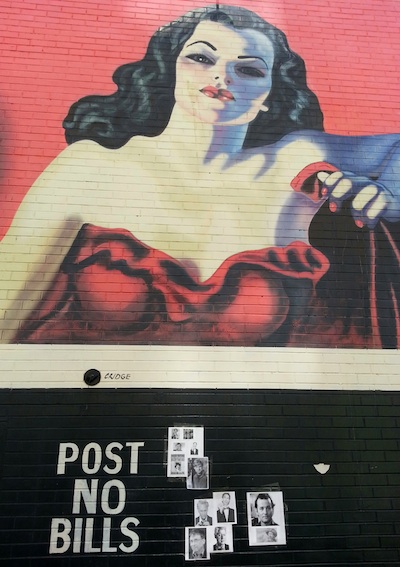
brick wall painted with "Post No Bills" message plus print-outs of famous Bills taped to the wall, Pittsburgh, PA

It’s a cheap visual joke. The self-consciously retro POST NO BILLS painted in big white block letters on the black brick wall of the former Joe Mama’s Italian restaurant in Oakland. Right next to it, jokesters have taped–nay, “posted”–a slew of pictures of famous people named Bill. There’s Bill Murray and Bill Clinton, Bill Gates and Bill Maher, Bill Nye “The Science Guy” and the wall’s most arcane inclusion, Buffalo Bill Cody. Bill Cosby makes a de rigueur appearance begging the question: is it bad taste or mockery to include a disgraced Bill in one’s (relatively benign) act of prankdom?

It’s a sad state of affairs when one gets a nice chuckle out of some college kids’ first nights back jape and then we jump immediately to skepticism. This is probably a thing–maybe it counts as a “meme,” I think to myself, something somebody thought of and now folks do as a cliche, like adding love locks to the nearest bridge, or “this gum tastes like rubber,” or flossing.

So off to the Internet I went, and sure enough, Google Images was stocked with variants on this joke. Color copies clipped to a chain link fence; Xeroxes stapled to plywood; Clinton, Gates, and Murray as Run-DMC; and nice, spray-painted stencils on plywood of the same group (plus Cosby) at various urban construction sites. A template clearly exists and the canon established.

So, what would it take to make this bit more interesting? If this prank-loving blogger was going to have at it (and he’s not) he would at minimum throw out all the obvious candidates. Pittsburgh young people: make it your own! Here then, for anyone considering a future rendition, are a handful of Orbit suggestions for great Pittsburgh “Bill”s that you could use, without getting into the Post No Bills rut. Make us proud.

William Pitt, 1st Earl of Chatham

William “Bill” Pitt, 1st Earl of Chatham

William Pitt: A guy who liked Pittsburgh so much he named himself after the city. Hold it. No, it was the other way around. And maybe the city didn’t get any choice in the matter. Whatever. “Ol’ Bill” is the namesake of both Pittsburgh and Chatham College/Chatham Village and a host of other places all over the country. Tell me the image of William Pitt’s ridiculous powdered white wig wouldn’t look great wheat-pasted to the side of Joe Mama’s.

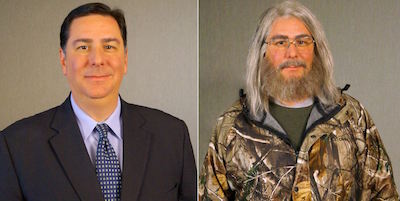
Two photos of Pittsburgh Mayor Bill Peduto: one in a suit, one in disguise for the television show "Undercover Boss"

Pittsburgh Mayor Bill Peduto in both mayoral and “Undercover Boss” guises

Mayor Bill Peduto: This one is pretty obvious. Even if you’re a student here in your first semester, you should be aware of your mayor. You’ll likely even have the opportunity to vote in the next mayoral election, so you should pay attention. Though Mayor Peduto probably would not condone vandalism (even if it’s only committed with photocopies and packing tape), I’ll bet even he would get a little kick out of being in the Order of the Bills.

Bill Mazeroski's 1960 World Series-winning home run over the New York Yankees

Bill Mazeroski, 1960 World Series

Bill Mazeroski: “Maz” gets credit for one of the most dramatic moments in Pittsburgh sports history: a walk-off home run to win the 1960 World Series over the New York Yankees. You might not be able to pick his face out of a Post No Bills line-up, but this iconic photo of the ecstatic game-winning stride around the bases will resonate with even the casual Pirates fan–there’s even a bronze statue of it at PNC Park. Oh yeah: and this all happened at Forbes Field, which is now Schenley Plaza/Pitt campus.

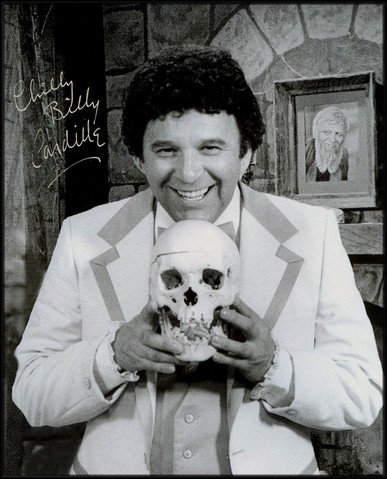
Pittsburgh television/radio personality "Chilly" Bill Cardille, from his time hosting "Chiller Theatre"

Chilly Billy Cardille in the “Chiller Theatre” days

Bill Cardille: This blogger didn’t move to Pittsburgh until the 1990s, so I missed out on Chiller Theatre, Pittsburgh’s entry in the bygone era of local hosts introducing late-night B-movie features on broadcast television. But I still know of it, so you should too. Cardille is equally famous both for his role as a TV news reporter in Night of the Living Dead and as a longtime radio host on (former) “music of your life” station WJAS (R.I.P.). I don’t know how many dozens of times I heard him spin “Theme From a Summer Place” or “Close to You” while I patched plaster and sanded floors. Those tunes, just like Cardille’s bedroom baritone, never got old. The patching and sanding, on the other hand…

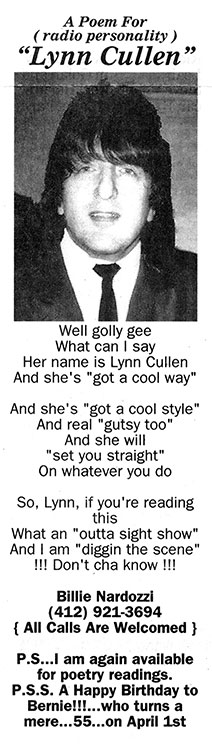
A poem titled "Lynn Cullen" from the newspaper classified ads by Billie Nardozzi

One of Billie Nardozzi’s weekly classified ad poems

Billie Nardozzi: As Pittsburgh’s (unofficial) poet-laureate, Nardozzi published his verse weekly in the Post-Gazette classified ads for at least a decade. Every Tuesday, you’d get the same photo of himself with some rhyming, quoted “words” of “wisdom” on subjects like kindness, true love, loneliness, home cooking, etc. You make yourself a spray paint stencil of that mug with that mullet and the people of Pittsburgh will “lose” their “minds.” Guaranteed.


Honorable Mentions. Other great Pittsburgh Bills:

  • Billy Conn: Professional boxer, mostly known for the oxymoronic title of World’s Light-Heavyweight Champion (1939-1941) and for taking on (and, yes, losing to) Joe Louis, who was a weight class above him. There’s a Billy Conn Boulevard in Oakland (actually just a ceremonial section of Craig Street) and a line of photos up at Hambone’s, some of them with googly eyes stuck on the glass. Make it happen.
  • Billy Strayhorn: Jazz composer, arranger, lyricist and Duke Ellington’s right-hand man. Just try taking an ‘A’ train or living a lush life in some small dive without him.
  • Bill Bored: Drummer for the late great new wave weirdos The Cardboards and star of Stephanie Beros’ Debt Begins at 20. That movie contains a ton of great shots in Oakland and Bloomfield of places that don’t exist anymore. I’m dying for an Orbit interview with Mr. Bored!
  • Bill Cowher: He of the most-noteworthy mustache, beard, and flying saliva–oh, and he coached a football team, too. Another person with features so strong they scream out to be abstracted into two-tone.
  • Billy Buck Hill: Obscure sub-neighborhood of the South Side Slopes. Yes, this counts as a “Bill.”

brick wall painted with "Post No Bills" message and retro Coca-Cola advertisement, plus print-outs of famous Bills taped to the wall, Pittsburgh, PA

Unread: The Record Label Next Door

Chris Fischer, Unread Records & Tapes

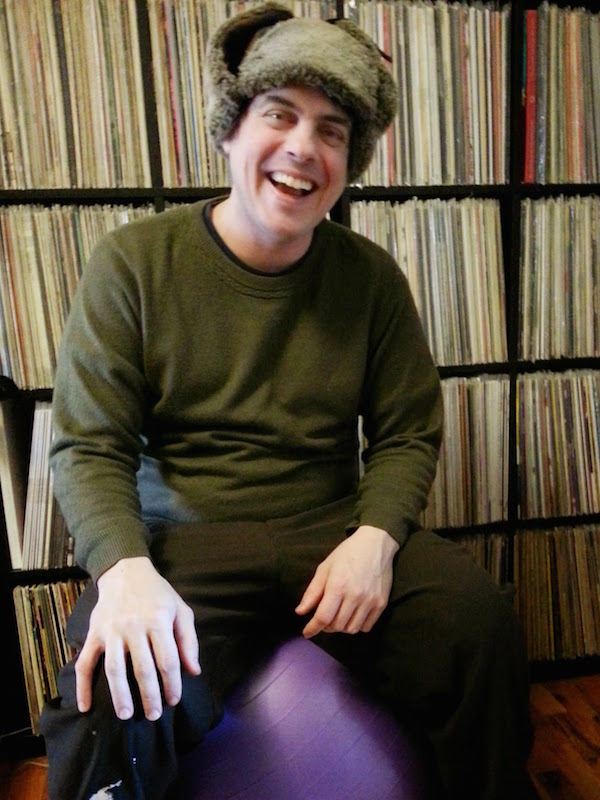
Chris Fischer at Unread Records headquarters, Lawrenceville

This isn’t Richard Branson.

No, when Chris Fischer jets to London, it’s on the shoe leather express.  And it’s probably just over to Long John Silver’s.  That certified gold Nathaniel Hoier cassette?  Dubbed by hand, artisanally, they way they did it in olden times (er…the 1990s).  Your order will arrive with a personal letter, in block letters, with fancy spellings.

Last year Fischer’s record/cassette/art/zine enterprise Unread Records & Tapes celebrated twenty years of pressing the Record and Play buttons with a two-day all-hands-on-deck (ahem, most hands) label festival and art show in Omaha, Nebraska. For the lion’s share of the label’s twenty years, Fischer lived in Omaha, which is why the fete was back there. Some majority of the Unread’s enormous (170+ releases, and counting) output comes from that part of the world, including household names like The Debts, Lonnie Eugene Methe, The Dad, David Kenneth Nance, Places We Slept, and Noah Sterba.

Noah Sterba "The 12 Bar Blues" cassette cover

Noah Sterba “The 12 Bar Blues” cassette (Unread #170)

The Unread diaspora extends much further, though, with folks like South Carolina madman Charlie McAlister, Milwaukee’s Ramon Speed, Furniture Huschle/Furniture Three, John Thill, and Dennis Callaci from California, Portlanders A John Henry Memorial, George Willard, and Mean Spirt’d Robots, etc. all calling the label (part-time) home.

So why is this profile appearing in the Pittsburgh Orbit and not in, you know, the Omaha Orbit? Well, I’m glad you asked! Fischer, a Pennsylvania native (though, from the other side of the state), relocated to our fair city a couple years ago and is steadily making this place home. Here in Pittsburgh, Unread has invested in our own Swampwalk, C. Frank, and some other cats.

[Full disclosure: This music-loving and -making blogger also sings and strums, blurts and bleeps on the side. Some of those sounds have been captured and capitalized by Unread Records.]

Chris Fischer, Unread Records & Tapes

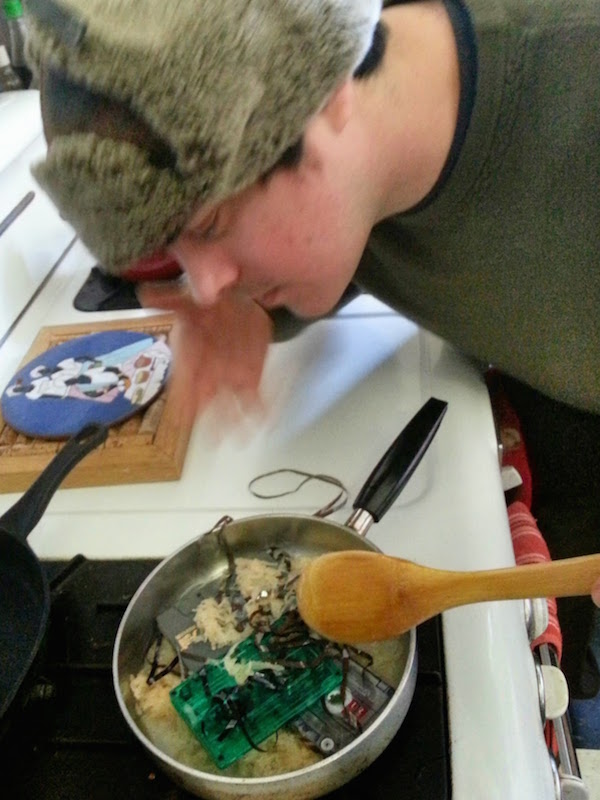
In the kitchen, cooking up beats

We started this piece way back in the late winter, hence Fischer’s very un-Summer attire in these photos. But it never felt right. What they told us in our journalism correspondence course (D is still passing, right?) is that like a winter coat–or a mackerel–every great article needs a hook to hang on, and we just didn’t have one. So we put this post on the shelf and went off looking for weird pizza and Jimmy “The Greek’s” graveAnd while Chris hasn’t exactly been sitting on his keister (the label has issued at least a half dozen new cassettes and one l.p. in the last few months) we found our hook–or at least our exclamation point–with Public Coffin.

Unread Records "Public Coffin" 8 cassette single + book box set

Unread’s “Public Coffin” 8 cassingle box set + book as, they say, “unboxed”

This Coffin is as pure a representation of the Unread aesthetic as anything you’ll find: hopelessly, uncompromisingly in love with that most outdated and maligned of media: the audio cassette, (cassette singles, no less!) and filled with whole-heart no-fi stuffing. The package features eight of the label’s standard-bearers, including collection co-conspirator and plains troubadour Simon Joyner, each turning in e.p.-length mini-albums that range from damaged and noisy to weird “pop” to pure, lonely desolation.

The mustard yellow cassettes arrive in a hand-silk-screened package that includes a 32-page book that serves as liner notes, fanzine, artists’ excrement, and head-scratching objet d’art. Fischer is also a printmaker, artist, and zine creationist whose scratchings and silk-screenery decorate much of the Unread catalog.

Razors "Besides" cassette cover

Razors “Besides” cassette (Unread #162)

Unread’s twenty-first anniversary is coming up this fall. This time, the annual “Junkfest” event will take place in Pittsburgh (date and location still to-be-decided, but we’ll report back). That’s plenty of time to find yourself a boombox, clear off a little counter space, and get your old Fast Forward and Rewind chops all worked-out. You’ll need them.

Chris Fischer, Unread Records & Tapes

Chris Fischer: on the ball and havin’ fun

A Wooden Street!

Section of wooden street in Pittsburgh, PA

Roslyn Place: Pittsburgh’s last wooden street (detail)

From even very close, you’d swear they were bricks–or maybe cobblestone, but they’re a little too flat for that. No, tiny Roslyn Place in Shadyside is paved (it turns out that is the right word) with wood. Tightly packed, up on their ends for strength and wear, smooth and even.

This blogger has ridden a bicycle on plenty of streets bricked (to varying degrees of comfort) and cobbled (Hell on earth for the cyclist) and I can say that Roslyn’s wood blocks were a more pleasurable experience than either of those options. That may owe a lot to the fact that Roslyn Place is only one block long and dead-ends in a tiny cul-de-sac, so it doesn’t endure the kind of heavy through-traffic other roads receive, but it’s still impressive.

Roslyn Place wooden street in Pittsburgh, PA

Looking up from the end of Roslyn Place

The technique is known as Nicholson paving and it goes back hundreds of years, but seems to have peaked in the early 19th century. Though it’s impossible to get any kind of comprehensive list, it’s clear that the number of remaining wooden streets in America is very low. There are mentions of similar single block-long Nicolson pavement streets in Philadelphia, Cleveland, and St. Louis, plus at least three alleys in Chicago. But that seems to be all the Internet is aware of, making Roslyn Place a member of a very small club.

The Orbit does not like to get scooped. We did not become the nation’s most-trusted news source by getting our information second-hand. That said, we give credit where credit’s due. And in this case the story of Pittsburgh’s last wooden street came to us from Margaret Krauss’ report on WESA earlier this Summer. That piece does a very good job describing the 100-year history of the street and its single full-scale rehab in 1985. Readers are encouraged to go straight to the source for those details*.
Houses on Roslyn Place, Pittsburgh, PA

Houses at the end of Roslyn Place

The fact that we had to hear about the wooden street from a public radio report is particularly galling when you know the location. Roslyn connects to Ellsworth Avenue and is a short block from Aiken–a corner that I’ve probably passed a thousand times, never peeking down the side street. If that isn’t an Orbit cautionary tale on observation and exploration of your immediate surroundings, I don’t know what it is.

Damaged section of Roslyn Place's wooden street

Wood chips: thirty years later and only one pot hole on the street


* The Post-Gazette and City Paper have both written pieces about Roslyn Place as well.  I just either didn’t catch on or don’t remember those.