Step Beat: Climbs 57

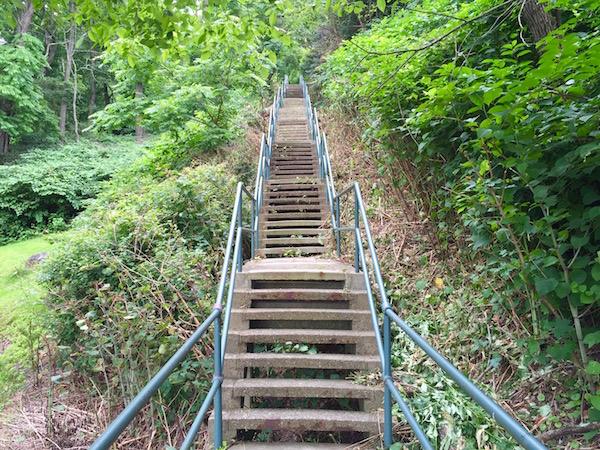
looking up long set of city steps, Pittsburgh, PA

Looking up the lower section of the 57th Street steps

Has Pittsburgh fifty-seven varieties of city steps? Maybe.

It’s an intriguing question. There are long and short sets of steps; steps on the side of the street and steps alone in the woods. There are steps of wood, metal, and concrete; steps in good repair and ones that are falling apart; open steps and ones permanently closed. Some have special bicycle ramps added; others just tell you to Try. There are steps with crazy turns and angles and steps that just go up one straight line. There are steps the whole neighborhood uses, step street intersections, and steps that no longer go anywhere.

It would probably take a significant imagination to keep this riff going all the way out to the magic number. However, we know Henry J. Heinz considered 57 to be a lucky number*, and if it’s good enough for the king of condiments, it’s good enough for Pittsburgh Orbit. We certainly felt lucky after a climb up the very fine 57th Street Steps in Lawrenceville.

city steps with older home, Pittsburgh, PA

Step-accessible (only) house at the bottom of the 57th Street steps

city steps at 57th and Duncan Streets, Pittsburgh, PA

The intersection at Duncan Street, mid-point in the 57th Street steps

The steps that make up the pedestrian section of 57th Street qualify as at least two of these varieties. The lower half, from where Christopher Street forks off 57th up to Duncan Street, is in immaculate shape. The treads and rails are all perfectly maintained, with easy clear passage. The surrounding foliage has been neatly trimmed and there was no litter the day we visited. There’s even one remaining house that is only accessible via the steps.

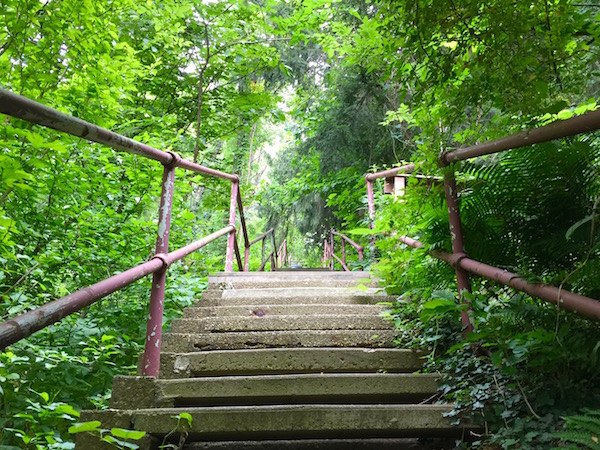
An the upper half? Well, that’s another story. In the middle of a lush Pittsburgh summer, dense knotweed has enveloped the majority of this stretch with just enough room for the city trekker to go full-on Indiana Jones. [Note to readers: bring a fedora, whip, and satchel.] It’s clear this batch is neither as well-loved nor as well-used as its downhill sibling. Still, it offers a great off-the-grid version of the step experience, which is just as much of what we’re after.

city steps nearly overgrown with knotweed, Pittsburgh, PA

Entrance to the upper section of 57th Street steps (at Duncan Street)
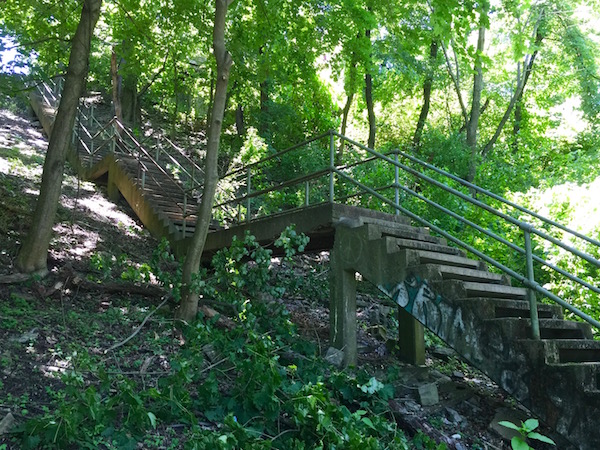
looking up city steps covered by trees, Pittsburgh, PA

Looking up the upper section of 57th Street steps

If there’s a bummer to the 57th Street steps, it’s that you’re stuck with a straight up-and-back trip–there’s no looping around for a more interesting walk/hike. Somewhere around half-way up the top stretch (above Duncan), you hit a pretty decisive end-of-the-line. The treads are gone, trees and weeds have overtaken what’s left, and a clear Steps Closed barrier has been placed across the route.

At this point, the red handrails continue, tantalizing us by disappearing into the hillside. The map shows that at one point the steps terminated up on Price Way in Stanton Heights, but that connection seems unlikely to be re-opened–at least until The Orbit gets put in charge of public works. Until then, pass the ketchup.

city steps missing treads with "Steps Closed" sign blocking the way, Pittsburgh, PA

End of the line: top of the 57th Street steps


* Heinz famously had way more than 57 different food products when the “57 Varieties” tag line was dreamed up and added to packaging.
Get the Gist: The 1917 Manchester Bridge Sculptures

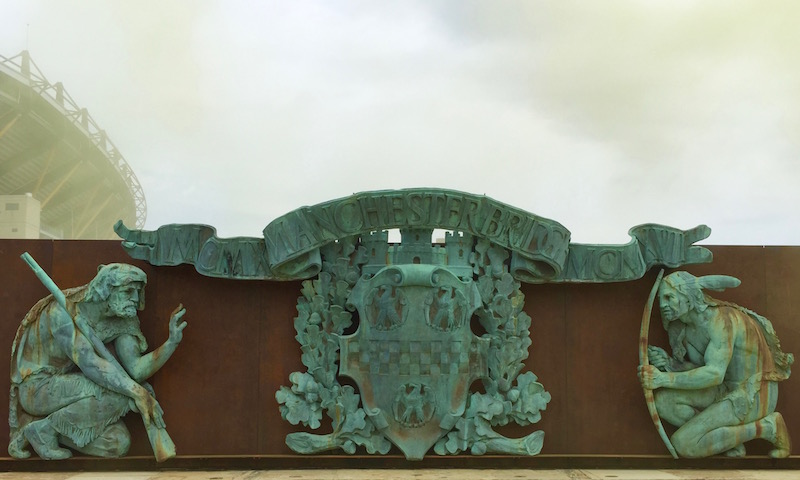
Preserved Manchester Bridge sculptures in their new location near Heinz Field, Pittsburgh, PA

The Manchester Bridge sculptures in the drifting yellow fog of the Color Run cleanup

Has anybody seen the bridge? Robert Plant asks on Led Zeppelin’s 1973 time-scuttling pseudo-funk jam “The Crunge,” Where’s that confounded bridge? It’s a preposterous rhetorical question–an inside joke, to be sure–but it wasn’t so funny when this blogger found himself in the very literal position of being unable to locate the bridge he was looking for.

To be fair, The Orbit was actually just trying to find some ornamentation–not, you know, an entire bridge. Still, we were on the hunt for three giant bronze sculptures that originally adorned the Manchester Bridge, and are now on display on the North Shore. We had only the most minimal of directions–“near Heinz Field”–but they couldn’t be that hard to find, right?

Well, it took wheeling around the entirety of the stadium, down along the riverfront, and then a befuddled dose of Googling to actually locate the new installation. [Readers: fear not, we’ll make it easier for you–see below.]

Black and white photo of Manchester Bridge in 1918, Pittsburgh, PA

Manchester Bridge as it looked in 1918, the year after the sculptures were added (photo: Wikipedia)

The story goes that the old Manchester Bridge–which spanned the river between the point and where Heinz Field is now–was erected between 1911 and 1915 and then had these sculptures added a couple years later in 1917. When the old bridge was replaced by the much larger Fort Duquesne Bridge in 1969 someone thankfully had the wisdom to put the big bronze decorative pieces in storage instead of the scrap yard.

It’s kind of amazing that now–forty-seven years later–the sculptures should finally move off the shelf to out on the street where everyone can see and enjoy them[1]. The location–in the literal shadow of Heinz Field–seems a little goofy. It’s really only convenient if you happen to already be walking in to a football game or urinating before a Kenny Chesney concert. However, it is within a stone’s throw of where the old Manchester Bridge touched down on the North Side, so in that way it makes pretty good sense.

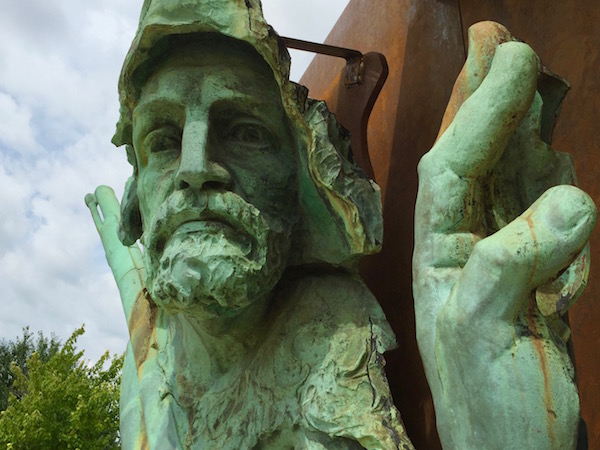
Detail of frontiersman Christopher Gist from the preserved Manchester Bridge sculptures, Pittsburgh, PA

Frontiersman Christopher Gist (detail)

And what of the sculptures? Well, on one side you’ve got Christopher Gist, the “frontiersman” who mapped the Ohio River valley in the 1750s crouching with musket, buckskin, and one very manly beard. Up close, there’s a deep, dazed look in his eyes and remarkable detail considering how high the piece was suspended above the bridge deck.

Opposite is the figure of Guyasuta, who was also involved in the colonial exploration of the Ohio[2]. The Seneca chief acted as local guide to one George Washington, in his pre-father of the country role as a young officer on a mission to survey what was then The West. Guyasuta’s posture is a near mirror image of Gist: hunkered down on one knee with a weapon at hand (in this case, bow and arrow), ready for action, but not yet drawn.

detail of Chief Guyasuta from the preserved Manchester Bridge sculpture, Pittsburgh, PA

Chief Guyasuta

Between these two figures is an enormous representation of an unfurled banner reading MCMXVII (1917) Manchester Bridge. Below it is a full-on 3-D version of the city crest and seal, complete with its checkerboard pattern (these are blue and white when they appear in color), “three bezants bearing eagles rising with wings displayed,” and “a triple-towered castle masoned Argent.” The seal is very much not the required black-and-gold[3]. Rather, the whole thing has turned the fabulous weird green of oxidized bronze, which looks pretty terrific.

Worth the trip? Certainly, at least if you’re already down on the North Shore walkway, at Heinz Field, or Stage AE for any reason. Or you can just pick up the twofer with the next Color Run cleanup, like we accidentally did. And if you see this wayward blogger gasping in the clouds of technicolor dust, maybe you can show him the way out, just like Gist and Guyasuta.

Manchester Bridge sculpture detail including a triple-towered castle masoned Argent from the seal of the City of Pittsburgh

Detail: the “triple-towered castle masoned Argent” of the seal of the City of Pittsburgh

Getting there: The newly-installed Manchester Bridge sculptures are indeed right by Heinz Field. They’re on North Shore Drive, just about where it meets Art Rooney Ave. (the little ring road around the stadium), in the small greenspace between the gates and Stage AE.


[1] The new installation only includes the sculptures from one end of the bridge. There is another set with different figures (including Joe Magarac!) that was also saved and is yet to be made public.
[2] Gist is presumably the namesake of the tiny cross street in Uptown. Guyasuta also has an un-remarkable eponymous residential road in suburban Fox Chapel. This seems like a bit of rip-off for both explorers when similar colonial-era players Forbes and Braddock got such prominent main drags.
[3] Between looking up Gist, Guyasuta, the Manchester Bridge, clarifying Led Zeppelin lyrics, the city flag and seal, and then definitions for “argent” and “bezant”, this post set some kind of Orbit record for its orgy of Googling obscure minutia[4].
[4] Note: no, we were not Googling “orgy”. That’s for later.

Alien Landscapes: Color Run Cleanup

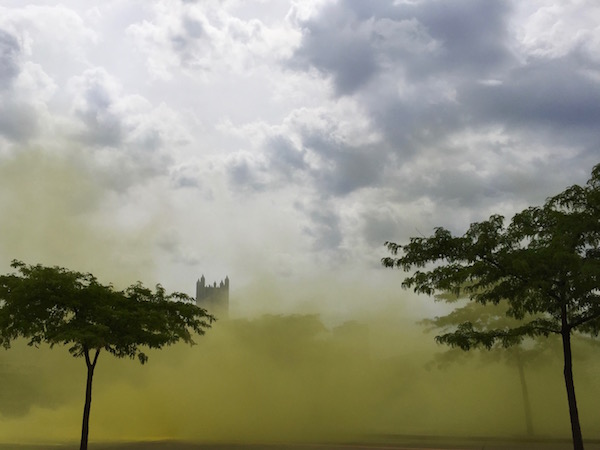
Peak of PPG Place seen through a cloud of yellow dust, Pittsburgh, PA

These colors don’t run…but they may blow away in the wind

You’ve seen them–heck, maybe you’ve been them. (Generally) young people in sunglasses and jogging outfits with wild random splashes of color criss-crossing the full lengths of their persons. Nothing is spared–clothing, exposed skin, face, and hair have all been haphazardly doused in iridescent blasts of paint dust. They’re on foot, winded, giddy, and/or dazed–appearing as if recently exposed to supernatural radiation or looped on a new dancehall hallucinogenic.

yellow dust covering street and sidewalks, Pittsburgh, PA

Yellow brick (err…cement) road (and sidewalks)

The Orbit has no idea what “The Color Run” is all about*–we stopped following trends after opening the closet to a wardrobe full of acid wash. What we can say is that it’s some kind of well-organized group event** that involves throbbing disco music, inflatable rainbow-shaped arches, many bold statements suggesting–perhaps, demanding–participants be HAPPY, and yes, lots and lots of deeply-hued paint dust.

Whateverthehell these folks are doing, I’ll tell you one thing: accidentally running into the Color Run aftermath is bizarre…and it’s a hoot.

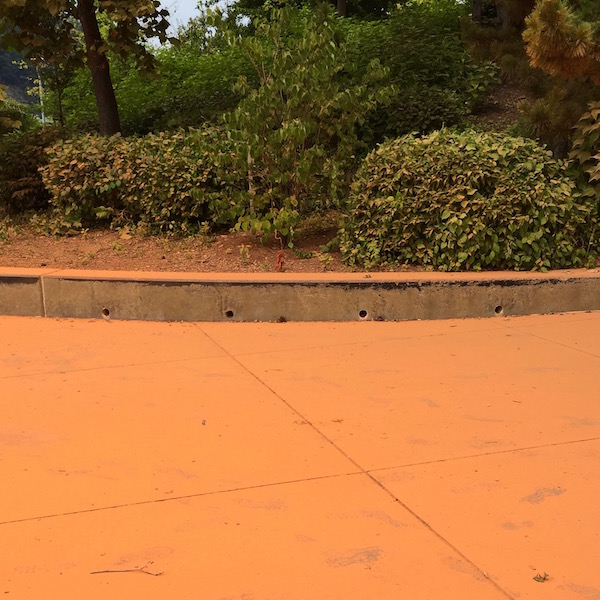
orange dust covering sidewalk and bushes

Planet Orange

Streets of gold! Phosphorescent shrubbery! Day-glo pavement! Bike trail loose gravel mixed with electric blue dye and formerly hum-drum parking spots tattooed in technicolor. For one, brief, shining post-Color Run moment, the general area of the near North Side, around the stadiums and those new office buildings, was transformed into a Star Trek set, a fever dream, a visionary environment, an alien landscape. The future really is here right now…or it at least it was last Saturday.

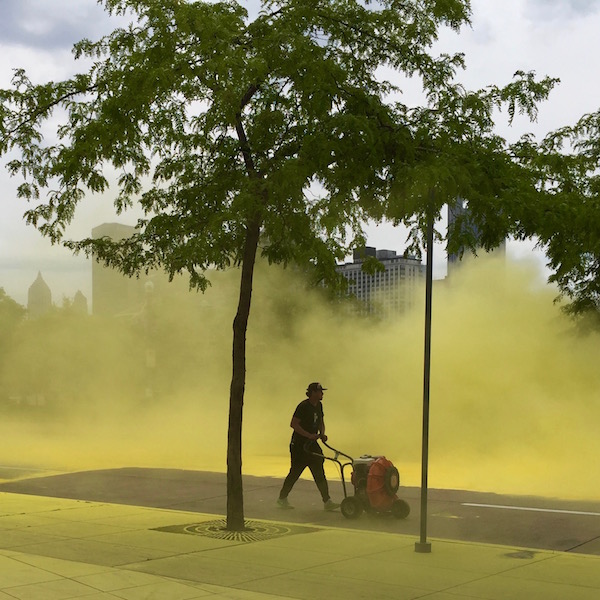
man pushing an electric blower kicking up yellow dust from The Color Run, Pittsburgh, PA

Spell-caster/dream-maker/Color Run cleanup crew member

When the big custom sweeper/blower machine rolled through, I couldn’t race fast enough to catch the billowing clouds of bright yellow dust filling the sky and temporarily blocking out everything in sight. A couple decent shots with downtown Pittsburgh nearly enveloped and then it all disappeared in the wind as fast as it had flown up. The Orbit‘s only regret is that we didn’t make it around to the other discarded dust patches in time to collect the whole color set. We’ll not make that mistake next time.

wooden letters that spell HAPPY, seen from behind

They even have their own language. YPPAH.


* Yes, we are well-equipped to Google “the color run,” but Orbit readers have come to expect a level of “speculative journalism” that doesn’t weigh the reader down with undue facts or research.
** The trucks packing up in the parking lot all had Salt Lake City, Utah addresses on them, so we assume this is some kind of franchised, touring operation.

Art/Work: Big Industry Art

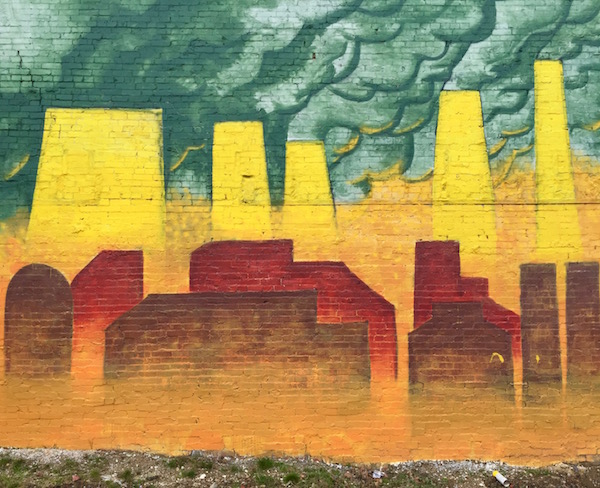
mural of abstract steel mills on brick wall, Hill District, Pittsburgh, PA

Mural, Hill District

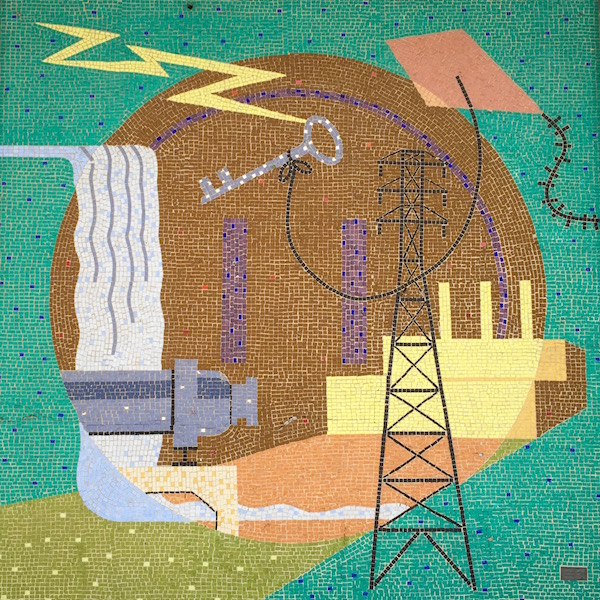
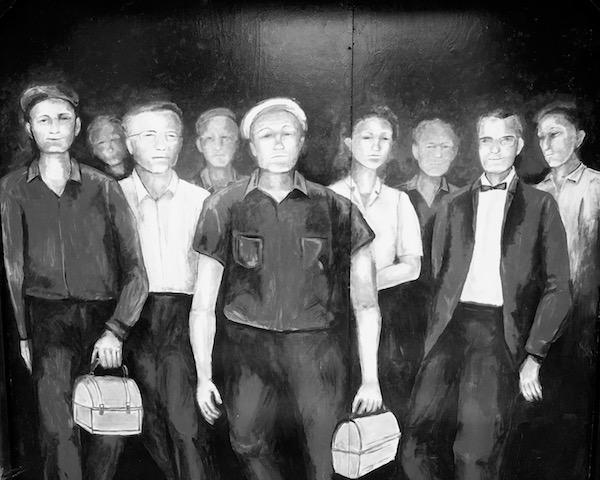
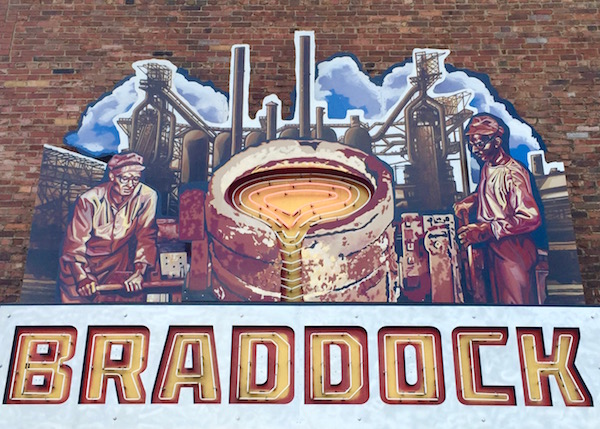
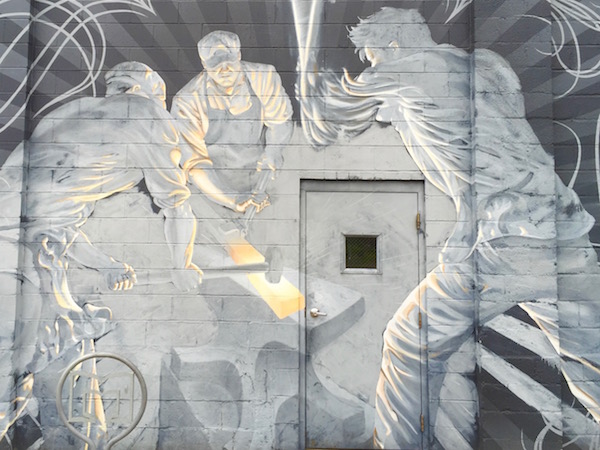
They’re striking images. Tall stacks belching a blanket of smoke that blacks out the sky. Grim men with lunch pails and work shirts. A cauldron of molten metal is poured against a skyline of towering steel vessels. The tools and symbols of power generation: hydroelectric, relay tower, a key struck by lightening. Three ironworkers team up to hammer a bar of hot steel on an anvil as beams of radiant energy stream out, ostensibly the only light source in an otherwise unlit workshop.
tile mosaic depicting various industry and innovation from commercial building in Bloomfield, Pittsburgh, PA

Mosaic, Bloomfield

Mural of steelworker, downtown Pittsburgh, PA

(light-up) Mural, Downtown

Somewhere between social realism and folk art lies the realm of steel town tributes to the workers and industries that built them. The mills are (almost) all gone–as are the coke plants, glass and aluminum producers, bridge builders and pipe rollers. But you wouldn’t know it from the public art that still exists–and continues to get created anew–all over the place.

The depictions are of landscapes and people that many Americans wouldn’t choose to decorate with: rusting blast furnaces, smoke-spewing chimney stacks, utility infrastructure, big men–and they are almost always men–working hard.

Mural depicting workers with lunch pails emerging through the pedestrian tunnel to PPG's Ford City, PA plant

Mural, Pittsburgh Plate Glass workers, Ford City

Painting of steel mill and workers with metal and neon lights mounted to brick wall, Braddock, PA

Mixed (mural with neon lights and metal sign), Braddock

Much of “new” Pittsburgh would rather not talk about the steel industry. The air has been cleaned-up (sort of*), there’s a workforce teeming in eds, meds, and….TEDs (?) over yesteryears’ union laborers, and–amazingly–we’re getting some amount of national attention on things like quality of life, affordability, and fancy food. Famously down-on-itself Pittsburgh is even starting to believe some of the hype. Civic boosters and young urbanites want to put those big smokestacks and ginormous rolling mills as far as they can in the rearview mirror.

Thankfully, though, there’s a great reverence for the people and industries that built the region. In fairness, there’s also just a lot more visual power and romance to it. It’s hard to imagine similar wall-sized tributes to tech workers, robot engineers, bankers, heart surgeons, or academics. That said, The Orbit has long considered itself the Joe Magarac of blogs**–so if you’ve got some bare bricks, give us a call. Like Norma Desmond, we’re ready for our close-up.

Mural painted on cinderblock wall of iron workers hammering hot steel on an anvil, Red Star Iron Works, Millvale, PA

Mural, Red Star Iron Works, Millvale


* The actual quality of the air is still a mess–you just can’t see the problem quite so obviously any more.
** Or at least the Joe Pesci of blogs. You think this blogger is a clown?

Step Beat: Basin Street Blues

Looking down the Basin Street city steps, Pittsburgh, PA

Looking down from near the top of the Basin Street steps, Troy Hill

If there are more stereotypically Pittsburgh names for a couple streets than Brabec and Voskamp, point this blogger to them. That these two short residential ways (in Troy Hill and Spring Garden, respectively), should be connected by a picture-perfect set of city steps is all the more apropos. Action, scene, cut, and print.

Top of the Basin Street city steps at Brabec Street, Pittsburgh, PA

Top of Basin Street at Brabec Street, Troy Hill

Tripping across a new set of city steps is no great feat–there are hundreds of them after all*. But randomly arriving at a stretch as spectacular as the Basin Street steps doesn’t happen every day. The couple hundred individual risers that connect these two near North Side neighborhoods have everything the step trekker and urban daydreamer could possibly hope for–theater, tranquility, history, and mystery.

View of Spring Garden and Spring Hill neighborhoods from the Basin Street steps, Pittsburgh, PA

View from the steps: Spring Garden (below) and Spring Hill (above)

Steps, by their altitude-adjusting nature, almost always offer something in the way of rewarding city vistas and Basin Street is no exception. The view from the very top (at Brabec Street) is shrouded in trees, but multiple points along the way offer terrific angles through the branches down to the Spring Garden bottoms below and up into the lush hillside of City View/Spring Hill above.

Thick tree cover and hand rail from city steps, Pittsburgh, PA

Hill view from the steps

Aside from the surround-sound bird chirping and song-singing–plus one indefatigable opossum loitering in a Voskamp Street back patio–not a creature was stirring in or around Basin Street on the day we visited. It is this gentle peace right in the center of the city that makes a great set of steps so special.

Basin Street has its requisite signs of humanity–foundations for long-gone homes off to the sides and no small amount of litter left by teen drinkers and hill campers–but it generally has more of the feeling of being way out in the woods. It’s fair to say that this particular wood still features the sounds of weed whackers, dudes working on cars, and distant classic rock wafting through branches–but a wood nonetheless.

Looking up the Basin Street city steps, Pittsburgh, PA

Looking up the Basin Street steps

Like Tolstoy’s happy families, each story of the city steps is in a sense the same: a wonderous artifact of urban infrastructure still exists, relaxing in repose on and under-visited city hillside. Nature, time, and tide reclaim as much as the Pittsburgh D.P.W. allows. The occasional pedestrian saunters through, but they exist mostly in a time of their own.

On the other hand, though, each passage of steps–at least the really glorious, long, secluded ones like Basin Street–offer their own unique experiences: different views, twists and turns, different high, lows, and end points. Rising Main, it ain’t, nor does it have the clusters of great steps like Fineview or the South Side Slopes, but this little backside of Troy Hill is well worth the trip. Big ups to the Basin.

View of the Spring Garden neighborhood from the Basin Street city steps, Pittsburgh, PA

Voskamp Street, Spring Garden, from near the bottom of Basin Street


* There is no official number, but the estimate is somewhere around 750 sets of public steps in Pittsburgh.

Flag Post: A Very Orbit Independence Day 2016

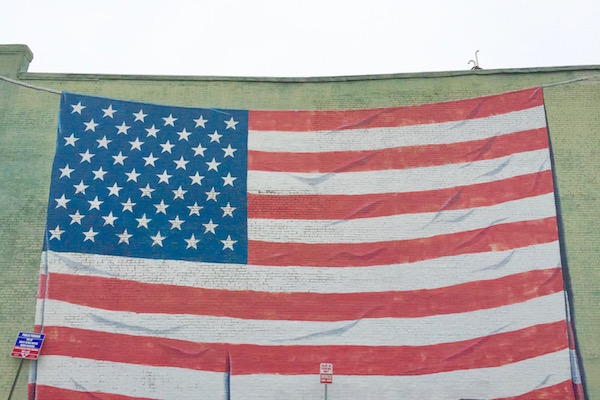
mural of American flag painted on exterior brick wall

Mural, Lawrenceville

On the shore dimly seen through the mists of the deep,
Where the foe’s haughty host in dread silence reposes,
What is that which the breeze, o’er the towering steep,
As it fitfully blows, half conceals, half discloses?
Now it catches the gleam of the morning’s first beam,
In full glory reflected now shines in the stream:
‘Tis the star-spangled banner, O! long may it wave
O’er the land of the free and the home of the brave.

The Star-Spangled Banner (second verse), Francis Scott Key

artwork with American flag and news clippings, Clarion, PA

Public art, Clarion

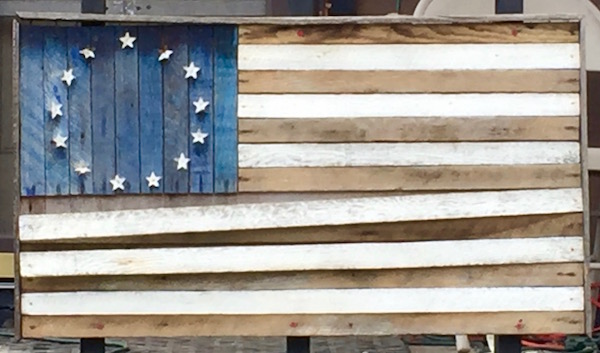
Wooden shipping pallet painted like an American flag

Shipping pallet flag, North Side

Oh sure, the world looks at we, the bloggerati, and just sees the obvious glory. But let me tell you something: blogging is more than just lavish parties, sleazy hangers-on, “making it rain,” and bath salt benders–it’s hard work! Why, who do you think is out of the house at 10 a.m. on a Sunday morning, gears cranking while sunlight warms his wind-tousled hair, obsessively searching high and low* for the next breaking story? Not you–I’ll tell you that much. Why, you’re probably doing something fun and relaxing while getting some light aerobic exercise! And who’s working his index fingers to mere nubs hunt-and-pecking to research the national anthem while you sit on your keister and surf the Internet? This is the cross we bloggers bear.

Neon American flag in glass block window of brick building

Neon flag with glass block frame, Strip District

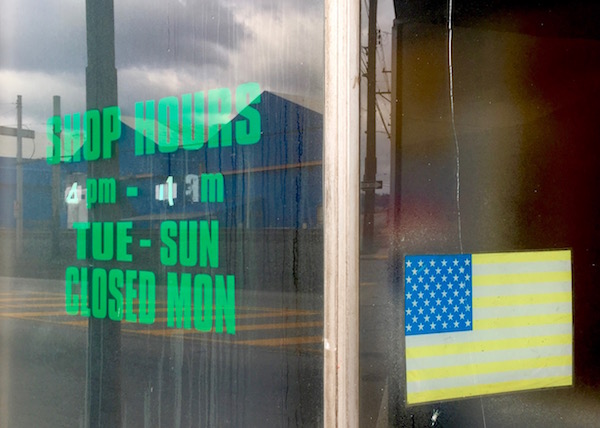
glass storefront windows for former pizza shop, Homestead, PA

Yellow, white, and blue flag, (Former) pizza shop, Homestead

Of the many rewards blogging provides, the excuse to look up odd reference points like the verses of our national anthem is one that goes unheralded–un-spangled, if you will. Reading the full set of lyrics (there are four original verses written by Francis Scott Key, plus one more added by Oliver Wendell Holmes during the Civil War), it’s nice to see that the song actually has some real heart and poetry to it.

It’s quite a lovely and unexpected bit of verse from a tune that is, at best, overplayed, and at worst, a nail-biting one-two of plodding drudgery preceding the inevitable scene-chewing high wire act in the penultimate line. The song (and each verse in its full form) has a Sunday morning coming down conclusion in the good-on-paper, but now tainted-by-jingoism cliché The land of the free and the home of the brave.

Child's painting of American flag on painted plywood

(Former) storefront, Ambridge

Mural detail showing waving abstract American flag with many other design elements including dice, city skyline, men, flowers, etc.

Park’n’ride mural (detail), Wilkinsburg

The American flag can be a lot to take in–both visually and symbolically. It’s not the most aesthetically-rewarding vehicle out there, but we prattled on enough about this in last year’s flag post. What is exciting is how many citizens choose to construct their own versions of the flag. Here we see them painted on wood, built from shipping pallets, recycled from the lathe of a plaster wall, as a mural over a parking lot, and fixed into a waving position in the chain link fence by a steel mill. Donald Trump would have us believe that America is no longer great, but it’s pretty obvious that plenty of Americans still feel like there’s something to celebrate.

homemade American flag made from painted wooden slats, Pittsburgh, PA

Front porch, South Oakland

American flag made from red, white, and blue plastic pieces inserted into chain link fence, U.S. Steel/Edgar Thomson Works, Braddock, PA

Chain link and garland flag, U.S. Steel/Edgar Thomson Works, Braddock


* At least, everywhere along the bicycle trails.

A Protractor Bender

protractor glued to base of light pole, Pittsburgh, PA

#234, Arsenal Park

Much like starting on a bag of potato chips or listening to Creedence records, when you finally break down to blogging about the Pittsburgh protractors, you can’t stop at just one*.

Oh, how long had this blogger let his eyes skip over them, camera safely stowed in the hip pocket? No temptation at all–we’d let other hack bloggers work this scene.

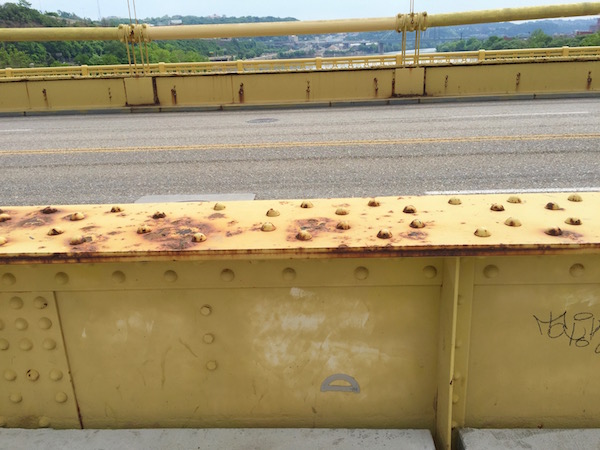
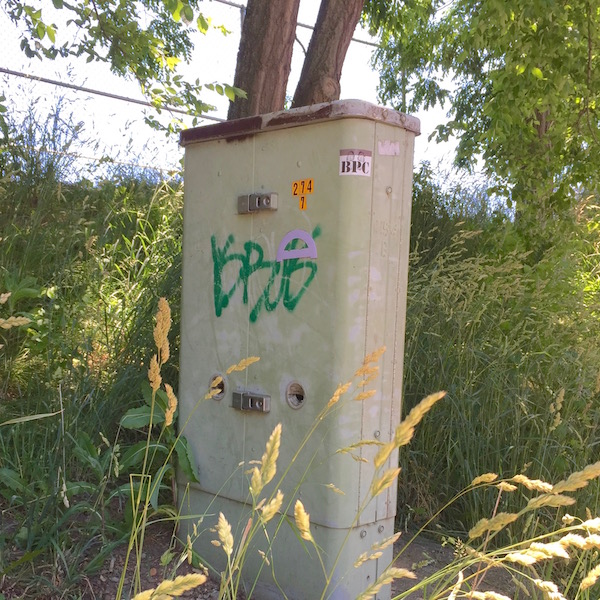
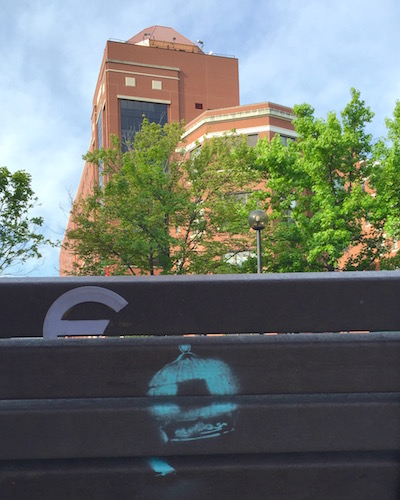
But once we ran the Orbit Obit waxing on about the fate of the disappearing Pittsburgh protractors, the floodgates were officially open. Like a drunkard on a first bender after rehab, we were bagging everything in sight–bridge railings, bases of light posts, electrical boxes, the posteriors of park benches, an air conditioner. (Yes, even an air conditioner!)

So, whether you’re full-on pro-protractor or just geometry-curious, here you go. It’s an Orbit collection of a bunch more of the arced creatures, picked up in just the last couple weeks. Drink up.

protractor glued to lamp post base, Swinburne Bridge, Pittsburgh, PA

#425, Swinburne Bridge

protractor glued to light pole, Pittsburgh, PA

#218, Bloomfield

protractor glued to electrical box panel, Pittsburgh, PA

#236, Arsenal Park

purple protractor glued to power box on light pole, Pittsburgh, PA

#410, Bloomfield

purple protractor glued to metal plate on Swinburne Bridge, Pittsburgh, PA

Swinburne Bridge (number unreadable)

purple protractor glued to rear of park bench, PIttsburgh, PA

Friendship Park (number unknown)

purple protractor glued to window air conditioner, Pittsburgh, PA

#418, Lawrenceville

Purple protractor glued to 10th Street Bridge, Pittsburgh, PA

#448, 10th Street Bridge

purple protractor glued to electric power box, Pittsburgh, PA

Troy Hill (number unknown)

protractor glued to lamp post base, Swinburne Bridge, Pittsburgh, PA

#430, Swinburne Bridge


* Yes, even this choogler can stop before he gets to Mardi Gras.

The Front Yard Marys of Bloomfield, Part 1

Statue of Mary in grotto surrounded by roses, Pittsburgh, PA

Sciota Street

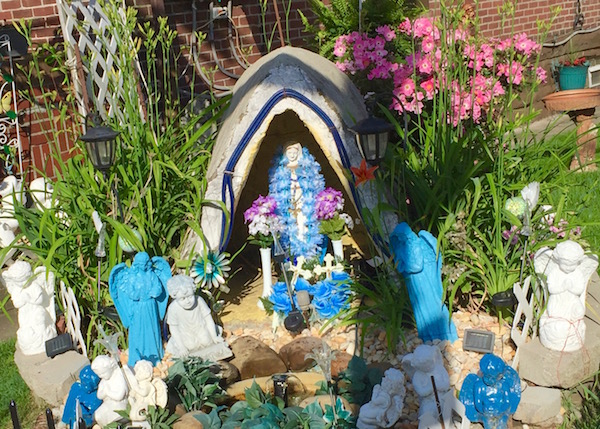
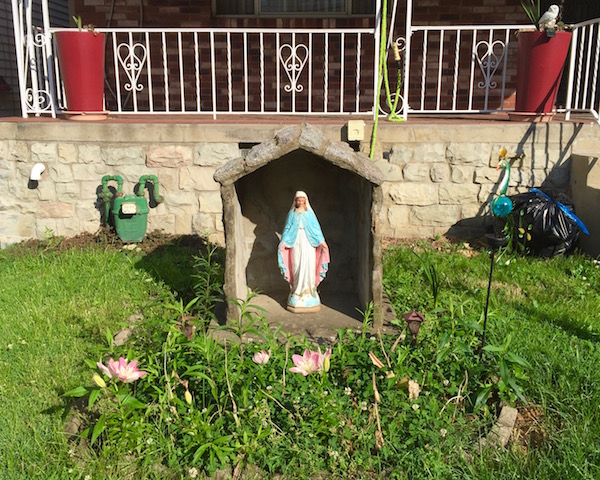
Mary–yes, that Mary–may have come from Nazareth, but she’s definitely got a second home in Bloomfield. Maybe even third and fourth homes–for a blessed virgin, she gets around! Decked out and ready to party in a Hawaiian lei, flanked by flowers, angels, cherubs, lights, and crosses, Mary is the centerpiece of postage stamp front yards, stoops, and porches.

Bloomfield is not known for its private green spaces–I’m sure suburbanites would guffaw at what passes for a “yard” in the neighborhood. The tight row houses are usually built right up to the sidewalk, some with porches, but almost never any grass. So it’s doubly impressive that with so few houses even able to host a grotto, many have chosen to do so.

front yard Mary with angel statuettes, Pittsburgh, PA

Pearl Street

Mary statue in front yard, Pittsburgh, PA

Pearl Street

Brick house with statue of Mary on front porch, Pittsburgh, PA

Mathilda Street

Front yard Mary statue, Pittsburgh, PA

Cedarville Street

Sisters of the Holy Spirit convent, Pittsburgh, PA

The mother of all Front Yard Marys: Sisters of the Holy Spirit convent, Friendship Ave.

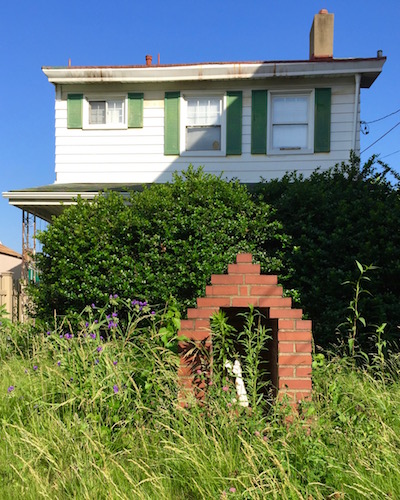
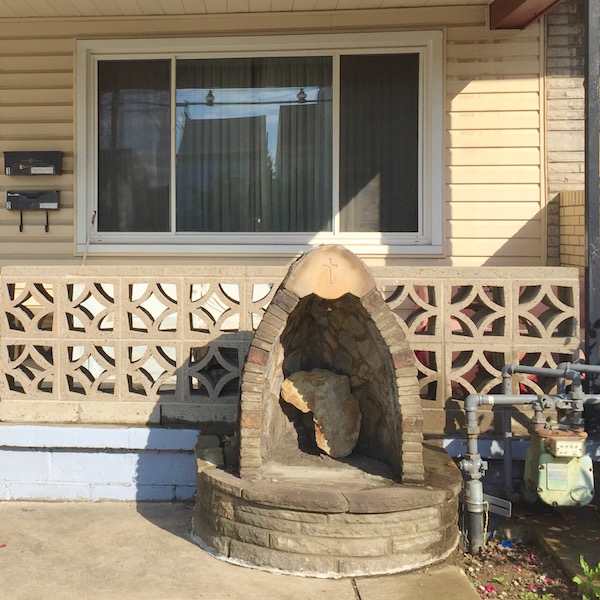
An interesting corollary to the front yard Mary is the sub-phenomenon of ex-front yard Marys, or empty Mary grottos. What’s happened to Mary? Where did she go? Hopefully one day we’ll run into the homeowners and get the full story. Until then, we can only guess that the original owners of the statues have moved on and taken Mary with them. Alternately, Mary may have been stolen, kidnapped, or ransomed. These homemade brick and concrete grottos clearly aren’t going anywhere, so it’s no wonder they’ve become permanent fixtures on the property, with or without Mary.

former Mary housing, now containing angel statuette, Pittsburgh, PA

Mary doesn’t live here anymore. Ex-front yard Mary (the grotto is now occupied by an angel figurine), Pearl Street

empty Mary housing, Pittsburgh, PA

… or here. Empty grotto, Pearl Street

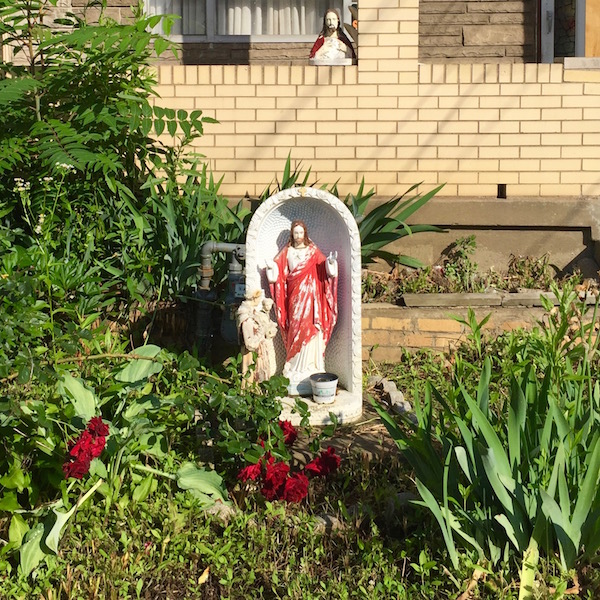
We’re collecting other front yard deities for a future scene report, but it bears mentioning that Jesus gets into the front-of-house tributes as well–just not as often.

Jesus statue in front yard, Pittsburgh, PA

Front yard Jesus and front porch Jesus, Pearl Street

An Orbit Obit: The Lost Art of Found Photographs

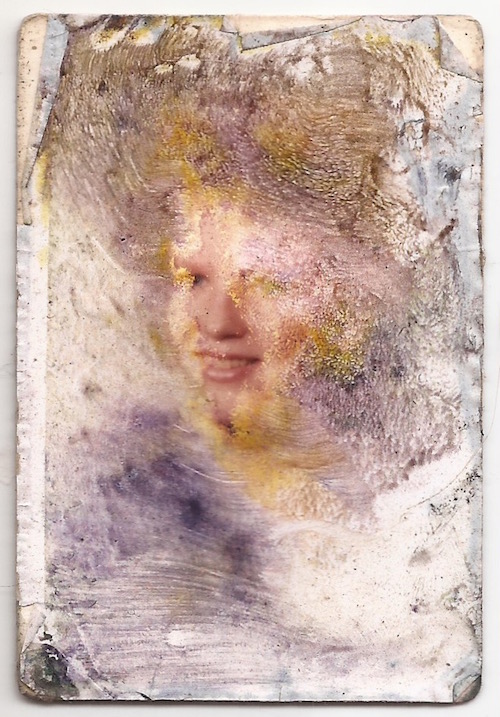
water-damaged wallet size photograph of an unknown girl

You used to find them everywhere. Someone else’s photographs, lost, torn to bits, or simply discarded as substandard. Dropped from wallets, ripped-up in tear-stained anger, fallen from automobile door pockets and sun visors, blown by the wind. Once, an entire paper bag full of slides from a stranger’s family vacation out West.

O, the riches of big box parking lots of yore! Rejected photos were so often immediately jettisoned right onto the lined pavement of the Target or Rite Aid that processed them. You can picture the disgruntled customer flipping through a just-picked-up batch in the front seat of his or her sedan. For every stray finger obscuring the lens or flash that didn’t pop, a picture tossed right out the window. This pre-blogger was even known to rescue misfires directly from photo processing waste bins[1].

water-damaged wallet size photograph of an unknown baby

The Orbit‘s files are stuffed with dozens–probably hundreds–of found photos, but now that the world’s gone digital, we almost never come across them anymore. So that’s what made this recent find such a gas.

Kirsten Ervin[2] occasionally merges civic duty and her daily constitutional with a cleanup of litter found in Lawrenceville’s Arsenal Park. That will make it’s own fine story–hopefully one day appearing on these very virtual pages–but we’ll leave the telling of it to Kirsten. Suffice to say that among the many curiosities that eluded the waste bin and made it home was this collection of photographs.

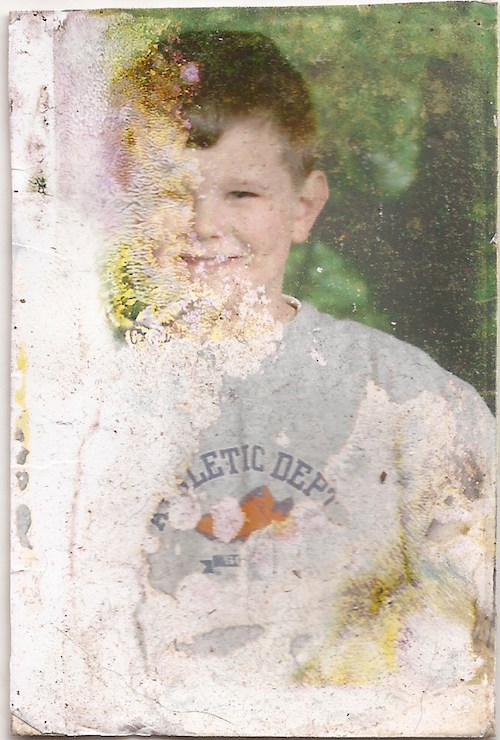
water-damaged wallet size photograph of an unknown boy

What a find indeed! Five wallet-sized color photos, one each of two babies (or, possibly, two photos of the same baby), one boy, and two young ladies of indeterminate age. In each, their time spent outdoors in the elements of Arsenal Park has drastically affected the images[3]. A girl’s posed smile barely visible through a swirl of dreamy fog–her red hair and purple sweater psychedelically lifting and blurring into the background. The pair of infants seem blissfully unaware of an encroaching ooze. The woman’s big grin and shoulder length brown hair the last recognizable elements as her face and torso dissolve into the picture’s white background.

water-damaged wallet size photograph of an unknown baby

They’re arresting images, and it’s everything the chase for found photos ever promised. The standard questions are there: who are these people? and how did the photos end up here? But it’s also so much more. The beautiful decay and accidental destruction of the original pictures is lovely and haunting and thoroughly thought-provoking. If these are the last found photos we ever come across, we’ll know we went out with a bang.
water-damaged wallet size photograph of an unknown woman

All photos courtesy of Kirsten Ervin.


[1] Yes, this is kind of cheating, and no, we’re not proud–but this story isn’t about that.
[2] Full disclosure: a full time resident of Chez Orbit.
[3] Cleaning the mud-soaked photographs following their return home may have inadvertently contributed to the image distortion.

The Ways and Means Committee

Banner Way

Banner Way

Kirsten Ervin files her second story for Pittsburgh Orbit, inaugurating what we hope will be a new series on Pittsburgh’s alleys. The Ways and Means Committee is called to order!

I came home one day to find DEA agents and men in white coveralls in the alley behind our house, carting out garbage bags bursting with kind bud. The biggest indoor marijuana grow lab in Pittsburgh was discovered in a second-floor loft on Urbana Way two years ago. The stench permeated our own house. I smelled like the inside of a bong for the rest of the day, having some awkward explaining to do at business meetings.

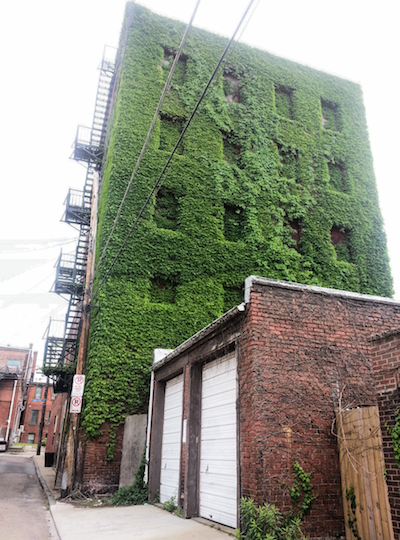
ivy-covered 5-story brick building, Pittsburgh, PA

Banner Way

Over the 16 years we’ve lived in Lawrenceville, a lot has happened on Urbana Way. We had a most colorful neighbor living behind us–a self-professed DJ, artist, soap maker, “creative genius”, etc. who went by MC Strawberrie Cream. Mostly she was really good at yelling at whatever boyfriend she was living with at the time. That, and terrorizing the neighborhood with late night playlists of piercing club music, so loud it made conversation difficult. She had electric orange hair and a permanent scowl. Her apartment was on the second story of an older industrial building, with a wide double door and a pulley. There was a dumpster below. Whatever went in that dumpster, or was left in the alley, was gone within minutes, Strawberrie Cream having hoisted it up into her apartment with its electric winch. One time we caught her sitting on top of a heap of trash in the dumpster drinking a beer, her skirt splayed out, picking through the contents.

Blackberry Way, Pittsburgh, PA

Blackberry Way

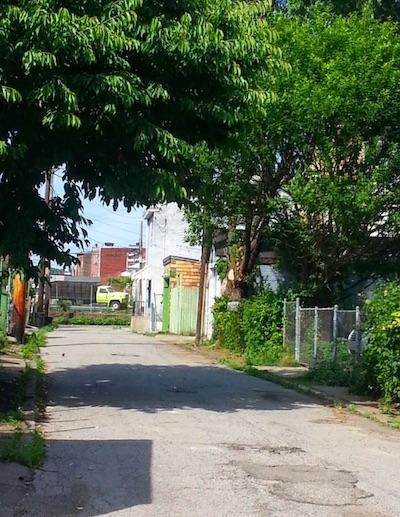
I am fascinated by the alleys of Pittsburgh and have recently gone exploring the other “Ways” in Lawrenceville, of which there are many. Most have very pleasing names: Blackberry Way, Umpire Way, Plum Way, Eden Way, Antwerp Way. They read like poetry. I wonder how they were named. They have street signs but aren’t streets. They intrigue me, beckoning like secrets. Here are the backs of houses, the backs of yards, the less traveled, the ultimate locals-only. Alleys are not meant to be seen, just as the back of an elaborate embroidery is not meant to be examined. But, in turning it over to reveal the hidden stitching, one meets with a fascinating haphazard tapestry. It’s not pretty, but this is where the work happens.

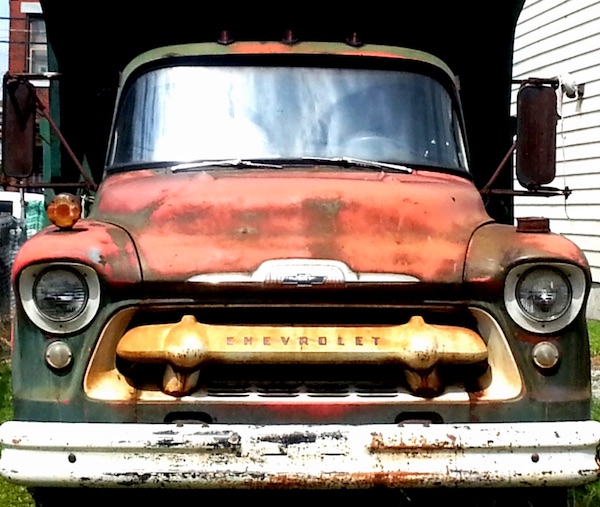
old Chevrolet truck, Pittsburgh, PA

Locarna Way

Likewise, the tiny backyards and fences of the alleyways reveal a lot about how we live, pretty or not. This is where we relax with a beer on a summer night, wash our cars, run through the sprinkler, take out the garbage. Our gardens, cars, grills, toys, and castoffs compete for space in the postage stamp existence of outdoor city life. Here is where the carefully-manicured green patch abuts the yard overrun with weeds and an old refrigerator. Kiddy pools, fire escapes, peeling paint, and barking dogs lean toward each other. It’s the juxtaposition of the junkyard and the sublime.

Banner Way

Banner Way

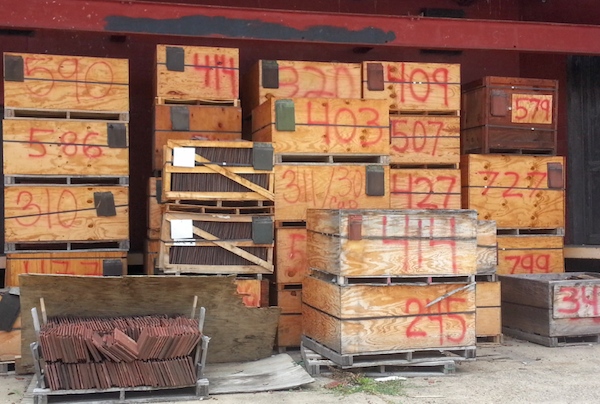
This is also where Pittsburgh reveals its industrial, immigrant past. Many of the ways are paved with cobblestone and brick, dotted with the breezeways of an ancient European village. Unassuming buildings lift up their back curtains to make way for deliveries and storage. Heavy equipment moves here.

Plum Way

Plum Way

While drinking in the random and accidental beauty of the alleyways, I come across the freshly appointed and carefully streamlined undersides of newer, fancier developments. These are stripped of any secrets or stories–pretty, but so bland as to be indistinct from one another. This is my worry for Lawrenceville, for Pittsburgh. It’s not the money or the so-called sophistication of new transplants that I am worried about. It is the whitewash of what is already here, the antiseptic cleansing of history, and the rejection of the underside of things–the masking of who we are and how we live.

Cotton Way

Cotton Way

All photos and text by Kirsten Ervin.