The moon is just one celestial body waiting for us on the other side. Moon morning walls, Lawrenceville
“What’s on the other side?”
That evergreen question-koan has motivated—and haunted—explorers from Leif Erikson to Harry Houdini. The Over-the-Wall Club is no exception.
In our last post, the wall-eyed went deep into the wall. This time the crew looks up, over, and around some of our favorite walls to ponder the mysteries of the universe. What’s on the other side? Sure, but also Where are we going? and What happened before we got here?
Heady stuff, indeed, but we’d expect nothing less from our team of urban alchemists who can stare deep into—and over—a stack of bricks and turn the experience into a portal to another dimension, free of space and time.
Welcome to the rest of your life, just lookout for a few walls along the way.
Something old and something new, Lawrenceville
Big blue, Lawrenceville
Wall quarters, New Kensington
A house unglued, Knoxville
Stay out, Duquesne
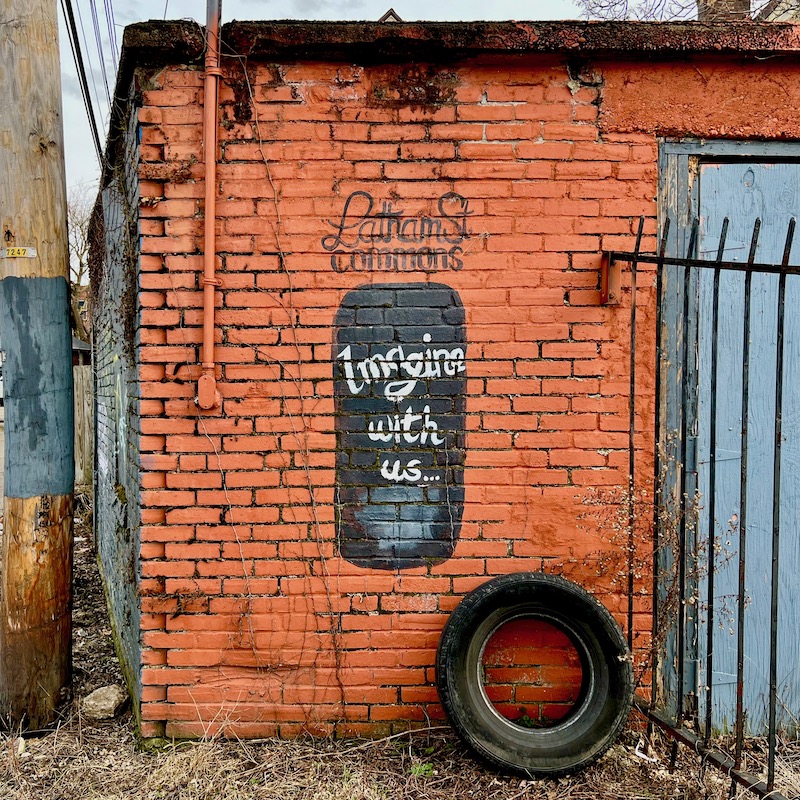
Still life with wall and tire, Friendship
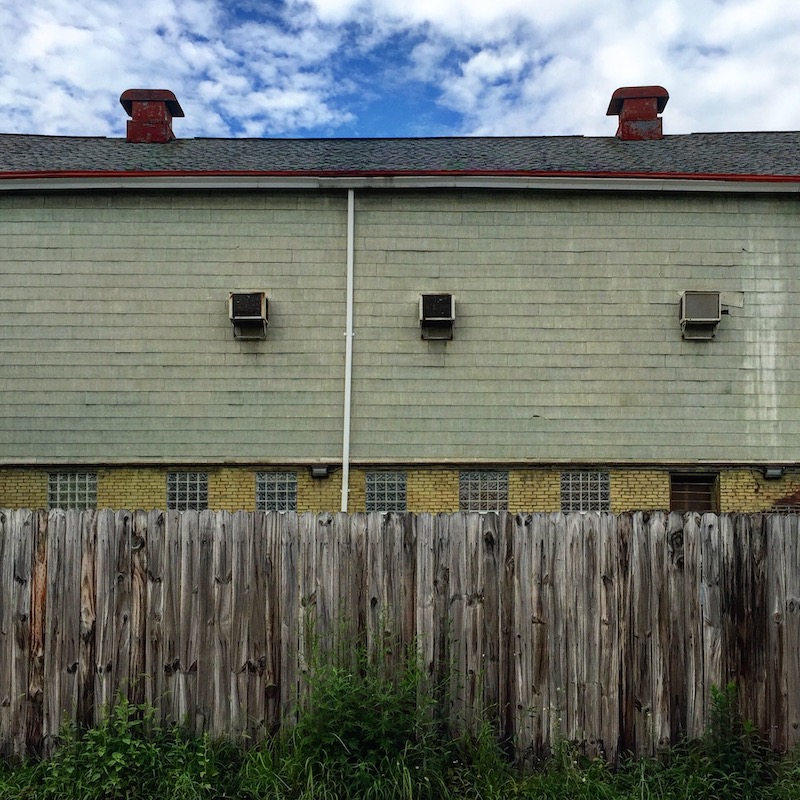
Over-the-fences over-the-wall, Lawrenceville
Inside-out wall, Hill District
If these walls could sing! Bloomfield Liedertafel Singing Society
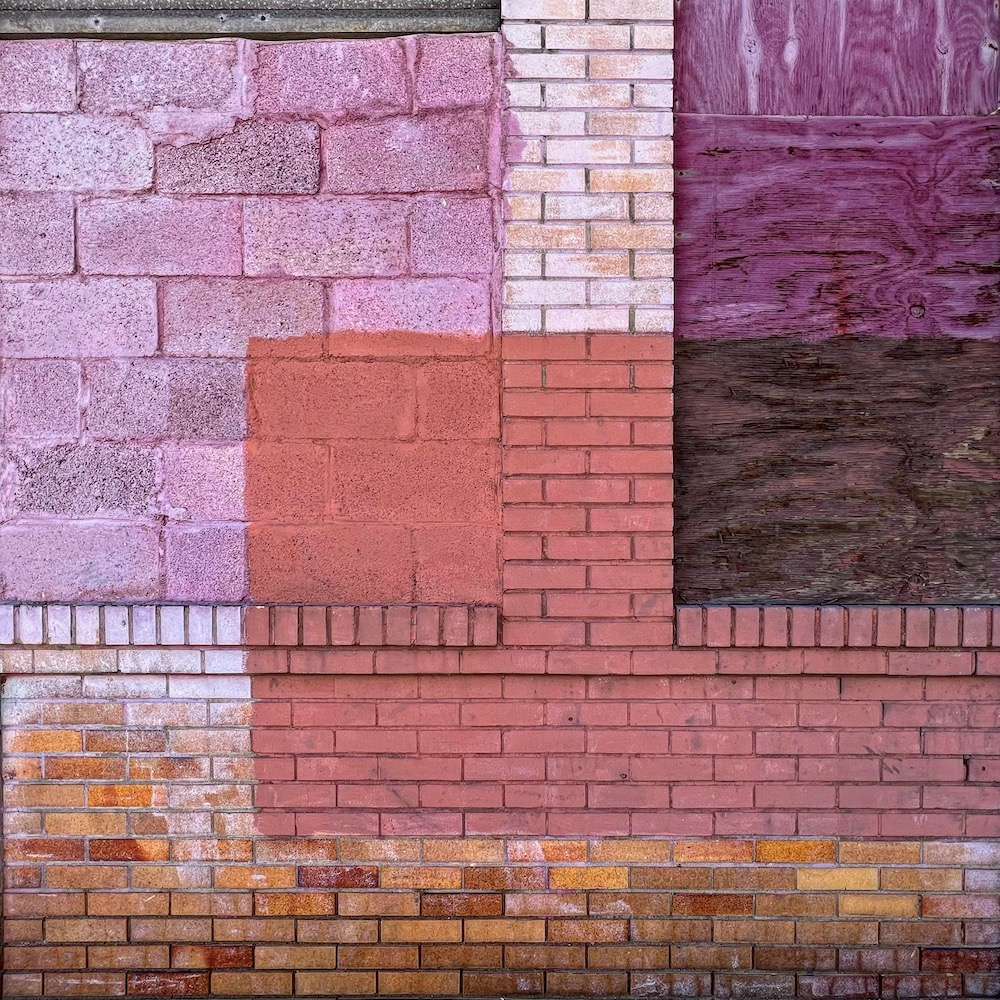
The old building is large enough that it was probably erected for commercial use, but couldn’t have been anything major—a small factory, perhaps, or maybe it served as a distribution point for products we’ll never know.
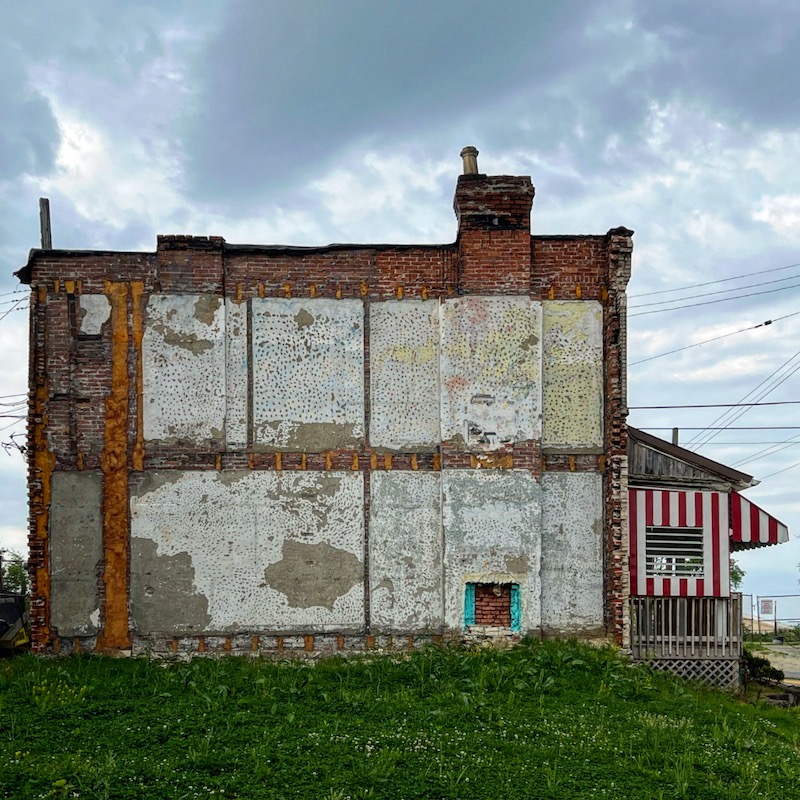
In the hundred-and-twenty years or so that it’s been standing—we’re just guessing here—the structure’s original orange bricks have been chipped and scarred, graffiti-tagged and painted-over countless times. Along the way, the building’s large windows were filled-in alternately with cinderblock and plywood. These after-market additions have gone through their own battered histories. They now exist as equal partners with complex lives with more in common with the original material than not.
Meadville
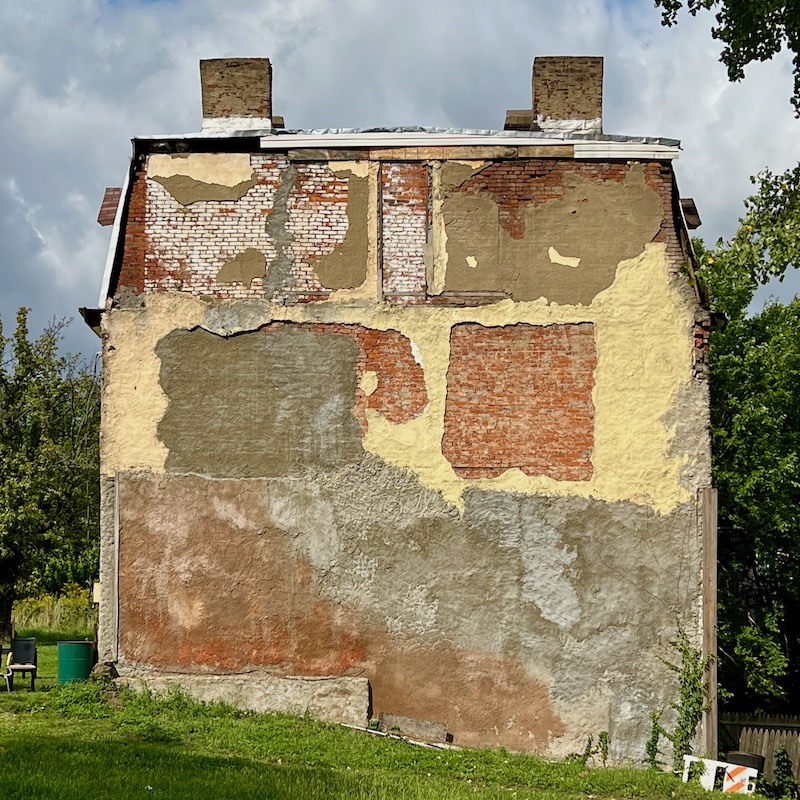
While this anonymous building on a side street in Mt. Oliver is likely on no one’s radar as an important site among Pittsburgh’s many architectural treasures, it’s a legit rock star to wall enthusiasts. You couldn’t find a better example of pure wall than a middle-height section of interlocking rectangles, rich oranges, purples, reds, and pinks. For those who would travel halfway around the world for such an experience, the Taj Mahal of wall perfection is right up on the hilltop.
Bloomfield
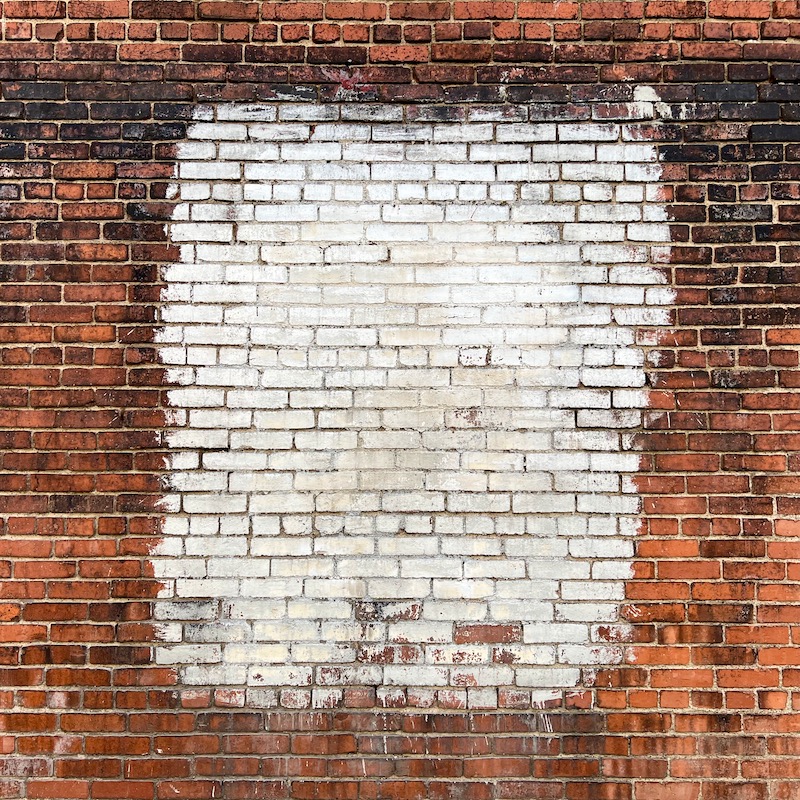
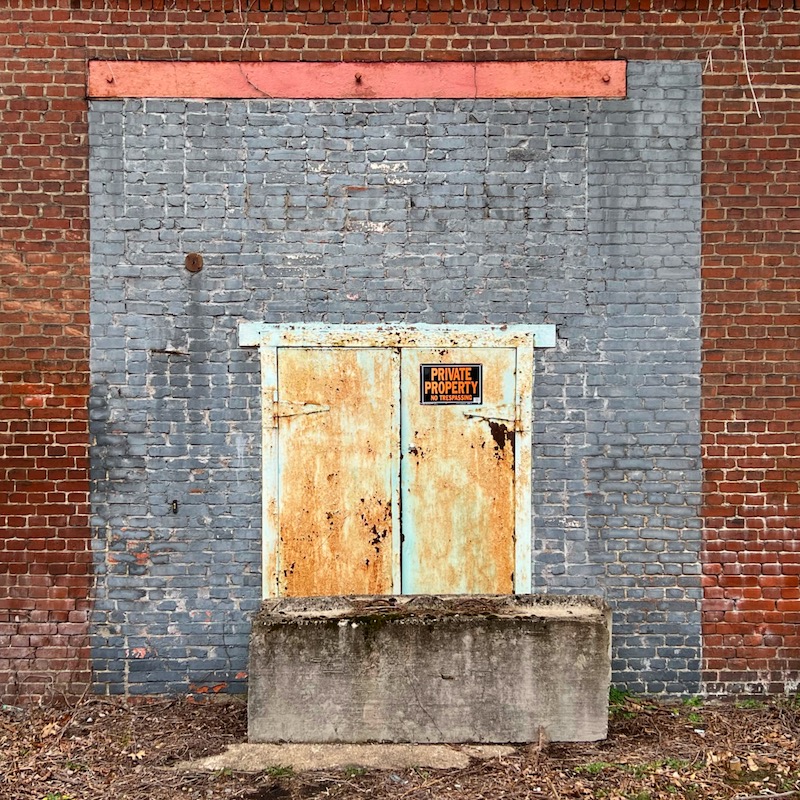
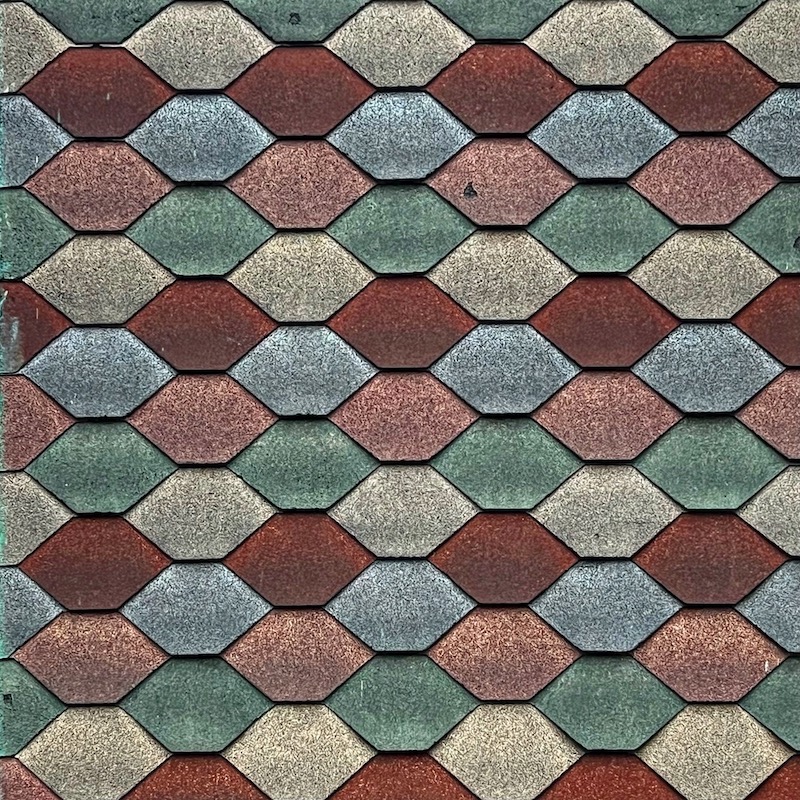
It’s been so long since we checked in with The Over-the-Wall Club that the group’s collected bounty runneth over in the most satisfying and thrilling of ways. If you want walls—I’m talkin’ extraordinary, centuries-in-the-making, once-in-a-lifetime walls—we’ve got ’em. Walls that can be stared into to unlock the mysteries of time and space. Walls so beautiful they could be placed in the finest of modern art museums and connoisseurs would ooh and ahh with great gusto. Walls with so much to say they’re not merely worth any old thousand words, but deliver messages to change lives and alter history.
Uptown
But wait! There’s more! There sure is. We had so many great walls that we’ll have a follow-up where we actually go, you know, over the wall as a counter to today’s experience of going into the wall. Sure, that sounds like a lot of mumbo-jumbo from some dumbo—and it is!—but trust me on this one: you’ll want to be here on this journey of growth and discovery, speculation and fantasy. We’ll see you on the other side.
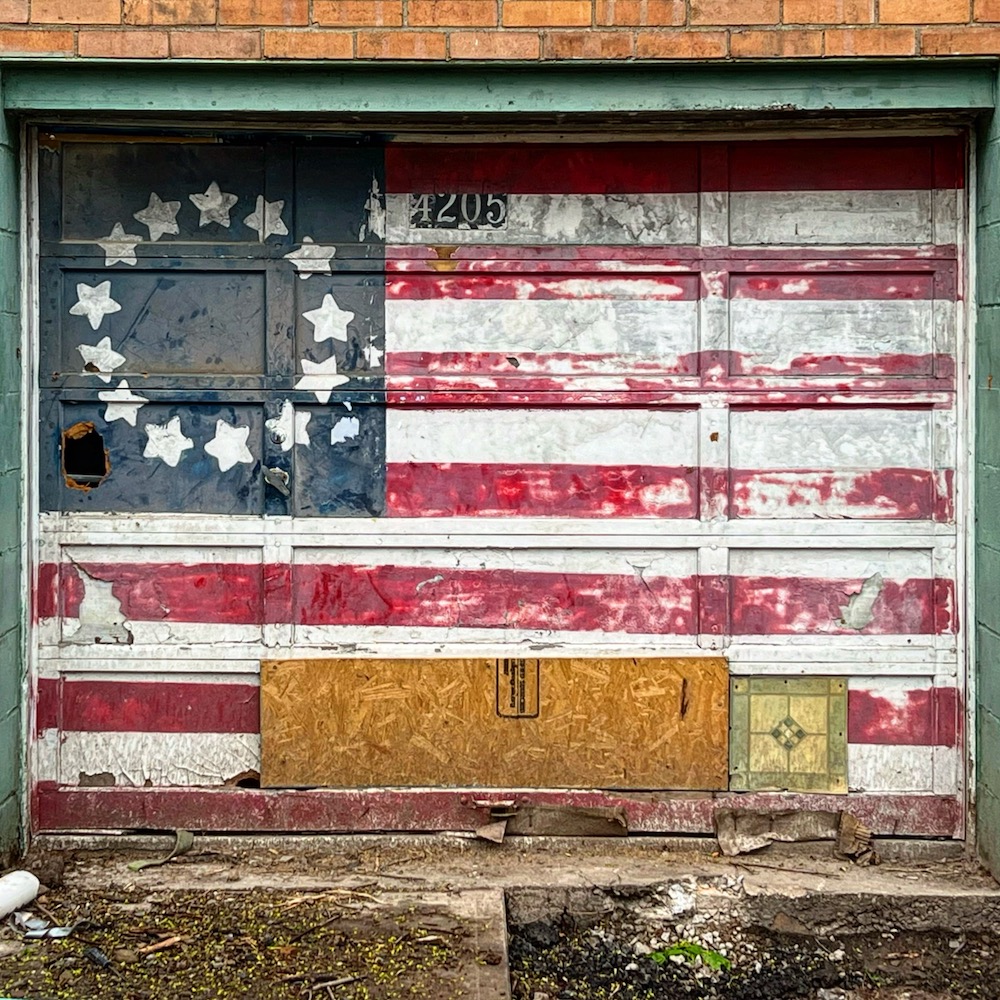
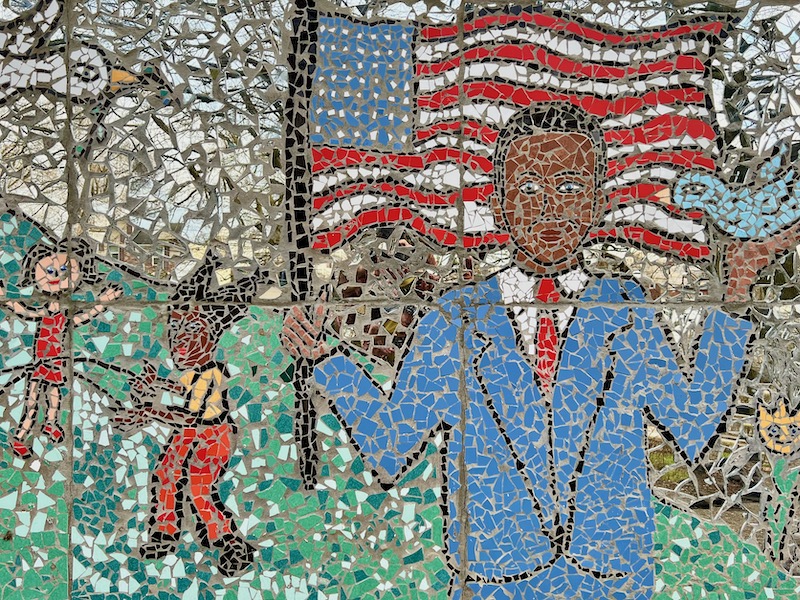
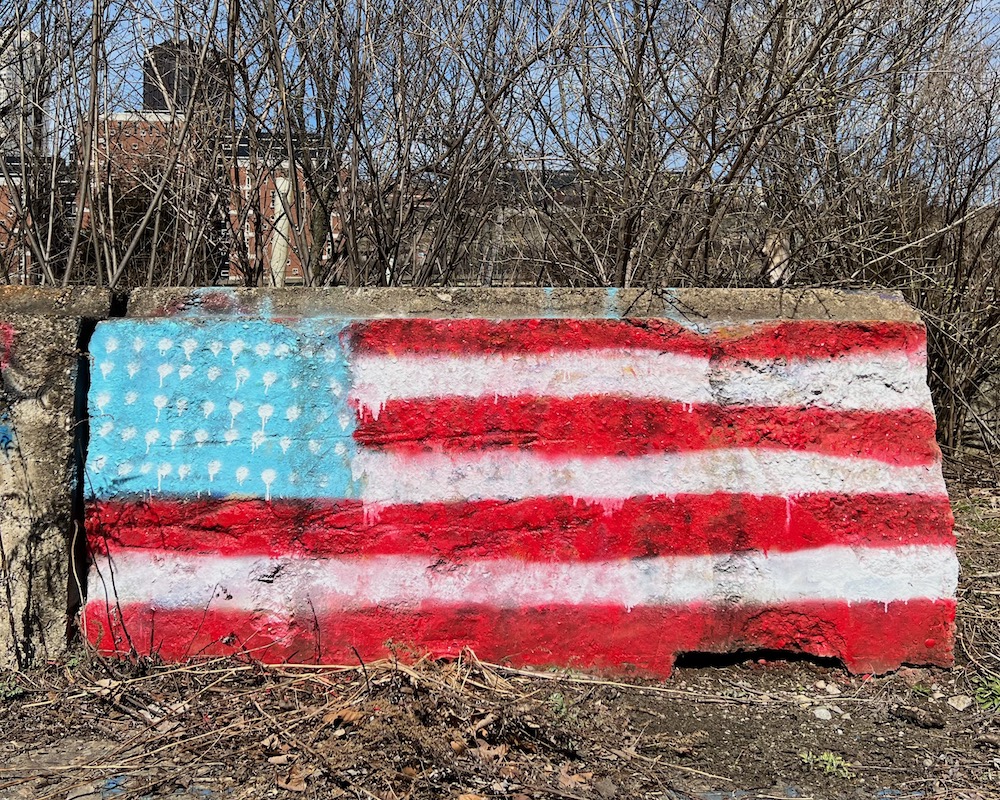
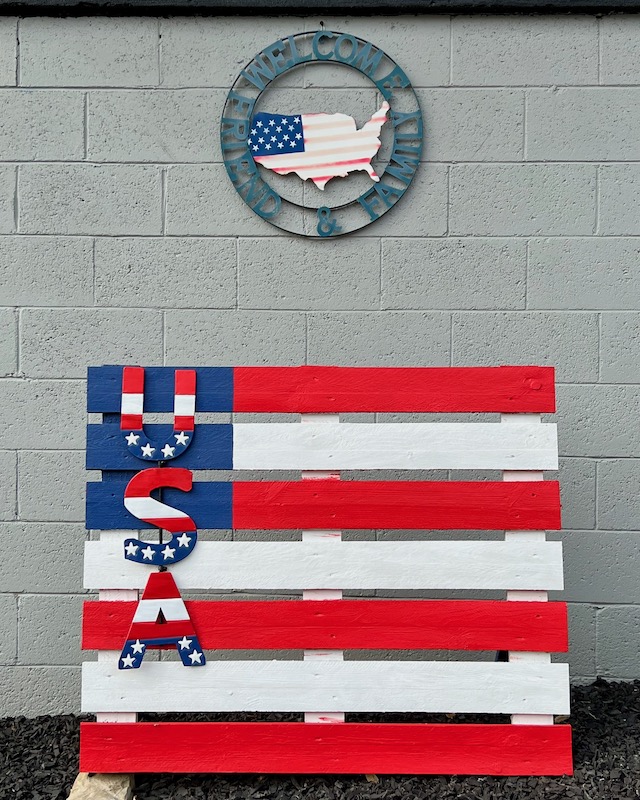
The American Flag. It with all its symbolism and implication, patriotism and zealotry. It’s our flag—whether we choose to wave it or not—and it means radically different things to different people. We are all Americans here, sure, but it doesn’t feel that way to everyone.
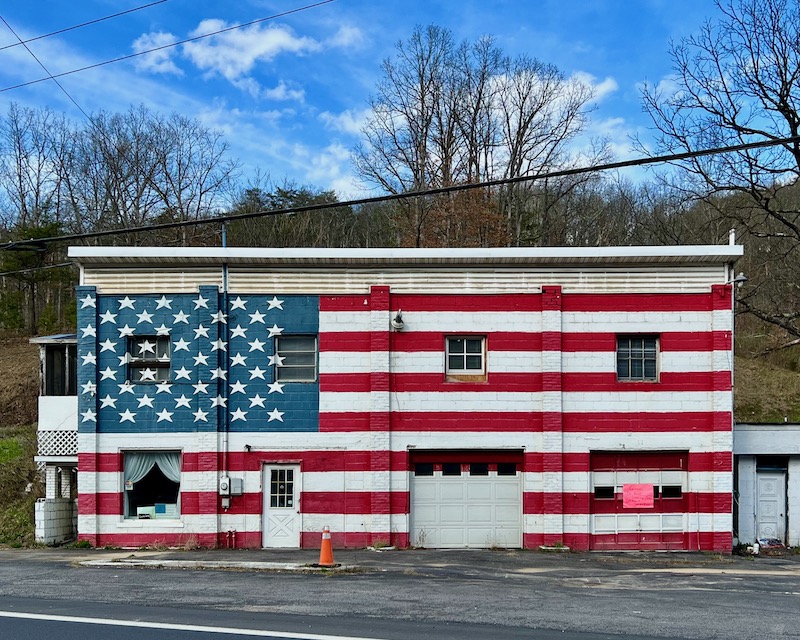
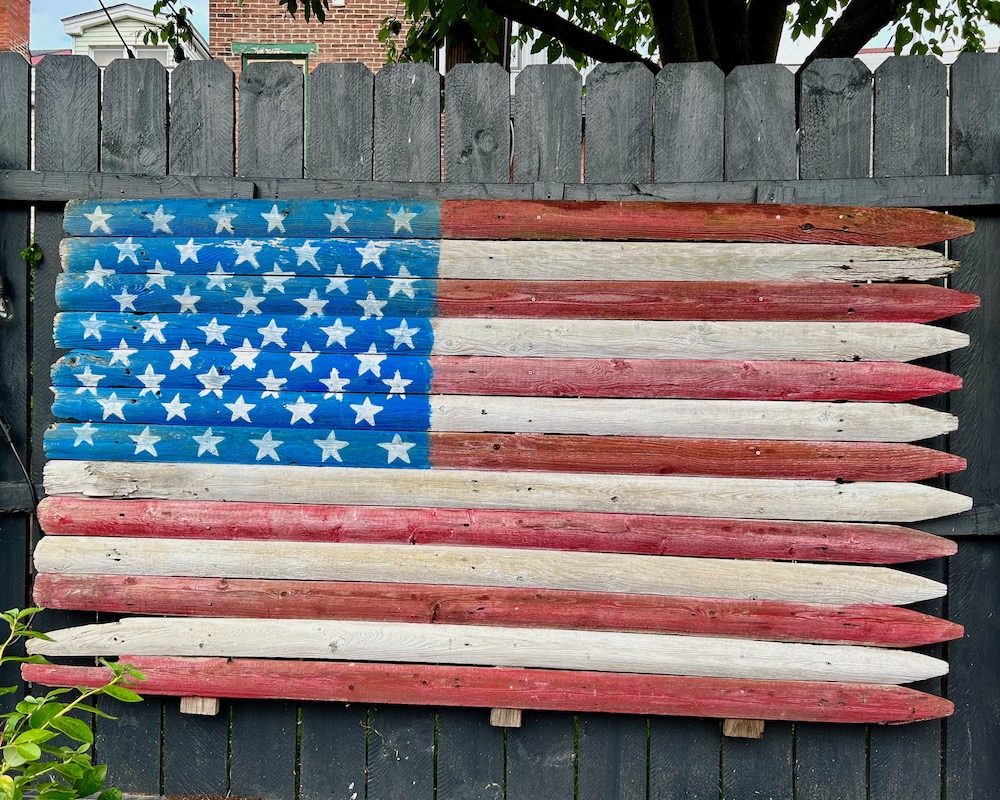
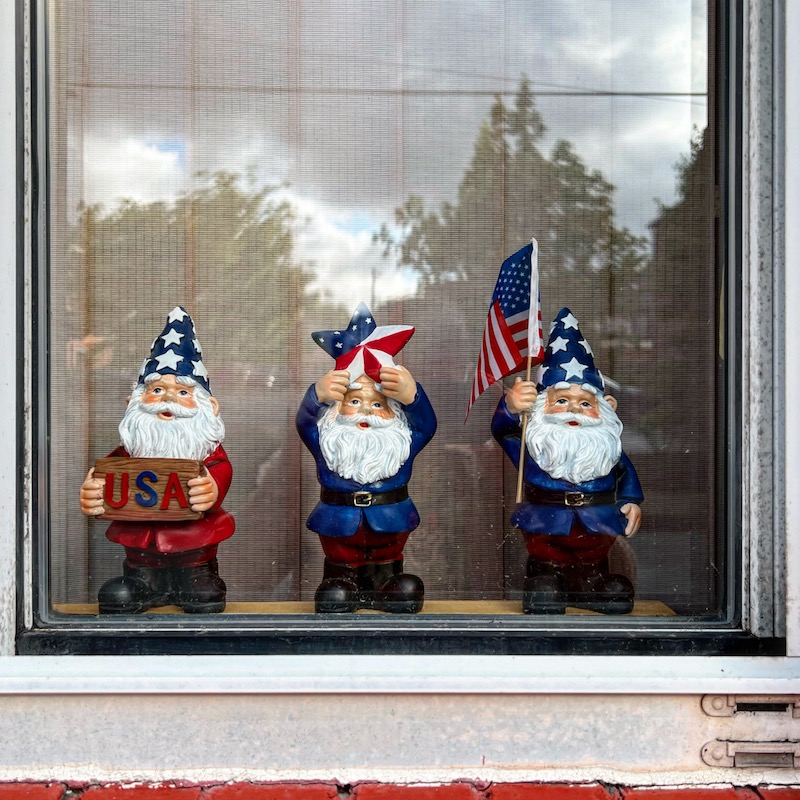
Today, Independence Day, is that most flag-wavingest, reddest, whitest, and bluest day of the year. Flags and flag-colored things will be aplenty, jutting from front porches, staked into grassy yards, aggressively paraded in pickup truck beds, and decorating everything from courthouses and baseball games to cakes and cookouts.
Ft. Ashby, WV
This year, we made a movie! In addition to our annual roundup of interesting flags found in the wild, your author asked long-time friend and collaborator David Craig, he of the Portland Orbit, to write a poem about the flag. The result, “This Flag,” was recited by its author, put to music by yours truly, and turned into a rock-poetry video featuring flags in many forms, fluttering in the wind and otherwise.
“This Flag” by David Craig and Willard Simmons
Happy Independence Day, y’all.
The best fence is a good fence … on a fence, Lawrenceville
… and the gnomes of the free, Bloomfield
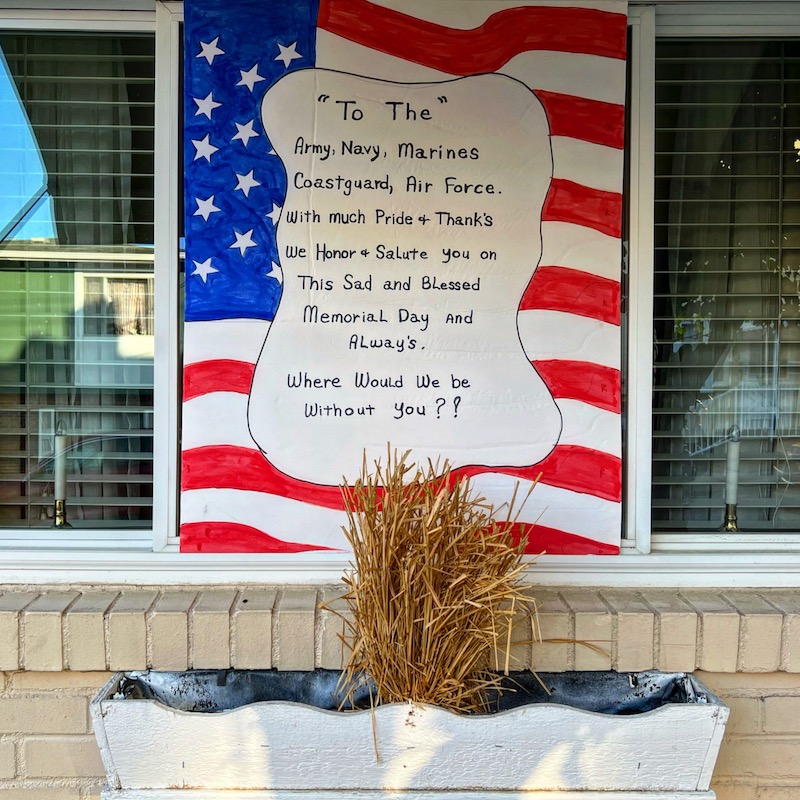
“To The” Army, Navy, Marines, Coastguard, Air Force. Lawrenceville
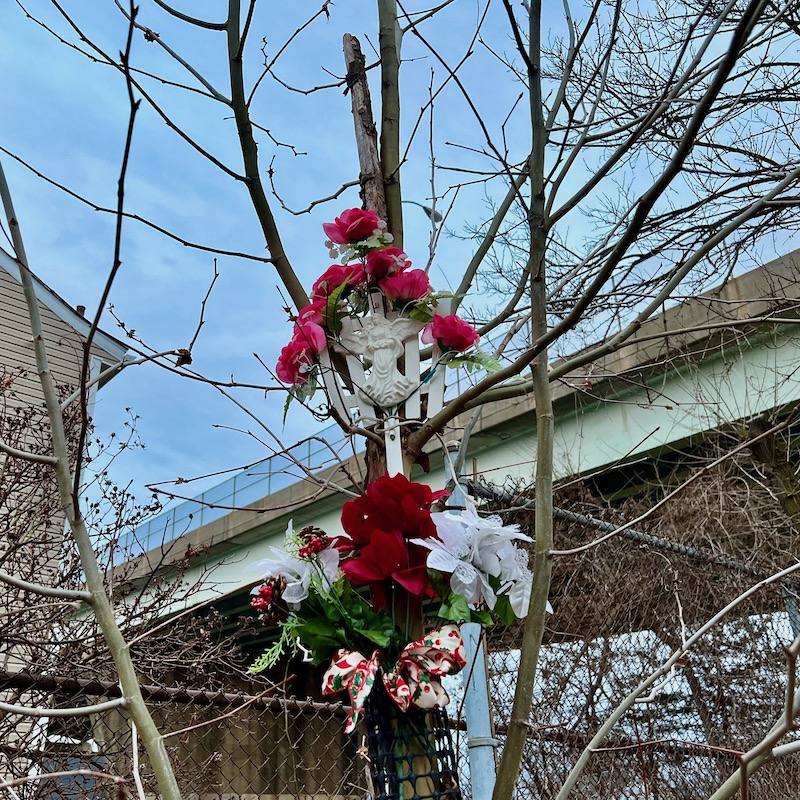
An impromptu/informal memorial for an unknown young man, attached to a tree in Woods Run
On an otherwise unremarkable side street, a single roadside tree stands out from the rest. Attached to it is a bouquet of pink and white flowers, a solar-powered light, and enlarged color photograph of a young man. The subject is both movie star handsome and ruggedly everyman in his plain white t-shirt and stretchy track suit pants. Aside from the man’s face, every square inch of exposed skin has been tattoo’d in an array of text, glyphs, and images.
Of course we can’t know for sure—there is no annotation for the beribboned photo on this back-alley tree—but by now, we’re accustomed to think of these informal tributes as memorials for lost friends, loved-ones, or community members who’ve passed onto the infinite entirely too soon for those who mourn them here on earth.
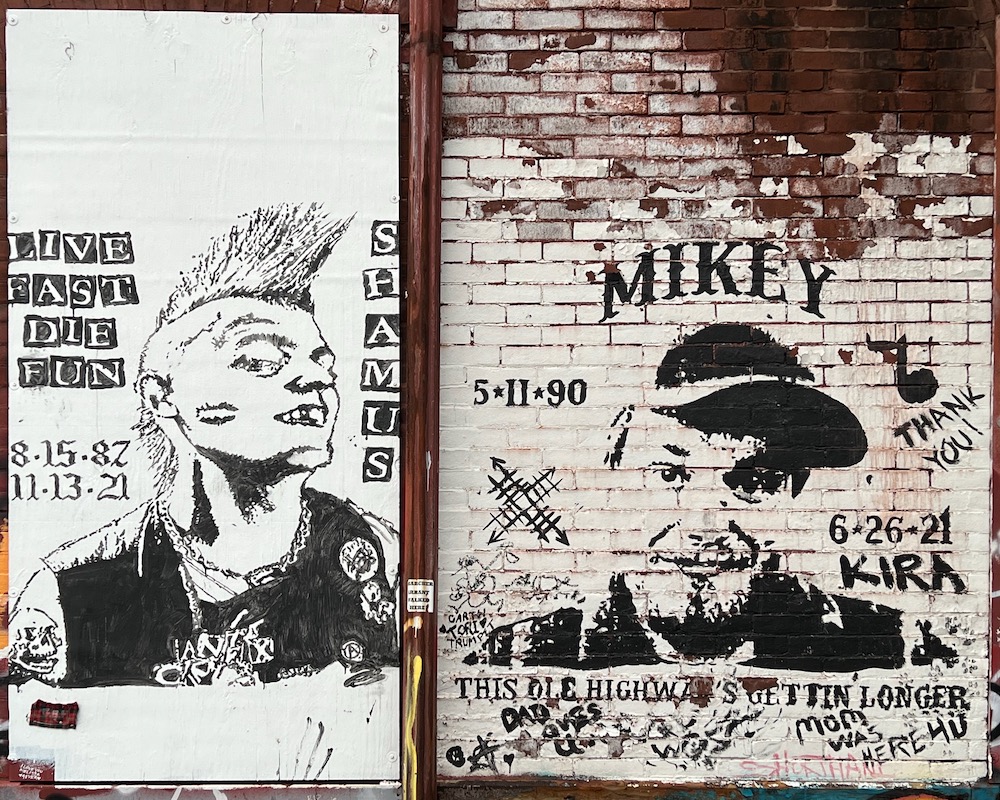
Shamus/Mikey, Polish Hill
Memorial Day. Let’s do this. In what has become an Orbit tradition, we take a hyper-local turn on today’s holiday. No, it’s not strictly about honoring our fallen members our armed services, but it’s also not about discount mattresses and blow-out doorbuster deals at the mall.
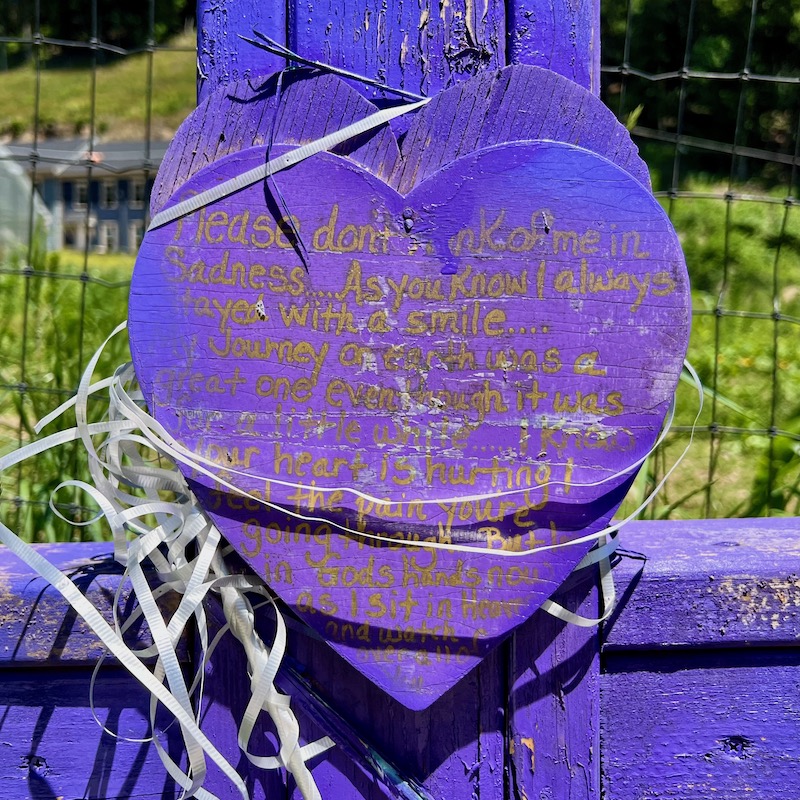
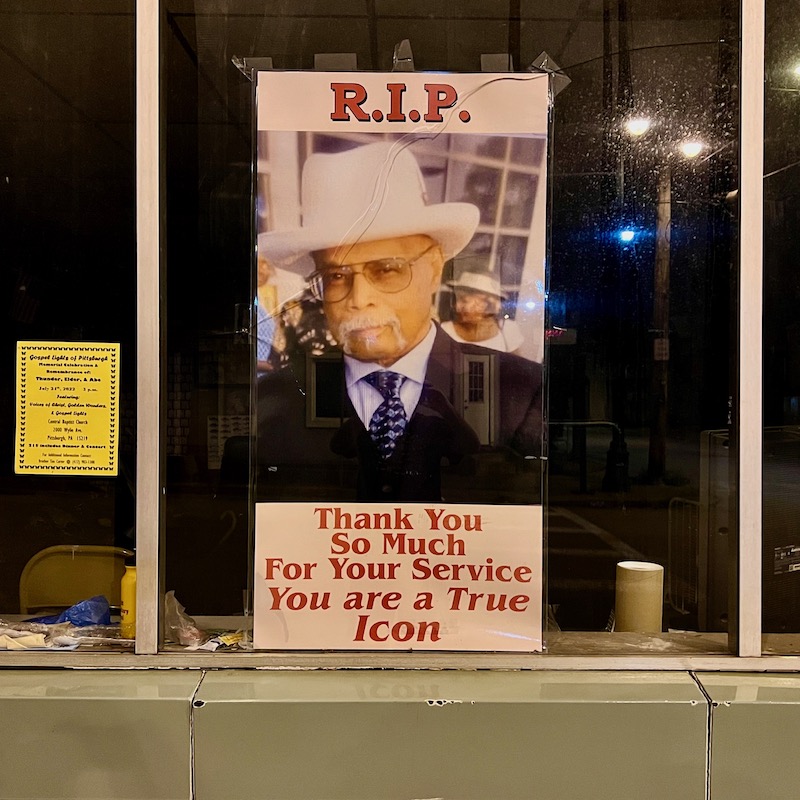
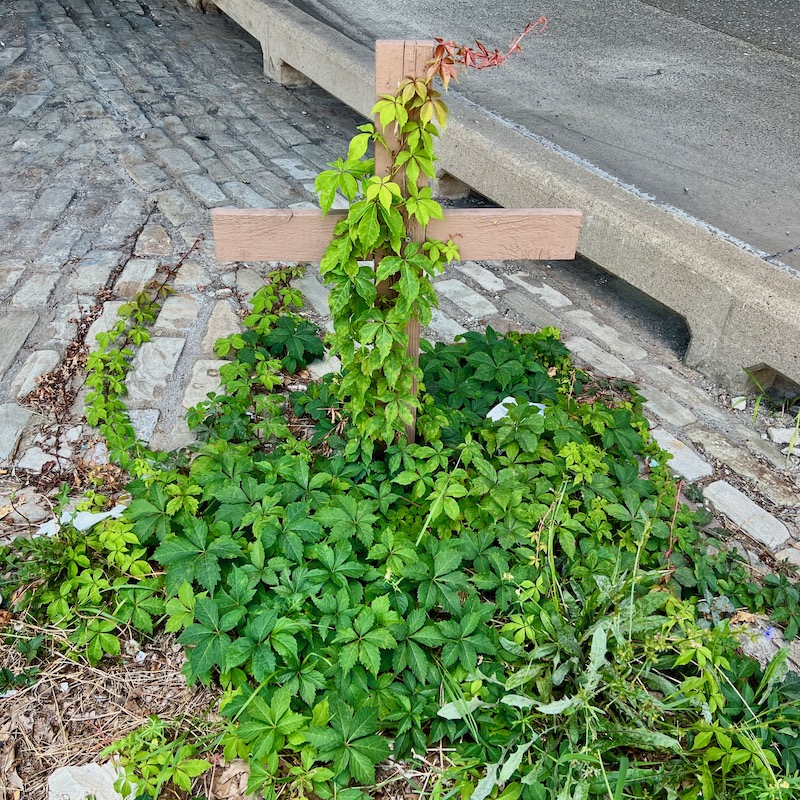
These impromptu tributes—painted on walls and staked into roadside berms, placed in windows and stuck into tree trunks—are the people’s memorials. They’re what we’ll be thinking about this day—yes, along with slaw dogs, Clancy’s chips, and beer from a can—as we memorialize the memorials that are inevitably not long for this world.
Happy Memorial Day, y’all.
unknown, Perry South
detail: “Please don’t think of me in sadness …”
unknown, Homestead
unknown, Manchester
Lotte, Polish Hill
Harley (the rat?), Chateau
“Never Forgotten” East Ohio St. OG’s (sic.), Deutschtown
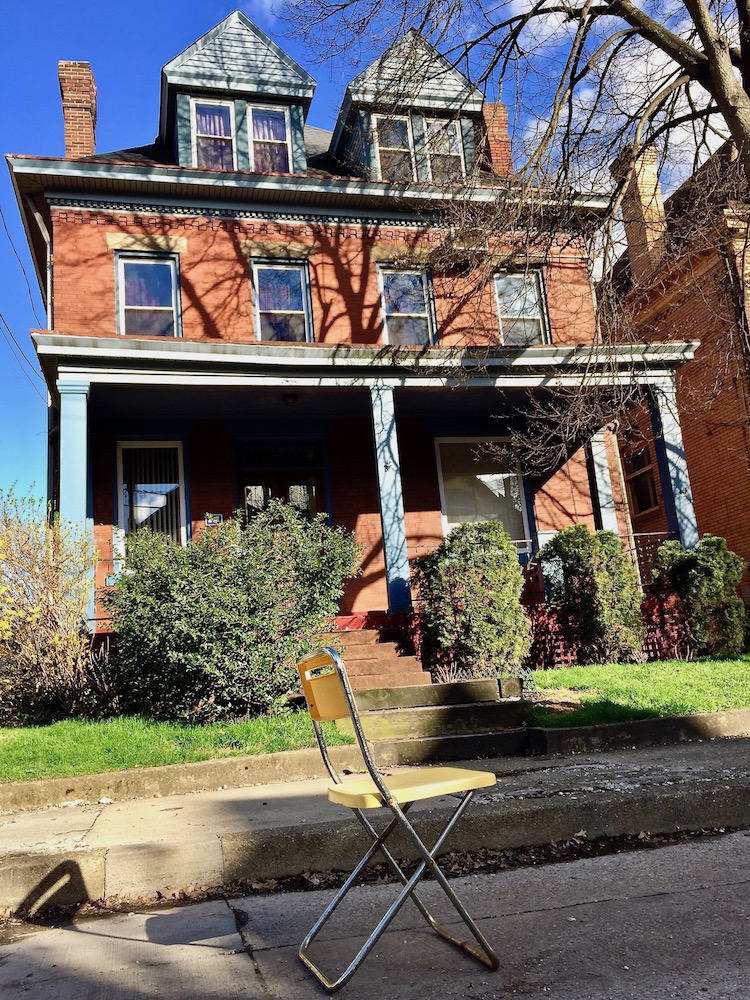
The classic! A single chair from a dinette set, orphaned and alone, reserving an on-street parking spot. Garfield
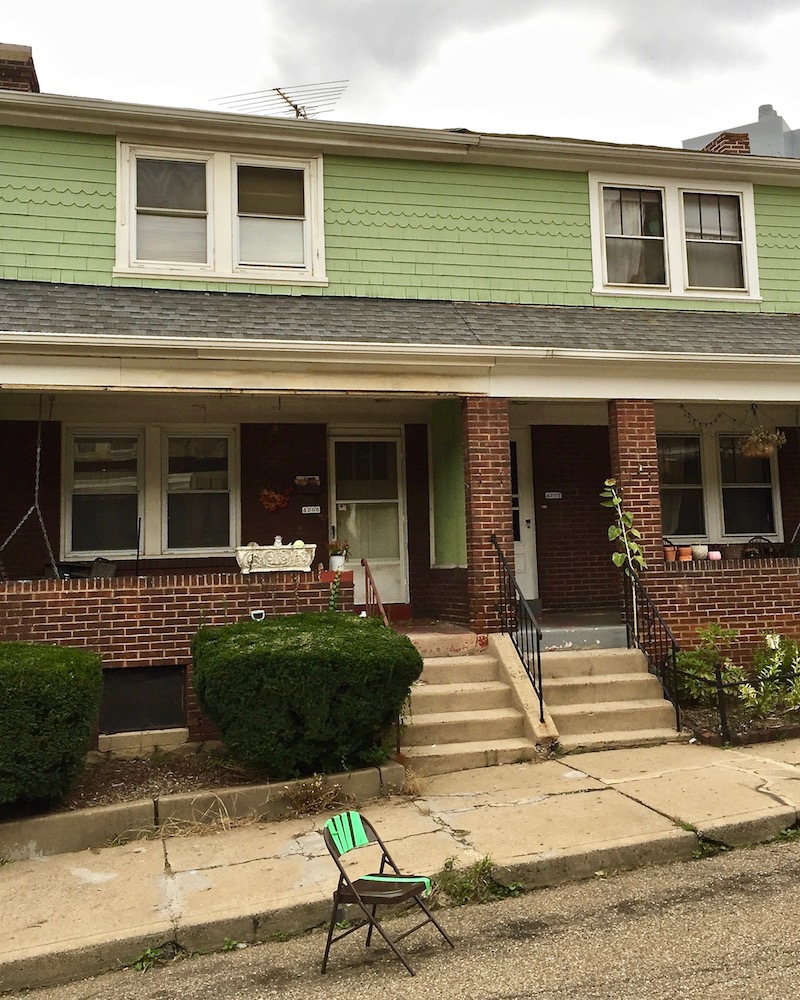
Alone in the rain, playing dangerously in the street, a lone chair stands sentry over his master’s cherished sixteen feet of curbside frontage. The seat was once a member of a family—four, perhaps six, identical siblings joined around a matching dining table where the rest of the household would eat and cajole, argue and play. Now though, with that Camelot lost, just one chair is banished to the loneliest, last role of its life—standing on the street, waiting for a car to come home, holding a parking place.
Parking chair with backup cone, just in case. Lawrenceville
It’s strange to think of the omnipresent Pittsburgh parking chair as an endangered species or dying phenomenon—it is not, by any means—but the character of the object reserving that spot has changed significantly.
Twenty years ago, the parking scene was still dominated by chairs that once held keisters at the kitchen table. That image of the single chrome dinette chair, rusting and battered, dirty stuffing leaking through cracks in the upholstery, is indelible if you were lucky enough to see them in those salad days.
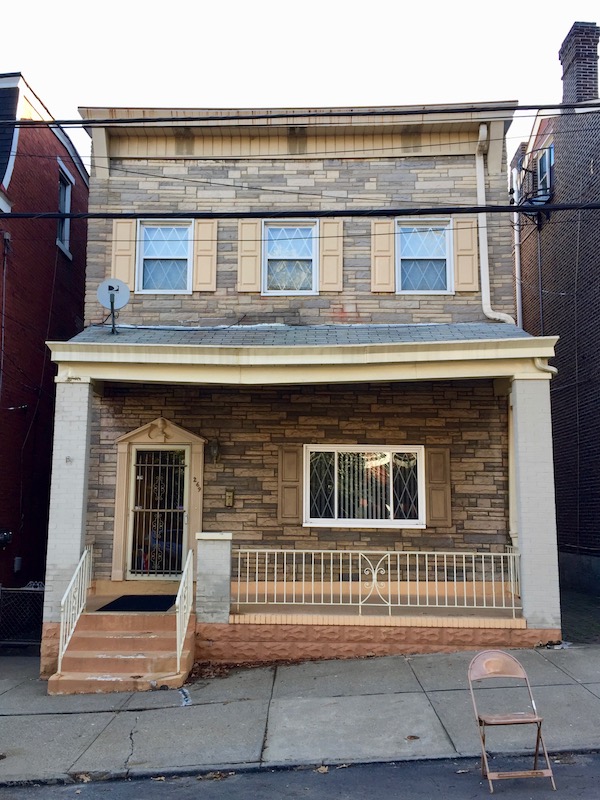
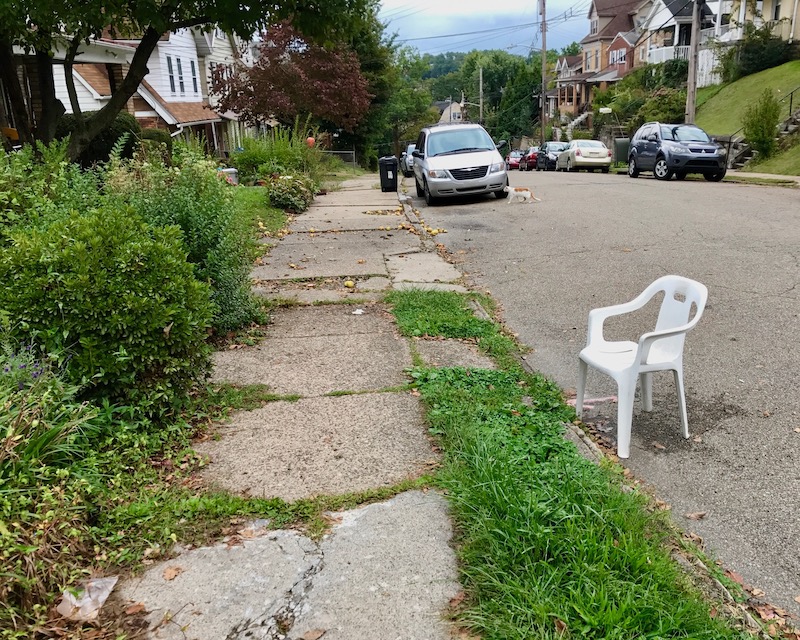
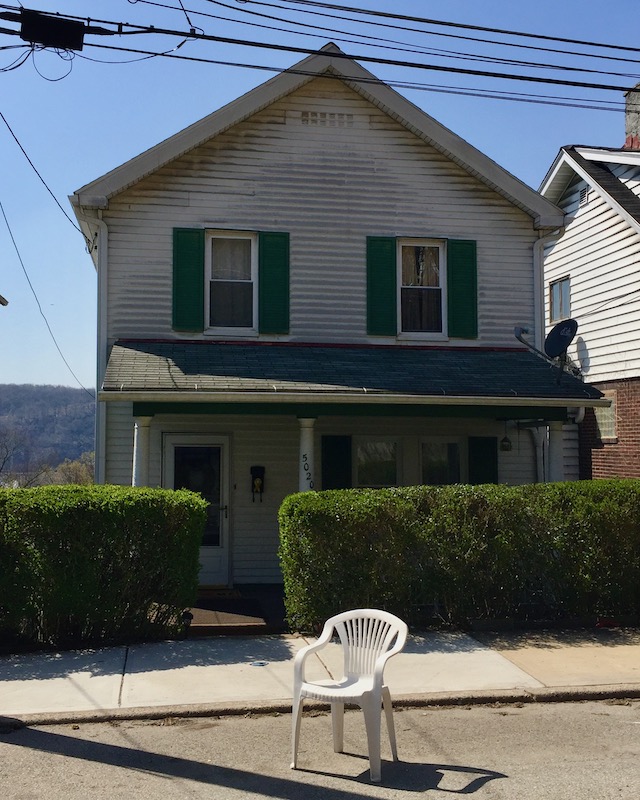
That time is past, though. Just look at this collection of photographs—the cheap, stackable, white plastic lawn chair has taken over the market and ex-dining chairs are few and far between. There’s still a lot of variety—folding chairs of every make and model and non-chair “chairs” (we’ll get to those)—but we still miss those diner-style seats that used to dot row house residential streets like birds on a wire.
East Liberty
For the last eight years The Orbit has resisted the urge to park our behind in this most predictable of subjects d’Burgh—it seemed too easy and too obvious.
Parking chairs are also really difficult to photograph well. I know, I know—boo hoo to this guy living the dream making fat stacks taking pictures of street chairs in Pittsburgh—do your job, amirite? It ain’t that easy, buddy. You want to see the chair, sure, but it’s (usually) only interesting in the context of a much larger thing—an entire house or a row of them—that it’s related to. So you’ve got to get this little thing in front of really big thing and then houses have all this visual noise distracting you, blah, blah, blah—it ain’t easy.
Anyway, the oddly routine experience of seeing single chairs randomly in the street is also right up our, ahem, alley. So that ultimately won out, even if these aren’t our finest photos.
Finally, if you’ve got a great parking chair, a photo of one, or a story about them, we’d love to hear about it or get tagged on it.
Taped-up. Lawrenceville
Steelers parking chair! Lawrenceville
Bloomfield
Lawrenceville
Parking spot au naturale, Greenfield
Lawrenceville
Lawrenceville
Lawrenceville
No parking AND no sitting. Polish Hill
Out front and proud. Hazelwood
Parked parking chairs, ready to deploy. Bloomfield
Parking chair twins! Lawrenceville
Chair’s eye view. Lawrenceville
Just in Case You Didn’t Get the Hint …
“No Parking.” Lawrenceville
“Please do not move chair—therapist coming.” Lawrenceville
“No Parking! You will be towed away.” Bloomfield
Parking Non-Chairs
“The Thing” (our term), Bloomfield
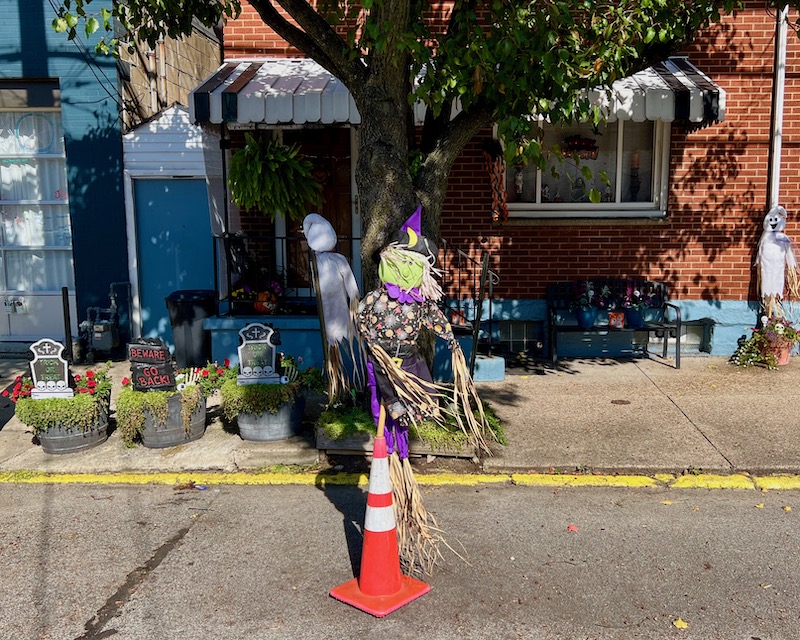
Park here and you’ll get hexed! Parking witch, Southside
Parking milk crates, Bloomfield
The cone of toxic masculinity, Bloomfield
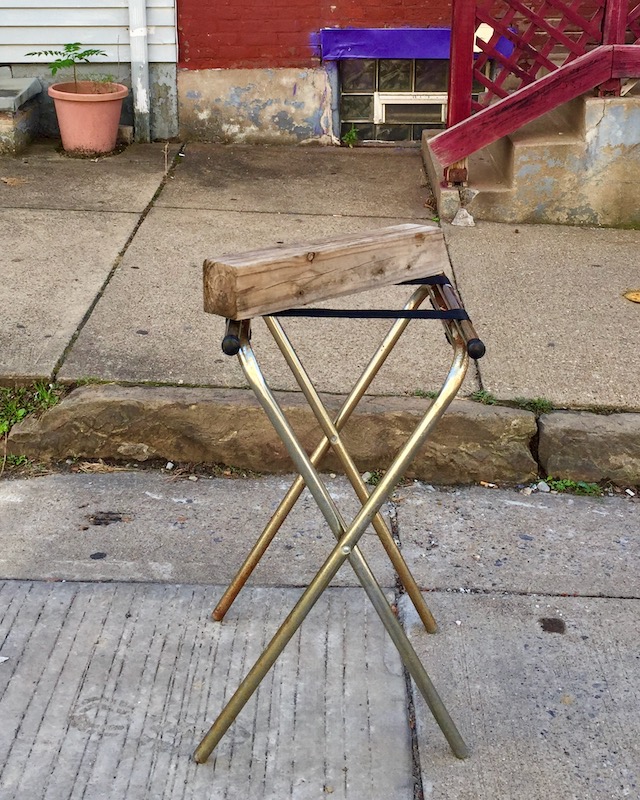
Parking tray holder and 4×4, Lawrenceville
The “Anything Goes!” Parking bollard, parking chair with 2x4s, Lawrenceville
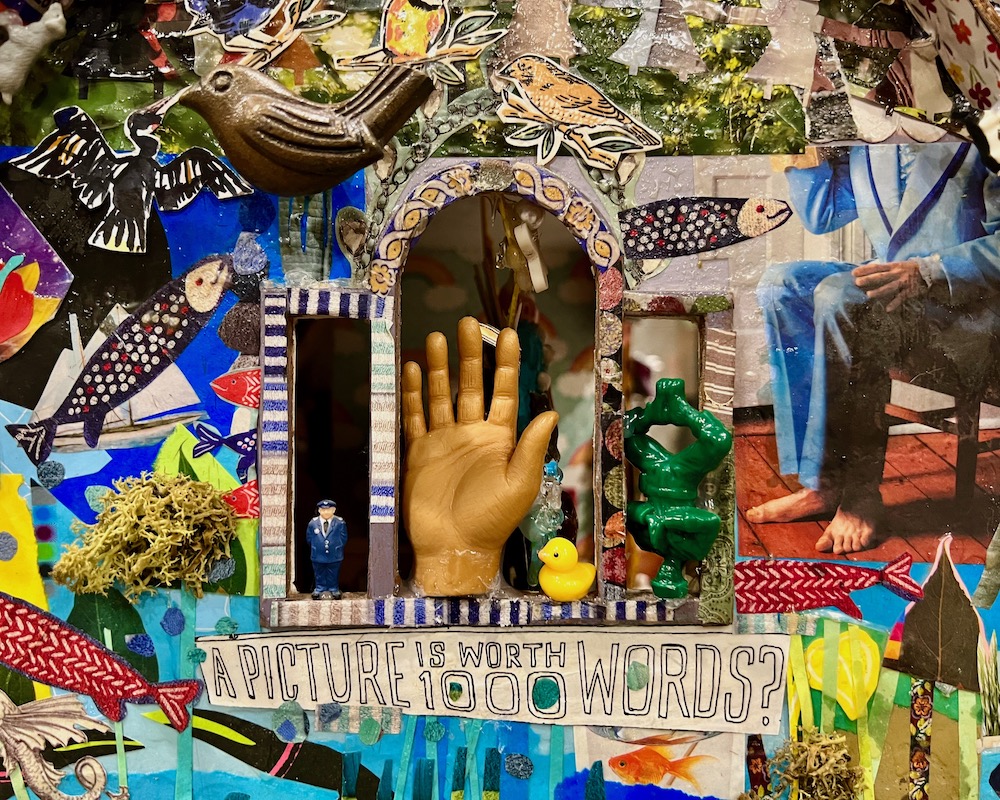
Sometimes a picture may be worth even more than a thousand words. “I Lost My Mind” (detail) by Erin Harper was included in Art All Night 2023
There will be time to murder and create. The words are painted and collaged onto a set of five entrance steps to an elaborately over-the-top front porch. The three-story, Victorian-style dollhouse is covered with a blitzkrieg of … everything. Small toys, buttons, shells, bottle caps, and other found objects have been hot-glued to its surfaces along with a loose collage of magazine cuttings, product packaging, and patterned prints. The decoration is not limited to the exterior of the house. No, the walls and floor of each interior room are decked-out, each in a different over-the-top theme.
The art piece, titled I Lost My Mind, is by Erin Harper. One hopes Ms. Harper was speaking metaphorically of both the losing of minds and murder, but she certainly found time to create. It was perhaps the most striking work at last weekend’s Art All Night, this year again at 31st Street Studios in the Strip District.
If you have to make time for just one … “I Lost My Mind,” Erin Harper (detail)
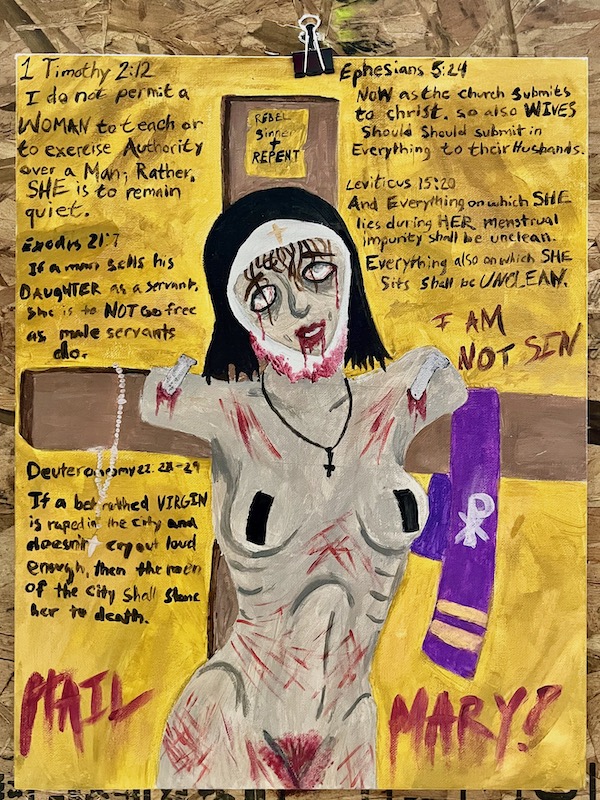
Let’s get something straight: there were boobs—lots of them—wangs too. And yes, there was at least one hoo-ha. In addition to the requisite nudes and soft-porn, other Art All Night perennial genres included sports art, paint-splattered baby dolls, skip-a-little-rope, smoke-a-little-dope doobie visions, skulls, skeletons, and zombies, visual puns, and lots and lots of renditions of the downtown Pittsburgh skyline. This being the first Art All Night since the Dobbs decision came down, women’s rights and body autonomy was an important topical issue.
The Sleestack came back. “Slimy,” Don Strange
These specialties are not the sum of the artwork included at Art All Night. Despite the focus of this piece, know that Art All Night also features landscapes in oil, portrait paintings, photography, ceramics, elaborate sculpture, delicate craft, terrific kids art, and all the rest. The event, of course, is so much more than paintings hung on plywood walls—the mass of people out-and-about, kids going nuts on cardboard, performance art, the drum circle under the 31st Street Bridge.
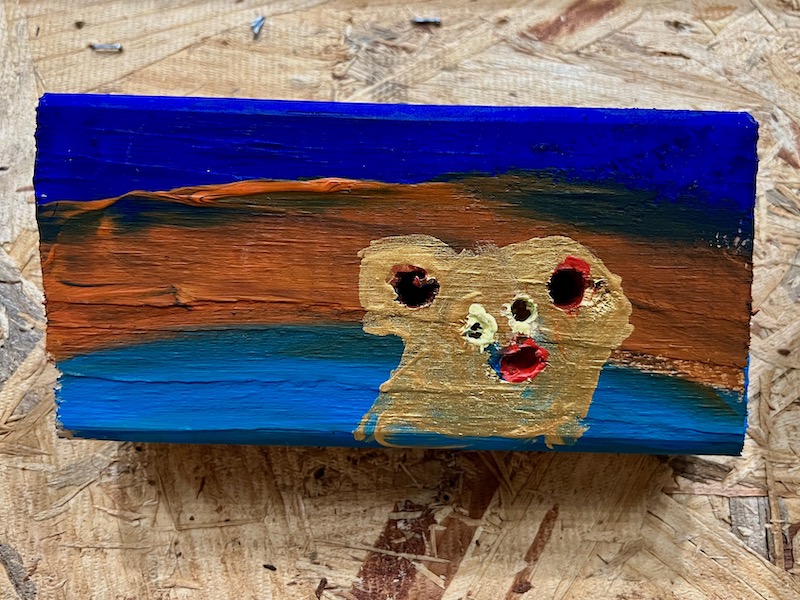
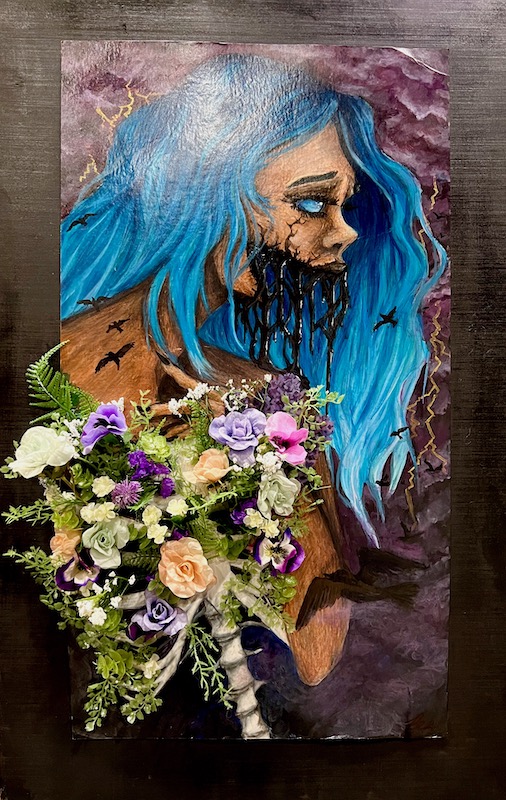
But it is this collision of the sublime, along with the ridiculous and the mundane that makes Art All Night so special. And what is most thrilling is that these individual bizarre expressions—created as jokes or under the influence of hallucinogens or mental health issues as they may—have an outlet for public exhibition.
What the heck, man? “Brittany in a Sketchy Atlantic City Hotel,” Joseph Heckmann
I don’t know if there’s a gallery out there that would show Joseph Heckmann’s Brittany in a Sketchy Atlantic City Hotel, but I’m sure glad I got to see it. What was Brittany doing in Atlantic City and why is she dressed like a clown headed to aerobics? Does she really have a giant tattoo of another clown on her left leg? I want answers, sure, but Heckmann’s acrylic painting gives us that great gift of wonder—not just about the subject of the artwork, but about its creator too.
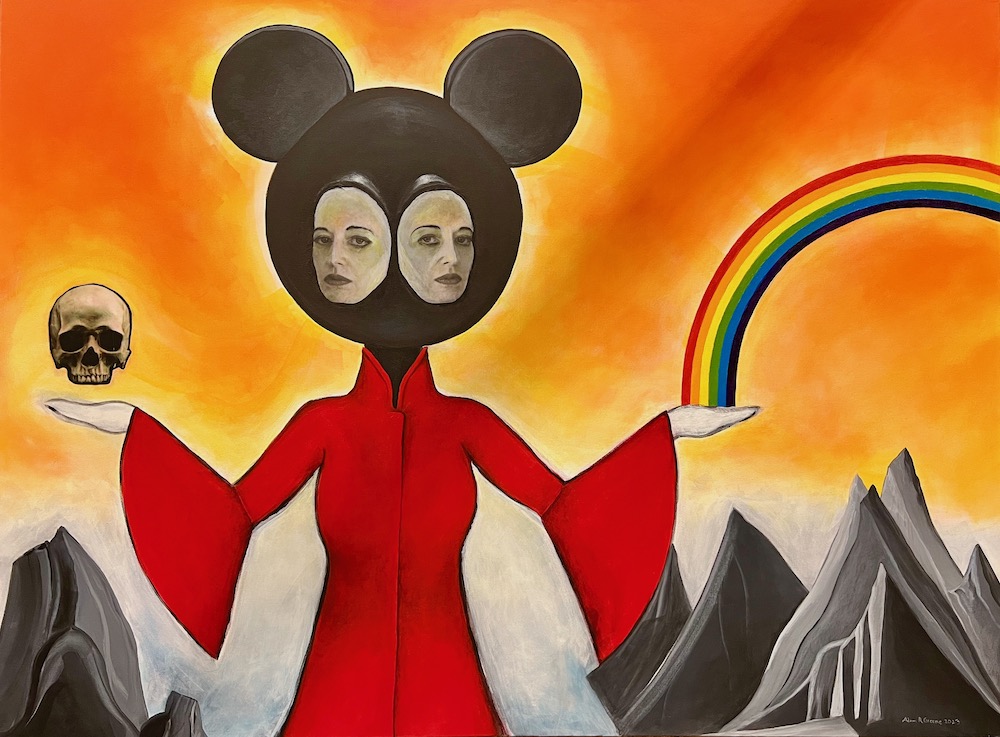
A whole different rainbow connection. “Death, Division, and the Iconography of Hope,” Adam Greene
That is Art All Night’s great gift to the world—both to its event goers and its art contributors. It continues, 26 year on, to be a safe space of free expression for every kind of any person to do what they want to do and share it with everyone else. Hats off, yet again, to the fantastic crew that manages to pull this genie out of a hat year after year.
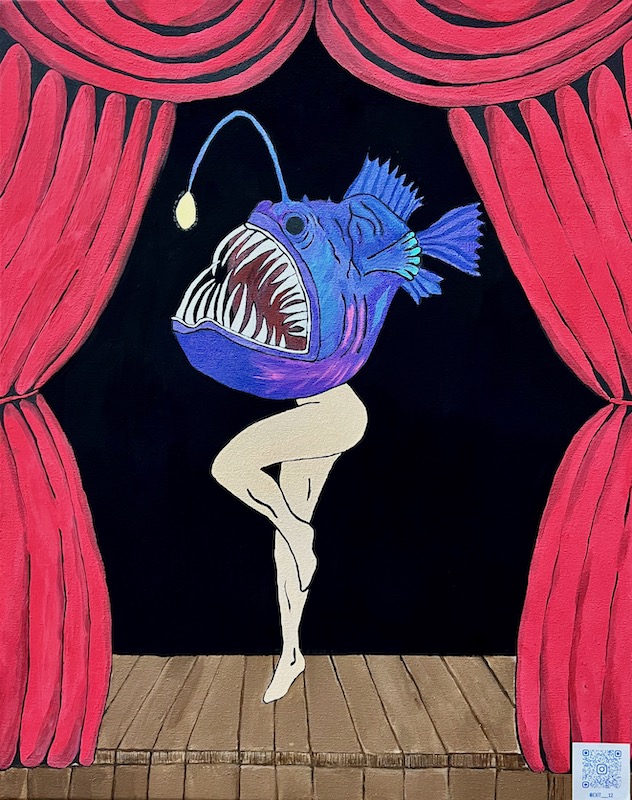
If chickens can have fingers, fish can have legs … and perform on a Vaudeville stage. “Legs,” Casey Welsby
Rope was skipped here. “Path to Pacaya,” Megan D’Jovin
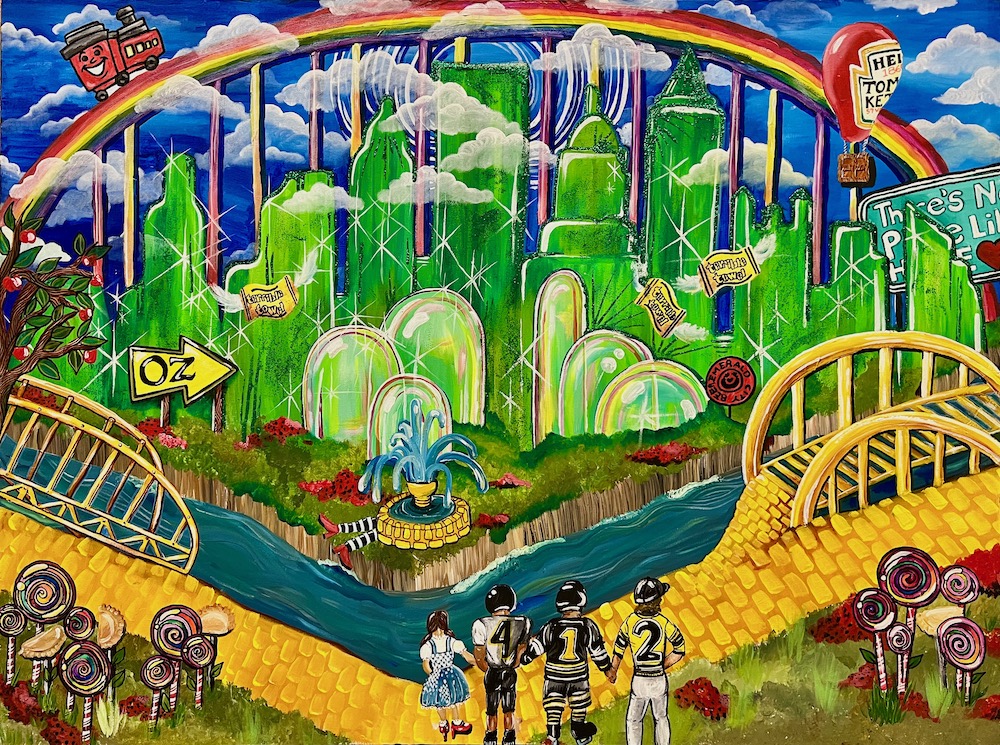
Black and gold and emerald green. “OZ Pgh,” Tara Lee Fedonni
Nun havin’ fun. “Popsicle Nun,” Leah O’Shea
A nun not havin’ so much fun. “The Scorned Nun,” Faith M.
You moss remember this. “I’ve Got You Covered,” Angie Monk
Tom Brady: “known cheater,” artistic muse. “GOAT 666,” The Artiste Reno
Baby on board. untitled, Eileen Cousins
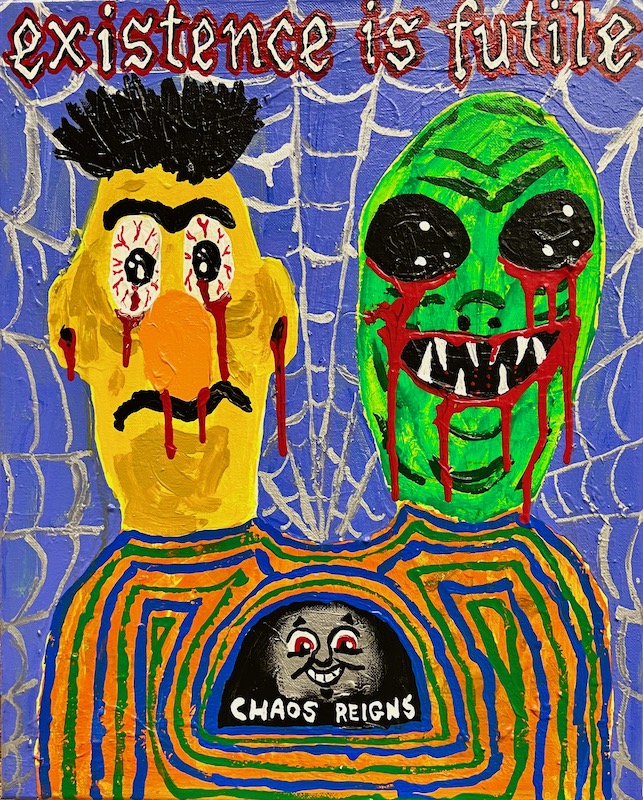
Ernie’s got a brand new bag. “Existence is Futile,” John Rogers
Big pants to fill. “In Case of Emergency Break Glass,” Taylor Atkins
Robot dance party. Unknown (journalism fail!)
Red wave. “The Wave Returns to the Ocean,” Jenna McDermot
Zombified and skeletized. “Speechless,” Brenda Vernon
Flesh and bones. untitled, Lindsay Tate
Fire in the hole. “It’s Fine,” Crystal Berry
Down at the tube station at Midnight. “Wood Street T Station,” Brendan Donovan
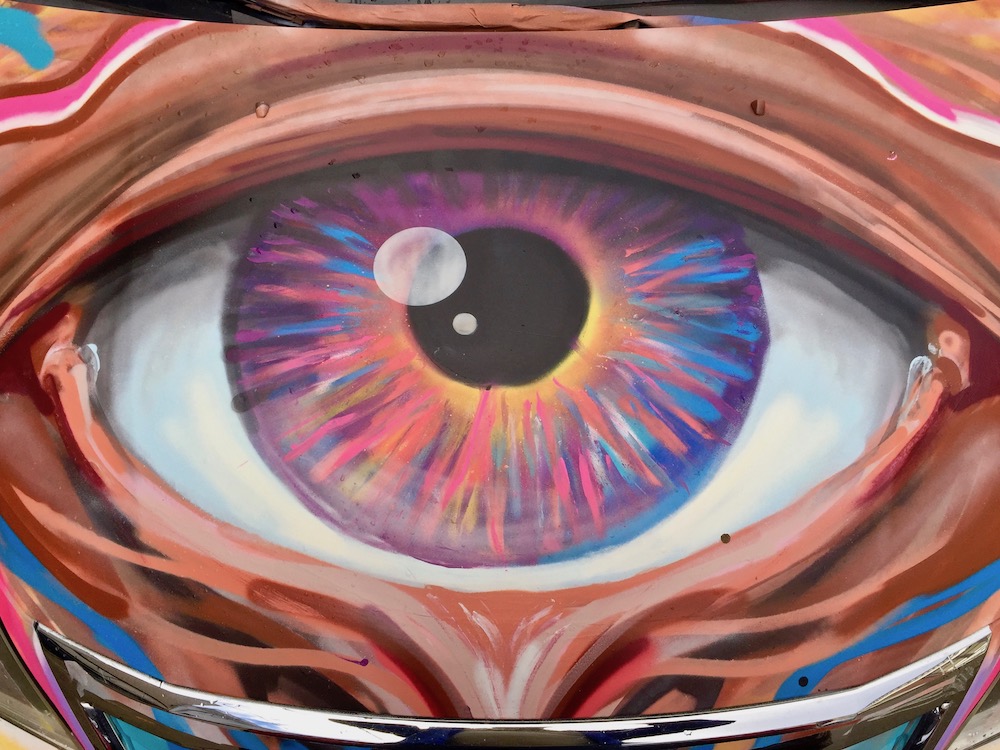
Here’s lookin’ at you. The big eye on the hood of the Red Fish Bowl art van in Lawrenceville. One of many fine examples of artworks created for the engine hoods of automobiles.
Staring right back at you is the biggest eyeball you’ve ever seen. We’re talking about a King Kong-sized window to the soul. Gulliver’s frightened ocular as he’s swarmed by Lilliputians. The last thing your reincarnated keister sees before the fly-swatter takes you onto your next life … and it’s parked right there on Butler Street.
Our Lady of Perpetual Torque, Bloomfield
If you thought great art was confined to museum halls and bathroom stalls, banish that notion from your mind! Yes, it’s everywhere and anywhere. Why, you’ll find the work of budding young Picassos, Yayoi Kasamas, and Thomas Kinkades on worksheds, mailboxes, trash dumpsters, and right in the middle of the street.
But cars, man, cars! We’re Americans! We drive everywhere and get angry doing it! The automobile is our religion and its finish coating is this temple’s elegant spires and stained-glass windows. Why not treat it like the holy house it truly is?
We’ve all been hoodwinked in one way or another, but this time it’s in the very best way. The mother of all mothers blessing an F-150; a chainsaw-wielding mastodon rider with a window to another galaxy; someone’s sun-bleached Easy Rider fantasy played out across the front of an Econoline van.
So let’s get down under—and over—the hood and rev up another great canvas for self/automotive expression.
Chainsaw-wielding mastadon rider with a window to another galaxy, Lawrenceville
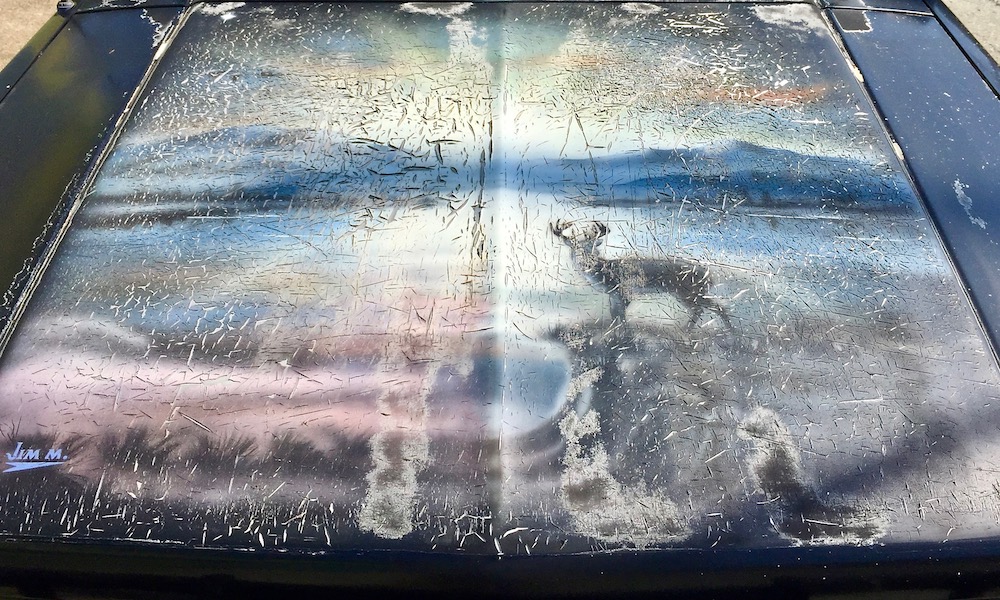
Stag in sunlight by Jim M., Jeannette
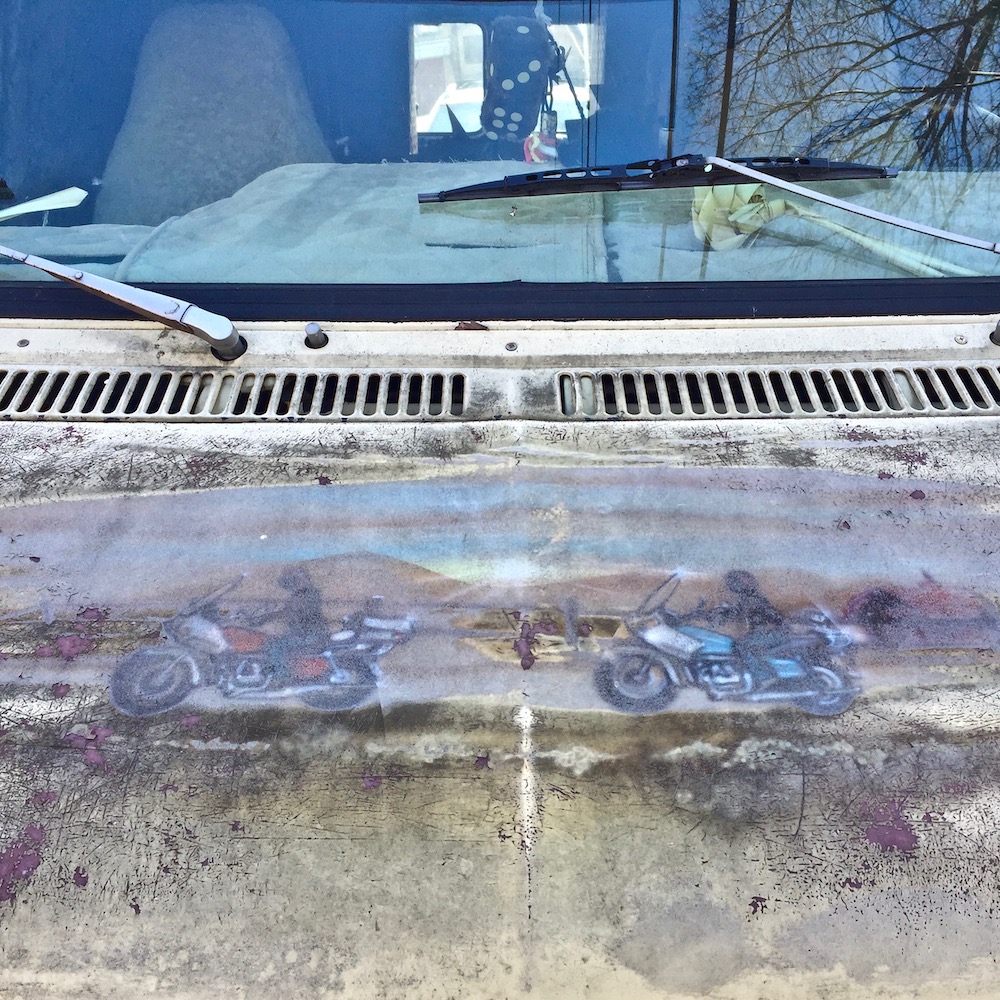
Motorcycles in the desert, Polish Hill
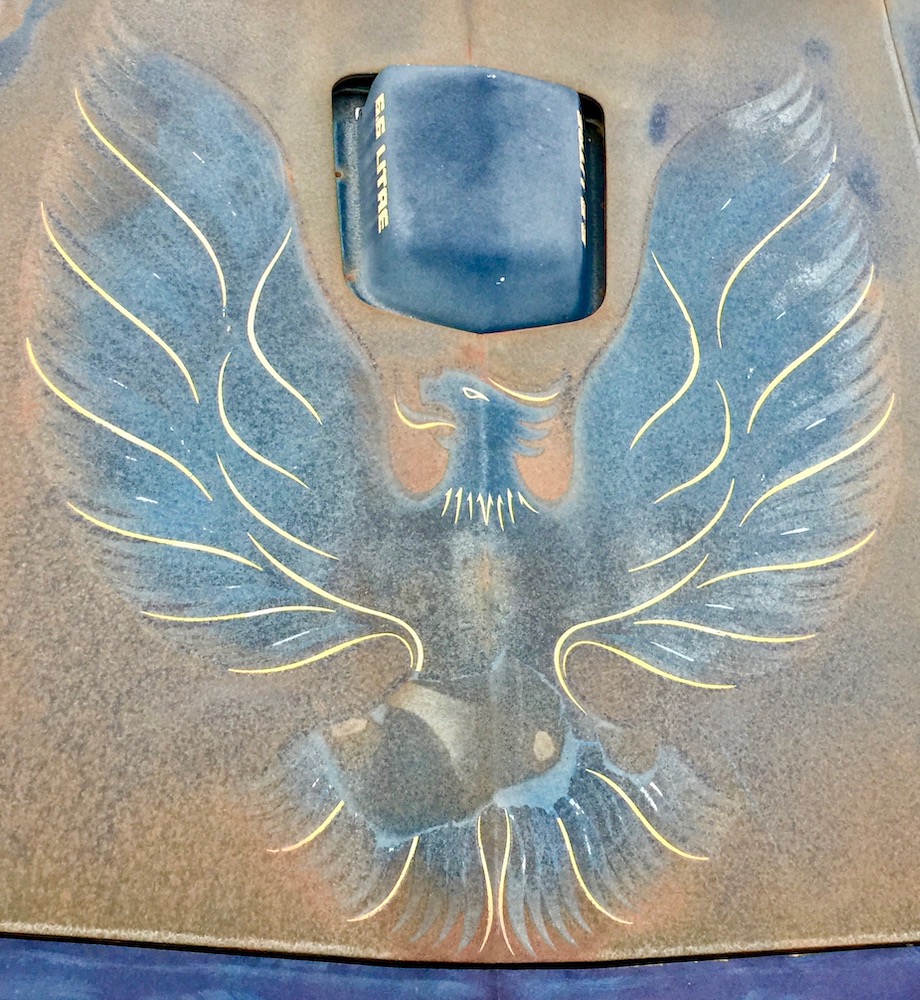
The mother of all hood art! 1970s Firebird, Strip District
Confetti Beetle, Bloomfield
Bloody skull/fangs, Lawrenceville
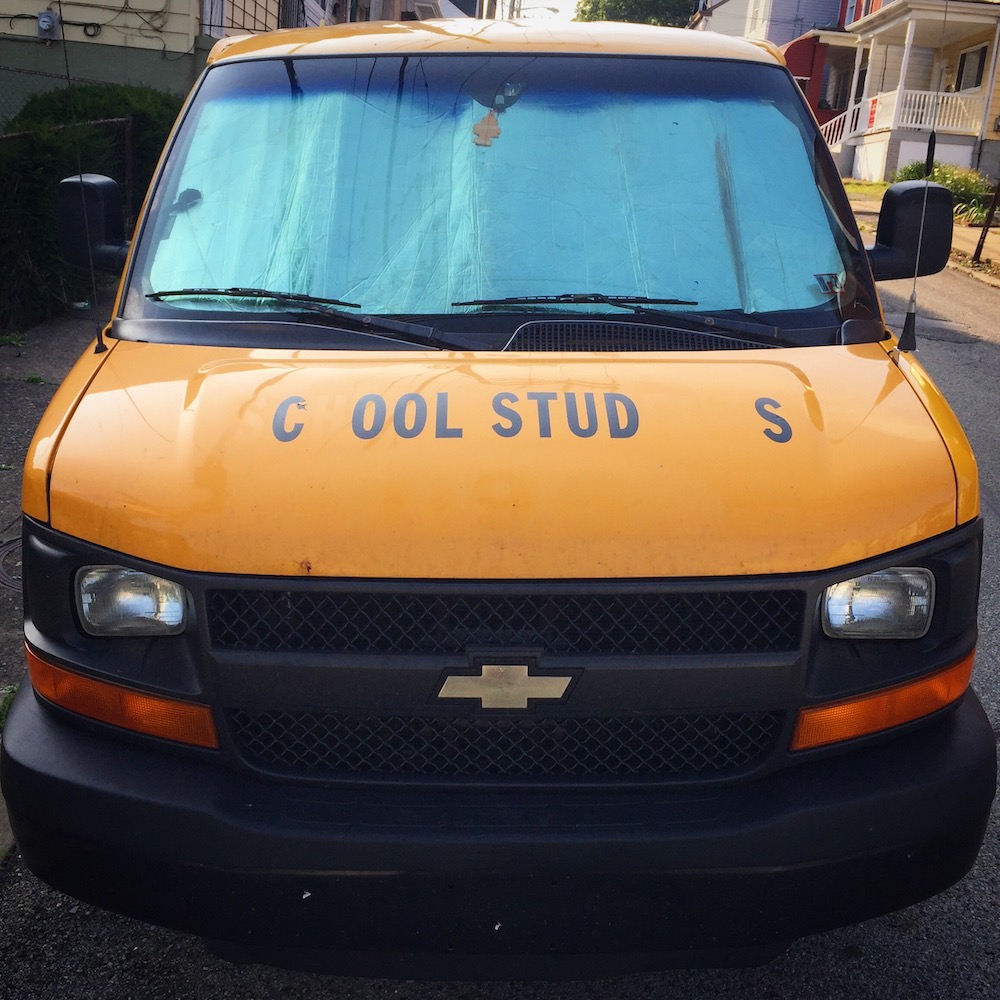
C OOL STUD S, Bloomfield. [Side note: they also could have gone with HO DENTS.]
Bad Girl, Downtown. [Side note: true to her name, Bad Girl was illegally parked.]
“HOH 22—Verticoll” (sic.), Downtown. One of many similar tile-based artworks installed on Pittsburgh streets over the last year
Appearing like alien inscriptions burned into city streets, they just seemed to arrive out of nowhere, in the still of the night. The images are cryptic—they could be designs for astral exploration or tools to cure conditions we can only imagine. These coded hieroglyphics seem as if they’ve been very intentionally left for only the most sentient of earth’s creatures who may be able to comprehend their true meanings.
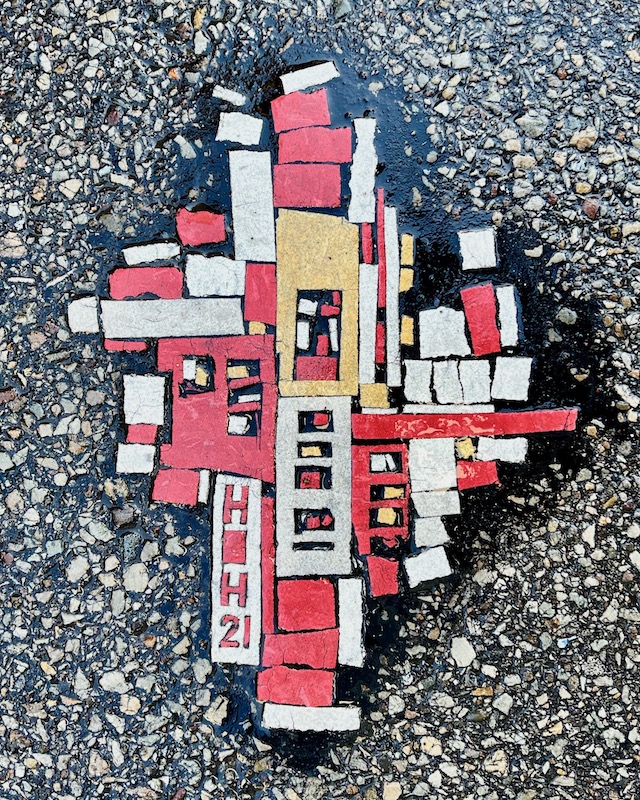
HOH 21, Downtown
When last we encountered the House of Hades, six years ago, it was in the form of a series of similar artworks that could be fairly described as tributes or homage to Toynbee Tiles. [Newcomers to this topic: click those links for background.] The pieces used the same graphic language as the Toynbee originals: big block letters with clear—if bizarre—messaging that reads like paranoid prophesy of dystopia.
One man vs. American media in society, reads a tile; Media must be reduced to ash, another. One even goes as far as to name its inspiration: The resurrection of Toynbee’s idea in society.
Those pieces, all including the date 2012 were installed on and around Blvd. of the Allies, Downtown, in 2017. A cursory look around the Internet shows The House of Hades deploying similar pieces in a raft of American cities: Philadelphia, Milwaukee, St. Louis, and Richmond, to name a few.
HOH 22, Downtown
Unless your author is slipping—and that is entirely likely—The House of Hades left Pittsburgh’s streets alone for the next five years.
Starting in the summer of 2022, though, new Toybee-like tiles began appearing throughout the city—Bloomfield, Oakland, Lawrenceville, and especially Downtown. These new cut-up mosaic street pieces are in the same medium as House of Hades’ 2017 deployment, but with an entirely different visual style. We don’t know these are from the same person or people—heck, we don’t know anything about these folks!—but the correlation and HOH attribution suggest our old friend is back in town.
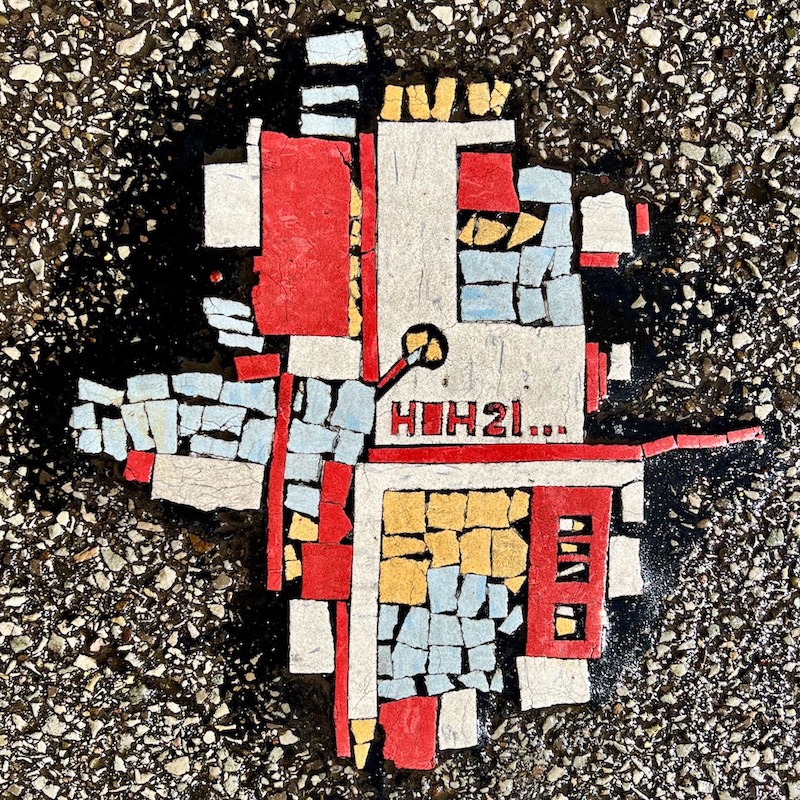
HOH 21, Downtown
I don’t know what you did with your pandemic, but it feels like The House of Hades spent the last couple years working on a brand new bag. These pieces avoid any scorn of American media by abandoning text entirely (aside each tile’s HOH inscription). Instead, the tiles are more pure art: constructivist assemblages of colored blocks and metric lines, maze-like interlocking shapes and jumbled forms like tall stacks of books on a shaky table. They may be read as floor plans to space housing or profile views of history, mid-excavation. Rorschach-like, one can probably read just about anything into these designs depending on where the mind is inclined to wander.
And wander it shall as we stare deeply into these fascinating artifacts and dream of the next contact from beyond.
HOH 21, Downtown
HOH 22, Lawrenceville
HOH 21, Downtown
HOH 21, Downtown
HOH 22 ‘Su__?, Bloomfield
HOH 22, Lawrenceville
HOH 22, Oakland
Special thanks to Orbit reader Ivan Russell for his tips on a couple of the Downtown tiles.
The Lucite-enclosed photograph of Harry Begler (d. 1921). One of many grave markers that include both photographs and the symbolic imagery of chain links at Workmen’s Circle Branch 45 Cemetery, Shaler
From inside a half-globe of clear Lucite, Harry Begler stares straight back at us. The young man’s image is amazingly intact and undistorted by the odd curvature of the material that protects his photograph. The clear casing has suffered somewhat over time, but is still in terrific condition considering it’s spent the last hundred years living through as many freeze-and-thaw cycles, the corrosive air produced by heavy industry, and the inevitable presence of no-goodniks. Centered below Beglar’s photo and cut into his long granite grave marker is the depiction of three chain links making an ever-so-graceful arc downward.
Harry Abromovitz, 1888-1932
Chains are a not-uncommon symbol to find etched into gravestones and they appear in great frequency here at Workmen’s Circle Branch 45 Cemetery. Begler’s three links match the totem of the Independent Order of Odd Fellows whose symbol—standing for Amicitia Amor et Veritas (English: Friendship, Love, and Truth)—is its own standalone thing.
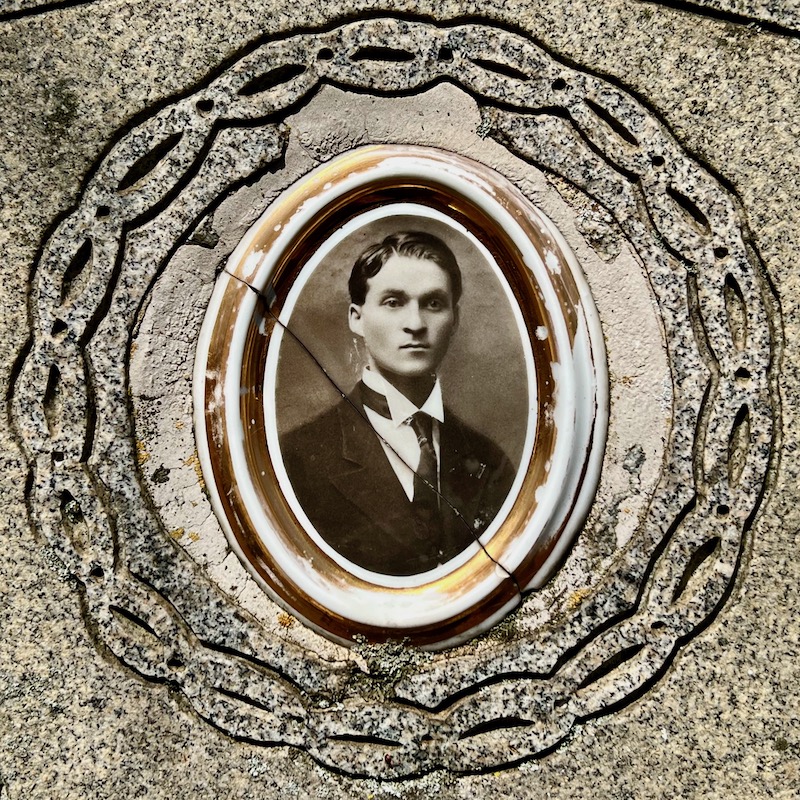
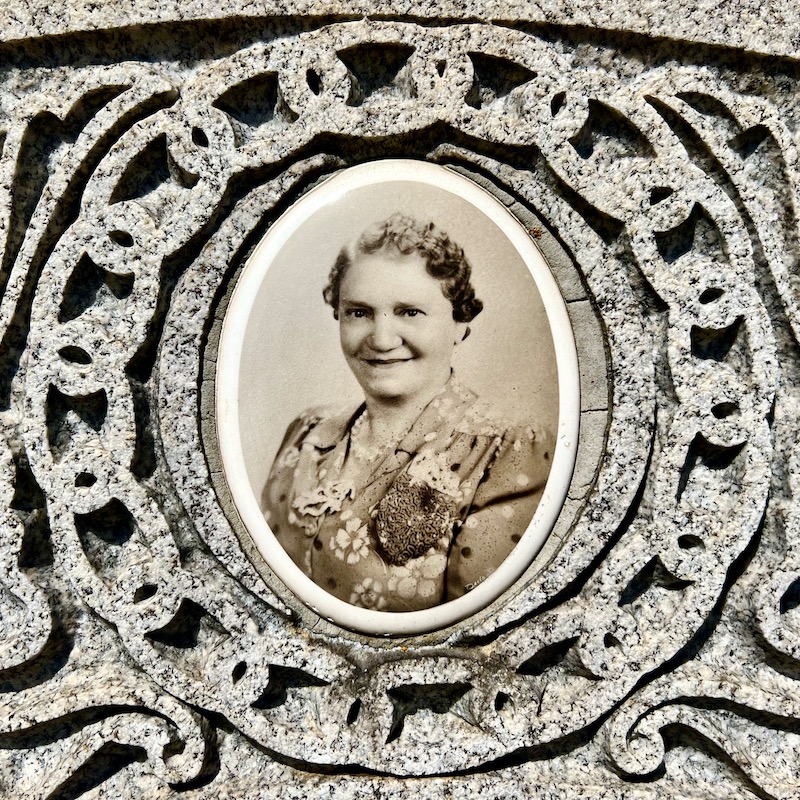
The rest of Workmen’s Circle’s linked chain imagery takes an entirely different form. For these, an unbroken chain encircles the deceased’s portrait.
Harry Shore, 1885-1928
Google the subject and you’ll find a whole lot more information around grave marker carvings that feature a broken chain—with its last link either missing or severed. There even appears to be a common twofer plan where the first half of a couple to die would have the broken link with her or his partner following it up with a connected chain to symbolize the pair united in the afterlife. We don’t see any of this at Workmen’s Circle, though—all chains are perfect circles and completely intact.
That the residents of Workmen’s Circle are all Jews may or may not be significant with regard to the symbolism of chains on grave markers. This goy couldn’t find anything connecting the two, but perhaps our O.T. brothers and sisters can help us out here.
Speculation aside, it’s always interesting to see how these patterns emerge at certain cemeteries—it’s almost fad-like. So gander away at these terrific combos of grave marker photographic portraits and the wreath-like protective chains that wrap them up both as design elements and symbols.























































 Pittsburgh Orbit