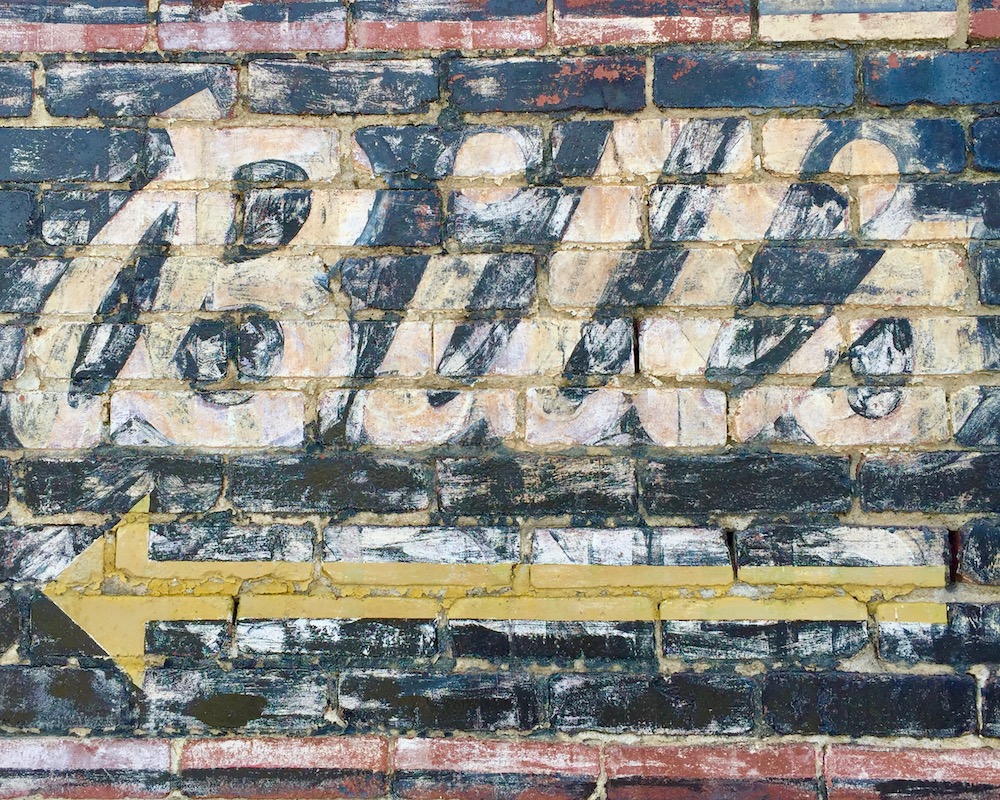
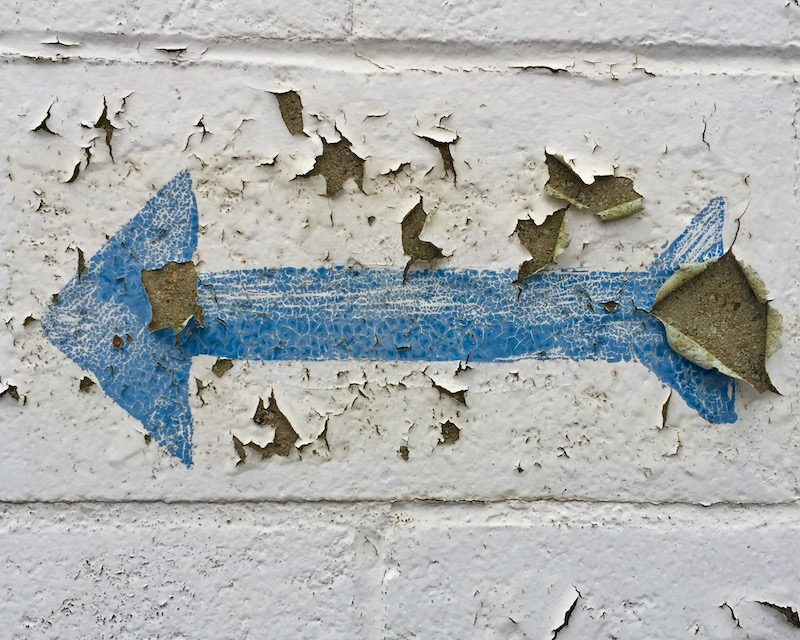
Ghost sign for a ghost tavern, but the arrow’s still there. It was that way to Bill’s, East Vandergrift.
Direction—am I right? Who doesn’t need a little more of it, especially now. The world’s fallen apart, all trust is gone, no one seems to know where they’re going. Someone, anyone—heck, anything—show us the way!
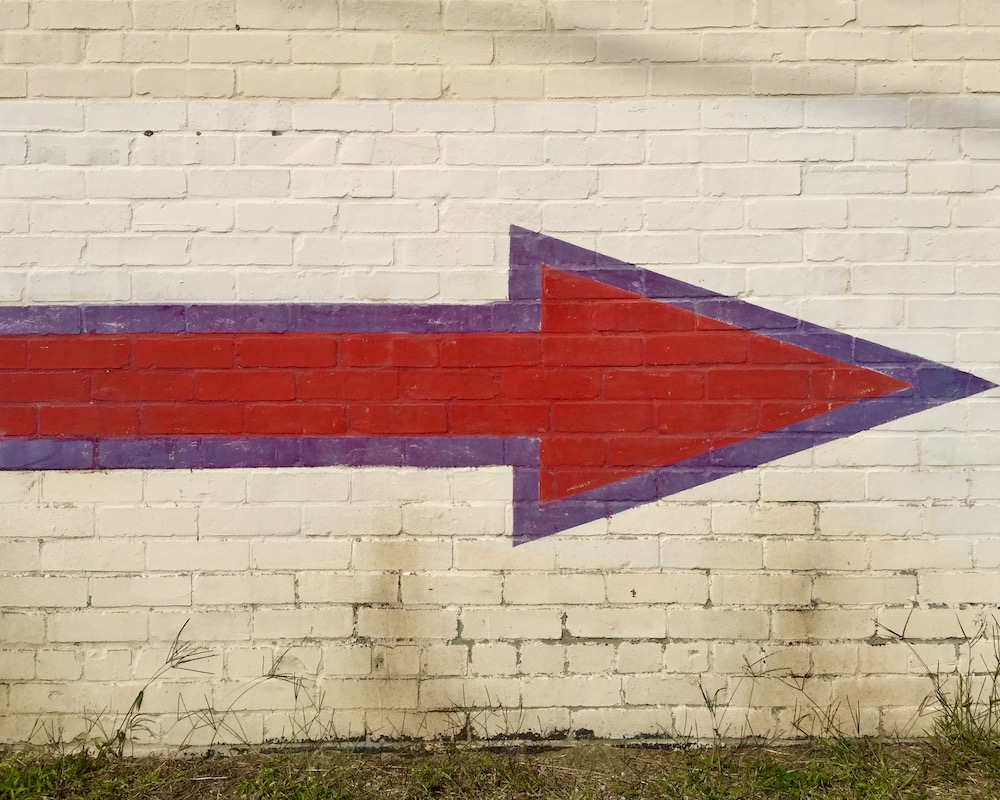
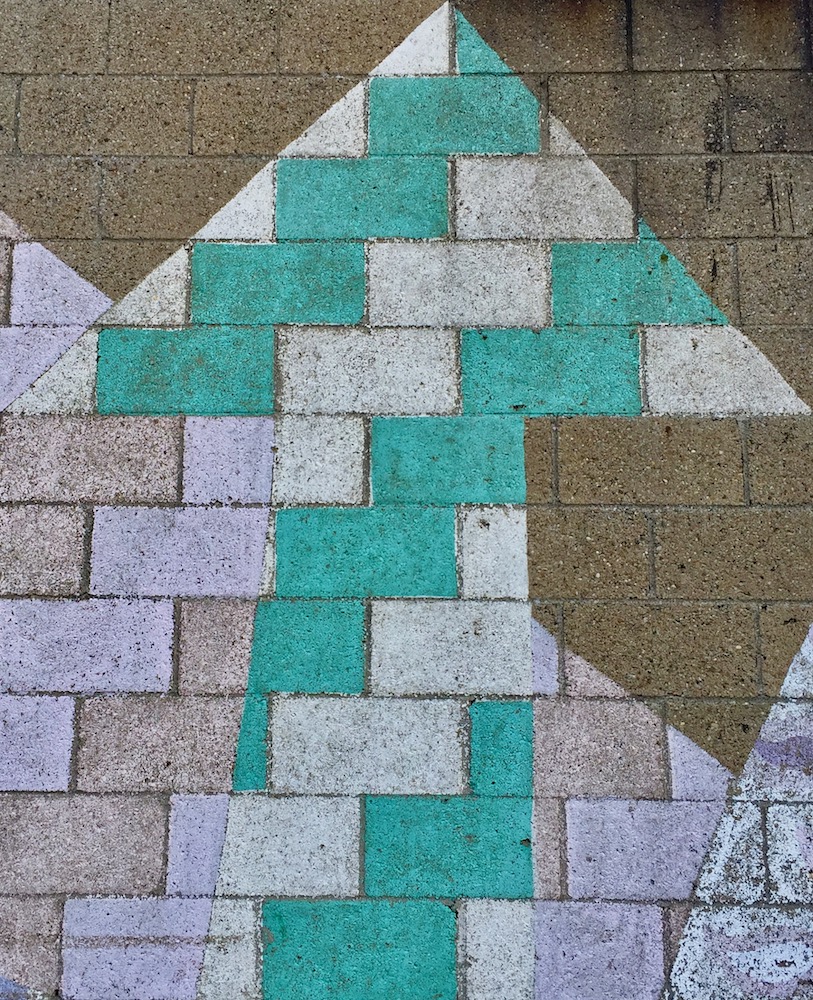
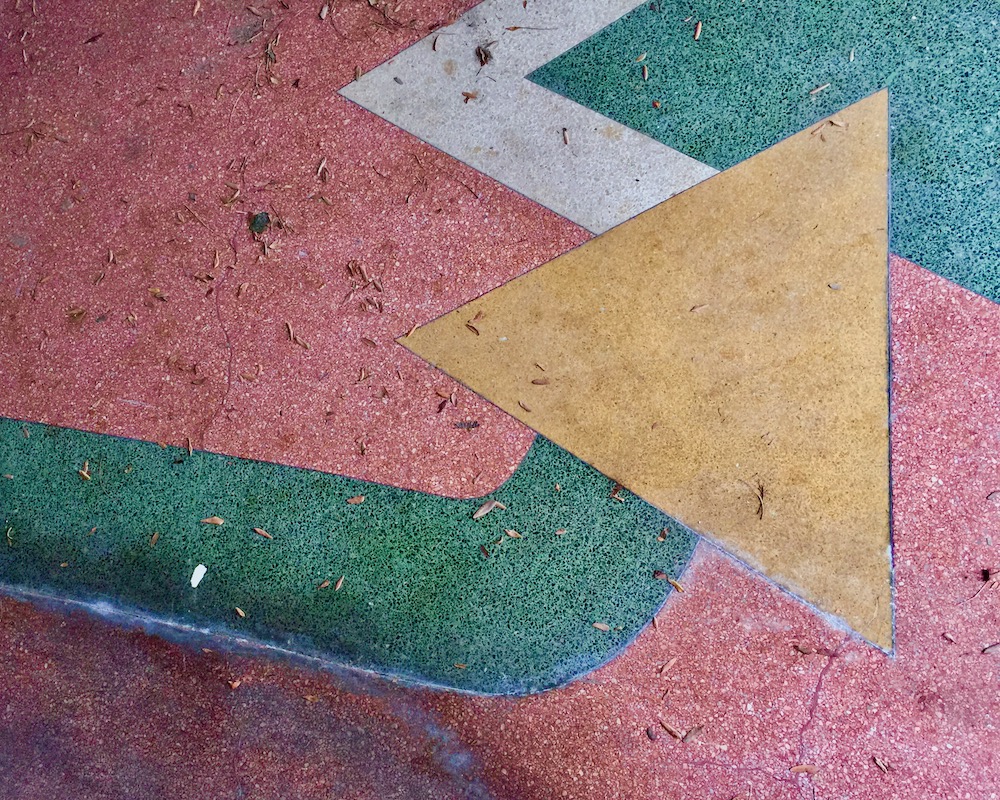
Enter the simple arrow. Yeah, we’ve still got a few of them lodged in the backside, but we love them just the same. The arrow guides us through some of life’s many mysteries with that most basic of graphic forms. It points us clearly this way or that; up, down, and around-the-bend; when we need to start looking and what’s coming up ahead.
Enter here, below the water line, Wheeling, WV
Four or five years ago, we started collecting great, hand-made arrows painted on walls and plywood boards to direct vehicles toward parking and loading zones, help people locate back entrances, and keep everyone moving the right way. In the resulting story [This Way Out: Arrow Collecting (Aug. 20, 2017)] we waxed on and on about our love for the humble arrow. That description was so complete that we’ll keep the narrative on this sequel short and get you where you’re going.
J. D’Antonio, that way. Brownsville
Steel mill arrow, Weirton, WV
Dog-legged/up and over, Homestead
No parking … but only to right there. Millvale
Double arrow! Monaca
Swooping in for a big entrance, Wheeling, WV
Down and out in Larimer
Loooooooong arrow, Burgettstown
This way to TNT Monster Mechanic, Beaver Falls
Up! Garfield
Overgrown arrow, Squirrel Hill
Down and around, New Kensington
Blue arrow, New Kensington
This way for auto parts, Hill District
Take your pick … as long it’s during shop hours, Larimer
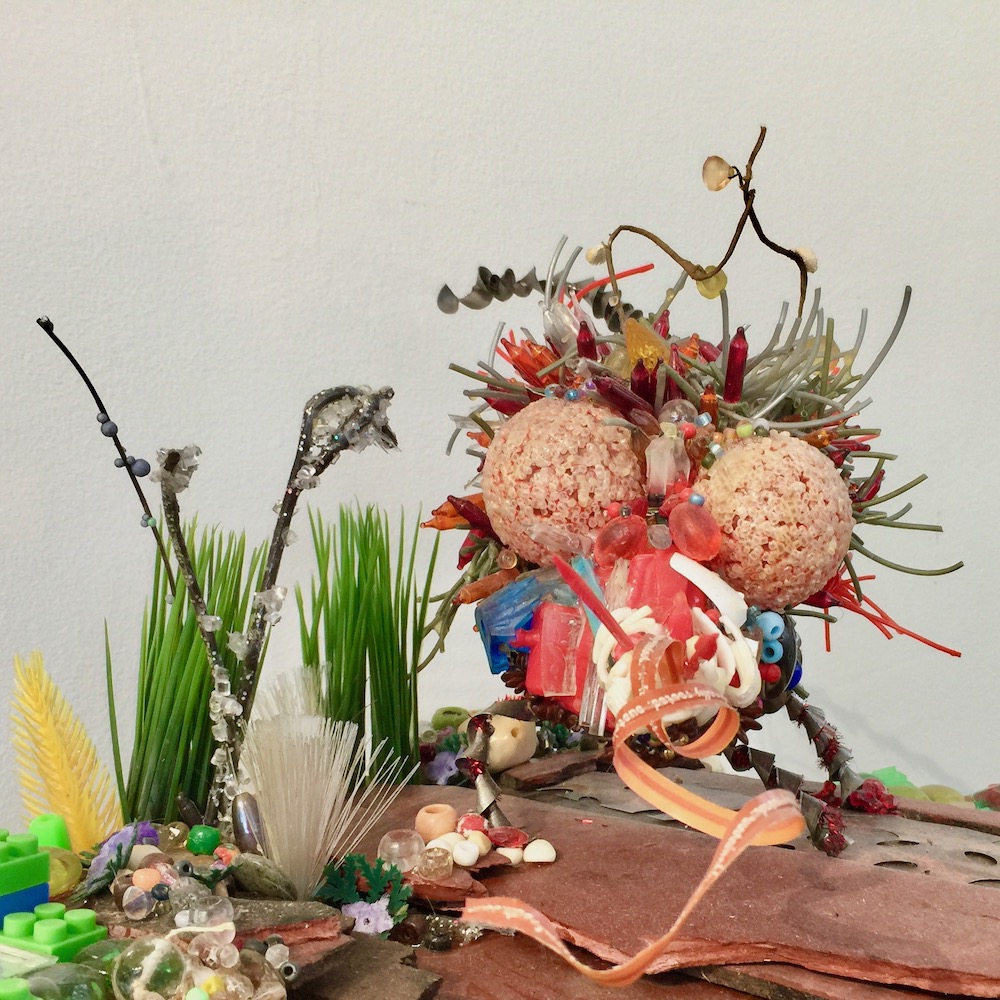
Garbage, this ain’t. “The Price is White,” an assemblage triptych made from recycled, discarded, and donated objects in artist Glendon Hyde’s current show at Spinning Plate, “This is Garbage.”
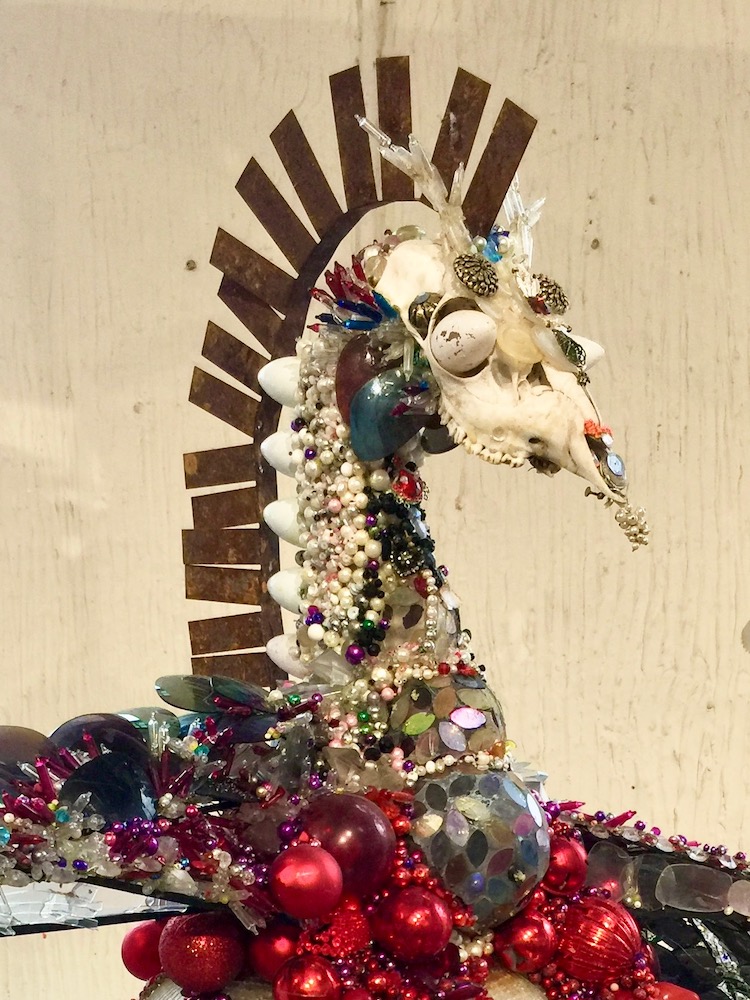
The large swan has its wings spread a full four- or five-feet wide as it rests atop a glass table. Unlike waterfowl one might find in the most idealistic of parks or if you’re just randomly lucky out in nature, this bird is both skeletal and glasslike, brutally jagged, and delicately bedazzled.
The graceful neck of the beautiful creature is an ornamented fantasy of deconstructed costume jewelry, burnt-out micro-bulbs, and little pearly leaves. The bird’s wings are aloft in waves of smoky sunglass lenses as eggs populate the eye sockets of an animal’s skull. Around the body swirls a tumble of shiny red Christmas ornaments.
“Emerge” (detail)
“The show is a love letter to Greta Thunberg,” says artist Glendon Hyde, “At fifteen, she had this myopic determination to do something about the state of the world. I wish we could all manage to find the bravery in ourselves to do something important.”
Hyde is discussing This is Garbage, the first large-scale solo exhibit of his artwork in thirty years. It’s up now through the end of the month at Spinning Plate Gallery. The title is ironic, self-deprecating, but also sadly true. Most people would look at these raw materials–and perhaps even the odd but lovely artworks to emerge from them–as detritus. Don’t make that mistake.
“Lohan and Child: How to Export White Jesus” (detail)
“Baboon Assed Bush Pig” (detail)
Garbage, this ain’t. But there’s no denying the obvious environmentally-conscious connection here. One hundred percent of the materials making up Hyde’s large freestanding, ceiling-dangling, and wall-hanging sculptures have lived previous lives.
The component parts have been supplied by friends, donated by fans, and left on his doorstep by the in-the-know. They’ve also come mailed-in from far away and picked right out of curbside garbage bins ahead of city collection crews. Nothing in the show, aside from glue, Hyde tells us, was purchased at an arts supply store–or anywhere else for that matter.
“Restorations Needed” (detail)
“Picnic Dilemma” (detail)
While claiming the show was for Ms. Thunberg, another theme keeps spilling out. Emerge is the action word Glendon Hyde uses most in our conversation. That concept comes up early and often throughout the show.
The aforementioned swan is a piece literally titled Emerging and its companion Ugly Duckling rests just across the space. The two creatures appear to be looking back at one another with a knowing hang in there, it gets better silent communication.
Elsewhere, an enormous sequined frog morphs from its tadpole state; a cicada, or Sir Cada, outfitted in something between bondage and biker gear, has sprung from the earth for its once-ever-seventeen-year bender. Babies emerge from the womb; an ant is poised atop a glass apple; jellyfish bob and weave in the boundless surf of a tinfoil sea.
“Ugly Duckling” (detail)
In a world–especially one still well within a global pandemic–where everything feels like it’s moved to the Internet, there is an even more subtle touchstone for the exhibit.
“I’ve emerged to be a more stalwart person,” Hyde says of the ugliness around so much of world’s discourse right now. “Current culture is so abrasive I found myself wanting to get away from the arguing. The best thing I can do is play and share that experience with friends.”
Indeed, the show is blessedly free of any video screens; there is nary a #hashtag, @handle, or URL address to be found. Instead, the show is a grand expression of human-hands touching each and every piece, working the materials, wrapping, gluing, and stitching disparate elements into their final reconstructed forms.
“The Buddha Moth” (detail)
Part of the fun of This is Garbage is that each piece warrants a multi-level examination. There’s an establishing first-impression from a few steps back. The viewer sees the overall form and message–often in perilously-precarious balance–its visual language and suggestive humor.
But then you’ve got to get in close–real close–to see the intense level of detail, clever reuse of random materials, and each creative choice in miniature that grows, blossoms, and yes, emerges from its rooted center. This is where your author spent most of his time–looking at all the little beads, the curling folds of movie film, how plastic Internet cables wrap and blend with soft, frayed acrylic yarn.
“Don Quixote”
“Florida Garden” (detail)
Two years of Glendon Hyde’s life went into creating This is Garbage. It took him and a friend four days just to set everything up in the gallery space. (And he lives right upstairs!) That might seem like a long time for a gallery show … until you see this one. It is as dense and eye-popping, stuffed-to-the-rafters and meticulously placed as anything you’ll encounter anytime soon.
Whether the lofty concepts behind Guns, Germs, and Steel: The Hipster Tea Trolley or Thoreau’s Temple translate to gallery visitors is questionable. What’s not is that This is Garbage is a fantastic vision statement from an artist who is singularly endowed with the ability to spin gold from tinfoil, bring life from street debris, and coax spectacular joy from these desperate times.
“Hoodoo Guru”
This is Garbage is up at Spinning Plate Gallery, 5821 Baum Blvd. in East Liberty, now through Sept. 30. Gallery hours are Thursday and Friday, 12-6; Saturday 12-7; Sunday 12-3. Hyde is holding a special second opening–let’s call it a re-emergence–this Saturday, Sept. 11, from 6-10.
A final note on the photographs:
It’s safe to say visual art is pretty much always best experienced up-close and in-person. To see the scale, true color, and individual brushstrokes of a painter; how different strands cross, meld, and blur in fiber art; the way sculpture demands to be seen from multiple angles; up close and from a distance. Photographs are excellent long-term documentation for the work, but they just don’t match up to seeing the real thing.
Glendon Hyde’s pieces really need to be seen in person. There’s just no way to photograph most of the work (especially in this particular gallery setting) and have it look like anything–that’s why we chose mostly detail shots. A bunch of really great pieces didn’t make it to this story for that reason alone. Do yourself a favor and get down to Spinning Plate while you can to see this fantastic show the way it needs–nay, deserves–to be seen.
* Special thanks to Paul Schifino for an assist on this story’s title.
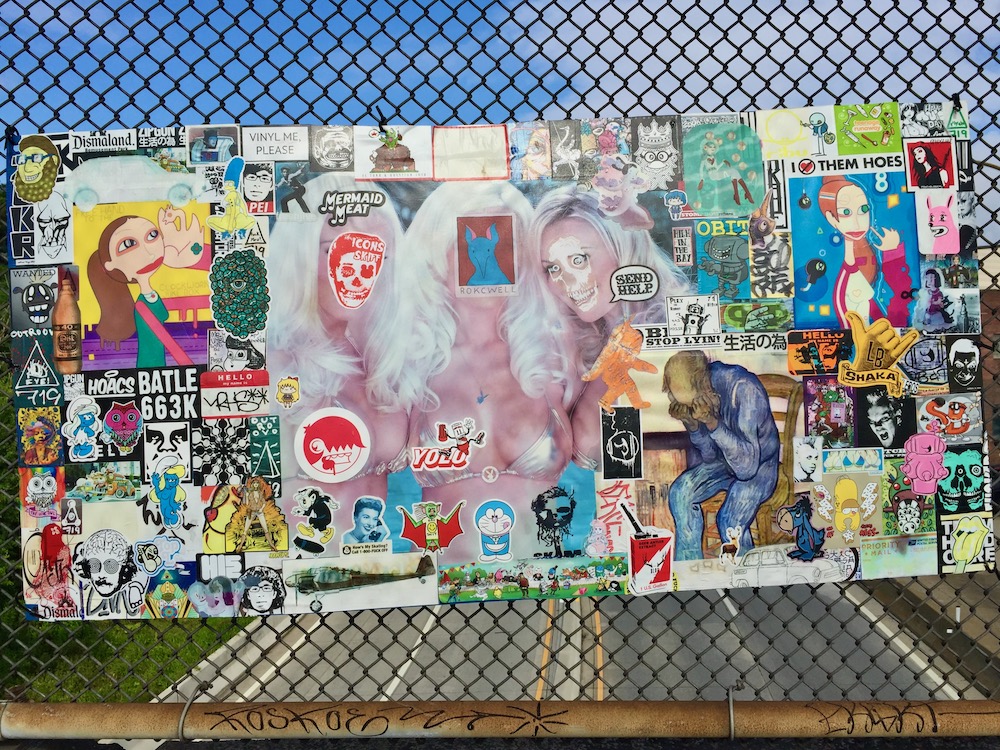
A lot to take in on one’s morning commute. One of the Midnight Montagier’s large collages, Bigelow Blvd. pedestrian overpass, 2018
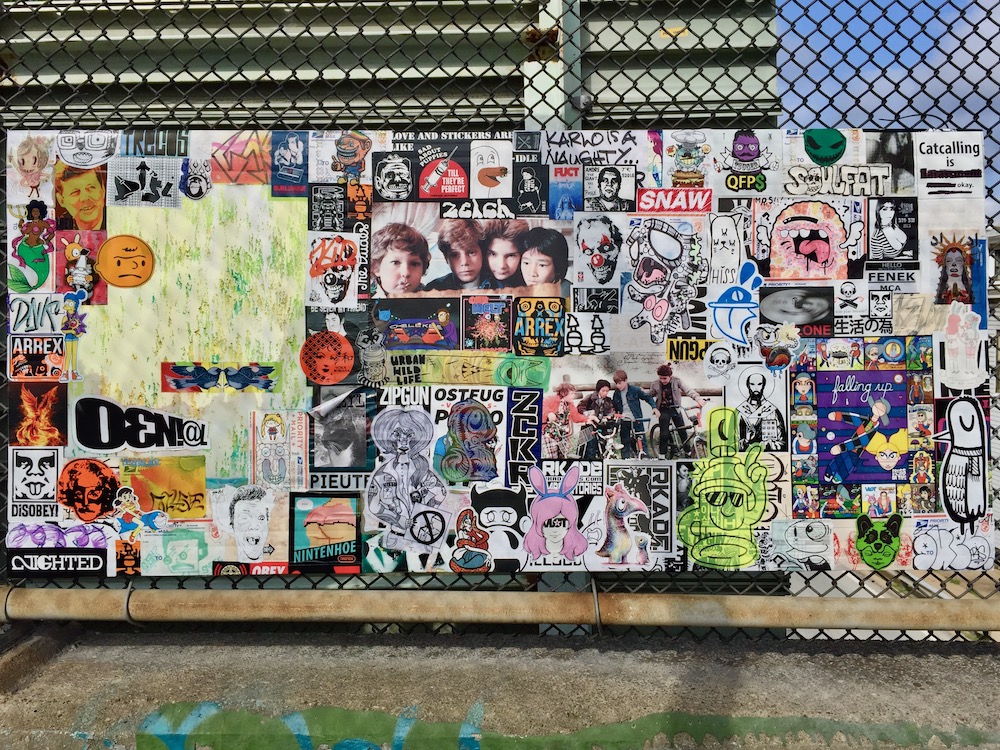
There is a lot going on here. Three bleached-blonde bikini babes take center stage in the strange artwork, but each has her face plastered-over with a large sticker or morphed into freakish skeleton-like distortion. On either side, big colored cartoon-like images have been pulled from a big book, or maybe a glossy calendar, or poster–who knows? Surrounding all this is a riot of other, smaller imagery: faces, sections of classic paintings, pop culture icons, and recycled Hello, my name is identification tags.
The whole thing is probably six feet wide, mounted on cardboard backing, and has been zip-tied to the chain link enclosure on one of Bigleow Blvd.’s two pedestrian overpasses. It is not alone.
Bigelow Blvd. overpass, 2018
Bigelow Blvd. overpass, 2018
They appeared all at once, in one glorious technicolor explosion. At least, that seems like what happened.
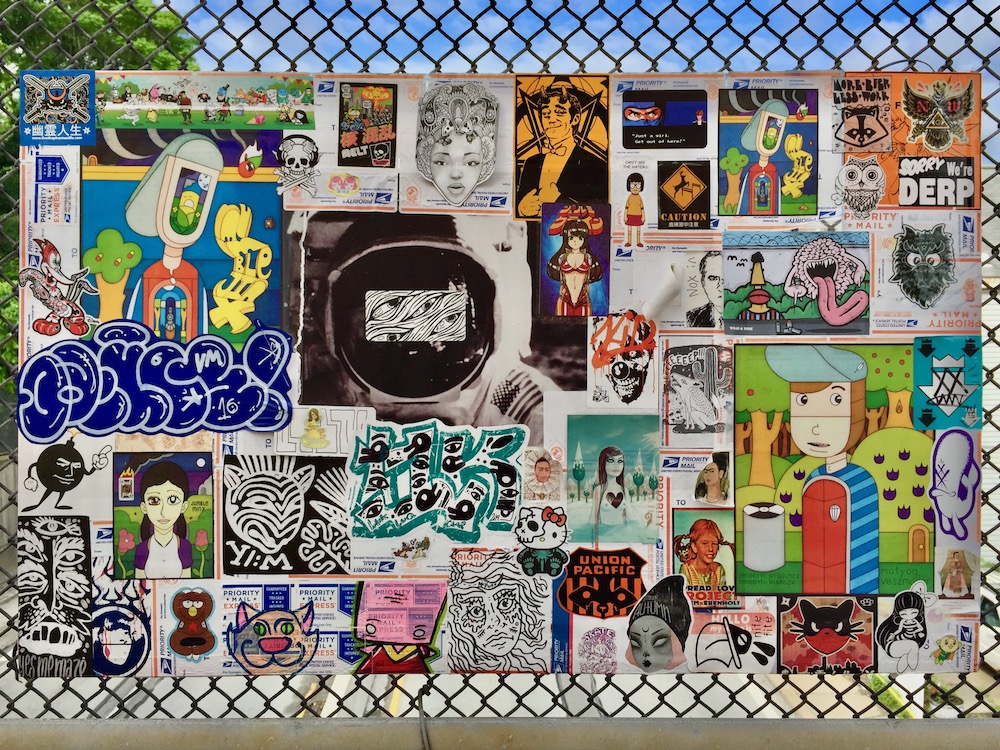
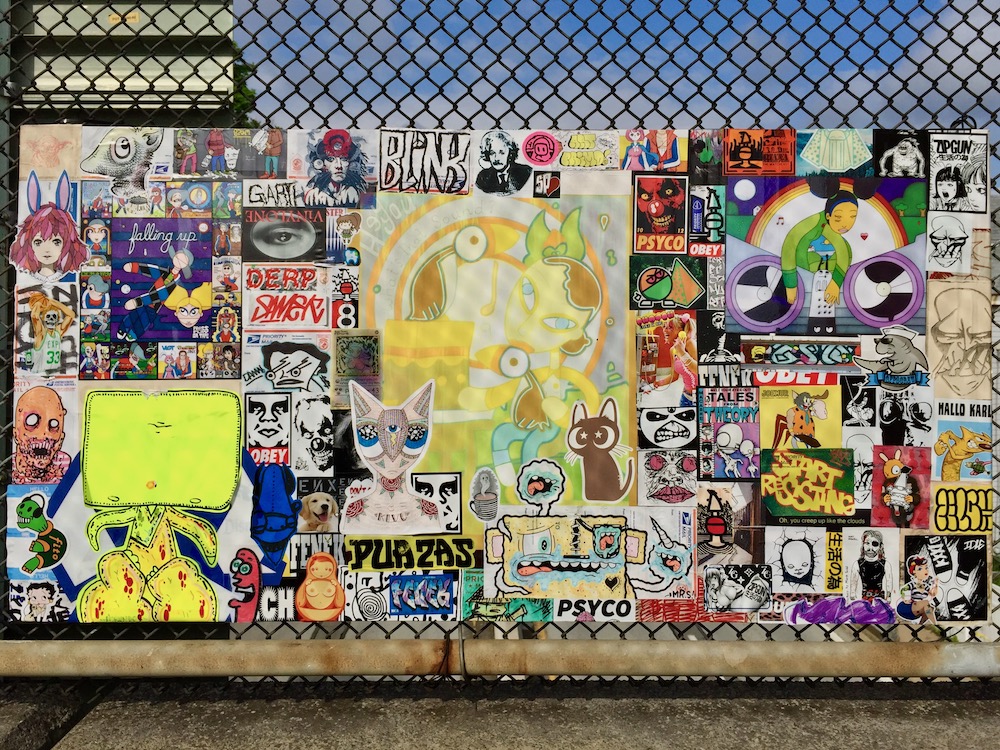
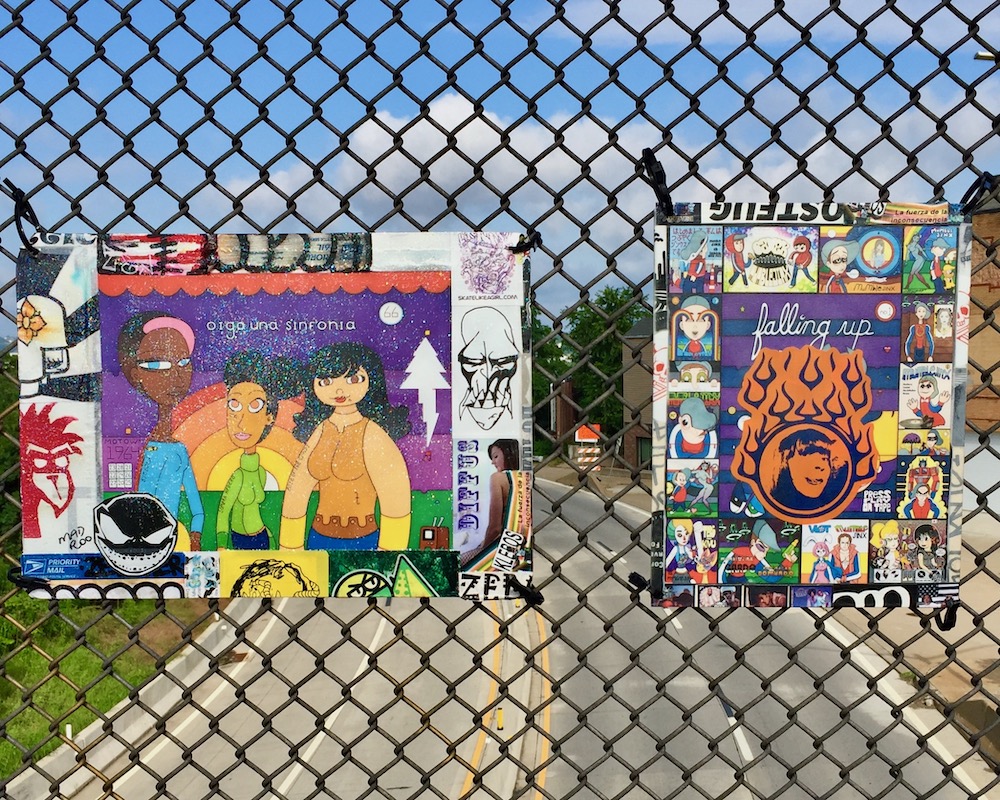
One day–it was late June, 2018–these protected walkways were surprise-decorated (aka bombed) with more than a dozen giant collages, all in a singular style. Taken as a whole, the jumble of assembled images added up to a distended fever dream of dark cartoons, chopped-up advertisements, random photographs, and belongs-on-a-skateboard sticker art.
Attempting to discern meaning from any particular collage–let alone the installation writ large–is a fool’s errand. Sure, there’s plenty to work with if you really want to impose a theme on a collection of random Manga frames, postal slaps, and Obey stickers–but you’re not doing yourself any favors by wading into that particular murky sea.
Bigelow Blvd. overpass, 2018
Bigelow Blvd. overpass, 2018
One after another, attached to both faces of the chain link fence with zip-ties, the eye-popping pieces felt like the magnum opus of an artist (or artists?) who we’re calling The Midnight Montagier. (You know, from the French.)
Weeks, months, maybe years worth of work must have gone into hoarding visual imagery and curating the contents, the cutting-out and gluing-down. All this quiet energy was blasted out to the world–or, at least, the handful of pedestrians who regularly walk the overpass–in one giant salvo, three summers ago.
Bigelow Blvd. overpass, 2018
Bigelow Blvd. overpass, 2018
The pieces felt less like an organized statement of purpose and more like a compulsive saver finally admitting I’ve got to do something with all this stuff. There are worse motivations for artistic expression and many lesser attempts at beauty and/or messaging on city infrastructure.
The gift of these carefully created pieces to the few of us who experienced them before either nature or the Department of Public Works decided their time was up was fascinating and much appreciated.
Bigelow Blvd. overpass, 2018
Bigelow Blvd. overpass, 2018
With this much creative energy and such obvious dedication to the medium, the person or persons behind the Bigelow installation would have to strike again. Once they got their first taste of anonymous glory and release to the world, there’s no way they wouldn’t want to go back for more … right?
Well, we waited, we watched, and over the last three annums, we’ve trundled down every side street, back alley, bicycle lane, and flight of city steps the city has to offer, always looking, always searching. Days turned to weeks and months turned to years. But alas, that was it. The Midnight Montagier seemed to have saved it all up for a single epic go-down-swingin’ exorcism of every creative demon and each loose bit of visual ephemera to wash up on their desktop.
Bigelow Blvd. overpass, 2018
Bigelow Blvd. overpass, 2018
… until just last month.
Three years later the Montagier finally struck again! Why we didn’t run a piece on the collages at Bigelow back in 2018 still seems goofy, but perhaps the blogging gods knew there would be more to the story–we just needed to wait through a global coronavirus pandemic (Phase I, sigh) to get there.
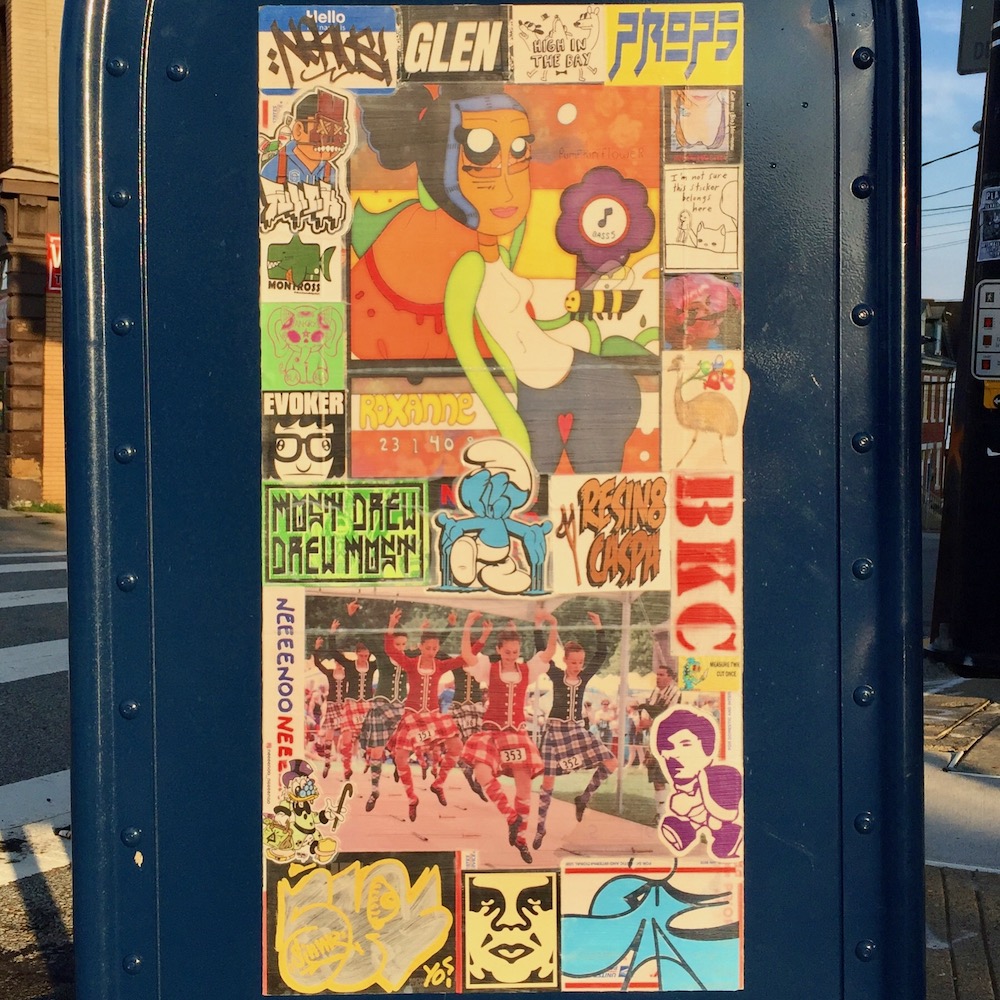
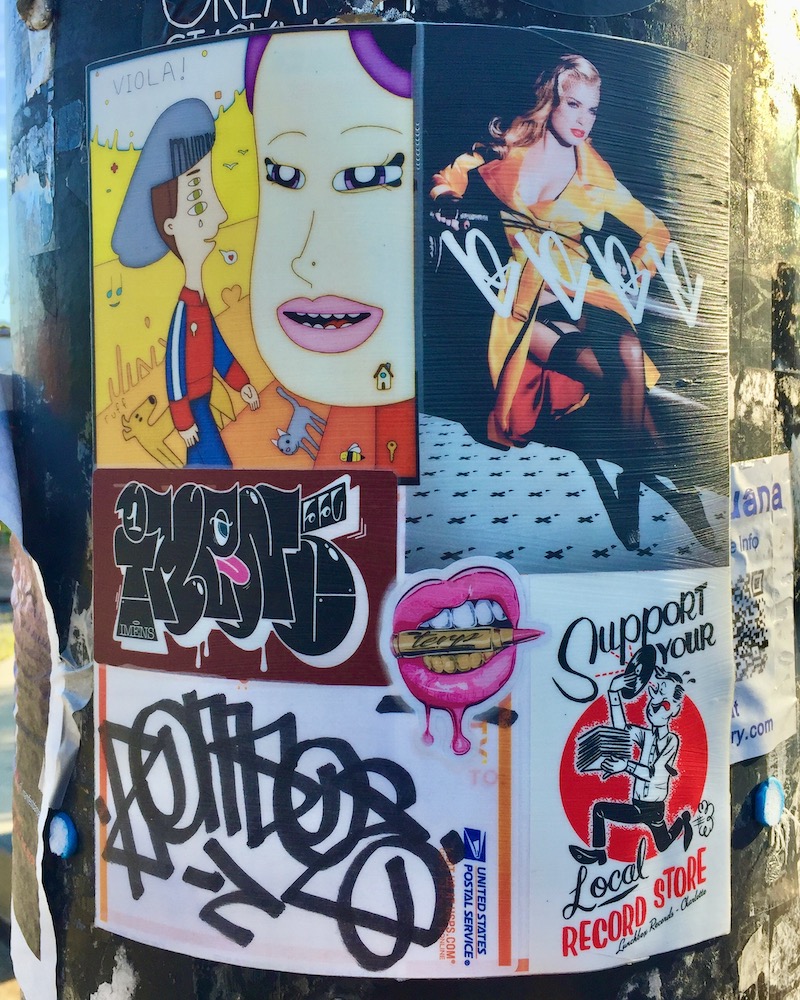
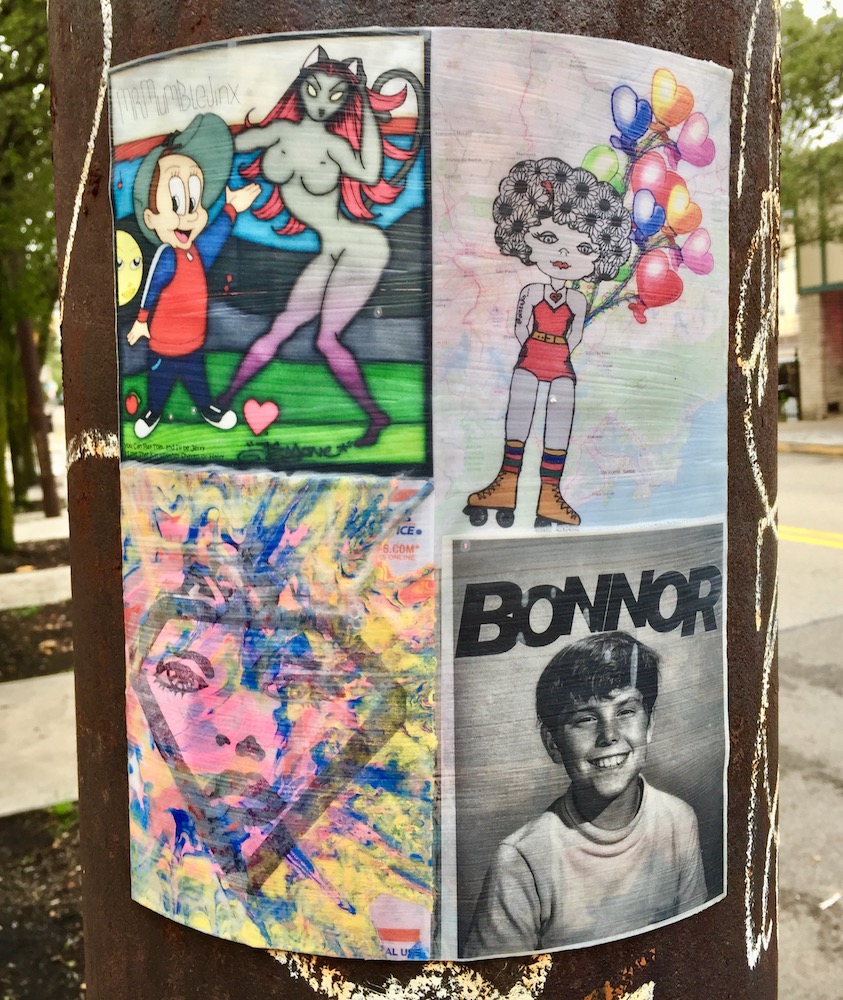
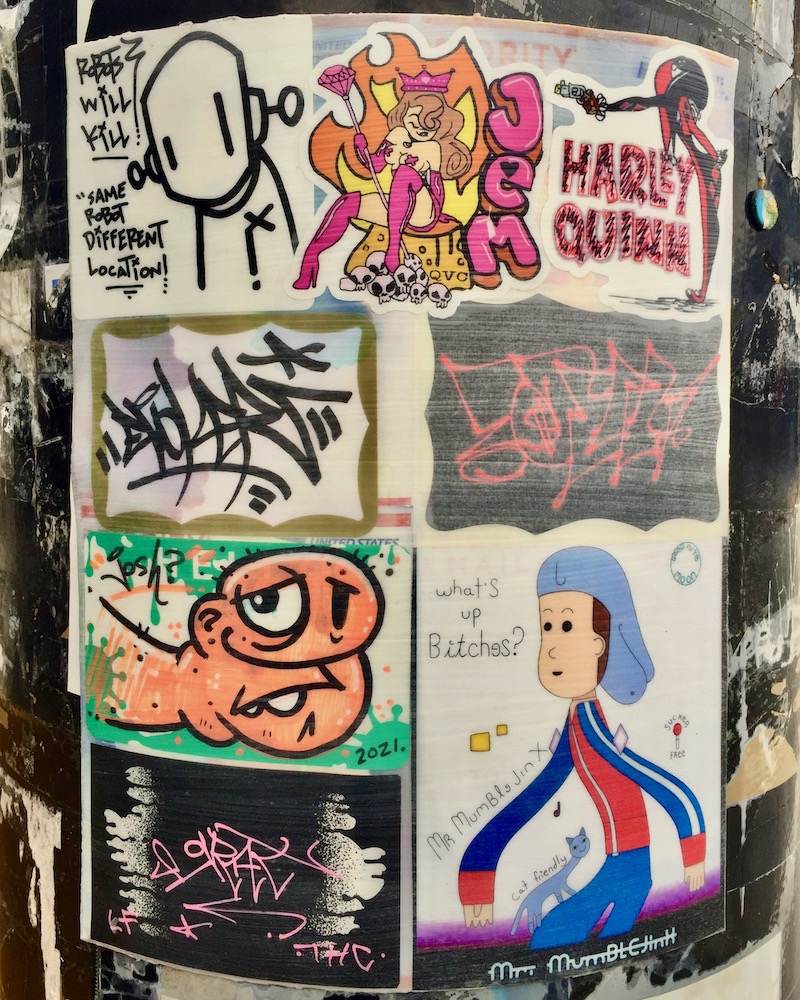
Regardless, our old collage buddy returned–and in such dramatic fashion! In a similar kind of overnight secret art drop, new pieces arrived en masse across Lawrenceville’s utility poles, free publication boxes, and at least one mailbox early this August.
Lawrenceville, 2021
Lawrenceville, 2021
It took your author about two seconds to recognize the tell-tale blocky hodge-podge of colorful visual jetsam, this time glued to a utility pole on Butler Street. Other pieces were spotted in quick order–mostly along Butler Street, but also up the hill on Penn.
Several very rainy weeks on, the pieces are still holding up, if sun-faded and with some edge peeling. The style of collage is exactly the same, but the delivery mechanism has shifted ever so slightly. Gone are the big cardboard backings and loose zip-ties. These pieces are smaller, maybe 11×14–sized to curl around roughly a quarter of the big steel traffic signal poles–and glued or wheat-pasted directly to bare metal.
Lawrenceville, 2021
Lawrenceville, 2021
To The Midnight Montagier, Thank you for distributing your collections in such an exciting, egg-hunting, head-scratching way. For keeping the spirit of the street alive and coloring the world. For making the morning constitutional a mental exercise as well as physical. If you’d ever like to tell your side of the story, we’d love to connect. Until then, we’ll be looking out for you, at Midnight.
Worlds collide! Sheet metal pole art skyline, Hill District
In the wild hillside that runs between Bigelow Blvd. and The Middle Hill, there is an oasis of street art (err … steps art? tree art?) clustered in the forgotten land around one particular set of city steps. There are sculptures and collages, weird art photos and paintings on wood. Our favorite tin can pole artist has a whole trove of terrific pieces here.
Maybe we’ll do a story on the whole thing at some point, but it was one particular piece, nailed to a utility pole, that caught the attention on this day. In it, the artist has taken a discarded piece of sheet metal and painted a rough but unmistakable black silhouette of the downtown Pittsburgh skyline. There are the spiky towers of PPG and the peaked triangles of The Gulf Tower and Koppers Building. The artwork is inscribed with the simple throwback message City of Champions.
Bright lights, big city. AlphaGraphics, Downtown
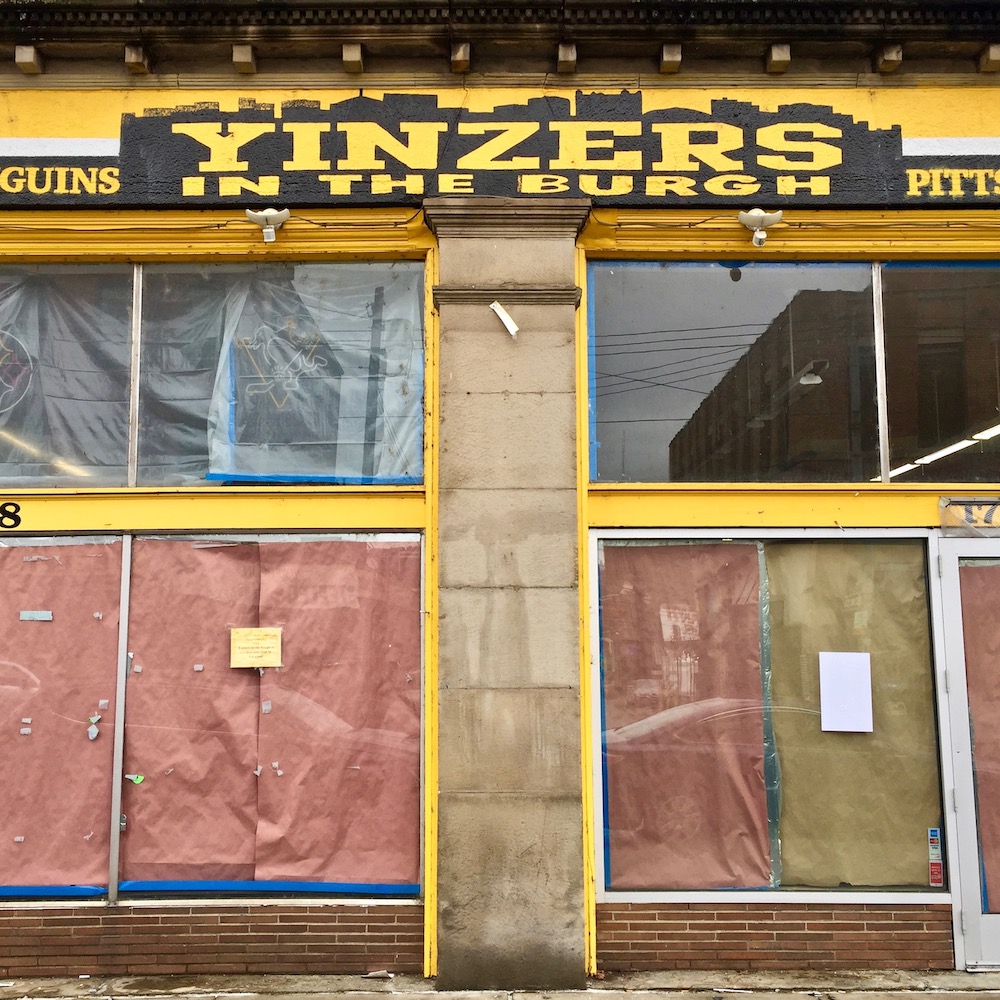
Mere minutes–OK, it was probably a couple hours–after posting our last trip down skyline way, there it was again. The artist who hand-painted the storefront for the old Yinzers in the Burgh didn’t have a lot of vertical room to work with, but made the most of what s/he did have. In city official black-and-gold–but squashed as if in the footpath on one of Godzilla’s benders–the downtown Pittsburgh skyline is still undeniable.
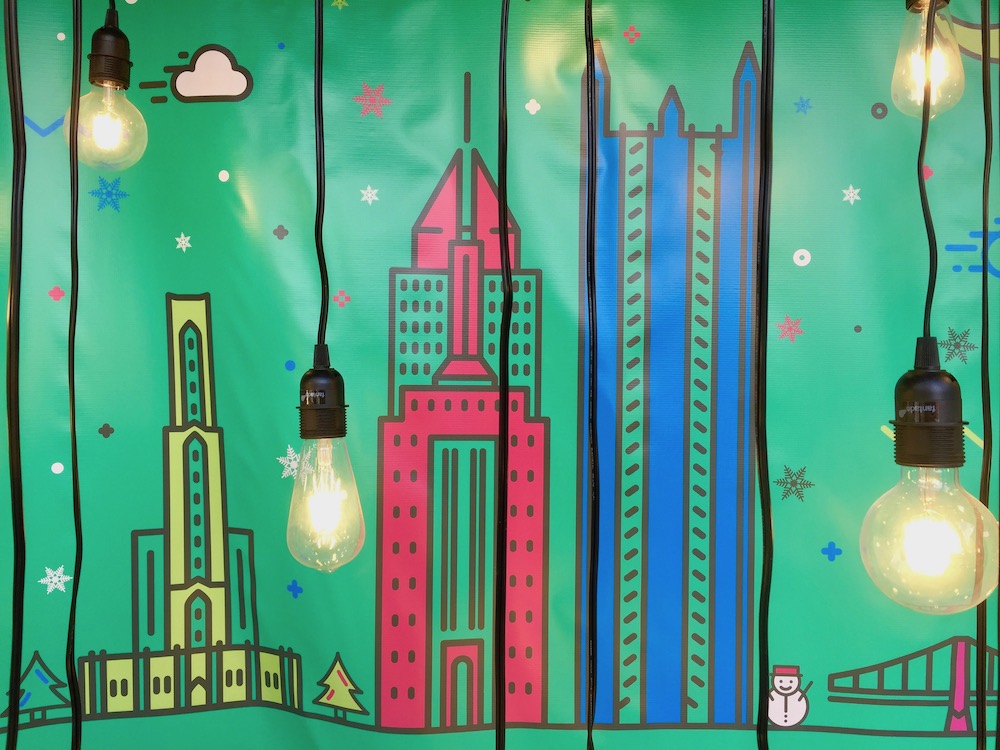
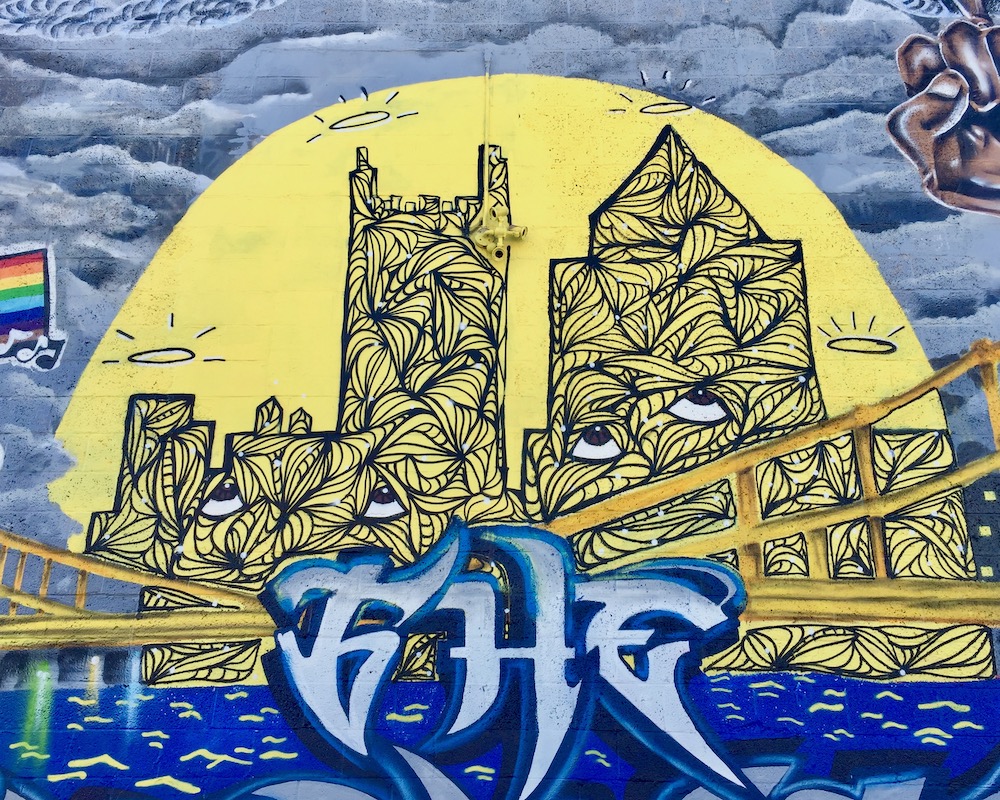
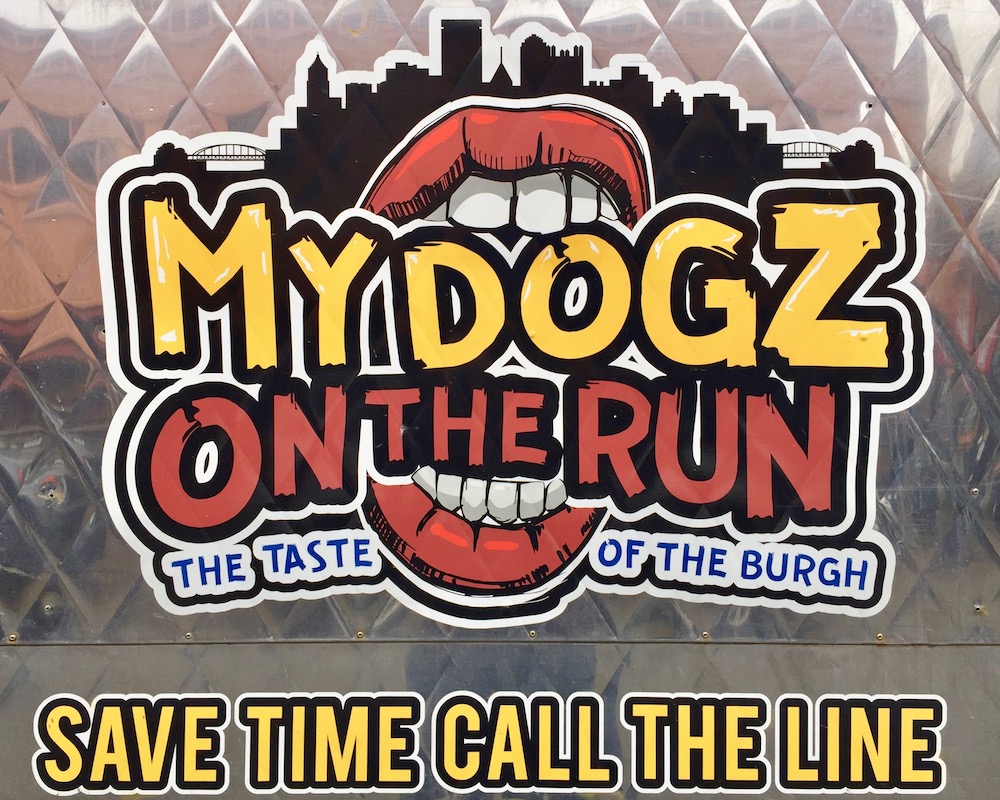
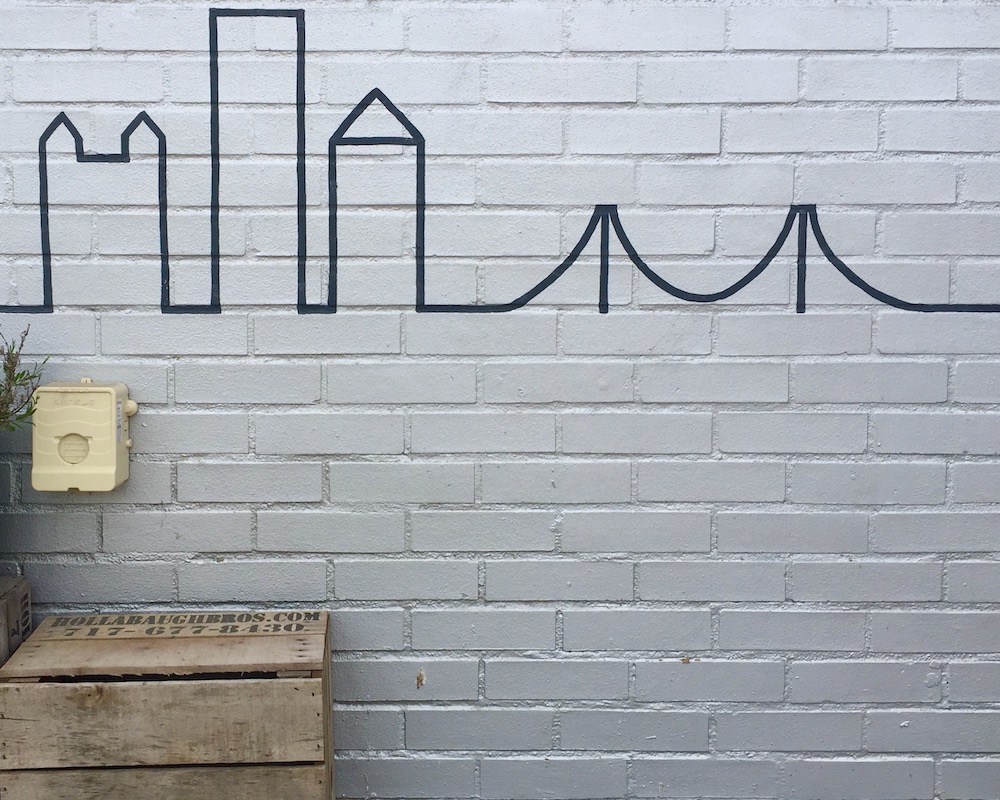
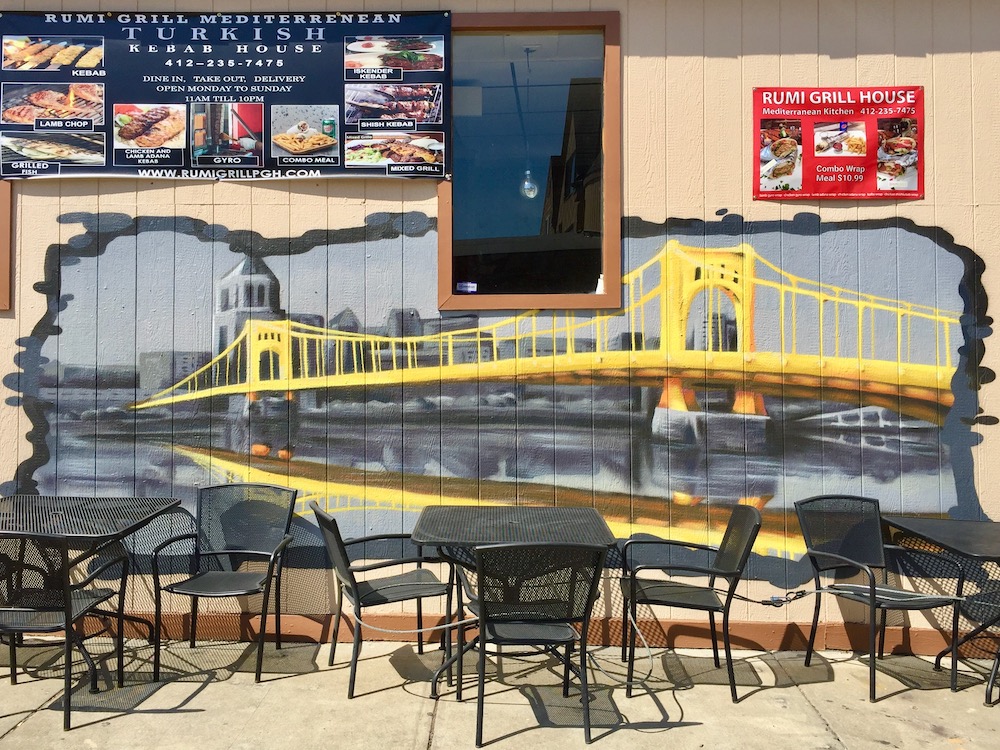
So, here you go, Pittsburgh: another couple dozen+ graphic renderings of the downtown skyline coming from storefronts and retail signage, community groups and folk art. Like that famous body part/Van Patten, eight of these collections should be more than enough, but this is a gift that just keeps on giving. I’m sure we’ll be back with #9 in the series soon enough.
Squashed city. Yinzers in the Burgh, Strip District
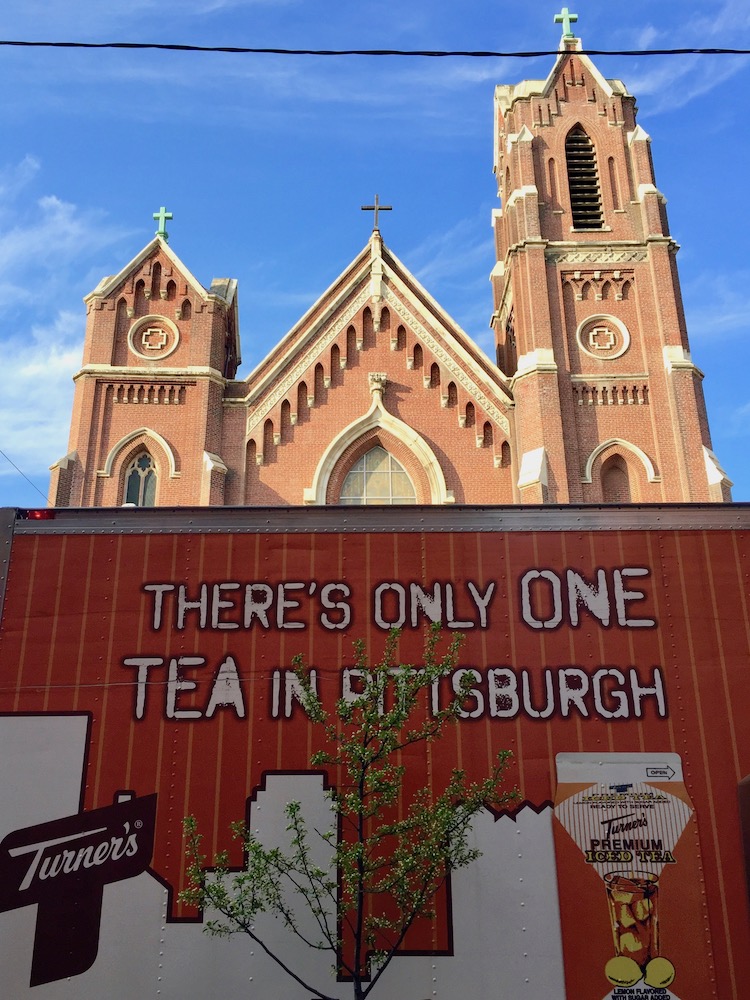
Debatable number of “T”s/teas city. Turner’s Iced Tea truck, Bloomfield
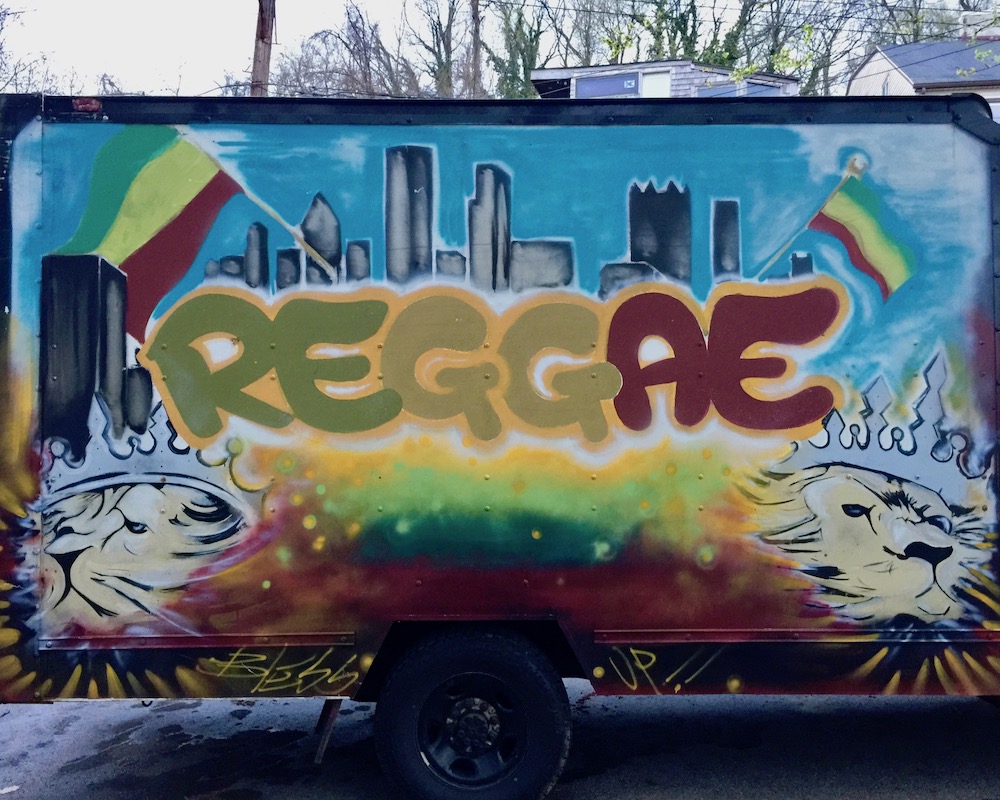
Iriesburgh. The Reggae supply truck, Hill District
The city has eyes. Spirit, Lawrenceville
Big mouth city. My Dogz on the Run food truck
Red, black, and green city. PURR: Pittsburgh Union of Regional Renters logo (electronic)
Birds and bee city. LaScola’s Italian Ice and Custard, Highland Park
Simple city. Rolling Pepperoni, Lawrenceville
Bridge city. Rumi Grill, North Oakland
Condiment city. Ketchup City Creative, Sharpsburg
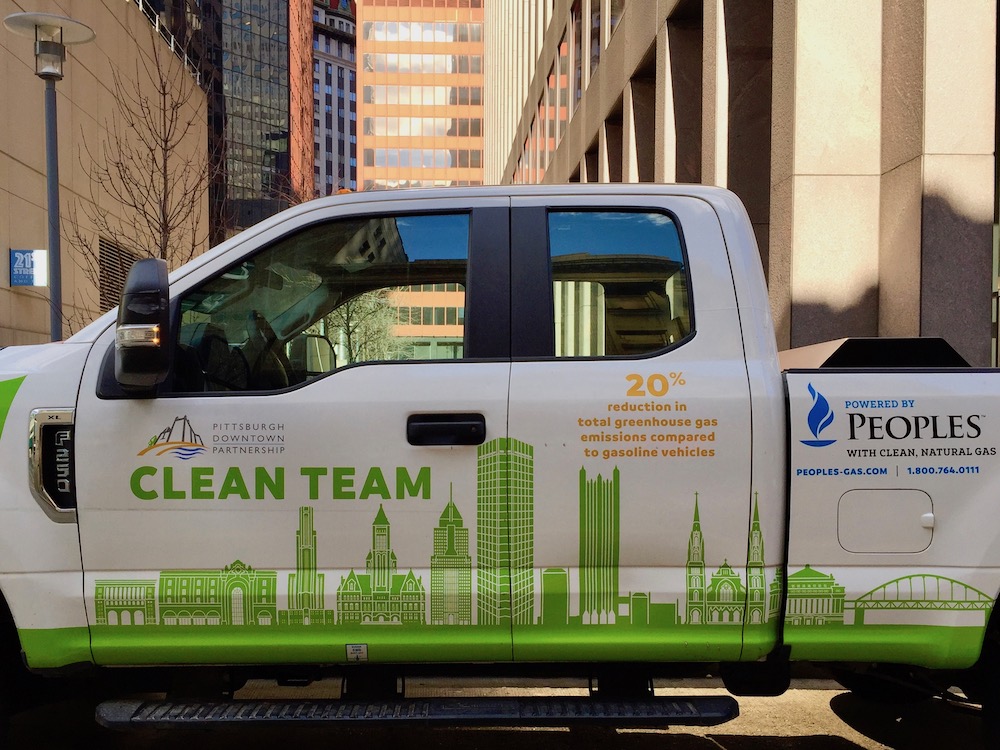
Clean city. Pittsburgh Downtown Partnership Clean Team
River city. Rivertowne Brewing truck
Sunrise city I. Pittsburgh Window Film
Sunrise city II. Aishel Real Estate
Jagged city. Pittsburgh Kids Foundation, Downtown
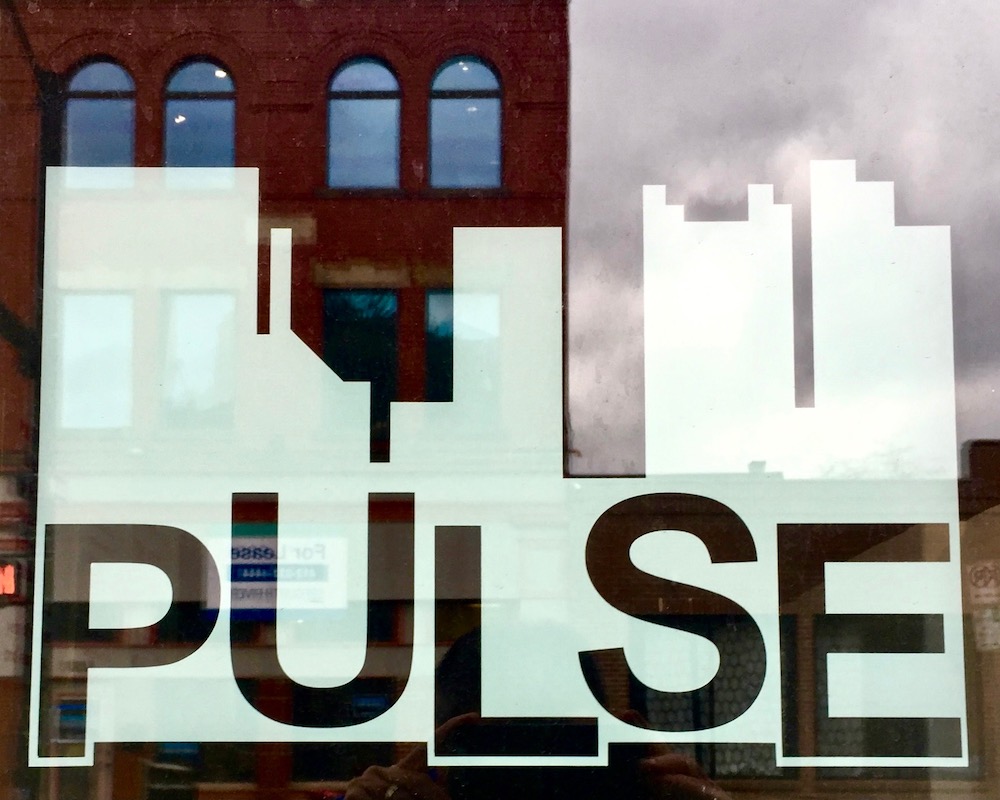
8-bit city. Pulse, Garfield
Outline city. City Collision, Strip District
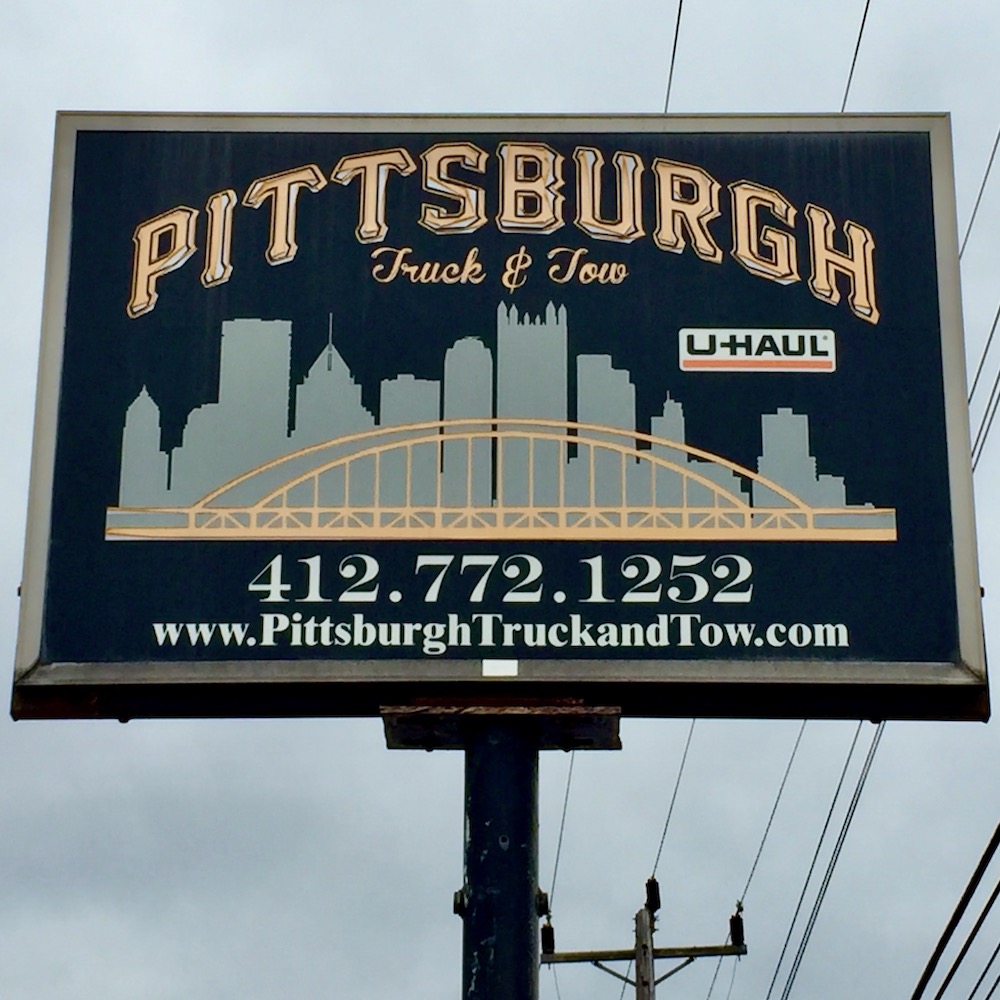
Tow city. Pittsburgh Truck & Tow, Sharpsburg
Gray city. Pittsburgh Property Remodelers car wrap, Stanton Heights
Shades of a blue city. Peduto for mayor yard sign [Note: not a posthumous endorsement, just reporting here]
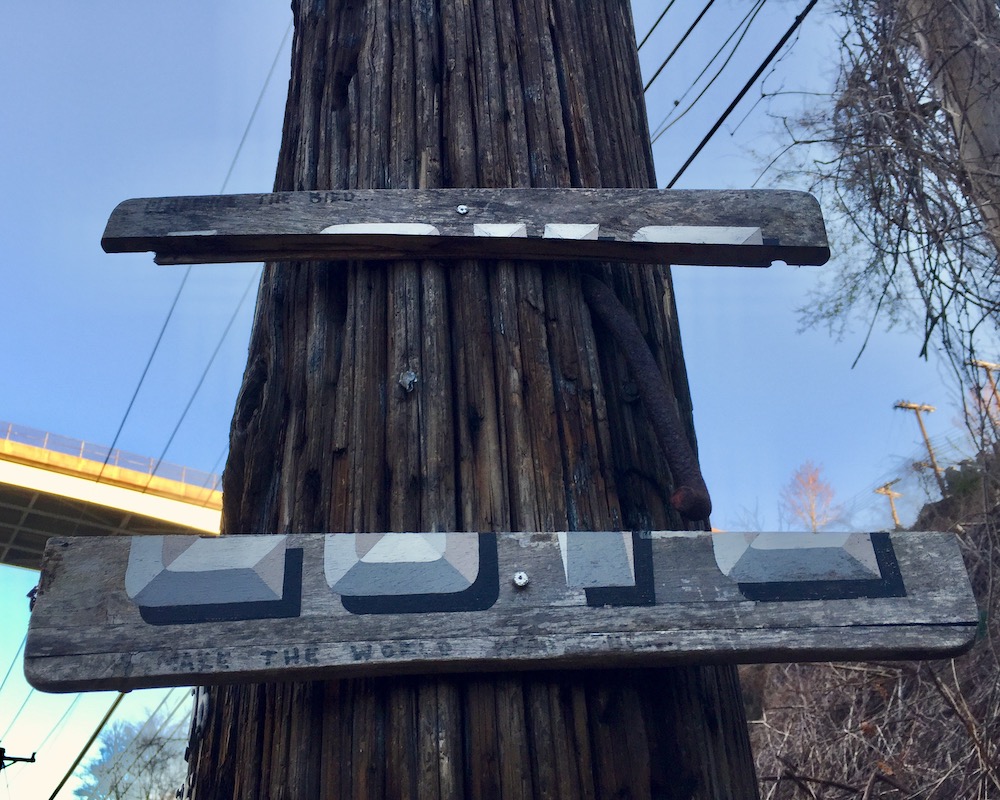
“I’ll tell you what magic is … Love” / “The Hollow.” Unofficial tin can pole art welcome signage for the Skunk Hollow Art Walk.
There is a melancholy to the exhibition: themes of darkness, loneliness, one very literal cry for help. Among the images, you’ll find birds soaring in flight and stretched-out cats, abstractions and twinkling stars–but these are the exception.
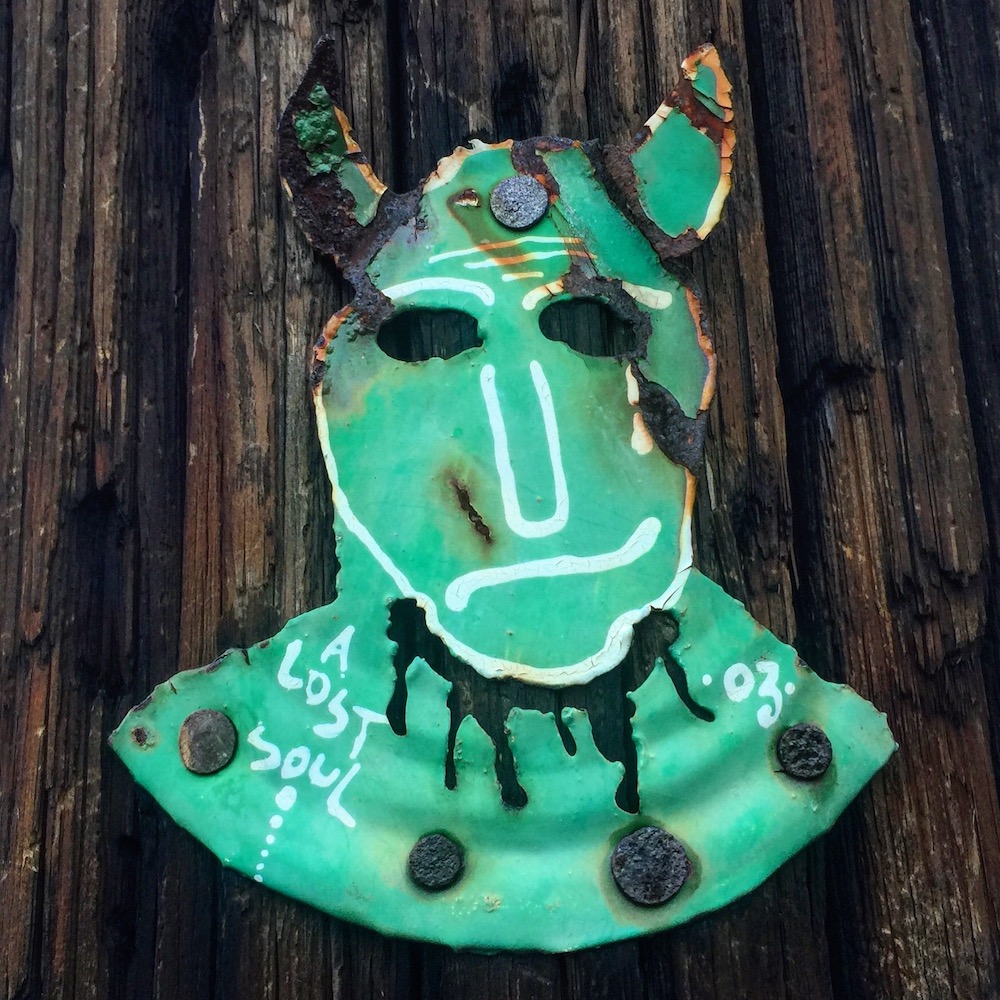
If Orbit staff were laying out a catalog for the collection, our cover would feature the image of a single small piece installed on a utility pole. In it, a figure has been cut from a tin can lid and painted a rich spring green. The devil’s horns are bent and rusted and his eyes are cut out to make us believe we can stare right through the back of his cranium. In hand-lettered paint marker is a simple descriptor alluding to exactly that: A Lost Soul.
A lost soul.
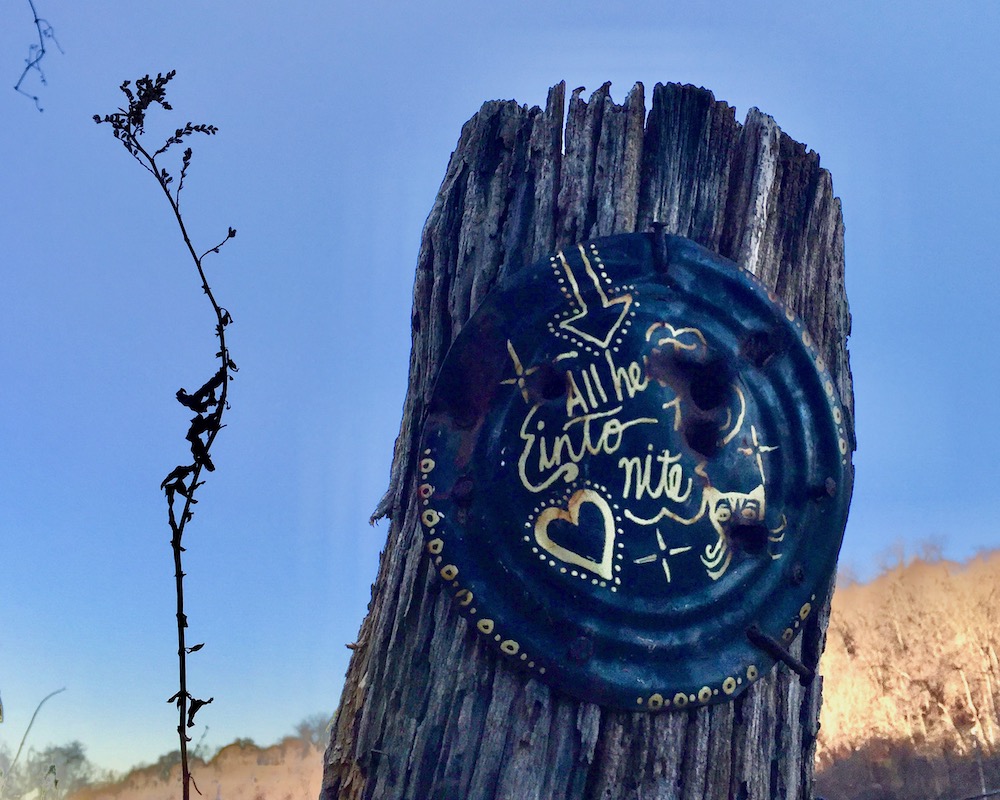
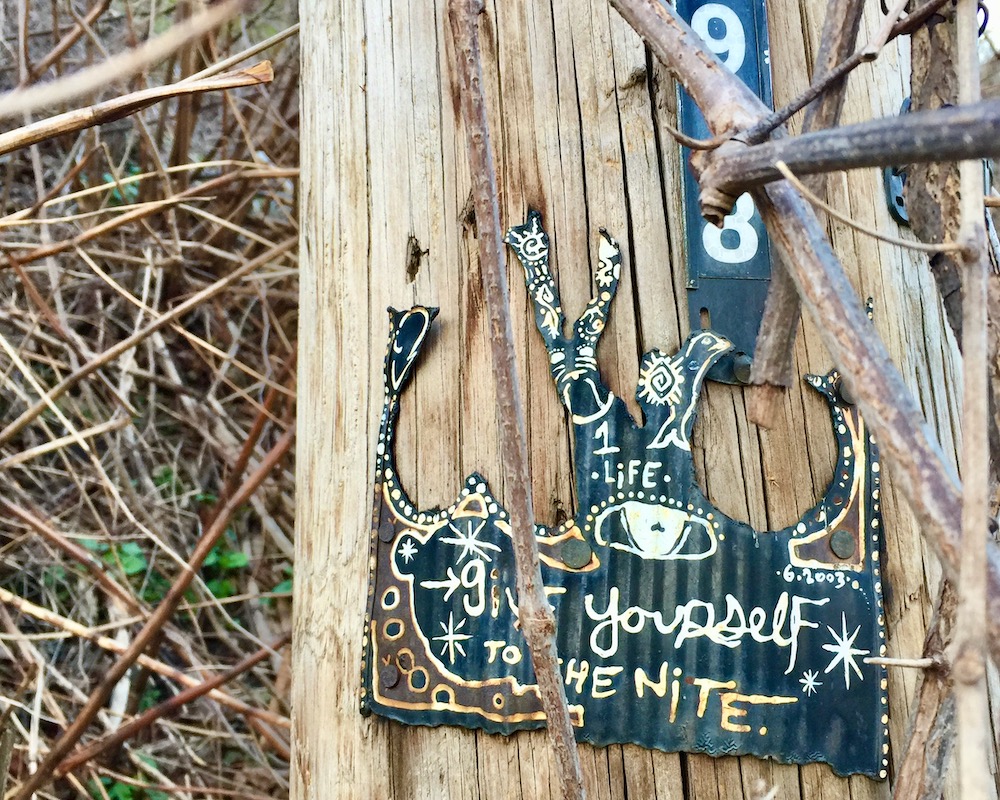
Elsewhere, there are instructions to Give yourself to the nite (sic.), a pair of unoccupied dinette seats, our favorite tin can pole artist’s tell-tale devils, martini glasses, hearts, and arrows. The artwork is made from recycled metal bits and bobs, a discarded cutting board, even the door from a standard-issue mailbox.
It is artwork from the trash bin, placed deeply out-of-sight–as if thrown into the void–and likely only ever experienced by fellow lost souls who hear the cryptic pieces whispering from cracks in the wood … or maybe that’s just the way it seems.
“Help me.” Ex-mailbox pole art.
“All here (?) into the night.”
Skunk Hollow, the deep valley that separates Bloomfield from Polish Hill and North Oakland, won’t appear on any regional cultural guides; you’ll not find it featured in glossy magazines or listed among Pittsburgh’s next hottest neighborhoods. In fact, “The Hollow” doesn’t even show up on maps of the city (at least, not by that name). Its derisive title is merely a people’s collective dismissal of the out-of-sight/out-of-mind not-quite-a-real-neighborhood.
There are some good reasons for all this. Skunk Hollow hosts one of the more convenient spots in the city to illegally dump a La-Z-Boy recliner or an old television–plenty of people have chosen to do just that. The handful of businesses located along Neville Street are not what you’d call boutiques–they’re more of the rock-moving, general contracting, and looking-for-new-occupants varieties. Japanese knotweed has completely consumed the steep hillside and makes an effective trap for all of the blown-around street trash as it washes over Bloomfield’s banks.
“And that nite, we raided the devils. Private stash needless to say.” / “We had a good ole time.”
Pole art in the round
So if the Convention and Visitors Bureau wants to pitch Skunk Hollow as a special place for out-of-towners to explore on their limited time in the ‘Burgh, they’ve got their work cut out for them.
But for those of us waking up ridiculously early, obsessively walking many mental health miles at daybreak, the Hollow is a welcome open air experimental art detour. Its randomly-curated works speak to the solitude of the early hour and themes of escaping into the night, tiny devils playing hell with our synapses, and you are not alone messaging make for a kind of communal balm for the disconnected.
“Life is good right now … thanks, Mom.”
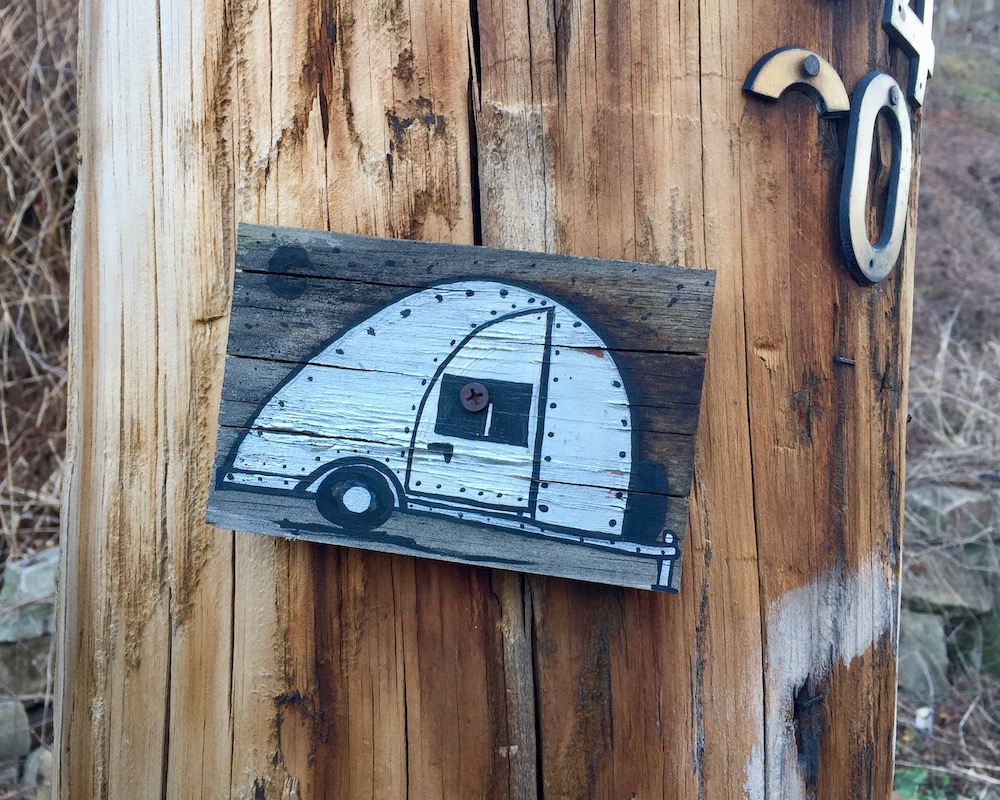
Camper trailer painting
The Skunk Hollow Art Walk is not what you’d call accessible. There is one big hill, one Y-shaped flight of city steps (we’ll get to those), and a road surface with no accommodation for pedestrians. Worry not, though, it’s unlikely you’ll see any other human beings–with or without vehicles–during the length of your visit. Walking in the street tends to work out just fine when you’re the only one there.
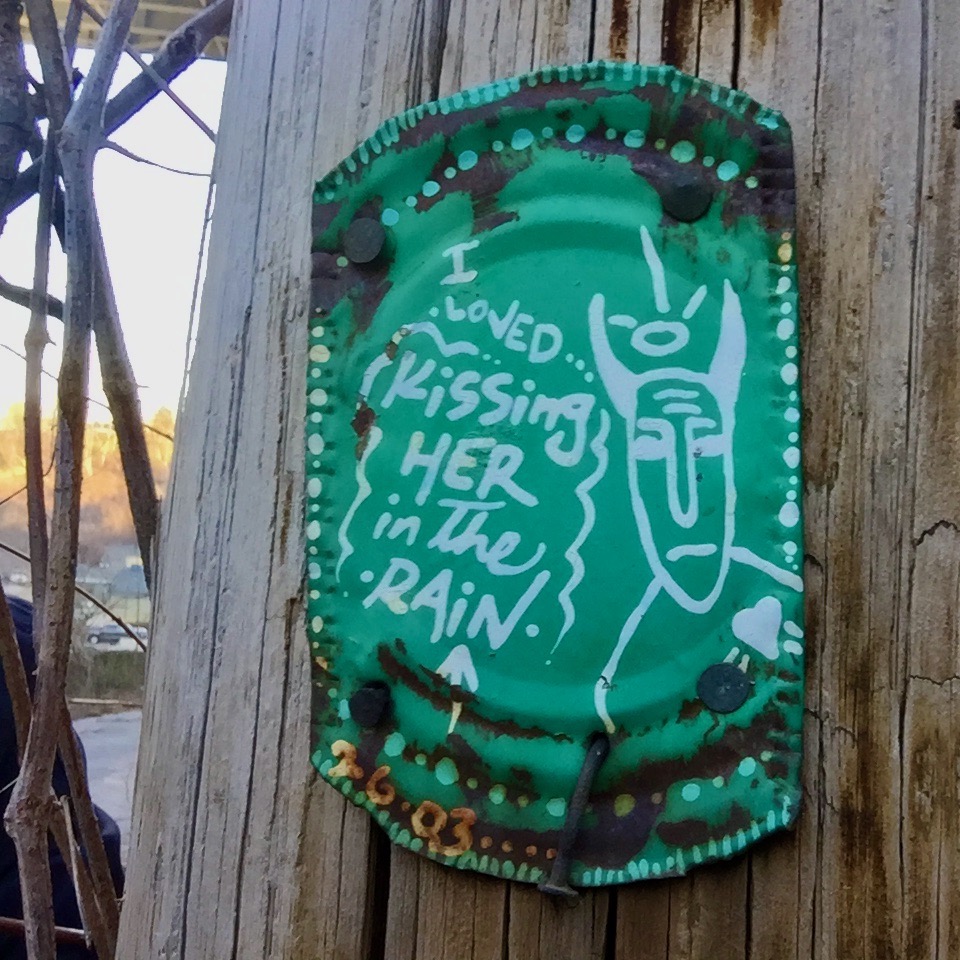
Viewing the environment on foot is an absolute requirement as all the little objets d’art are scaled for up-close examination and located in the kinds of niche spaces one must poke around thoroughly to see at all. One of the photos here (I loved kissing her in the rain, below) was achieved only by climbing up the hillside, bearhugging a utility pole with one arm, and then using the dumb selfie camera so I could get a photo of a tin can painting that I couldn’t actually see from my precarious position.
“I loved kissing her in the rain.”
“Give yourself to the nite.”
For the directionally-challenged, don’t worry about getting lost in Skunk Hollow. There is only one road that traverses the short distance between Bloomfield’s backside and the old Iron City brewery. In typical Pittsburgh fashion, it goes by three different names–Lorigan, Neville, and Sassafras–in its approx. 3/4 mile run.
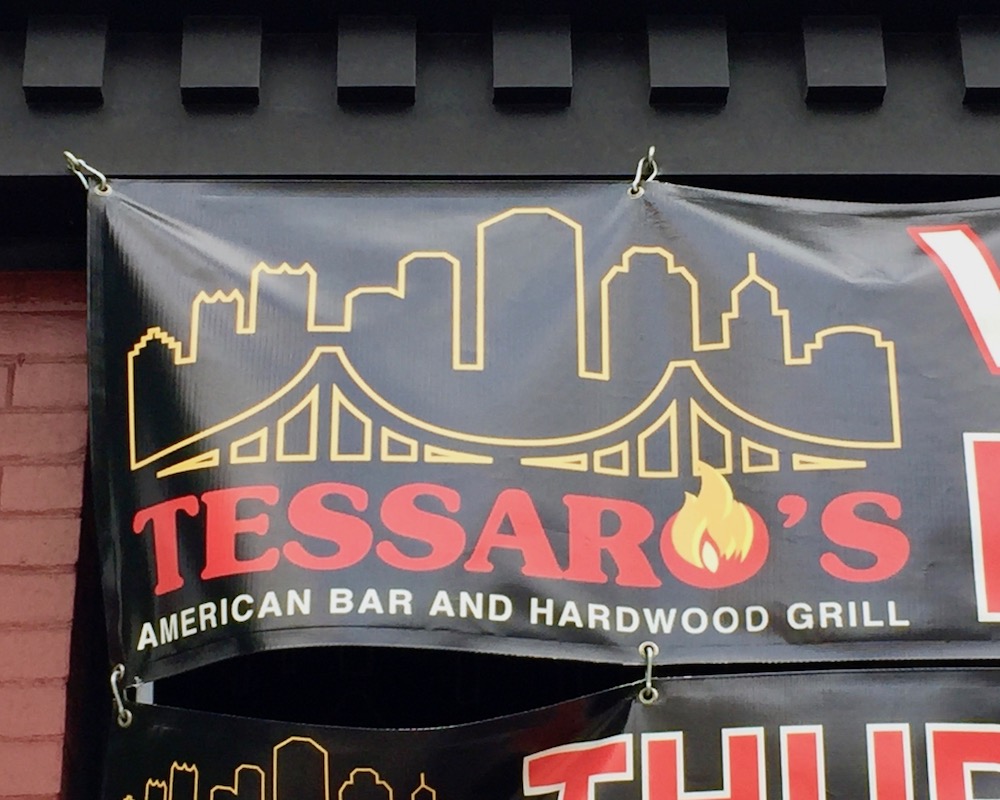
Most of the art is found along sloping Lorigan Street, from the Ella Street steps down to the bottom of the hill, so a greatest hits visitor could drop in for some tin can pole art and still make it to Tessaro’s for an early dinner. But really, why not go “full Hollow” and walk the length of it. It’s a little more spartan at the bottom, but by the end you’ll be rewarded with some great wheatpaste pieces on the old brewery.
Ella Street (aka the “Try Try Try”) city steps
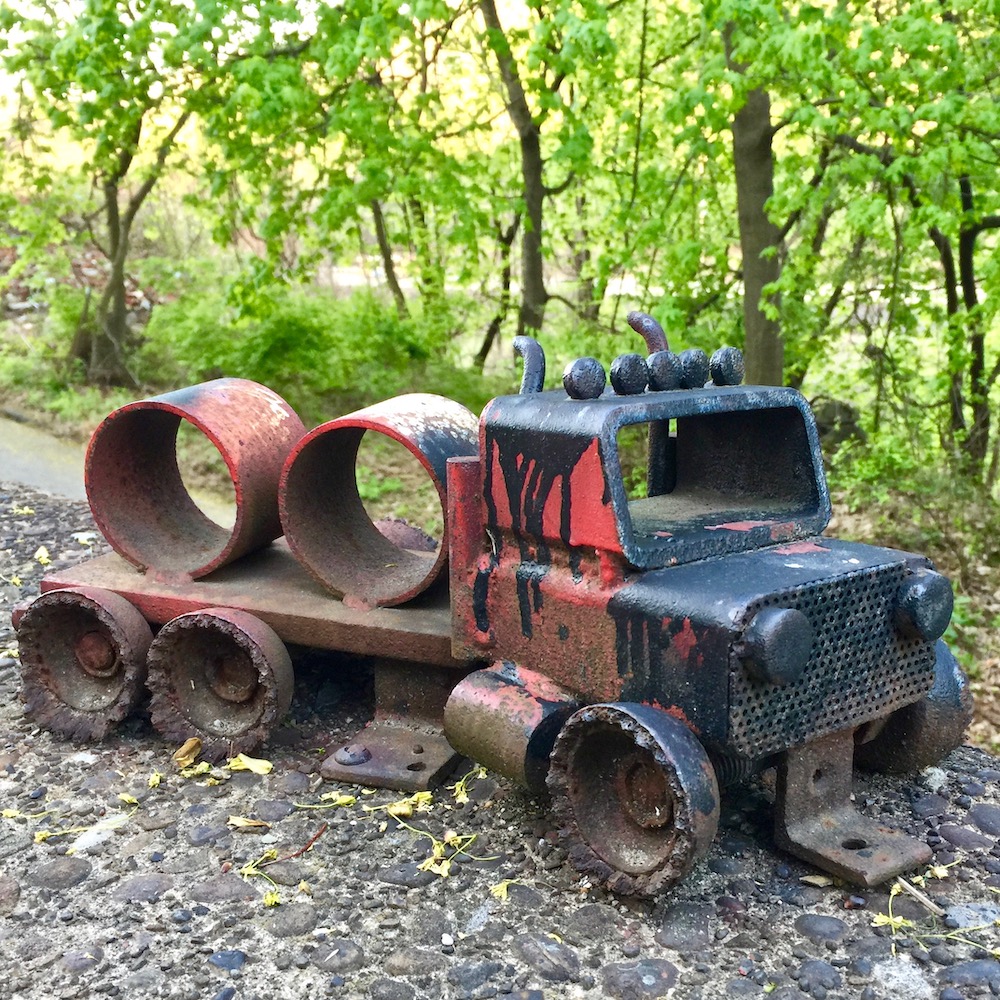
The “Try Try Try” steps metal truck
The last time The Orbit reported from Skunk Hollow we were on the step beat, there to check out the great Ella Street (aka the “Try Try Try”) city steps. We’ll not go over all that here, but this bit of you can do it self-affirmation infrastructure is totally of a piece with the collection of street art that surrounds it.
What’s been added to the steps (since that 2015 story) is its own terrific set of oddball ephemera. The bolted-on scrap parts truck (photo above) is thankfully still there, right at the lowest landing. It’s been joined by a tiny sculpture of simple chairs, placards, handrail ramblings, one repurposed wooden puppet-like thing, and a mystery mailbox.
Tiny furniture, big steps
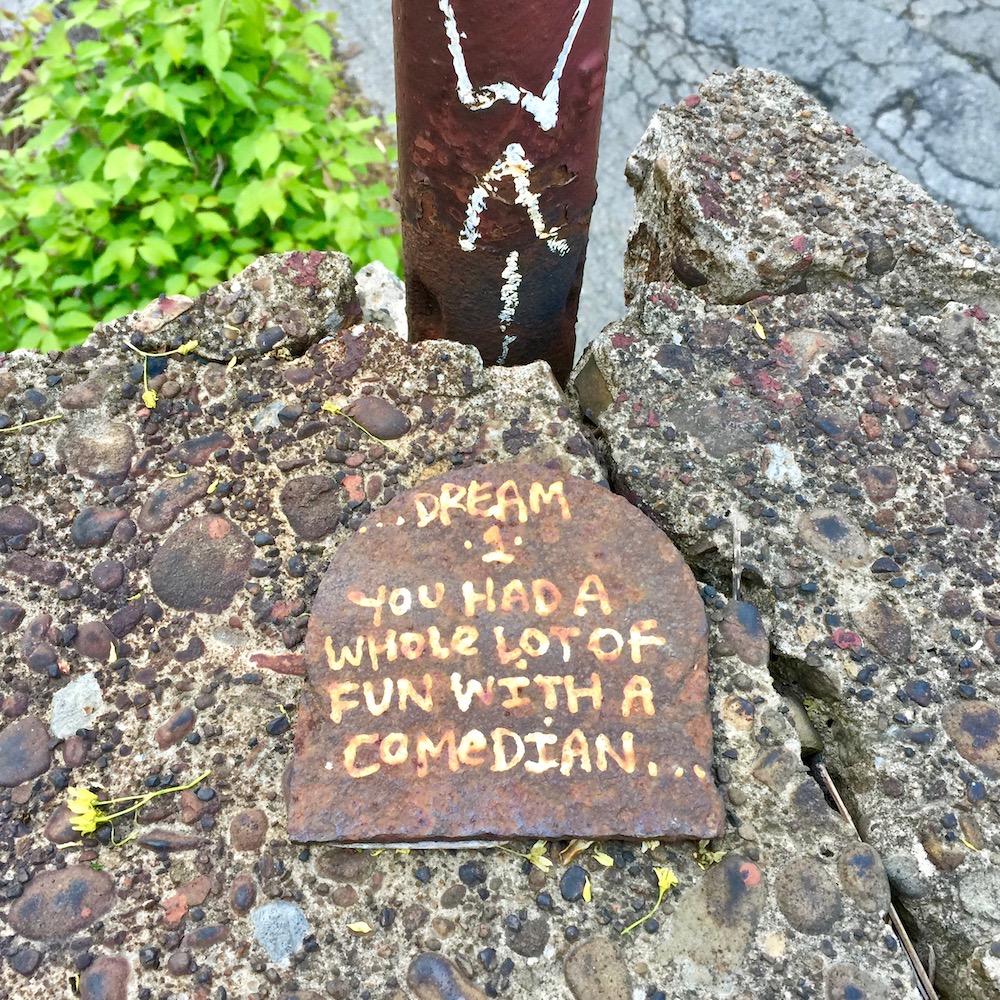
“Dream 1: You had a whole lot of fun with a comedian …” Steps koan
Art on the “Try Try Try” steps
A fancy art museum, this ain’t–but then again, no one visiting The Carnegie gets to experience the thrill of risking both poison ivy and tetanus in their bloodthirsty pursuit of new tin can pole art. As combined art happening/aerobic workout, Skunk Hollow is hard to beat. Plus, the hours are great and the price is right.
Yes, attendees of the Skunk Hollow Art Walk will have to negotiate some broken glass and a few salty words committed in spray paint on the jersey barriers along the roadside–oh, there’s also that mystery odor. But, like poking through a thrift shop or digging through used records, a visit rewards the patience of the art lover willing to do a little work for a commensurate dose of oddball magic.
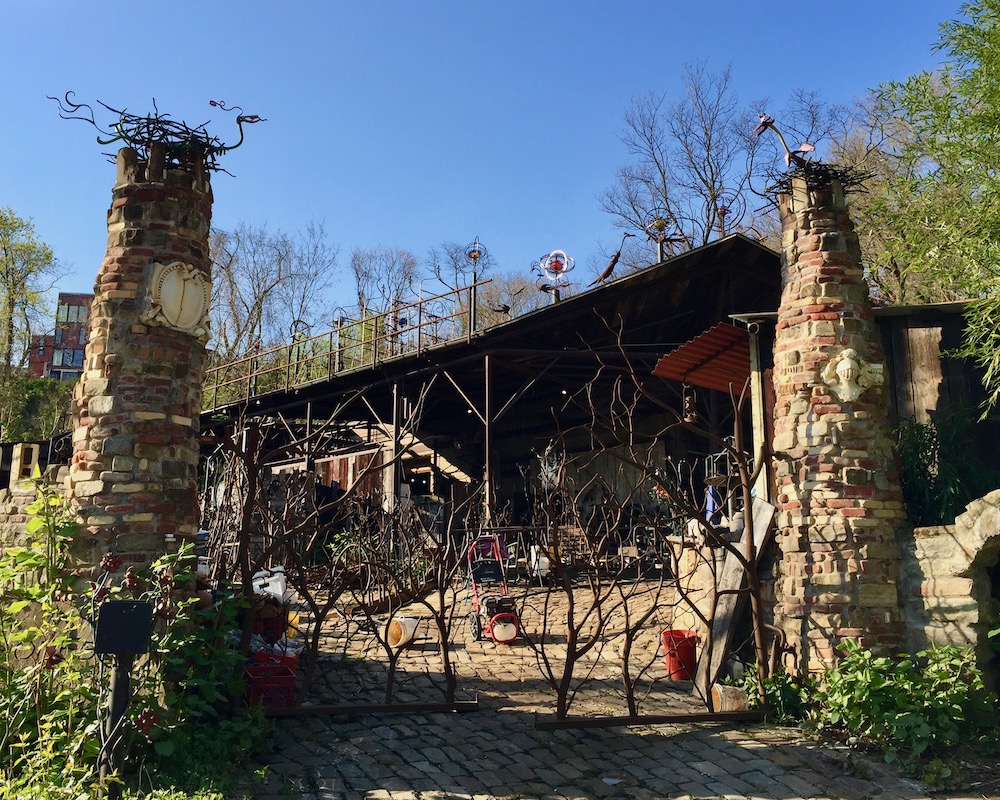
The Seussian gates of Iron Eden, Lorigan Street
Ouch! There is no middle ground in love. Vestigial cutting board art.
Yes, there are Pittsburgh protractors in The Hollow
If JYK could make Skunk Hollow a part of his American tour, you can walk down the hill from Bloomfield.
One of humankind’s most glorious examples of wall quarters. Inside-outside wall, Wellsville, O.
The giant wall holds a lot of history–and likely not a few secrets. Two tall stories high and spanning the full depth of the lot–from the sidewalk on Wellsville’s Main Street all the way back to the service alley–this space did a lot of living. Demolition on the building that used to be here exposed a (former) interior wall that is an archeological treasure our shallow American memory will have to substitute for “real” finds like Sutton Hoo or Tutankhamun’s tomb.
The plaster walls still cling to a rich palette of battered colors. Each room had been painted in an entirely different scheme and what remains are beautiful antique reds, pale yellow-greens, and deep melancholy blues. There are channels on the surface where we see clear outlines of the old building’s load-bearing interior walls, a staircase, plumbing lines, slotted holes in the brickwork for tall floor joists.
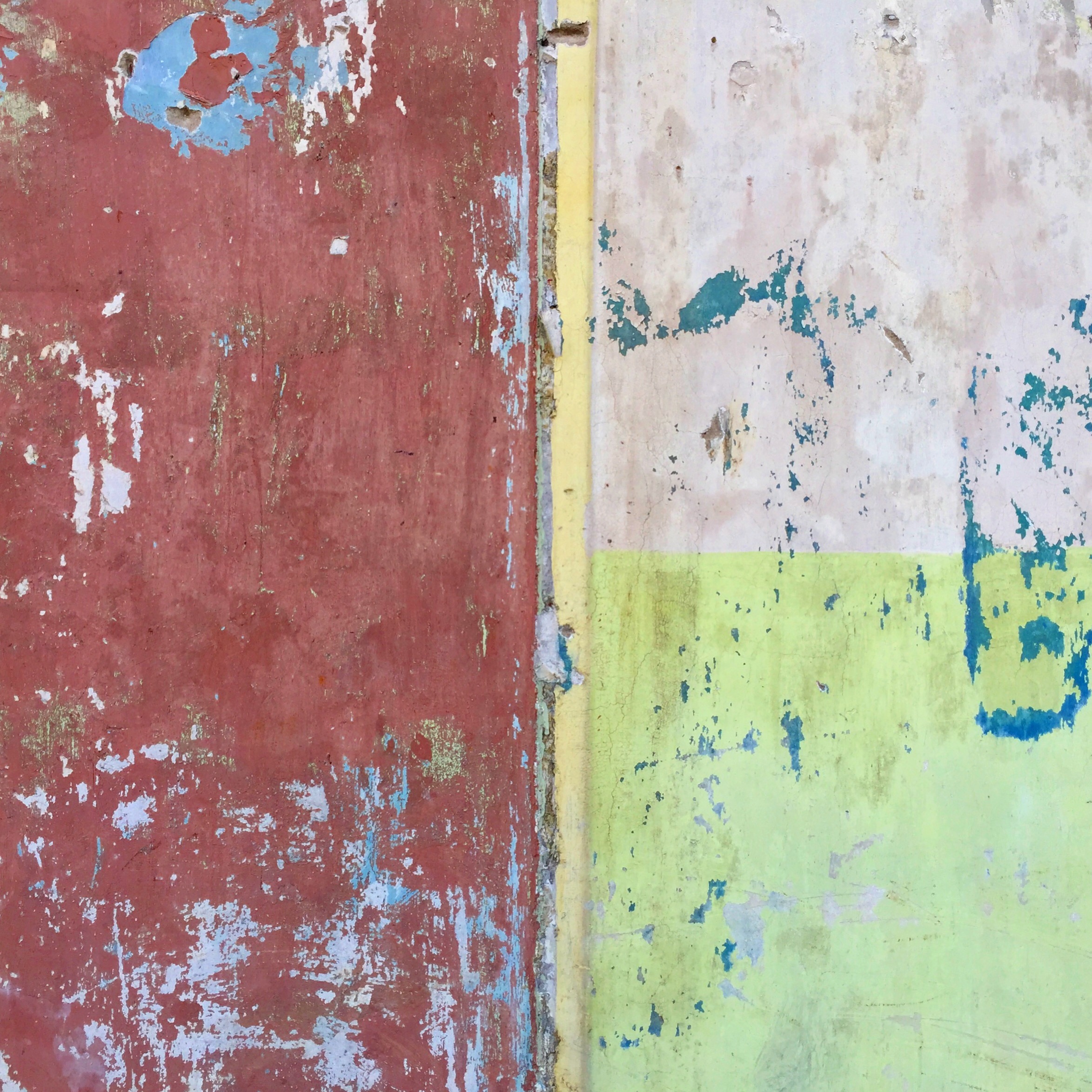
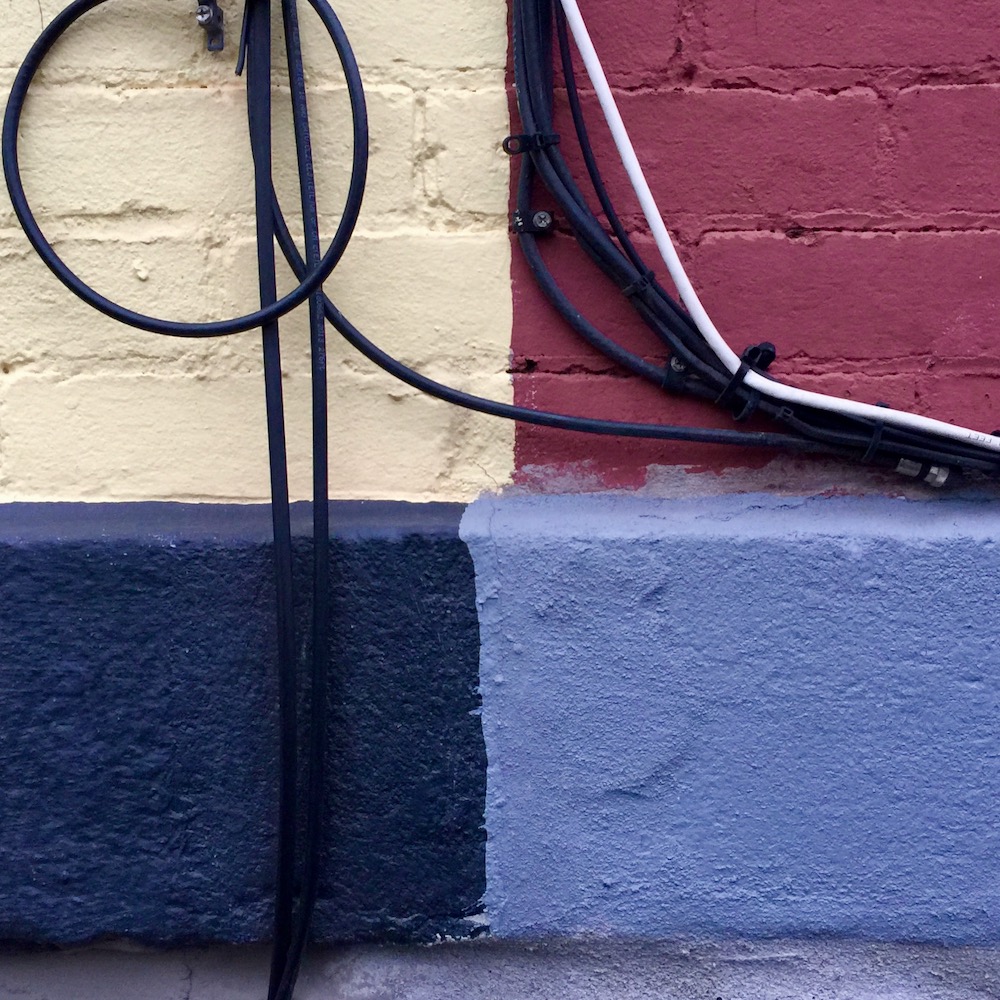
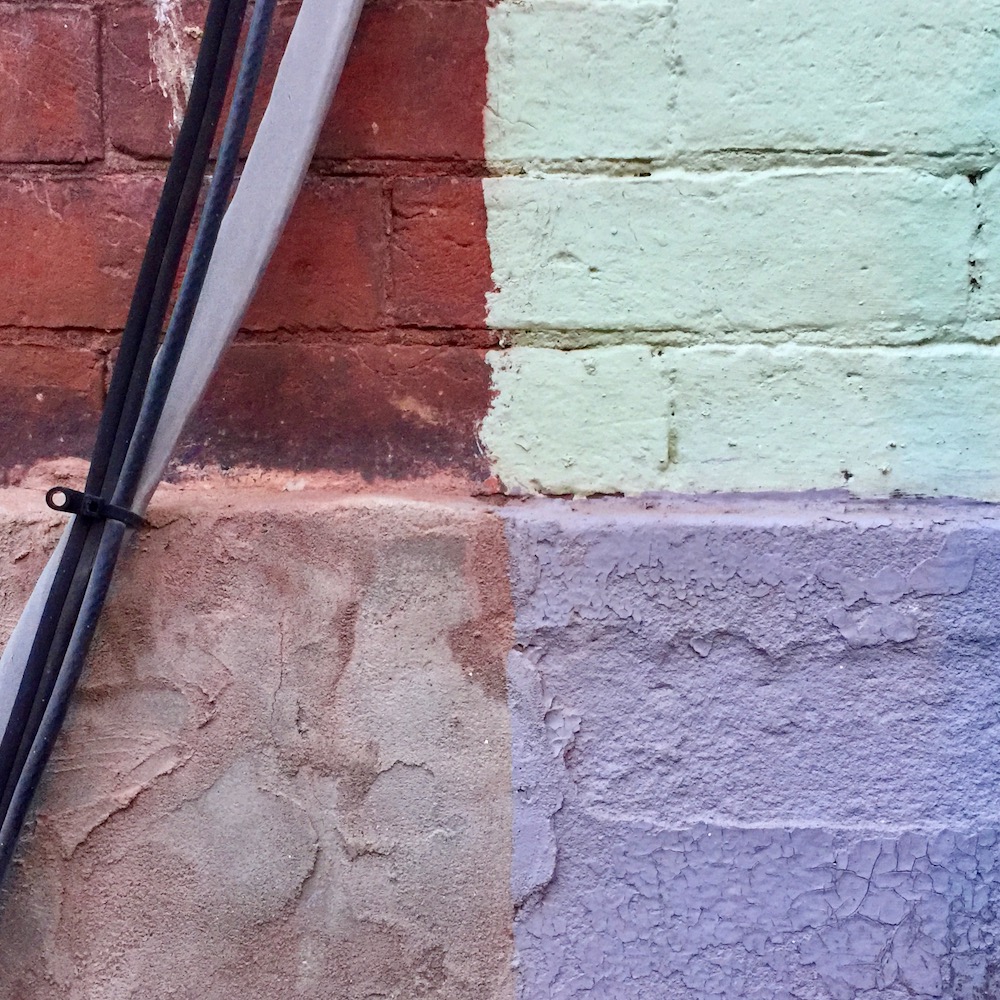
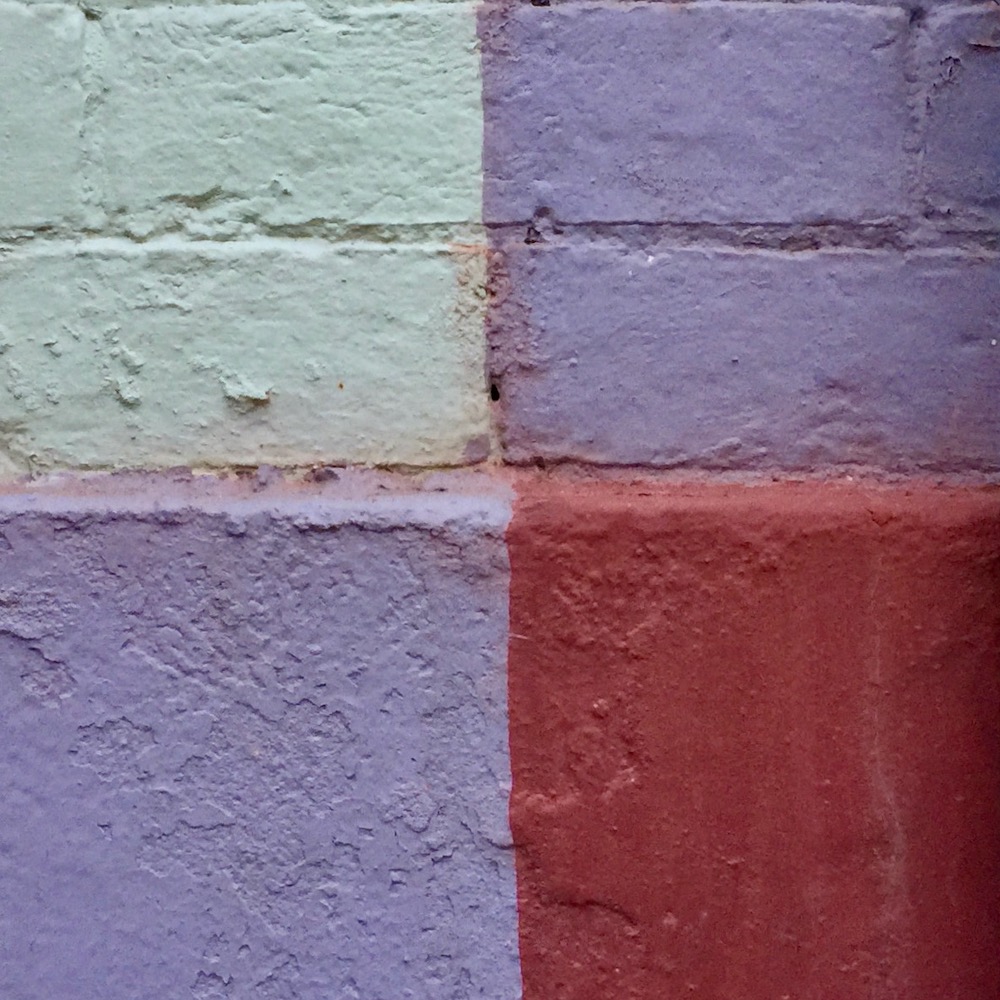
With all this, it is one particular section of the wall surface that intrigues more than the rest. In it, we see the intersection of three colors, each scarred, smeared, and pockmarked with age but still brimming with verve. A strong yellow line runs due north-south and gives the whole thing the composition of a modernist painting. Everything exists in perfect right angles.
The wall that started it all. Forest Hills
The obsession with wall quarters began way back in 2015 with a reporting trip to Forest Hills. We were there to commune with the ex-atom smasher and later found ourselves by another, similar, inside-outside lot. Amongst the rubble of felled bricks and illegally-dumped housewares were four squares within a larger square: the right side faded green-blue, the left a dirty white; plaster above, cinderblock below. The section lines could not have been more precise.
It was perfect: balanced and meditative, color, material, and texture arrayed in transcendent harmony. It’s the kind of lightening bolt that may only land once in a generation–heck, once in a lifetime if you’re lucky.
Strip District
But, wall-watching naifs that we were back then, the hard truth wasn’t fully understood. It seemed obvious that we’d run into more big, glorious, quad-sectioned walls just as soon as the mind was opened to them. Why, once you set the controls for Marys or Steelermobiles or The Dog Police you see them everywhere–wall quarters must be just as easy … right?
Bloomfield
Well, you know where this is going. No, it is not easy to locate a perfect wall square–and this poke-down-every-alley and look-inside-any-abandoned-property keister is here as a material witness. Six years later–six years of looking for these things!–and we’ve come up with merely a handful of specimens. A lot of them aren’t even that good!
But if you take the collection we did manage to cobble together and throw in a (good-sized) set of bonus/pseudo-wall squares, we end up with a pretty nice haul. Hopefully they’re as pleasing to Orbit readers’ eyes as they are for staff to deep focus on when we’re destressing in Chez Orbit’s salt cave. Breathe in, breathe out, close our eyes and say it until we believe it: everything is going to be all right.
South Side
Millvale
Bloomfield
Row House Rejoinders
I’m not going to lie, The Over-the-Wall Club has some purists who frown on the relatively easy wall quarter pickins found in row house blocks. While it took us half a decade of constant scouring to come up with just the few “real” quarters (above), any Sunday stroll through the South Side Flats or the Mexican War Streets will reward with a bounty of these interfaces between next-door row houses.
With brickwork and foundations in a continuous plane, it just takes neighboring homeowners with different color preferences and a little bit of luck (steps, stoops, porches, and downspouts all get in the way; sloping hillsides break a lot of linear connections) to get really nice, perfectly squared-off intersections.
Lawrenceville
Lawrenceville
Lawrenceville
Lawrenceville
Lawrenceville
Lawrenceville
Lawrenceville
Lawrenceville
Lawrenceville
Lawrenceville
Lawrenceville
Lawrenceville
No Room for Squares
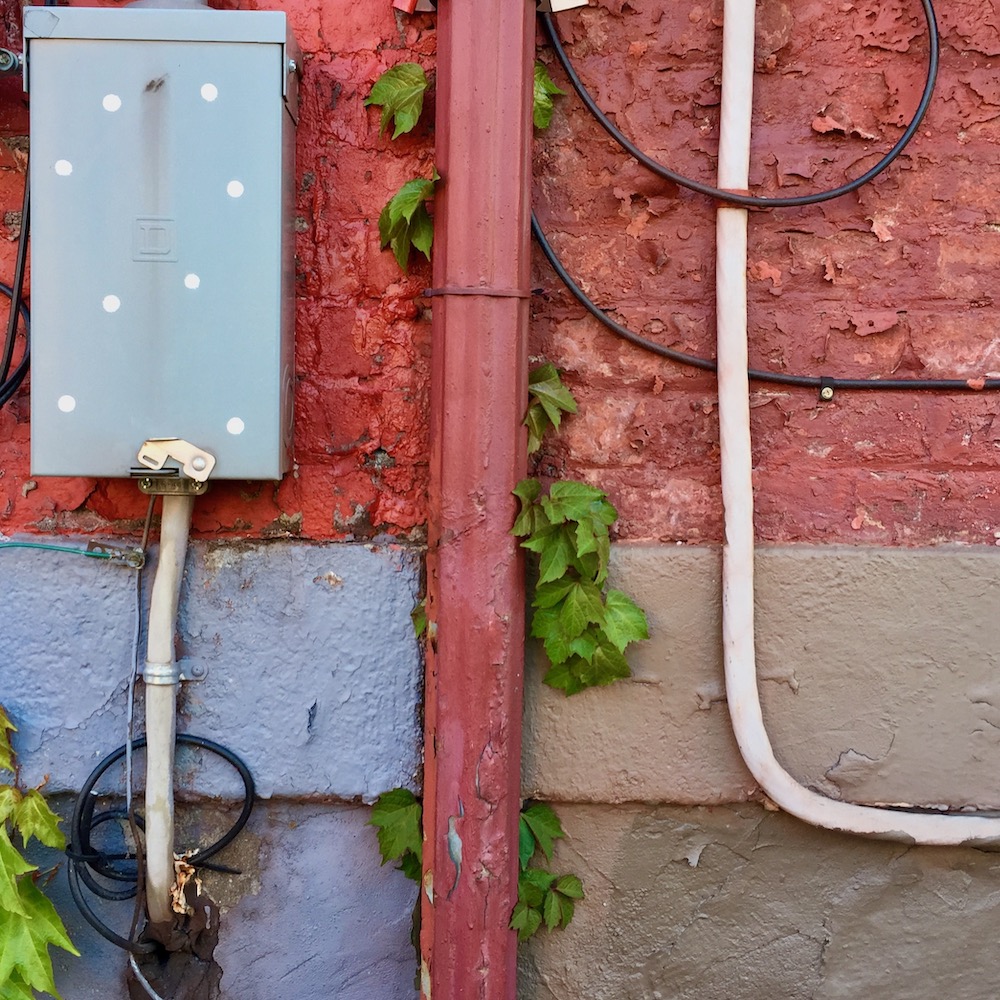
As with life, things on a wall don’t always line up perfectly. One shouldn’t let that diminish the shear ecstasy of a beautiful mixed-media surface, though. An extra drain pipe here, foundations that don’t line up there–we’re all better off to roll with these as … not imperfections, but rather elements that broaden the depth of the final composition. Ain’t nobody perfect, but a wall with a whole lot of problems sure might come close.
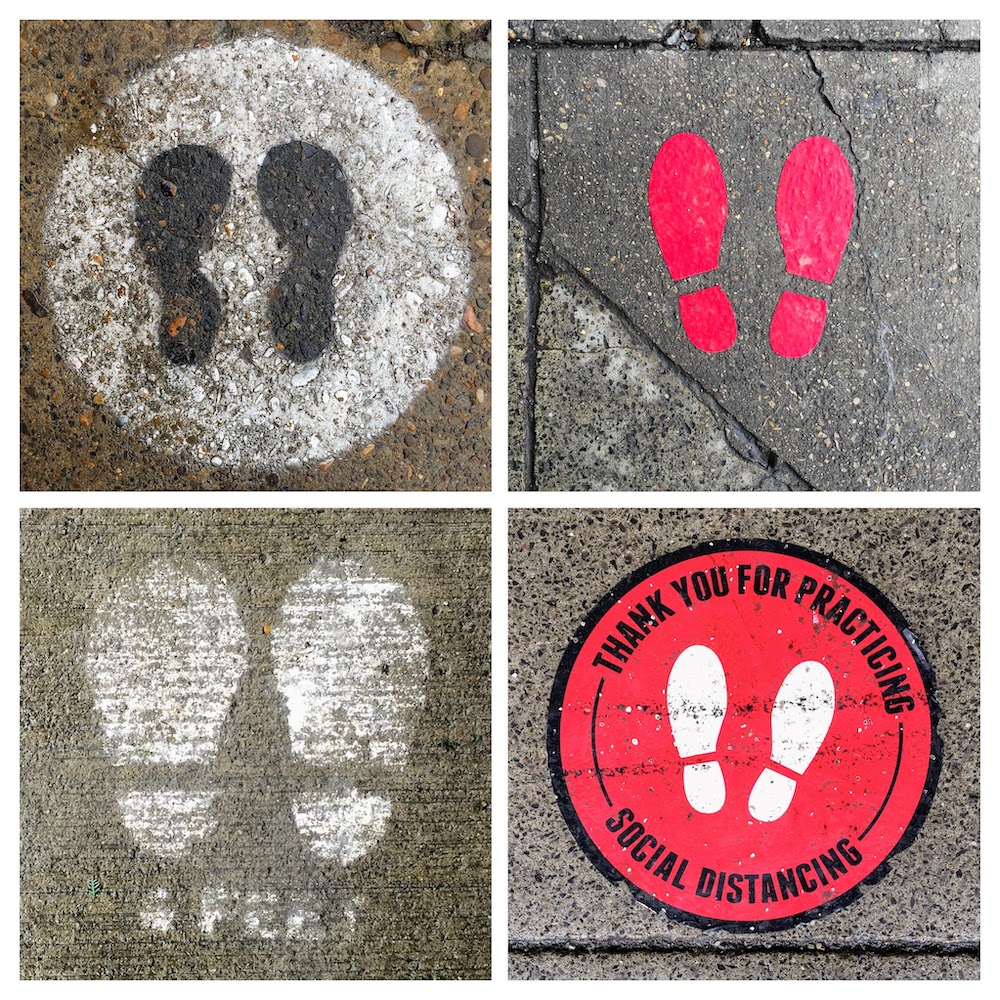
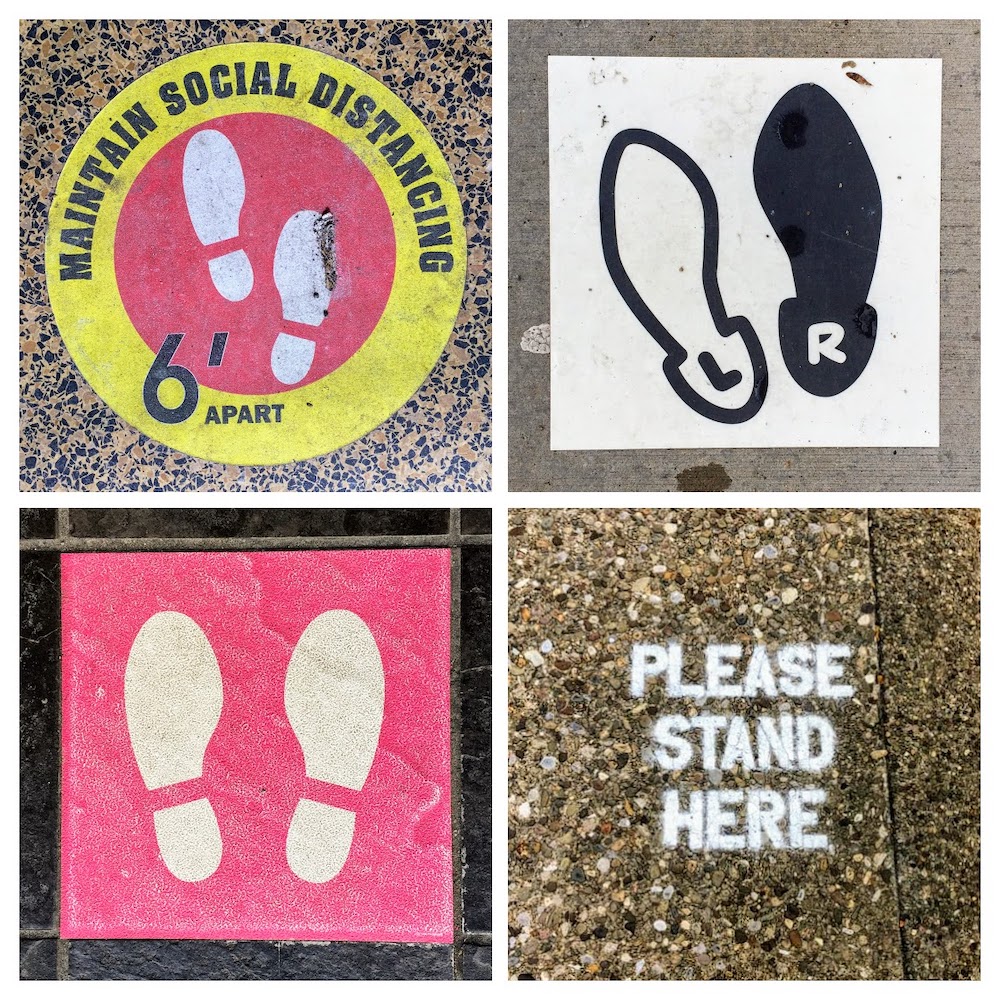
Six feet by two feet: some of the ubiquitous six-foot social distance waiting markers found on sidewalks
One day this will all be over. With vaccines going into arms as we speak and new alternatives arriving from just-approved sources, it’s not that unrealistic to see a day in the near-ish future when we’ll be able to see friends again, to go out to theaters and rock-and-roll shows, to have the freedom to travel, throw a party, or just quaff a beverage at the tavern.
Along with this, it’s easy to predict “after times” celebratory events that ritualistically destroy the physical reminders of the year+ we’ve all lived in some level of coronavirus lockdown. Mass bonfires of face masks seem like the most obvious expression, but outworn sweatpants and pajamas, abandoned first novels and knitting projects are likely targets in the same group exorcism.
animal tracks
The collective scar on the nation’s forehead signifying the half a million (and counting) human lives lost will not be forgotten any time soon–nor should it. The shuttered storefronts of businesses of both the mom & pop and big box varieties will ultimately be rented to new merchants, but unswept sidewalks under For Lease signs will be with us for a while.
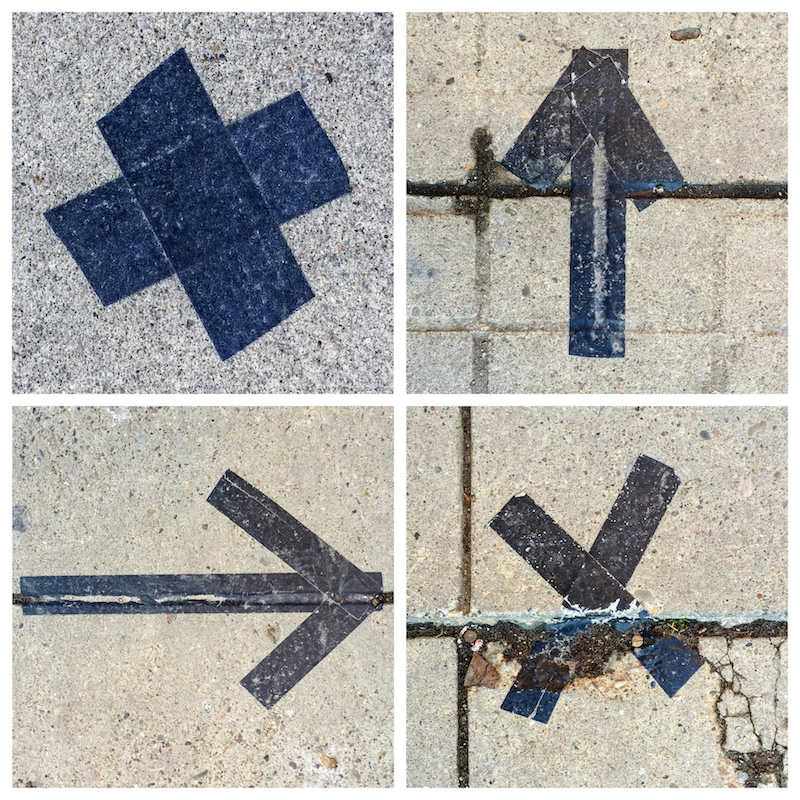
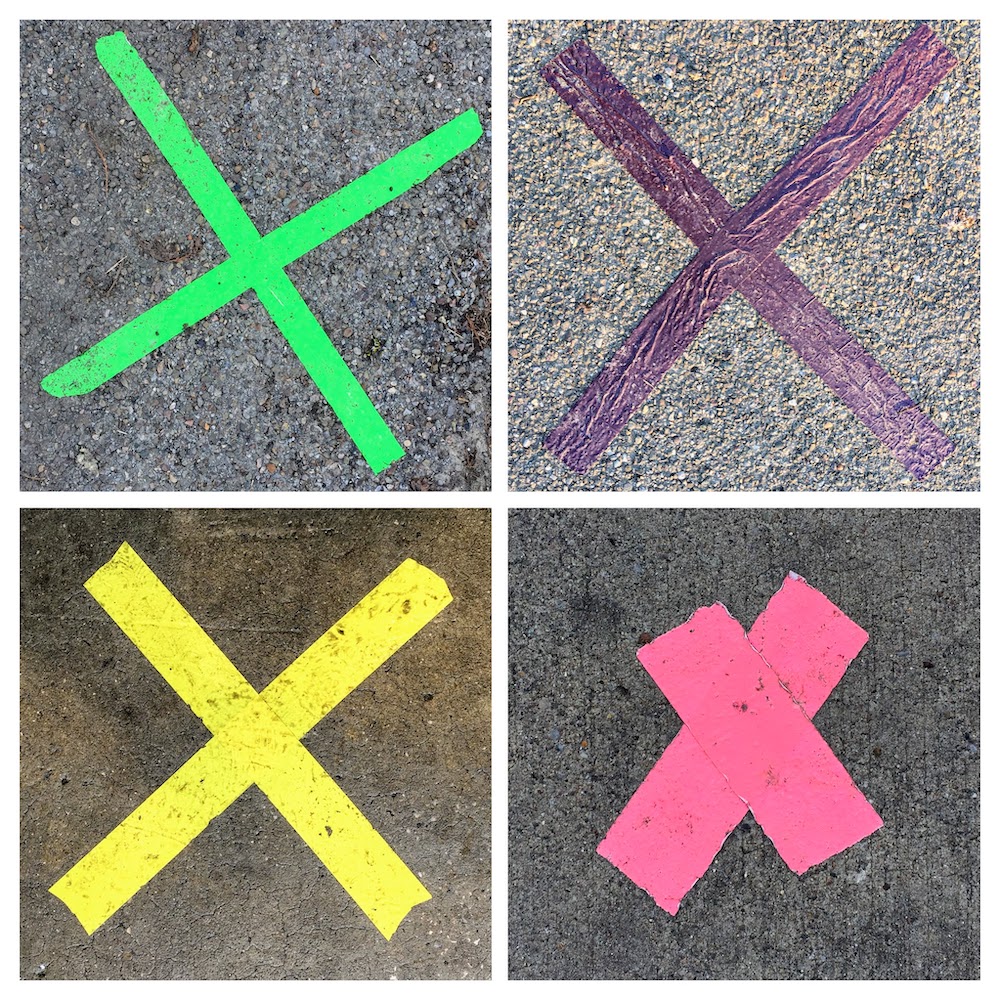
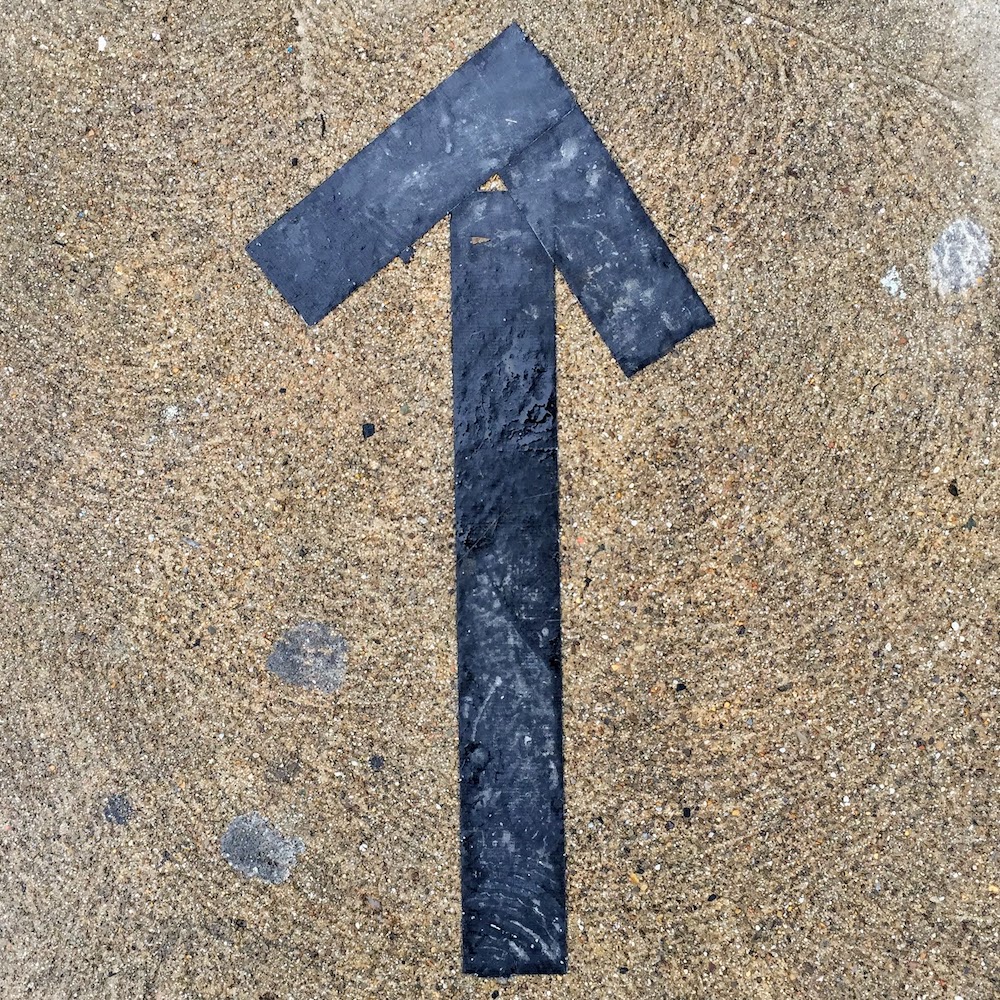
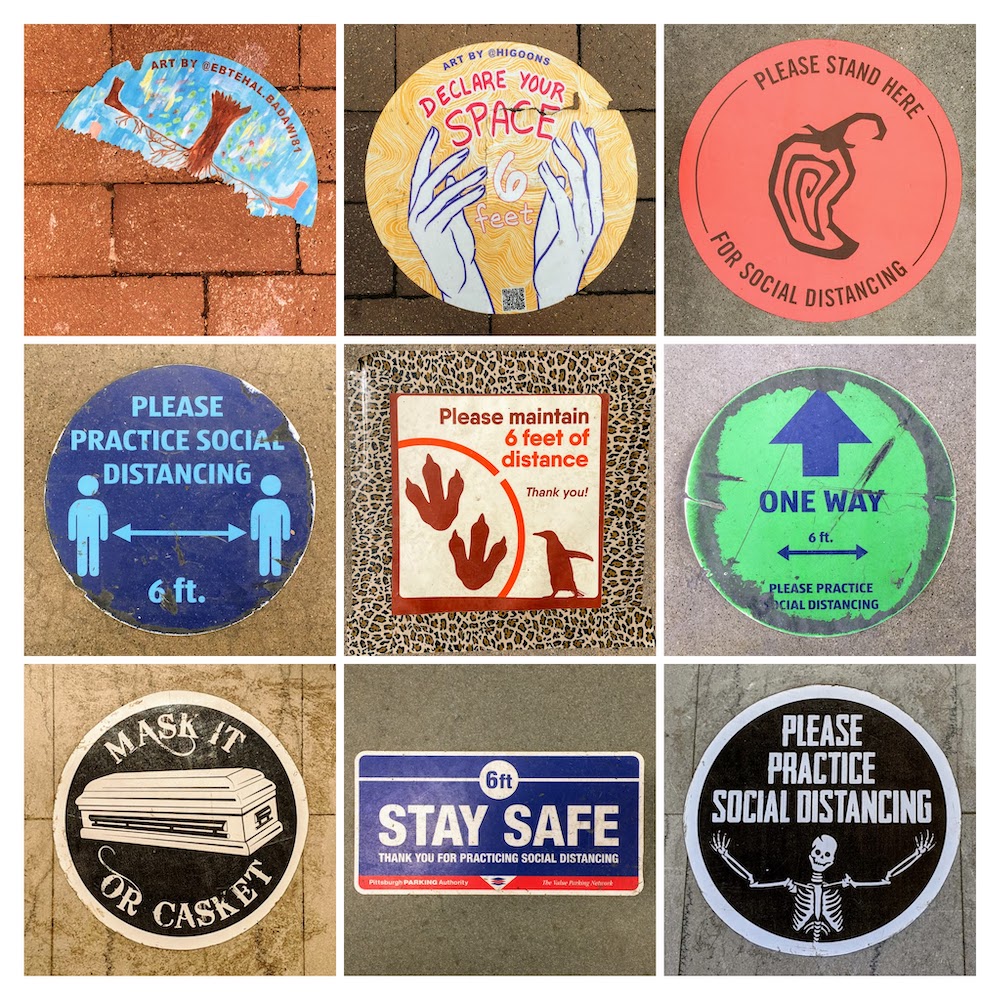
One of the most obvious visual elements of the coronavirus pandemic is the stencils applied to sidewalks, stickers on retail floors, and makeshift duct tape delineations to mark pedestrian traffic flow and spaced six-foot waiting points. These ubiquitous graphic additions to the landscape all popped up overnight early in the pandemic and then seemed frozen in time after this single application.
Despite the obvious advertisement for the incredible adhesive tenacity to survive a very snowy Pittsburgh winter, these markers are, by definition, temporary. When bars and restaurants are allowed to open at full capacity and mask orders are finally lifted, shop stewards will peel back the big round decals and scrape off the gaffer’s tape once and for all. [Pro tip: forget GameStop–invest in Goo Gone now!]
six feet/two tone
It is this moment when historians should be alert to these soon-to-disappear markers of a time we think we’ll never forget. Fear not: we will. Humans have famously lousy memory and we’re hardwired to move onto the next thing. Your author has been laughed-at for still using a five-year-old iPhone–you think this society is going to be thinking about six-foot distance markers in a few years? A new generation of Covid deniers will inevitably force the narrative that the whole thing was a collective fever dream. Heck, in ten years we’ll probably have no one left that can still bake sourdough bread.
the colors of coronavirus
let’s put the X in six
six feet [includes photo contributions from Michele Timon]
this way out
When Orbit readers Alyssa Cammarata Chance and Michele Timon submitted photos of some of the big round floor decals we see all over, we first scoffed at these as “corporate coronavirus.” No, they’re neither as creative or interesting as original stencils, nor as randomly oddball as the tape directives. But with a little reflection and a whole lot more re-examination, they make for their own unique experience worth documenting. We’ve included the best of them here.
please stand here [includes photo contribution from Michele Timon]
Condado Tacos: winner of corona-variety award [includes photo contribution from Alyssa Cammarata Chance]
and even more! [includes photo contributions from Alyssa Cammarata Chance, Lee Floyd, and Michele Timon]
wash up!
Special thanks to The Orbit’s co-executive assistant to the mailroom intern Lee Floyd for suggesting this fascinating topic.
If you’ve got some good photos of six-foot separator markers–or anything that speaks to the last year in lockdown–let us know and maybe we can include it in a follow-up story.
Last fall, we watched with disbelief as a tenant finally moved into the empty retail space at Penn & Main and opened its doors for business. That prime corner had sat unoccupied for at least two decades*, and El Sabor Latin Kitchen inexplicably added another Mexican restaurant to the same block as Los Cabos during a global pandemic. Let’s just say the whole thing was front page news at Chez Orbit. But when those big Penn Avenue windows came dressed in a decal with an original logo of the Pittsburgh skyline embedded in a hot pepper, well, let’s just say it made the last twenty of years of head-scratching make a lot more sense. The landlords were just looking for the right tenant all along.
Hot Pepper City: El Sabor, Bloomfield
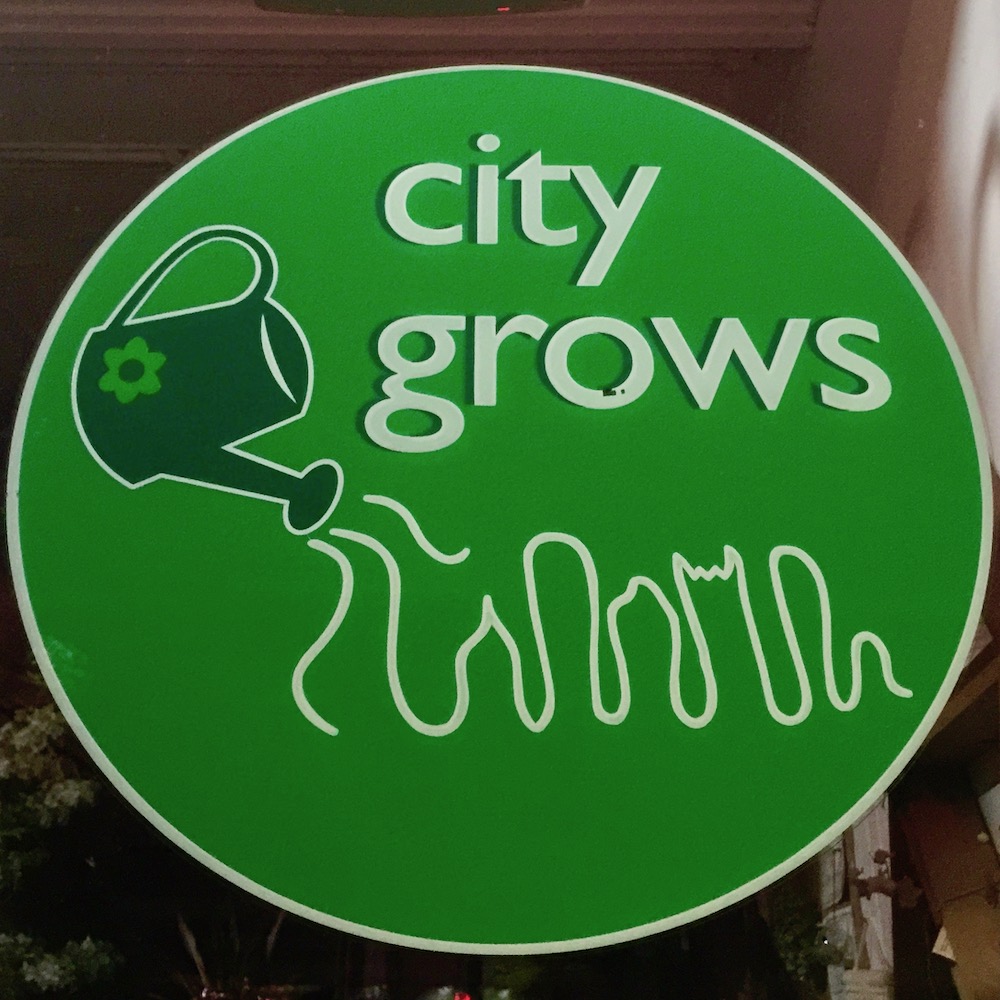
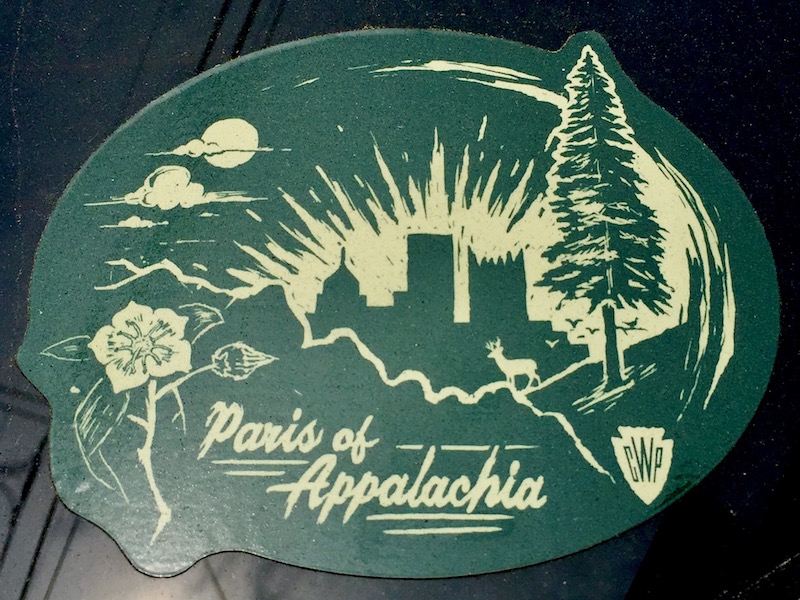
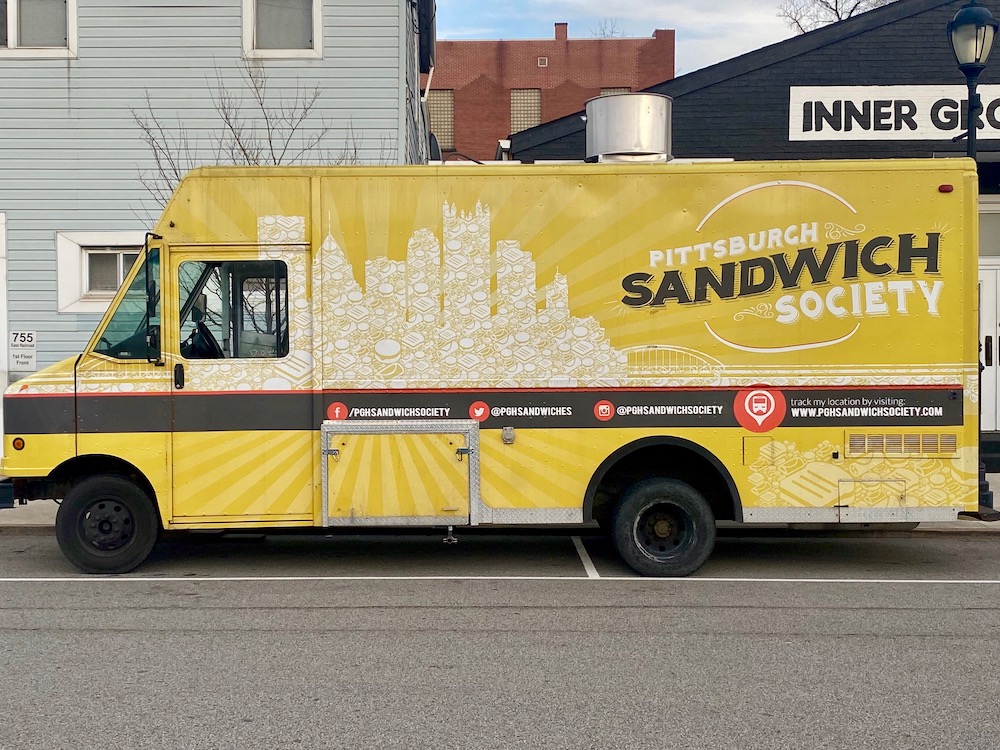
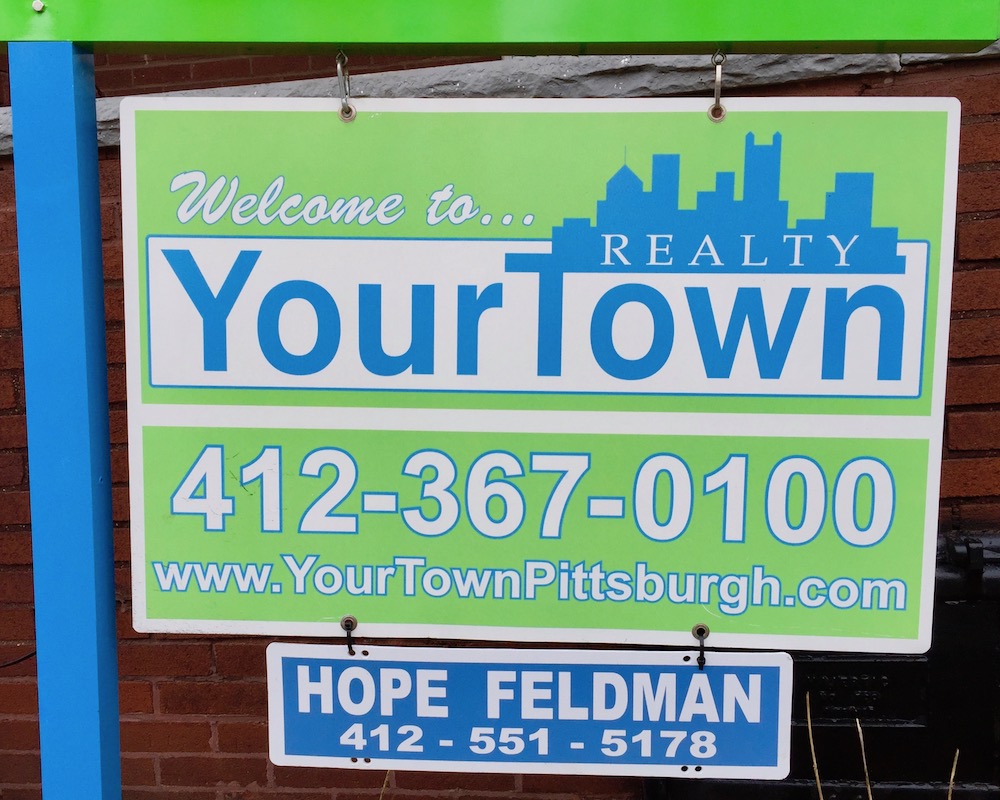
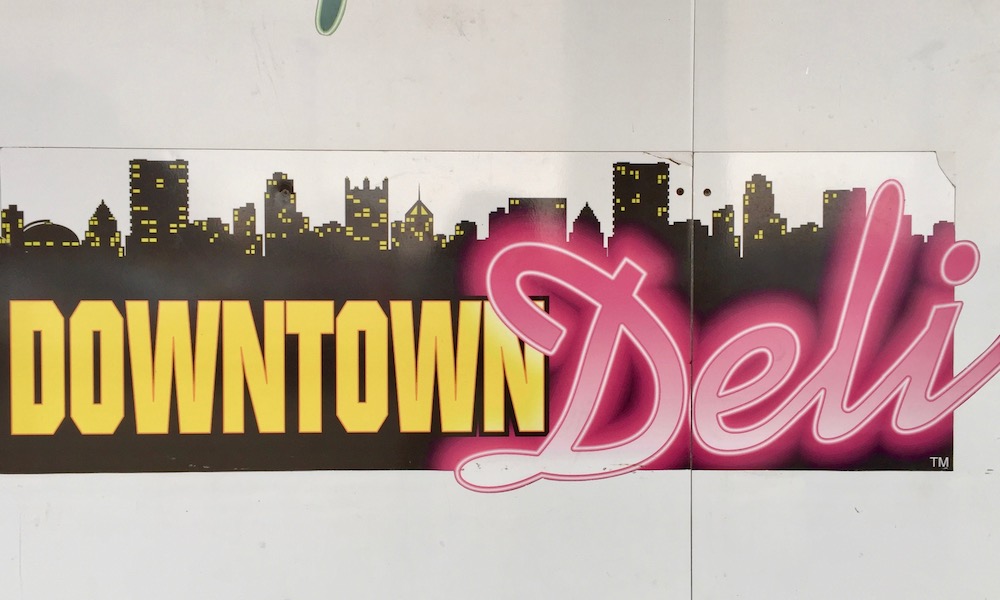
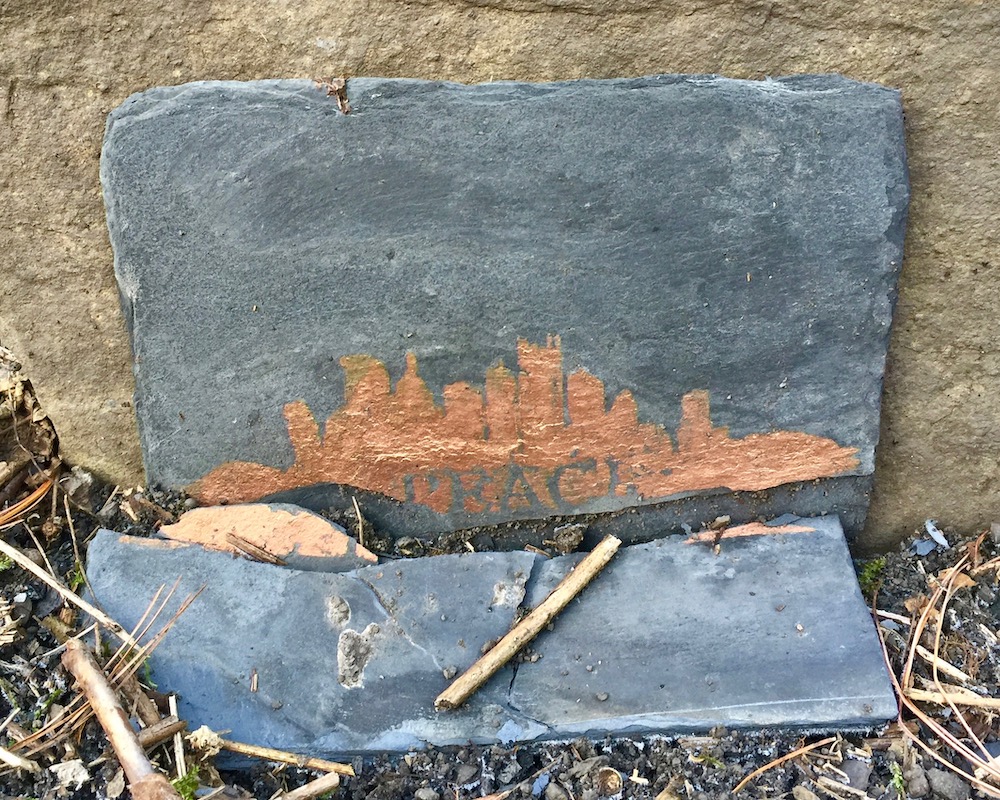
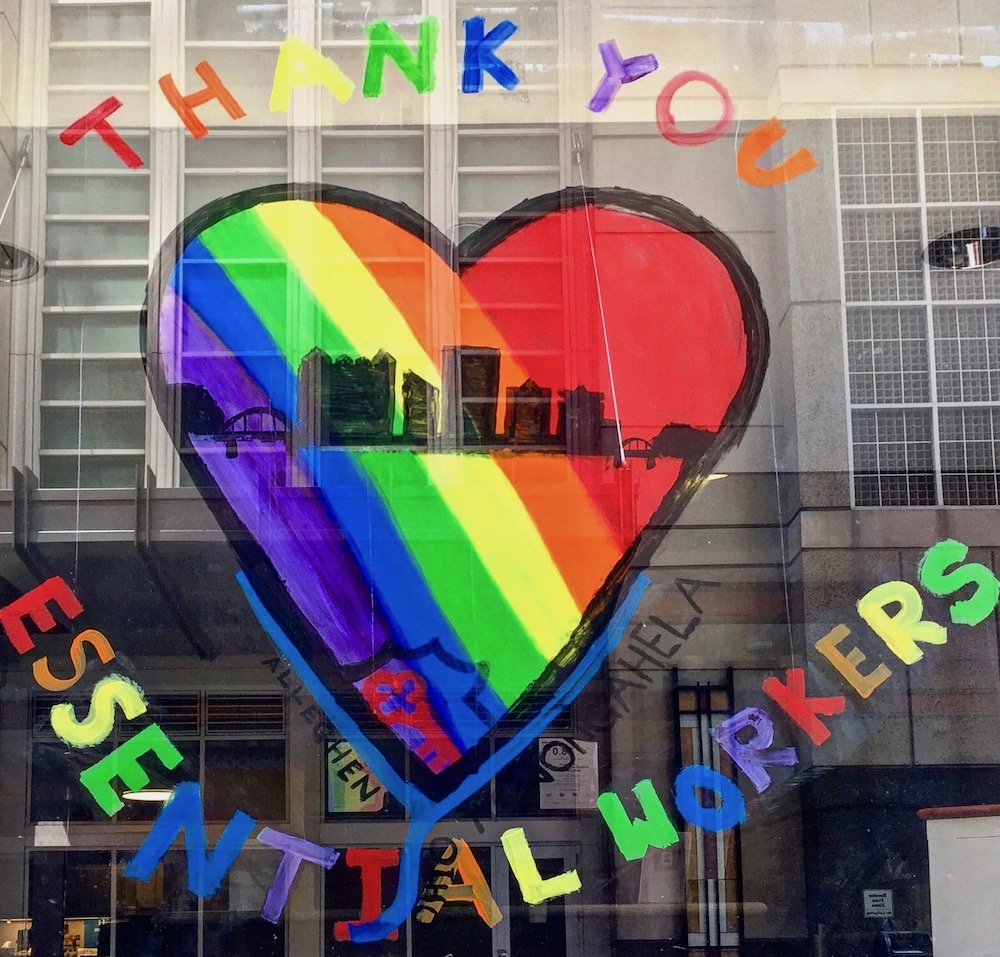
The downtown Pittsburgh skyline–spiky towers at PPG Place, Highmark’s pointed angle, the big block of the USX (neé US Steel) tower, a couple of bridges if we’re lucky–just won’t be contained. Here it is, the Orbit‘s seventh trip down this particular road and we’ll no longer be foolish enough to think we’ve bagged them all. You get a new restaurant today and there will always still be an untapped pizzeria, plumber, real estate agency, or left-in-the-woods slate stencil art tomorrow.
It is a beautiful (and sunny!) day out there. Go out and find your own Pittsburgh skyline.
[Special thanks to Greg Lagrosa who is working the micro-beat of food trucks with the Pittsburgh skyline temporarily parked in Verona hard.]
Sandwich City. Pittsburgh Sandwich Society food truck, Verona [note: skyline made of *sandwiches*!] [photo: Greg Lagrosa]
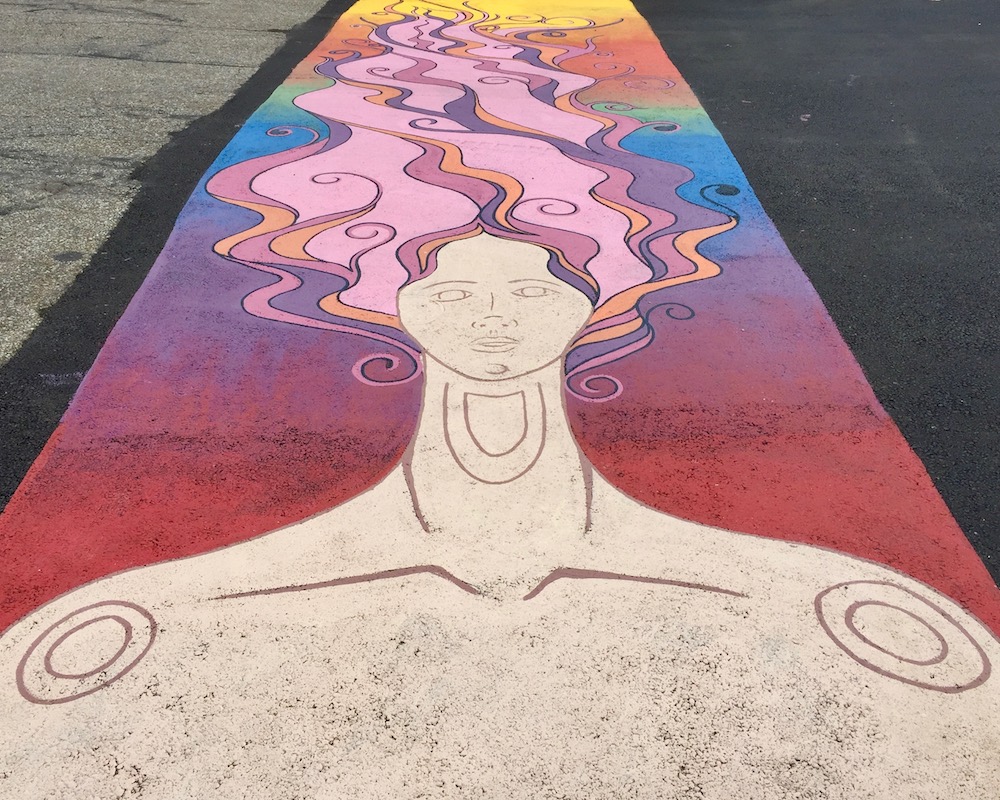
Wild hair. Crosswalk mural at Sedgwick Street and Grant Ave., Millvale
While no one wants to be a doormat, we might all wistfully hope to be a crosswalk. At least, we would if we were rendered this lovingly.
Standing on the corner, the woman in the street is quite the vision. With a plain face and porcelain skin, she is more antique doll than real flesh and blood. It is her hair, though–a psychedelic swirl of curled pinks, mauves, and orange locks spread out across a technicolor rainbow backdrop–that gets the well-deserved focus here.
The mural is painted across Sedgwick Street, in Millvale. It is one of a couple dozen similar murals painted last summer directly on top of existing crosswalks in the borough’s great little downtown business district. We don’t know who the individual painters are [artists: please get in touch so we can credit you!] but various reports have the murals loosely associated with the group that puts on the annual Millvale Music Festival. That free weekend turn-every-business-into-a-music-venue hootenanny, along with everything else, just couldn’t happen last year.
Something fishy (Grant & Sherman)
BIG free library (Grant & Sheridan)
While the show wasn’t able to go on, Millvale’s civic spirit continued unabated. The murals are 100% focused on the community, with almost all of them containing unnamed but sly references to the small businesses that exist in the immediate proximity.
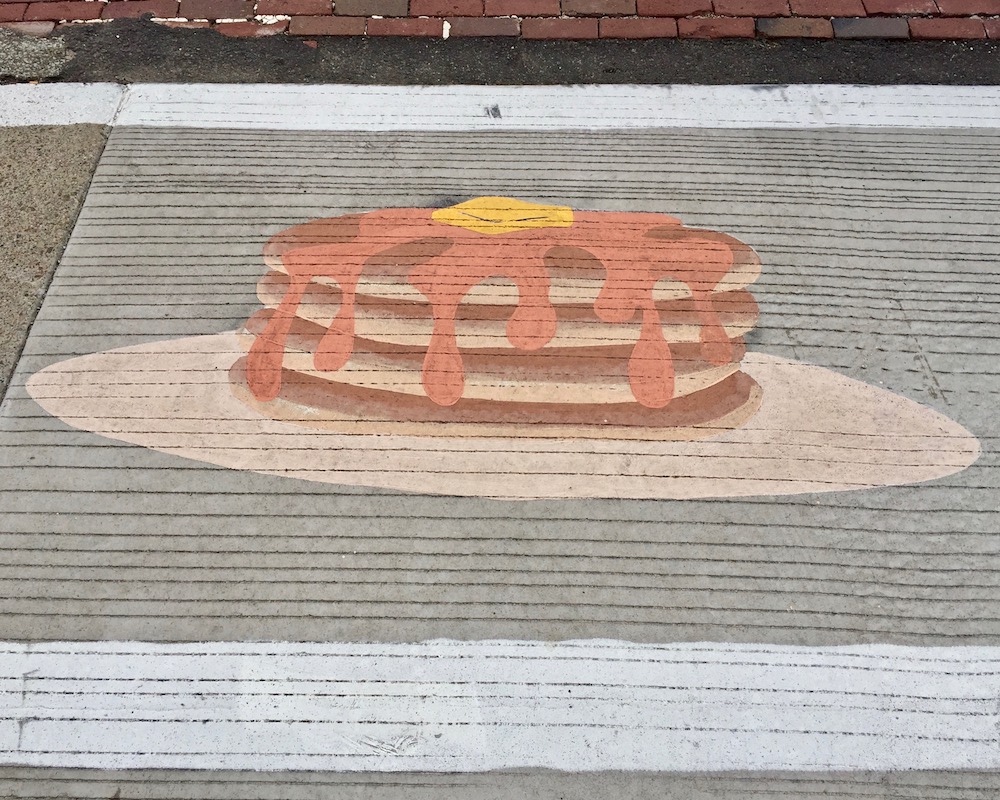
There are a pair of collections of disembodied haircuts near Shear Timing and Salon 22; a lineup of dancing tacos, hot peppers, and salsas by Baby Loves Tacos’ North Ave. location; a firehose dowsing a raging flame in front of the fire department. A row of books is just down from the public library; stacks of Pamela’s glorious crepe-like pancakes at the P&G Diner; happy kids and chocolate bunnies by Yetter’s Candy Shop.
As waistline-watching, model-building, music fiends, we’re wondering how Jean-Marc’s French bakery, Esther’s Hobby Shop, and The Attic Record Store slipped through cracks here, but perhaps those are all in the works for this coming summer.
Curl up and dye (details) (Grant & Sedgwick; North & Lincoln)
Firehouse (Lincoln & Sedgwick)
At present, Millvale’s downtown community is at a real high point of healthy livability. Its storefronts are occupied with businesses from the mundane to the sublime: there are a couple fancy things, a lot of nice-to-haves, and plenty of nuts-and-bolts. Those of us looking at (and regularly walking across the bridge to) Millvale from across the river in Lawrenceville can tell you all about the slippery slope from this zenith of sensible sustainability to drowning in condos, Thai rolled ice cream, and weekend partiers arriving by the Uber-load.
The crosswalk murals that celebrate Millvale’s community point all this out beautifully, without ever needing to rub your face in it. This little borough with its candy shops and laundromat, diners, dive bars, and videotape rental, church-turned-concert hall and ex-Moose Lodge to trattoria Sprezzatura, has so much to offer right now–even in the depths of Covid-induced ghost towns everywhere–that we should appreciate what we’ve got and how we can keep it just like it is.
Gateway to Millvale (North Ave.)
Happy kids! Beer-making icons! (Grant & Sedgwick; Grant & Sherman)
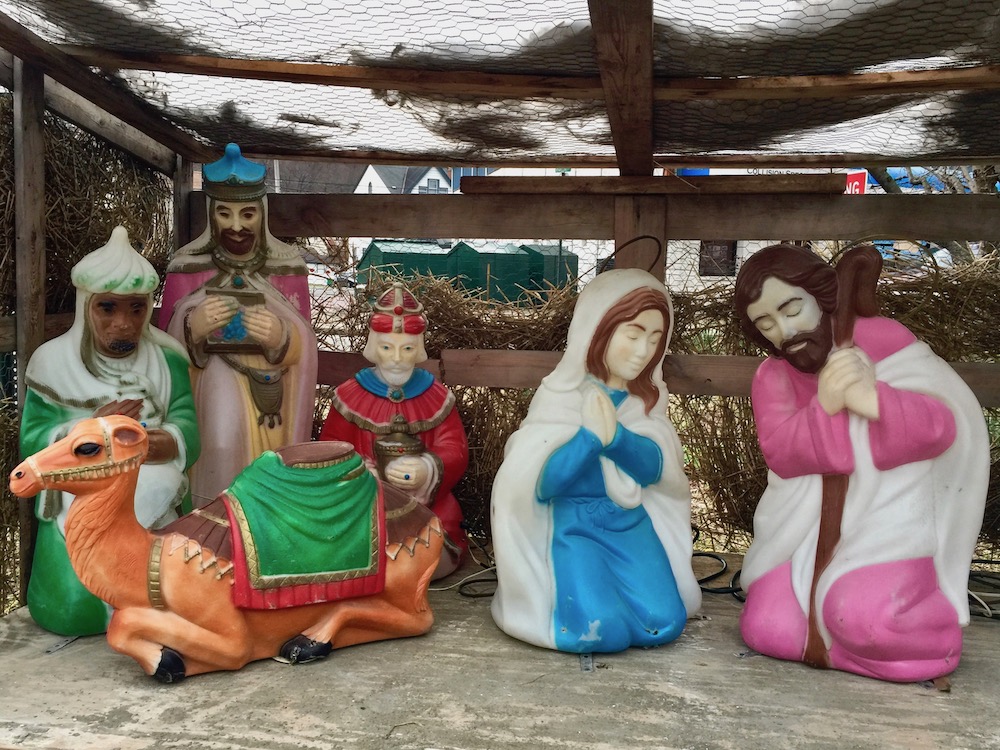
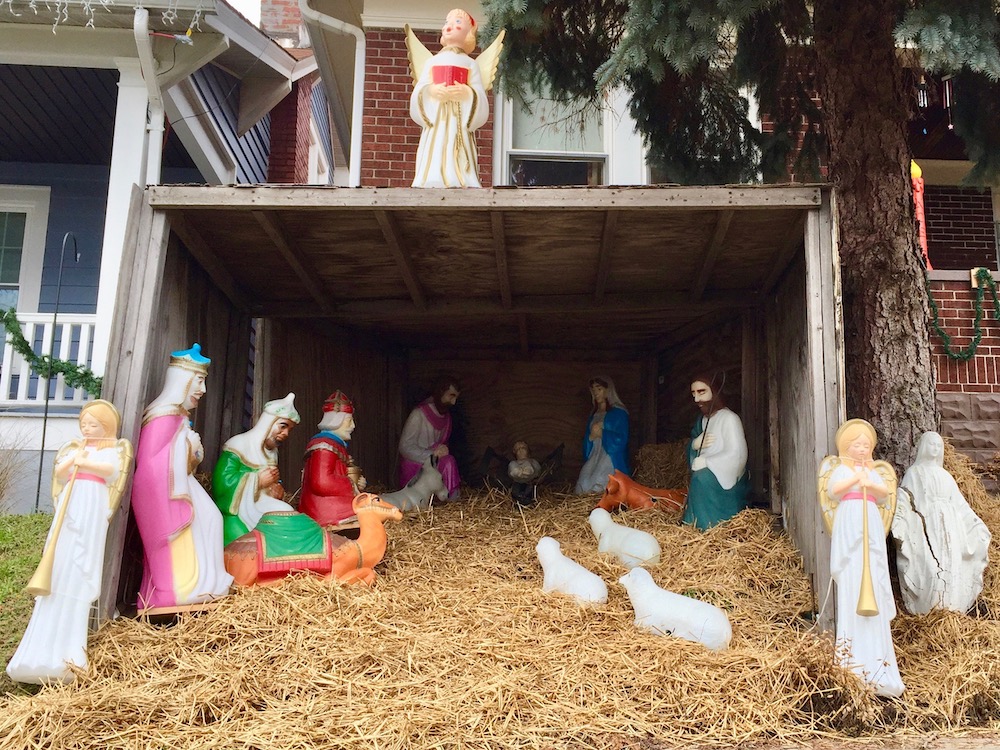
Three wise men AND Three Stooges. Full-on residential nativity scene, Ross Township.
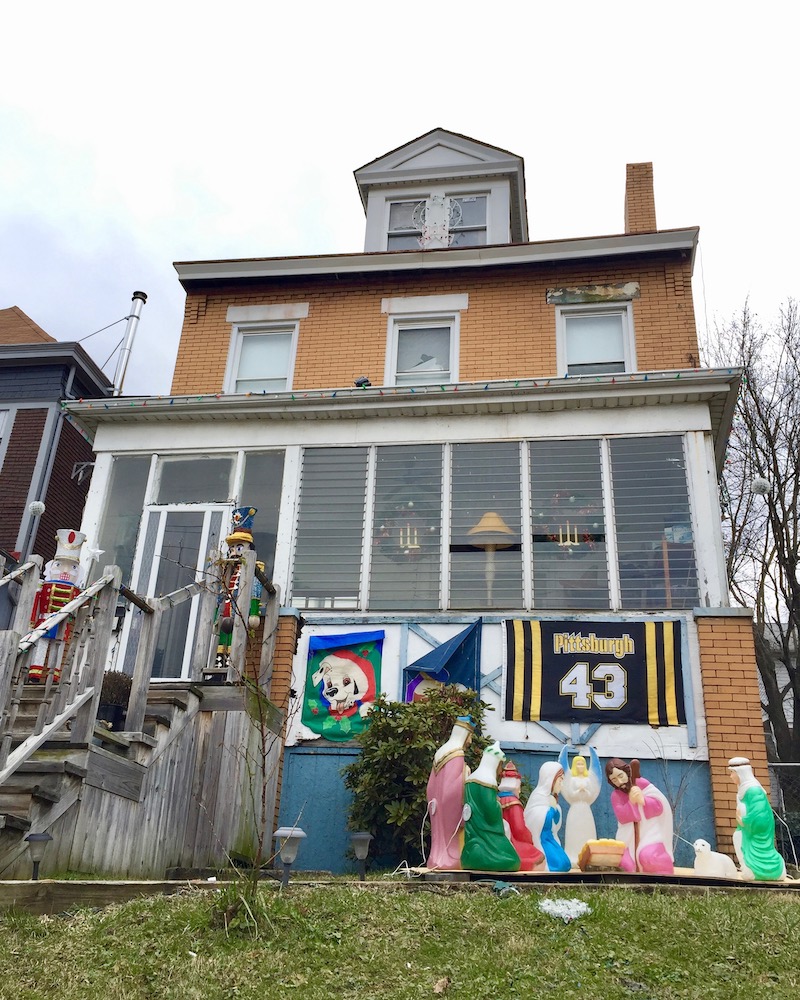
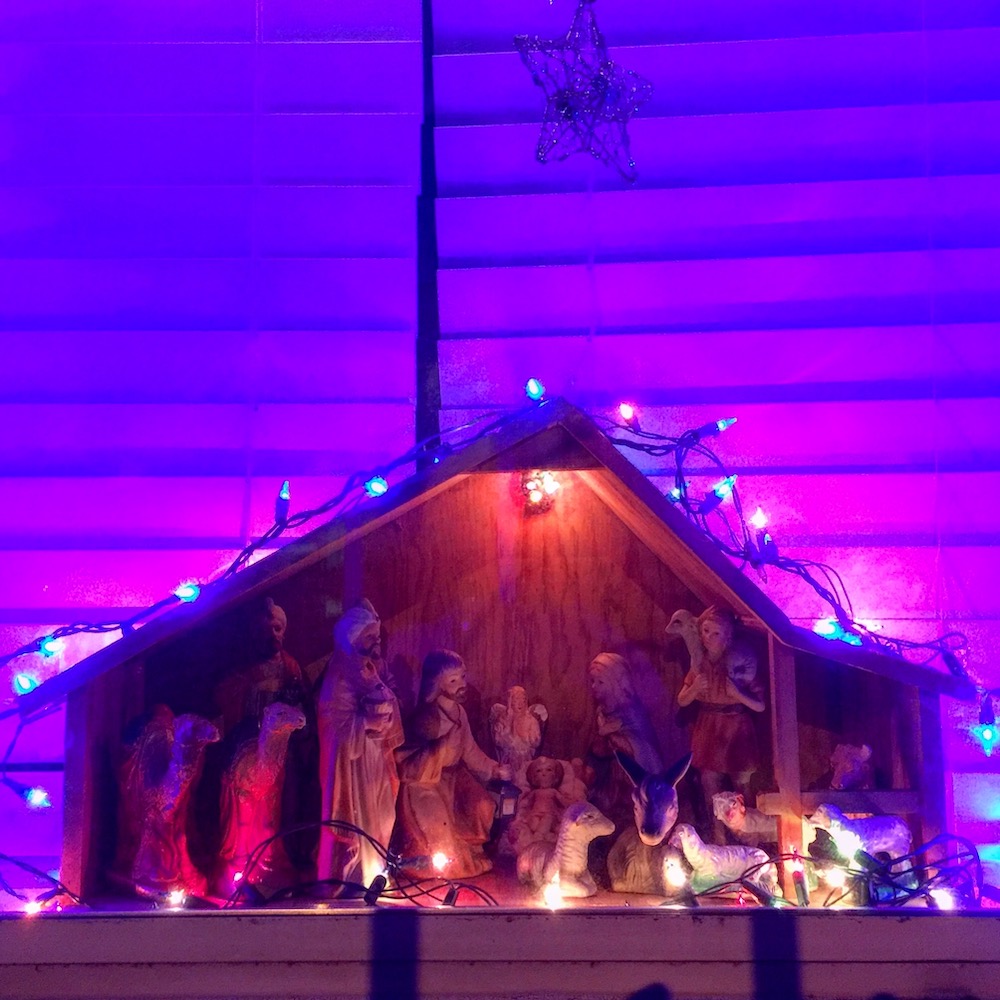
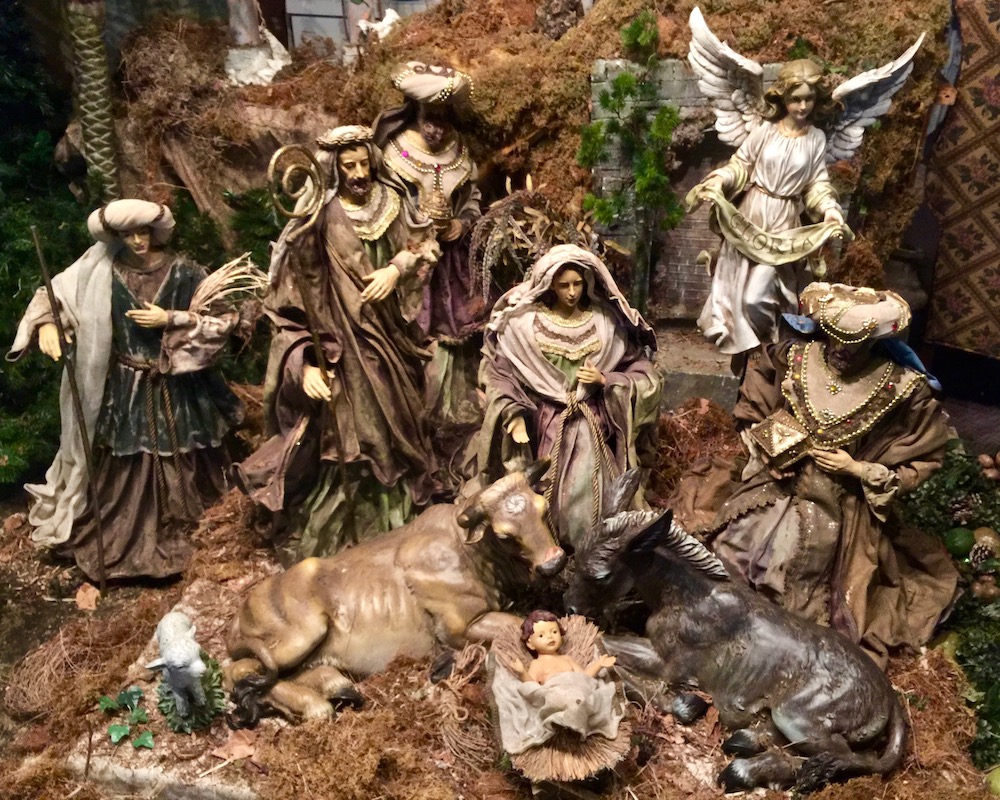
We’re not too proud to admit it: we’ve got a crush on the crèche, make major maneuvers for the manger, and take any opportunity to go nativity when the opportunity arises. That occasion presents itself early, often, and with no remorse on any trip around Bethle…ahem–metro Pittsburgh.
‘Tis the season for plastic lawn decor, strings of dollar store lights, and more baby Jesuses than you’d think a monotheistic society would care to advertise–but that’s what we do. For the atheist, it’s a weird internal conflict–I don’t believe any of this hokum, but man do I love it. If only this country had more wise men, myrrh out the yin-yang, a livestock petting zoo by every newborn and a kneeling camel in every cul-de-sac. Heck, we can dare to dream.
Merry Christmas, happy holidays, and a spine-tingling Krampus to all and may The Orbit‘s diaspora have the good frankincense to stay safe until Santa can hook us up with the vaccine.
Cinderblock crèche, Polish Hill
Wait…where’s the kid? Millvale *
Forget the frankincense and myrrh, who brought the 24″ Weber? Monessen
Major manger, Reserve Township [Note: bonus cracked Mary!]
Three wise men, two nutcrackers, AND Troy Polamalu (+ “A Christmas Story” sexy leg lamp!), Reserve Township
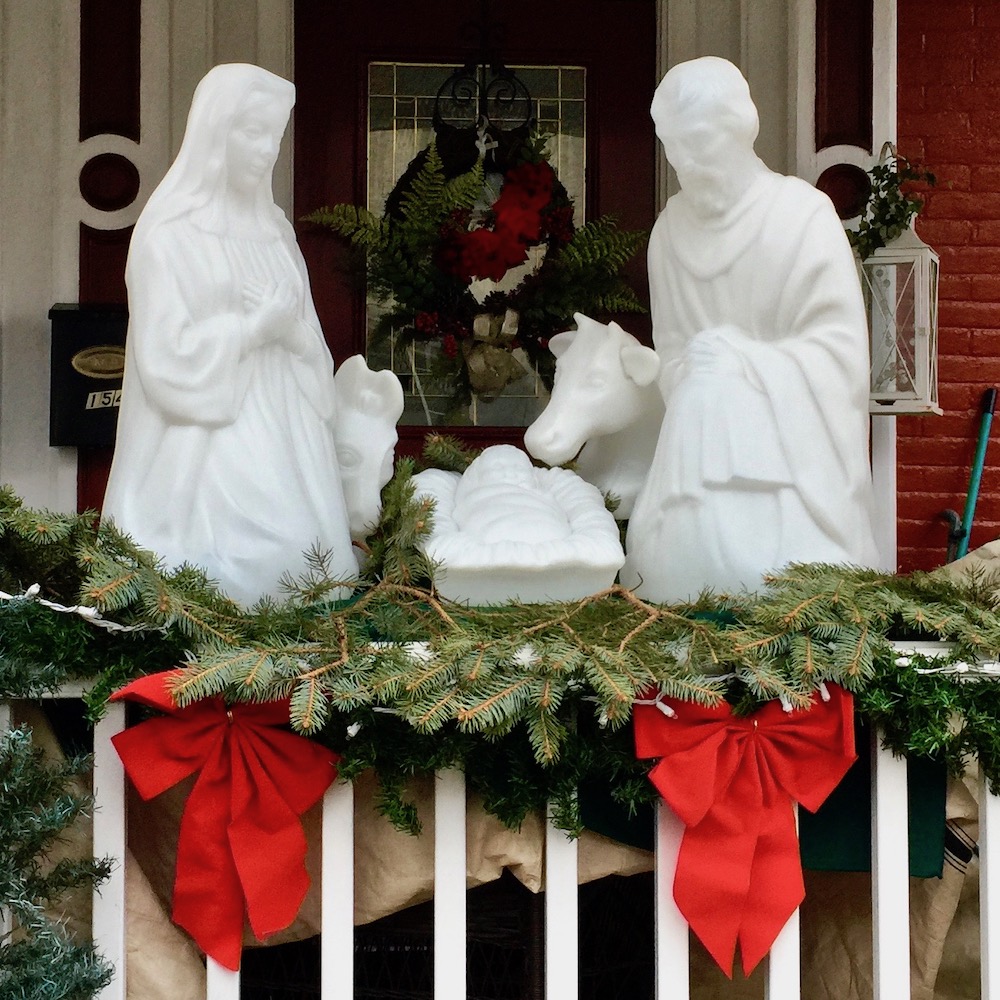
White Christmas, Lawrenceville
Christmas behind bars, Lawrenceville
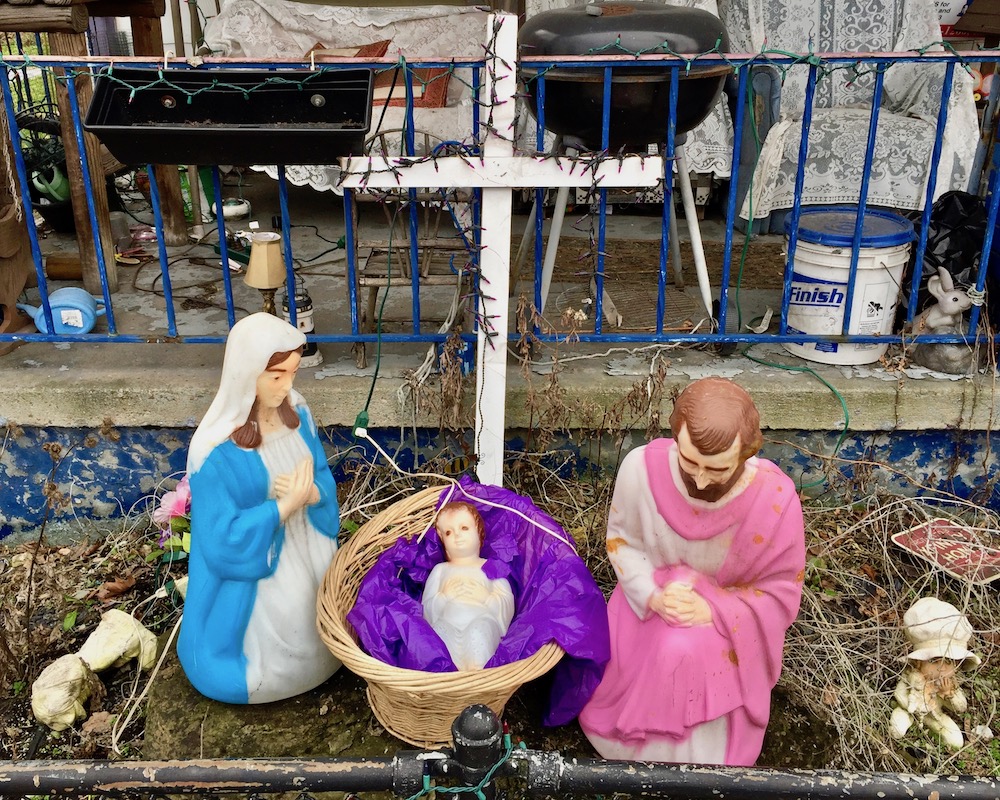
Row house crèche, Lawrenceville
That’s not the baby Jesus! Marshall-Shadeland
O Hummel town of Bethlehem, Merante’s Gifts, Bloomfield
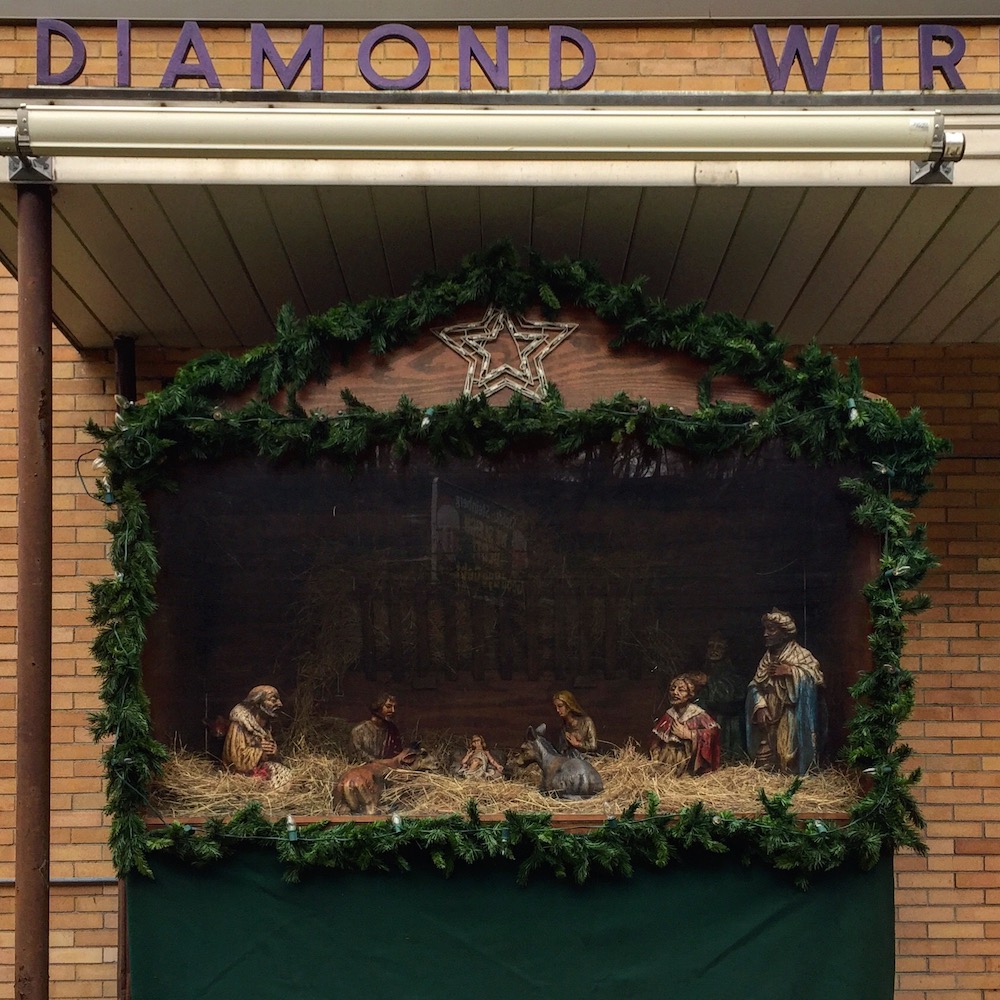
Diamond Wire Spring, Ross Township
Cement circle crèche, Glassport
Bloomfield
Front porch crèche, Lawrenceville
* Orbit Instagram user @danko_pgh explains this as “The Baby Jesus figure should never be displayed until very late on Christmas Eve.” That certainly makes sense once’d you think about it, but clearly isn’t followed universally.






































































 Pittsburgh Orbit