(No Longer) In The Mood

Pressure Chemical, Pittsburgh, PA

Mood Indigo: Pressure Chemical’s Lawrenceville plant

The story was a little too good: little Pressure Chemical was the home of the mood ring–and they had a wall of the objects as mementos in the offices of their Lawrenceville plant. But, as sophisticated Orbit readers know, don’t believe everything you hear.

It turns out, though, that the story is half true–or, at least, partially true. Pressure Chemical was indeed integral in the production of the mood ring, that most iconic groovy fashion fad/accessory of the 1970s–and it’s one that’s still available today, unlike the pet rock.

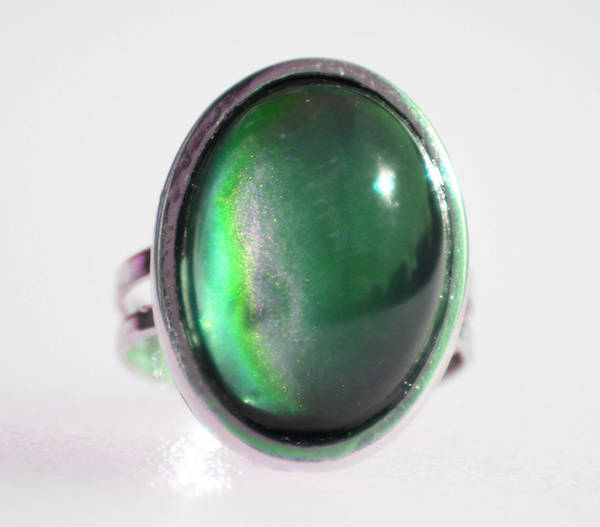
close-up of green mood ring

Mood ring. Green is alternately “normal,” “active,” “romantic,” or “jealous,” depending on the chart. [photo: the Internet]

When we want answers, you can bet we get them. The Orbit staked-out Pressure Chemical’s Smallman Street building and weren’t leaving until we could go all the way to the top. O.K., we actually just got really lucky and CEO Larry Rosen happened to walk out the front door before we could even get to the buzzer. Even on his way to a meeting, Rosen was friendly and took the time to answer all of this blogger’s questions about Pressure Chemical’s involvement with the 1970s fad, the legend of the wall of mood rings, and the building’s most recognizable feature, its multicolor flowing stripe.

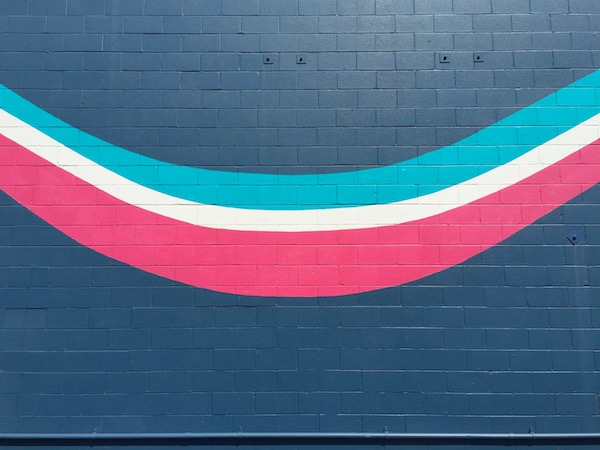
detail of stripes painted on Pressure Chemical's building, Pittsburgh, PA

You’d be happy too. Pressure Chemical’s smiling stripes.

Rosen confirmed that yes indeed, back in the 1970s heyday of the fad, Pressure Chemical brewed the liquid crystal component that actually makes the rings’ color change. No mood rings were manufactured in the facility, nor is Pressure Chemical currently involved in producing material for the still-available accessories. And no: Rosen tells us there is no such thing as a wall of mood rings in the office. Sigh.

As for the Pressure Chemical building’s most recognizable decorative flourish, Rosen told us that a few years back the Lawrenceville Corporation was helping out with facade beautification grants and the company took the opportunity to paint the exterior of the building its present deep blue with the tri-color wave/stripe that wraps around the entire facility. He’d like to repaint the front, but the proximity of power lines make it an OSHA violation to paint while the electricity is live. The rest of the building has since been repainted.

detail of Pressure Chemical plant with American flag, Pittsburgh, PA

Ain’t that America: stars and stripes and stripes

So, in the end maybe we didn’t get to bag the great photo of a spread of mood rings mounted to Pressure Chemical’s waiting room wall. But we can still dream of a place where such a thing exists, each of their liquid crystal bits glowing in slightly different temperatures as if ghostly disembodied fingers fill them all at a grand family reunion. We’ll always be in the mood for that.

An Orbit Obit: Clemente Street Art

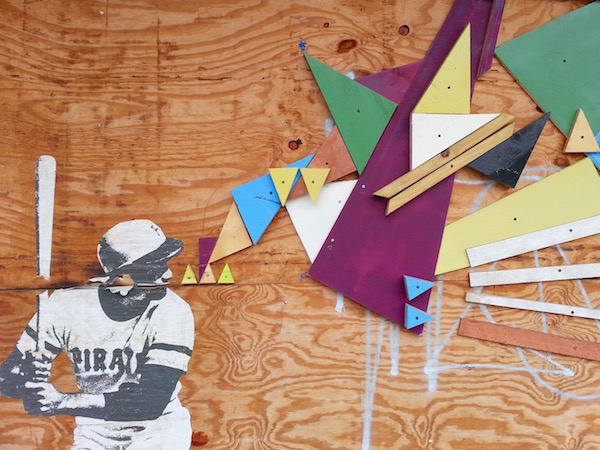
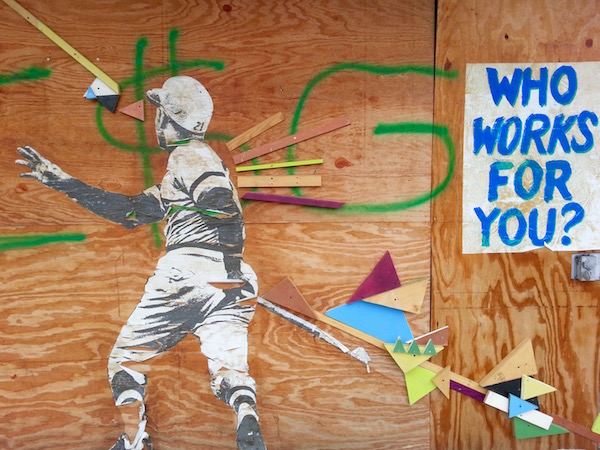
wheat paste and colored wood block street art of Roberto Clemente, Pittsburgh, PA

Wheel Emporium (detail), 2013

Today it begins. The period from now until the early dark eves of October is, for many sports fans, a restoration of when things feel right. It is a time of chin music and LOOGies, where men scratch their groins and spit sunflower seeds in concrete dugouts awash in discarded Gatorade cups. It is the season where contests are interrupted at the discretion of “managers” who summon pitchers and catchers at the mound for tense mid-game summits, runners in scoring position the imminent threat. Phrases like “O-and-two, the count,” “low and outside,” “check swing,” and “foul ball” will be repeated ad infinitum. Rivers of yellow mustard, sweet relish, and, yes, ketchup (heathens!) will adorn a non-stop parade of frankfurters. It is a time when spring’s inevitable showers send both players and spectators alike to huddle under whatever protection the park offers while radio announcers ramble on in aimless filibusters to occupy the dead air. It is baseball season.

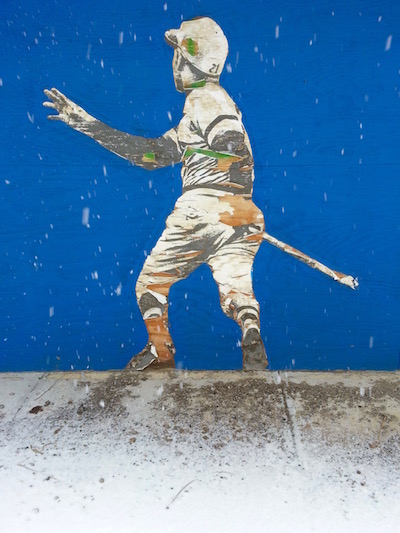
wheat paste street art of Roberto Clemente, Pittsburgh, PA

Wheel Emporium, 2014

Wheel Emporium, a retail outlet and installation garage for what they used to call mag wheels, existed at the corner of Penn Avenue and 34th Street in Lawrenceville for years. The small shop was shuttered some time around 2012 (?) and plywood installed to protect the giant panes of glass in its showroom windows.

Though this blogger would sooner, uh, put ketchup on his hot dog than pay money for fancy auto parts, we always enjoyed passing the little shop with its big windows and array of shiny chrome. But what we liked even more was what came after Wheel Emporium closed: the terrific pair of elaborate street art tributes to Pittsburgh Pirate great Roberto Clemente.

wheat paste and colored wood block street art of Roberto Clemente, Pittsburgh, PA

Wheel Emporium, 2013

A note to bloggers: always get an establishing shot! We sadly just took close-up photos of the artwork–and of course they’re now long gone*–so there’s not really a sense of how the pieces relate. For sure, though, we can say there were two nearly life-sized black-and-white enlargements of old photos wheat-pasted to Wheel Emporium’s protective plywood. In the first, Clemente is in his batting stance, left leg starting its lift in anticipation of the incoming pitch. The other–perhaps just seconds later–shows the batter watching the rocket he’s just launched sail from the park, his body twisted in the follow-through of the heavy swing. In both, the artist(s) applied shards of cut painted wood to the plywood which suggest waves of energy coming directly from Clemente.

wheat paste street art of Roberto Clemente, Pittsburgh, PA

Wheel Emporium, 2014

The tale of the Clemente art took a strange turn a year later. At some point in 2014, the colored wood pieces were all removed and the rest of the exterior plywood painted over in a deep blue color. Amazingly, though, whoever did this chose to preserve the wheat pasted photos, leaving an equally-effective alternate version of the previous year’s art. In these, we see Clemente’s two-tone image really “pop” against the monochrome blue background. It would have been fantastic to re-install the wooden additions on top of the blue, which would have looked far superior to the noisy graffiti’d wood grain, but we can’t always get what we want.

wheat paste and colored wood block street art of Roberto Clemente, Pittsburgh, PA

Wheel Emporium (full), 2013

Roberto Clemente is debatably the most beloved Pittsburgh Pirate for his prowess both in the batter’s box and out in right field (which helped the team win two World Series over his eighteen year tenure) and also for his charitable efforts off the field. His life ended tragically in a plane crash Clemente was on for a humanitarian relief mission to Nicaragua in 1972. For all of these reasons, he’s certainly a fitting subject for not just his bronze statue at PNC Park, but also the street art tributes that appeared in Lawrenceville. We’d love to see more of them.

That said, The Orbit would be equally enthusiastic about seeing similar street-level honors bestowed on other Pirate greats. Imagine a stenciled and spray-painted Honus Wagner or a 3-D “Pops” Stargell constructed from recycled materials. If you don’t see the opportunities in “Big Poison” and “Little Poison” (brothers/teammates Paul and Lloyd Waner), then you’re not trying very hard. Hell, why not create a new set of Greenberg Gardens in the city’s many vacant lots? I guess we need to quit yapping about it and start…planting about it.

wheat paste street art of Roberto Clemente, Pittsburgh, PA

Strip District (current)

Addendum: We were so glad to see the tradition of Clemente wheat-pasting continue on a recent ride through the Strip District. This photo was taken just last week and shows what appears to be a relatively new photo of Clemente pasted to a vacant storefront on the 2700 block of Penn Avenue. In it, Clemente’s bat is pointed directly at the camera and he displays a look that’s both steely and also posed, perhaps stifling his characteristic smile to crack serious for the photographer.

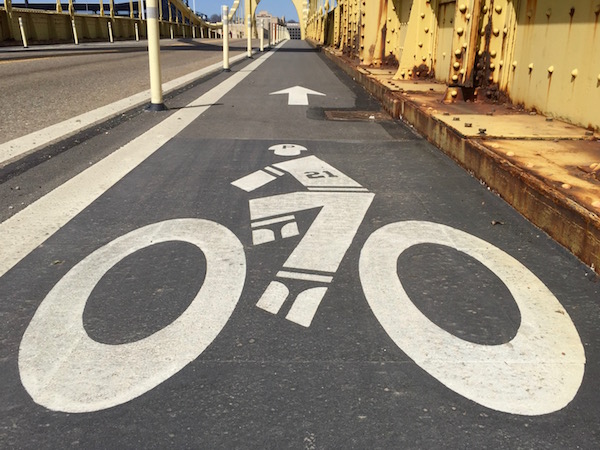
bicycle lane marker of Roberto Clemente, Pittsburgh, PA

Bicycle lane marker, Clemente Bridge

One final addition: over at The Portland Orbit, they recently ran a story called “The Beautiful People of the Bike Lane” about the terrific work of that city’s Board of Transportation to make customized, humorous bicycle lane markers. This cyclist was totally jealous and wished Pittsburgh would do something as fun and interesting. Well, it turns out that we do have at least a few these customized “bike guys.” You guessed it: they’re honoring the very same Roberto Clemente on the downtown bridge that now bears his name. It’s definitely Clemente art on the street, even if it’s not, you know, street art.


* The former Wheel Emporium was razed in 2015 and at present there’s a much larger building under construction that appears to be another combined retail/residential mixed-use space.

Egg Hunt

front yard display with Easter bunnies and eggs, Pittsburgh, PA

Lawrenceville

The bunny and the egg. That the high Christian holiday of Easter would be associated with two such non-religious totems seems strange. However it happened, we ended up with the bunny (always white; never a “rabbit”) and egg (brightly colored; sometimes elaborately decorated) as the emblems of the season. Eggs kind of make sense–Easter is either the celebration Jesus’ resurrection (if you’re Christian) or the spring holiday (if you’re pagan), and eggs certainly represent the spirit of rebirth (really, new birth) as well as anything. Bunnies? Not so obvious.

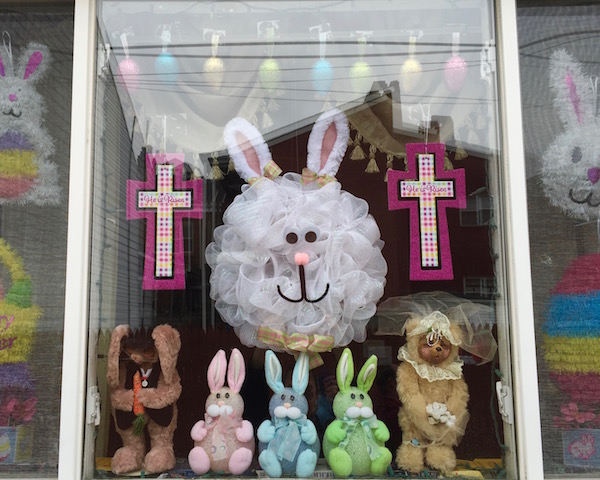
rowhouse window with Easter bunnies and eggs, Pittsburgh, PA

Bloomfield

This blogger grew up in The South and though my memory is foggy, I don’t ever remember Easter being as big a deal–and I really don’t remember people decorating their houses the way Pittsburghers do. The variance is minimal and it’s basically all store-bought, but there’s a lot of it.

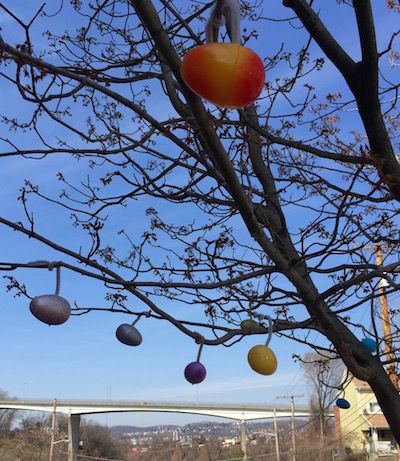
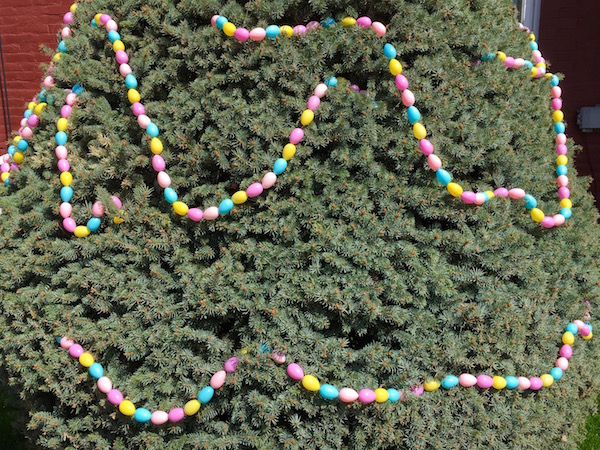
De rigueur are plastic colored eggs in both chicken and dinosaur sizes, sometimes strung on lines or hung from trees, often just resting in a front patch of grass or nestled under shrubs. Occasionally these come in a light-up strand like Christmas lights. You’ll often see die cut two-dimensional paper eggs pasted into windows and taped on door frames.

The other nearly as common element is the white Easter bunny. These creatures vary from hefty ceramic hand-painted garden centerpieces to plastic stand-up figures to fuzzy paper decorations that look like flat piñatas.

small flowering tree with plastic Easter eggs, Pittsburgh, PA

Bloomfield

It strikes me that the palette is so slim. Just two images–plus the occasional flower, cross, or duckling thrown in as garnish–for such an important holiday. Compare this to Christians’ other big day: Mary, Joseph, the little lord Jesus, wise men, yonder star, the manger, Santa, elves, the sleigh, reindeer, presents, candles, candy, carolers–the list goes on and on. Christmas also gets its own defined color scheme, song book, and yearly television specials. I’m sure there are traditional Easter church hymns, but what about carols?

sidewalk chalk drawing of Easter egg, Pittsburgh, PA

The Run

This year, Easter Sunday rolled around and this heathen had neither a church service nor holiday ham supper to look forward to. So with a glorious seventy degrees and cloudless blue skies The Orbit set out on an old school egg hunt.

We weren’t actually out to possess any eggs. We just wanted to get an idea of who was out there decorating and what they were doing with the eggs. Of course, we’ll also take any excuse to ride the Orbit-cycle for a couple hours and poke our nebby Orbit-schnozes into other people’s business–and believe you me: schnozes were poked in the making of this story.

plastic Easter eggs hanging from tree, Pittsburgh, PA

Bloomfield

The ride took us all over the place–The Strip, Spring Garden, Central North Side, downtown, South Side, The Run, Panther Hollow, etc.–but observant Orbit readers will note that almost all these photos came from just two neighborhoods: Bloomfield and Lawrenceville.

Are these places Easter central? Maybe. Or did we just poke a little harder or a little wiser in the well-known nearby terrain? Well, that’s believable too. We definitely had insider information on the Easter crazy pair of neighbors on Lorigan Street in Bloomfield that generated several of these pictures.

tree with garland of plastic Easter eggs, Pittsburgh, PA

Lawrenceville

Along the way, we ran into one legitimate kid-centric egg hunt taking place in Arsenal Park. These eggs were not well-concealed–I must have spotted two dozen from the seat of my in-motion bicycle–but the target age of participants seems to start at the just-barely-walking, so I suppose it’s a fair contest.

The whole experience was good fun and good exercise and got us thinking that it might be interesting to stage an Orbit-sponsored, bicycle-based egg hunt for next year’s holiday. Would folks be into that? I don’t know, but maybe we’ll give it a try next year.

window flower box display with bunnies and eggs, Pittsburgh, PA

Bloomfield

rowhouse windows decorated with Easter bunnies and eggs, Pittsburgh, PA

Lawrenceville

front stoop display of Easter bunny and eggs

Lawrenceville

Dead Mall: Allegheny Center

Former office building in Allegheny Center, Pittsburgh, PA

Former office building, former Dollar Bank

It was a Saturday afternoon and this American was at the mall. Nothing strange about that, right? Where it gets weird is that he was the only one at the mall. And I mean literally the only living creature on this giant plot of city-center property*.

I wasn’t even there to buy anything! But that’s lucky, because believe me, there was nothing for sale–no novelty t-shirts, no shoes, no Spencer Gifts, no Licorice Pizza, and (sigh) no Orange Julius.

Empty common area of Allegheny Center Mall, Pittsburgh, PA

Main common area

Allegheny Center, one of Pittsburgh’s three ginormous, well-intentioned, but ultimately disastrous urban redevelopment projects of the 1960s, is today the most intact of that triumvirate. The Civic Arena was torn down several years ago and its massive site is currently in development for yet another makeover. East Liberty’s business district is more gradually having its wrongs…undone (I’m not sure “righted” is fair–certainly the displaced residents wouldn’t think so).

This isn’t your average dead mall. For one, it’s not way out in the suburbs–just one river crossing and a few blocks separate Allegheny Center from downtown Pittsburgh. For another, even though as a shopping mall it’s definitely long gone, some amount of the property is very much in use. Many of the former retail spaces are now occupied by an unlikely collection of anonymous back offices for banks, utilities, tech companies, etc. There’s even a working soup-and-sandwich restaurant to serve the captive clientele (but it’s not open over the weekend).

Things are going to change fast for Allegheny Center real soon. Announced last year, the complex is about to have a whole bunch of money dumped into it to convert the mall space to a incubator and campus for high tech companies with the new name Nova Place. Radiant Hall has moved into the ground floor of the office building and Quantum Theatre will stage its next production (Ibsen’s The Master Builder) upstairs in April. We thought The Orbit ought to get in there and take a look before everything changes once again.

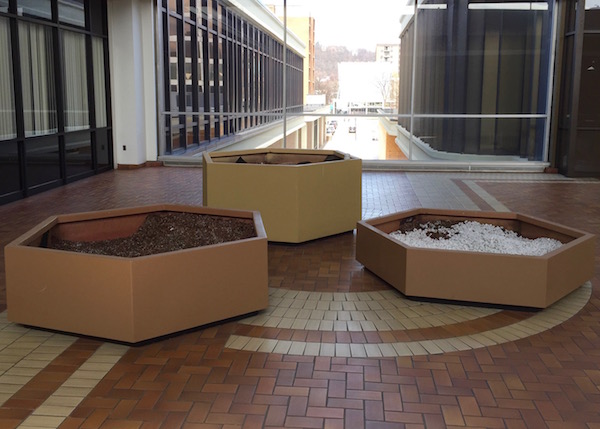
Large hexagon-shaped planters filled with both dirt and styrofoam packing peanuts, Allegheny Center Mall, Pittsburgh, PA

Empty hex planters

Allegheny Center isn’t just a (former) shopping mall. It’s a small complex of buildings that includes an eight-story office building and a similarly-sized set of apartments (which may still be in use). There’s also a terrific freestanding bank branch that has the center’s very of-its-time midcentury modern curved boxes.

Much has been made about what The North Side lost when the Allegheny Center project came in–most notably its beautiful, central market house and sensible street grid. That was all before this blogger’s time, but the pictures are heartbreaking.

Entrance to parking garage and curved, projecting windows, Allegheny Center Mall, Pittsburgh, PA

Parking garage entrance and characteristic curved exterior features

That said, the fifty years that have passed since Allegheny Center was built in 1966 have largely been kind to what could have been a horrific featureless and windowless box like many of its enclosed mall peers. The overall design is an inventive mixture of interior and exterior space. Shoppers could get to destinations both within the enclosed mall area and also from a number of outside-facing storefronts. Allegheny Center’s original plan devoted much of its space to an open garden/park are on what is now just a bizarre gray plane. The center had mixed use as a central focus, accommodating retail, dining, office, and residential space. Parking is entirely hidden within underground garages. Maybe most surprising, given what we’ve seen of mall design since, nearly 100% of the exterior space contains big windows with views of downtown Pittsburgh (to the south) and up to the hills of Fineview (north).

Aerial photo showing Allegheny Center's original open space parklet and red polymer surface

Aerial photo of Allegheny Center’s original open space parklet with red polymer surface [photo: concretedecor.net]

It’s also in amazingly great condition. I was struck by how absolutely clean and immaculately cared-for the entire property seems to be. Inside the mall, the arched atrium windows still let in a great slanted light, the original tile may show its age in color selection, but not in cracks or wear. Windows–there are many–are clean and bright.

Outside we didn’t see any of the tell-tale signs of other dead malls–no rust or leaks, no cracked window panes or graffiti, no trash, cigarette butts, or weeds. The exterior retail spaces have all been boarded-over with plywood to protect them. We obviously don’t know what things look like underneath, but if they resemble the rest of property, restaurants and retail stores could move back in tomorrow. [Note to Lou Pappan’s heirs: please consider this!]

While it’s certainly dated, the architectural design has the remarkable quality of being both curved and boxy, regular and asymmetric, retro and modern. By today’s standards, it’s cool…or, at least, it could be. By any yardstick, it’s got a lot more potential than Century III. Let’s all cross our fingers for Nova Place.

Empty exterior common/garden area, Allegheny Center Mall, Pittsburgh, PA

Exterior common area with boarded-up former storefronts, former parklet


* This is only a slight exaggeration–during our half-hour visit we did see one dog-walker (outside) and one security officer (inside).

Sources:

Pittsburgh’s Next Hottest Neighborhoods

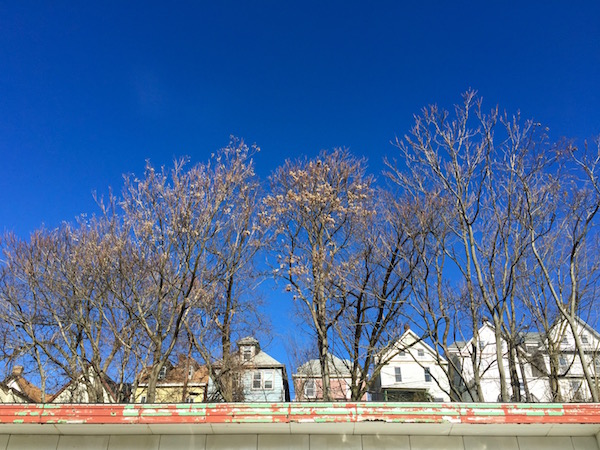
older frame houses with clear blue sky and bare trees, Pittsburgh, PA

Allentown rooftops, just around the corner from NoCarSoSoSlo

Pittsburgh is famously a city of neighborhoods–ninety of them, to be exact. Most are incredibly distinct. There’s no questioning the transition from Bloomfield to Oakland or Larimer to Lincoln or Polish Hill to Lawrenceville–you have to cross a bridge to get there. Spring Hill and Troy Hill are way up on the top of steep hills; Spring Garden is down in the valley between. More subtley, Bloomfield and Friendship are on the same plane, but as Friendship Ave. dog-legs around, the street grid changes bias, the blocks change dimension, and Friendship’s stately detached homes yield to tight Bloomfield aluminum-clad row houses. It’s clear you’re somewhere else.

But not all of the city is as well-defined, nor is it all prospering at the same rate. What to do? Enter the acroname–the citizen and/or developer-based rebranding of urban spaces to upsell low-rent sections of town into yuppie havens and “whitopias”. New York has famously come up with SoHoTriBeCaNoLita, Dumbo, etc. to address this; others have followed suit. Pittsburgh has been blessedly free of this trend*, but at the rate we’re gentrifying–and our collective me too obsession–it seems like it’s only a matter of time.

Here then is an Orbit modest prediction/proposal for the rebranding of some parts of town that are maybe a little harder to define just how and where they fit in.

NoSOak (“No Soak”)

row homes in Pittsburgh, PA

Empty beer bottles, an American flag in the window: that looks like NoSOak to me

The residential section of central Oakland, with Bates as its main through street, was traditionally an Italian-American neighborhood, but that legacy has largely ceded to college ghetto. Ratty old couches fill front porches , flags and beer signage decorate dirty windows. By rebranding itself NoSOak (North of South Oakland), the neighborhood’s landlords and property developers may be able to usher in an entirely new clientele of tech yuppies and hospital workers, eager to rehab those turn-of-the-century row houses on pedestrian-friendly blocks, the lovely aroma of street tacos perpetually wafting in the breeze.

NoCarSoSoSlo (“No Car–So, So Slow”)

Detail from the hand-painted storefront of the Mount Oliver Mens Shop, Pittsburgh, PA

The Mens Shop, a NoCarSoSoSlo icon for generations

The southern borough of Mount Oliver is a politically-independent island entirely surrounded by the city of Pittsburgh, but hasn’t benefitted from (or gotten ruined-by–take your pick) the rapid gentrification that so much of the city is experiencing. Heck, even hilltop neighbor Allentown has a heavy metal coffee shop now! With the rebranding NoCarSoSoSlo (North of Carrick/South of the Southside Slopes) the borough can reference two city neighborhoods without ever mentioning you have to pay goofy Mount Oliver taxes.

VoBeShaBlo (“VO-bee-shay-blow”)

older frame houses, train tracks, and busway, Pittsburgh, PA

View of VoBeShaBlo through the chain link fence of the Aiken Ave. Bridge

The two-to-three-block-wide strip that runs between the train tracks/east busway and Baum Boulevard are technically Shadyside, but it’s physically cut off from the heart of that neighborhood and it doesn’t share its hoity-toity feel. To mix our metaphors like we’re real urban planners, VoBeShaBlo (The Void Between Shadyside and Bloomfield) is a line in the sand that its resident “Shay-Blowers” will wear with pride, finally attaining an identity that’s been missing for a long, long time.

The hoodlet has some appealing (potential) amenities that can make this work. There are nice, if not fancy, older frame houses (although not that many of them). Between Centre and Baum they’ve got a bigger business district than a lot of city neighborhoods. And it’s well-connected/located if you’re either a cyclist or bus rider. VoBeShaBlo’s Giant Eagle even sells beer!

PaHolE / WheBiJIs (“PAY-hole / we-BIJ-iss”)

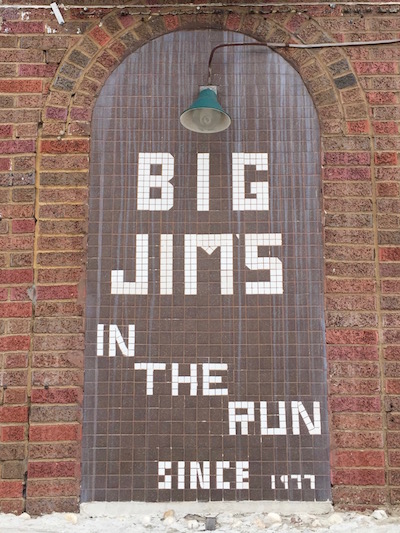
Tile sign for Big Jim's in The Run, Pittsburgh, PA

Big Jim’s, a PaHolE / WheBiJIs institution since 1977

Four Mile Run, or just “The Run”, is the tiny sub-neighborhood under both The Parkway and Swinburne bridges. Its technically a part of Greenfield, but doesn’t really feel like it. Like Rodney Dangerfield, a lot of people go back to school via its walk/bicycle path directly to central Oakland and cyclists know it as the connection point to the jail trail. But with literally just one-way-in/one-way-out, motorists typically ignore it and most of Pittsburgh has probably never even been to the neighborhood.

Luckily for PaHolE / WheBiJIs (Panther Hollow East / Where Big Jim’s Is) there are a couple of great local places of note including the great St. John Byzantine Church, access to the Schenley Park ball fields, city steps up to Greenfield proper, and Big Jim’s terrific eponymous tavern. Let’s quit fooling around and put it on the map.

HiDiBuNoQuOak (“HI-dee-boo-no-quoke”)

View down Dunsieth Street, Pittsburgh, PA

Looking down Dunsieth Street toward Carlow University in HiDiBuNoQuOak

The area around Pitt’s upper campus doesn’t really feel like it fits in anywhere. It’s the university, so that’s Oakland, right? But it’s also way up the hill–at the southeastern edge of The Hill District–physically separated from the hospitals and school buildings below. By embracing their new identity as HiDiBuNoQuOak (Hill District, But Not Quite Oakland) residents tell the world they’re doing their own thing in their own time, man. No quoke.


LoLa (Lower Lawrenceville) and Eastside (East Liberty adjoining Shadyside) are the two painfully obvious exceptions, although The Orbit doesn’t know anyone that actually uses these terms.

Street Beat: Who is the Dirty Poet?

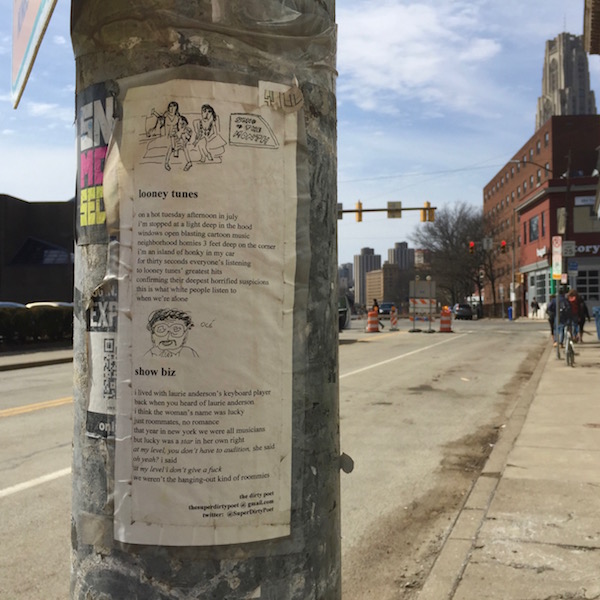
Three of The Dirty Poet's poems taped to a light post, Pittsburgh, PA

In the wild: The Dirty Poet’s work where most people experience it

You’ve seen his work. At least, you have if you’ve loitered around any less-than-respectable tavern, coffee shop, or music venue in Pittsburgh’s East End over the last decade.

Xeroxed in small batches–usually two or three bite-sized poems at at time–cut down to vertical half pages, and taped to light poles, left on bulletin boards, and passed hand-to-hand (if you know who to talk to), The Dirty Poet is an old-school bard of the boroughs, a tale-teller of the tarmac. Like the clergyman preaching to drunkards on Skid Row, The Dirty Poet takes the mountain to Mohammed with that very deliberate pre-Internet mass communication, the flyer and handbill.

The Dirty Poet sits on a set of Pittsburgh city steps with his face hidden behind an open copy of his book

The Dirty Poet: his head is always in a book

The Dirty Poet, who spoke with Pittsburgh Orbit on condition of anonymity, claims he is the best read poet in Pittsburgh. Admittedly, this is probably not a high bar, but it would be difficult to name any competition for this title*. “People read these poems that would never read any other poetry,” says The Dirty Poet, and he’s right.

The work is taken out of the English department, out of the bookstores and coffee shop readings, hell, you don’t even have to enter a building–it’s right there on the sidewalk. One needn’t have a college degree or even a library card. [Spoiler alert: you do need to be able to read.] By taking the poems directly to the streets, taped up on light poles, it’s as populist and mass accessible as it could be. Whether he’s reaching people hungry for an unslaked thirst for verse or just bored and waiting for the bus, they’re all [OK, some of them] joining the revival in this tent.

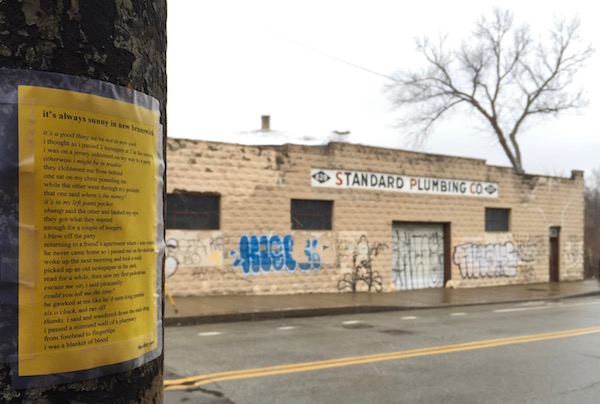
Photocopy of "It's Always Sunny in New Brunswick" by The Dirty Poet, taped to a light pole, Pittsburgh, PA

The Dirty Poet has also been at this a long time. Writing his whole life, he began the practice of pairing his Xeroxed literature with the other gig flyers, ads for weight loss studies, and rock band stickers that litter the street some fifteen years ago. That’s more time than most poets have cumulatively spent in grad school, getting rejected by literary journals, and giving up writing entirely.

In our conversation, El Dirtero spoke with obvious pride about the many chance meetings he’s had with readers as he’s plied his trade on the pavement. “Guys in their twenties come up to me and tell me they’ve been reading me since they were teenagers,” the Dirty One says, “I think I speak to a universal feeling of alienation.”

The Dirty Poet sits on a jersey barrier with the graffiti "Your vulgarity is a virtue"

The Dirty Poet: vulgar, virtuous

But what of the poetry itself? It’s loose, personal, true, vulgar, cynical, sly, smart-alecky, profane, and, yes, possibly (but not usually) dirty. It also doesn’t rhyme and it’s definitely not for everyone. “I write poetry to process my experience,” the Soapless Shakespeare tells us. Subject matter ranges from the topical (politics, gun violence, race relations) to observational (hypocrites of all faiths and isms, technology dependence, media and mass culture) to many personal anecdotes of characters and experiences throughout his life. The Great Unwashed assures us these are all true.

Three poems by The Dirty Poet taped to a light pole on Forbes Ave, Pittsburgh, PA

One final note: Pittsburgh Orbit was planning to reprint a couple of The Dirty Poet’s pieces here, but in the spirit of his work, we thought it only made sense to urge our readers to take the time, step outside, and check out the poetry where it lives, right on the streets of Pittsburgh. If you don’t see it, you’re not trying very hard. And if you don’t live around here, well, this is just one more reason to come pay us a visit**. The Dirty Poet will still be at it when you do.


* Billy Nardozzi, the “Chaucer of the Classifieds,” seems like the only legitimate competition for this title, but when you get into pay-to-play territory, the water gets muddied pretty quick.

** Those looking for a more substantial collection of The Dirty Poet’s work can find the collection Emergency Room Wrestling on Words Like Kudzu Press.

A Thomasson!

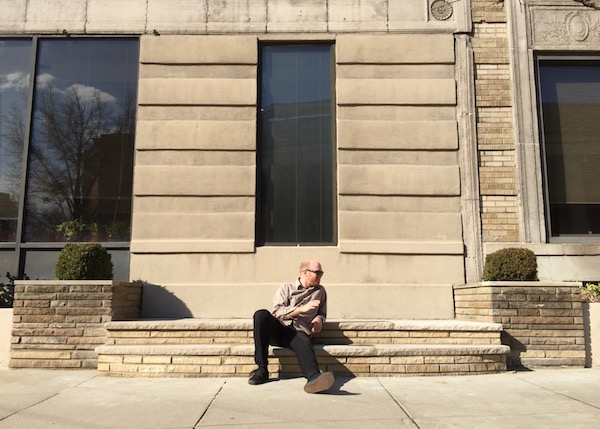
Man relaxing on unused, but well-maintained entry steps to apartment building in Pittsburgh, PA

At least one guy uses this thing. The Thomasson, after a full rehab, March, 2016

We got really interested in Thomassons from a story of the same name on the great 99% Invisible podcast. A Thomasson, as defined by the Japanese artist Akasegawa Genpei who first identified and named them, is an architectural leftover or vestige that no longer has any use and is actively maintained. The name is a reference to one Gary Thomasson, a baseball player who, through twist of fate and contractual obligations was paid to ride the bench–ineffective, but maintained. [The podcast has that whole backstory.] Pittsburgh Orbit became obsessed with finding a local Thomasson.

Pittsburgh is littered with evidence of architectural decay. The giant extant former stone supports of the old Point and Manchester bridges downtown or the countless foundations of long-gone hillside houses come to mind–but there are plenty of examples. The tricky part in identifying a Thomasson is in finding one that people are still actively taking care of.

Bellefield Tower and Bellefield Clinic, Pittsburgh, PA

Bellefield Tower, Oakland. The mother of all Thomassons or still in use?

Bellefield Tower, at the corner of Fifth and Bellefield streets in Oakland, is a potentially glorious Thomasson–we could go as far as saying the mother of all Thomassons. But does it count? Bellefield is a freestanding bell tower that appears to have outlived the church (we assume?) it was once attached to. It’s now mere feet from the curved puce and mauve shopping mall chic exterior of Bellefield Clinic, making for possibly the most painfully awkward architectural juxtaposition in the city.

But does the tower really have no current use? It’s hard to say–this blogger has never heard its bell ringing, and it seems too small and awkwardly-shaped for much else. But possibly the clinic stores scrubs and hypodermic needles there. Maybe a couple of lucky administrative employees get solo offices, each with a tiny staircase. The point is, it could be in use. An investigation is in order*, but we’re not ready to call this a Thomasson…yet.

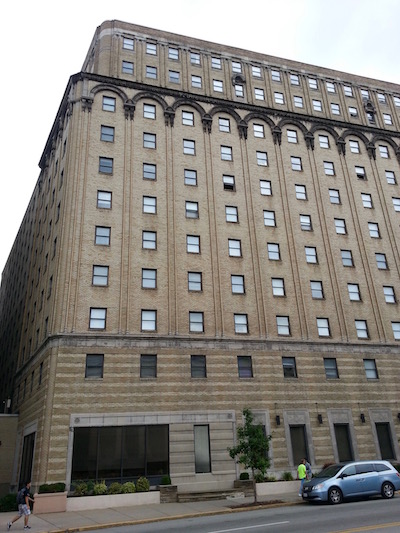
Apartment building on Fifth Avenue, Pittsburgh, PA

In context: Webster Hall’s Thomasson (pre-rebuild), Summer, 2015

Luckily, though, almost right next door, on the corner of Dithridge and Fifth Avenue, sits Webster Hall and what is an undeniable Thomasson. The eleven-story apartment building clearly used to hold something like lunch counters, or maybe retail spaces, on each ground floor corner–you can tell by the decorative masonry work and big window openings. There’s also a strange pair of steps that lead up to a now-bricked-in and glassed-over former entry point. It’s dressed-up with a pair of inviting potted boxwood shrubs, but they’re not fooling this blogger: in nine years of working a block away, I’ve never seen anyone (except The Orbit‘s hired stooge/model) use this as a resting spot. And why would you? As steps, they’re an uncomfortable, awkward seat–there’s no back and not enough leg room–and who wants to relax on busy/noisy Fifth Avenue when you could walk two blocks and be in Schenley Plaza?

Work truck and crew repairing unused steps on apartment building, Pittsburgh, PA

The Thomasson during reconstruction, Feb. 2016

The steps are also undeniably under active maintenance. By last fall, they had lost some of their mortar, causing stones to shift and structure to break apart. The coming of winter only made it worse. When Team Orbit spotted a work crew out front in January it led to some great group rubber-necking and speculation, trying to get a glimpse at what was happening under the mysterious plastic tent. Would they tear up the downtrodden, useless steps-to-nowhere, dashing our hopes that this was our first legit Thomasson? Or was the crew there to make things right–to enpower Oakland’s pedestrians to once again bypass this funny stoop on their way to more pleasant places of repose?

Well, by this point in the story it’s no surprise that the workers came armed with mortar and trowels (not a jackhammer) and we can happily report that the Thomasson is alive and looking as good as new. To Pittsburgh’s other Thomassons, hang in there: we’re coming for you!


* Yes: finding out what’s up with Bellefield Tower is on The Orbit‘s big list!


Murals of the Sewickley Speakeasy

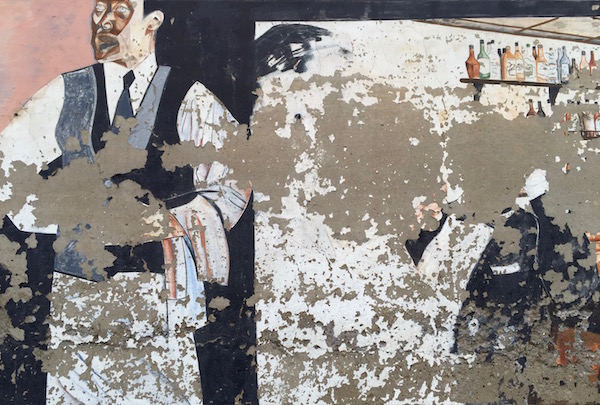
disintegrating mural from Sewickley Speakeasy, Sewickley, PA

Waiter

Nothing lasts forever, we know this. This is especially true of art, which is produced in much greater quantity than there is demand, often in fragile formats and up to extremely subjective taste and value judgement. But to have one’s canvas get dusty in the basement or torn in a move has got to be a wholly different experience than watching the slow-motion disintegration of something as large and inescapable as a giant public mural right along a major thoroughfare where passers-by literally can’t miss it.

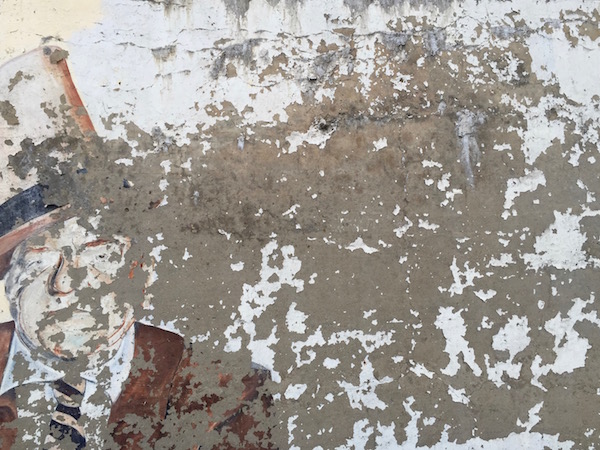
disintegrating mural from Sewickley Speakeasy, Sewickley, PA

George Gershwin

The Murals of the Sewickley Speakeasy have a lot going against them, at least in terms of longevity. First, they’ve got to deal with an inhospitable Western Pennsylvania climate–drastic temperature fluctuations, dense humidity, snow, ice, sleet, rain, and, yes, occasional bright sunshine. Then, they’ve been painted on a retaining wall holding back a steep incline. The hillside runoff alone, leaching through the concrete, would likely separate paint from surface material in short order. Add to this the wall’s position, mere feet from busy Route 65, which must receive plenty of kicked-up salt, exhaust, and road debris.

disintegrating mural from Sewickley Speakeasy, Sewickley, PA

W.C. Fields

Given all that, maybe it’s no surprise the murals have weathered so severely in not even twenty years. We don’t know what they looked like when the paint was fresh, but even with an obvious nostalgia theme in mind, dollars to doughnuts they didn’t have the washed-out, sepia-toned color you’ll find today–and that’s where you can still make out an image at all. On large stretches of the seven mural sections, great amounts of the underlying paint and nearly all of the recognizable figures are gone.

disintegrating mural from Sewickley Speakeasy, Sewickley, PA

Greta Garbo

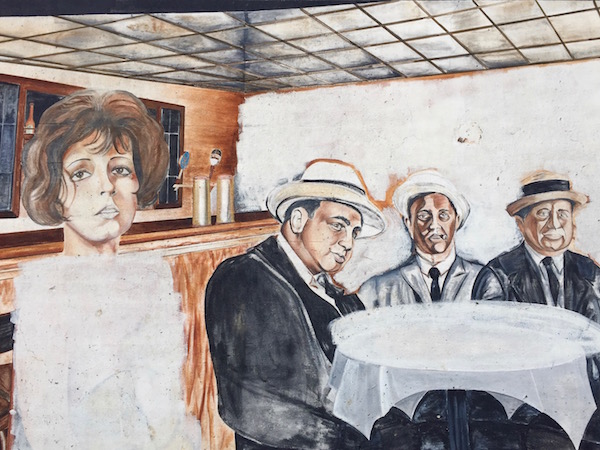
What’s left, though, is beautiful and tragic. I’m sure when the owners of the Sewickley Speakeasy commissioned these pieces they set out for an inviting, mood-setting series of vignettes to invoke not just the conviviality of any great nightspot, but certainly also the high-style/wink-and-nod underground romanticism of Jazz Age urban life–a place where some of America’s greatest musicians and movie stars mixed with politicians, bootleggers, flappers, and toe-tappers (not to mention the penciled-in family members of the bar’s owner).

Some of that still shines through the cracks, but mostly we get ghosts–fractured, fallen apart, and disappearing into clouds of base primer and bare concrete. In some cases, the remaining images are astonishing. George Gershwin, still nearly intact but soot-covered enough to look as in black face, sits at an invisible piano. W.C. Fields, with cocked top hat and great drunkard’s schnoz, is clearly identifiable against a blitzed-out snowstorm of fragmented paint chips. All smiles, Bill “Bojangles” Robinson and Pittsburgh’s-own Lena Horne still look like they’re having fun, oblivious to the dust storm blowing in fast*.

disintegrating mural from Sewickley Speakeasy, Sewickley, PA

Bill “Bojangles” Robinson, Lena Horne, piano player

The Orbit reached out to August Vernon, the artist who painted the murals back in 1999, but either he doesn’t want to talk to us or he really doesn’t check his email. From what we can tell, Vernon continues to paint large-scale murals, but now from a home base in a warmer, sunnier climate (either Florida or South Carolina–his web site lists both). The artist’s changes in latitude have likely put grimy Route 65 and the Sewickley Speakeasy murals far in his pastel-colored rearview mirror. That’s too bad, as we really wanted to know what the experience is like to see such an epic project fall into this nether state and what the outlook is like for a working artist who must confront this potential deterioration on a daily basis. We’d also love to get his memories on creating the Speakeasy murals.

At this point it seems unlikely we’ll hear from Vernon, and if so, that’s something he shares with his most famous characters. We’ll never know the real Clara Bow, or Rudolf Valentino, or Bette Davis. The world was left with their films, and we’ve got Vernon’s painted tributes–at least, until they’re gone with the wind.

disintegrating mural from Sewickley Speakeasy, Sewickley, PA

Clara Bow, Al Capone and friends


* Help identifying some of these characters from an entry on pghmurals.com based on a 1999 Post Gazette article by Barbara Cloud.


The Frankenstein Hillside of Woods Run

Hillside with embedded bricks and cinderblocks, Pittsburgh, PA

The Frankenstein hillside of Woods Run (detail)

This is about as Pittsburgh as it gets. A steep, nearly vertical, hillside forms a natural boundary between two distinct neighborhoods–Brighton Heights up above and Woods Run down below. Hillside erosion (or the threat thereof) has forced the hand of…someone (the city? industry? private property owners?) to infill cracks and fissures in the bare rock, but they’ve done it in the cheapest, most ramshackle way possible. It’s kind of like creating the goofy colored belt system instead of actually building any new highways–but to solve erosion issues instead of…directional? [The belts certainly do nothing for traffic.] In both cases, The Orbit applauds this philosophy of low-tech, minimally-destructive, infrastructure recycling.

Hillside with embedded bricks and cinderblocks, Pittsburgh, PA

Even with the bright morning sun shining on them, it’s a little hard to see what’s going on in these photos. The hill probably reaches fifty or sixty feet above street level at its highest and there are at least a handful of houses that back right up near the top edge. At the base is vacant land (today), but likely held row houses, retail, or small industry buildings back in the day.

Irregularly set into the rock face are a mortared collection of various masonry materials–bricks of all shapes, sizes, and colors, as well as cinderblocks, paving stones, and poured concrete. The overall effect is as if some bygone cheapskate public works director gave the order to “just fill the cracks with whatever you have laying around.”

Hillside with embedded bricks and cinderblocks, Pittsburgh, PA

The combination is beautiful, weird, and, yes, looks like the work of a mad scientist, or maybe a mad civil engineer. There’s the very awkward collision of nature and technology–like a brick and stone cyborg, only this one wants to keep loose rock from falling on you instead of hunting you down for crimes you’ll inevitably commit in the future. The spare parts and junk shop chic is something any crazy inventor with a bricklaying hobby would be proud of. The hill’s vertical face is rendered in wonderful 3-D, at points both smooth and jagged, metric and chock-a-block–it gives the whole enterprise this incredible depth and texture. Seeing these on a clear day, in the A.M. (when the eastern sun lights them up), will match any gallery experience. We guarantee it, just like Dr. Frankenstein did.

Hillside with embedded bricks and cinderblocks, Pittsburgh, PA

Getting there: The Frankenstein hillside runs along the dog-legged stretch of Woods Run Ave. between Eckert St. and McClure, right across the street from Mr. Jack’s Neighborhood Bar (“No guns. No knives.”)–just look up. Cyclists will be well aware of this particular patch of road as it’s the primary route from the very end of the river bike trail by the old jail to points west and north.

Ansell Regrettal: A Ross Township Donnybrook

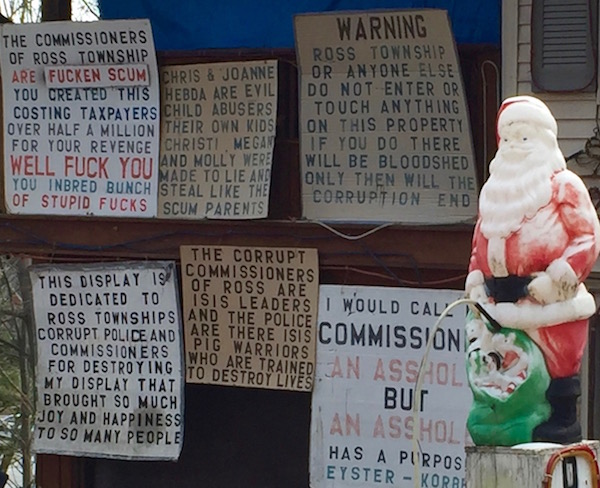
Santa Claus lawn ornament with protest signs against Ross Township leadership

Merry Christmas from Ross Township

“A man curses because he doesn’t have the words to say what’s on his mind.” — Malcolm X

This grew-up-in-The-South-where-we-don’t-wear-watches-or-curse blogger has tacitly agreed with Mr. X, though it was mainly because he finds the habit so ugly…and uncreative…and put on. People who cuss a lot always seem like they’re play-acting clichéd roles they’ve seen in tough-guy movies, or they’re trying to impress or intimidate somebody. That said, it would be hard to suggest that Bill Ansell has any difficulty expressing what’s on his mind, and he uses plenty of four-letter-words to do it.

Regular readers of The Orbit will appreciate that this digital publication generally steers clear of both controversy and vulgarity. Perhaps it is fitting, then, that today’s post breaks with past rules, mores, and highfalutin standards with a story all about salty language, neighbor-against-neighbor suburban strife, Christmas gone bad, and one guy who refuses to play by the rules. Those easily offended should probably stop right here.

White pickup truck loaded with plastic lawn ornaments, children's toys, and a portatoilet, Ross Township, PA

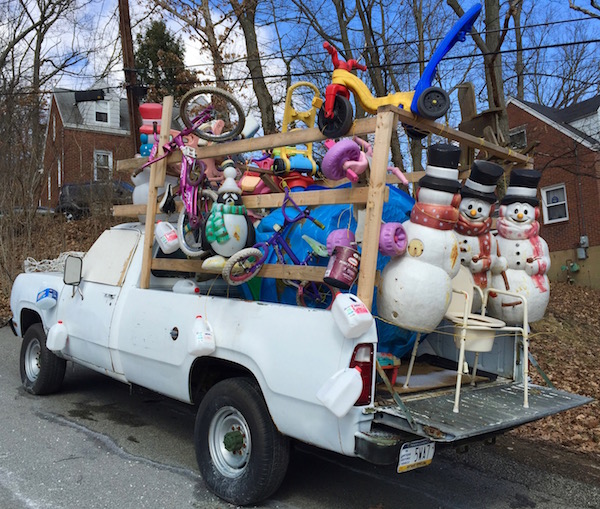
“My other car is a sleigh”

In addition to not liking the blue language, we also hate to get scooped. But even though this story has been going around for years, it was new to us. It goes back at least to 2007 when Bill Ansell, a Ross Township electrician, began to have a series of run-ins with his neighbors, the municipality, and the local constabulary as documented in the William Ansell v. Ross Township suit. In a nutshell, the case seems to revolve around Ansell’s over-the-top holiday displays, ensuing complaints from his neighbors, and some amount of legal action. More recently, WPXI ran a report on Ansell re-lighting his uniquely-offensive string of lights. [More on this, below.] Seeing these reports with their blurred images of the offending words and vague reports of detritus in the Ansell yard, we knew we had to see the place for ourselves.
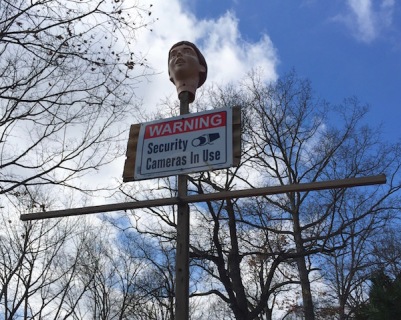
Plastic head on cross with "Security cameras in use" sign, Ross Township, PA

This guy is watching you

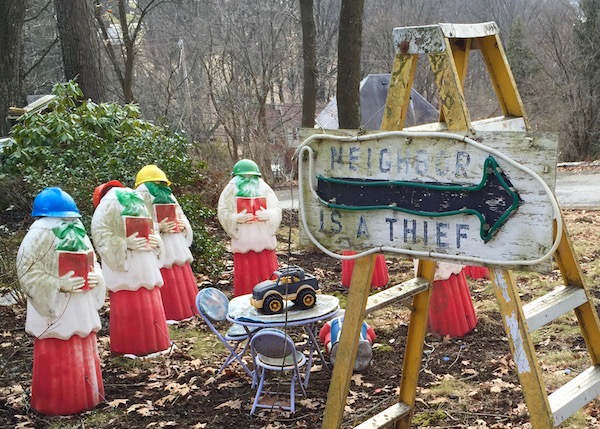
And what a sight it is to see! Tiny Fairley Road is really just a paved circle containing seven otherwise unremarkable residences. Bill Ansell’s is the only house sitting in the island formed by the looped street and as such, it has a large, awkwardly-shaped oval plot. About a third of the yard is covered with blue plastic tarps with an array of broken children’s toys and mangled plastic Christmas displays holding down the fabric. At the property’s edge are a series of plastic (mannequin?) heads on staked crosses featuring Warning: security cameras in use signs and hand-written inscriptions like “God’s country.” Ansell’s white pickup truck is parked on the street and comes loaded with a Santa-sized cargo of discarded toys, holiday lawn ornaments, and one portatoilet. The side yard has a chorus of headless carolers, each with a safety helmet over its empty neck hole, and a home-made light-up arrow sign that reads Neighbor is a thief.
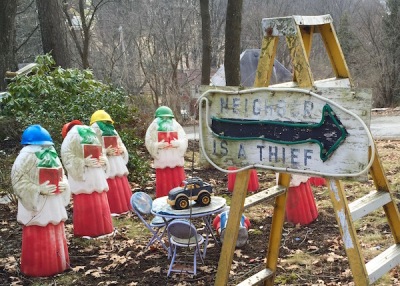
Handmade wooden sign with arrow reading "Neighbor is a Thief" with choir member lawn ornaments missing heads, Ross Township, PA

“Neighbor is a Thief”, headless choir

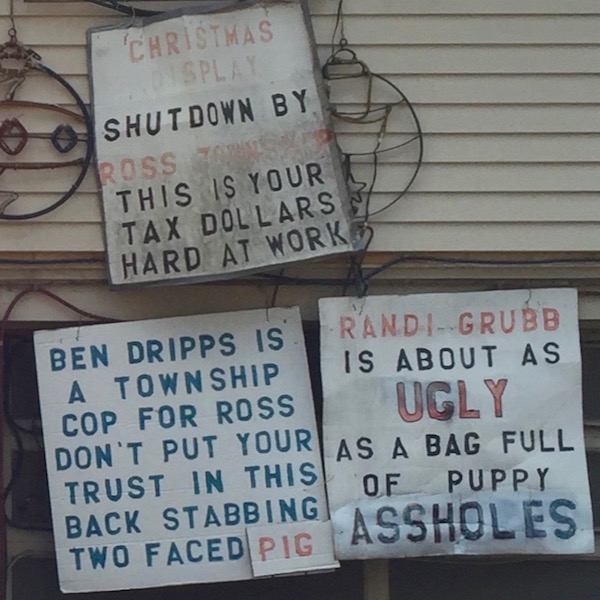
If it ended there, this would just be an oddball story about somebody getting a little nutty with the lawn decoration. But it is the front of the house that really takes this story from News of the Weird to, uh, Village of the Damned.  There is more playground equipment, one Santa Claus that lights up to appear as if urinating electrons, and then there are the crazy-man banners. Nine large boards, each hand lettered in precise stencils, act as an open hail of rage against what appears to be everyone who’s ever questioned Ansell’s displays: the commissioners of Ross Township, Ansell’s neighbors (and their children), and the Ross police force.

Christmas lights arranged to spell "Fuck Ross Township", Ross Township, PA

The lights that started it all, lit up in the only decent photo we could find [photo: Brody Barbour]

If you’ve followed this story at all, you know that Ansell’s coup de grâce is a string of Christmas lights that spell out FUCK ROSS TOWNSHIP in giant letters that span the full width of the house. We went back at night to get a photo, but alas, they were dark–the township and Ansell seem to have reached some accord on this particular issue. Rest assured, everything else on the property was lit up like some weird prison holiday scene. Huge outward-facing flood lights seemed aimed to catch–or at least intimidate–would-be vandals and assailants. At the same time, bladder-control Santa, the carolers, one headless wise man, etc. had their eyes all aglow in the hopes that Uncle Bill might bring them a new cardboard screed to darken the new year.
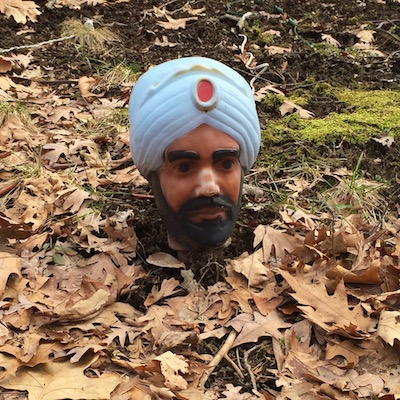
Head of wise man lawn ornament, Ross Township, PA

Maybe not-so-wise man

The Orbit would love to get Bill Ansell’s side of the story, but frankly, we’re scared of him. The threat “there will be bloodshed” for “enter(ing) or touch(ing) anything on (Ansell’s) property” seems pretty clear. The arrest details from the court case list a number of loaded weapons stored in the house and kept at arm’s reach, including a shotgun and several pistols, so he certainly seems well-equipped for violence. We’ll do our reporting from the public space on the pavement, thank you very much.
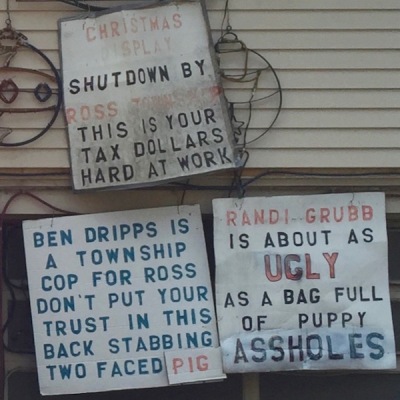
handmade protest signs on house, Ross Township, PA

It is a strange, sad scene, indeed. Pittsburgh Orbit has made a theme of celebrating the rapidly-disappearing evidence of life actually touched by the human hand as well as endeavors at creativity and individualism in all areas–hell, that’s why we’re reporting this story. Bill Ansell certainly possesses all of these. But the untethered anger, armed threats of violence, and extreme paranoia are a lethal combination we sadly hear about all the time. These usually end with a candlelight vigil and a Republican call for prayer. Hey–maybe it will work this time! To the fine people of Ross Township, and especially those immediate neighbors on Fairley Road, we feel for you.

UPDATE (16 December, 2016): A previous version of this story included the FUCK ROSS TOWNSHIP photo credited to “unknown/The Internet”. The photographer, Brody Barbour has since alerted us to his authorship and we’ve updated the credit.


Sources: