Ghost Sign Story: The Butcher, The Baker, The Soda-Pop Maker

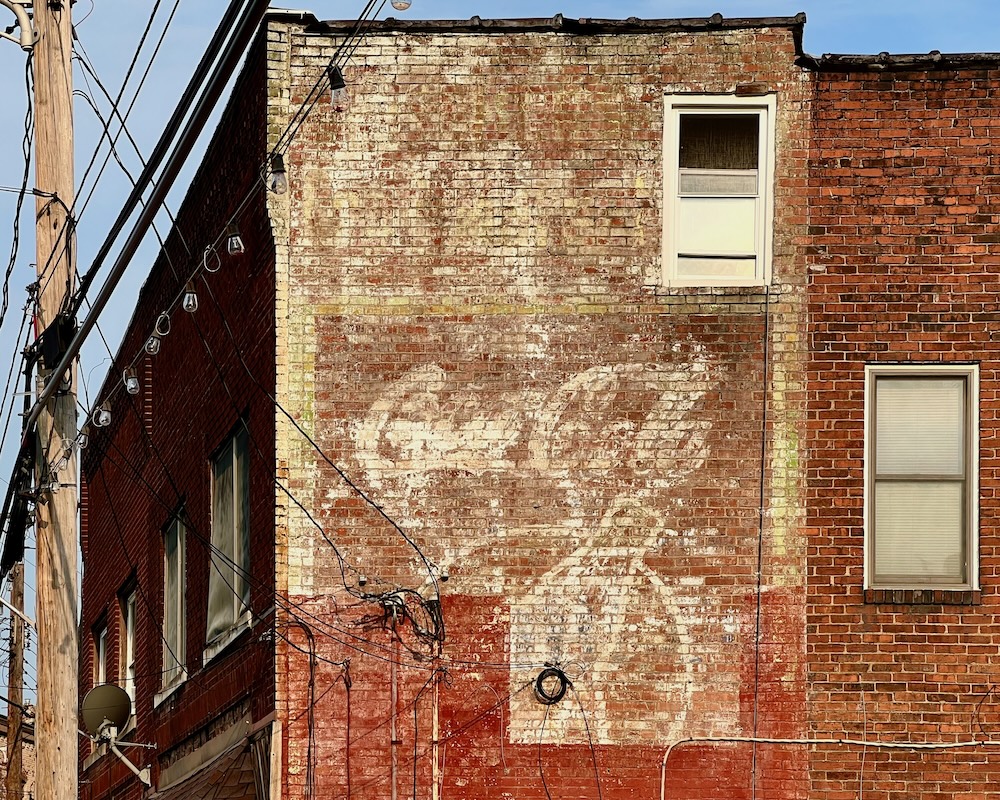
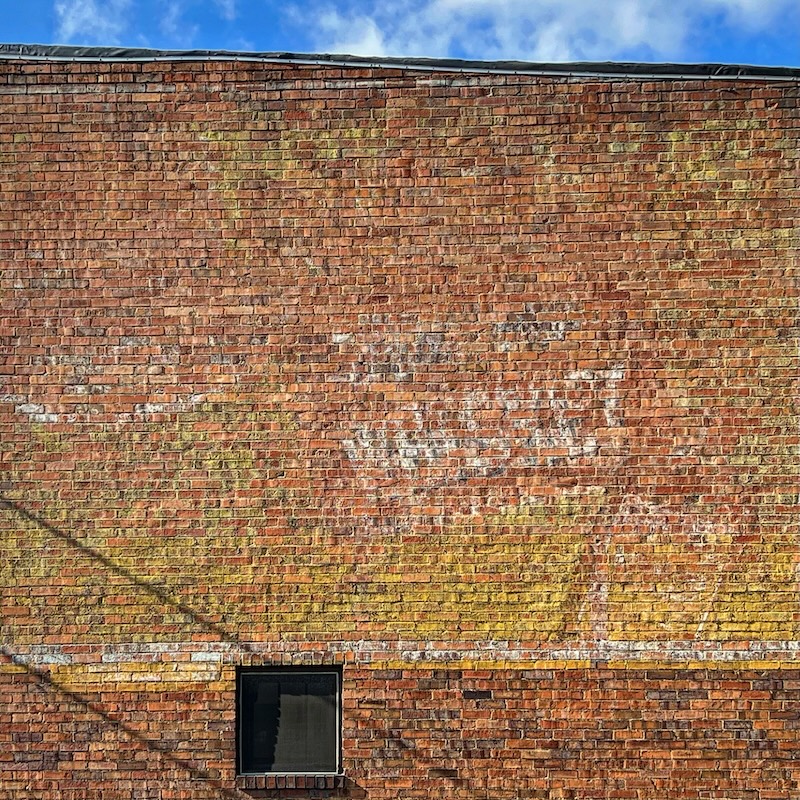
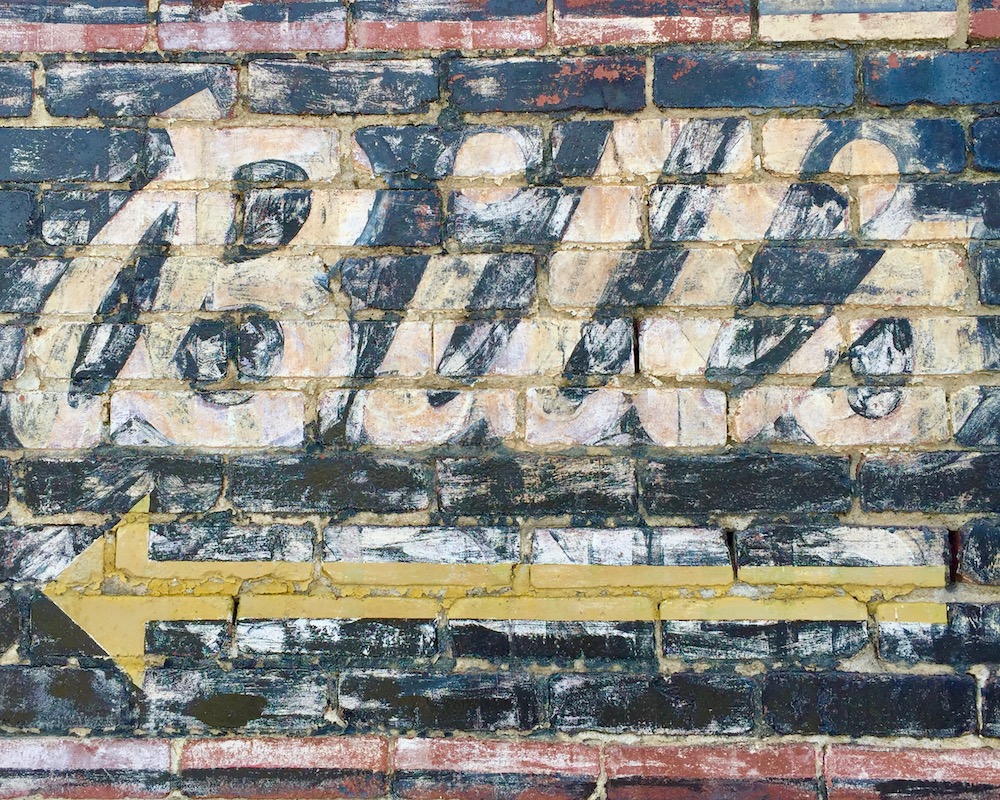
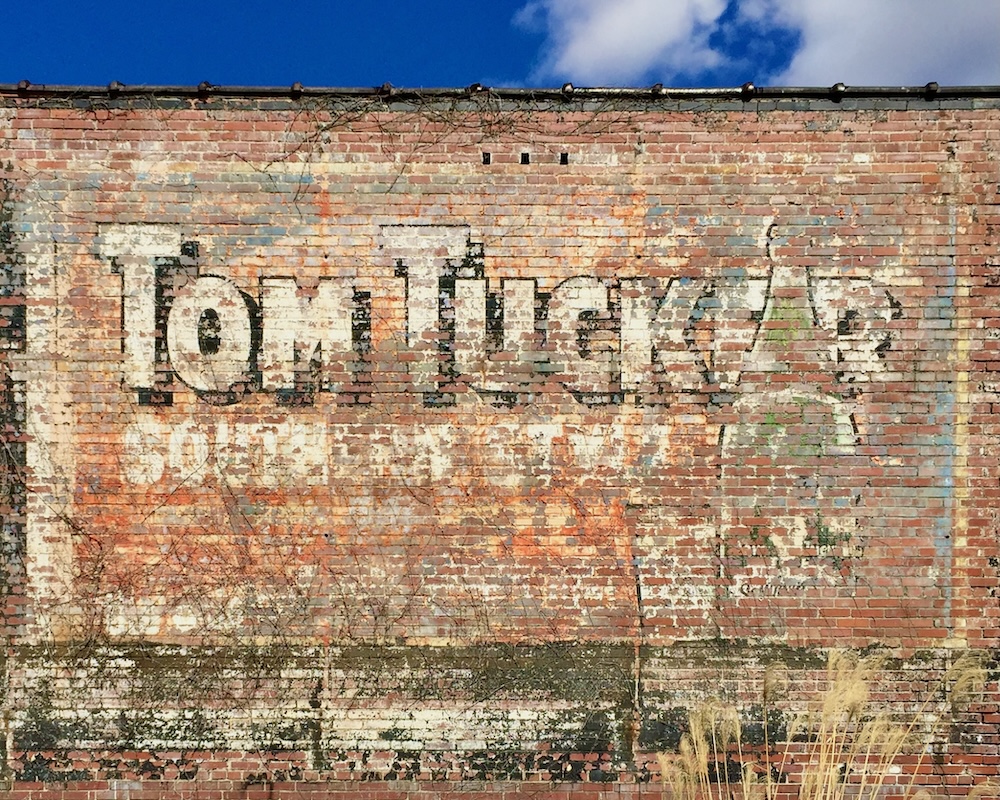
brick wall painted with faded advertisement for Tom Tucker ginger ale
A painted ghost sign for Tom Tucker “That dirty mother … lover” Southern-style Mint Ginger Ale, probably from the 1950s-60s, faded and worn but still holding on. Brighton Road, Perry South.

Blocked by a freestanding billboard for decades, the advertisement for Tom Tucker Southern-style Mint Ginger Ale may as well have been unearthed by archaeologists when it arrived out-of-the-blue a few years ago.

A person can still purchase Tom Tucker, but it won’t come in a 32-ounce green glass bottle anymore. Looking every bit the champagne of Southern-style mint ginger ales it is, the big bottle was painted directly onto a two-story brick wall of a row house along Brighton Road probably 60 or 70 years ago.

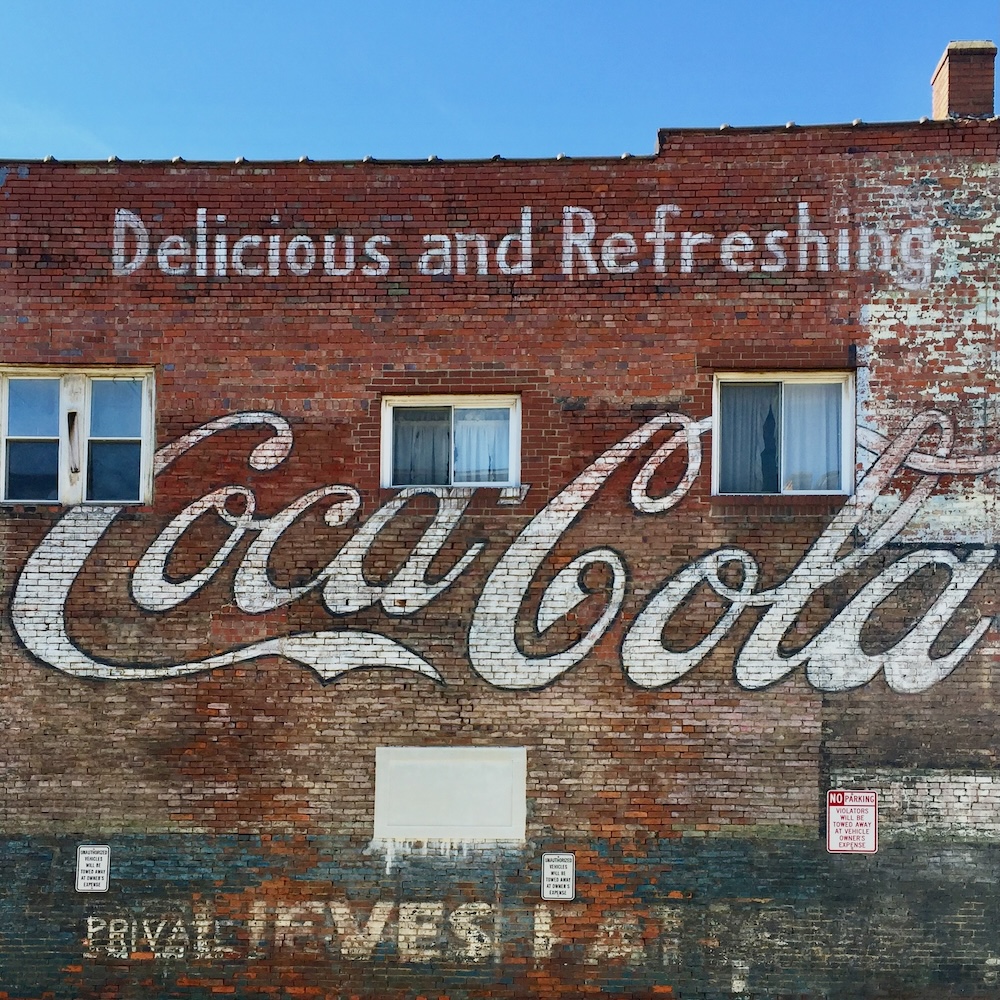
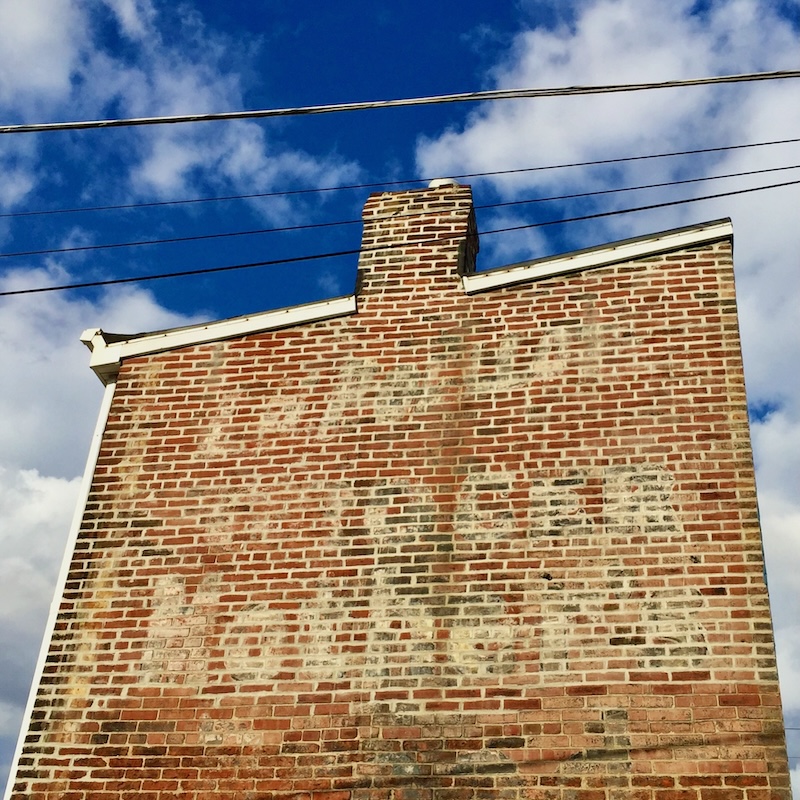
brick wall painted with faded advertisement for Coca-Cola
A solid investment. Coca-Cola ad still working today, Tarentum

We deal in ghosts, The Orbit. Ghosts of people that lived here, sure, but ghost houses too. There was an entire ghost neighborhood in Clairton until it disappeared completely. At some point we’ll get to our collections of ghost barbers, ghost taverns, and ghost pharmacies out to the world.

Ghost signs, though—the original “ghosts”! Advertising, from a time before billboards were as ubiquitous as they are now, was created by sign painters directly on the brick walls of buildings in prominent places. We’re lucky so many of them survive and—for the companies that persist, at least—one has to believe it was a solid investment to pay for one wall in 1960 and still have it working for them today.

We’ve got so many ghost sign photos in the backlog that we’re going to break up the collection into some themes. This week: food & drink edition. We’ll get to the other stuff soon.

Soda-Pop … and other beverages

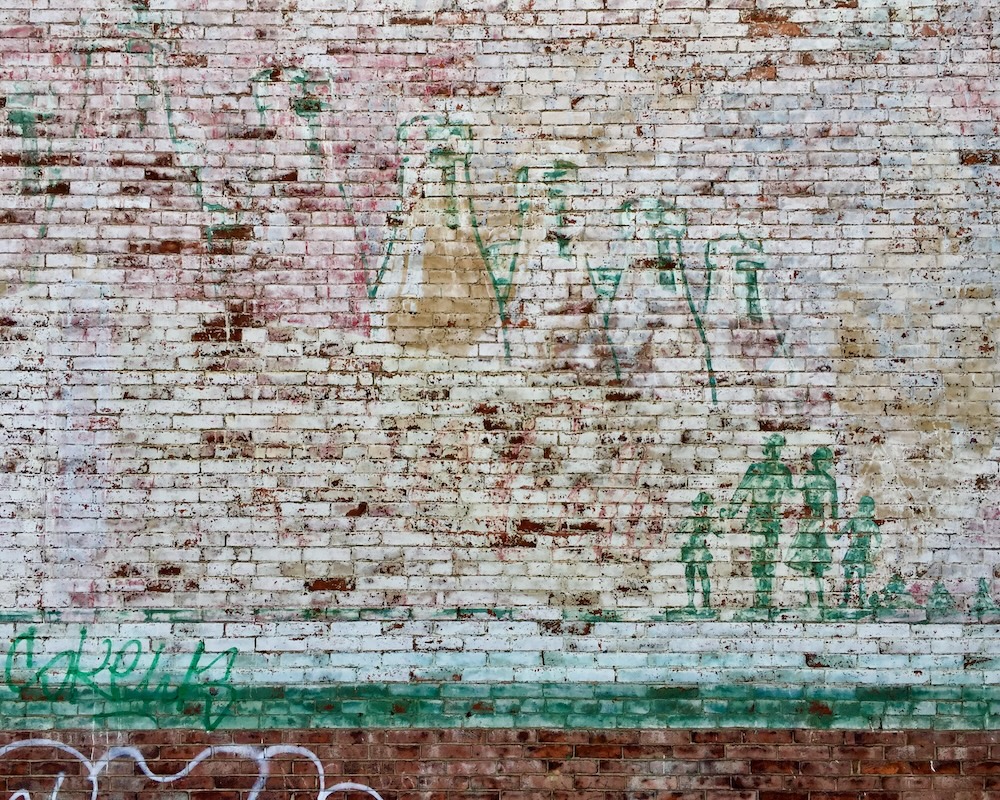
brick wall painted with faded advertisement including glass bottles
(unknown) giant pop bottles with a family rightfully in awe, Uptown
brick wall painted with faded advertisement for Coca-Cola
Coca-Cola, Sharpsburg
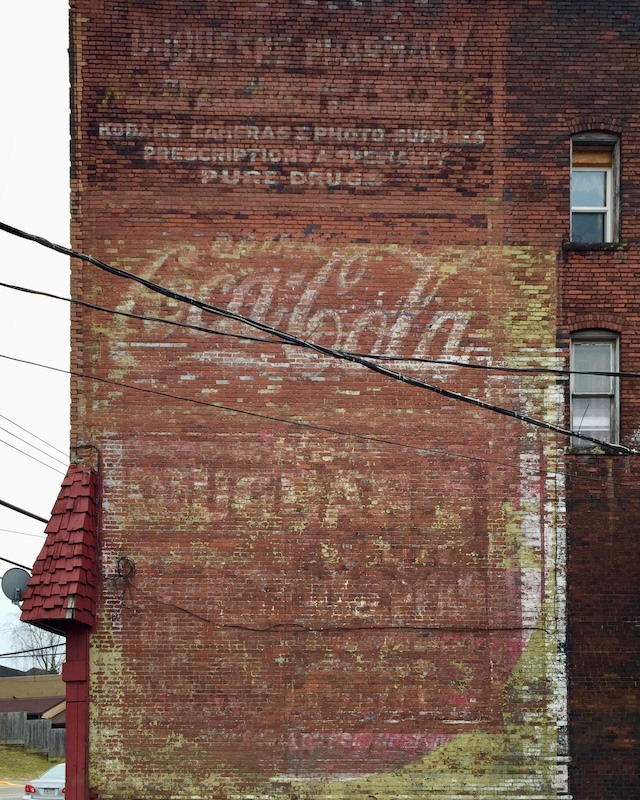
brick wall painted with faded advertisement for Coca-Cola
Duquesne Pharmacy / Coca-Cola, Duquesne
brick wall painted with faded advertisement for Squirt soda-pop
Kempler’s Deli Market / Squirt, Weirton, WV
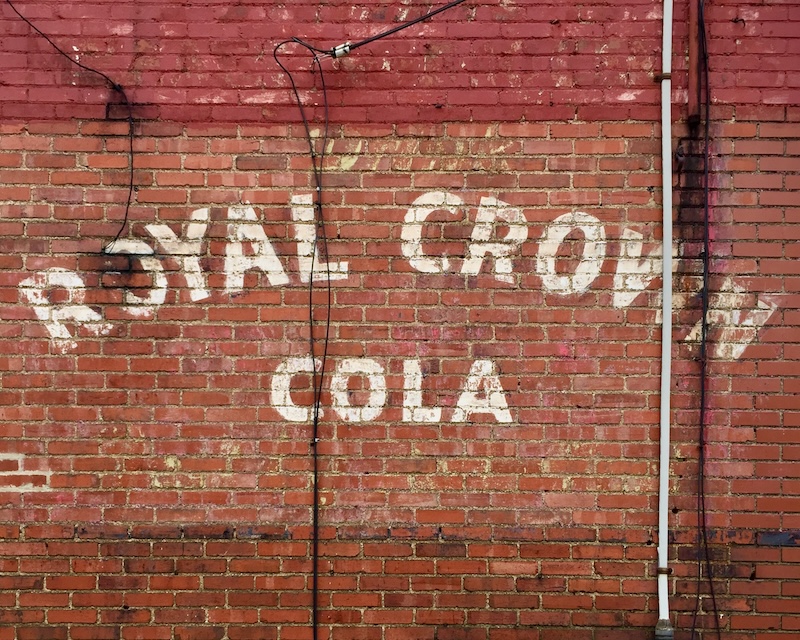
brick wall painted with faded advertisement for RC Cola
Royal Crown Cola, Duquesne
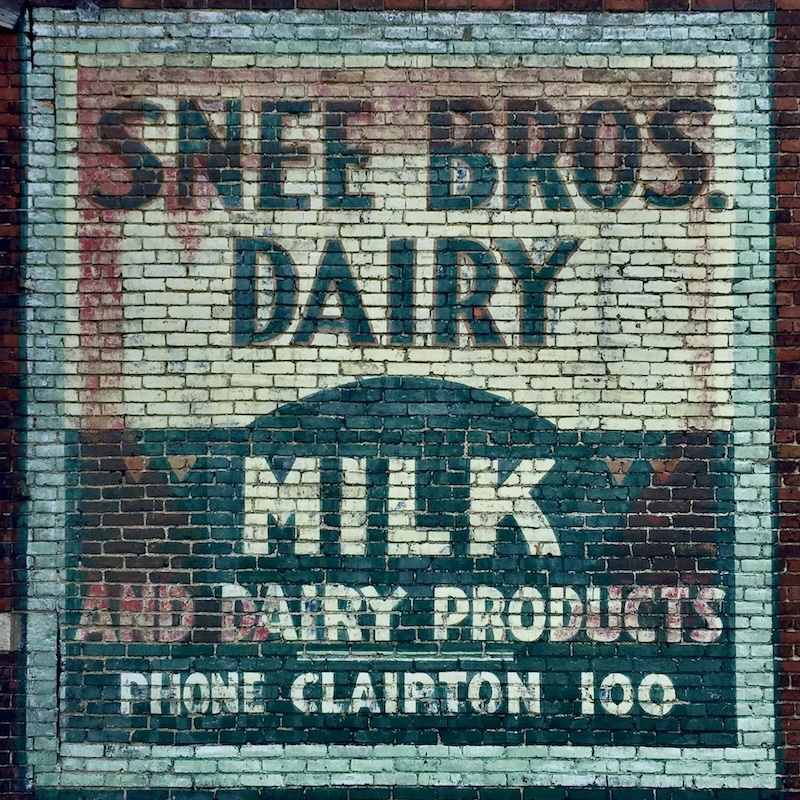
brick wall painted with faded advertisement for long-gone dairy
Snee Bros. Dairy, Clairton
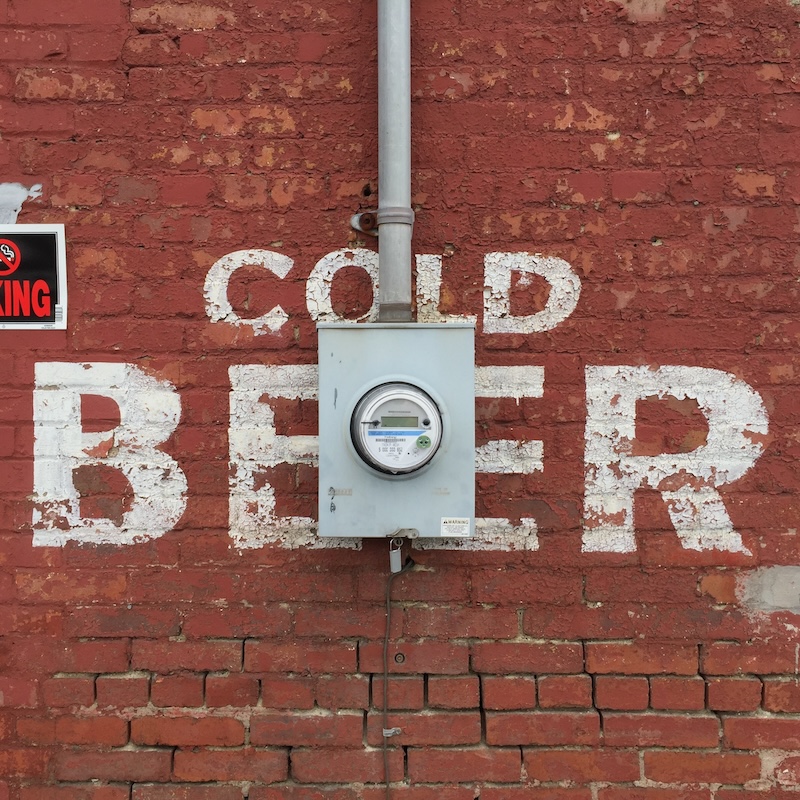
brick wall painted with faded advertisement for cold beer
Cold Beer, Monongahela [1]
faded ghost sign for long-gone liquor store
Cut Rate Liquor Store, Cumberland, MD
brick wall painted with very whiskey advertisement
(unknown) Whiskey, Ambridge

Junk Food Junkies

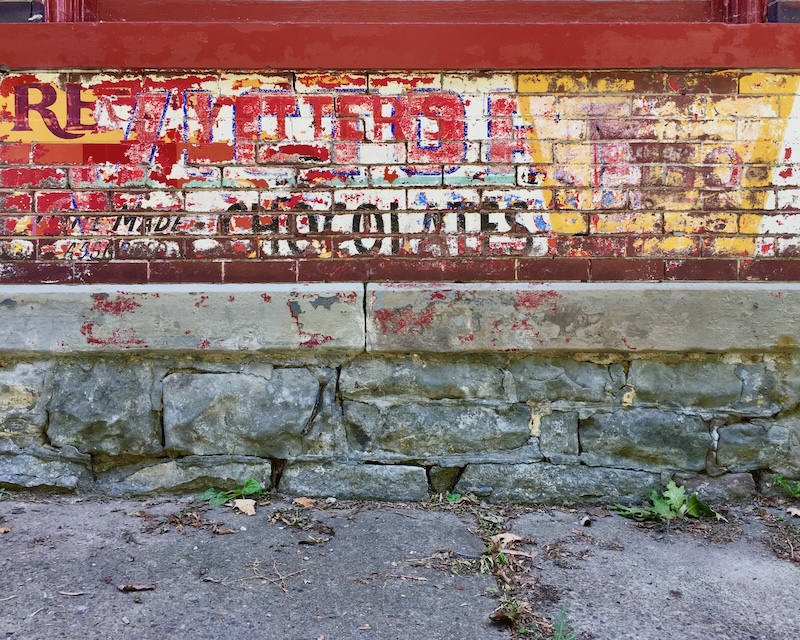
brick wall painted with many layers of faded advertisements
Yetter’s Chocolates, et al. Millvale
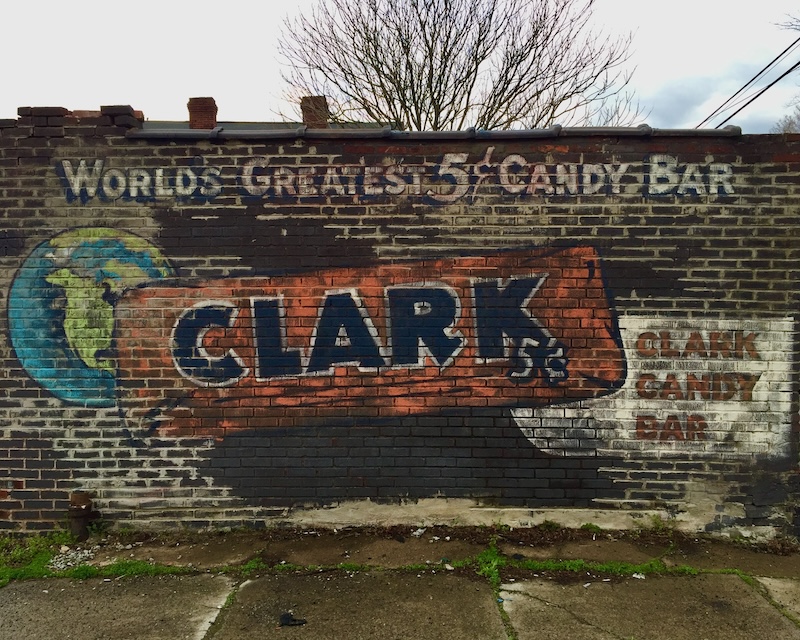
brick wall painted with faded advertisement for Clark candy bars
Clark Bar, Hill District [2]
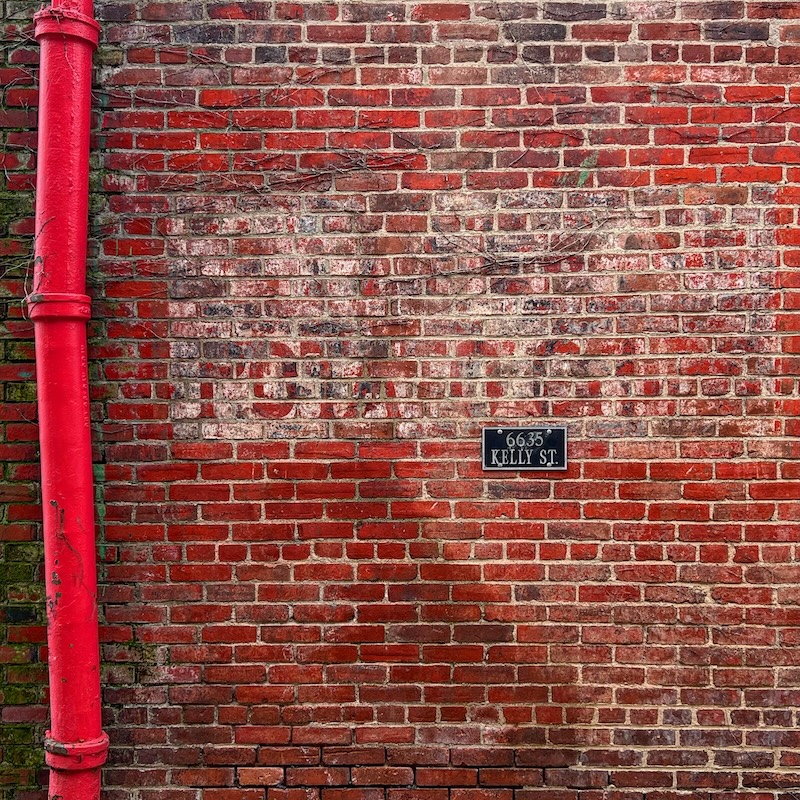
brick wall painted with faded advertisement for potato chips
DeMiller’s Potato Chips, Larimer [3]

Flour Power

ghost sign for Bill's bar painted on brick wall
Bill’s Bakery, East Vandergrift
brick wall painted with faded advertisement for Gold Medal Flour
Henry Wer(?)’s Wholesale Liquor / Gold Medal Flour, Carrick
brick wall painted with faded advertisement for Gold Medal Flour
Gold Medal Flour, McKees Rocks
brick wall painted with faded advertisement for long-gone grocery store
(unknown—LaPollo?) Grocer / Mother’s Best Flour, Lawrenceville
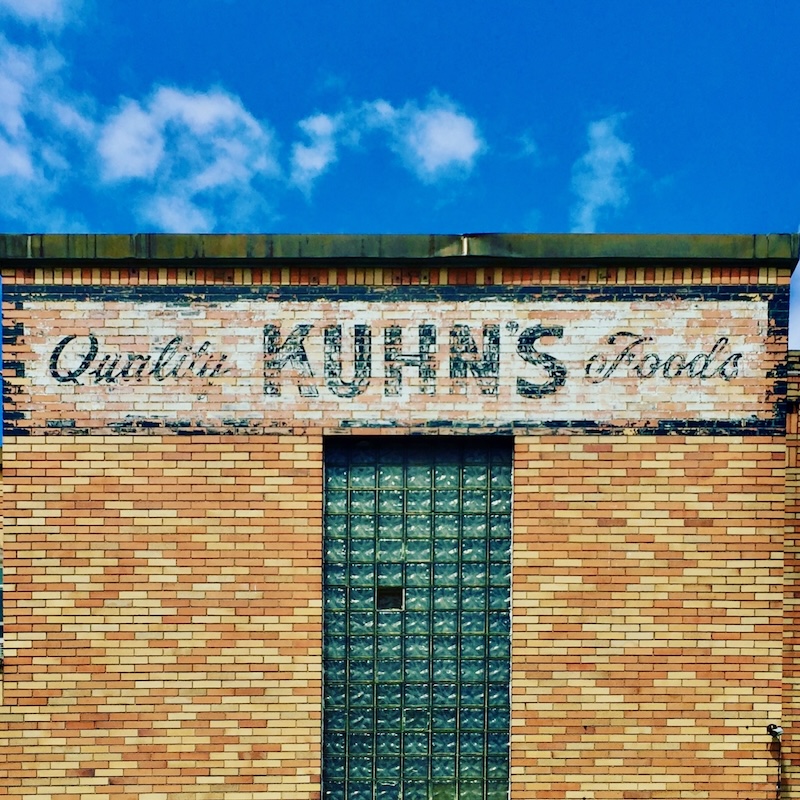
brick wall painted with faded advertisement for Kuhn's grocery store
Kuhn’s Quality Foods, Perry Hilltop [4]
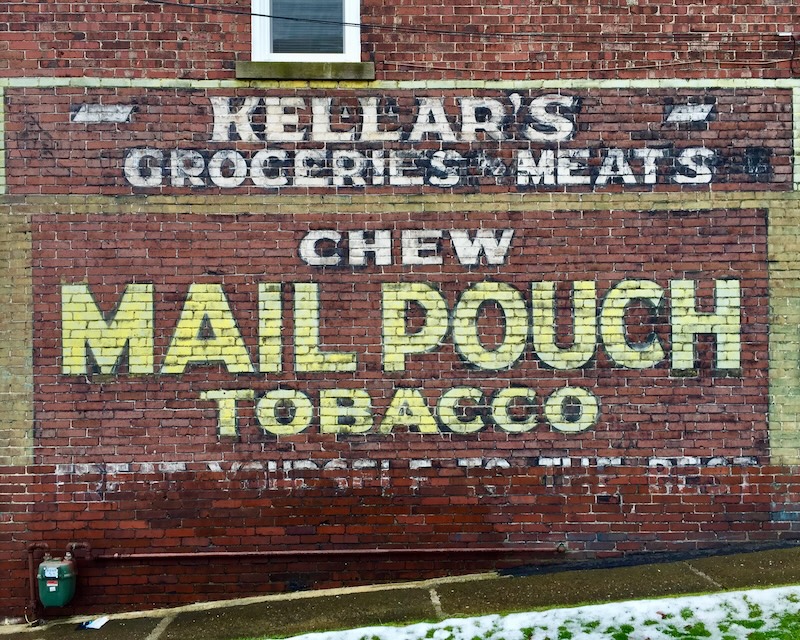
brick wall painted with faded advertisement for Mail Pouch tobacco
Kellar’s Groceries and Meats / Mail Pouch Tobacco, Lyndora
brick wall painted with faded advertisement for Lebanese food store
Mowad’s Mill City Inn, Lebanese Foods …, Aliquippa
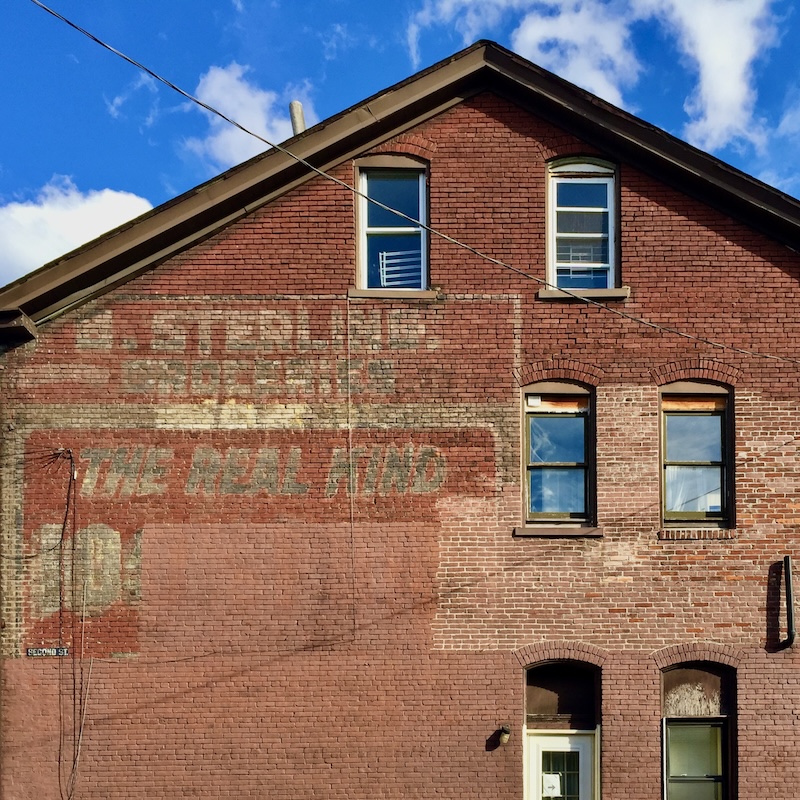
brick wall painted with faded advertisement for long-gone grocery store
E. Sterling Groceries / “The Real Kind,” Sharpsburg
painted sign for Fiore's Home Dressed Meats on brick wall, Pittsburgh, PA
Fiore’s Home Dressed Meats, Larimer [5]
faded ghost sign for butcher painted on brick wall
(unknown) meats, Lawrenceville
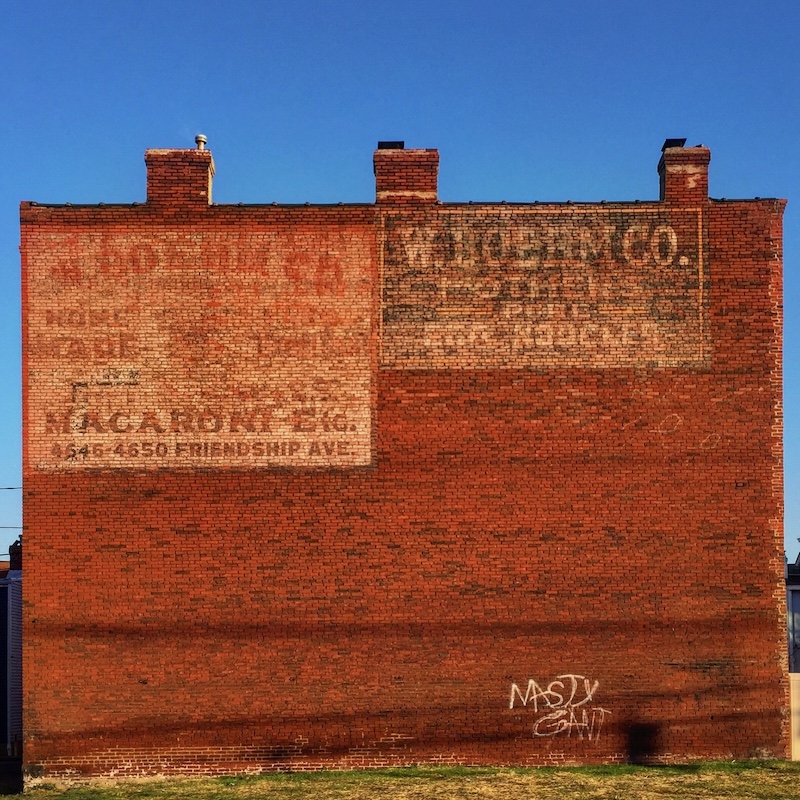
brick wall painted with faded advertisement for W. Boehm Co.
W. Boehm Co. Grocer, Bloomfield [6]

Notes:

[1] Cox Distributing still sells cold beer from this location, but the style of sign painting and subsequent meter placement suggest this may be from an older business.

[2] While this Clark Bar ghost sign looks like some holy grail of the genre, Orbit readers informed us it was created for the film Fences which filmed in the Hill District in 2016.

[3] No, you can’t read the name DeMiller’s in this sign, but somehow astute Orbit reader Maggie Ess identified the building as home to the Keystone Potato Chip Co., 6635 Kelly Street, maker of DeMiller’s chips.

[4] Kuhn’s Quality Foods is still very much a going concern with eight stores in the region, but this brick building on Perrysville Ave. no longer hosts one of them.

[5] Reposted from our earlier story Looking for a Lost Little Italy in Larimer.

[6] Macaroni Etc! This W. Boehm Co. “Manufacturers of Mother’s and Excelsior egg noodles, macaroni, and spaghetti” ghost sign twofer was exposed only when a pair of row houses were demolished on Pearl Street in 2021.

The Over-the-Wall Club: What’s on the Other Side?

looking over graffiti-covered fence and large building to moon in sky
The moon is just one celestial body waiting for us on the other side. Moon morning walls, Lawrenceville

“What’s on the other side?”

That evergreen question-koan has motivated—and haunted—explorers from Leif Erikson to Harry Houdini. The Over-the-Wall Club is no exception.

In our last post, the wall-eyed went deep into the wall. This time the crew looks up, over, and around some of our favorite walls to ponder the mysteries of the universe. What’s on the other side? Sure, but also Where are we going? and What happened before we got here?

Heady stuff, indeed, but we’d expect nothing less from our team of urban alchemists who can stare deep into—and over—a stack of bricks and turn the experience into a portal to another dimension, free of space and time.

Welcome to the rest of your life, just lookout for a few walls along the way.

large new condo building behind old brick wall
Something old and something new, Lawrenceville
large industrial building on sunny day
Big blue, Lawrenceville
large wall painted in four colorful quadrants
Wall quarters, New Kensington
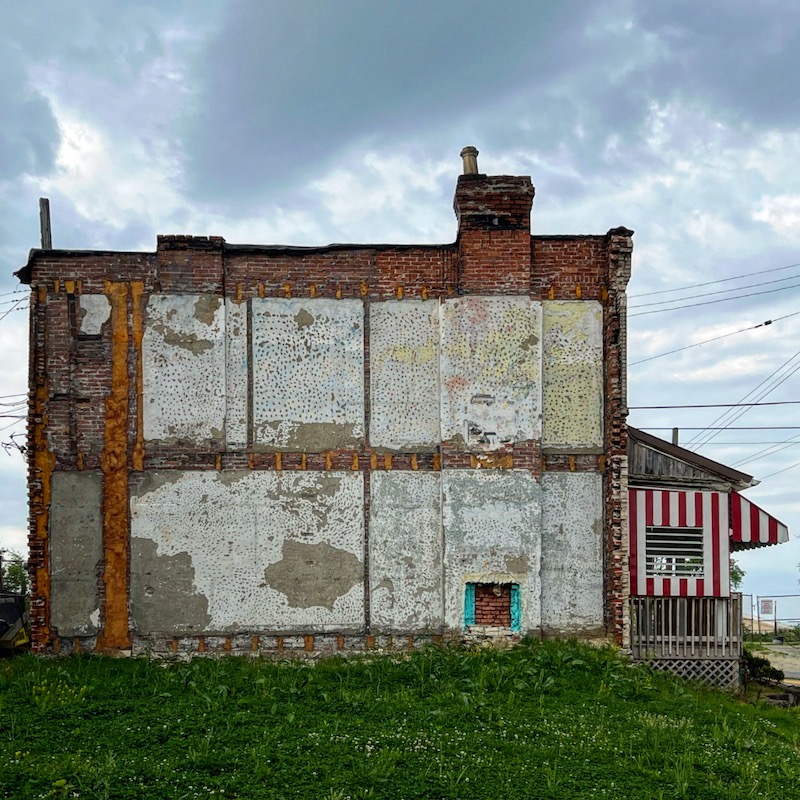
exposed side of brick row house
A house unglued, Knoxville
brick wall with covered-over window
Stay out, Duquesne
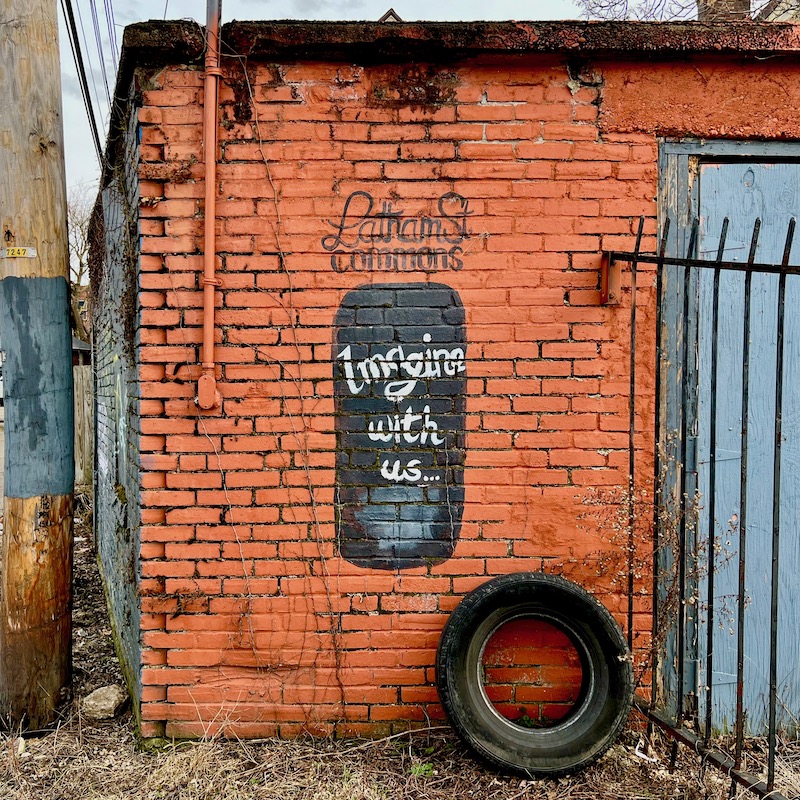
brick garage wall with small mural
Still life with wall and tire, Friendship
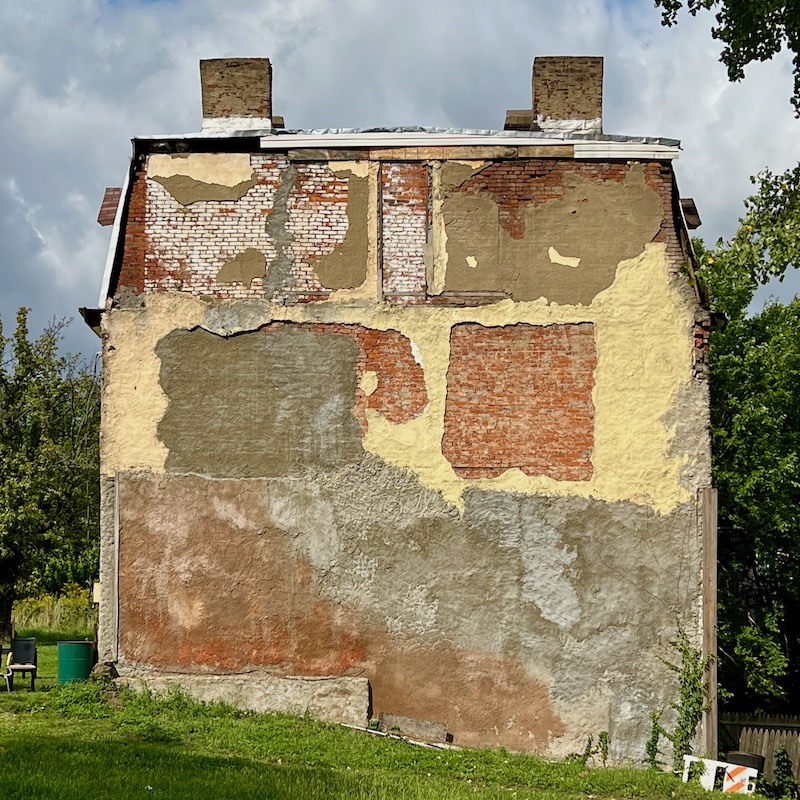
side wall of brick row house with fences
Over-the-fences over-the-wall, Lawrenceville
row house with exposed interior wall of former adjoining house
Inside-out wall, Hill District
large tiled building with wooden fence
If these walls could sing! Bloomfield Liedertafel Singing Society
large brick building with painted message for The Good Time Bar
This way to The Good Time Bar, Millvale

The Over-the-Wall Club: Going Into the Wall

wall with many building materials and colors
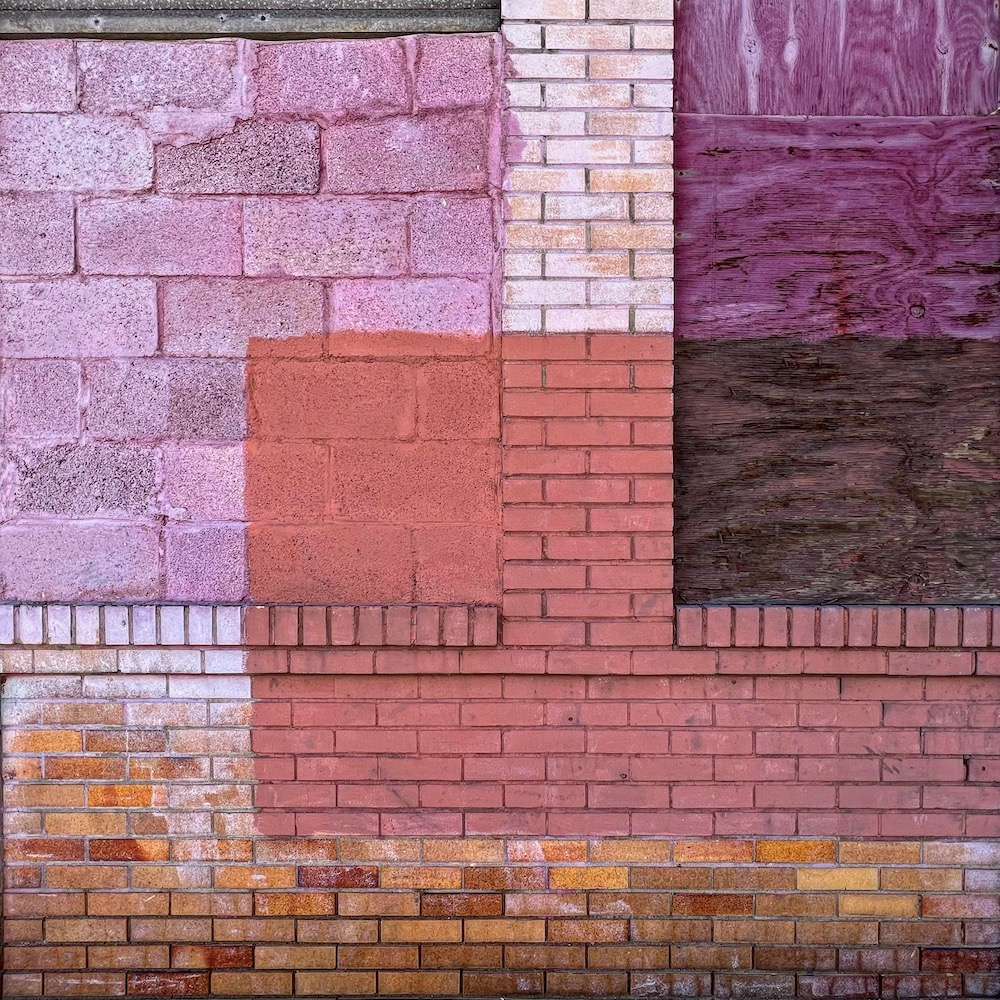
The Taj Mahal of walls, Mt. Oliver

The old building is large enough that it was probably erected for commercial use, but couldn’t have been anything major—a small factory, perhaps, or maybe it served as a distribution point for products we’ll never know.

In the hundred-and-twenty years or so that it’s been standing—we’re just guessing here—the structure’s original orange bricks have been chipped and scarred, graffiti-tagged and painted-over countless times. Along the way, the building’s large windows were filled-in alternately with cinderblock and plywood. These after-market additions have gone through their own battered histories. They now exist as equal partners with complex lives with more in common with the original material than not.

wall partially-covered in tile
Meadville

While this anonymous building on a side street in Mt. Oliver is likely on no one’s radar as an important site among Pittsburgh’s many architectural treasures, it’s a legit rock star to wall enthusiasts. You couldn’t find a better example of pure wall than a middle-height section of interlocking rectangles, rich oranges, purples, reds, and pinks. For those who would travel halfway around the world for such an experience, the Taj Mahal of wall perfection is right up on the hilltop.

brick wall with many paint colors and textures
Bloomfield

It’s been so long since we checked in with The Over-the-Wall Club that the group’s collected bounty runneth over in the most satisfying and thrilling of ways. If you want walls—I’m talkin’ extraordinary, centuries-in-the-making, once-in-a-lifetime walls—we’ve got ’em. Walls that can be stared into to unlock the mysteries of time and space. Walls so beautiful they could be placed in the finest of modern art museums and connoisseurs would ooh and ahh with great gusto. Walls with so much to say they’re not merely worth any old thousand words, but deliver messages to change lives and alter history.

brick wall with geometric painted sections
Uptown

But wait! There’s more! There sure is. We had so many great walls that we’ll have a follow-up where we actually go, you know, over the wall as a counter to today’s experience of going into the wall. Sure, that sounds like a lot of mumbo-jumbo from some dumbo—and it is!—but trust me on this one: you’ll want to be here on this journey of growth and discovery, speculation and fantasy. We’ll see you on the other side.

brick wall painted in multiple shades of red
Rothko wall, Bloomfield
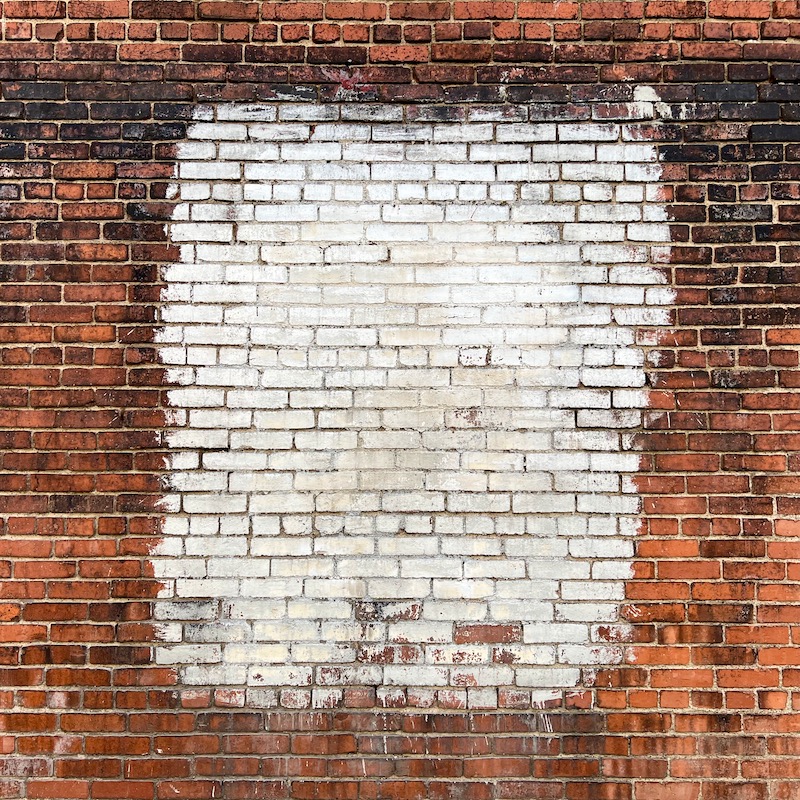
brick wall with painted white rectangle
Rothko wall, Lawrenceville
brick wall with large painted rectangle
Rothko wall, Friendship
brick wall in several shades of red
Rothko wall, Bloomfield
brick wall with doors blockaded by large cement piece
Millvale
brick wall with layers of wood attached
Bloomfield
brick wall with wooden grid
Grid wall, Hill District
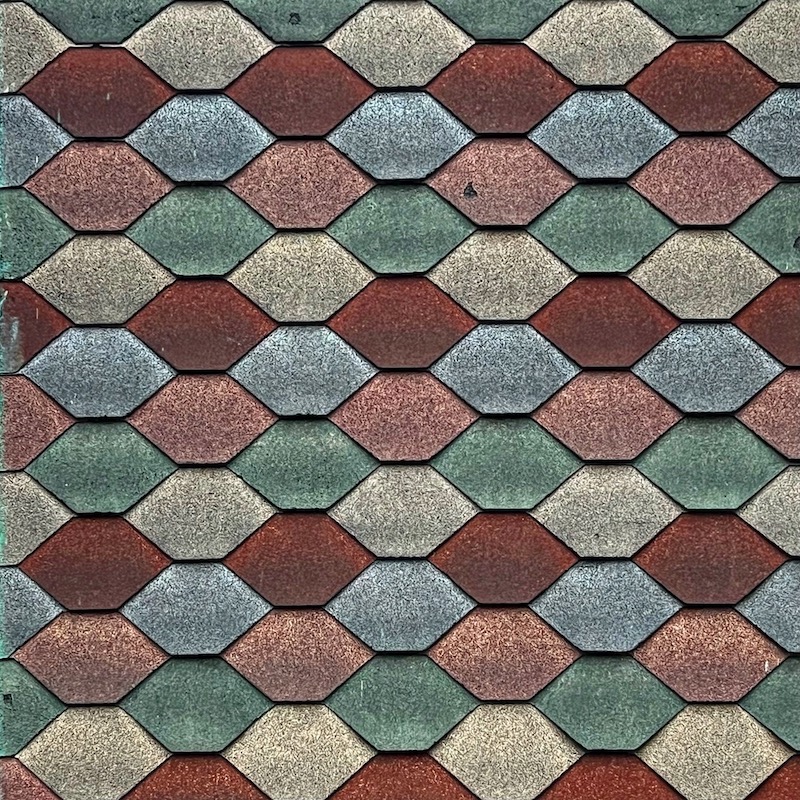
wall covered in multi-color "fish scale" tile
Fish scale tile wall, Lawrenceville
brick and cinderblock wall in midcentury modern style
Heidelberg
brick wall with many textures
Don’t make that face! Hill District
brick wall with many large pipes
Lawrenceville
section of brick wall and masonry foundation
Garfield
brick wall with wheat paste Rorschach print
Rorschach wall, Lawrenceville

The Over-the-Wall Club: Searching for Wall Quarters

exposed formerly interior wall showing three paint colors in perfect quarters
One of humankind’s most glorious examples of wall quarters. Inside-outside wall, Wellsville, O.

The giant wall holds a lot of history–and likely not a few secrets. Two tall stories high and spanning the full depth of the lot–from the sidewalk on Wellsville’s Main Street all the way back to the service alley–this space did a lot of living. Demolition on the building that used to be here exposed a (former) interior wall that is an archeological treasure our shallow American memory will have to substitute for “real” finds like Sutton Hoo or Tutankhamun’s tomb.

The plaster walls still cling to a rich palette of battered colors. Each room had been painted in an entirely different scheme and what remains are beautiful antique reds, pale yellow-greens, and deep melancholy blues. There are channels on the surface where we see clear outlines of the old building’s load-bearing interior walls, a staircase, plumbing lines, slotted holes in the brickwork for tall floor joists.

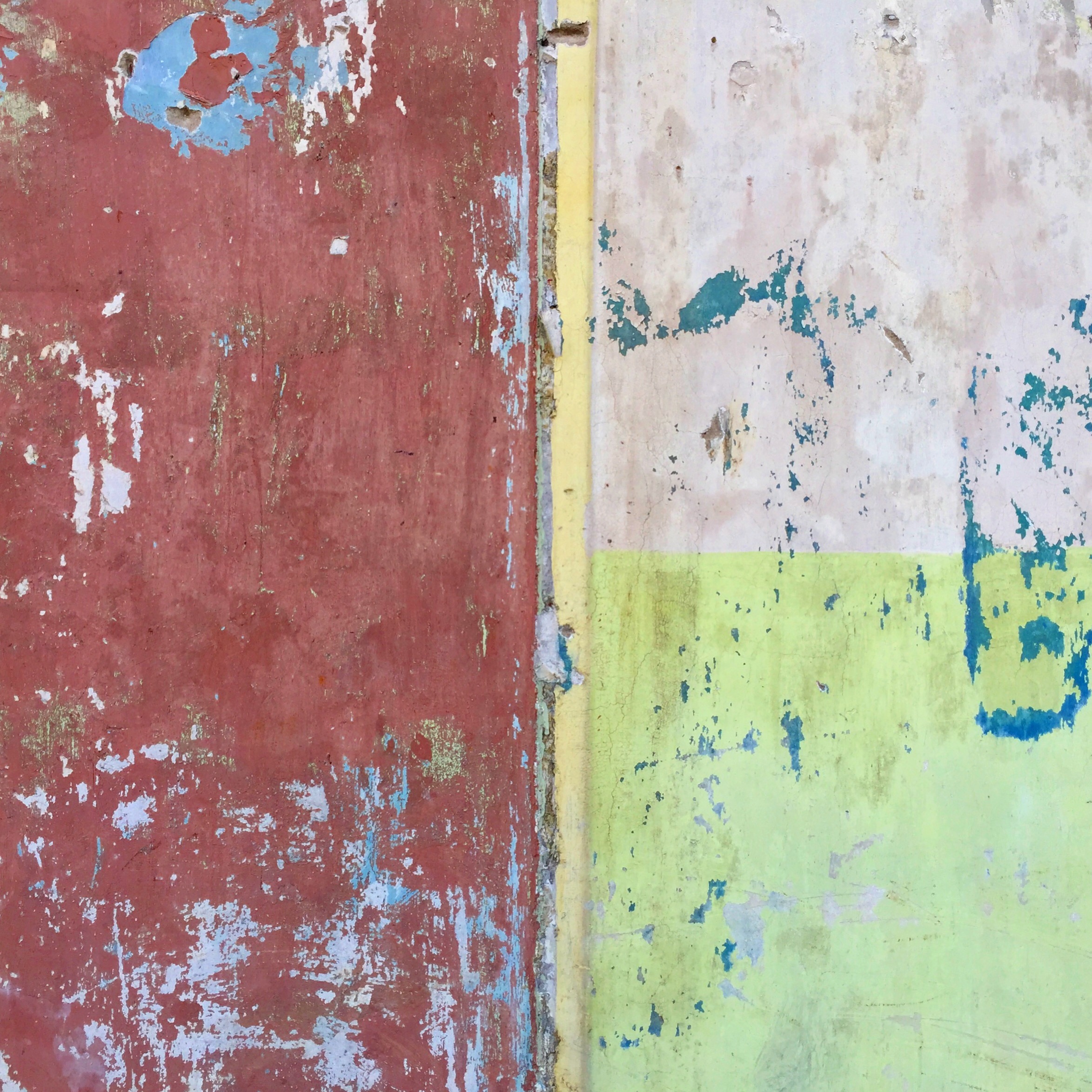
With all this, it is one particular section of the wall surface that intrigues more than the rest. In it, we see the intersection of three colors, each scarred, smeared, and pockmarked with age but still brimming with verve. A strong yellow line runs due north-south and gives the whole thing the composition of a modernist painting. Everything exists in perfect right angles.

cinderblock and plaster wall with loose bricks
The wall that started it all. Forest Hills

The obsession with wall quarters began way back in 2015 with a reporting trip to Forest Hills. We were there to commune with the ex-atom smasher and later found ourselves by another, similar, inside-outside lot. Amongst the rubble of felled bricks and illegally-dumped housewares were four squares within a larger square: the right side faded green-blue, the left a dirty white; plaster above, cinderblock below. The section lines could not have been more precise.

It was perfect: balanced and meditative, color, material, and texture arrayed in transcendent harmony. It’s the kind of lightening bolt that may only land once in a generation–heck, once in a lifetime if you’re lucky.

brick and masonry wall sectioned into four colors, Pittsburgh, PA
Strip District

But, wall-watching naifs that we were back then, the hard truth wasn’t fully understood. It seemed obvious that we’d run into more big, glorious, quad-sectioned walls just as soon as the mind was opened to them. Why, once you set the controls for Marys or Steelermobiles or The Dog Police you see them everywhere–wall quarters must be just as easy … right?

brick wall with loose bricks
Bloomfield

Well, you know where this is going. No, it is not easy to locate a perfect wall square–and this poke-down-every-alley and look-inside-any-abandoned-property keister is here as a material witness. Six years later–six years of looking for these things!–and we’ve come up with merely a handful of specimens. A lot of them aren’t even that good!

But if you take the collection we did manage to cobble together and throw in a (good-sized) set of bonus/pseudo-wall squares, we end up with a pretty nice haul. Hopefully they’re as pleasing to Orbit readers’ eyes as they are for staff to deep focus on when we’re destressing in Chez Orbit’s salt cave. Breathe in, breathe out, close our eyes and say it until we believe it: everything is going to be all right.

cinderblock wall sectioned into rough quarters by paint, Pittsburgh, PA
South Side
section of plaster and marble wall divided into four distinct quarters
Millvale
detail of brick wall where different paint layers have made distinct geometric sections
Bloomfield

Row House Rejoinders

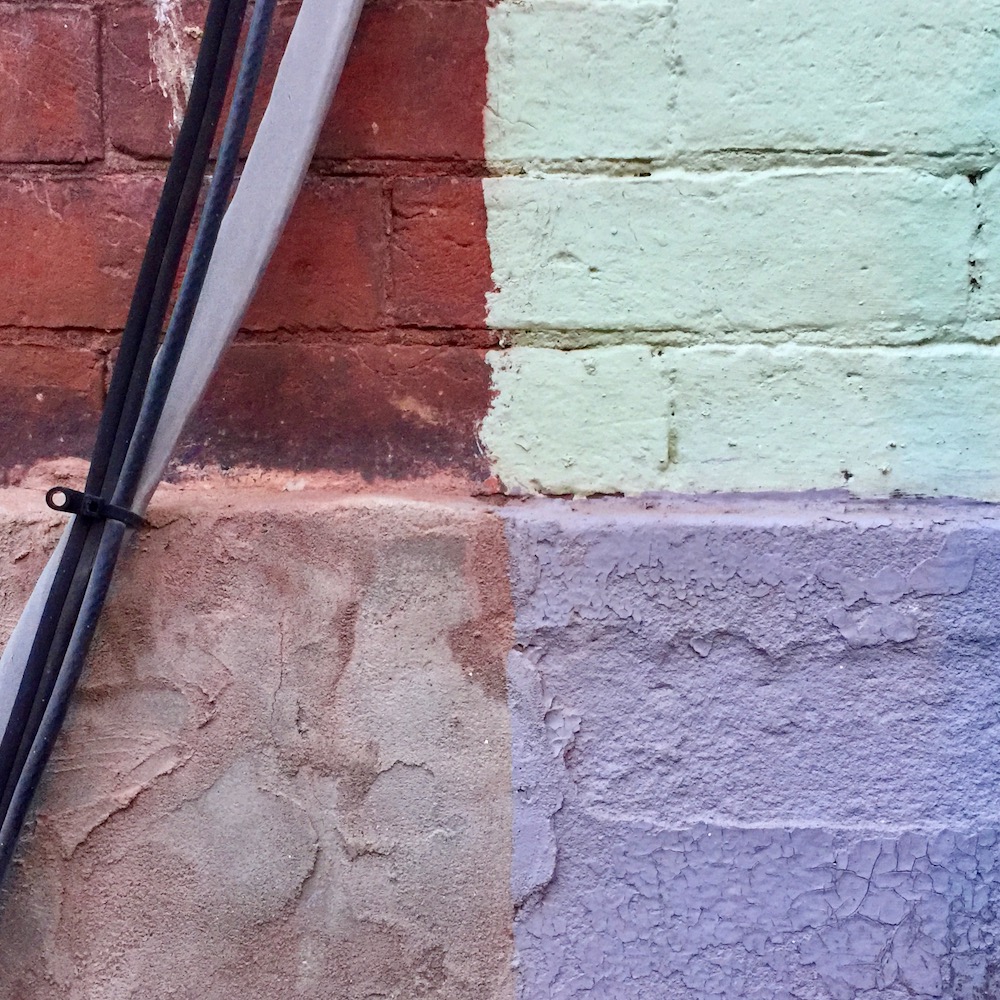
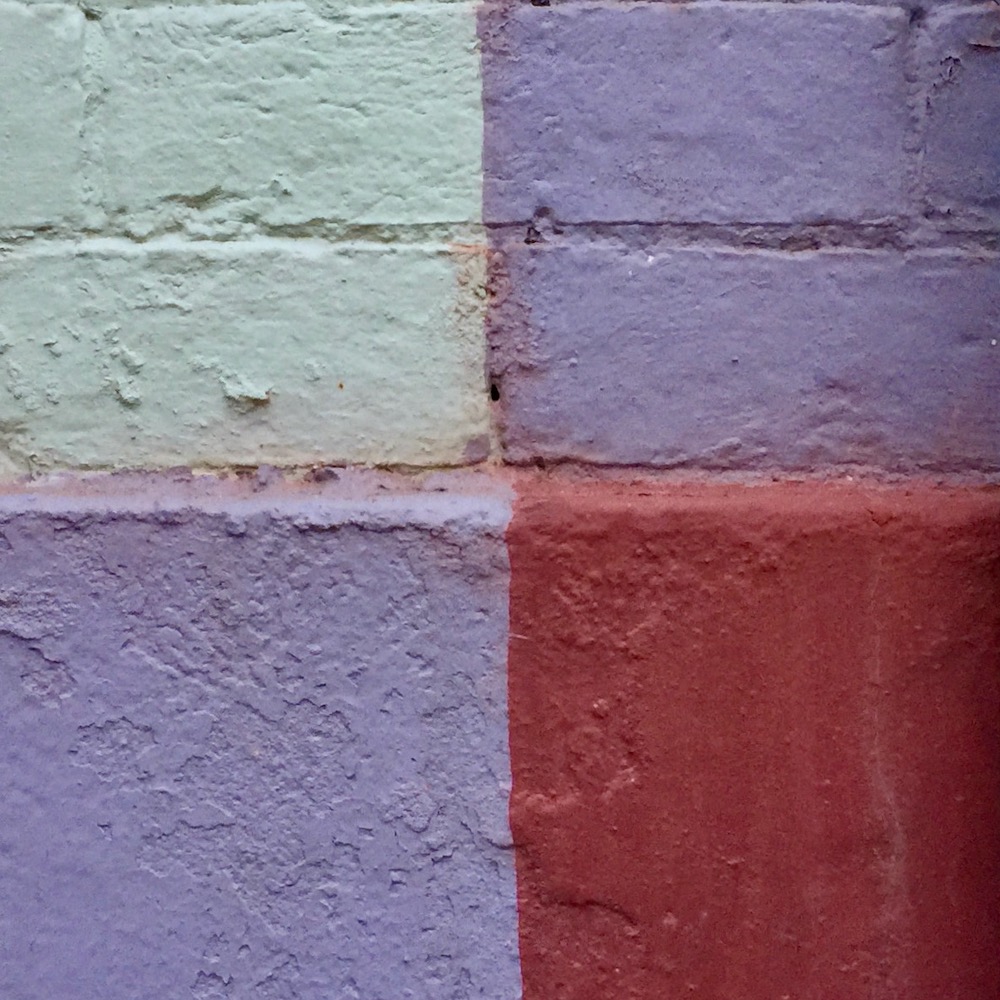
I’m not going to lie, The Over-the-Wall Club has some purists who frown on the relatively easy wall quarter pickins found in row house blocks. While it took us half a decade of constant scouring to come up with just the few “real” quarters (above), any Sunday stroll through the South Side Flats or the Mexican War Streets will reward with a bounty of these interfaces between next-door row houses.

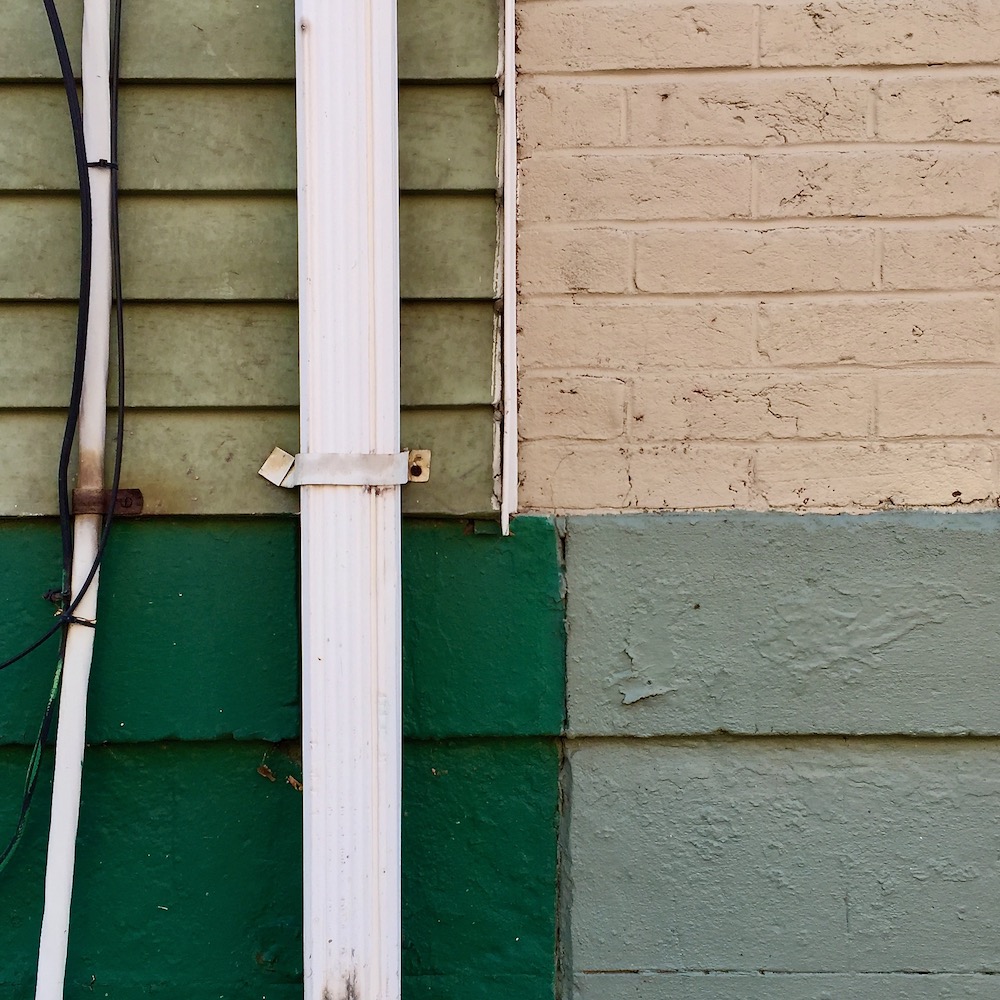
With brickwork and foundations in a continuous plane, it just takes neighboring homeowners with different color preferences and a little bit of luck (steps, stoops, porches, and downspouts all get in the way; sloping hillsides break a lot of linear connections) to get really nice, perfectly squared-off intersections.

detail of row houses where paint colors make four perfect squares
Lawrenceville
detail of row houses where paint colors make four perfect squares
Lawrenceville
detail of row houses where paint colors make four perfect squares
Lawrenceville
detail of row houses where paint colors make four perfect squares
Lawrenceville
detail of row houses where paint colors make four perfect squares
Lawrenceville
detail of row houses where paint colors make four perfect squares
Lawrenceville
closeup of bricks meeting foundation of two rowhouses, forming equal square quandrants
Lawrenceville
detail of row houses where paint colors make four perfect squares
Lawrenceville
detail of row houses where paint colors make four perfect squares
Lawrenceville
detail of painted row house walls and foundation showing distinct square quarters of different shapes and colors
Lawrenceville
detail of painted row house walls and foundation showing distinct square quarters of different shapes and colors
Lawrenceville
detail of painted row house walls and foundation showing distinct square quarters of different shapes and colors
Lawrenceville

No Room for Squares

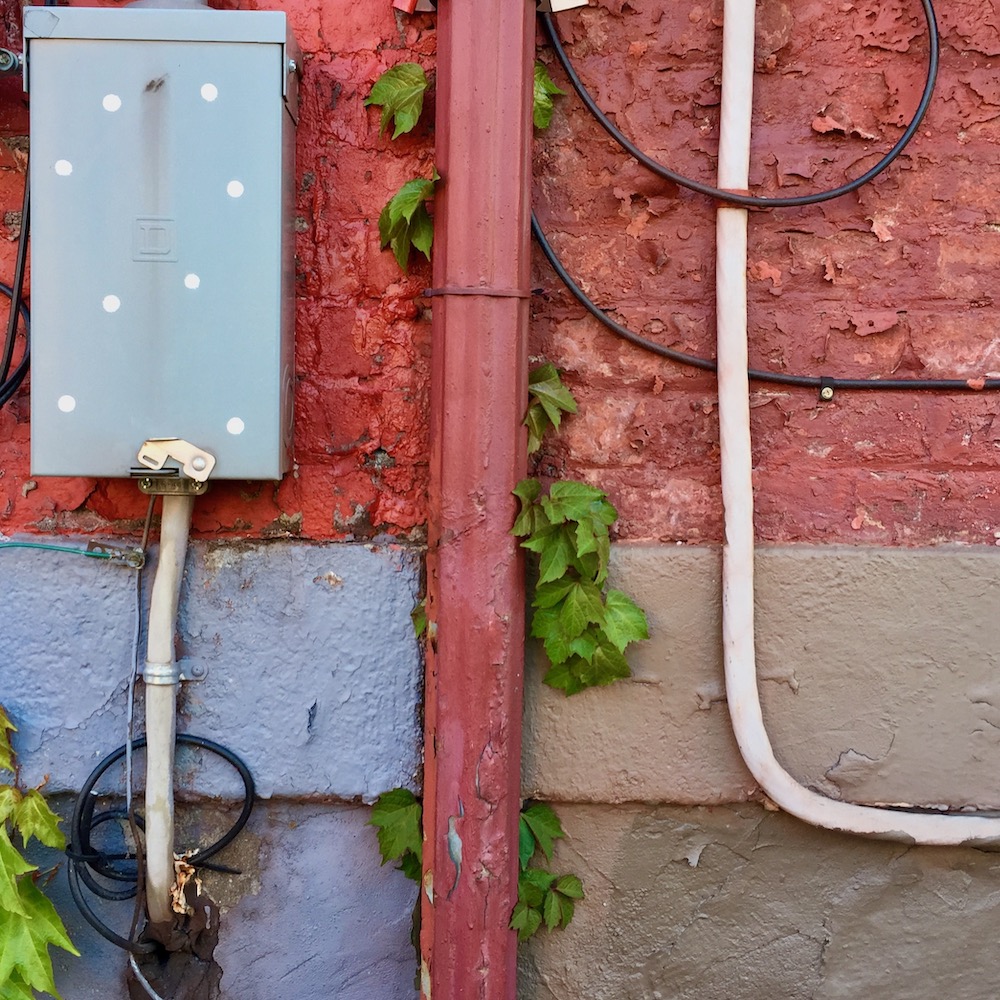
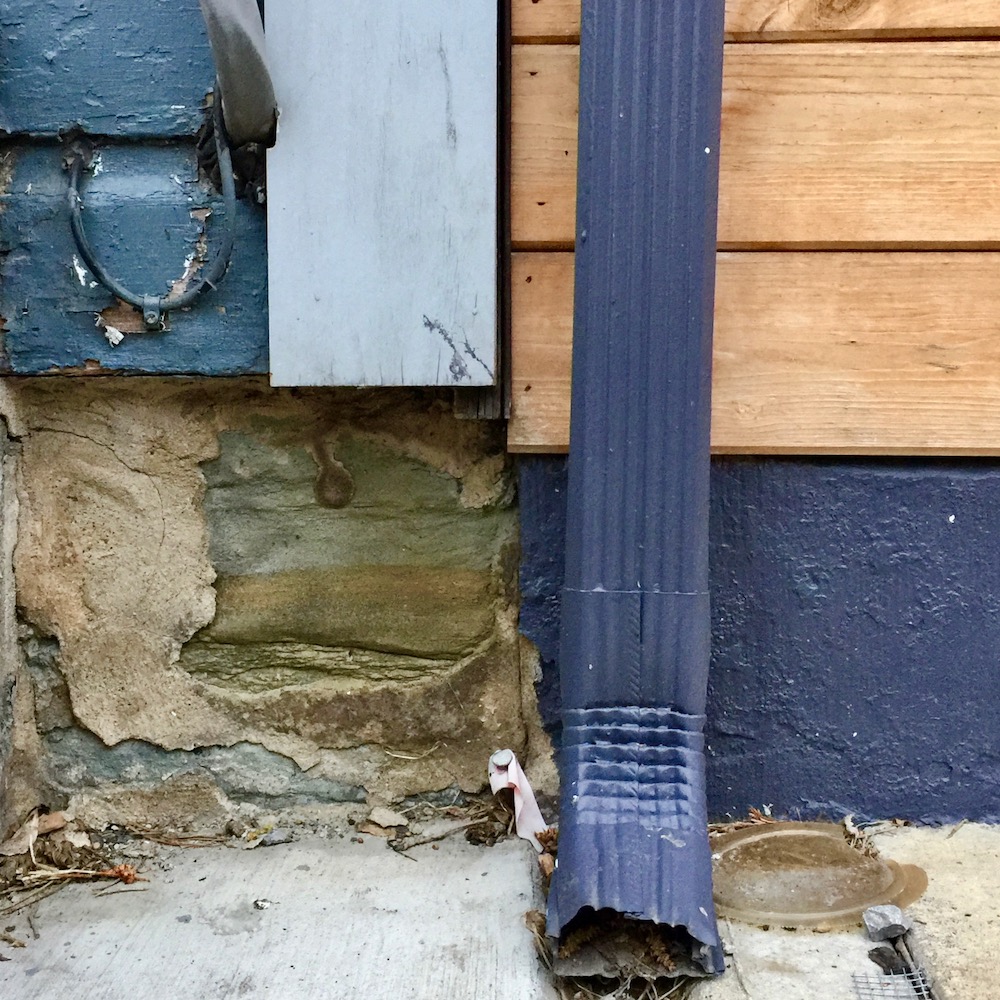
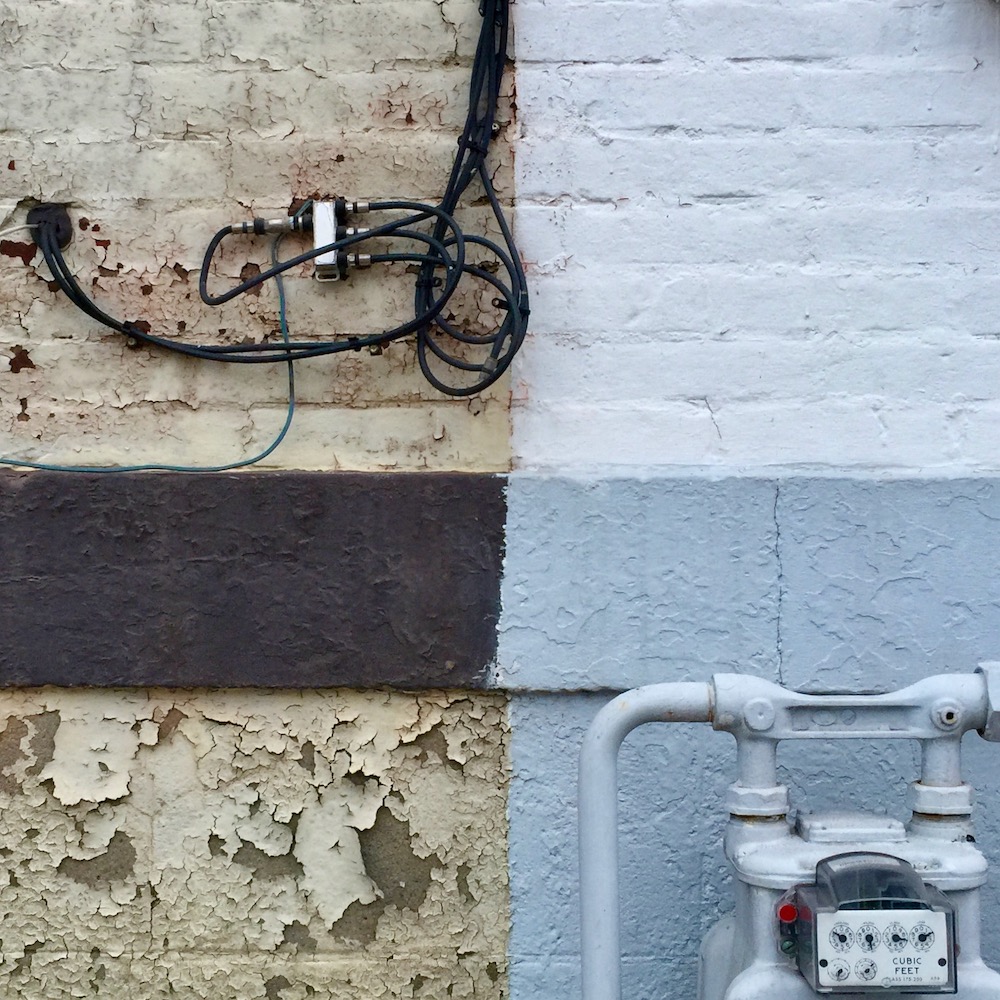
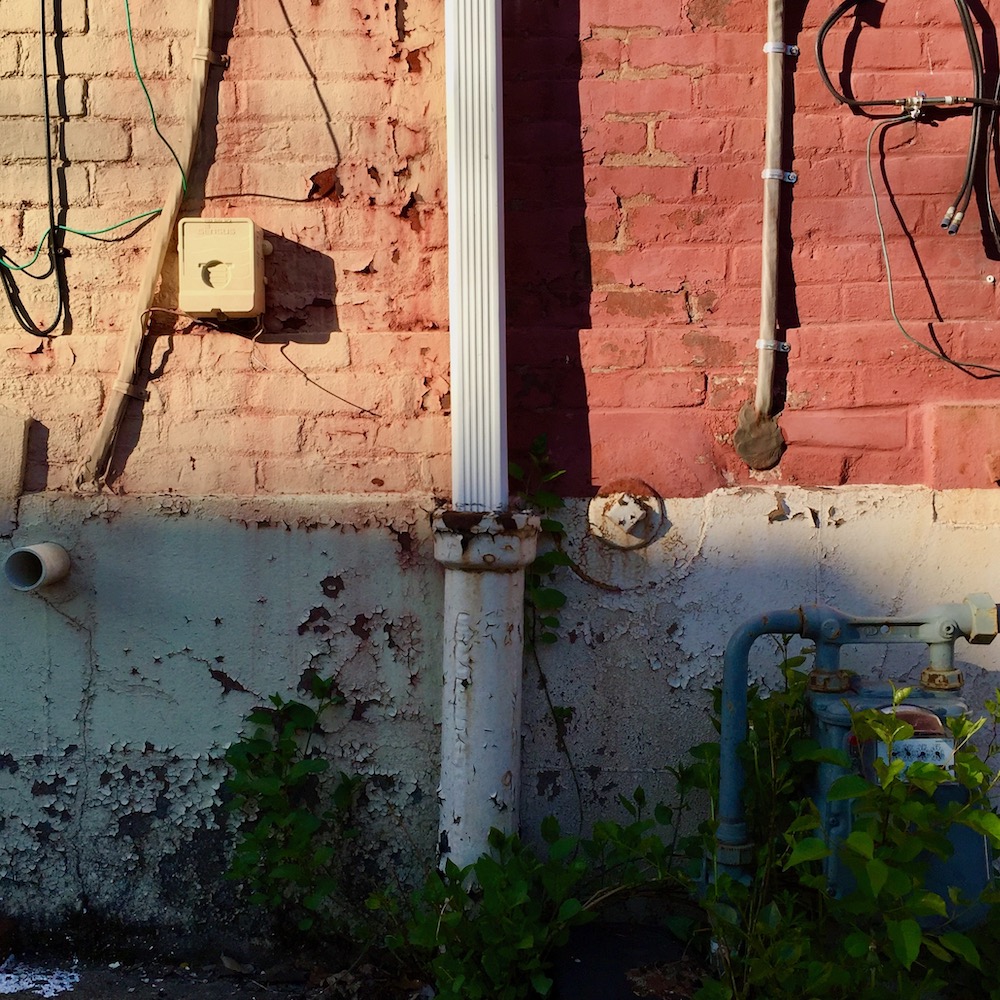
As with life, things on a wall don’t always line up perfectly. One shouldn’t let that diminish the shear ecstasy of a beautiful mixed-media surface, though. An extra drain pipe here, foundations that don’t line up there–we’re all better off to roll with these as … not imperfections, but rather elements that broaden the depth of the final composition. Ain’t nobody perfect, but a wall with a whole lot of problems sure might come close.

detail of row houses where paint colors make four perfect squares
Lawrenceville
detail of retail storefront where colored glass joints have made distinct geometric shapes
Vandergrift
brick exterior wall of row house painted in multiple sections
Lawrenceville
detail of row houses where paint colors make four perfect squares
Lawrenceville
wall surface with geometric shapes formed by paint colors, siding, drain pipe
Lawrenceville
detail of row houses where paint colors make geometric pattern
Lawrenceville
detail of row houses where paint colors make four perfect squares
Lawrenceville
detail of brick retail storefronts where paint choices have made distinct geometric shapes
Lawrenceville
detail of painted row house walls and foundation showing distinct square quarters of different shapes and colors
Lawrenceville
detail of painted row house walls and foundation showing distinct square quarters of different shapes and colors
Lawrenceville
detail of painted row house walls and foundation showing distinct square quarters of different shapes and colors
Lawrenceville
detail of painted row house walls and foundation showing distinct square quarters of different shapes and colors
Lawrenceville

The Over-the-Wall Club: Mon Valley Mondrian

brick wall with many styles and paint colors, Clairton, PA

Composition in Four Quadrants, Large Avenue, Clairton

One needn’t be an art connoisseur to recognize Piet Mondrian’s Composition No. III, with Red, Blue, Yellow, and Black. The 1929 oil-on-canvas painting is a simple geometric abstraction consisting of heavy black lines separating different-sized rectangular spaces. The three primary colors make cameo appearances, but the vast majority of the canvas is plain white.

Even if you don’t know this particular artwork, the piece is typical of Mondrian’s late-career shift that would define him. The easy-to-imitate style would be nicked for everything from textiles to housewares to TV game show sets; we still see plenty of it today. Three years ago, the original Composition No. III sold at auction for a record $50.6 million dollars[1].
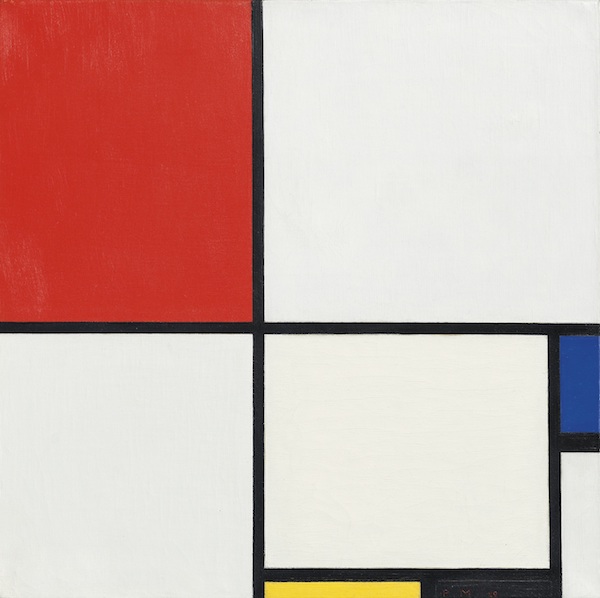
Piet Mondrian's painting "Composition No. III, with-Red, Blue, Yellow, and Black"

Piet Mondrian, “Composition No. III, with Red, Blue, Yellow, and Black,” 1929

You can buy a three-bedroom home in the City of Clairton, around 15 miles from downtown Pittsburgh, for somewhere in the neighborhood of 15 to 30 thousand dollars[2]. Clairton’s story is a familiar one to its sister (ex-)mill towns in the Monongahela Valley–a boom for the first half of the 20th century following the massive growth of the steel industry, gradual exodus to the suburbs as families bought cars and became more mobile, then the steep decline with the collapse of Big Steel in the ’80s. Today, Clairton’s population is around a third of its peak in the 1950s[3].

That’s left a lot of vacant real estate. It’s not an exaggeration to say that for the sale price of this one little artwork–Composition III is just 20 inches, square–every for-sale property in Clairton could be purchased, many times over[4].

cinderblock wall painted red and blue with a white stripe, Clairton, PA

Lavender over Dark Red with White Stripe, Stewart Alley, Clairton
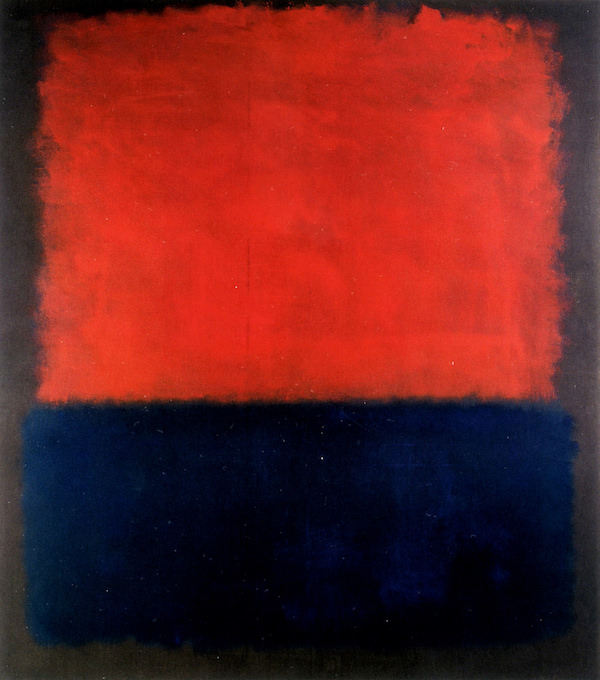
minimal abstract painting "Number 207 (Red over Dark Blue on Dark Gray)" by Mark Rothko

Mark Rothko, “Number 207 (Red over Dark Blue on Dark Gray),” 1961

While it’s unlikely anyone in Clairton owns an original Mondrian, the fine residents of the “City of Prayer” have a trick up their collective sleeve–they just have to look out the window or walk down the block. There, for public view on the side streets and little alleyways, is an accidental, but absolutely spot-on survey of 20th century modern art.

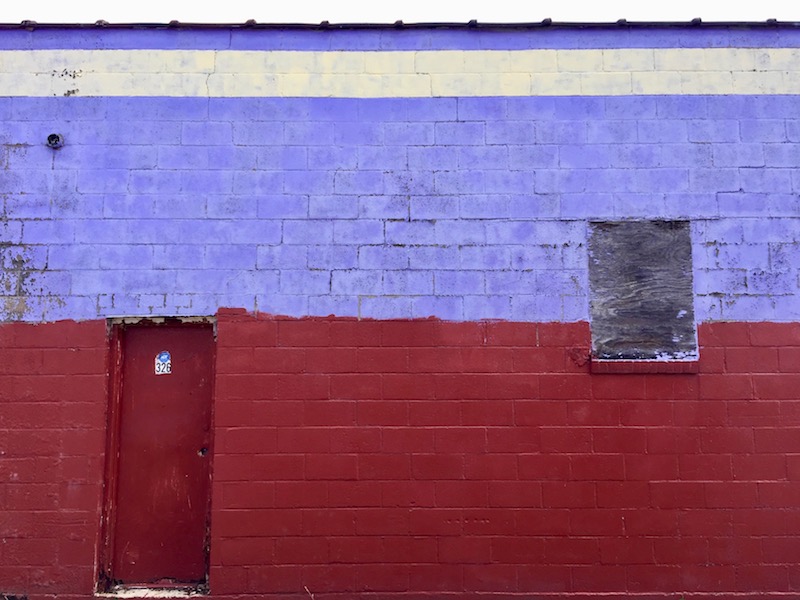
Stewart Alley, just a block or two from the center of town, has a dead ringer for Mark Rothko’s soft-form, two-color ambient abstractions. Clairton’s version is rendered in deep red and light purple on the cinderblock wall of a commercial backside. The artist has upped the ante with a jaunty high-level racing stripe just under the roofline.
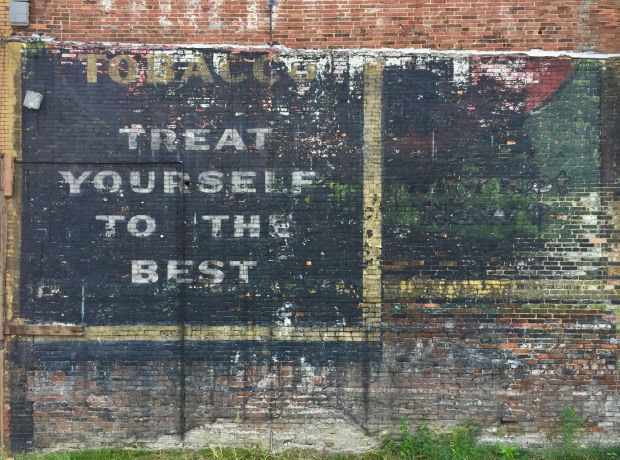
brick with layers of "ghost signs" overlapping, Clairton, PA

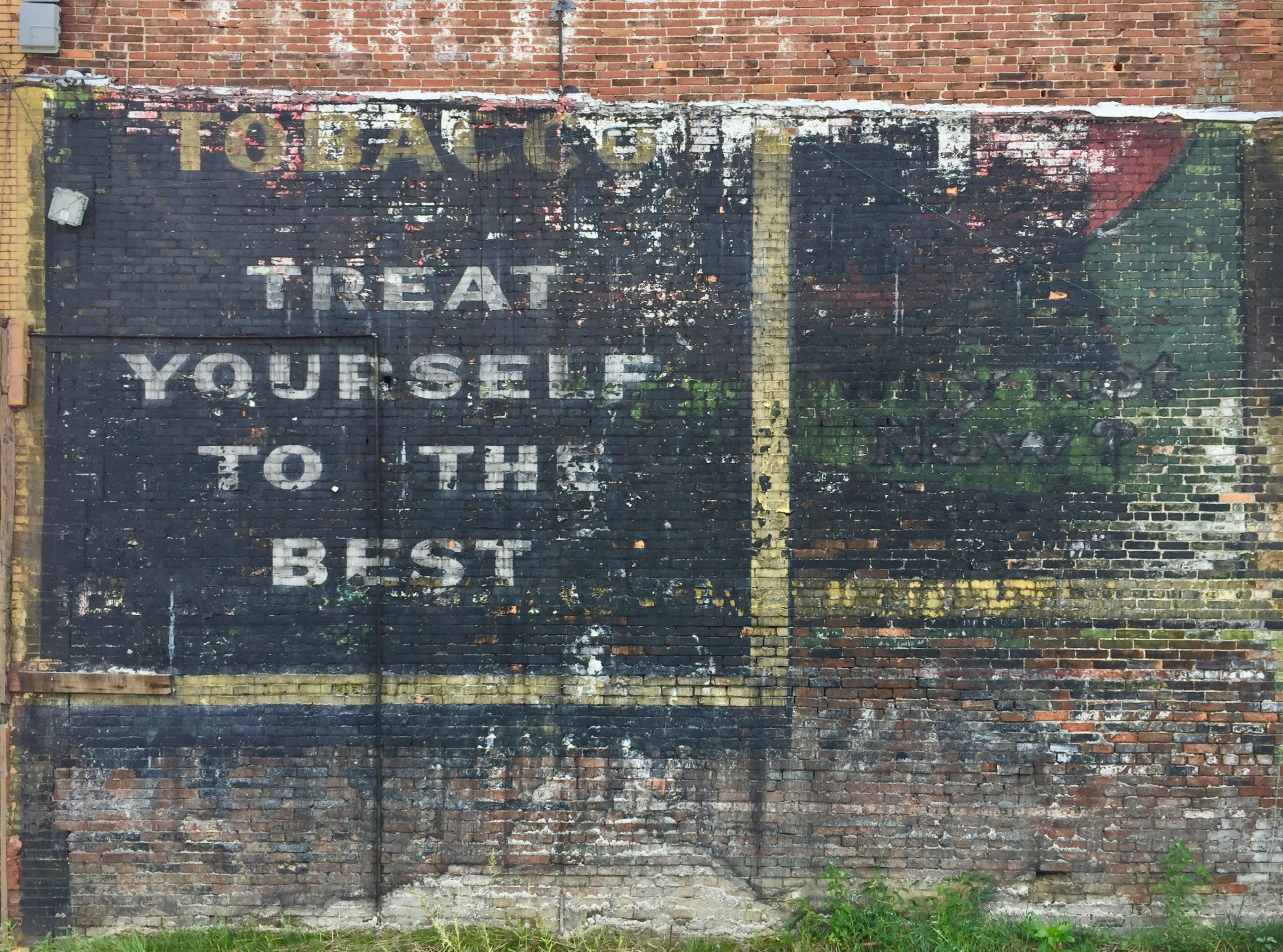
Treat Yourself to the Best, Waddell Avenue, Clairton

mixed media/collage artwork by Robert Rauschenberg

Robert Rauschenberg, “Magician,” 1959

Just a couple blocks away and across a grassy vacant lot, sits the long side wall of an empty retail storefront. The wall features a riot of overlapping ghost advertisements–for Gold Medal Flour, some kind of tobacco, and others faded beyond recognition. The drywall and peg board from an ex-next-door neighbor are included in the collage, as is the yellow after-market siding protecting the apartment residences above. [Note: not all of this made it into the photo detail.]

Together, the life-imitating-art-imitating-life tableau made up a composition that spoke to the mixed-media/assemblage work of Robert Rauschenberg. Here, some stray, recycled text; there, paint smears, crumpled forms, jagged angles, and overlapping imagery.
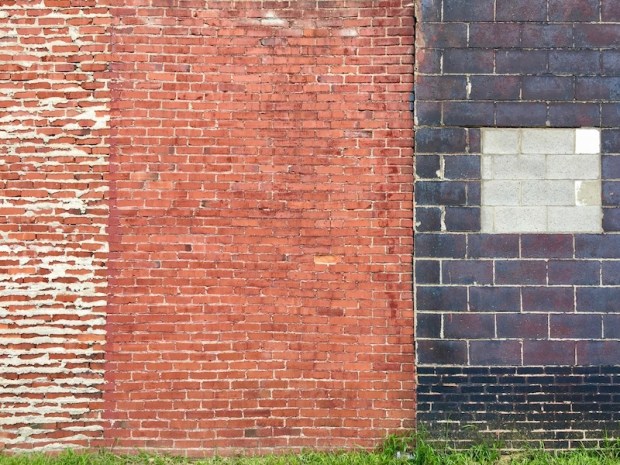
exterior wall built in multiple styles of brick and cinderblock, Clairton, PA

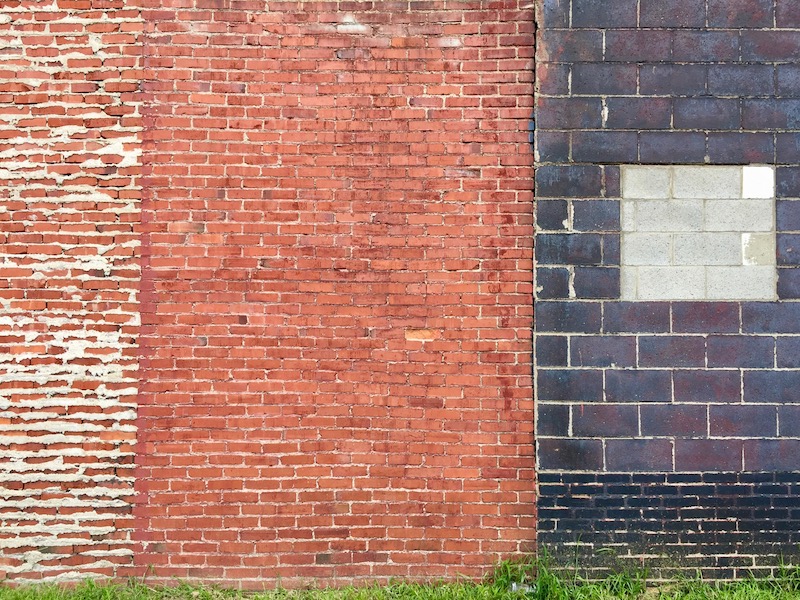
Komposition von mehreren Mauerwerk (Composition of Multiple Masonry), Miller Avenue, Clairton

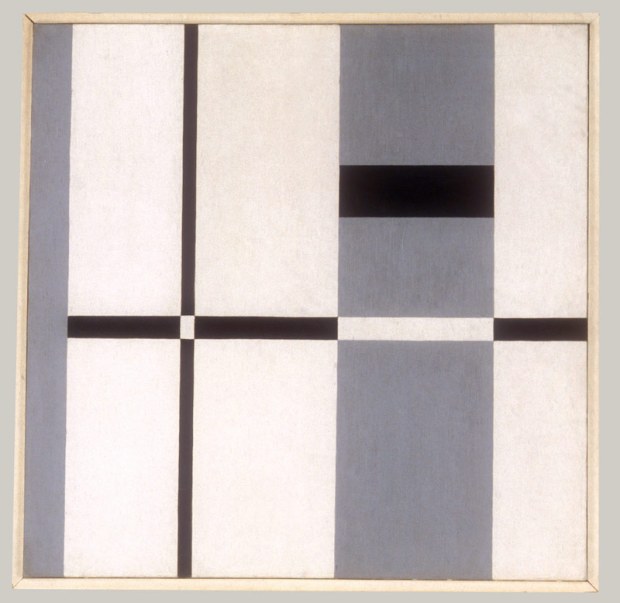
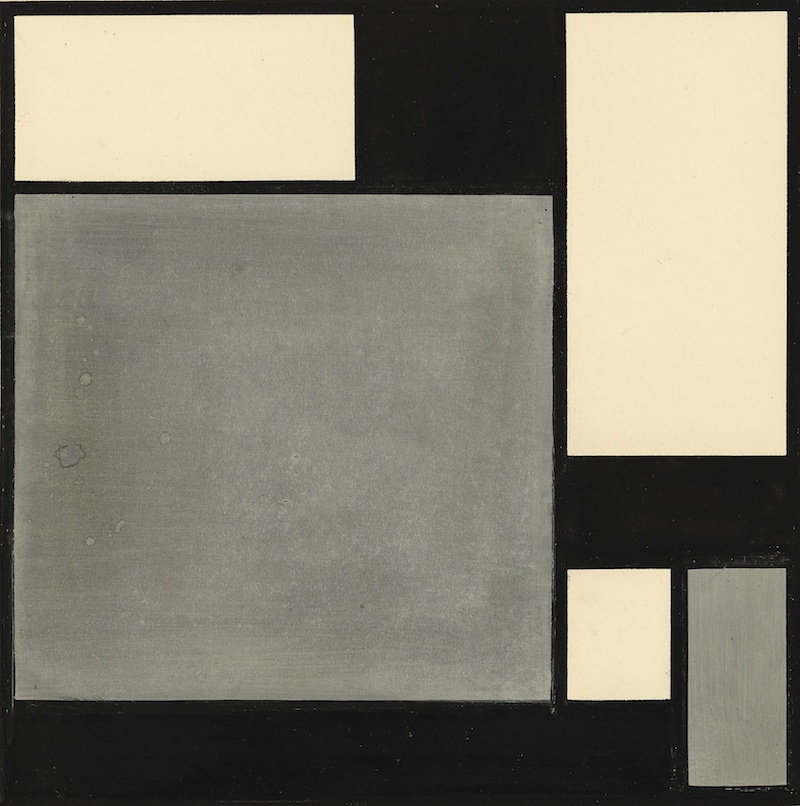
Karl Peter Röhl's geometric abstraction "Komposition mit Ruhendem Quadrat"

Karl Peter Röhl, “Komposition mit Ruhendem Quadrat (Composition with Resting Square),” 1924

Nearby, a wall so exquisite it quite figuratively took our breath away. Four interlocking, independent types of masonry–six patterns when you add in the squeeze of mortar and one stray white square–form such a simple, perfectly-balanced arrangement that it’s hard to fathom how the wall could have ended up that way by chance…or maybe it didn’t?

An older garage on Large Avenue features unique multi-tiered depth around its single, truck-sized garage door, a weathered two-tone paint job, and a bricked-over window that inserts an unexpected vertical box into the façade. That shape plays against the stair step drama of the doorway for a feeling that’s both harmonic and unresolved, balanced and weighted all wrong.
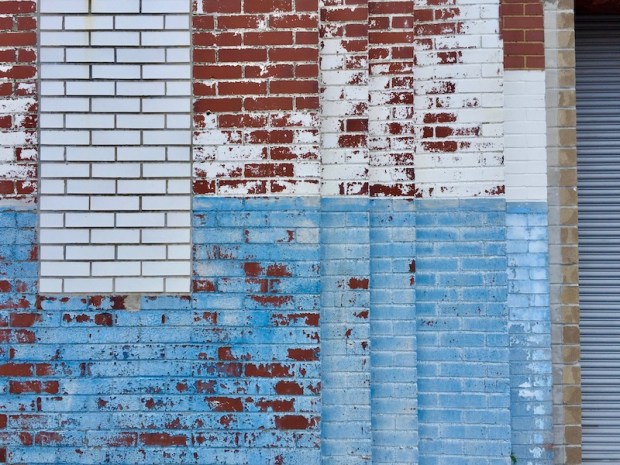
brick wall with worn paint job in several different levels, Clairton, PA

Five Layers, Large Avenue, Clairton

Jasper Johns stacked painting "Three Flags"

Jasper Johns, “Three Flags,” 1958

The Over-the-Wall Club held the latest of its infrequent, haphazard meetings in Clairton and we couldn’t have selected a finer set of public verticals. The small city has been through a lot, and contrary to the old saw, these walls do talk. They speak volumes, in fact, on growth and change, weather and time, industrial might and D.I.Y. ingenuity.

Sure, walking into a nice brand new construction brings a bunch of modern amenities and the rehab and reuse of older buildings is terrific. But there’s so much…not world history, but the people’s history in an old wall that often gets lost when the paint rollers and drop cloths come out.
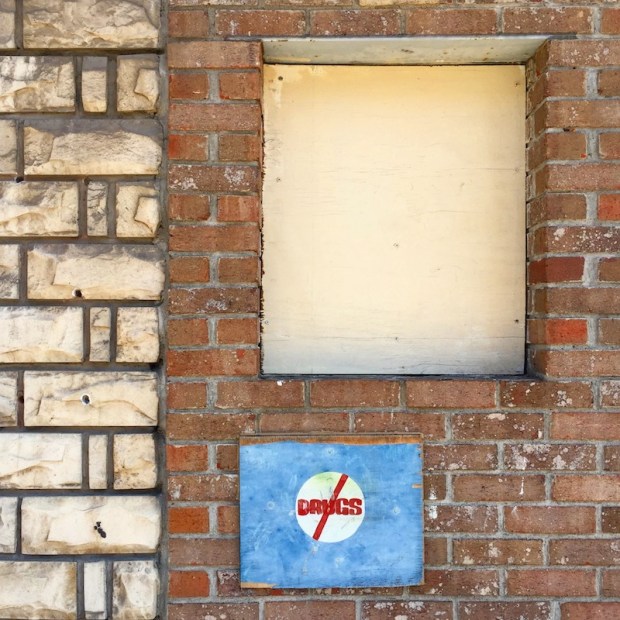
brick wall with handmade "no drugs" painting on wood, Clairton, PA

No Drugs, Mulberry Alley, Clairton

Burgoyne Diller's geometric abstraction "Second Theme"

Burgoyne Diller, “Second Theme,” 1949

Sometimes club members–like faithful parishioners waiting on the Rapture–get hung up on what’s on the other side. Clairton’s walls tell us to look right here, right now, at the intense beauty we can see in front of our eyes without going anywhere. We can reach out and touch it without the tantalizing prospect of a jackpot lottery payout or taking out a loan on the house. And it makes us value the moment–if history is any guide, these will be gone before you know it.

In fact, old Clairton is coming down hard and fast. An entire block of the St. Clair Avenue main drag has been torn down and planted with fresh grass seed since the last time we were in town. The Treat Yourself to the Best ghost sign was only exposed from a similar pair of demolitions on Miller Avenue. You’ve only got a limited window on these lovely old time-worn and tale-telling walls before they’ll either be meeting the paint brush (hopefully) or, more likely, the wrecking ball (sigh). Consider it your one shot at a traveling exhibit. Take the opportunity to see it and say goodbye while you still can.
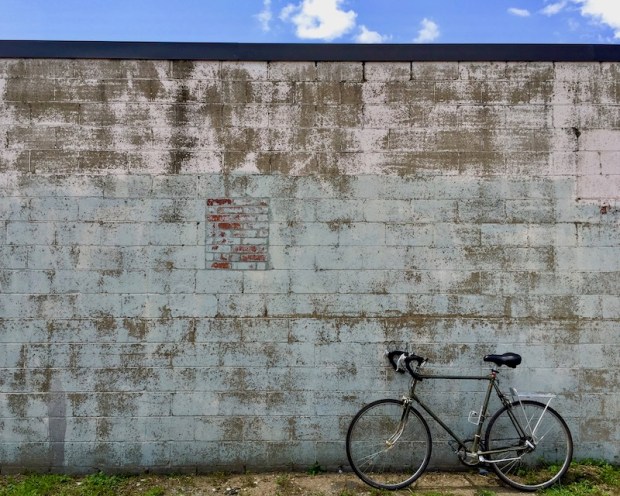
10-speed bicycle leans against a weathered cinderblock wall, Clairton, PA

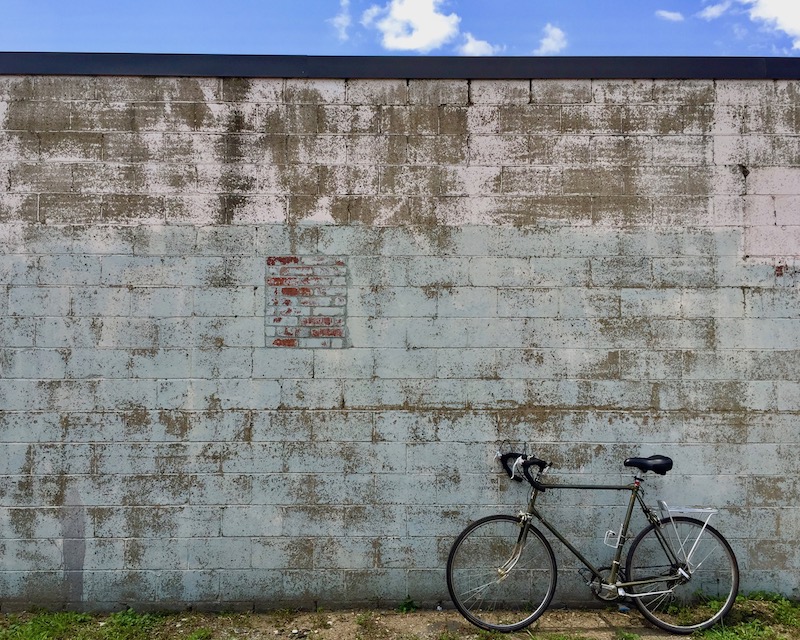
10-Speed (The Orbitmobile), Stewart Alley, Clairton
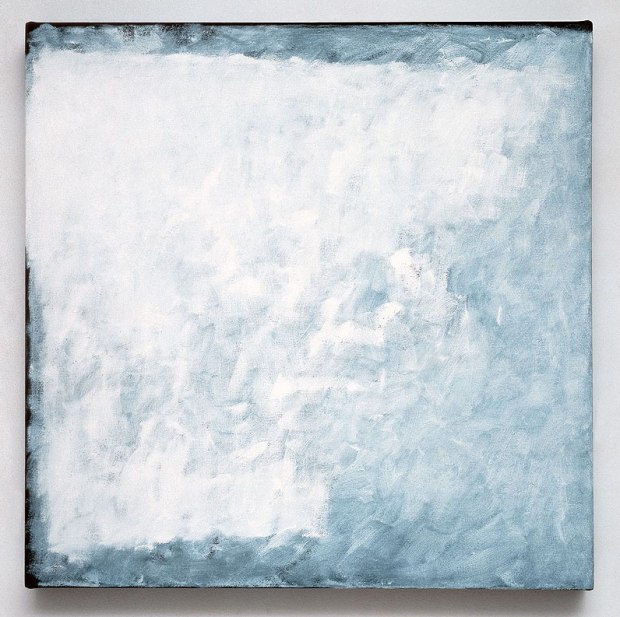
minimalist painting "Series #14 (White)" by Robert Ryman

Robert Ryman, “Series #14 (White),” 2004


[1] Source: https://www.christies.com/features/In-The-Saleroom-Piet-Mondrians-Composition-No-III-6090-3.aspx
[2] Source: https://www.zillow.com/clairton-pa/
[3] Source: https://en.wikipedia.org/wiki/Clairton,_Pennsylvania#Demographics
[4] The irony of Clairton is that it still hosts one of the few operating mills in the region: U.S. Steel’s massive Clairton Coke Works dominates the entire curling riverfront downhill from all parts of town. It’s a cliché, but if you’re anywhere in the area you can’t miss it.
The Over-the-Wall Club: A Winter Meeting

weathered brick and sheet metal factory wall, Etna, PA

factory, Etna

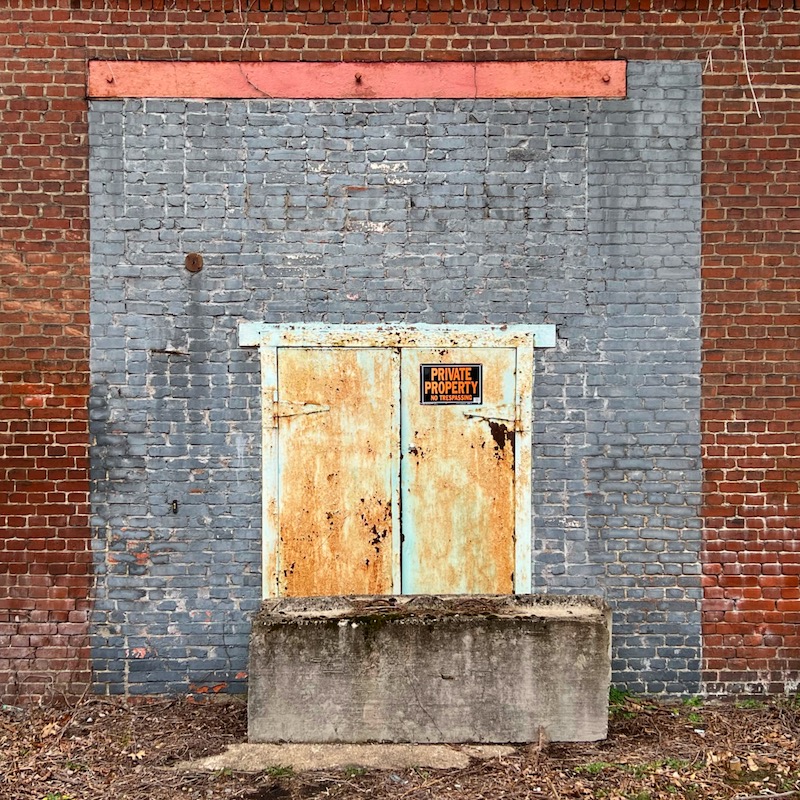
Every inch of the wall tells a story. Consider just the thick steel doors, rusted so far that a firey red is bleeding through the darker brown surface as if the earth’s crust was finally giving way to its molten core. Miscreants have scratched their tags and in-jokes into its surface and an off-the-shelf safety placard warns us about what we already know–DANGER lies on the other side.

Surrounding this lone entry point are a patchwork of industrial building materials: brick of a couple shades, cinderblock, concrete, sheet metal, corrugated fiberglass, PVC pipe, blue light bulbs suspended in a strand, and thick, high-voltage electrical wire.

There is but a single design detail committed for its aesthetics. Within one of the red brick surfaces, the mason has crafted an off-bias diamond that interrupts the stacked pattern in the gentlest of ways. Otherwise, this place is all business.

roofline with several commercial buildings, Charleroi, PA

roofline, Charleroi

If you’re tired of writing, the old wisdom goes, then you’re tired of living.

For The Over-the-Wall Club, there’s a similar mantra: if you’re tired of walls, then you’re really just tired of seeing. Put those eyes away–into a box in the bottom drawer, or send them off to the thrift shop so someone else can use them at a cut-rate price.

When last we met, the Over-the-Wall Club was pondering that old stand-by of the Dumpty clan, what’s on the other side? But let’s not ignore the trees for the forest. What’s right here in front of us may actually be the more interesting subject. Just because it’s blocking the view of those other things we think we’d rather be looking at doesn’t make it any less fascinating.

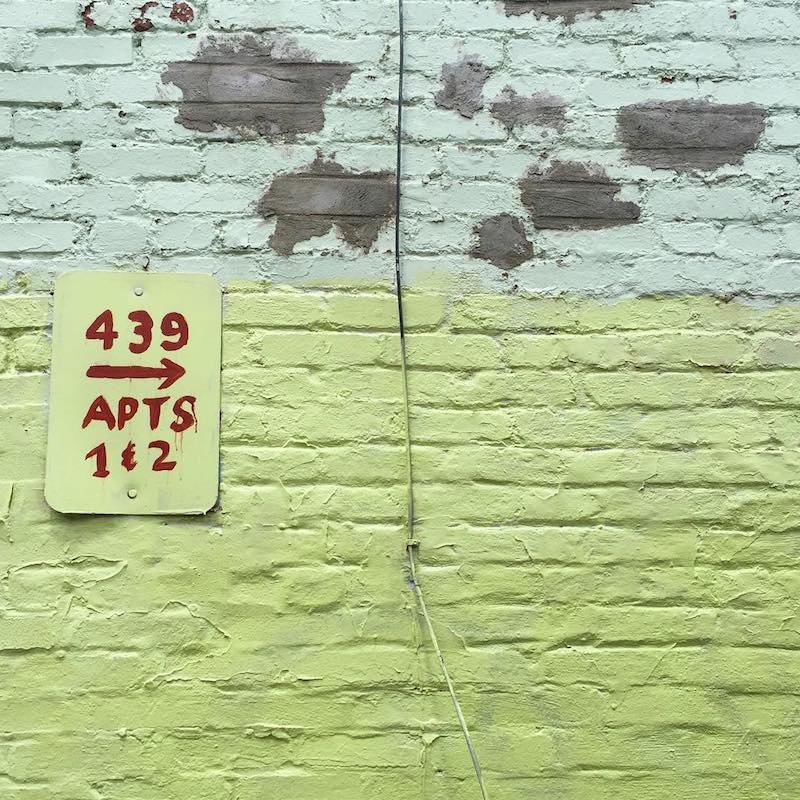
brick wall painted green and aqua with homemade address sign, Pittsburgh, PA

row house apartments, Oakland

Walls. America loves talking about them, and–gosh darn it–Mexico loves building them…at least, that’s what we’re told. But try to convince the federal government to put up a two-tone, aqua-on-lime green splotchy brick wall along the Rio Grande and see how far it gets you. In fairness, it’s a color scheme that maybe even Enrique Peña Nieto might get behind–but we still doubt he’s going to pull out the nation’s wallet any time soon.

alley wall with ghost signs and many materials, Butler, PA

ghost signs, ghost windows, ghost paint job, Butler

Another entry in the wall-as-modern art category. This geometric bricolage of styles and materials in a Butler alleyway competes with Etna’s factory row (above) in sheer density of visual stimuli. Two different mid-century Firestone Tires ads have ghosted themselves almost out of readability against a field of brick and stone, tin and particle board, paint and ash. If you can’t imagine a century’s worth of narratives playing out against this scenery, you’re not trying very hard.

tiled wall with cross and mountain, Pittsburgh, PA

ex-church, West End

If these walls could talk, they say–but some do! How does a former house of worship manage to preserve its midcentury terra cotta Jetsons cross and mount with but a few cracks and crumbles and still shed the loose bricks around it like tears at a funeral? I know, I know–it’s God’s way, or something like that, but there may be an equally fascinating or boringly prosaic reason. No matter how much church we go–or skip–we’ll probably never know.

facade of building with shadows of telephone pole and wires, Pittsburgh, PA

Industri l Engi & S p ly, Homewood

It’s the stories, man–the stories. The letters probably just fell off all on their own, but someone made a very conscious decision to block in those windows and repaint just one section in a warm, sun-baked yellow-orange that makes the whole mundane façade look like a poor man’s Mark Rothko. The criss-crossing shadows of a strong wooden utility pole and warped telephone lines decorate in the most abstract of ways.

interior of cinderblock warehouse with shadows of roof structure, Pittsburgh, PA

roofless warehouse, Strip District

Maybe there’s a set of parallel shadows that dance across the suddenly-exposed wall surfaces and make the whole scene light up like special effects at a discotheque or fancy lighting in a theatrical production. How many precious moments do we have before this old warehouse either gets a new roof or has the cinderblock walls felled to clear the lot? We can only wonder.

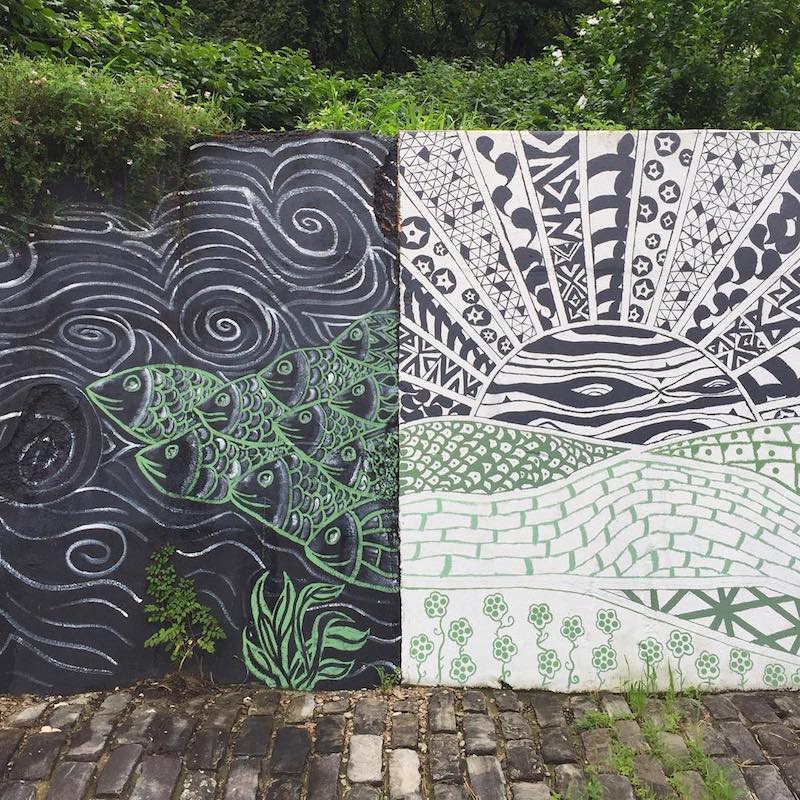
mural on outside retaining wall of fish and sunset, Penn Hills, PA

retaining wall mural, Penn Hills

…But that’s what The Over-the-Wall Club does best, wonderWhat’s on the other side? Sure. But also how did we get right where we are? And how can we stay just like this forever? If only it were that easy.

Until next time, we’ll see you over-, under-, roundabout-, and upside-the-wall.


See also:“The Over-the-Wall Club” (Pittsburgh Orbit, April 12, 2015)

The Over-the-Wall Club: A Secret Picnic Spot

cement wall with graffiti, trees, and smokestacks in the distance

Over-the-Wall lies a secret picnic spot

When last we left The Over-the-Wall Club, members were straining their necks, up on their tip-toes, peeking and peeping. Sometimes we catch a break and actually make it over to have a look on the other side. And every once in a while we find out that the grass really is greener over there.

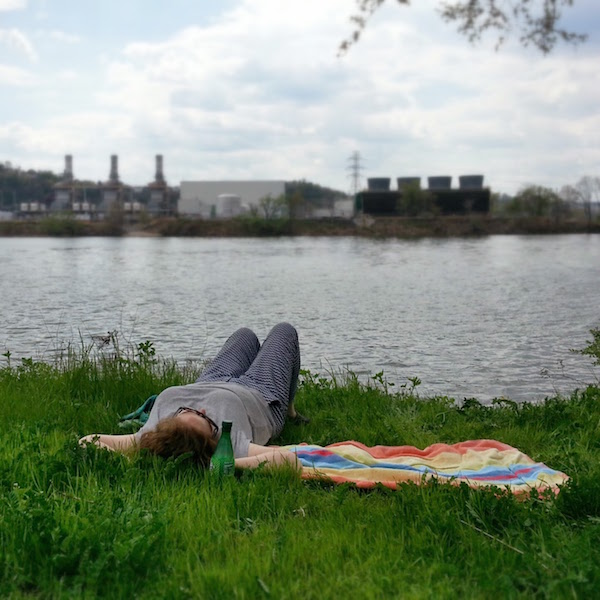
The most perfect secret picnic spot lies high in the aerie of Peregrine falcons, reachable only by trained tall tree-climbers with provisions shuttled in by drone. Sigh, someday. Until then, Orbit staff stumbled across a right nice substitute, on a grassy bank of the Ohio River, in the shade of flowering Spring trees, attainable only by bicycle. [Technically one could drive, park, and walk a trail, but that’s not as much fun.] The spot is accessed through a breach in a concrete wall.

woman laying on grass by the Ohio River

A very Pittsburgh picnic spot: Brunot Island power plants on the far shore

It is early May, the first definitive shorts-weather occasion of the year, and a glorious post-Pittonkatonk, post-marathon Sunday afternoon comin’ down. Not to nit pick on the picnic, but the menu was nothing to brag about (my fault, entirely). That said, we can credit Shur-Save with providing an acceptable board of fare (after we applied some after-market vegetables and condiments to the “Anytime Deli” sub) at a price that didn’t dent this blogger’s wallet.  Next time–and there will be a next time–we’ll do it up right.

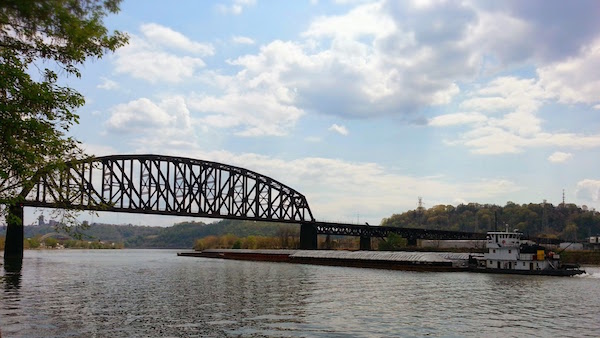
But what’s really special here is the amazing peace on this particular stretch of riverbank. We were well within Pittsburgh city limits, but never heard the sound of an automobile, a booming stereo, shouting, clattering, or any other noise (man or machine) for that matter. In fact, the only “traffic” we witnessed was one long coal barge and a couple pleasure crafts on the river.  One train rumbled by on the Brunot Island bridge.

barge on the Ohio River near Pittsburgh

This barge is all the traffic we encountered at the Secret Picnic Spot

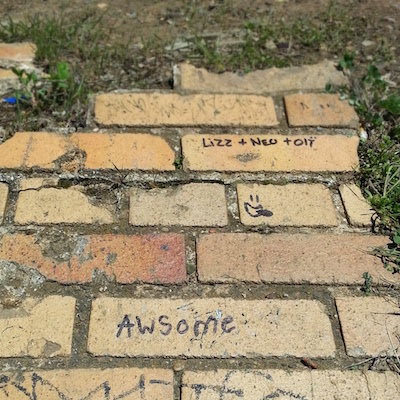
The Secret Picnic Spot is known to at least a few other river dwellers.  There was an empty Black Velvet bottle in the weeds and the burnt offering of an old school hobo fire.  A stray patch of brick wall embedded in the ground had been graffiti’d in black Sharpie.  We crossed paths with a pair of amorous middle-agers and a grandfather/granddaughter combo, but the spot’s fifty-or-so yards of riverbank can handle at least that much of a crowd with relative privacy.

bricks embedded in grass and dirt with handwritten "awsome" graffiti

Don’t take our word for it: Lizz + Neo + Oly confirm that the Secret Picnic Spot is awsome

If you’ve got a tip on a great Pittsburgh picnic spot (secret or otherwise), please let us know. We’ll show you ours if you show us yours.

The Over-the-Wall Club

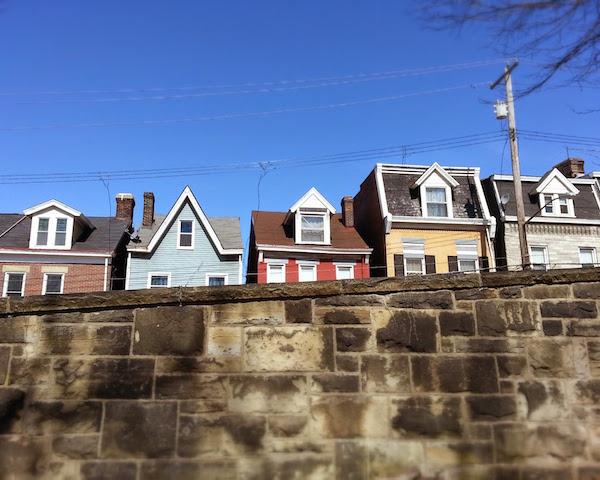
Bloomfield rowhouses seen over a wall

Bloomfield

What’s on the other side?

The question that drove thousands (millions!) of seekers–from Lief Ericson and Amelia Earhart to Harry Houdini and Charlie Sheen to that darned chicken.  What’s on the other side?

Walls make us wonder all the time, especially those that give just glimpses above of what might be masked below: treetops, a roofline, hillside, telephone wires.  What’s going on over there? Who’s in there? Is the grass really greener?

Photographically, they’re strange creatures. There’s very little visual action in a wall (depending on the wall), and you probably wouldn’t want to only look at a just a plain old wall. But what if it bisects a scene into neat geometric chunks: bands of near and far, light and dark, patterned and dissonant.

The Over-the-Wall Club meets irregularly to share photos of their findings, gulp coffee, inhale paint fumes, stare over the wall, and ask the question one more time: what’s on the other side?

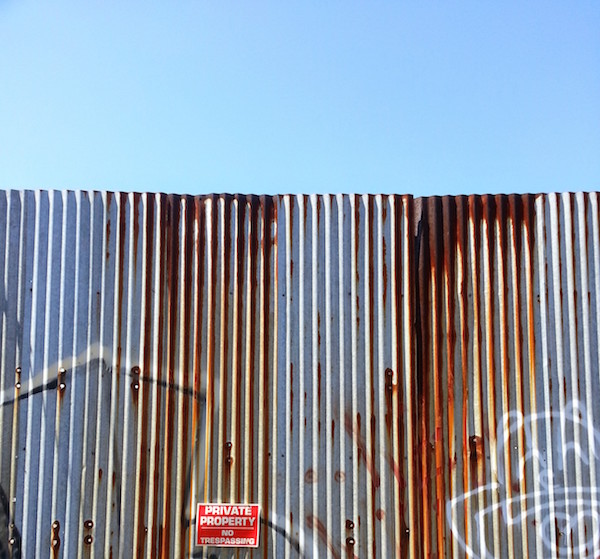
Corrugated metal wall, Lawrenceville

Lawrenceville

Leslie Park Pool, seen over the pool wall

Leslie Park Pool, Lawrenceville

Troy Hill, seen over a wall

Troy Hill (from the Strip District)

Lawrenceville row houses from Allegheny Cemetery

Lawrenceville (from Allegheny Cemetery)

ALICE IN WONDERLAND, W.C. Fields, as Humpty-Dumpty, 1933

The Over-the-Wall Club’s most famous member