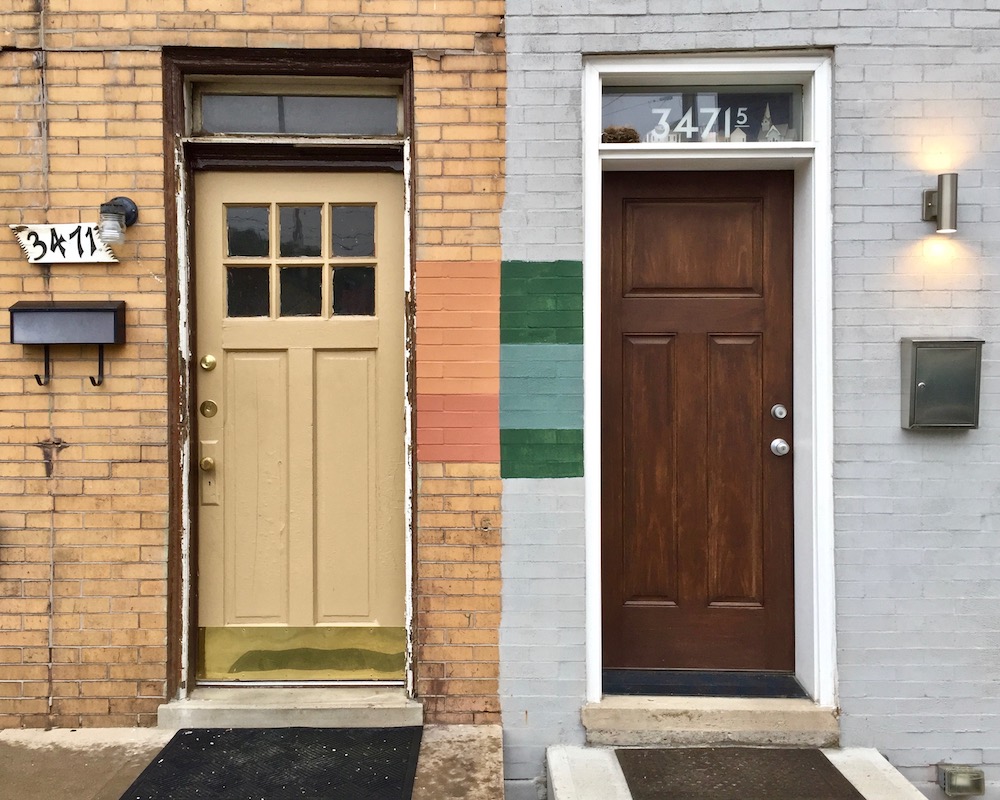
Row houses with side-by-side paint swatch tests, Lawrenceville
America—whether we like it or not—is getting a new paint job real soon. The next resident of America’s address won’t have the option to literally paint The White House you know, any other color, but he’s already decorating his cabinet in a radical new scheme. Will it be Science Denial Green or Paedophile Pink? Fox News Blue or Menstrual Blood Red? From what color interior walls will the poor housekeeping staff be required to scrub the ketchup stains and diaper odors this time around?
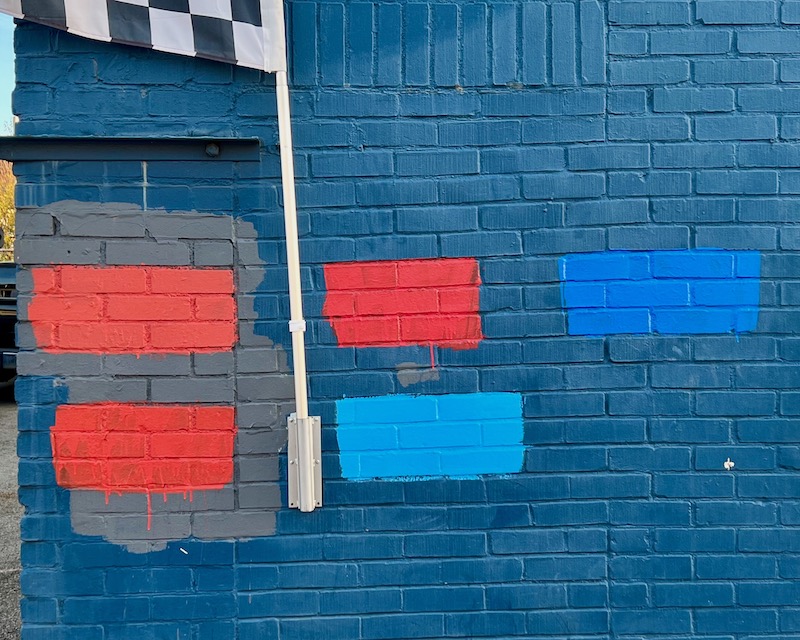
Before … Oakland
You’d think it would be easy to get before and after photos of a big painting project … you’d think. We know right where someone was planning to paint—it must be happening soon, so we’ll just check back when the job is done … right?
Not so fast. You’d be surprised how many customers take the initial leap to get a handful of color splotches painted on the front of their home or business only to let that job linger for months—years even—while they figure out what they want to do and how to pay for it.
… and after. Looks like they went with Option #1. Oakland
So we wait … and wait … and, gosh darn it, we’ve waited long enough! We’re running out of time and someone’s just about to kick over the paint can and put Bevis in charge of the cheerleading squad.
Welcome to your new home, America. We don’t know what it’ll be like when the job is done, but it ain’t gonna look the same.
Kind of like this one just as-is. Lawrenceville
So many options! Wheeling, WV
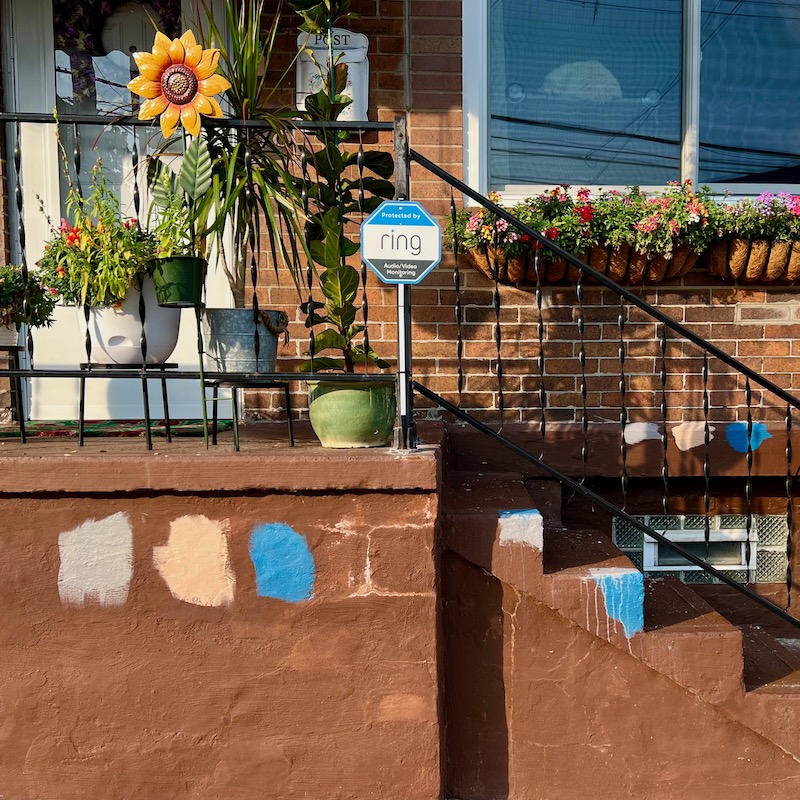
Let’s get stoopid! Lawrenceville
This feels political. Bloomfield
Green party. Point Breeze
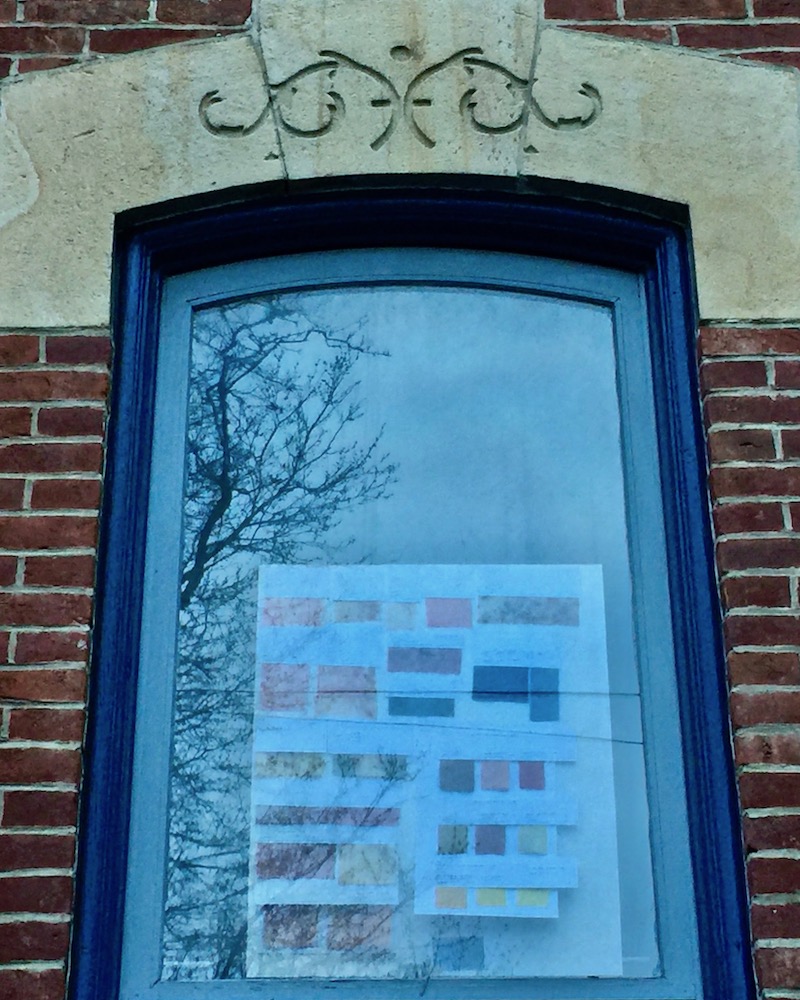
Window swatching. Lawrenceville
Which non-offensive neutral color to choose? Point Breeze
A little advice: don’t choose white person flesh color for your house. Lawrenceville
The moon is just one celestial body waiting for us on the other side. Moon morning walls, Lawrenceville
“What’s on the other side?”
That evergreen question-koan has motivated—and haunted—explorers from Leif Erikson to Harry Houdini. The Over-the-Wall Club is no exception.
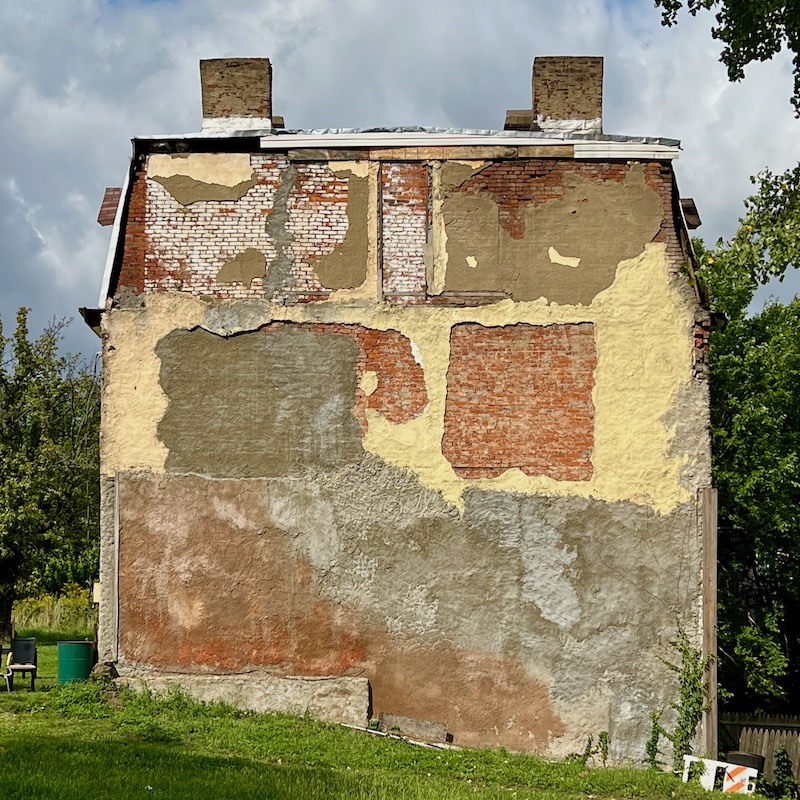
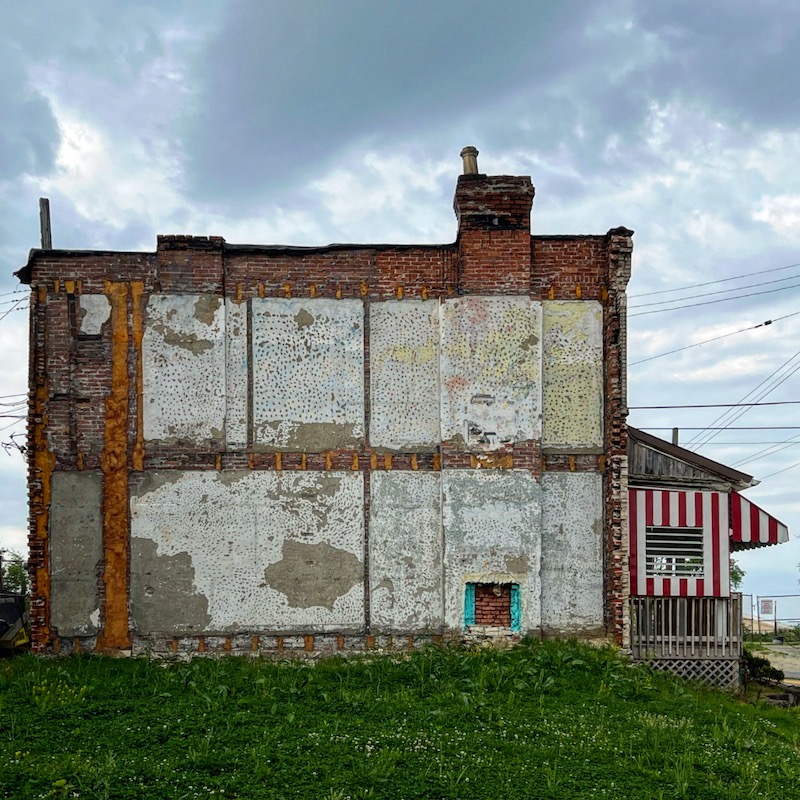
In our last post, the wall-eyed went deep into the wall. This time the crew looks up, over, and around some of our favorite walls to ponder the mysteries of the universe. What’s on the other side? Sure, but also Where are we going? and What happened before we got here?
Heady stuff, indeed, but we’d expect nothing less from our team of urban alchemists who can stare deep into—and over—a stack of bricks and turn the experience into a portal to another dimension, free of space and time.
Welcome to the rest of your life, just lookout for a few walls along the way.
Something old and something new, Lawrenceville
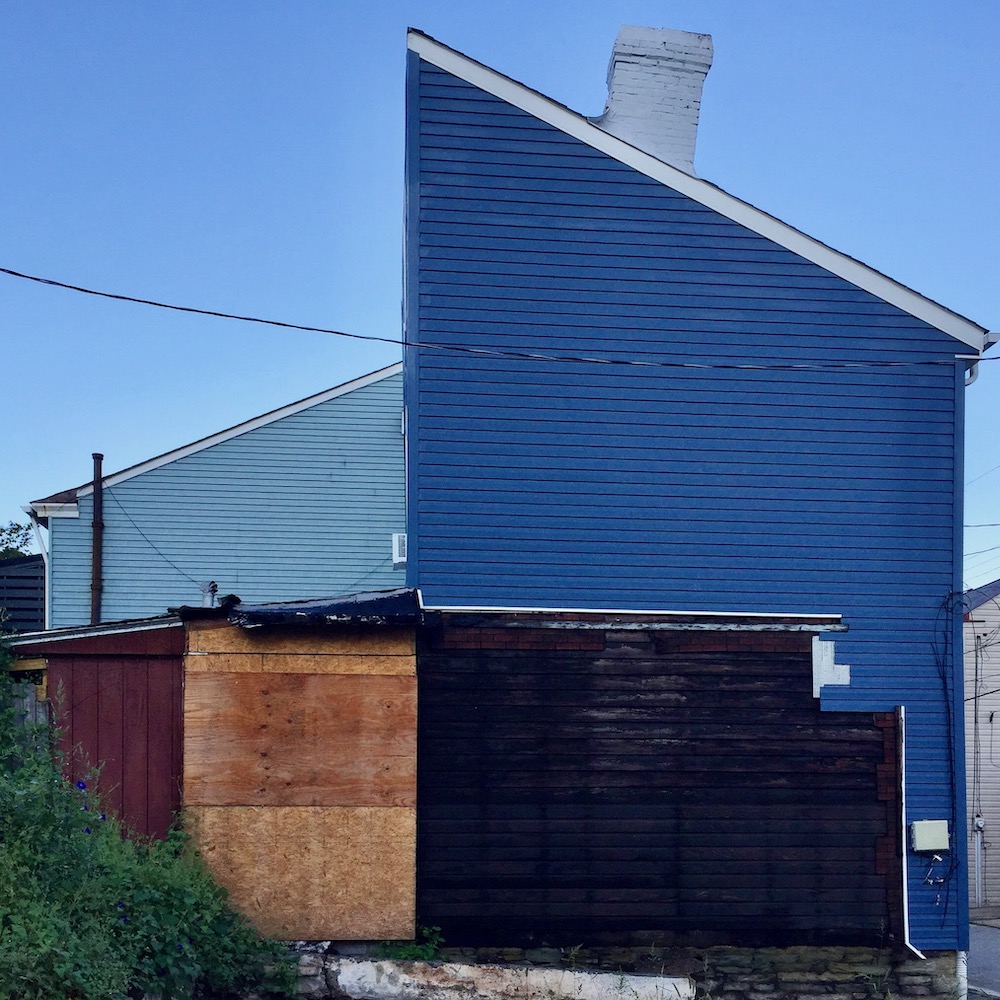
Big blue, Lawrenceville
Wall quarters, New Kensington
A house unglued, Knoxville
Stay out, Duquesne
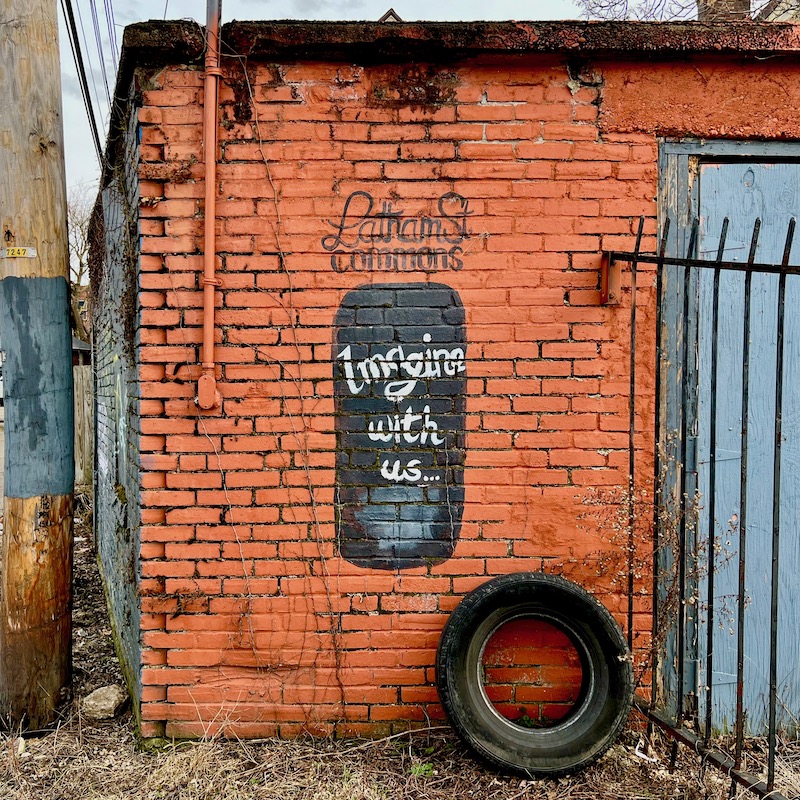
Still life with wall and tire, Friendship
Over-the-fences over-the-wall, Lawrenceville
Inside-out wall, Hill District
If these walls could sing! Bloomfield Liedertafel Singing Society
The old building is large enough that it was probably erected for commercial use, but couldn’t have been anything major—a small factory, perhaps, or maybe it served as a distribution point for products we’ll never know.
In the hundred-and-twenty years or so that it’s been standing—we’re just guessing here—the structure’s original orange bricks have been chipped and scarred, graffiti-tagged and painted-over countless times. Along the way, the building’s large windows were filled-in alternately with cinderblock and plywood. These after-market additions have gone through their own battered histories. They now exist as equal partners with complex lives with more in common with the original material than not.
Meadville
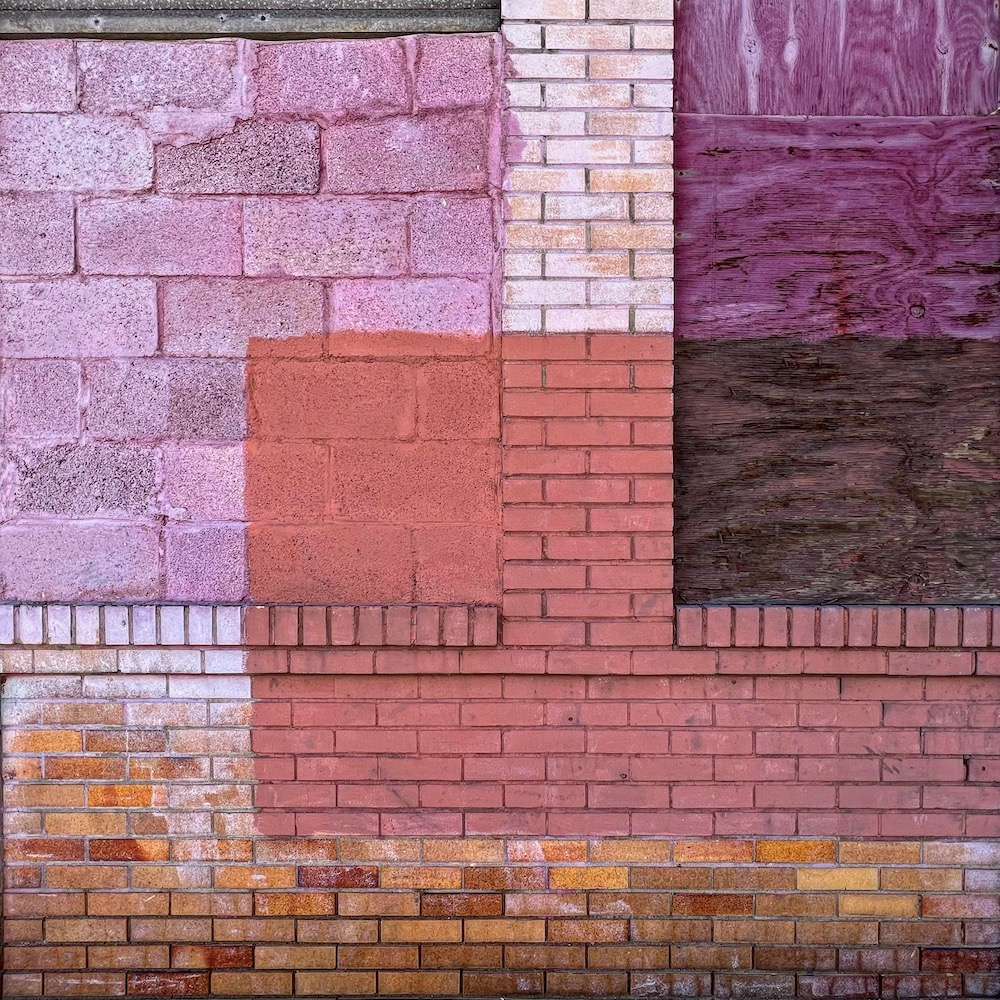
While this anonymous building on a side street in Mt. Oliver is likely on no one’s radar as an important site among Pittsburgh’s many architectural treasures, it’s a legit rock star to wall enthusiasts. You couldn’t find a better example of pure wall than a middle-height section of interlocking rectangles, rich oranges, purples, reds, and pinks. For those who would travel halfway around the world for such an experience, the Taj Mahal of wall perfection is right up on the hilltop.
Bloomfield
It’s been so long since we checked in with The Over-the-Wall Club that the group’s collected bounty runneth over in the most satisfying and thrilling of ways. If you want walls—I’m talkin’ extraordinary, centuries-in-the-making, once-in-a-lifetime walls—we’ve got ’em. Walls that can be stared into to unlock the mysteries of time and space. Walls so beautiful they could be placed in the finest of modern art museums and connoisseurs would ooh and ahh with great gusto. Walls with so much to say they’re not merely worth any old thousand words, but deliver messages to change lives and alter history.
Uptown
But wait! There’s more! There sure is. We had so many great walls that we’ll have a follow-up where we actually go, you know, over the wall as a counter to today’s experience of going into the wall. Sure, that sounds like a lot of mumbo-jumbo from some dumbo—and it is!—but trust me on this one: you’ll want to be here on this journey of growth and discovery, speculation and fantasy. We’ll see you on the other side.
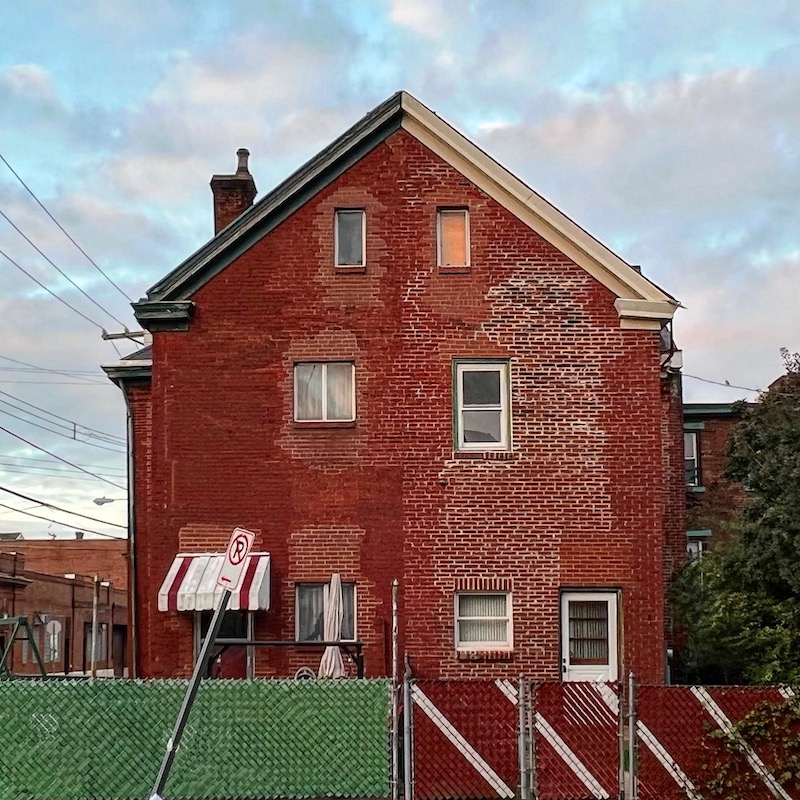
Brick/collage: the back side of a row house block with a lot going on. Lawrenceville
Don’t tell Ms. Orbit, but your author has had a long-running affaire d’amour going on decades now. My paramour is lovely—and complicated—but always a surprise. A fellow makes his clandestine visits early in the morning and late at night—sometimes even sneaking in for a Rupert Holmes-style lunch hour. Just like Lionel Richie and the gang, she’s quite literally a brick house … but is still mighty mighty when she dresses down in casual wood frame and siding. Yes, I’m in a legit Row House Romance and here to tell you a fire that burns this hot ain’t going out any time soon.
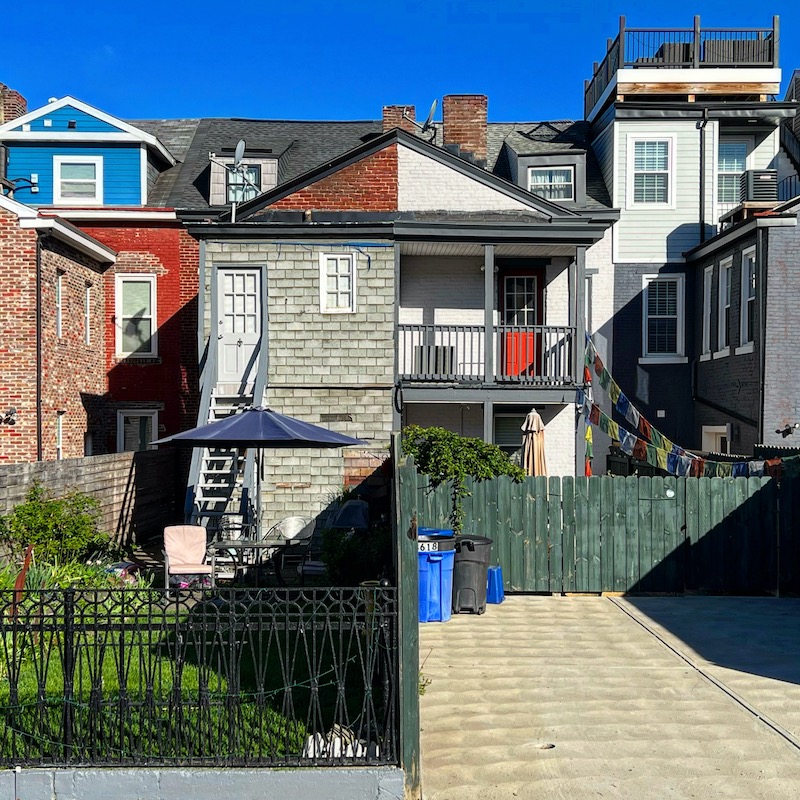
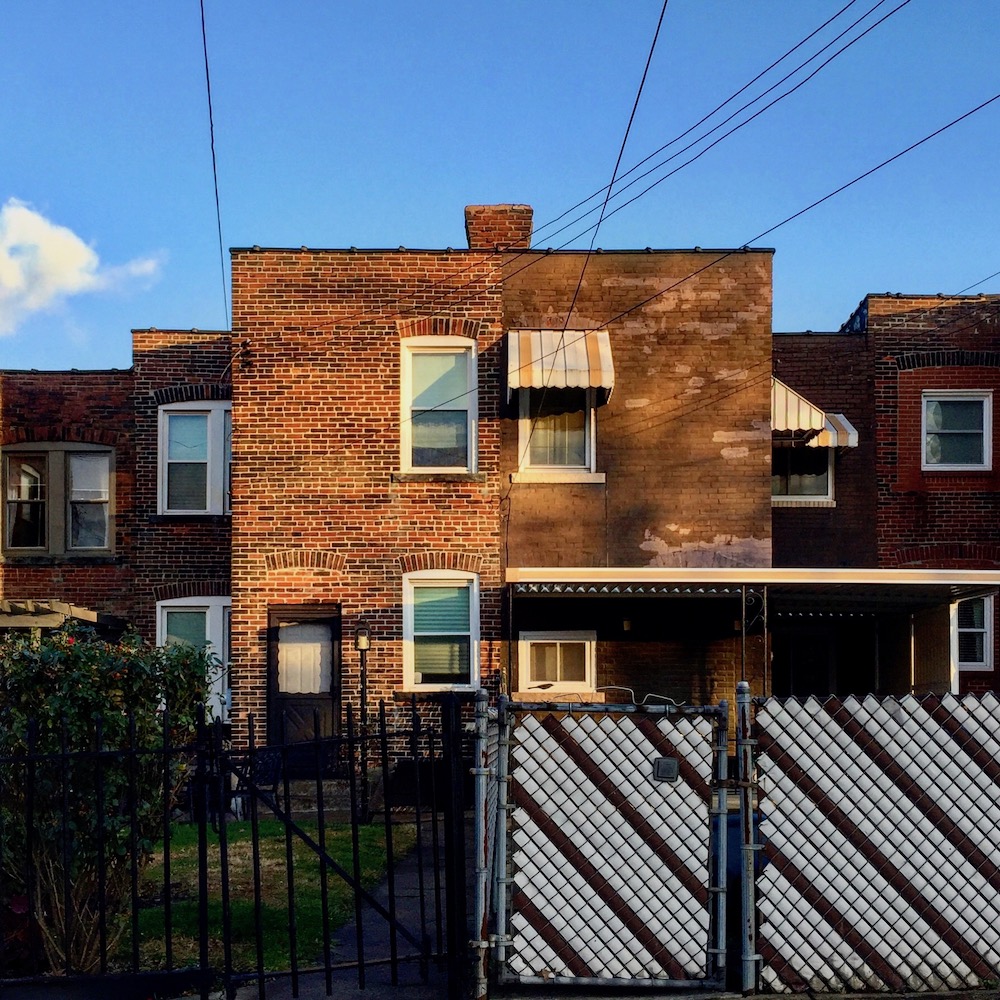
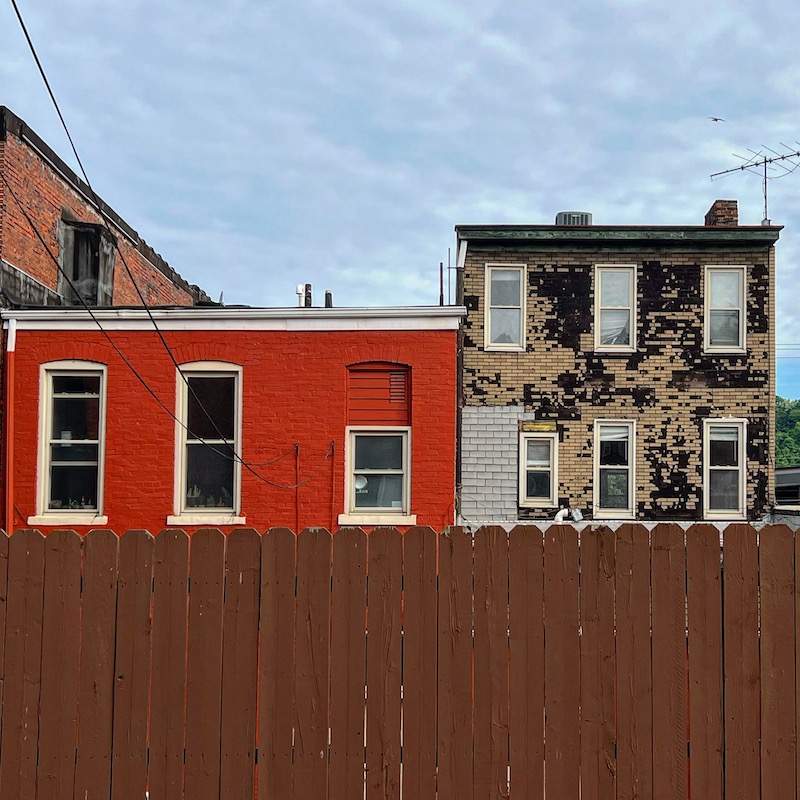
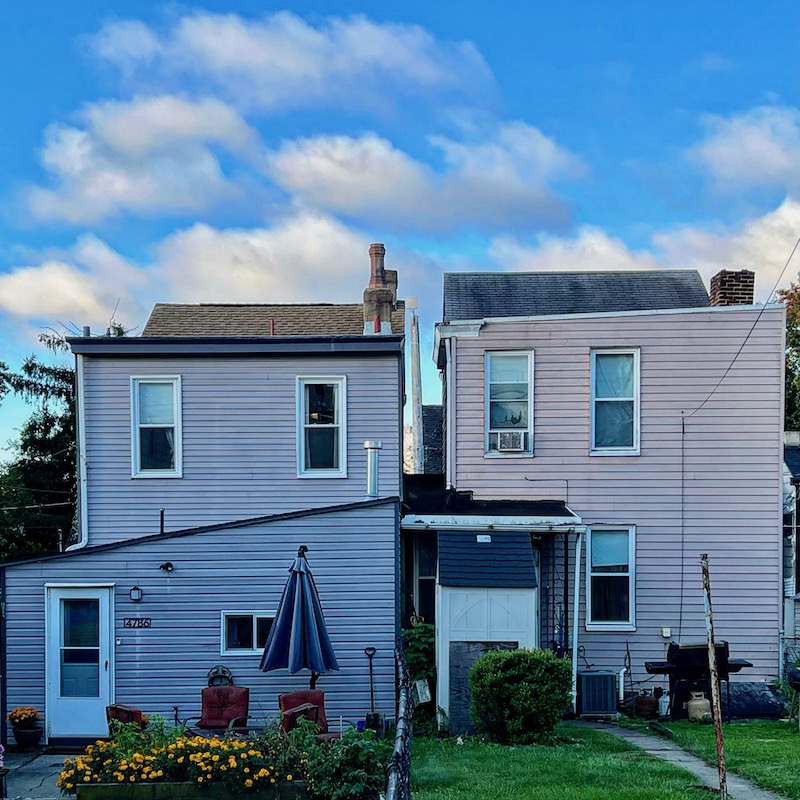
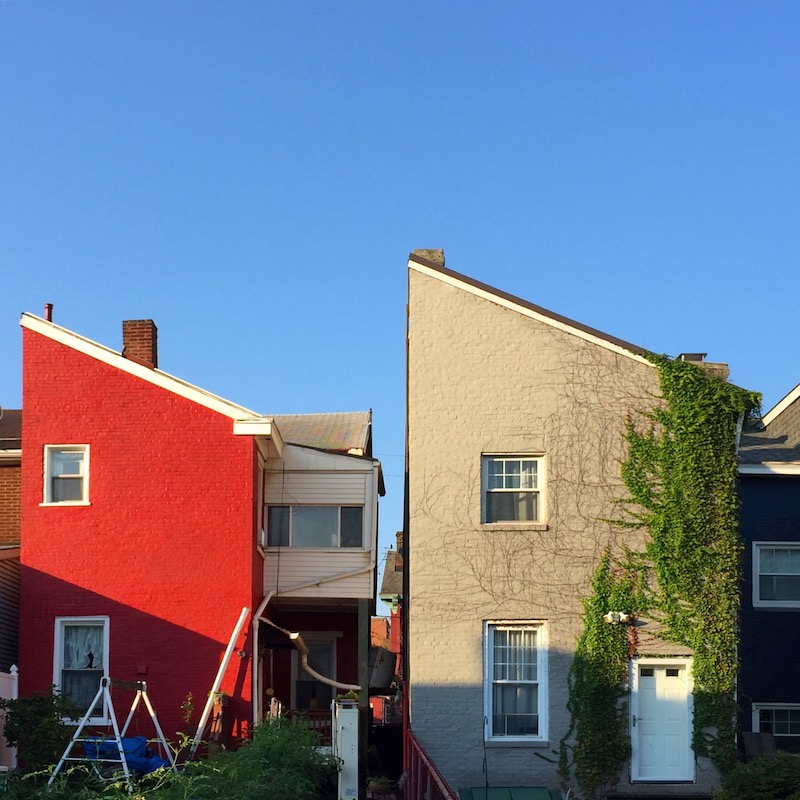
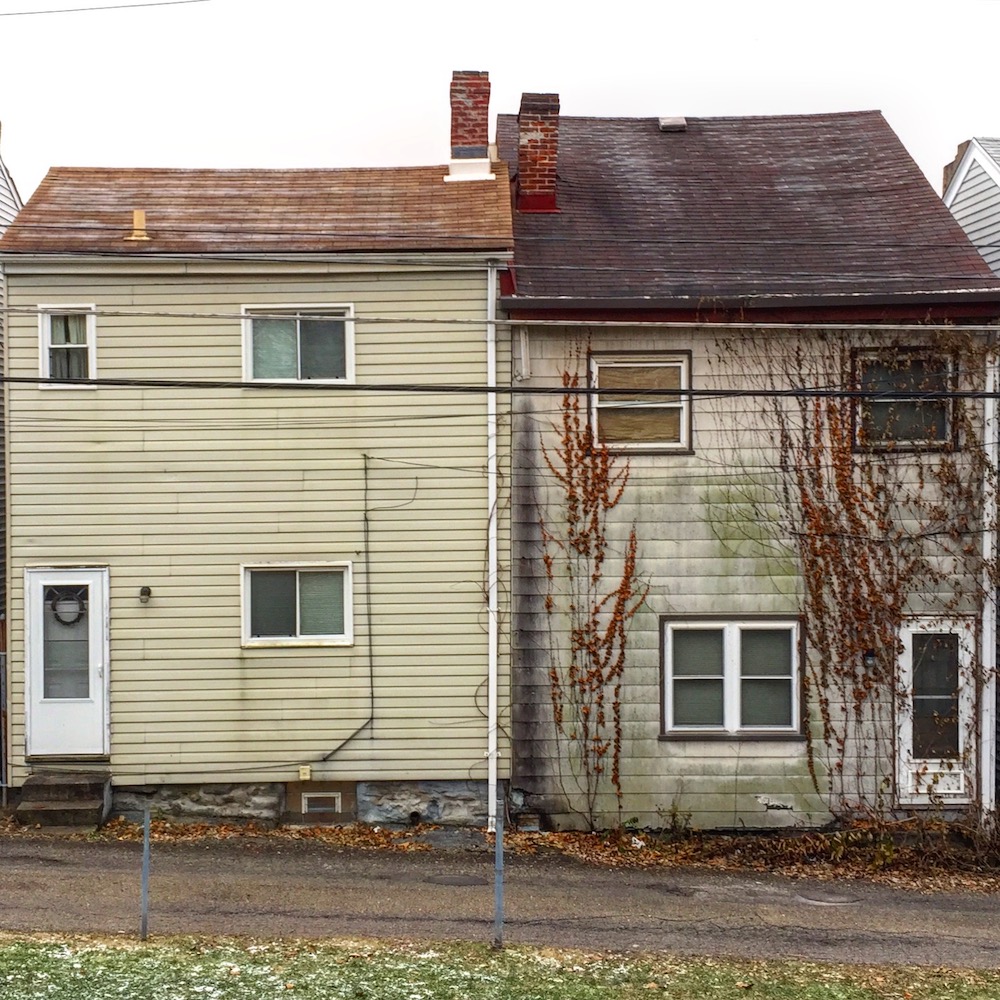
So today, we move around to the alley backsides of row house blocks where so often the true variations on this theme get amplified. Here—with less people looking and a little more room to make choices—homeowners let these birthed-from-the-same-womb siblings go their own ways.
She joined the fencing team, maybe, and likes to wear false eye … err, window lashes. His waistline expanded with a new addition and dresses like a pile of clothes when he can’t keep his siding straight.
Row house cubism, Lawrenceville
On—and over—the fence. Lawrenceville
Squeezed together, Lawrenceville
Little pink houses, Bloomfield
Split personality, Lawrenceville
Three amigos, Lawrenceville
Better fences, Lawrenceville
Green scene, Millvale
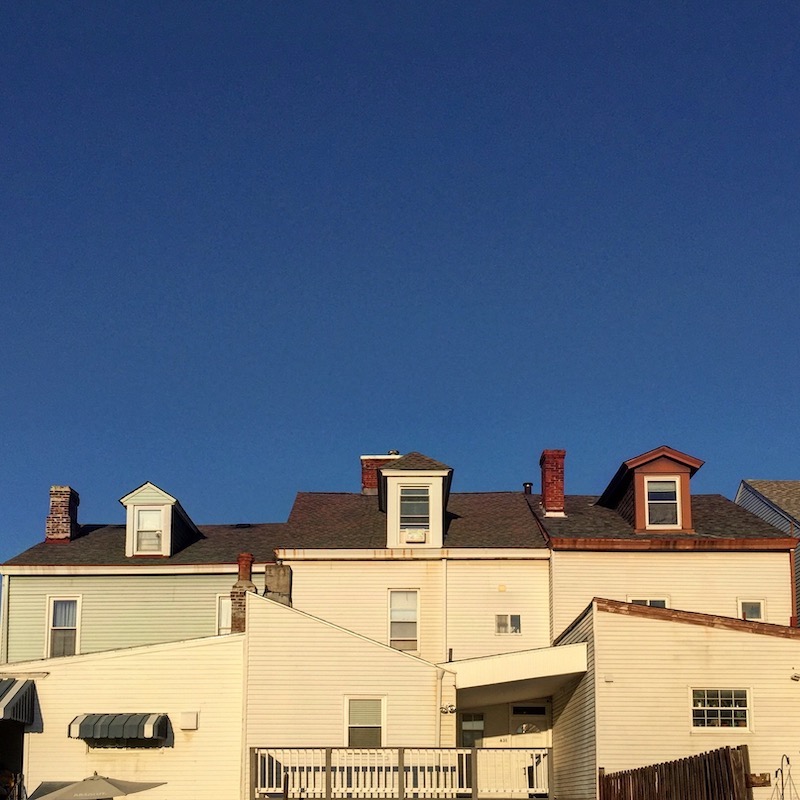
Big Sky Rooflines
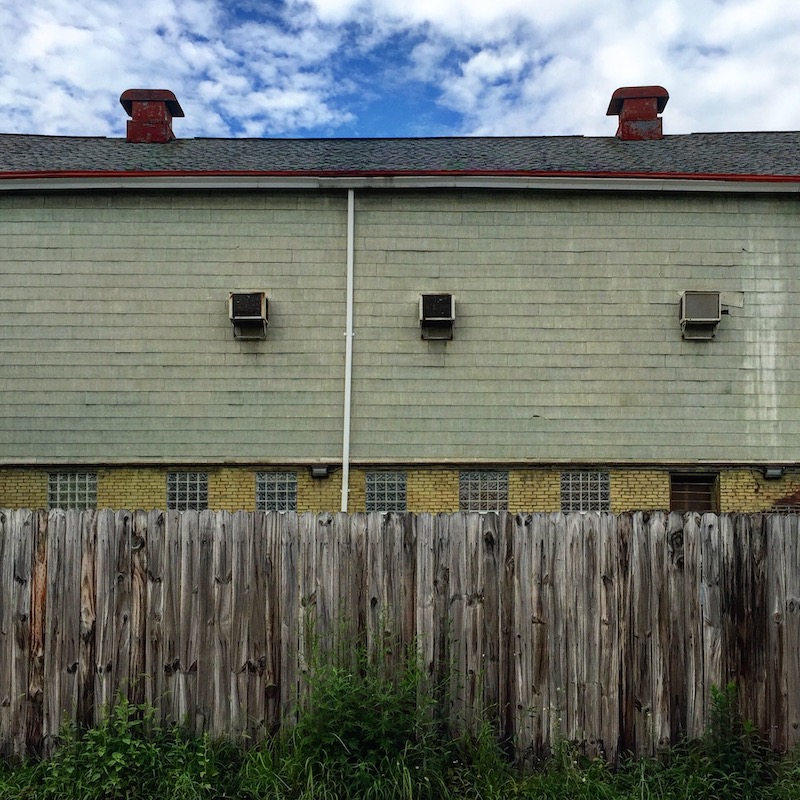
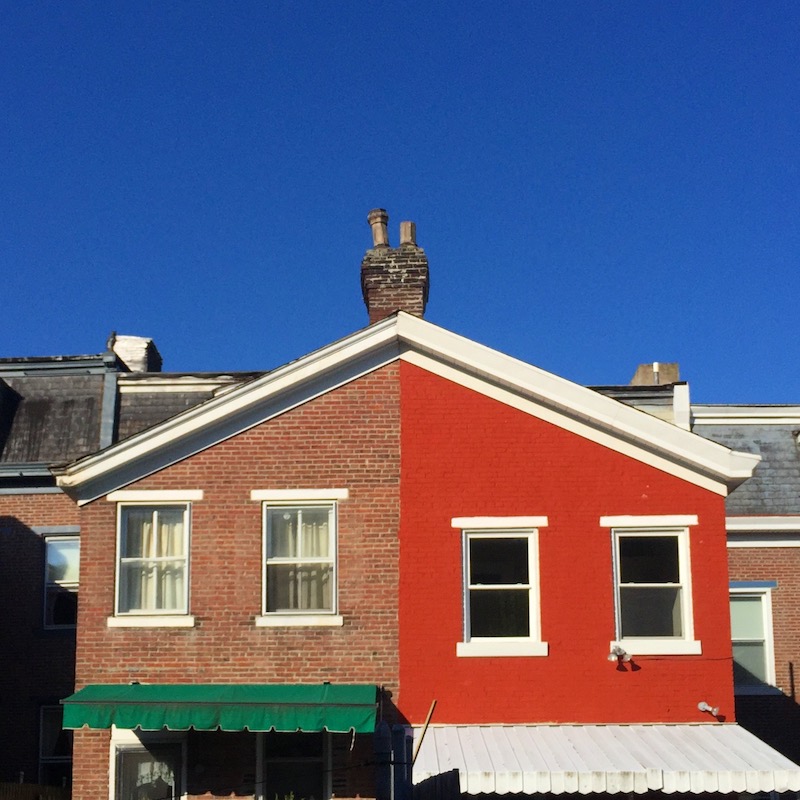
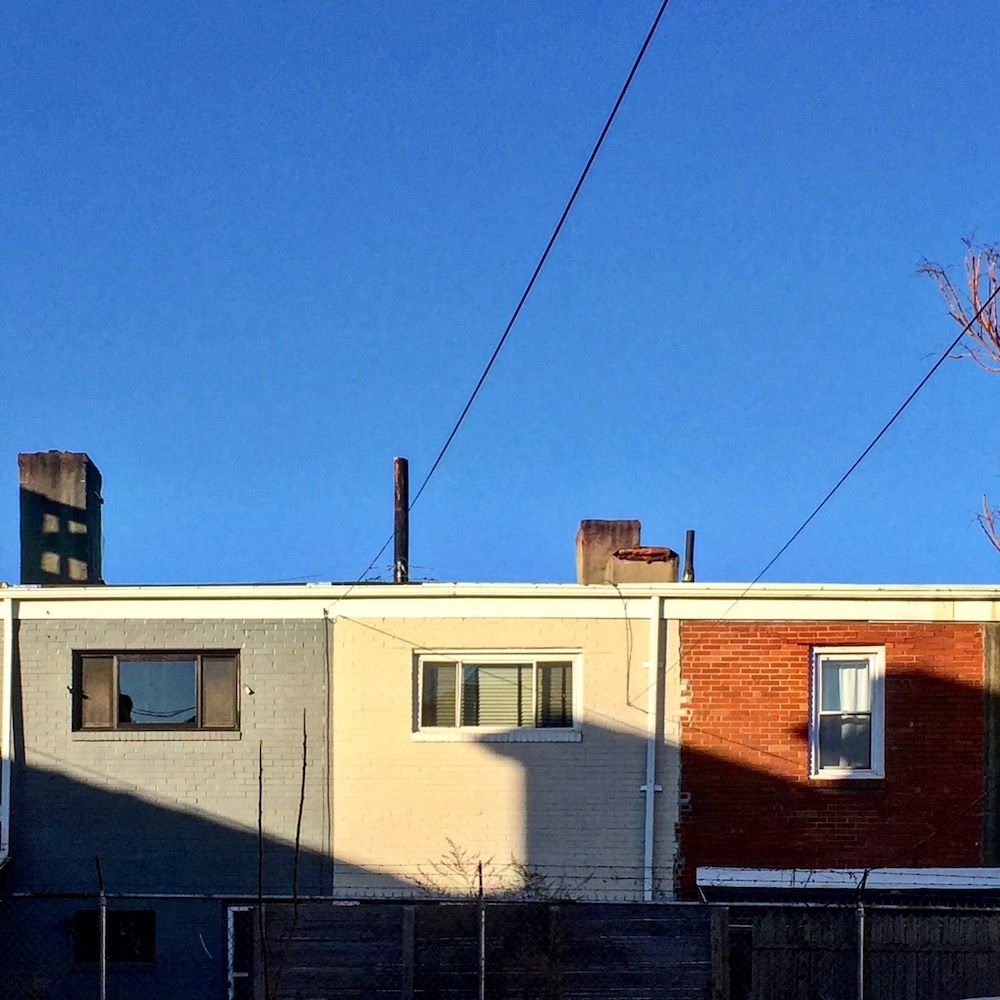
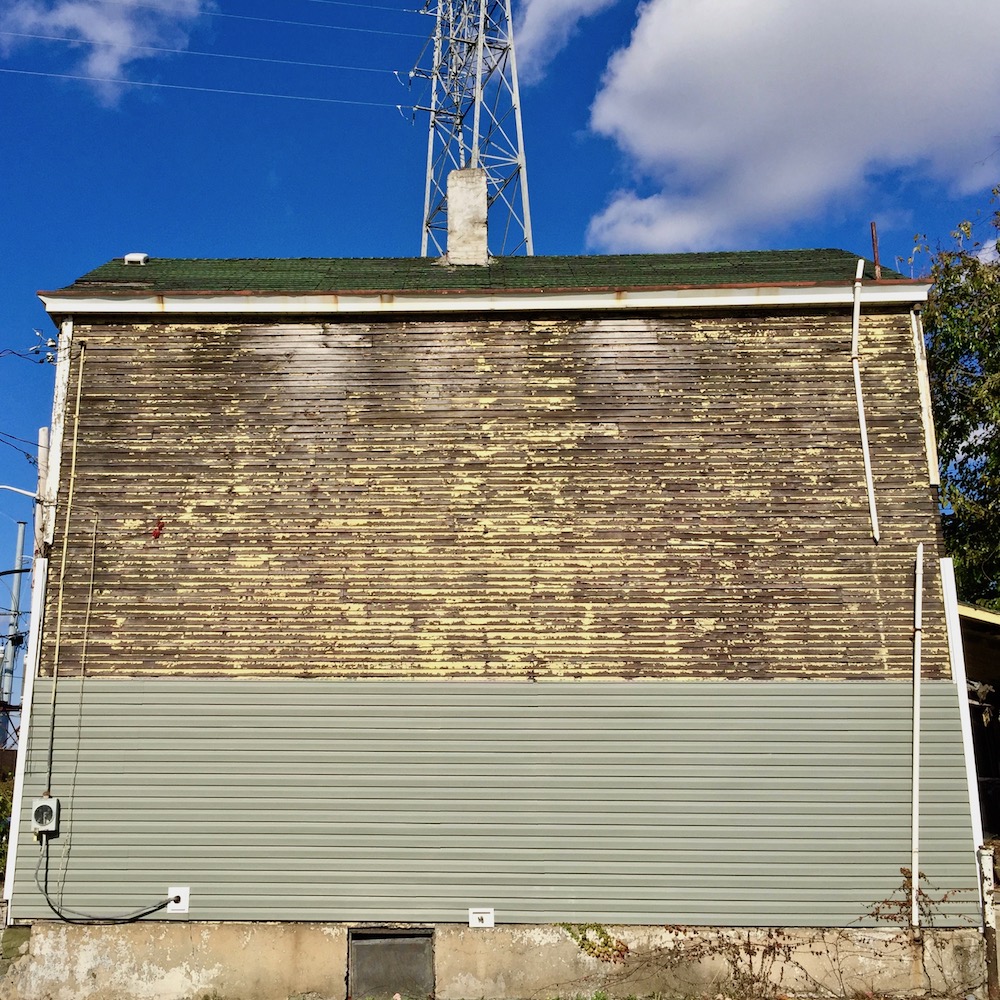
Maybe it’s cheating to include so much big blue sky in a photo that’s supposed to be about buildings, but when you’ve got it—and yes, it’s not all that often in Pittsburgh—a photographer will work it like a rented mule. Lit up like billboards and shining like new pennies, even humble row houses are elevated against a perfectly blue sky. It gives the picture a deep, mystical contrast we can’t resist. They just look so darn good—even from the back side.
The Sistine Chapel of mixed-media DIY home repair. Etna
With apologies to Joni Mitchell,
I’ve looked at life with both sidings now Fake stone, fake brick, anyhow Clapboard slats and fish scale tile Colored vinyl—go on for miles
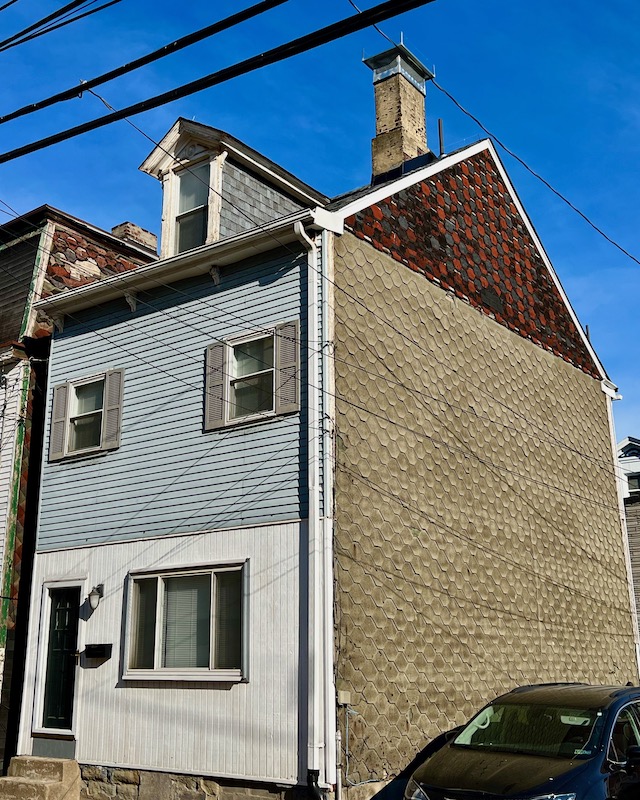
Call it what you like—brick collage bricolage or asphalt aspirations, vinyl verité or aluminum assemblage. We’re going the refer to the unique phenomena of homes improved in multiple phases with multiple different exterior building materials as mixed-media houses.
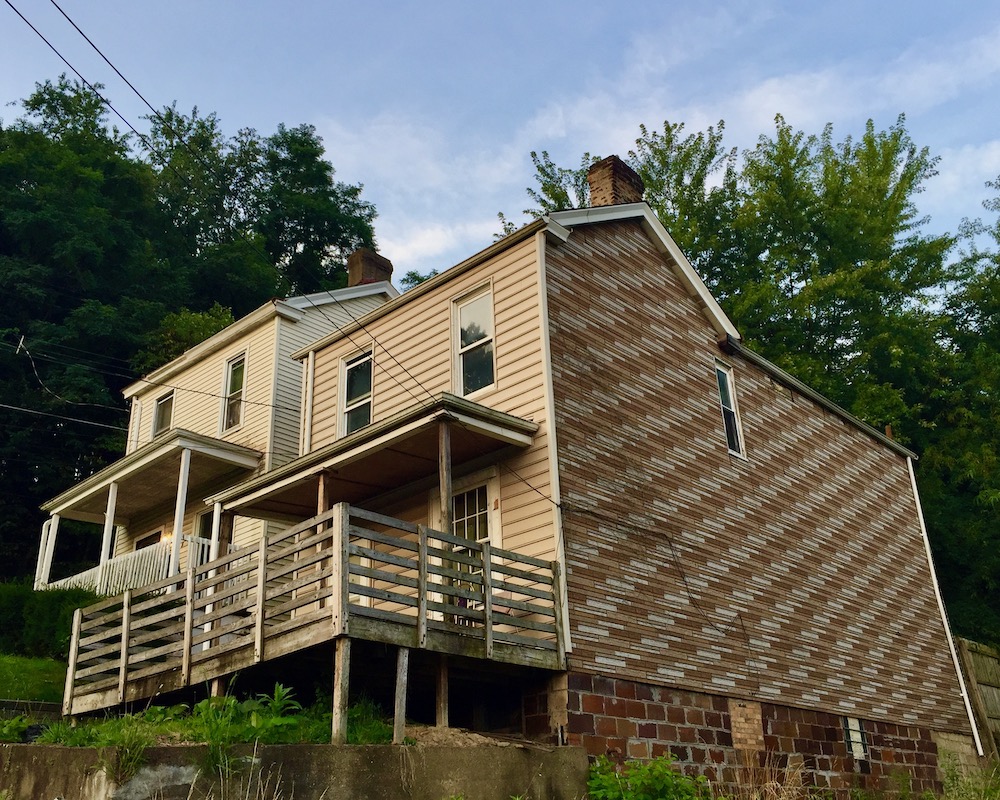
Slanted and enchanted. Mixed-media with ghost house. Lawrenceville
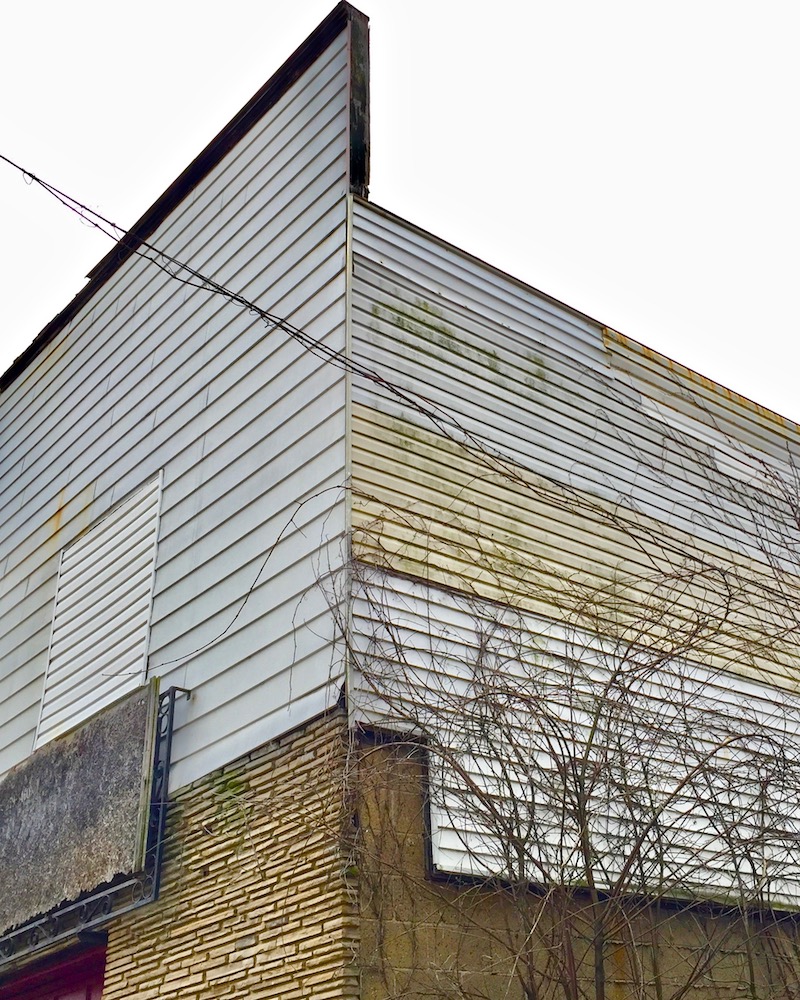
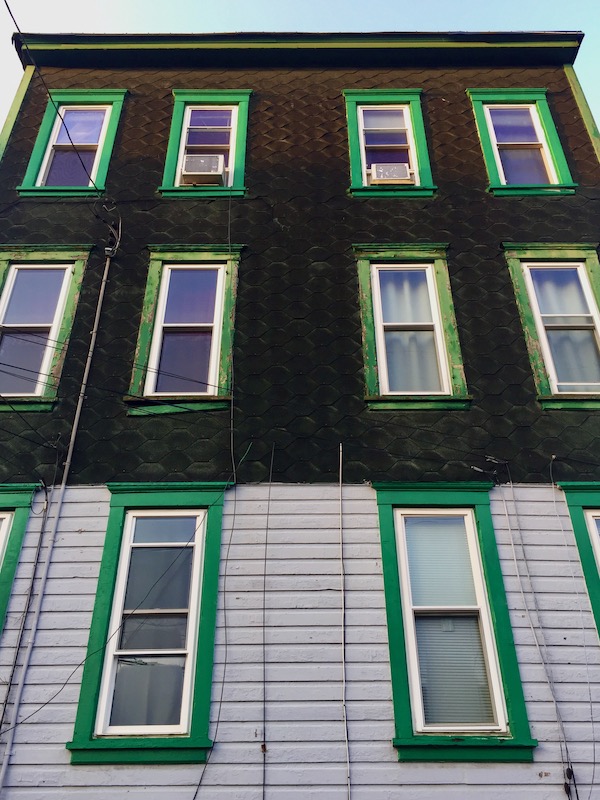
However it worked out, there are a lot of Pittsburgh homes—specifically row houses—that ended up with an upstairs/downstairs division in after-market siding. Sometimes, the twofer becomes a fourfer or fivefer when we go around the corner, under the porch, or up to the mansard roof.
The choice of material sometimes seems like a very conscious design decision—let’s do the first floor in blue stucco, she might say, yeah, and we’ll have white aluminum on the second floor, he joins in—but that doesn’t explain everything.
Bustin’ loose / drink the Kool-Aid. Elliott
Way too many of these examples seem like accidents of time, as if one set of homeowners made an initial decision and a subsequent owner came along and flipped the script twenty years later. Some just feel like people went with bargain lots on leftovers that couldn’t cover the entire house. We’ll likely never know why things ended up the way the did.
The photos—hopefully—speak for themselves and we don’t have enough puns on exterior cladding or Joni Mitchell in-jokes to warrant too much jibber-jabber. Enjoy.
Once, twice, nine times a lady. Lawrenceville
The grand buffet! Bloomfield
An even grander buffet! Allentown
Ain’t that America: brick, wood, steel, and glass. Mt. Washington
Rocks Bottoms mixer-upper. McKees Rocks
Triple layer cake. Bloomfield
Mid-renovation mixed-media. Bloomfield
Three stories for three storeys. Millvale
Bloofer-Twofer. Bloomfield
Business in the front … a different type of business around the side. West Homestead
Off off-white and stone below. Donora
Your porch, my wall. Neighbors sharing siding. Bloomfield
“That used to be a crack house,” the neighbor told me. Mixed-media fencing, Beltzhoover
Upstairs/downstairs. Polish Hill
The ghost in you. Mixed-media ghost house. Duryea, PA
From the road, it is impossible to see much detail in the odd structure lurking in the woods. Built directly into the hillside with an impressive array of flora stretching up as far as the eye can see, there is a proscenium-like opening in the tree canopy such that it’s visible right from Kummer Road.
It’s obvious this is neither one of North Park’s many party shelters nor anything too utilitarian, so you’ll know you’re onto something out of the ordinary. Get closer and the etched stone ornament above the doorway clearly, cryptically, tantalizingly reads Fountain of Youth.
Capstone, Fountain of Youth
Two visits to the fountain, separated by fifteen months and one global pandemic. The first–literally days before the world shut down in March, 2020–was brisk, way before leaves had returned to the trees, but lit up in glorious early afternoon sunshine under a pure blue sky. The second, mere weeks ago, on a hot and humid June afternoon, following the inevitably-introspective event of a friend’s gone-way-too-soon memorial service and a really rough few months in Nogginland.
If you, your friends, and loved-ones survived the pandemic with your (physical) health intact, be thankful. It was a really difficult year-and-change even if everyone in your world is still breathing. At best, we all probably feel like a year of our lives just evaporated into the aether.
An offering for the fountain sprites
Under these circumstances, who wouldn’t want to dip a ladle into a cool spring and drink crystalline mountain water–spiked with faerie dust, magick-infused, and blessed by the cosmos–to regain a measure of our collective lost year?
Spoiler alert: Don’t get your hopes up. First of all, no one (including your author) is recommending you drink the water from The Fountain of Youth. A 2019 Pittsburgh Magazine story informs us that by the 1950s, “tests revealed the fountain’s waters were no longer fit for human consumption due to ‘coliform organisms.'” Rumors have it that leaks within the nearby golf course watering system led to the spring’s demise. One can imagine graduating seniors from nearby North Allegheny and/or Pine Richland contaminating the water the old-fashioned way.
View from inside of the Fountain of Youth
The basic facts on The Fountain of Youth are both easy to find [Atlas Obscura, Roadside America, and WESA’s “Good Question!” series all got there before we did] and yet don’t tell us much at all. These sources agree the New Deal-created Works Progress Administration (WPA) constructed the spring house in 1938 and modeled the design to look like a Roman cavern. The short life (~15 years) of the spring as a water source, the pump-don’t-work-’cause-the-county-took-the-handle, and that stuff about water contamination are in common as well.
That’s about it, though. No one has an explanation for how a government works program decided to declare this place Fountain of Youth and not, you know, something more predictable like “Roosevelt Spring” or “Liberty Fountain.”
Entrance to the Fountain of Youth spring house, winter 2020
It is a cruel irony–or, perhaps, the most clever of cosmic jokes–that as a functional entity the “Fountain of Youth” had a lifetime shorter than that of your average house cat. But the ornate built-into-the-hillside structure is still with us, sheltering in the rain, cool and tranquil in the heat of summer, and enticing the inner, curious child in all of us (ahem) no-longer-children out into the woods for an eye-opening explore.
Does simply breathing in the clean air of the Fountain of Youth give us a regenerative contact high? Does a proximity to natural spring water cleanse the soul even if we don’t ingest it? Does it matter? The Fountain of Youth got us up and out, into the woods, poking, pondering, and bathed in sunlight. So yes, it seems like the Fountain of Youth is still working its magic just fine.
Fountain of Youth, seen from Kummer Road, late winter 2020
Getting there: The Fountain of Youth is maybe 100 feet off of Kummer Road, in North Park. It’s 0.7 miles north of the intersection with Ingomar Road and has a marker on Google Maps–you won’t have any problem finding it if you look.
Note: While the distance from the roadside is short, getting to the spring house from the road requires shinnying down a little hill, crossing a small stream, and then up again on the other side. The site is neither wheelchair-accessible nor recommended for those with any level of mobility problems or difficulty negotiating awkward terrain.
One of humankind’s most glorious examples of wall quarters. Inside-outside wall, Wellsville, O.
The giant wall holds a lot of history–and likely not a few secrets. Two tall stories high and spanning the full depth of the lot–from the sidewalk on Wellsville’s Main Street all the way back to the service alley–this space did a lot of living. Demolition on the building that used to be here exposed a (former) interior wall that is an archeological treasure our shallow American memory will have to substitute for “real” finds like Sutton Hoo or Tutankhamun’s tomb.
The plaster walls still cling to a rich palette of battered colors. Each room had been painted in an entirely different scheme and what remains are beautiful antique reds, pale yellow-greens, and deep melancholy blues. There are channels on the surface where we see clear outlines of the old building’s load-bearing interior walls, a staircase, plumbing lines, slotted holes in the brickwork for tall floor joists.
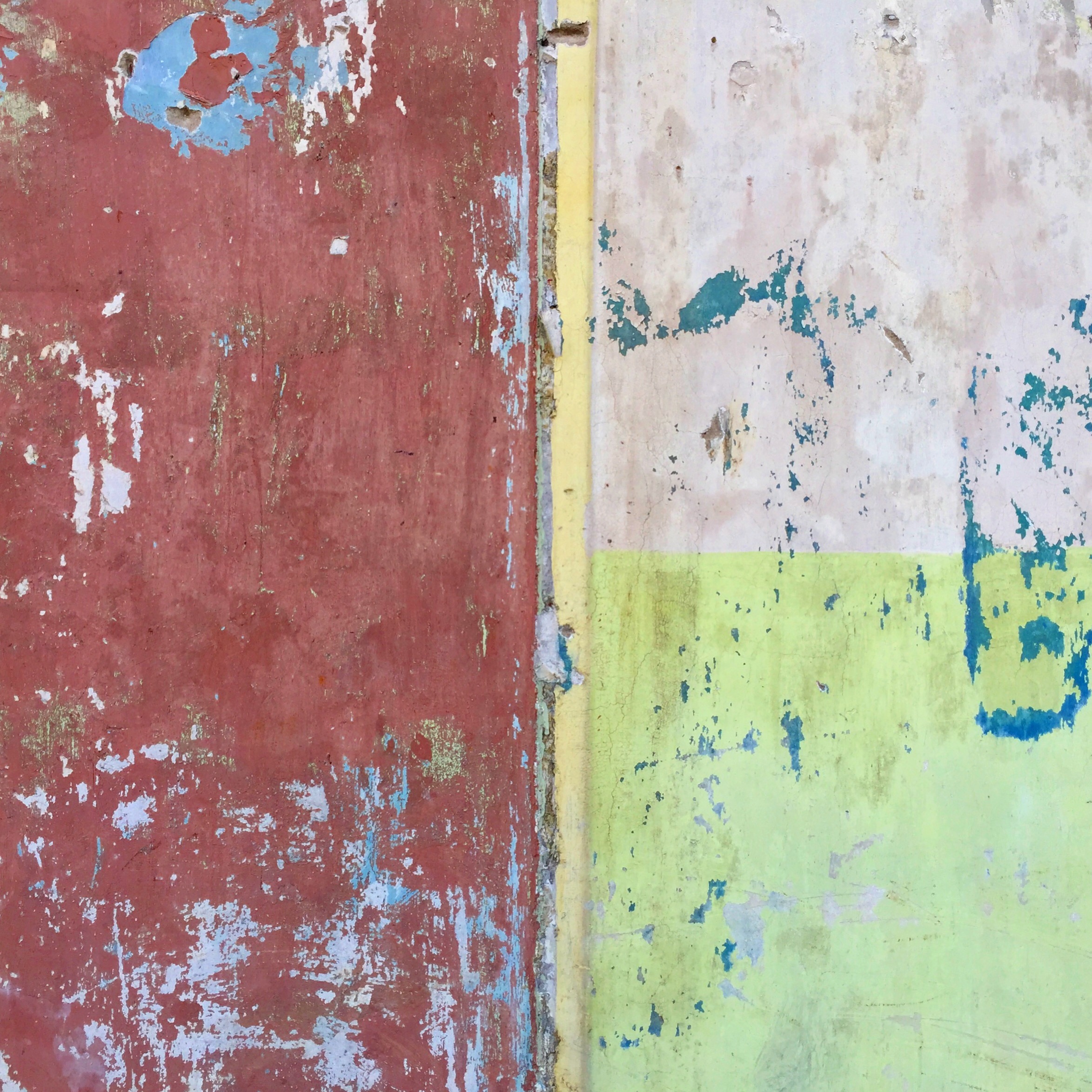
With all this, it is one particular section of the wall surface that intrigues more than the rest. In it, we see the intersection of three colors, each scarred, smeared, and pockmarked with age but still brimming with verve. A strong yellow line runs due north-south and gives the whole thing the composition of a modernist painting. Everything exists in perfect right angles.
The wall that started it all. Forest Hills
The obsession with wall quarters began way back in 2015 with a reporting trip to Forest Hills. We were there to commune with the ex-atom smasher and later found ourselves by another, similar, inside-outside lot. Amongst the rubble of felled bricks and illegally-dumped housewares were four squares within a larger square: the right side faded green-blue, the left a dirty white; plaster above, cinderblock below. The section lines could not have been more precise.
It was perfect: balanced and meditative, color, material, and texture arrayed in transcendent harmony. It’s the kind of lightening bolt that may only land once in a generation–heck, once in a lifetime if you’re lucky.
Strip District
But, wall-watching naifs that we were back then, the hard truth wasn’t fully understood. It seemed obvious that we’d run into more big, glorious, quad-sectioned walls just as soon as the mind was opened to them. Why, once you set the controls for Marys or Steelermobiles or The Dog Police you see them everywhere–wall quarters must be just as easy … right?
Bloomfield
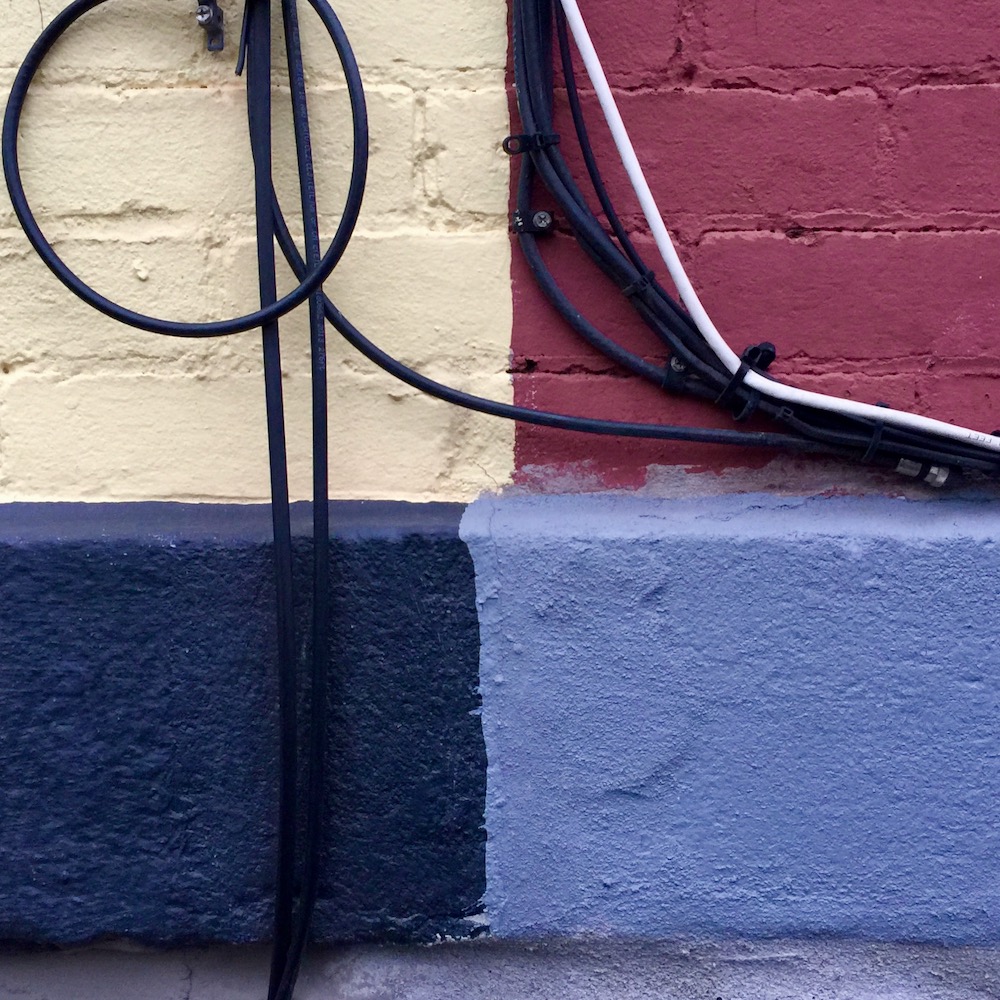
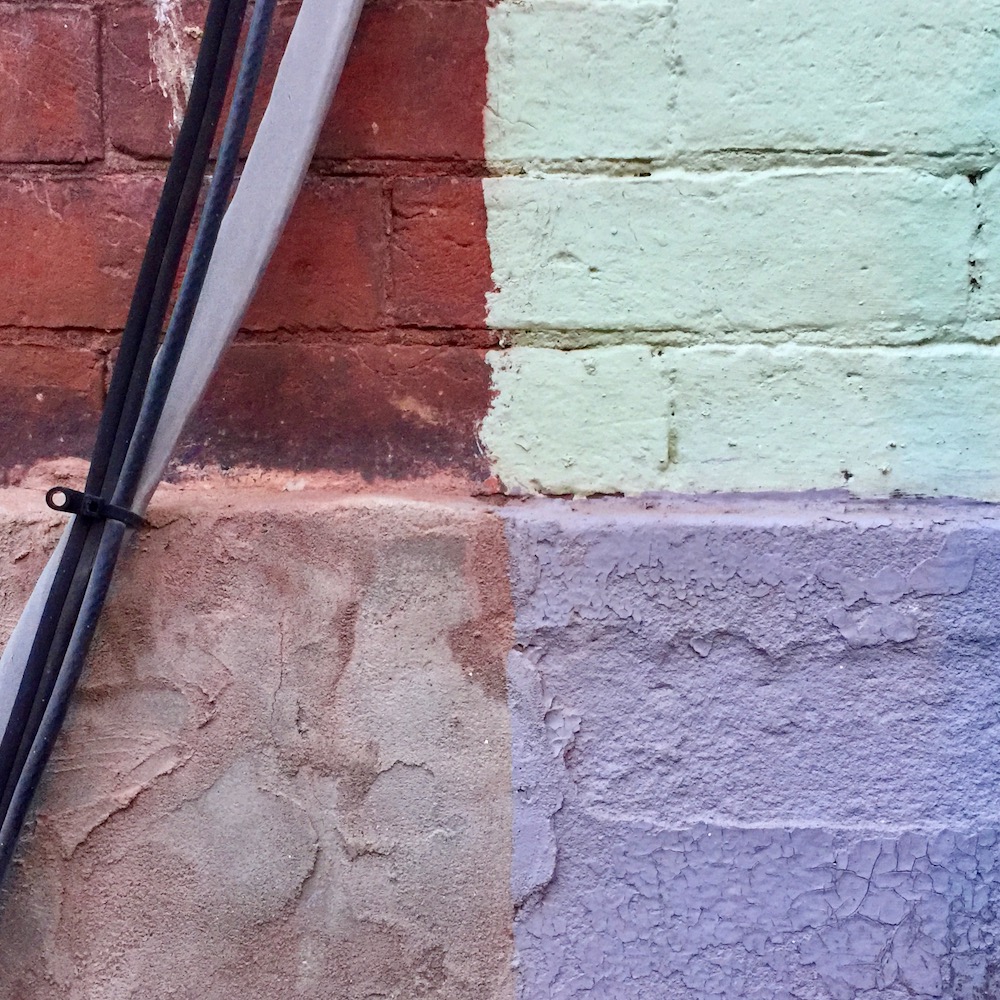
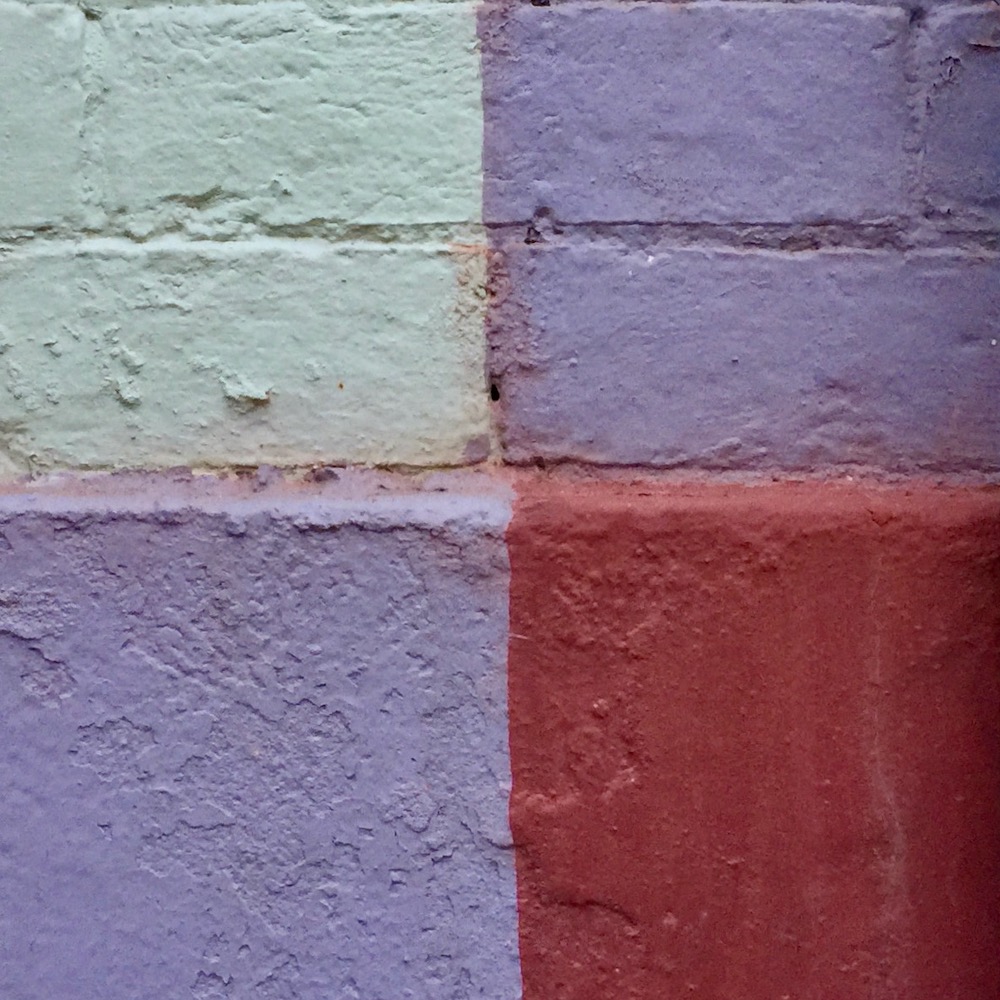
Well, you know where this is going. No, it is not easy to locate a perfect wall square–and this poke-down-every-alley and look-inside-any-abandoned-property keister is here as a material witness. Six years later–six years of looking for these things!–and we’ve come up with merely a handful of specimens. A lot of them aren’t even that good!
But if you take the collection we did manage to cobble together and throw in a (good-sized) set of bonus/pseudo-wall squares, we end up with a pretty nice haul. Hopefully they’re as pleasing to Orbit readers’ eyes as they are for staff to deep focus on when we’re destressing in Chez Orbit’s salt cave. Breathe in, breathe out, close our eyes and say it until we believe it: everything is going to be all right.
South Side
Millvale
Bloomfield
Row House Rejoinders
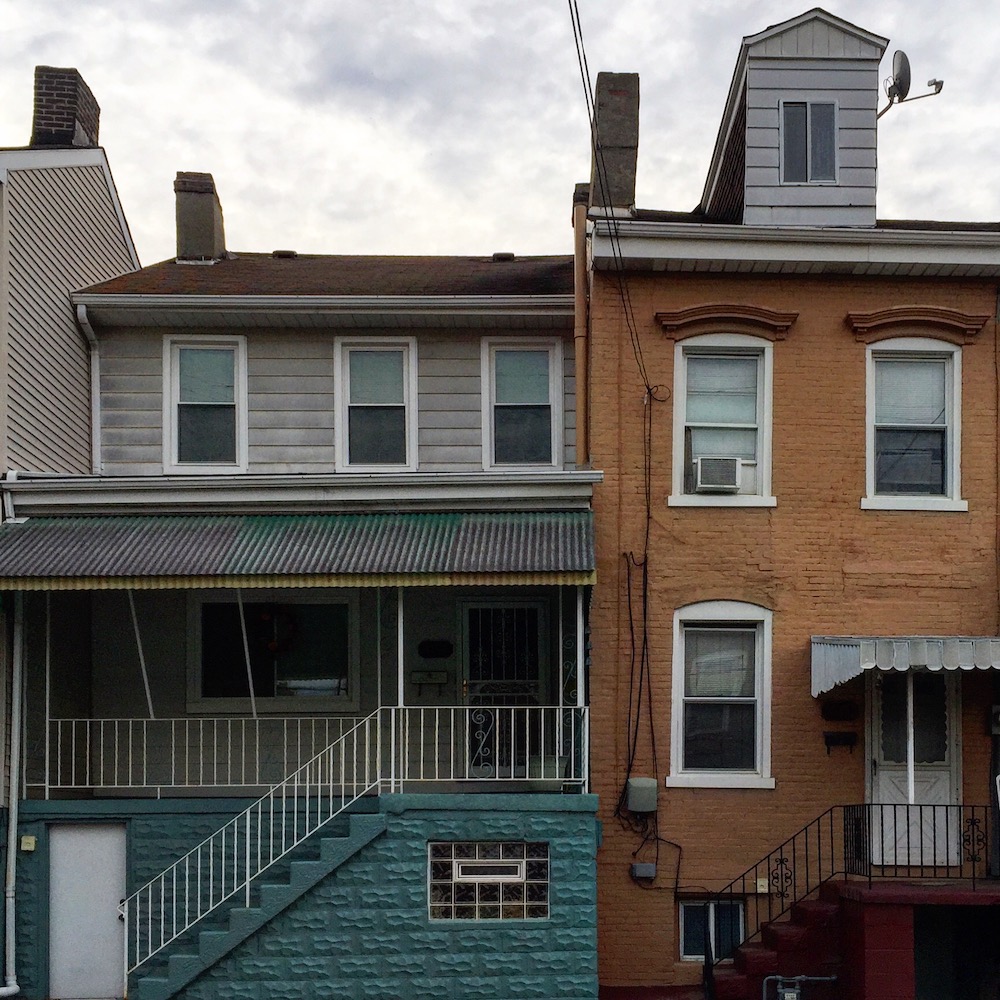
I’m not going to lie, The Over-the-Wall Club has some purists who frown on the relatively easy wall quarter pickins found in row house blocks. While it took us half a decade of constant scouring to come up with just the few “real” quarters (above), any Sunday stroll through the South Side Flats or the Mexican War Streets will reward with a bounty of these interfaces between next-door row houses.
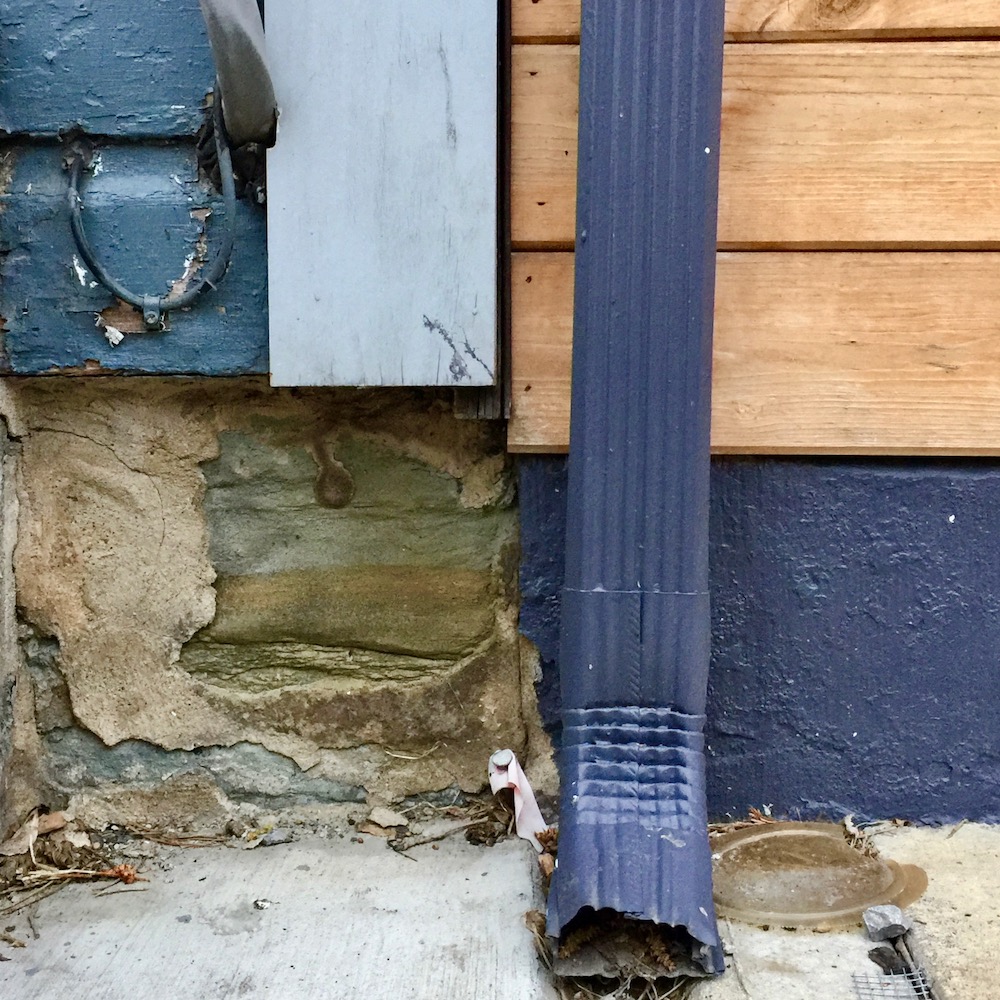
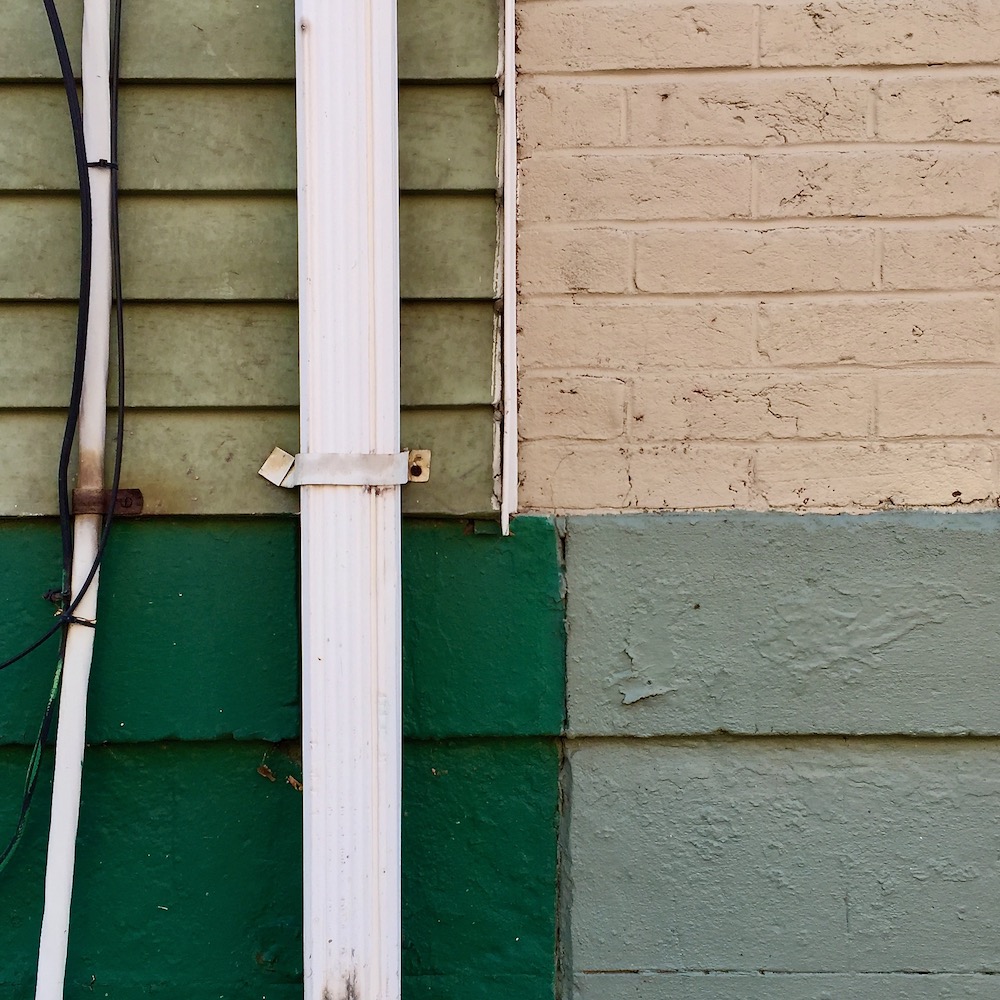
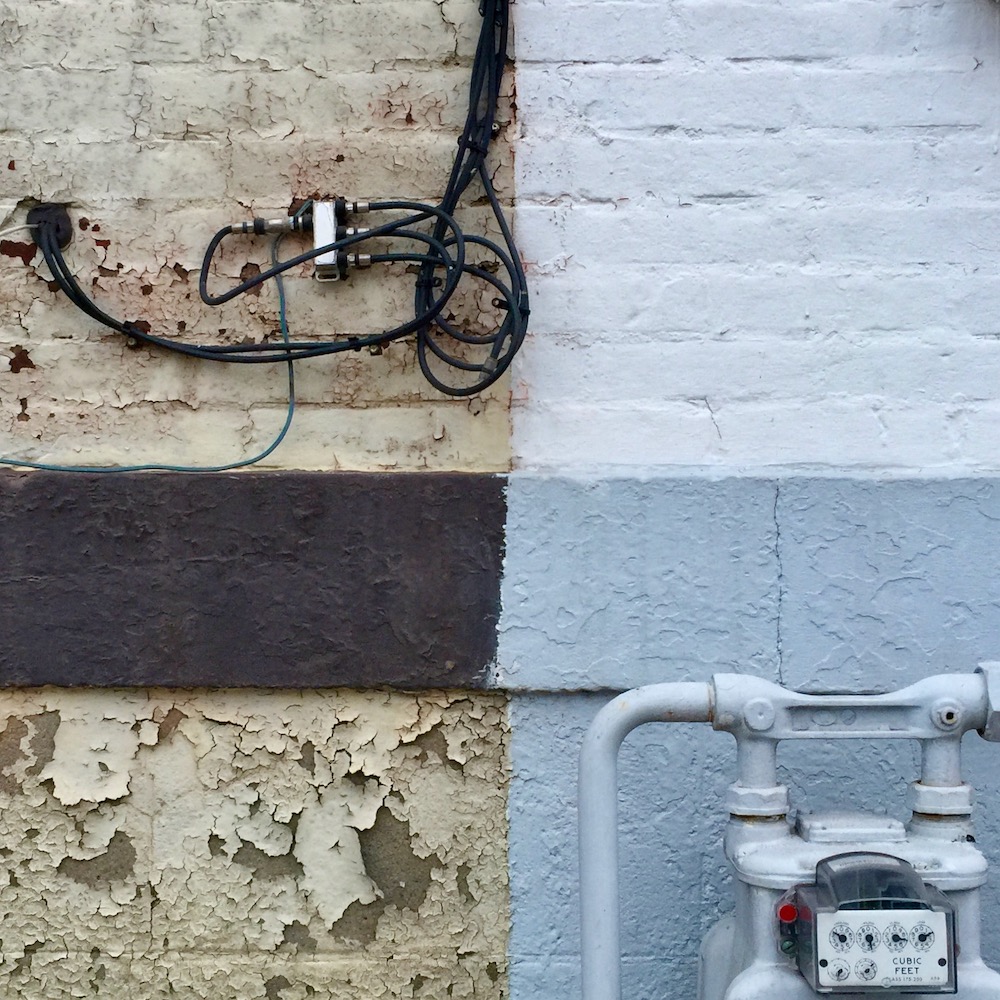
With brickwork and foundations in a continuous plane, it just takes neighboring homeowners with different color preferences and a little bit of luck (steps, stoops, porches, and downspouts all get in the way; sloping hillsides break a lot of linear connections) to get really nice, perfectly squared-off intersections.
Lawrenceville
Lawrenceville
Lawrenceville
Lawrenceville
Lawrenceville
Lawrenceville
Lawrenceville
Lawrenceville
Lawrenceville
Lawrenceville
Lawrenceville
Lawrenceville
No Room for Squares
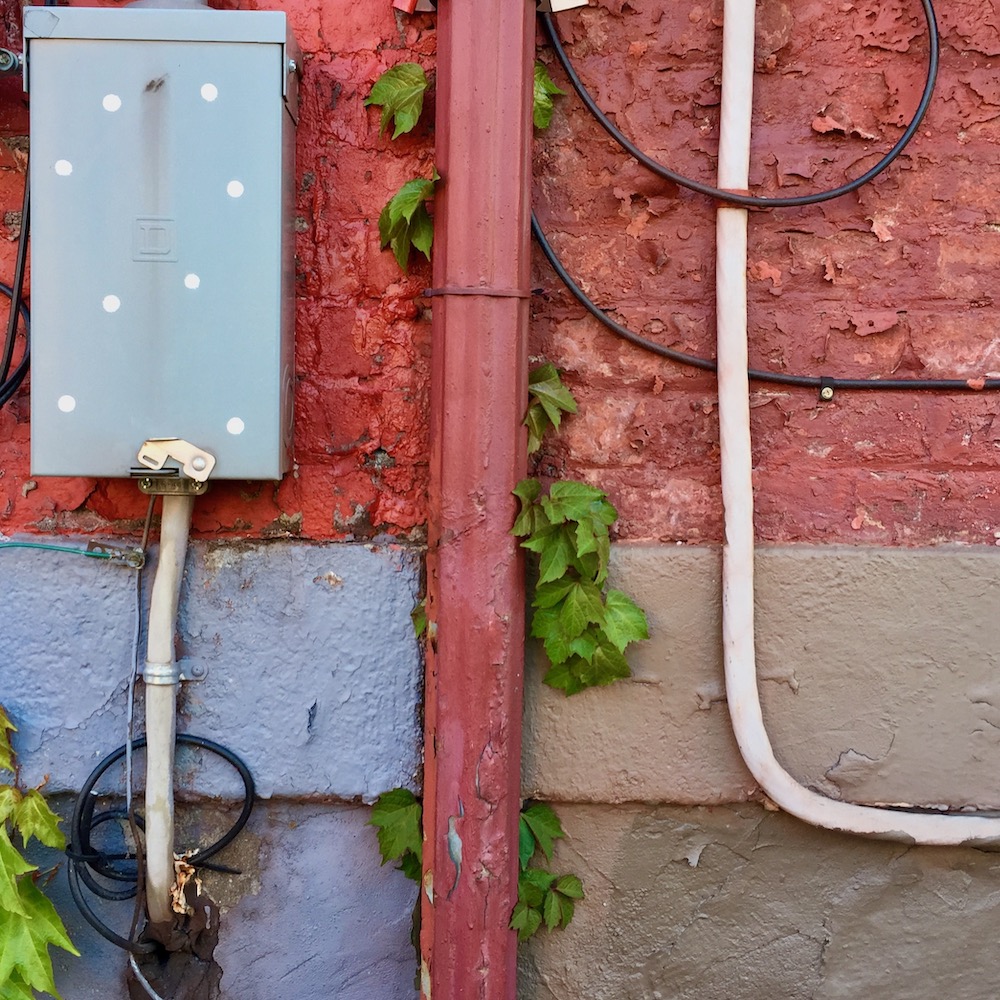
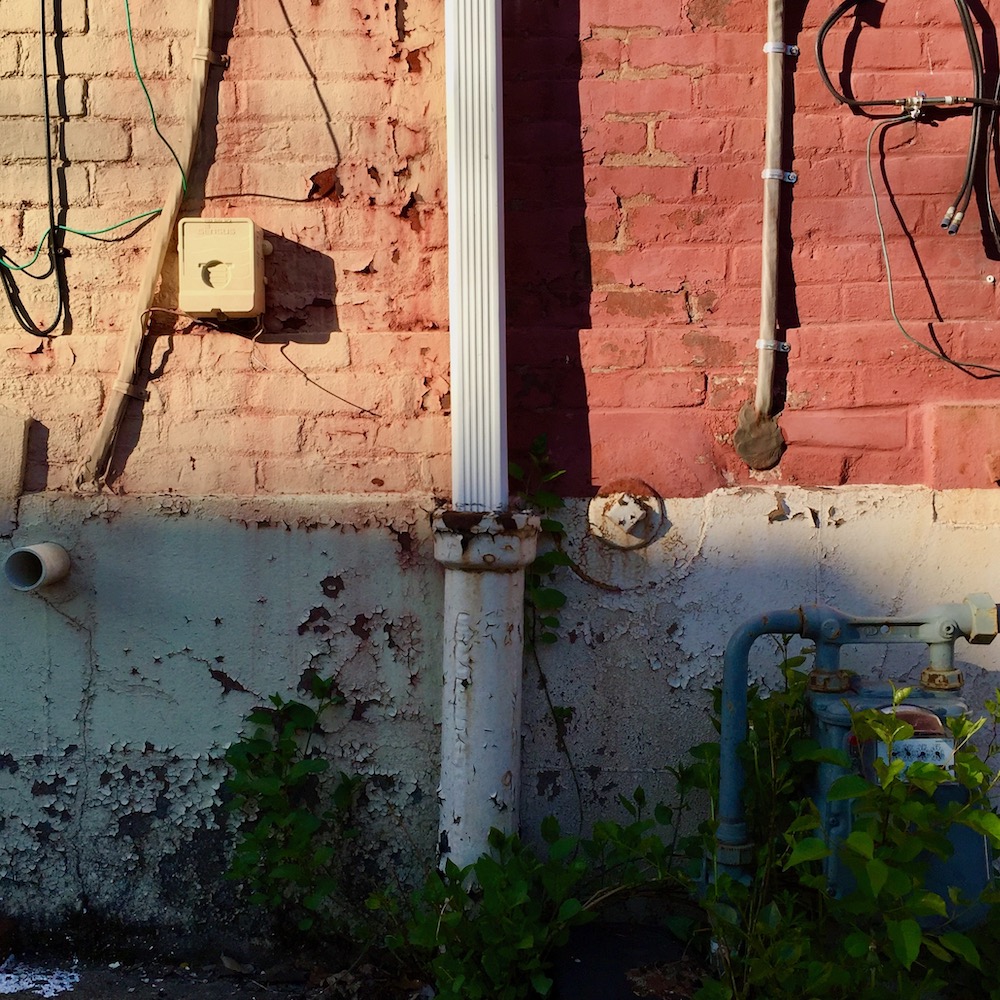
As with life, things on a wall don’t always line up perfectly. One shouldn’t let that diminish the shear ecstasy of a beautiful mixed-media surface, though. An extra drain pipe here, foundations that don’t line up there–we’re all better off to roll with these as … not imperfections, but rather elements that broaden the depth of the final composition. Ain’t nobody perfect, but a wall with a whole lot of problems sure might come close.
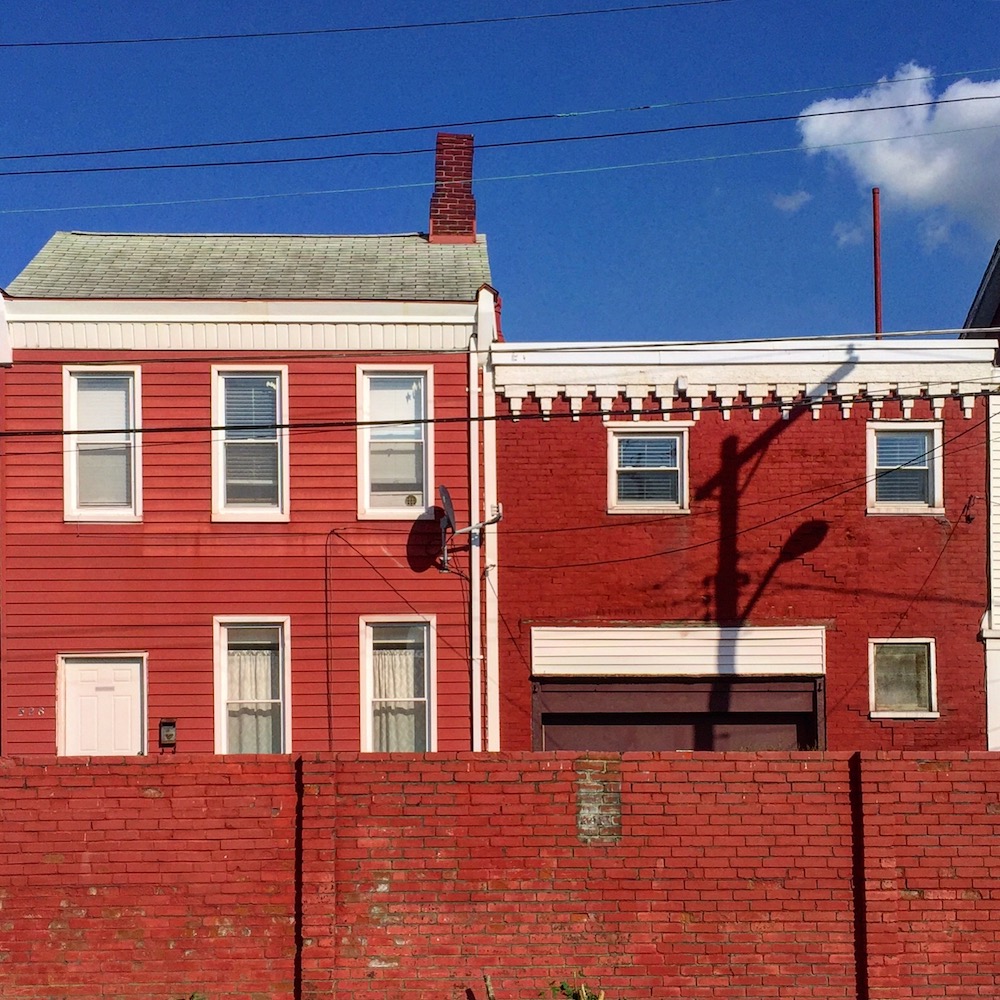
Bob Ross would be proud: lots and lots of red! Bloomfield
Behind a six-foot brick wall sit two side-by-side row houses facing a thin alley in Bloomfield. On the left is a typical Pittsburgh wooden worker house: two up/two down, three windows wide, no decorative flourishes. Immediately abutting it is either a small house with an unexpected garage door or a small garage/workshop with an apartment upstairs–it’s not really clear. Everything is painted red.
This is a prime specimen for the row house fancier who wants a single, coordinated palette: lots and lots of red with just enough white trim to outline features of the two houses and make design snobs’ blood pressure rise. On a sunny day, with a big blue sky and just one wispy cloud dancing above it, don’t that look like America, man.
Spring green and clean. Bloomfield
After the mental and physical exhaustion of last week’s sob session, it’s time for some spring cleaning. We’re sitting on sixty-eight stories in draft mode–so it’s well past time to clear out the cupboards, beat the rugs, and maybe throw some things away. Yeah, we may never get to Andy Warhol’s weight set or great Men’s Room signs, but if the brain will cooperate, expect a return to the weekly format for a while.
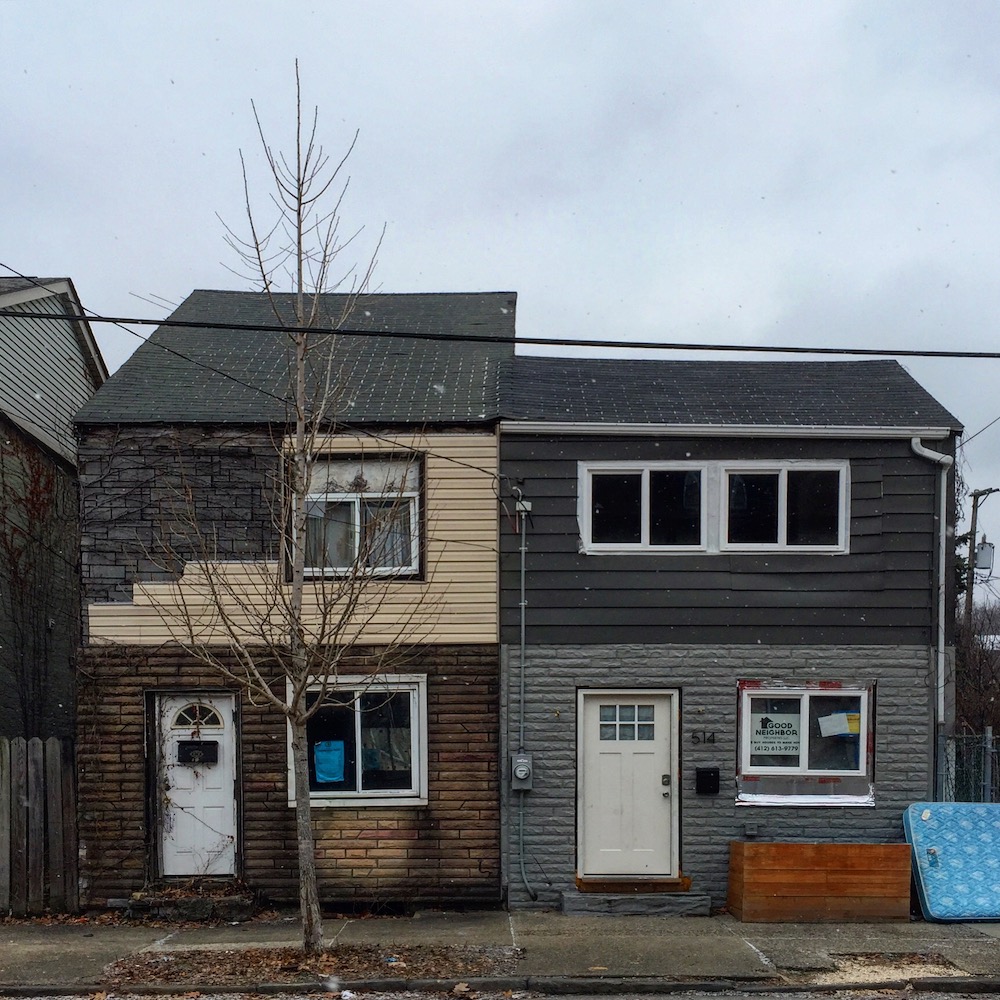
For the latest installment of our Row House Romance series, we’re digging into that elusive sub-genre of row house watchers–the side-by-side bestest buddies that decided to dress up in identical outfits. (Or, at least, came pretty close.) Enjoy.
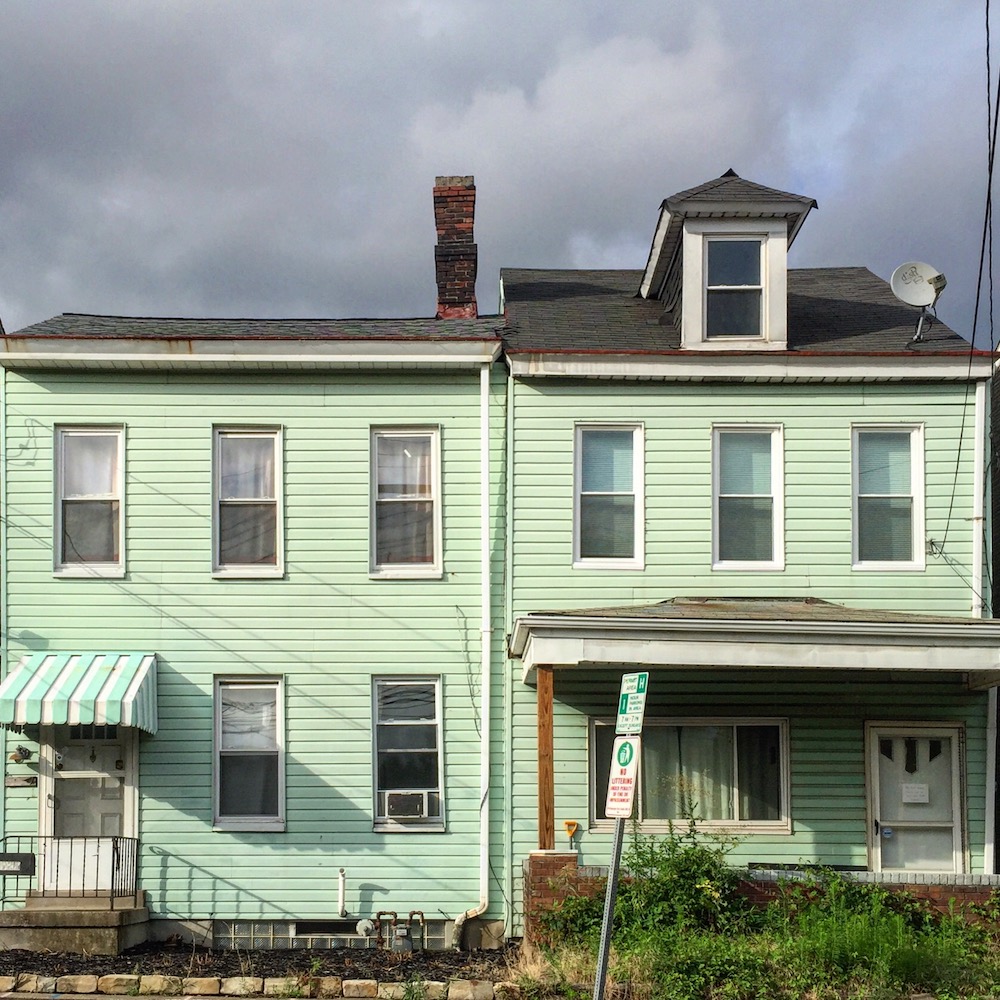
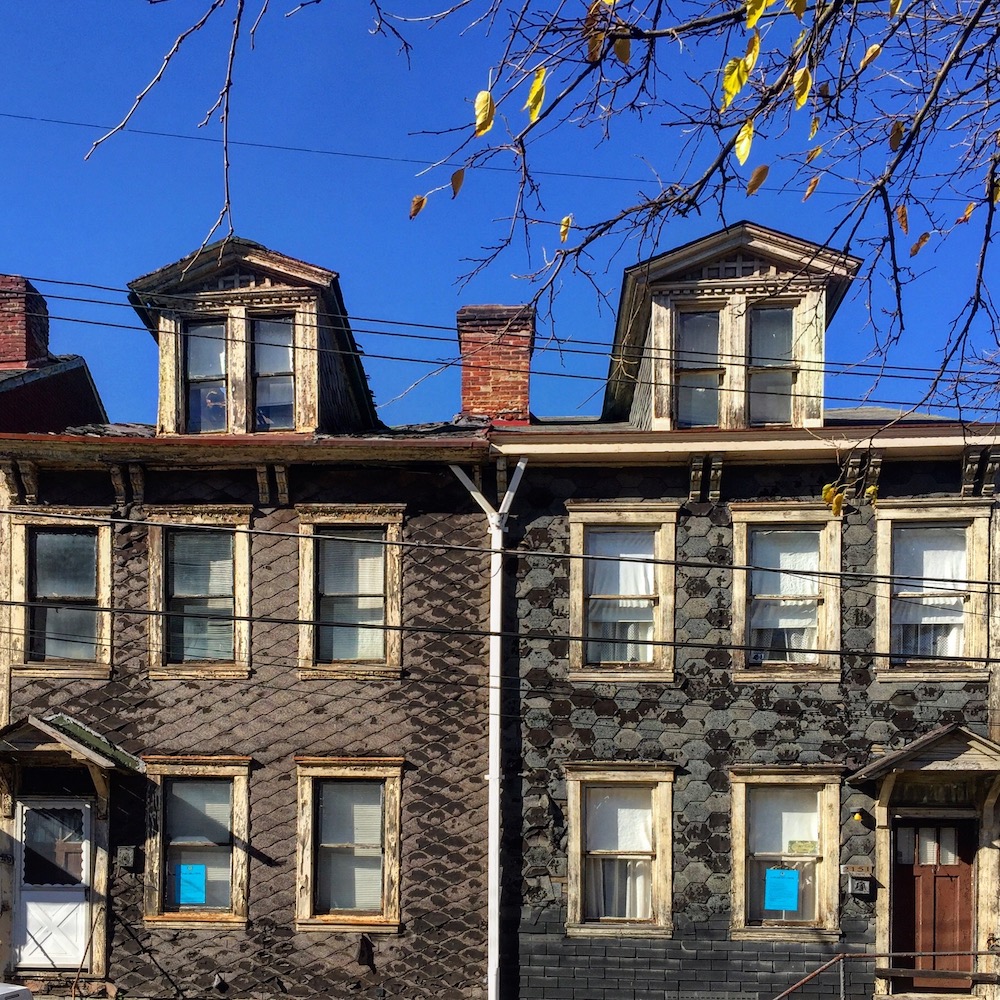
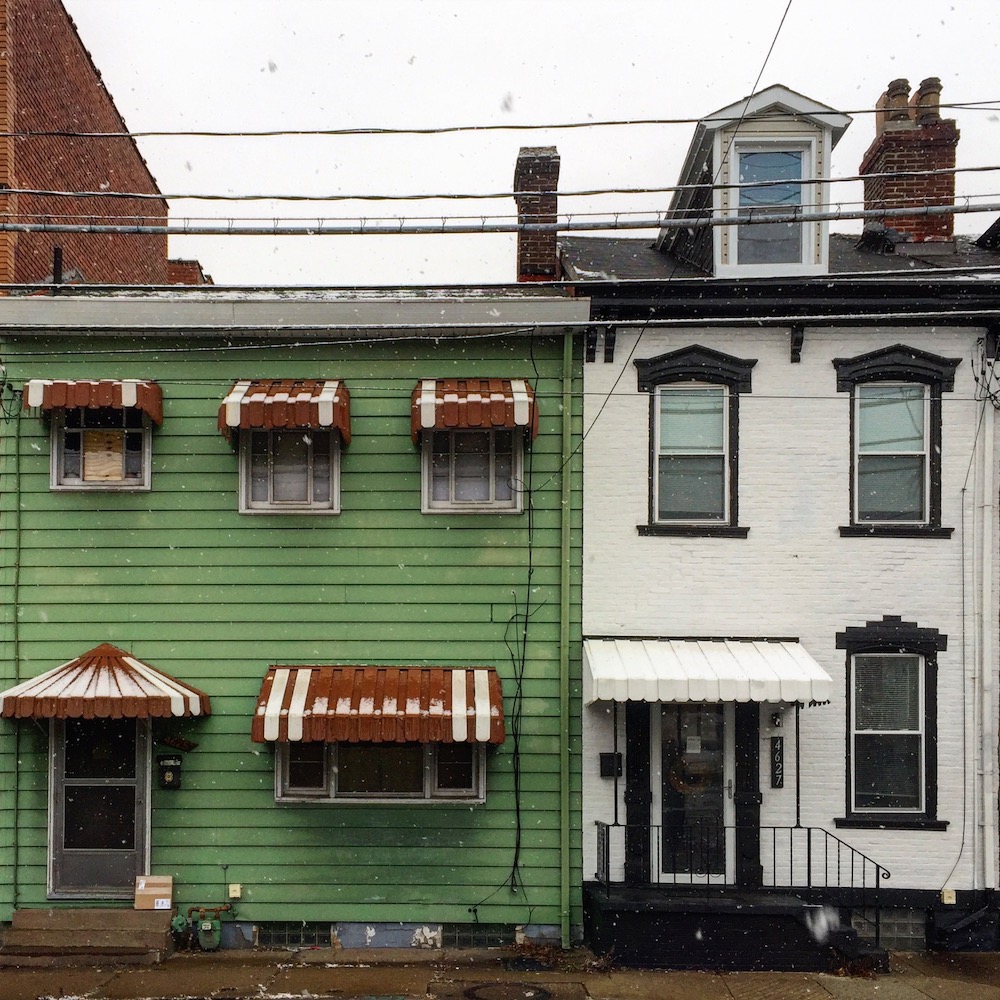
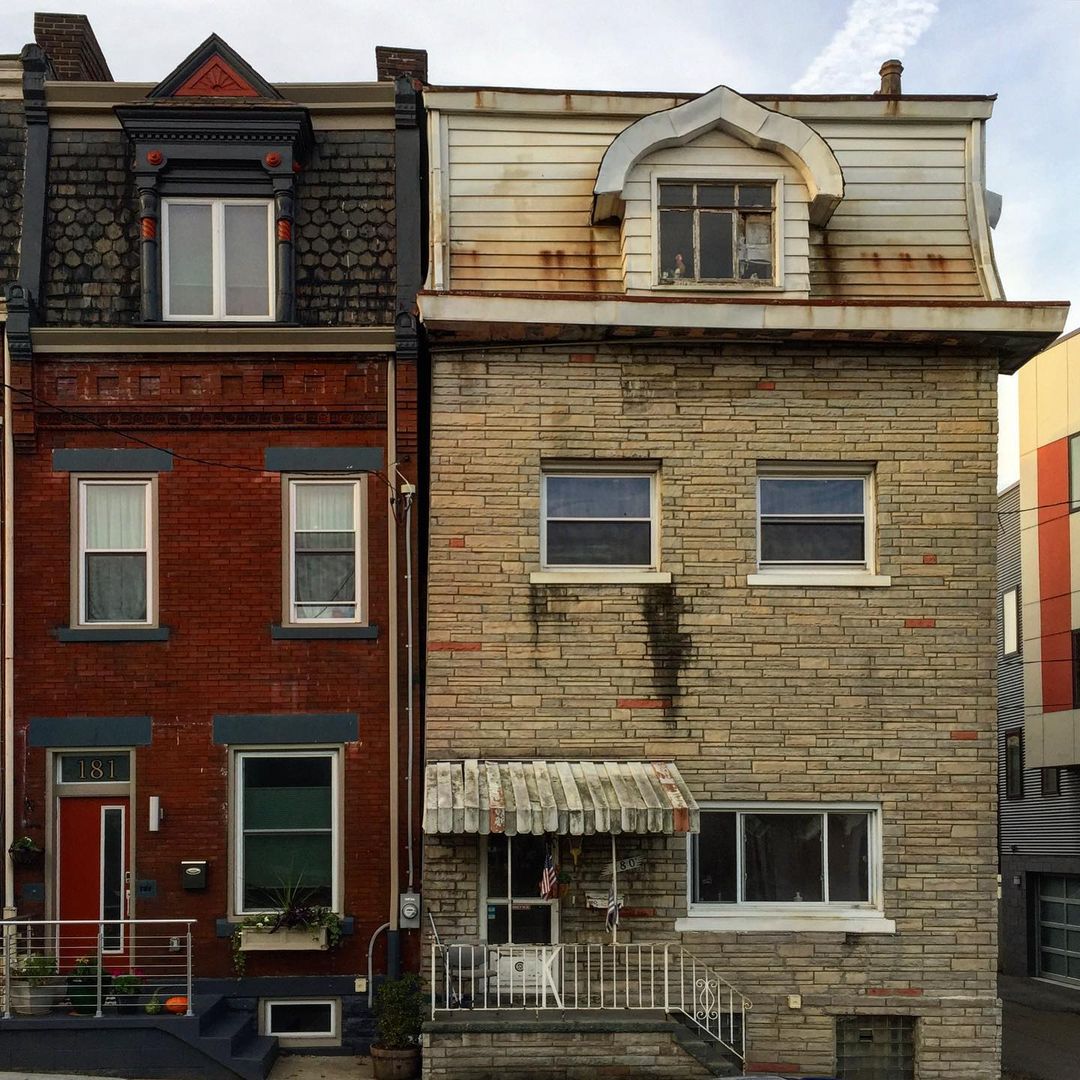
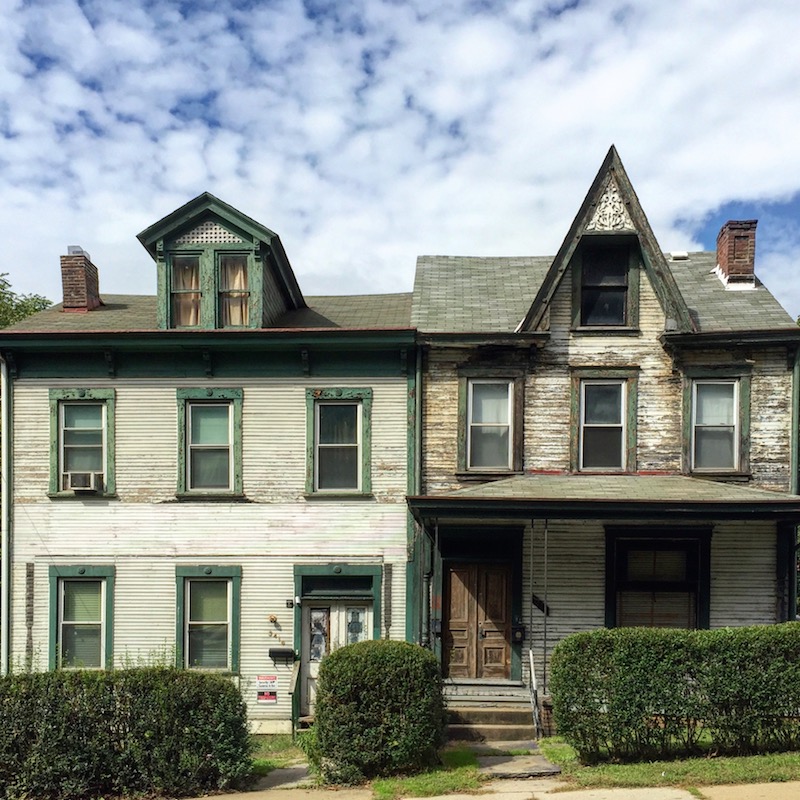
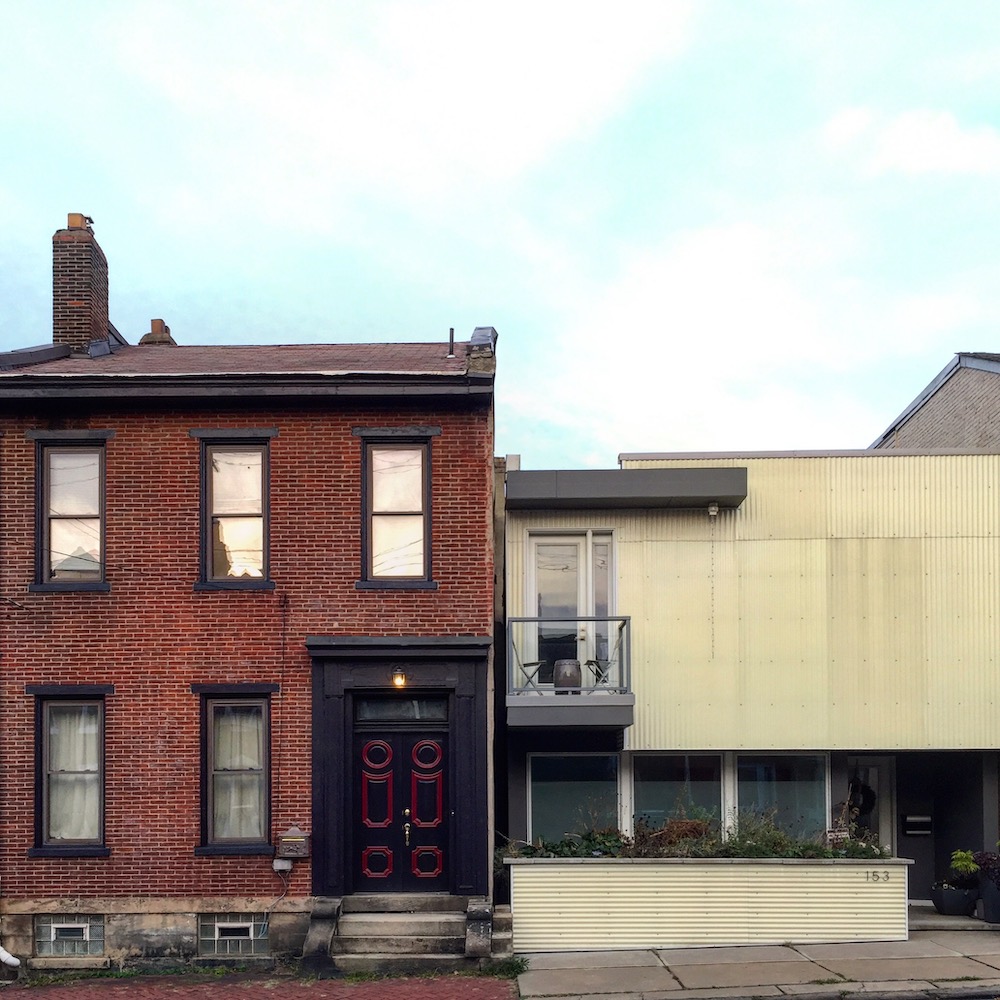
The holy grail! Side-by-side row houses of different width, height, design, color, and modernization, Bloomfield
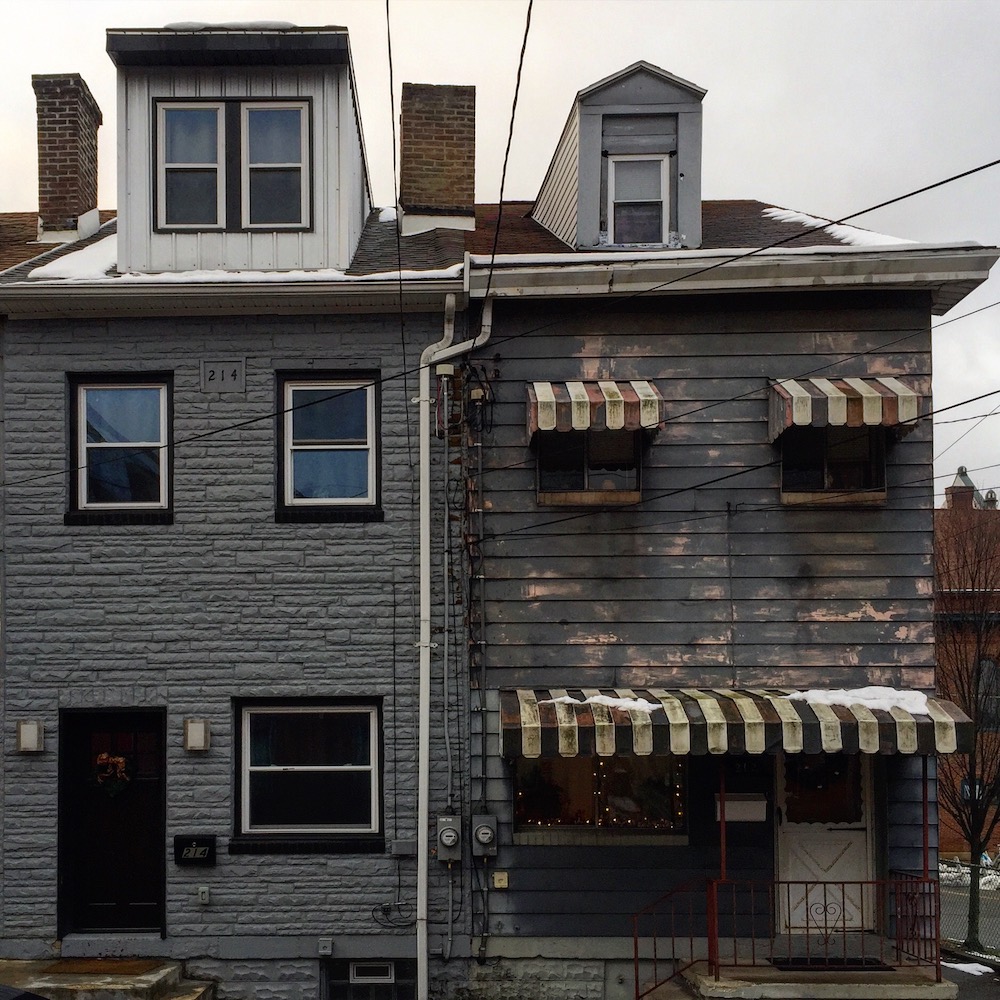
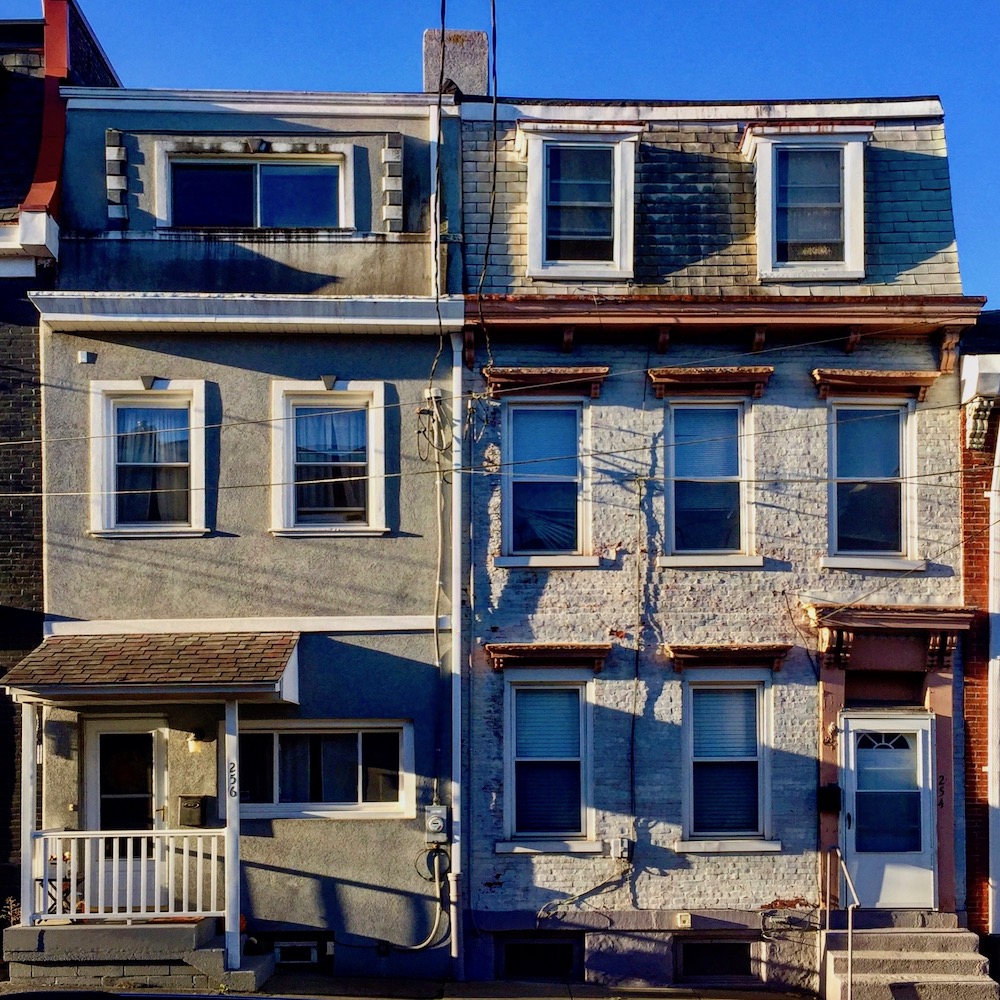
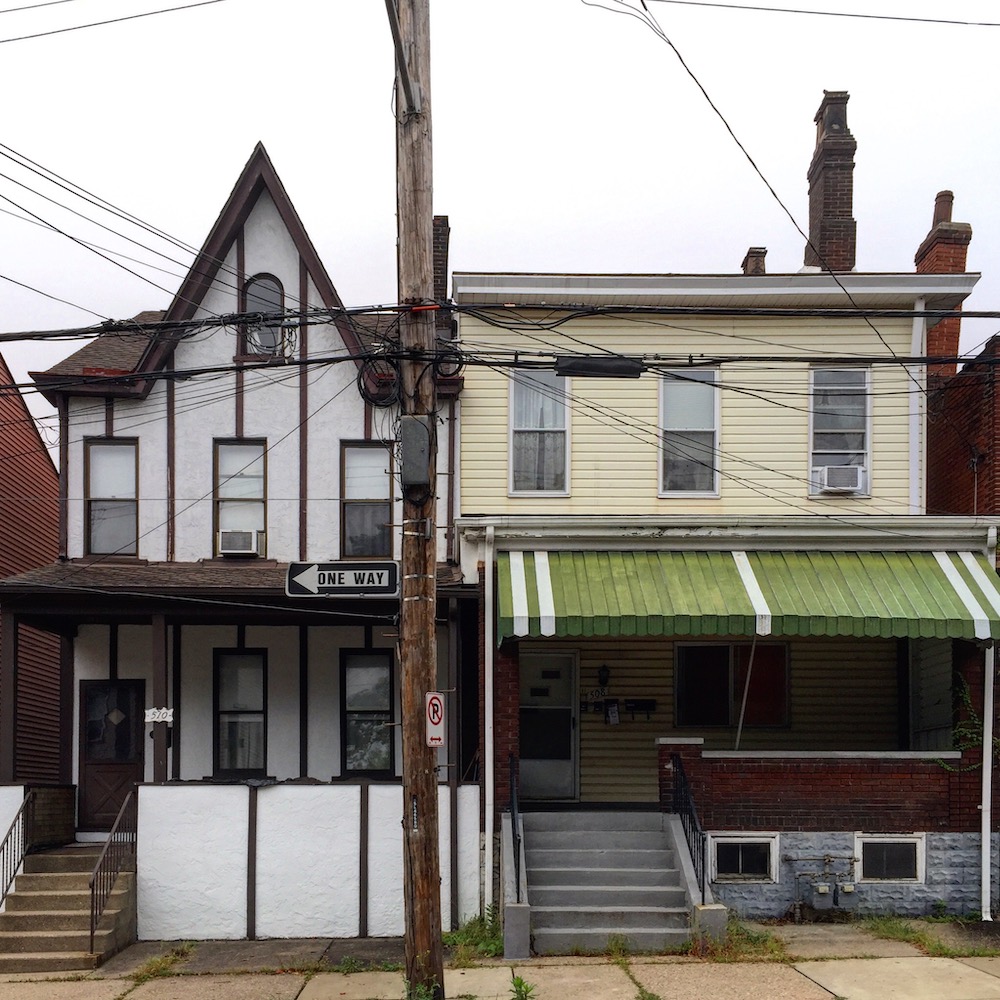
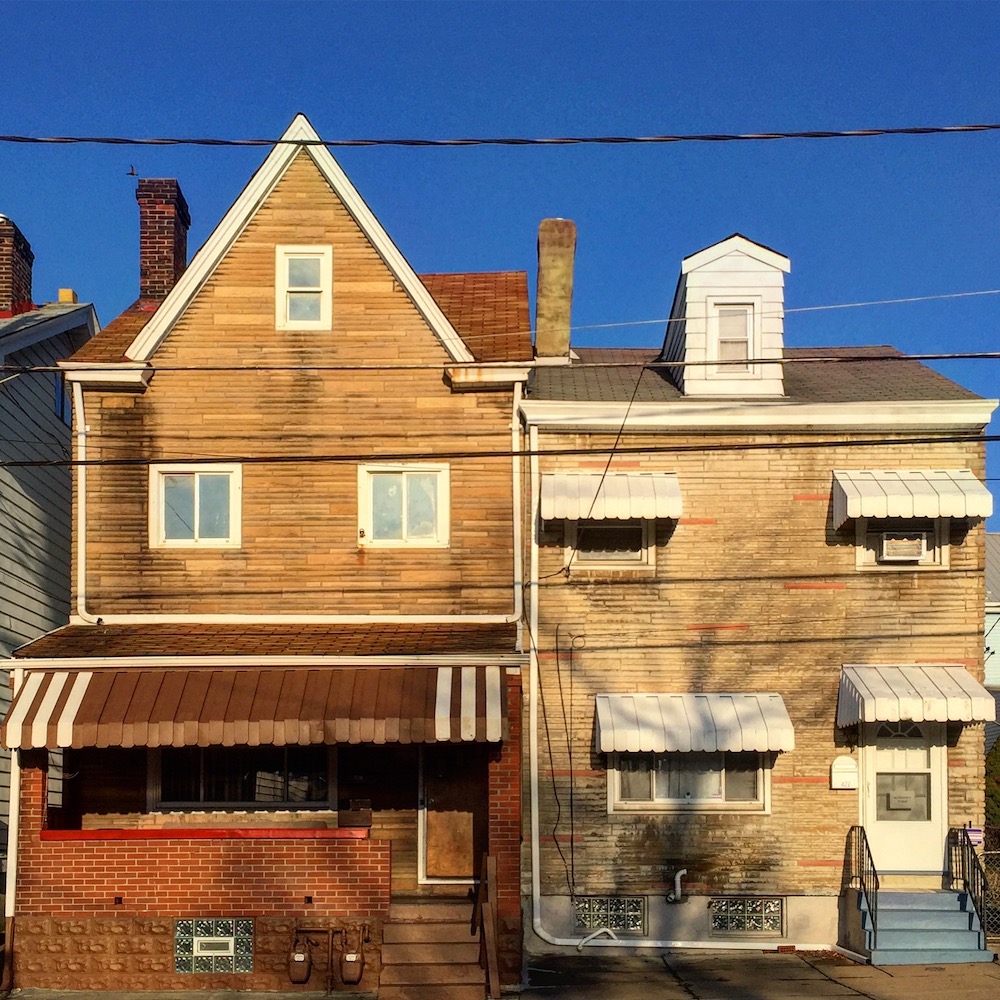
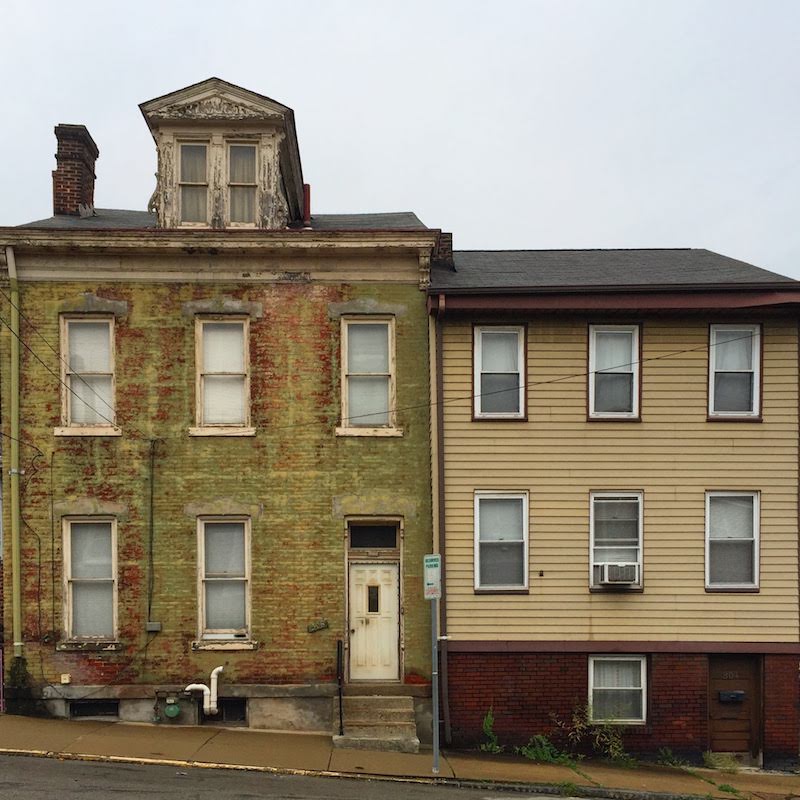
If there is a high–the dragon, if you will–that the hardcore romancer chases, it is this. A pair of stout row houses, butting right up against each other like books on a shelf, but otherwise as unrelated as chalk and cheese.
He with the faded green aluminum siding, splotched with decades of not-quite-matching touch-up paint; she with a prim new black-and-white scheme on her brick façade, ready for the town in never-going-out-of-style two-tone. He made the regrettable decision to turn his windows into port holes; she’s left the nice big double-hung two-paners intact, and has the afternoon sunlight to prove it. He’s still lugging around the same set of heavy-lidded awnings he picked up after high school; she’s newly trimmed her detail work–all clean lines, tight accents, and graceful ornament.
We could go on about how he’s put on a few pounds from all that sitting around, but that would just be cruel. No, we’re here to celebrate that great accident of residential architectural history–the side-by-side odd couple pairings one finds in Pittsburgh’s many row house blocks. Each evinces an anthropomorphic reaction to the unlikeliest of subjects: old-school worker housing.
There was enough commonality in some of these to group them into loose themes. Really though, this one’s all about the visuals, so we’ll quit yappin’. Whether you live in one (guilty!) or are just a drive-by wanna-be, happy row house romance to one and all!
To Peak or Not to Peak?
Bloomfield
Bloomfield
Bloomfield
Bloomfield
Bloomfield
Bloomfield
Bloomfield
Big Buddy/Little Buddy
South Side
Lawrenceville
Bloomfield
Bloomfield
Lawrenceville
Bloomfield
Lawrenceville
Brothers From a Similar—but Definitely Other—Mother
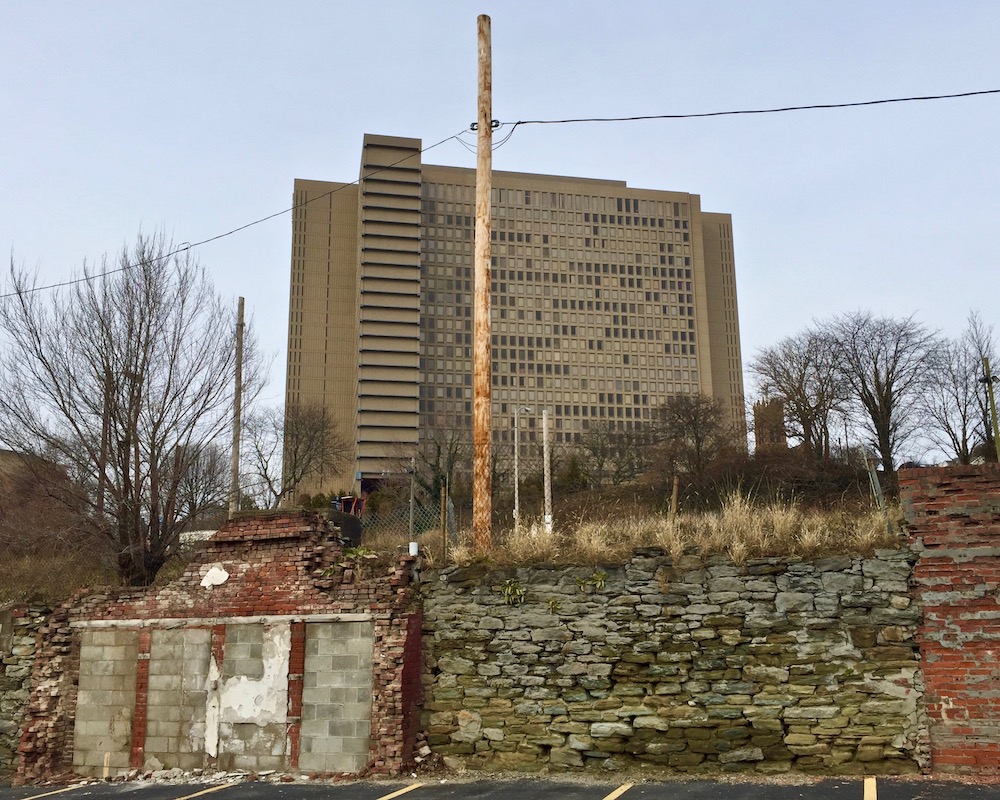
Golden hour on the lower Hill: City View (neé Washington Plaza) Apartments, Centre Ave.
It must have felt like a dream. At the crest of Centre Avenue, mere blocks above the hubbub of downtown Pittsburgh and the still-smoldering remains of the lower Hill, twenty-four stories of clean, sharp concrete and grid-patterned windows shot from of the earth like a dramatic rock formation or the liftoff armature of a rocket ship, just launched into space.
City View (originally branded Washington Plaza) wasn’t Pittsburgh’s first large-scale, post-war modernist building–there are a handful of big office towers built downtown in the 1950s that meet that description–but its position standing alone, at the top of its hill and with eyes cast out in all directions, had to have felt like something completely different. The future–whether Pittsburgh really wanted it or not–was here right now.
City View Apartments, southeast side
This speculative journalist has driven and/or biked past the City View towers a hundred times and seen its cold concrete form from every direction imaginable–it’s hard to miss if you’re anywhere nearby. But I’ll be honest here, if you’d asked me a year ago, I would have just considered it the anonymous big ugly apartment building uphill from the hockey arena.
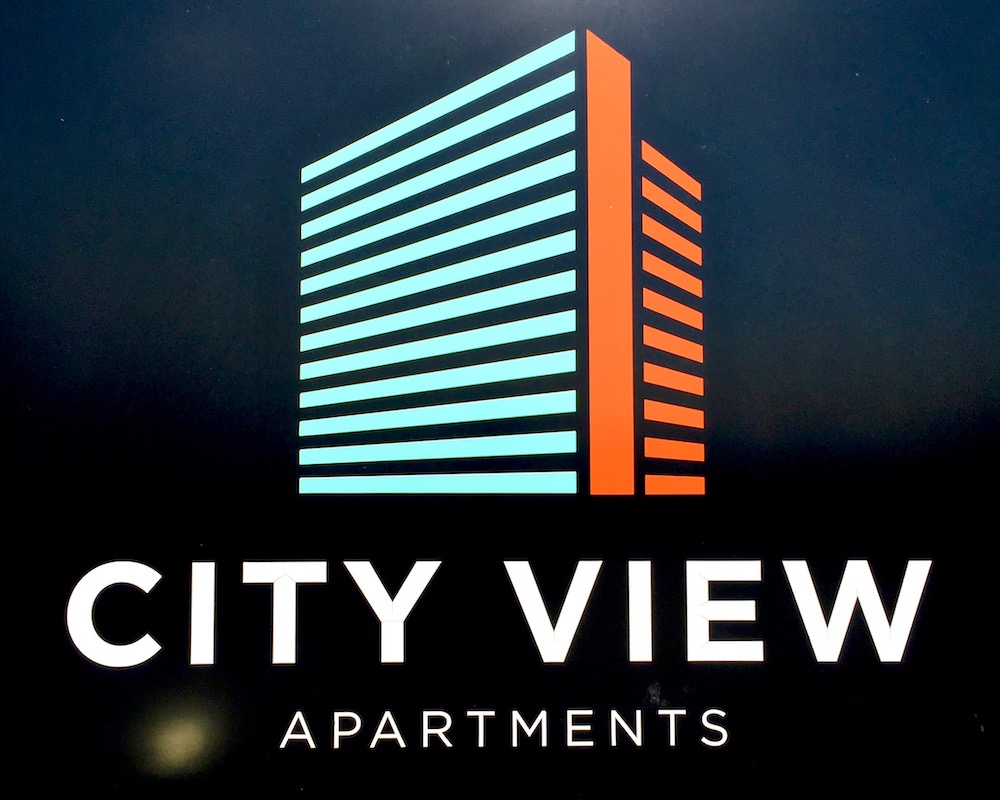
City View Apartments signage with abstracted/graphically-simplified version of the building’s design
And then … I.M. Pei died.
Pei, if you’re not a design geek or a regular crossword-puzzle-doer, is one of the giants of modern architecture who planned marquee office towers and airline terminals, art museums and corporate headquarters all over the planet. In his long career–he was 102 when he passed last year and worked most of those decades–Pei designed projects from Beijing to Bloomington, Doha to Denver, Paris to … well, you guessed it.
Old vs. … not quite so old. City View Apartments, seen from Fifth Ave.
The Washington Plaza Apartments arrived in 1964 at the height of Pittsburgh’s urban renewal efforts, the tail end of the razing of the lower Hill District,[1] and just a few years before the real boom in downtown glass-and-steel skyscrapers would hit. With its climate-controlled interiors and uninterrupted 360-degree views, moving from a cramped city row house into a brand new Washington Plaza apartment, mere steps from downtown, must have satisfied many a jet-age urban fantasy.
On this come-for-the-pun, stay-for-the-dessert Pi/Pie Day, we thought we’d add Pei Day to the ramshackle who’s-driving? feel of the occasion. (Just know that the name is actually pronounced PAY.[2]) In this version of the “holiday” we celebrate the master architect’s sole Pittsburgh project and give ourselves the opportunity to really take a good long look at the building, from a bunch of angles across different seasons, and see if its tan concrete and wall-of-windows would whisper its secrets of the modern age to us.
City View Apartments, north face
And … I guess it worked out that way. Perhaps it was because we’re so easily swayed by star power or maybe it was just taking the time to actually look at the place–to set aside a bunch of prejudices and commune with Pei’s big apartment building at street level[3]. Either way, we found that enough time spent walking around the place, looking up, picture-taking, and photo-editing made all that concrete warm up, wave back to us, and glow against several different impossibly-blue skies.
City View Apartments, east face
Look: there are no plans for us to leave our decidedly old-world row house with its boxy quarters and interior windows looking straight out on the neighbor’s brick wall. But there are times–up on the ladder, re-patching cracks in the same 140-year-old horsehair plaster one “fixed” not that long ago–that the mind wanders to an easier, simpler, more modern existence–big on sunlight and small on crumbling sandstone foundation dust. Yesterday’s modernists may have really had something there, and that’s how we ended up here, at Pei Day.
[1] The story of the destruction of the Lower Hill and forced displacement of its (largely black) resident/business community in the name of “urban renewal” is an extremely important one, but not the subject of this piece.
[2] The temptation to call this piece Pei Day Loans or Pei The Man or some such foolishness was strong, but for everyone (like me) who previously thought the name was pronounced PIE, that just wouldn’t make sense.
[3] The Orbit was escorted from City View’s lobby by security before we could either get a good look at the interior or any photographs. We’re not holding a grudge.





























































 Pittsburgh Orbit