One of humankind’s most glorious examples of wall quarters. Inside-outside wall, Wellsville, O.
The giant wall holds a lot of history–and likely not a few secrets. Two tall stories high and spanning the full depth of the lot–from the sidewalk on Wellsville’s Main Street all the way back to the service alley–this space did a lot of living. Demolition on the building that used to be here exposed a (former) interior wall that is an archeological treasure our shallow American memory will have to substitute for “real” finds like Sutton Hoo or Tutankhamun’s tomb.
The plaster walls still cling to a rich palette of battered colors. Each room had been painted in an entirely different scheme and what remains are beautiful antique reds, pale yellow-greens, and deep melancholy blues. There are channels on the surface where we see clear outlines of the old building’s load-bearing interior walls, a staircase, plumbing lines, slotted holes in the brickwork for tall floor joists.
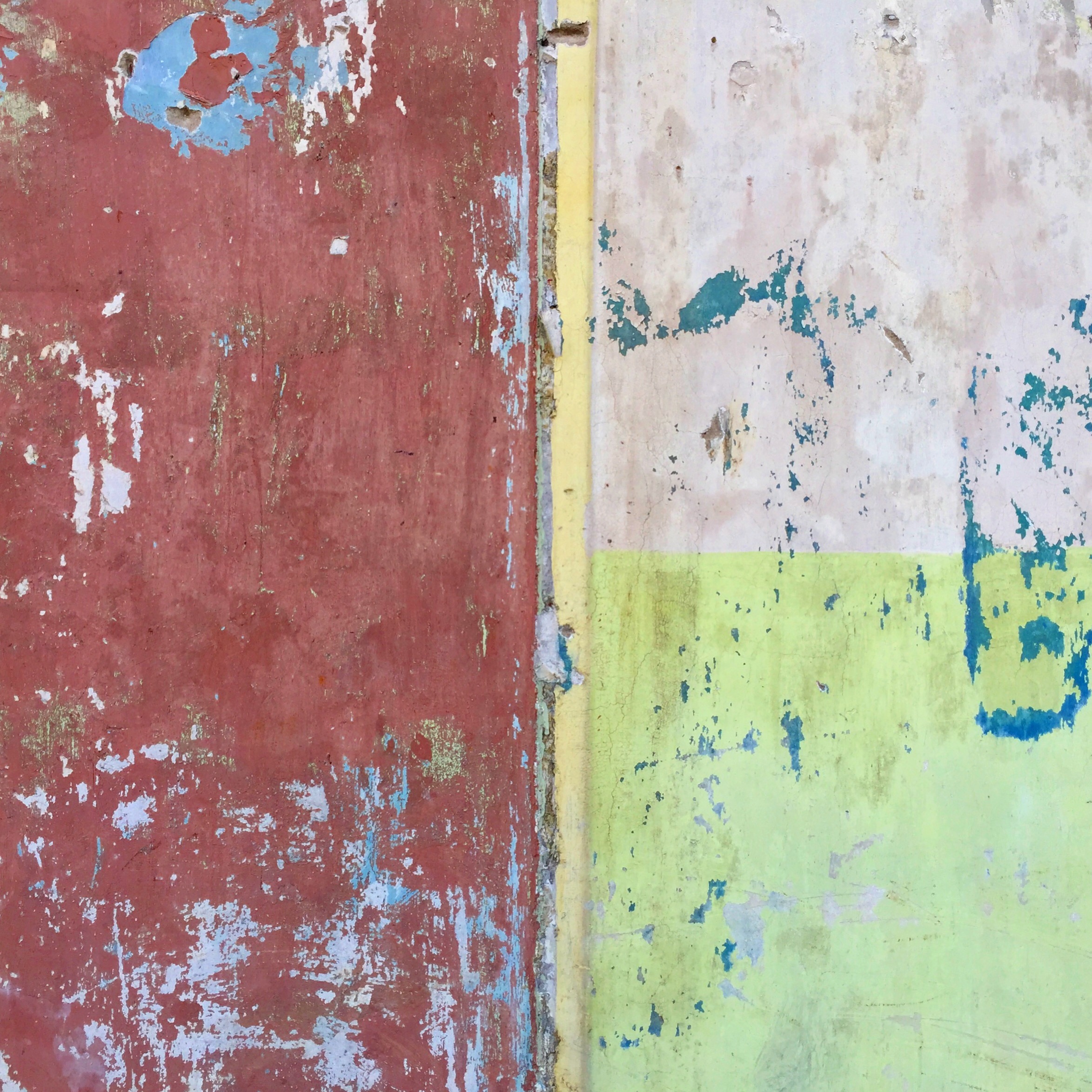
With all this, it is one particular section of the wall surface that intrigues more than the rest. In it, we see the intersection of three colors, each scarred, smeared, and pockmarked with age but still brimming with verve. A strong yellow line runs due north-south and gives the whole thing the composition of a modernist painting. Everything exists in perfect right angles.
The wall that started it all. Forest Hills
The obsession with wall quarters began way back in 2015 with a reporting trip to Forest Hills. We were there to commune with the ex-atom smasher and later found ourselves by another, similar, inside-outside lot. Amongst the rubble of felled bricks and illegally-dumped housewares were four squares within a larger square: the right side faded green-blue, the left a dirty white; plaster above, cinderblock below. The section lines could not have been more precise.
It was perfect: balanced and meditative, color, material, and texture arrayed in transcendent harmony. It’s the kind of lightening bolt that may only land once in a generation–heck, once in a lifetime if you’re lucky.
Strip District
But, wall-watching naifs that we were back then, the hard truth wasn’t fully understood. It seemed obvious that we’d run into more big, glorious, quad-sectioned walls just as soon as the mind was opened to them. Why, once you set the controls for Marys or Steelermobiles or The Dog Police you see them everywhere–wall quarters must be just as easy … right?
Bloomfield
Well, you know where this is going. No, it is not easy to locate a perfect wall square–and this poke-down-every-alley and look-inside-any-abandoned-property keister is here as a material witness. Six years later–six years of looking for these things!–and we’ve come up with merely a handful of specimens. A lot of them aren’t even that good!
But if you take the collection we did manage to cobble together and throw in a (good-sized) set of bonus/pseudo-wall squares, we end up with a pretty nice haul. Hopefully they’re as pleasing to Orbit readers’ eyes as they are for staff to deep focus on when we’re destressing in Chez Orbit’s salt cave. Breathe in, breathe out, close our eyes and say it until we believe it: everything is going to be all right.
South Side
Millvale
Bloomfield
Row House Rejoinders
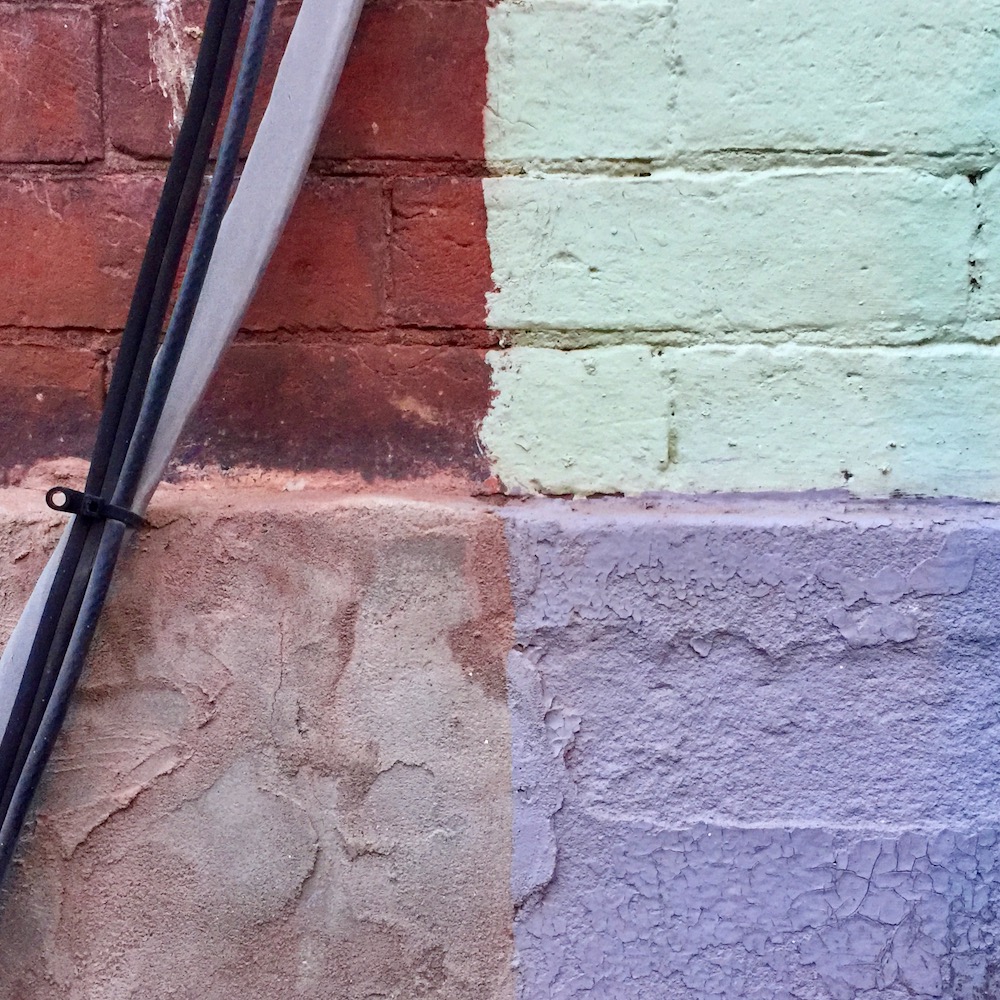
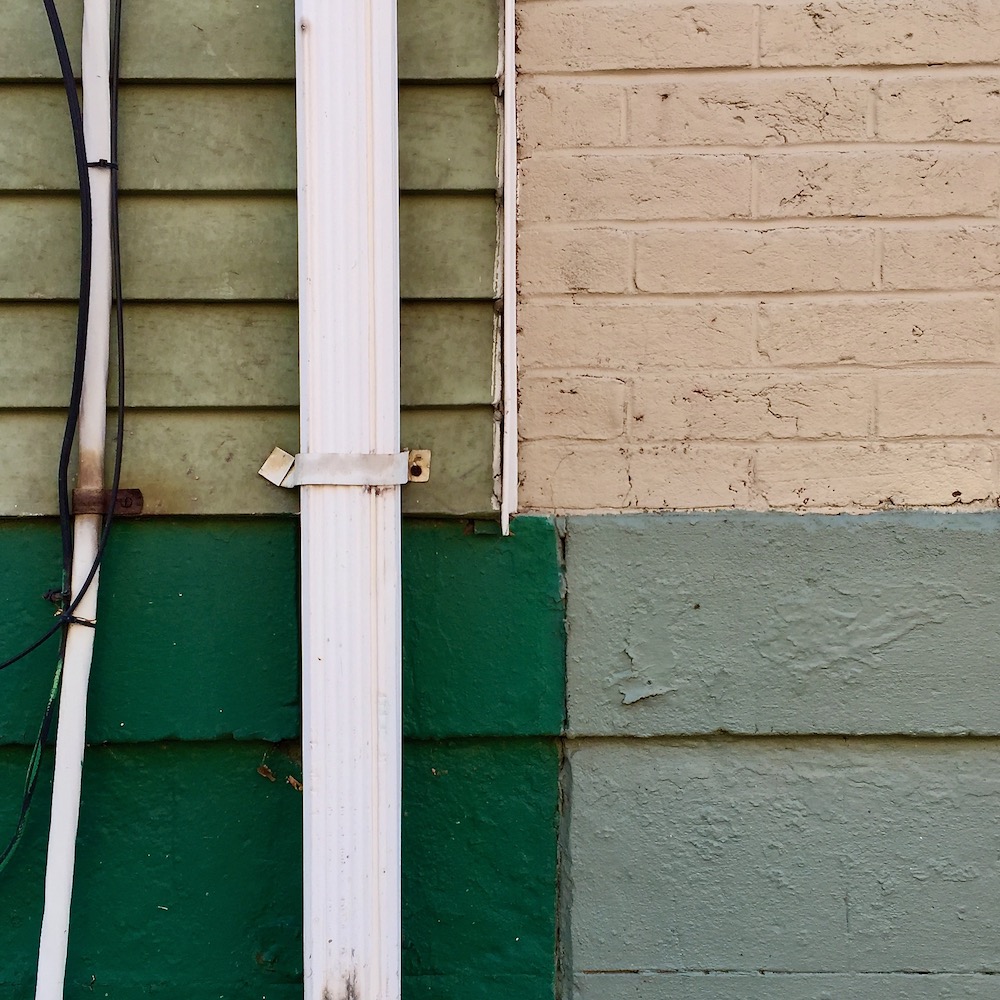
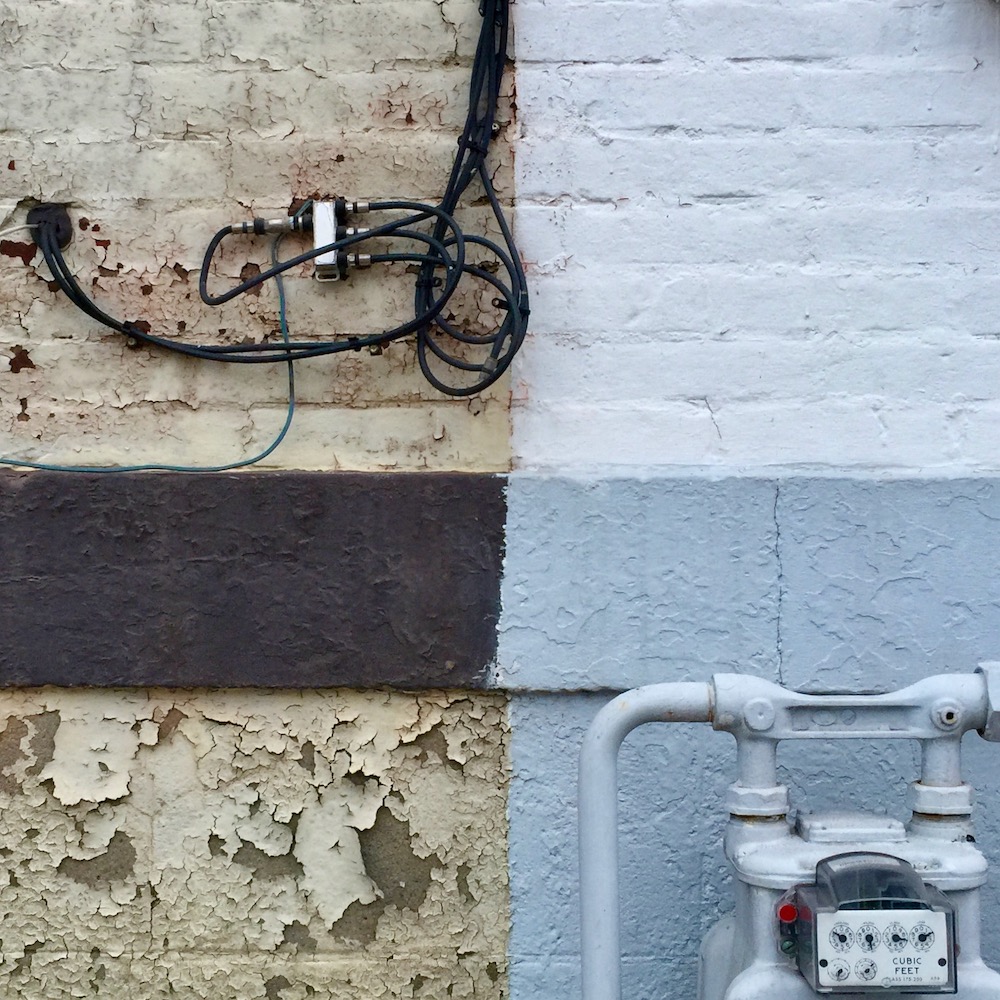
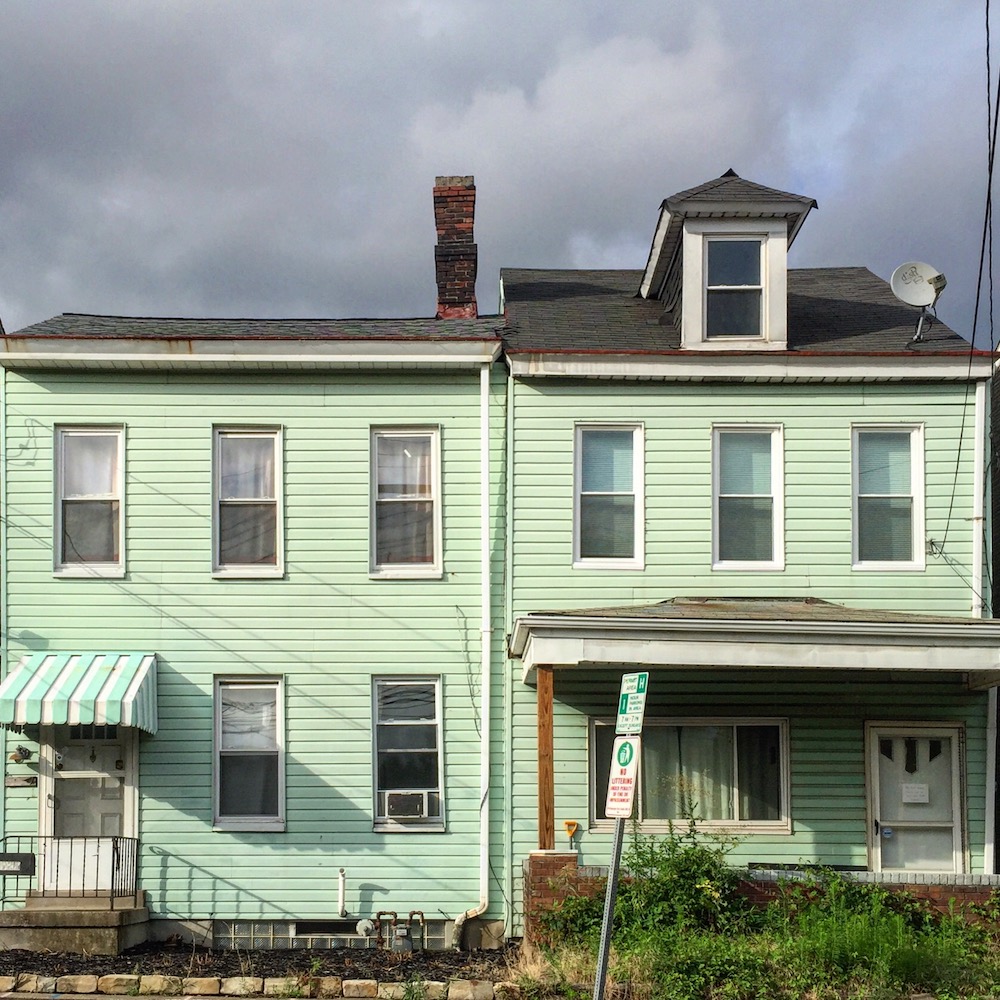
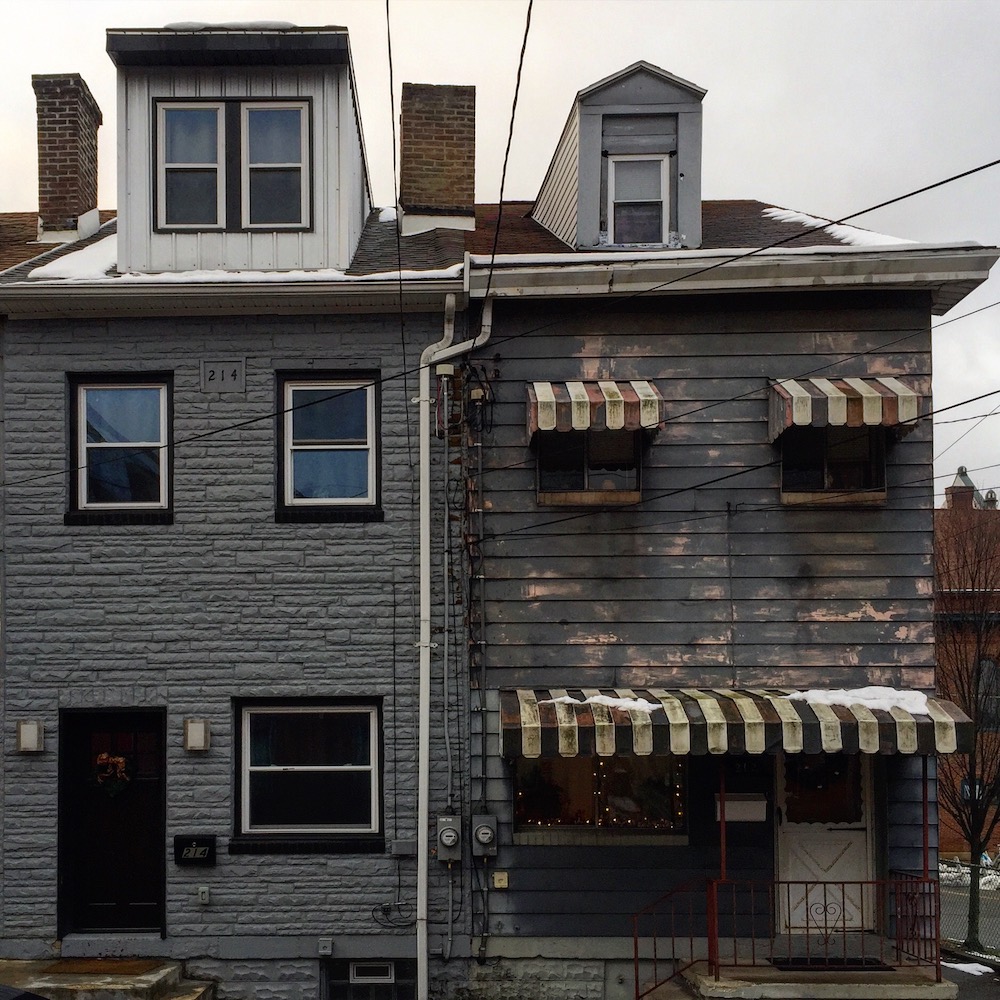
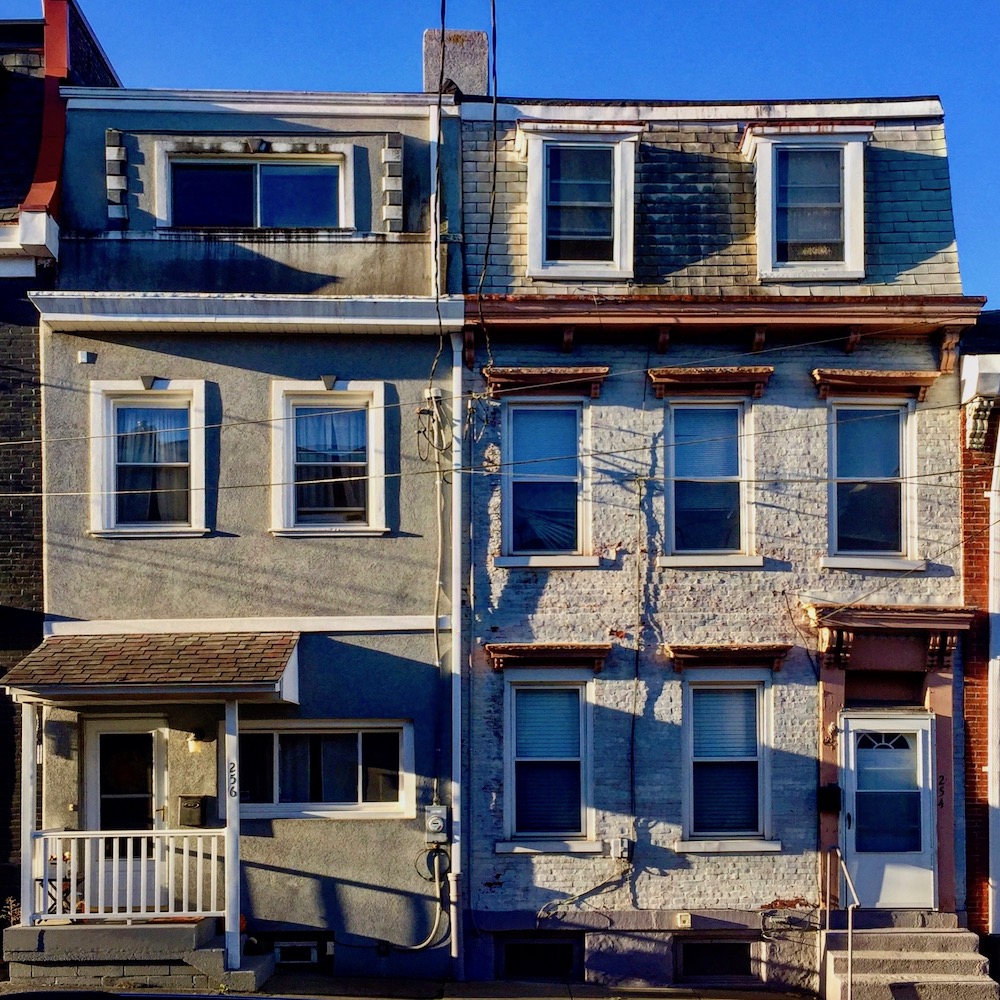
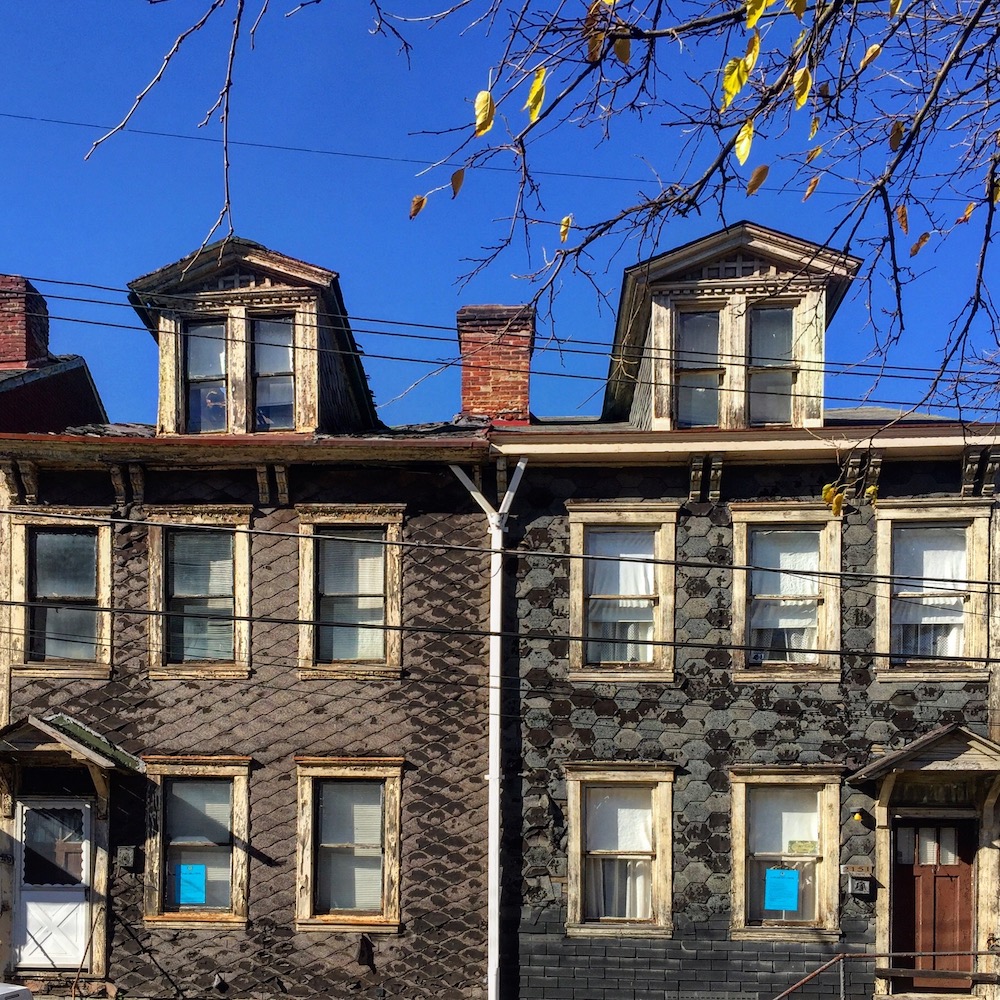
I’m not going to lie, The Over-the-Wall Club has some purists who frown on the relatively easy wall quarter pickins found in row house blocks. While it took us half a decade of constant scouring to come up with just the few “real” quarters (above), any Sunday stroll through the South Side Flats or the Mexican War Streets will reward with a bounty of these interfaces between next-door row houses.
With brickwork and foundations in a continuous plane, it just takes neighboring homeowners with different color preferences and a little bit of luck (steps, stoops, porches, and downspouts all get in the way; sloping hillsides break a lot of linear connections) to get really nice, perfectly squared-off intersections.
Lawrenceville
Lawrenceville
Lawrenceville
Lawrenceville
Lawrenceville
Lawrenceville
Lawrenceville
Lawrenceville
Lawrenceville
Lawrenceville
Lawrenceville
Lawrenceville
No Room for Squares
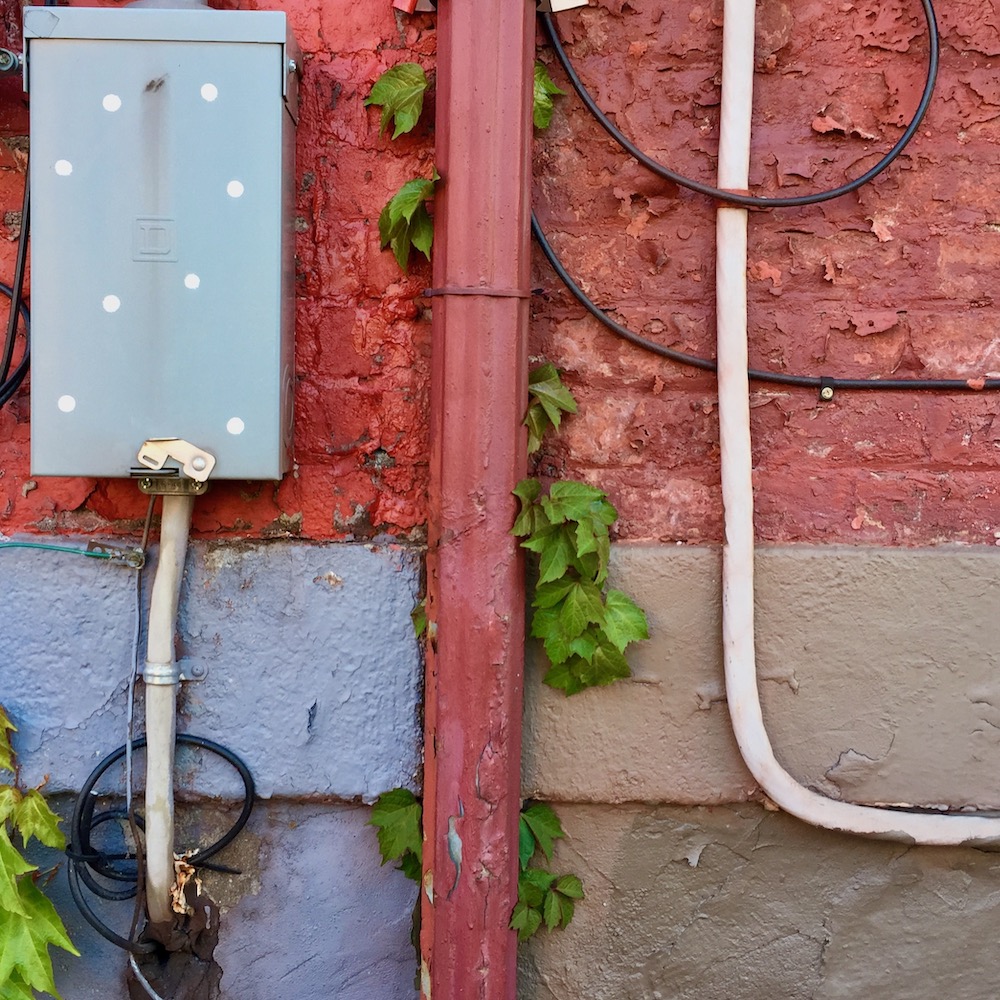
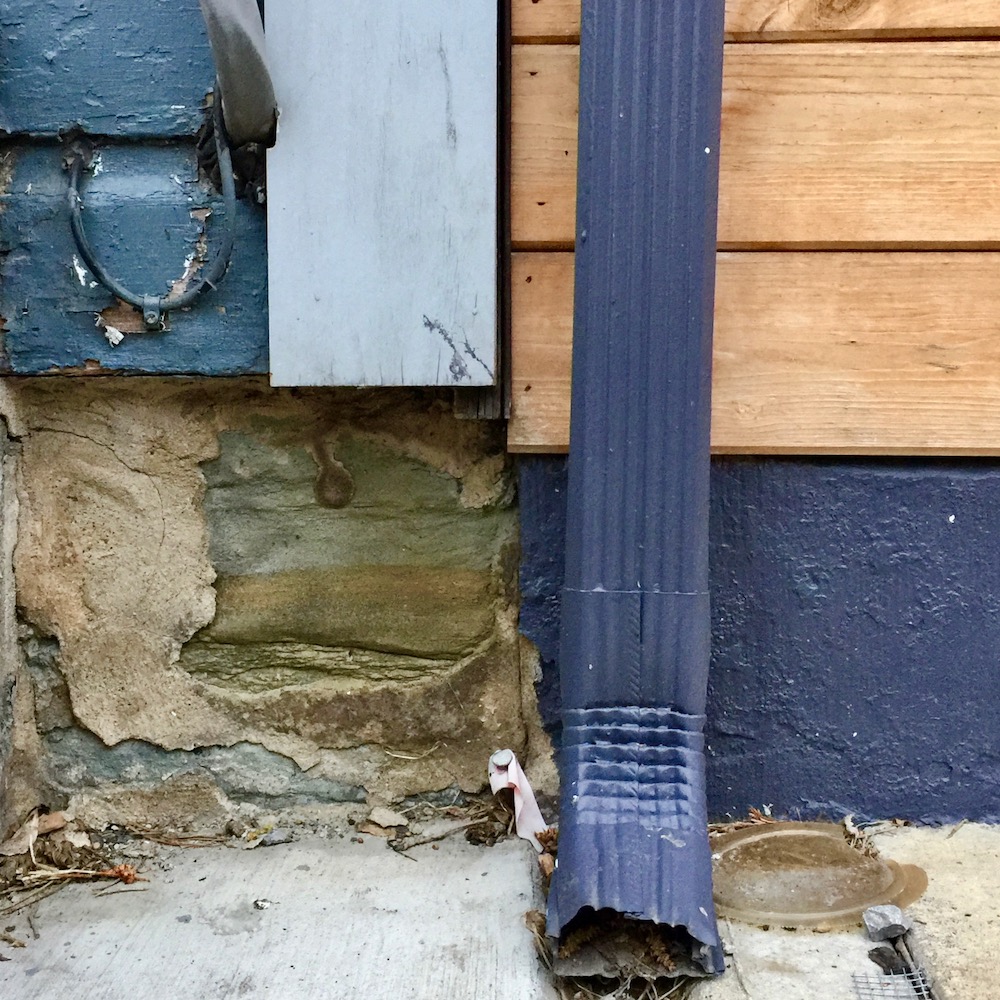
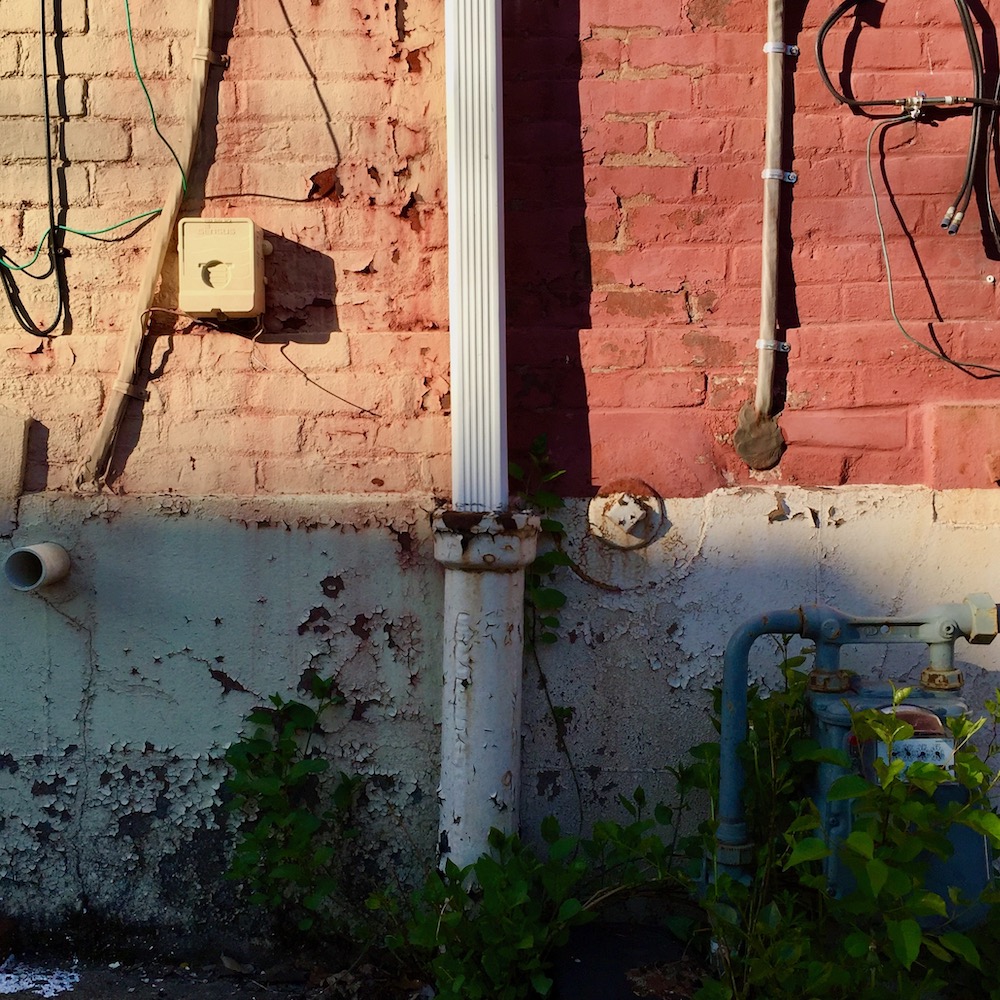
As with life, things on a wall don’t always line up perfectly. One shouldn’t let that diminish the shear ecstasy of a beautiful mixed-media surface, though. An extra drain pipe here, foundations that don’t line up there–we’re all better off to roll with these as … not imperfections, but rather elements that broaden the depth of the final composition. Ain’t nobody perfect, but a wall with a whole lot of problems sure might come close.
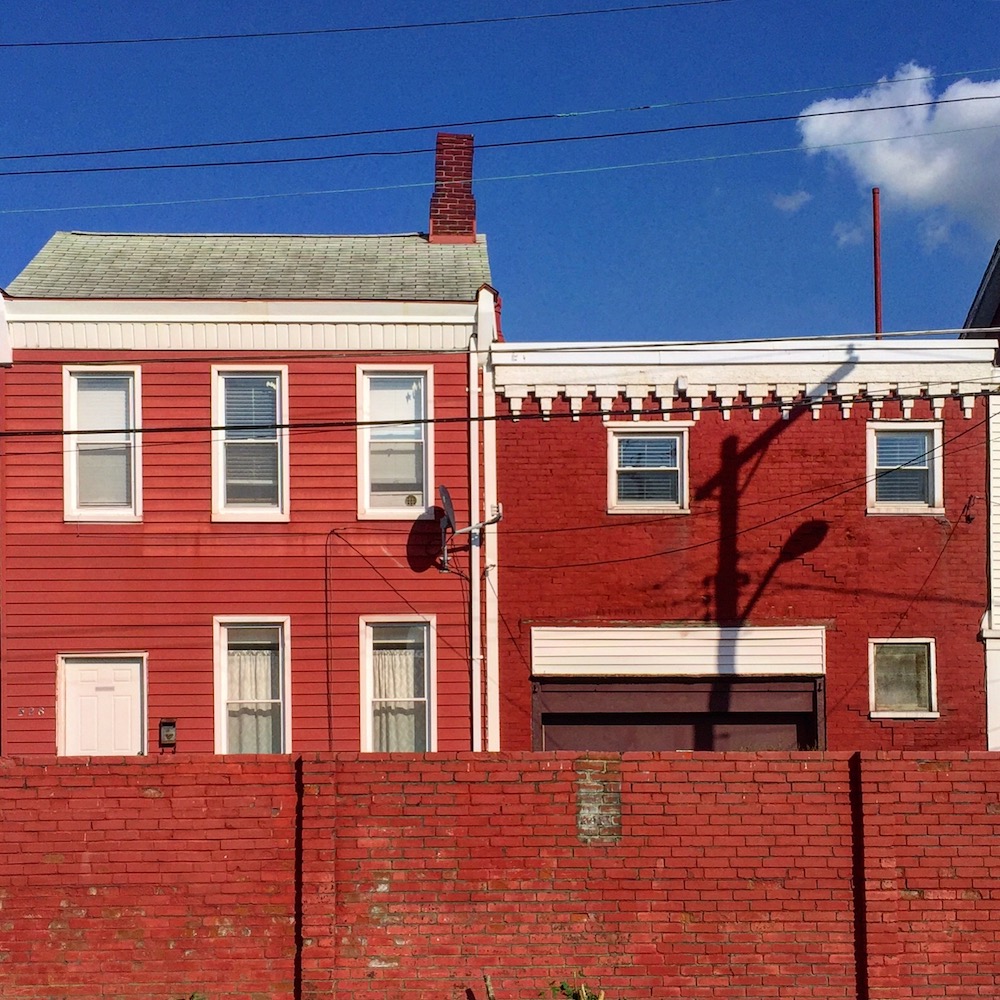
Bob Ross would be proud: lots and lots of red! Bloomfield
Behind a six-foot brick wall sit two side-by-side row houses facing a thin alley in Bloomfield. On the left is a typical Pittsburgh wooden worker house: two up/two down, three windows wide, no decorative flourishes. Immediately abutting it is either a small house with an unexpected garage door or a small garage/workshop with an apartment upstairs–it’s not really clear. Everything is painted red.
This is a prime specimen for the row house fancier who wants a single, coordinated palette: lots and lots of red with just enough white trim to outline features of the two houses and make design snobs’ blood pressure rise. On a sunny day, with a big blue sky and just one wispy cloud dancing above it, don’t that look like America, man.
Spring green and clean. Bloomfield
After the mental and physical exhaustion of last week’s sob session, it’s time for some spring cleaning. We’re sitting on sixty-eight stories in draft mode–so it’s well past time to clear out the cupboards, beat the rugs, and maybe throw some things away. Yeah, we may never get to Andy Warhol’s weight set or great Men’s Room signs, but if the brain will cooperate, expect a return to the weekly format for a while.
For the latest installment of our Row House Romance series, we’re digging into that elusive sub-genre of row house watchers–the side-by-side bestest buddies that decided to dress up in identical outfits. (Or, at least, came pretty close.) Enjoy.
Not all health is good health. Former Monessen Savings and Trust Building, et al., Monessen
Preface: In the six+ years I’ve been doing Pittsburgh Orbit, I’ve made every effort to make it not about me. There are no bylines to my writing and the photographs are uncredited. I don’t include a bio and most stories are written in third person (or with a “royal we“). I’m not one that wants personal attention but I do want readers to focus on these (hopefully) interesting things all around us and appreciate them while we can.
That said, I’ve been going through some heavy personal stuff and–much to my chagrin–that’s the only thing my fancy brain can focus on right now. The subject is perhaps an odd choice to include in the Orbit–or even to make this kind of private info public at all–but the shame and stigma of mental illness is one of its most dangerous native features. If you can’t hang with that–or it’s just, uh, too depressing–I get it; you’re completely excused.Hopefullywe’ll be back to our regular diet of upbeat stories on disappearing towns, sad toys, and partying alone in the cemetery soon enough.
Not right in the head/an incomplete picture. In-process mural, South Side.
Something isn’t right, all of the time. This is the water in which my brain swims and it’s how I’ve always been. No matter how good the occasion or how temporarily high the mood, there is a gnawing caution to not get too excited, to not enjoy it too much. This won’t last, the killjoy noggin chimes in to remind me, good things never do.
Dysthymia (aka persistent depressive disorder) is chronic, low-grade depression. It’s not among the more cinematic I wanna kill myself or I hear voices flavors of mental health affliction; it’s what used to be called “depressive personality.” That charming descriptor was deadnamed some time in the ’70s or ’80s for its less offensive and more clinical-sounding current title. Most of the time, it is entirely manageable with some low-octane pharmaceuticals and reasonable lifestyle choices.
Not quite right. Mural, McKeesport
Just like where I come from and who raised me (and who didn’t), dysthymia has affected everything about me. A half-finished painting is almost always more interesting than when it’s “done.” Forty-five degrees and drizzling is never bad weather–it actually feels pretty natural. Summer, with its relentless sunshine and unrealistic expectations for carefree fun, is the very worst of seasons. It’s why the minor third and flatted seventh sound so much better than their sprightly major cousins; Nick Drake, the Elvis of Sadness, gets a lot more spins than, you know, the Elvis of Elvises. I like my humor dry and dark.
Violins welcome. Outside art, Bloomfield
It’s also been a driving force in the Orbit aesthetic. Many people–some of whom are married to me–find spending a Saturday in, say, the Mon Valley to be “depressing.” The idea that I would return–over and over again, by choice, in my precious free time–to towns many view only as models of vacancy and despair, depopulation and collapse, where “they should bulldoze the whole place,” just doesn’t make a lot of sense to them.
Only half there. Mausoleum stained glass, Allegheny Cemetery
I don’t see it that way. Las Vegas is depressing. Suburban sprawl is depressing. Grown-ass adults scoring the likes on their selfies is depressing. Places with lovely bones, rich histories, big personalities, and flowers growing through the cracks in the sidewalk are fascinating, warts and all.
They’re also a convenient parallel for those of us who suffer from mental illness. We can’t throw these places–and, more importantly, the people who live there–away, just because the industries that built them abandoned the people who built the community. Likewise, there are those that would discard people who get brain sick as defective, broken, lazy, weak.
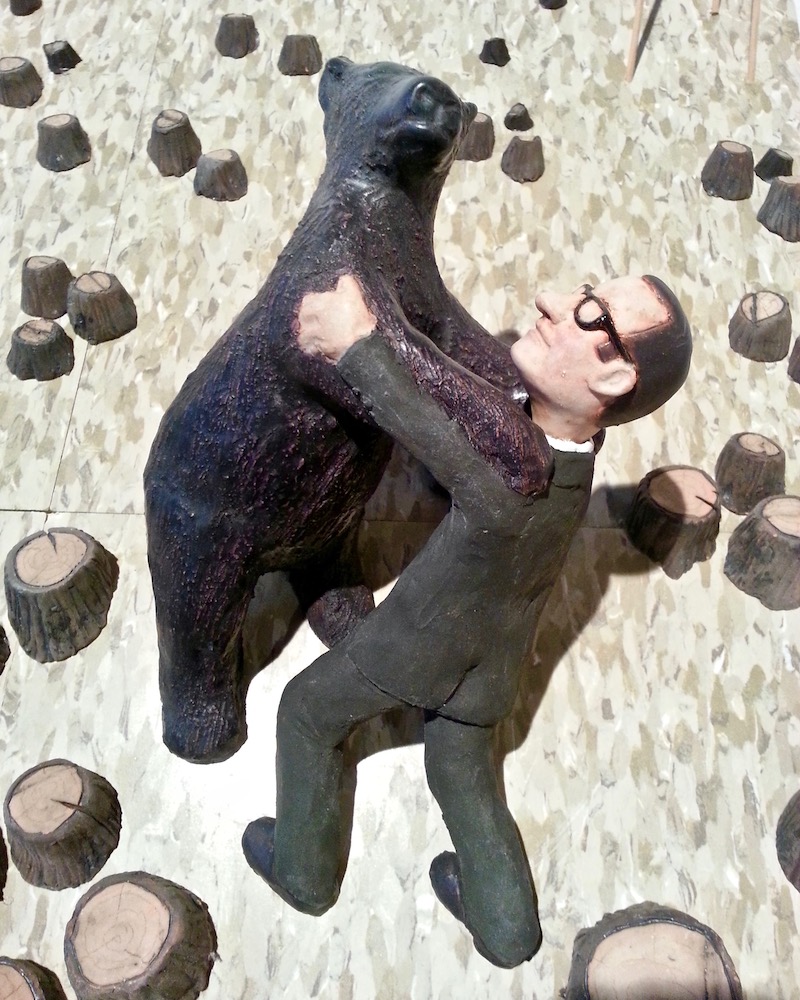
Man vs. bear (artist unknown)
Winston Churchill famously called his depression The Black Dog. I liken my experience to a different animal.
I’m in the woods and there is a bear chasing me, every day, all the time. He’s not one of those friendly bears. No, if the bear catches up with me, I will be mauled to death. I can outrun the bear, but only if I never slow down, never look back, never trip on a rock or pause to take in the view. If the bear gets me, gone are the relatively benign “blues” and “sads” we all experience and in comes the full battery of clinical symptoms: sleepless nights and loss of appetite, racing thoughts, guilt, shame, uncontrollable emotion. It becomes impossible to access joy.
It’s a good lifestyle for getting things done. When something wants to kill you, you don’t waste a lot of time on dumb TV, sleeping late, or doomscrolling. But being hyper-productive because the alternative is a hospital stay is no way to live.
Deflated, people say, they’ve got the blues or had better days. This ain’t that. Sad basketball, Lawrenceville
Anyway, I’ve been running for a long time–it’s been seven years since the last big one–but just recently that ol’ bear caught up to me again with a sneak attack I could never have prepared for. In the parlance of my psychiatrist, this is a “double depression” (I prefer “Double Bummer“)–a debilitating clinical depression on top of the everyday low-grade stuff. In the on-brand attempt to make lemonade from guilt-ridden lemons–and no capacity to write about anything else–I thought I’d take the opportunity to share one person’s perspective on dealing with the noonday demon.
If you’ve been there, this may be all too familiar; if you’re one of the lucky ones that never experiences major depression, maybe this will help you empathize the next time a friend is afflicted–and they will be, even if they’re too ashamed to tell you the truth about it. Regardless, I hope it can help someone.
He’s (almost) dead, wrapped in plastic. Christopher Columbus statue, wrapped, stacked, and packed for relocation, Schenley Park
Wrapped in plasticis maybe not as common a metaphor as greatest hits like The Thick Fog, Wearing a Lead Suit, or Stuck in the Depths of the Ocean, but it’ll do–and the Orbit archives contained a good photo to illustrate. The world is still going on out there, but at best we can only see it through a gauzy film; arms and legs too restricted to be of any real use.
This experience of having one’s eyes wide open–knowing exactly what we’re missing (or, at least, what the brain’s unreliable narrator tells us we’re missing)–is endemic of the experience. It’s watching our lives fast-forward to the near end when we can only dodder about while the world blissfully continues without a second thought about us.
We don’t know which way we’re going, either. “Two Face,” Schaefer’s Auto Art, Erie
There’s no right way to go. It’s a conundrum: when The Brain Fog takes over, every decision is the wrong one and every action taken is disaster. Doing nothing puts you into self-imposed solitary confinement; doing anything guarantees failure. Yes, this also describes the intersection where West Carson, Steuben, South Main, Sawmill Run, and The West End Bridge roll the dice to see which piece of infrastructure will claim a human life today.
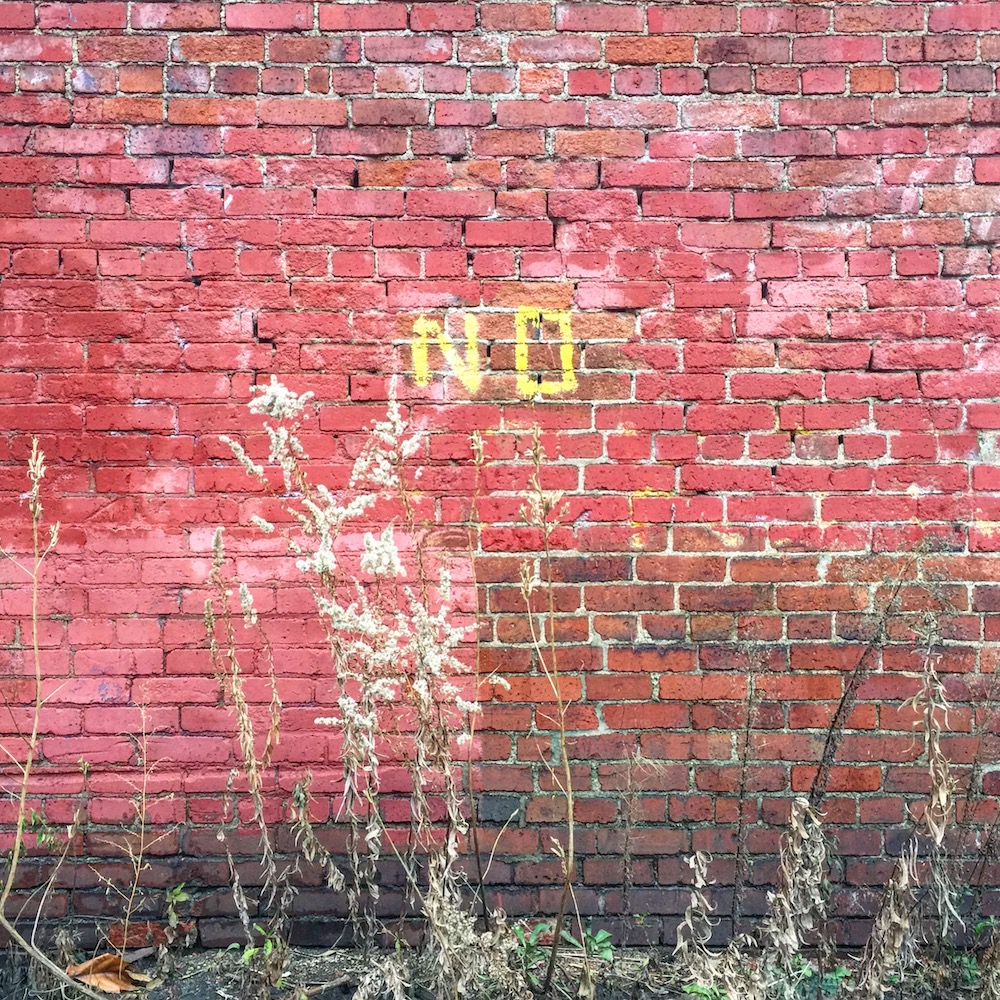
NO, South Side
No, just no. Republicans have famously become The party of ‘No’. No, you can’t bring that bill to the floor; no, there will be no discussion on the topic; no, we don’t have any ideas of our own. But if a person really wants to get down to the no-no sound, he or she just needs to take the D train, downtown. That’s the fastest way to get to hurtin’.
It’s here in this underground club of mind control experimentation that the brain’s wondrous capacity for life-threatening distortion will override any inconvenient, fact-based truths. In a kind of scorched-earth one-upsmanship, the body follows the noodle’s lead and raises the stakes by impairing the ability to move. Want to do the things you love? No, you can’t. How about some simple relaxation? No–the body may be at rest, but the mind is on a wild crime spree in Crazy Town. Want to laugh, sleep, communicate like a human being? Ain’t gonna happen.
Nighttime is the wrong time. Downtown Pittsburgh after dark.
Nights are the worst. The daily experience of lying in bed, unable to sleep, night after night, is a living hell. To spend an evening–heck, every evening for the duration of the depression–alone with one’s devastating thoughts is like being on a long drive with someone that hates you. Unlike Bon Scott’s view of hell, this is a bad place to be.
As I write this (section), it is 2:38 am. Two melatonin tabs, deep breathing exercises, a sleep meditation recording, and one prescription-grade horse tranquilizer only bought me one hour of shuteye. I’m averaging around three hours sleep a day; if I get five I feel like I won the lottery. Like clairvoyants or time travelers, we know the day ahead is already ruined well before sunrise.
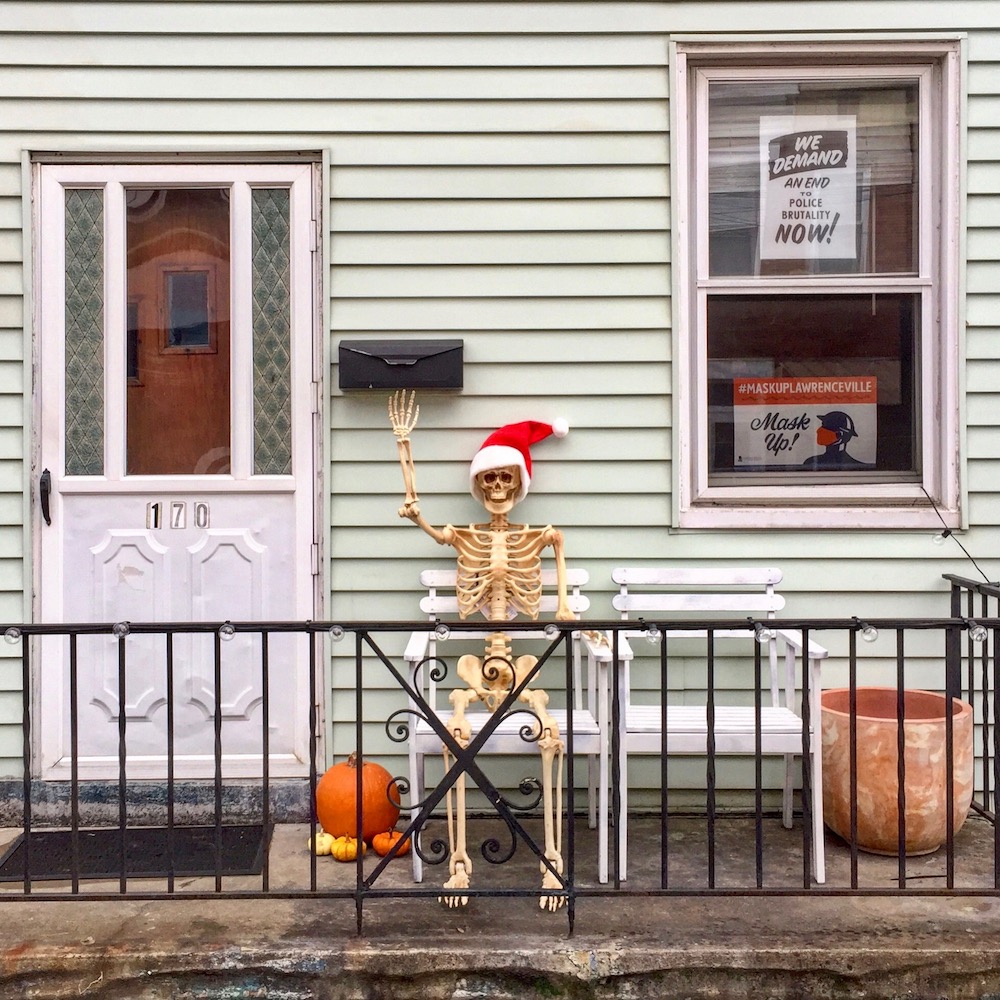
Hello neighbor, we’ll be over…sometime. Skeleton friend, Lawrenceville
Making friends with Death is one of the oft-overlooked bright sides to a clinical depression. Yes, there are others. Don’t discount the No AppetiteDiet‘s ability to burn off some of the lockdown 35 in a most ruthless fashion or all the extra time one gets when you can’t sleep past 4:30. Every morning is a like three “fall back” time changes right on top of each other. Just imagine all the things you have no energy to do with those extra hours.
But as a lifelong wake-up-screaming-in-the-night worrier about the unknown hereafter, when one’s twenty delirious waking hours every day exist on a cold cocktail of dread, exhaustion, guilt, despair, and self-loathing, death is still a haunting specter–but it’s no longer the terror it once was.
[Side note: personally, I have never been suicidal and don’t intend to start now. But if you are anywhere near that mindset, sweet Jesus, please contact the National Suicide Prevention Hotline: 800-273-8255.]
Help is on the way…as long as there’s a place to park. Therapist parking chair, Lawrenceville
Something hopeful. I’ve been through this enough times to know these things end–they always do. It doesn’t feel that way when you’re in it–the brain is making some very convincing arguments that we’re in a hopeless situation with no possible resolution and no means of escape.
But that’s not true. We can beat this, it’s just really really hard. For me, I have to go into a holistic mind/body regimen like Rocky prepping for Drago: long, heartbeat-elevating daily walks/bike rides; being open, honest, and talking with anyone who’ll lend an ear; professional help; cut out drinking and mainline fruits and vegetables; do everything you can to ensure a decent night’s rest. (This last one is a particularly tough nut to crack, see above.)
The very best thing, for me at least, is what I’m doing here: writing about it–heck, writing about anything. Even when I’m unable to pick up the guitar or focus on a movie, I can get my head deep inside a piece of writing and feel like I’ve learned something in the process. It’s why this little blog post, authored gradually over a couple weeks of ups and downs, turned into an epic saga–I just kept having more to say, and it felt good to get it down. Getting thoughts out and organizing them, reading them back and clarifying ideas, the old gadget of writing a “letter never sent”–these things really work.
We’ll get out of here, one way or another. The Mars UFO.
Lastly, when Mrs. Orbit read an earlier draft of this piece her reaction was, “It’s good, it’s heavy, and people are really going to worry about you.” Please don’t. I will be fine and I do know that I’ll get through this … eventually. This past week was way better than the week before (when most of the above text was written) and I’m legitimately feeling like I’m emerging from the fog.
But it’s a good reminder that people are suffering all around us, all the time. The isolation and anxiety of the pandemic has sent previously-epic mental illness rates through the roof. Please check on any friend you haven’t connected with recently; make sure your neighbors are OK; call your mother. Nothing gives a person in depression hope like a friend just reaching out to ask, “How are you? Are you doing OK?” … and then letting them say whatever they need to let go of.

























 Pittsburgh Orbit